
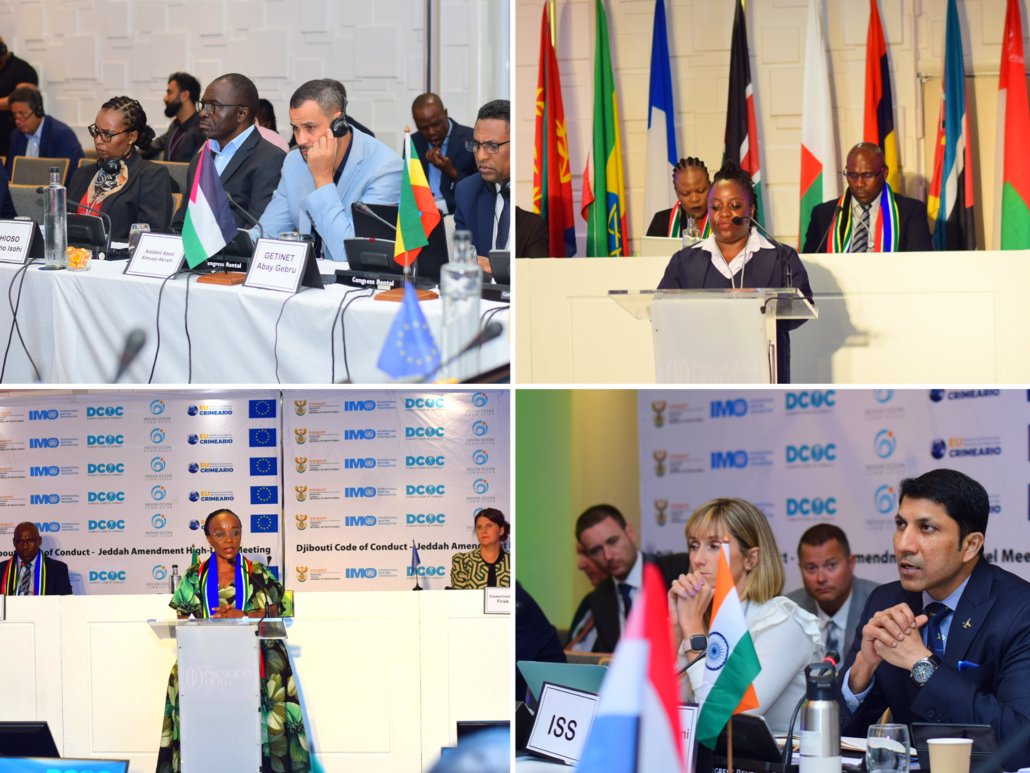
Keywords: Djibouti Code of Conduct/Jeddah Amendment, India, Eastern Africa, Western Indian Ocean, Maritime Security
Note: This article is the first of a two-part series that undertakes an in-depth institutional study of the Djibouti Code of Conduct and its Jeddah Amendments (DCoC-JA). This initial part examines the institutional evolution of the DCoC-JA and its transition towards the adoption of a bottom-up approach to regional maritime security. Part II will explore India’s engagement with the framework and its contribution to strengthening regional maritime governance.
India gained “Observer” status in the Djibouti Code of Conduct and its Jeddah Amendments (DCoC-JA) in September of 2020.[1] Nearly six years have passed since India joined the “Friends of the DCoC” club, making this an appropriate moment to assess the significance of this institutional engagement and to examine the extent to which India has aligned its maritime security initiatives with the objectives of the Code. Originally adopted on 29 January 2009, the Djibouti Code of Conduct (DCoC) is a non-binding regional maritime security agreement that was initially established to combat piracy and armed robbery against ships in the Western Indian Ocean (WIO) and the Gulf of Aden.[2] During the 2000s, piracy off the Somali coast became increasingly frequent, sophisticated, and geographically widespread, posing a serious threat to international shipping, freedom of navigation, and the safety of seafarers. Responding to this growing challenge, the International Maritime Organisation (IMO) facilitated the adoption of the DCoC as a mechanism of regional cooperation through which signatory States could collectively prevent, deter, and suppress piracy.
Anchored in international law and guided by United Nations Security Council Resolutions (UNSCR) 1816, 1838, 1846, and 1851 (2008), together with IMO Assembly Resolution A.1002(25) (2007), the Code established a practical framework that extended well beyond naval deterrence.[3] From its inception, it sought to strengthen national capacities to investigate, apprehend, and prosecute suspected pirates, while ensuring that maritime crimes could be addressed through effective legal and judicial processes. Simultaneously, it promoted the interdiction and seizure of suspect vessels, the rescue of ships and persons in distress at sea, and enhanced operational coordination and information-sharing among regional States and international naval forces.
In all these years, Somali piracy has served as the principal calibration point for the evolution of regional maritime security. It became the defining marker on the WIO’s maritime insecurity scale, prompting the emergence and institutionalisation of a wide range of bilateral and multilateral cooperation and coordination mechanisms. Yet, even as regional maritime security architecture expanded, the threat environment evolved, too. Across the Red Sea, the Gulf of Aden, and the eastern African maritime domain, piracy declined significantly but was never fully eradicated. Instead, many of the criminal networks that once relied on piracy diversified into other forms of illicit maritime activity. At the same time, the spillover effects of conflicts in Somalia, Yemen, and northern Mozambique, created permissive environments for organised crime, trafficking networks, and violent extremist groups operating across the maritime domain. Consequently, the regional threat landscape broadened to encompass arms and narcotics trafficking, maritime mixed migration, illegal, unreported, and unregulated (IUU) fishing, wildlife trafficking, illegal resource extraction, marine pollution, and crimes targeting critical maritime infrastructure. Responding effectively to these interconnected challenges required a transition from a narrowly focused counter-piracy mechanism to a comprehensive and integrated regional maritime security framework.
These evolving dynamics in the WIO have tested the resilience and relevance of both, longstanding maritime security mechanisms as well as newly established ones. Several international and regional maritime security frameworks — such as the United States-led “Combined Maritime Forces” (CMF),[4] the European Union Naval Force’s “Operation ATALANTA”,[5] the “Global Maritime Crime Programme” (GMCP) run by the United Nations Office on Drugs and Crime (UNODC),[6] the “Contact Group on Illicit Maritime Activities” (CGIMA), the “Indian Ocean Commission” (IOC), the “Indian Ocean Rim Association” (IORA), the Indian Ocean Naval Symposium (IONS), and several African Regional Economic Communities (RECs) such as the “Southern African Development Community” (SADC), the “Intergovernmental Authority on Development” (IGAD), and the “East African Community” (EAC) — are active in the region. This abundance of maritime security mechanisms has created what may be described as a “problem of plenty.” Although the region benefits from substantial international attention and assistance, the multiplicity of frameworks has created a false sense of comprehensive coverage while masking persistent gaps in coordination, implementation, and long-term sustainability. In practice, only a limited number of these initiatives have produced enduring institutional outcomes.
The proliferation of maritime security initiatives suggests that the WIO does not suffer from a deficit of cooperation; rather, it suffers from a deficit of coordination. The challenge is, therefore, no longer to establish new institutions, but to enable existing ones to function as a coherent regional maritime security architecture. Against this backdrop, this paper argues that the continued relevance of the DCoC-JA will depend less on expanding maritime cooperation than on strengthening coordination among existing initiatives. It argues that this can best be achieved through a bottom-up approach that places signatory States at the centre of regional agenda-setting while aligning external assistance with nationally identified priorities. With its recently adopted Engagement Strategy and three dedicated Working Groups — one focused exclusively on operational coordination — the DCoC-JA has begun strengthening its internal mechanisms. The question, however, is whether these reforms are sufficient to address the region’s broader coordination challenges. The paper also examines the extent to which India, as an Observer, has aligned its own maritime security engagement with the objectives and priorities of the Code.
To assess whether the DCoC-JA can assume this coordinating role, it is first necessary to understand its institutional design and governance structure. Within the wider regional maritime security architecture—which comprises conceptual, political, and executive layers—the DCoC-JA functions primarily as an executive-level mechanism, facilitating cooperation and coordinating practical maritime security initiatives across the WIO. The agreement brings together 22 Signatory States, which include African littoral and island States — from Egypt to South Africa, including Madagascar, Comoros, Mauritius, and Seychelles — as well as most West Asian littoral States and the Maldives.[7] The IMO facilitates the Code and serves as its secretariat, overseeing its governance framework, which comprises a Steering Committee and three Working Groups. Working Group 1 addresses Information Sharing, Working Group 2 focuses on Capacity Building, and Working Group 3 concentrates upon Operational Cooperation and Coordination at Sea. This framework has developed from years of interaction and high-level meetings with the Signatory States to make the Code suitable to their needs. In recognition of its growing role, several external partners have joined the framework as Observers under the designation of “Friends of the DCoC”. By 2020, India, together with Japan, Norway, the United Kingdom, and the United States, had acquired Observer status, with the European Union joining subsequently. As “Friends of the DCoC”, these partners support the implementation of the Code by strengthening information-sharing mechanisms, promoting maritime domain awareness, and providing technical, financial, and institutional assistance to the signatory States.
In 2017, the Jeddah Amendments to the Code transformed it into the DCoC-JA, expanding it from a counter-piracy mechanism into a broader framework for regional maritime security cooperation. The revised framework acknowledged that, beyond piracy, there exists an interrelated and complex set of maritime crimes capable of jeopardising the coastal security of States with limited law enforcement capacity. Its mandate has expanded from countering piracy to addressing illicit maritime activities, including smuggling, trafficking, IUU fishing, and maritime terrorism, while supporting environmental protection and sustainable Blue Economy objectives.[8] This shift reflected a growing regional recognition that long-term maritime security requires integrated, whole-of-government approaches that address both security and governance gaps, as well as the underlying conditions conducive to maritime crime. DCoC-JA in its present form has evolved from an emergency counter-piracy mechanism into a broader platform for maritime security cooperation and capacity-building. Signatory States increasingly recognised the need to strengthen national legislation, enhance maritime domain awareness, and improve information sharing by establishing and operationalising National Maritime Information Sharing Centres (NMISC), thereby reinforcing the Information Sharing Network (ISN).
Despite capability gaps, progress across the region has been significant, albeit uneven. No Eastern African State currently possesses a fully self-sufficient maritime surveillance architecture. Even the relatively capable States — South Africa, Kenya, Mauritius, and Seychelles — continue to rely on external partners for training, technology, intelligence sharing, or specialised equipment. The principal capability gap is not the absence of surveillance systems but the lack of integrated, nationally owned maritime governance. Most States possess elements of maritime surveillance — such as coast guard organisations, maritime operations centres, and information-sharing nodes — but these often remain constrained by limited resources, uneven inter-agency coordination, insufficient legal and institutional frameworks, and continued dependence on external assistance.
This reinforces the case for a bottom-up approach to maritime security, in which national capabilities are strengthened to begin with and only then connected through regional mechanisms such as the DCoC-JA. Moreover, the same external actors repeatedly appear across the region. The IMO (through the DCoC), the European Union, UNODC, India, France, the United States, and the IOC collectively support most national maritime security programmes. While these initiatives have significantly strengthened regional maritime security, they have also created a complex landscape characterised by overlapping mandates, duplication of effort, and, at times, competition among donor actors for influence and alignment with recipient States. Table 1 illustrates this pattern by mapping the maritime security institutions, external partnerships, and remaining capability gaps across the Eastern African littoral and island States.
|
State |
National Maritime Security Architecture | Maritime Surveillance & Information-Sharing Capability | Principal External Partners | Existing Maritime Security Initiatives | Major Capability Gaps |
| Somalia | Somali Police Force, Puntland Maritime Police Force, Coast Guard, Federal Maritime Authorities | Limited coastal surveillance, AIS monitoring, regional information sharing | IMO, UNODC, EUCAP Somalia, EUNAVFOR Atalanta, CMF, Türkiye | EUCAP Somalia, Op ATALANTA, GMCP, IMO (DCoC) | Weak governance, fragmented institutions, limited radar, piracy networks remain dormant, dependence on donors |
| Djibouti | Coast Guard, Navy, Maritime Administration | Coastal radar, DRTC, information-sharing network | IMO, Japan, France, US, EU | DRTC, IMO (DCoC), CMF liaison | Heavy dependence on foreign support despite strategic location |
| Kenya | Kenya Coast Guard Service, Navy, National Maritime Security Committee | MRCC, coastal radar, AIS, satellite integration | IMO, EU, UNODC, Safe Seas Africa, US, UK | GMCP, Safe Seas Africa, DCoC | EEZ surveillance, inter-agency coordination, offshore patrol limitations |
| Tanzania | Navy, Marine Police Unit | Coastal surveillance stations, National Joint Operations Centre (NJOC), MRCC | IMO, EU, India, UNODC | DCoC, Safe Seas Africa | Limited offshore surveillance, resource shortages, MDA integration |
| Mozambique | Navy, Marine Police, Maritime Administration | Limited coastal surveillance, northern maritime monitoring | Portugal, EU, France, India, IMO | EU Mission Mozambique, DCoC | Cabo Delgado insurgency, weak offshore surveillance, limited interoperability |
| South Africa | Operation Phakisa, Navy, SAMSA, Maritime Domain Awareness Centre | National MDA system, satellite surveillance, MRCC | SADC, IORA, IMO, France, US | Operation Phakisa, IORA, DCoC | Budget constraints, ageing fleet, large EEZ |
| Comoros | Maritime Gendarmerie, Coast Guard | Basic coastal patrols | France, EU, IOC, IMO | DCoC, IOC programmes | Very limited patrol assets, donor dependence |
| Madagascar | Navy, Coast Guard | RMIFC (Regional Maritime Information Fusion Centre), coastal monitoring | IOC, EU, France, IMO | MASE, Safe Seas Africa, DCoC | Large EEZ, insufficient patrol vessels, weak operational reach |
| Mauritius | National Coast Guard, Maritime Air Squadron | Maritime patrol aircraft, MRCC, integrated surveillance | India, France, EU, US | DCoC, IOC, IORA | Small force structure, technology dependence |
| Seychelles | Coast Guard, Maritime Security Committee | RCOC, radar network, aerial surveillance | India, France, EU, IMO, CMF | RCOC, DCoC, IOC | Vast EEZ, manpower shortages, operational burden |
|
Table 1: National Maritime Security Agencies Source: Author |
|||||
It is evident that with the Jeddah amendments, the DCoC-JA has demonstrated considerable flexibility in responding to the evolving needs and priorities of its member States. Despite this, however, it has yet to establish itself as the institutional anchor around which broader regional maritime cooperation can be organised.
The post-2017 evolution of the DCoC-JA demonstrates a growing willingness to adapt its institutional framework to the changing priorities of its signatory States. This adaptability has become one of the Code’s defining strengths. Unlike many externally conceived maritime security initiatives, the DCoC-JA derives its legitimacy from the participation of the coastal and island States that experience maritime insecurity firsthand. Their understanding of local threat dynamics, governance challenges, and institutional constraints places them in the strongest position to define regional priorities. Consequently, the DCoC-JA is well placed to advance a genuinely bottom-up approach to maritime security, whereby national institutions provide the foundation for regional cooperation while external partners — including the “Friends of the DCoC” — align their assistance with priorities identified by the signatory States themselves. In this model, the DCoC-JA functions not simply as a capacity-building platform, but as the principal capability-enhancing one, through which nationally identified priorities are translated into collective regional action.
A bottom-up approach to maritime security begins with the recognition that effective regional governance can only be built upon resilient national institutions. Rather than treating coastal States as passive recipients of externally designed capacity-building and capability-enhancement programmes, it places them at the centre of agenda-setting by allowing nationally identified priorities to shape regional cooperation. Maritime risk assessments, national maritime security strategies, legislative reforms, and institutional capability should collectively inform the regional agenda. External partners, in turn, should support these priorities by providing technical expertise, financial assistance, and specialised training in response to locally identified requirements rather than predetermined programme objectives.
Importantly, a bottom-up approach does not diminish the role of external partners, nor does it advocate decentralising regional maritime governance. Instead, it reorders the process through which maritime security priorities are identified and implemented. National institutions become the foundation of regional governance, while the DCoC-JA serves as the coordinating mechanism through which national priorities are consolidated into a coherent regional agenda. Within this framework, the “Friends of the DCoC” — including India — continue to provide technical assistance, institutional support, and operational expertise, but their engagement is guided by priorities articulated by the signatory States themselves. Regional coordination, therefore, emerges from strengthened national institutions rather than from externally driven programmes.
This emerging philosophy of nationally driven regional governance has now been formalised through the “DCoC-JA Engagement Strategy” (2025). This strategy represents the most significant institutional development since the Jeddah Amendments, translating the principles of sovereignty, regional ownership, inclusivity, coordinated international support, and industry engagement into a structured implementation framework.[9] A distinguishing feature of the engagement strategy is that it moves beyond broad policy aspirations by coupling strategic objectives with a phased implementation roadmap. Rather than articulating general ambitions, it sequences institutional reforms over the short, medium, and long term, thereby providing a measurable pathway for implementation. During the initial phase (2025–2027), priority is given to establishing “National Maritime Security Committees”, operationalising “National Maritime Information Sharing Centres”, strengthening information-sharing procedures, engaging inactive signatory States, aligning donor assistance, and launching a regional public-private forum. The second phase (2028–2030) focuses on consolidating these foundations through regular “Working Group” exercises, harmonising maritime legislation, operationalising the “DCoC Trust Fund”, integrating industry reporting, and mainstreaming gender and youth participation. Beyond 2030, the strategy envisages a broader conception of maritime security that extends beyond counter-piracy and maritime crime to encompass humanitarian assistance and disaster relief, environmental security, climate resilience, and the protection of critical maritime infrastructure.[10]
As of 2026, the DCoC-JA is already well into implementing its first phase and has made encouraging progress across its three Working Groups. Under Working Group 1 (Information Sharing), signatory States are working towards establishing “National Maritime Information Sharing Centres” (NMISCs), which will serve as the primary national hubs for maritime domain awareness, information fusion, and incident reporting. Effective information sharing enables States to develop a common operational picture, improve maritime situational awareness, and support timely, coordinated responses to threats at sea. In doing so, NMISCs are expected to strike an appropriate balance between the “need to know” and the “need to share.”
The “NMISC Roadmap” is built around three complementary pillars: institutional strengthening, technical integration, and capacity building. The first focuses on establishing clear governance structures and coordination mechanisms among national maritime agencies. The second seeks to develop interoperable information-sharing systems linked to regional centres such as the “Regional Maritime Information Fusion Centre” (RMIFC), the “Regional Centre for Operational Coordination” (RCOC), and the “Information Fusion Centre–Indian Ocean Region” (IFC-IOR). The third aims to strengthen the analytical and operational capabilities of personnel responsible for information management and maritime risk assessment.
The overarching objective is to create an integrated regional information-sharing architecture in which data on vessels of interest and other maritime incidents can be exchanged seamlessly across national and regional networks. To support this effort, the European Union’s “Crisis Response Project” is assisting the development of common standard operating procedures (SOPs) and improved digital connectivity among participating centres. These SOPs will establish a common operational framework, standardise reporting procedures, and improve interoperability between national agencies and regional maritime information-sharing mechanisms. Information generated through the NMISCs will subsequently feed into the RMIFC in Madagascar and the RCOC in Seychelles, strengthening regional maritime domain awareness and operational coordination. At present, Kenya and Tanzania have completed their NMISC roadmaps, while Comoros and Seychelles are expected to complete their roadmap workshops during 2026.
Working Group 2 (Capacity Building Coordination) adopts a more targeted and demand-driven approach to strengthening maritime security “capabilities” — the obvious confusion between the term used (“capacity”) and the terms that ought to have been used (“capability”) notwithstanding. Chaired by Seychelles, with Somalia serving as Deputy Chair, WG2 functions as the principal mechanism for coordinating regional capability-enhancement efforts. Rather than focusing solely on the delivery of platforms and equipment, it seeks to align international assistance with the priorities identified by the signatory States, thereby promoting coherence, complementarity, and the long-term sustainability of human-focused maritime capability enhancement. It is encouraging to note that WG2 has progressively shifted the focus of regional capability enhancement from isolated training activities and skilling towards a more structured and demand-driven model of institutional development. A key area of emphasis is enhancing maritime domain awareness (MDA) through improved integration and skilling to make better use of available surveillance and tracking systems, including the “Automatic Identification System” (AIS), “Long-Range Identification and Tracking” (LRIT), coastal radar networks, and other maritime monitoring technologies. Strengthening these capabilities enables signatory States to develop a more comprehensive operational picture of their maritime domains, improve information sharing, and enhance their ability to prevent and respond to illicit maritime activities.
The effective implementation of Working Group 3 (WG3) on Operational Cooperation and Coordination at Sea requires signatory States to adopt a Whole-of-Government (WoG) approach to maritime security. Central to this approach is the establishment of three interrelated national mechanisms: a “National Maritime Security Committee” (NMSC), a “National Maritime Security Risk Register” (NMSRR), and a “National Maritime Security Strategy” (NMSS). The NMSC serves as a cross-government coordinating body comprising senior representatives from relevant ministries and agencies responsible for addressing the full spectrum of maritime security risks. The NMSRR provides a comprehensive national assessment of the most significant maritime threats, enabling States to identify capability gaps and prioritise policy development and capacity-building efforts. These assessments, in turn, inform the formulation of the NMSS, which provides the strategic direction for strengthening national maritime governance and decision-making.
Together, these three mechanisms create an integrated framework for strengthening national maritime security governance by enhancing inter-agency coordination, promoting evidence-based decision-making, and aligning national priorities with regional cooperation. Recognising their importance, the DCoC-JA has prioritised their establishment across the region. Kenya, with technical support from the International Maritime Organisation (IMO), became the first signatory State to initiate the establishment of both the NMSC and the NMSRR, while Tanzania, Mauritius, and Seychelles are actively advancing similar initiatives. Building on this progress, the DCoC-JA has set a target of ensuring that at least twelve signatory States have fully operational NMSRRs by 2027.
WG2, currently chaired by Seychelles with Somalia serving as Deputy Chair, has played a pivotal role in advancing this institutional agenda. One of its most significant innovations has been the establishment of thematic sub-working groups in 2023 to operationalise the priority areas identified under Articles 1 and 2 of the Jeddah Amendment. These specialised groups bring together lead States and subject-matter experts to coordinate technical cooperation, facilitate knowledge sharing, and strengthen capacity-building across key areas of maritime security, including illegal, unreported and unregulated (IUU) fishing, port and ship security, human and narcotics trafficking, environmental protection, and other emerging maritime threats. The seven thematic sub-working groups are as follows:
| Ser | Sub-group | Chair |
| 1. | Human trafficking and smuggling | Maldives |
| 2. | Threats to the maritime environment | Mauritius |
| 3. | Illegal trade in wildlife (CITES violations) | Kenya |
| 4. | Trafficking in arms, narcotics and psychotropic substances | Madagascar |
| 5. | New and emerging threats to maritime security | TBC |
| 6. | Port and ship security and coastal installations | Ethiopia |
| 7. | Illegal, Unreported and Unregulated (IUU) Fishing | Tanzania |
| Table 2: Information on Sub-Groups
Source: DCoC-JA Official Website[11] |
||
The establishment of these thematic sub-working groups represents an important step towards operationalising the DCoC-JA’s bottom-up approach to maritime security. These sub-working groups allow signatory States to lead discussions and coordinate action in areas that reflect their own operational priorities and security concerns. By combining regional expertise with technical support from external partners, they promote nationally informed, demand-driven cooperation while strengthening regional ownership of the maritime security agenda.
Another notable innovation is the “Assistance Matrix”, introduced in June 2022 as the “Capacity Building Coordination Matrix” and renamed in 2024 (although, once again, the term “Capacity” could have been more correctly described as “Capability”). Developed to complement the work of WG2 and its thematic sub-working groups, the Matrix provides signatory States with a structured mechanism to identify capacity and capability gaps, prioritise national requirements, and map areas where external assistance is needed. More importantly, it serves as a practical planning tool for tracking regional needs and priorities while enabling States to undertake an honest assessment of their own progress. In doing so, it helps ensure that capacity-building and capability-enhancement efforts are guided by nationally identified priorities rather than externally driven programmes, reinforcing the DCoC-JA’s bottom-up approach to regional maritime security.
The successful implementation of these institutional reforms depends not only on the commitment of the signatory States but also on sustained support from the DCoC’s external partners. In this regard, the “Friends of the DCoC” platform provides an important mechanism through which signatory States can access international expertise, technical assistance, and support relevant to capacity-building and capability-enhancement, tailored to their respective maritime security priorities. Its greatest strength lies in its ability to facilitate coordination among a diverse range of stakeholders at the national, regional, and international levels. This multi-layered approach is reflected in several IMO-supported initiatives implemented under the DCoC framework. For instance, the European Union-funded “Safe Seas Africa” (SSA) programme in the WIO is delivered in collaboration with regional and international partners, including the IOC, INTERPOL, and the UNODC. All these agencies will further aid in building the DCoC-JA’s envisaged regional maritime security strategy. Similar collaborative arrangements underpin initiatives such as the Crisis Response Project[12] and the Port Security and Safety of Navigation in Eastern and Southern Africa and the Indian Ocean programme. Together, these initiatives demonstrate that effective maritime security in the region depends not only on financial and technical assistance, but also on sustained coordination among implementing organisations, regional institutions, and the DCoC signatory States.
The evolution of the DCoC-JA over the past decade demonstrates that regional maritime security can no longer be sustained through operational responses alone. Its continued relevance will depend on its ability to strengthen national institutions, improve regional coordination, and align external assistance with the priorities identified by the signatory States themselves. The framework’s recent institutional innovations—including the Engagement Strategy, the Working Groups, the National Maritime Security Committee model, National Maritime Information Sharing Centres, and the Assistance Matrix—collectively reflect a gradual shift towards a more nationally anchored and regionally coordinated approach to maritime security governance.
At the same time, these reforms underscore that external partnerships remain indispensable. The challenge is no longer one of mobilising assistance, but of ensuring that such assistance reinforces regional ownership rather than creating parallel structures or fragmented initiatives. As the DCoC-JA continues to mature, the effectiveness of its bottom-up approach will increasingly depend on how its “Friends” and development partners adapt their engagement to support nationally identified priorities, strengthen indigenous institutional capacity, and promote coherent regional cooperation. The next stage in the evolution of the DCoC-JA will therefore be shaped not only by the commitment of its signatory States, but equally by the quality, coordination, and strategic orientation of the support provided by its external partners.
********
About the Author
Ms Anum Khan is an Associate Fellow at the National Maritime Foundation. Her research is centred upon the multiple maritime facets of the eastern African littoral, about which she is deeply passionate. She may be contacted at amgs2@maritimeindia.org.
Endnotes:
[1] Ministry of External Affairs, Government of India, “India Joins the Djibouti Code of Conduct as Observer,” press release, 16 September 2020. https://www.mea.gov.in/press-releases?dtl/32977/India(joins(the(Djibouti(Code(of(Conduct(as(Observer.
[2] “About DCoC: Read More,” Djibouti Code of Conduct, accessed on 14 June 2026. https://dcoc.org/about-us.
[3] Djibouti Code of Conduct, “About DCoC: Read More.”
[4] “Combined Maritime Forces (CMF): About CMF,” accessed on 23 June 2026. https://combinedmaritimeforces.com/.
[5] European Union Naval Force, “Operation ATALANTA,” accessed on 24 August 2026.
[6] Maritime Crime, “GMCP Mission: To Improve the Capabilities of Member States’ Entire Criminal Justice Chain to Ensure The Rule Of Law And Cooperation In The Maritime Domain,” United Nations Office of Drugs and Crime, accessed on 24 June 2026. https://www.unodc.org/unodc/en/piracy/index.html.
[7] Djibouti Code of Conduct Secretariat, “Steering Committee,” Governance Framework. https://dcoc.org/governance-framework/steering-committee.
[8] Djibouti Code of Conduct Secretariat, Report of the 8th DCoC-JA High-Level Meeting on the Implementation of the Jeddah Amendment to the Djibouti Code of Conduct, Mauritius, 12–14 November 2025 (Nairobi: Djibouti Code of Conduct Secretariat, 2025),6. https://dcoc.org/storage/uploads/Report-of-the-8th-DCoC-JA-High-Level-Meeting.-Mauritius-12-14-November-2025-for-circulation.pdf.
[9] Djibouti Code of Conduct Secretariat, DCoC Engagement Strategy (Nairobi: Djibouti Code of Conduct Secretariat, 2005). https://dcoc.org/wp-content/uploads/DCoC-Engagement-Strategy.pdf.
[10] Djibouti Code of Conduct Secretariat, Report of the Eighth High-Level Meeting on the Implementation of the Jeddah Amendment to the Djibouti Code of Conduct, Mauritius, 12–14 November 2025 (Nairobi: Djibouti Code of Conduct Secretariat, 2025). https://dcoc.org/storage/uploads/Report-of-the-8th-DCoC-JA-High-Level-Meeting.-Mauritius-12-14-November-2025-for-circulation.pdf.
[11] Djibouti Code of Conduct, “Capacity Building,” accessed on 04 August 2026. https://dcoc.org/our-work/capacity-building.
[12] Djibouti Code of Conduct Secretariat, Factsheet: Crisis Response Project for the Red Sea and the Western Indian Ocean (CRP-RedWIO) (Nairobi: Djibouti Code of Conduct Secretariat, 2025), accessed on 04 August 2026. https://dcoc.org/storage/uploads/Factsheet-English-Crisis-Response-Project-for-the-Red-Sea-and-the-Western-Indian-Ocean-CRP-RedWIO.pdf.


Leave a Reply
Want to join the discussion?Feel free to contribute!