
Note: India–Russia relations today remain time-tested and reliable, with defence and energy continuing to be the two principal pillars of the relationship. While defence cooperation has firmly established itself as a key pillar and has been widely studied and accepted as a defining feature of bilateral ties, energy relations remain comparatively underexplored. Many may argue that energy cooperation has also existed for a long time, with only its scale increasing in recent years. However, despite the growing depth of the relationship and the potential areas of cooperation, India–Russia energy relations remain somewhat inadequately studied, due in part to their geopolitical sensitivities and complexities. This series examines the evolution of India–Russia energy relations, with a particular focus on trade under Chapter 27 of the Harmonized System (HS), particularly oil, coal and gas, while also examining the investments and other forms of engagement that have shaped the energy partnership. The series will therefore examine the broader dimensions of the energy relationship, including but not limited to the impact of sanctions, and explore the opportunities and vulnerabilities emerging from this expanding partnership.
Energy and energy security have always been among the most widely discussed issues across the world. Perspectives on the subject vary considerably, ranging from economic and political considerations to environmental concerns. While the global energy transition continues to gather momentum, the existing infrastructure, scale of demand, and developmental requirements of countries such as India, mean that conventional sources of energy, particularly oil, coal and natural gas, are likely to remain important for the foreseeable future. For India, this dependence is particularly significant. In crude oil, India produced only about 28.70 million tonnes (MT) domestically in 2024–25, while it had to import the rest of its requirement—around 243.22 million tonnes (MT)—making it dependent on imports for nearly 89.44 per cent of its consumption.[1] The import dependency for natural gas stood at 49.73 per cent, while that for coal it was 23.50 per cent.[2]
In a world of finite resources and increasingly uncertain energy markets, every major geopolitical disruption has reinforced the need for diversification. Diversification of energy sources and suppliers has long been advocated for the advantages it offers in reducing dependence, enhancing energy security and improving resilience against external shocks. India, which has for long been dependent on West Asian suppliers for a significant share of its crude oil requirements, has gradually sought to diversify its sources of supply, particularly over the past decade, as part of its broader effort to strengthen energy security and reduce concentration risks.
Yet, diversification does not come without costs. This is precisely what makes diversification difficult in an increasingly interconnected and geopolitically contested energy landscape. While India was in the process of diversifying its energy sources and suppliers, Russia, a long-standing and reliable partner, emerged from a relatively marginal position in India’s energy import landscape to become a major supplier, particularly after 2022. The rapid rise of Russian crude in India’s import basket generated considerable debate globally. While some viewed it as a pragmatic and economically rational decision, others described it as opportunistic or questioned its long-term sustainability amid continuing sanctions and geopolitical pressures.
This article seeks to examine these competing narratives, highlighting both the gains and the risks that India has encountered in the process of diversifying its crude oil supplies. Like any form of diversification, the shift towards Russian crude has come with its own set of economic, logistical, and geopolitical costs. The question, therefore, is not merely whether diversification is beneficial but whether the costs incurred in pursuing it are justified by the benefits it brings and whether these costs can remain sustainable in the long term.
While the broader discussion on India’s energy security encompasses oil, coal, natural gas and other sources, this article focuses specifically on crude oil, given its centrality to India’s import dependence and the particularly significant transformation in its sources of supply following 2022. India’s experience with Russian crude therefore offers a useful case through which to examine the larger paradox of diversification: whether reducing dependence on established suppliers ultimately enhances energy security, or whether it merely creates new forms of dependence and vulnerability.
From Marginal Supplier to Major Source: Russia in India’s Energy Basket
India is among the world’s largest crude oil importers, with imports accounting for nearly 90 per cent of its crude oil consumption. Russia, on the other hand, has consistently been among the world’s largest oil producers and exporters. In 2023, it was the world’s second-largest producer of crude oil and condensate, behind only the United States.[3] At the same time, Russia has historically been a major exporter of crude oil, with its traditional markets concentrated in Europe before 2022. This creates an interesting paradox: Russia had the oil, while India needed the oil. Yet, for decades, India’s crude oil import landscape remained largely centred on West Asia and other established suppliers.
As shown in Figure 1, which presents the value of India’s imports from Russia under HS 2709—Petroleum oils and oils obtained from bituminous minerals, crude—between 2005 and 2025, based on UN Comtrade data, imports remained negligible for most of the period before 2022. While some imports were recorded intermittently, their value remained very low, reaching only around US$2.31 billion in 2021. The picture changed dramatically after 2022, when the value of India’s crude oil imports from Russia rose to approximately US$25.53 billion, before increasing further to US$48.64 billion in 2023 and US$52.73 billion in 2024. Although the value declined to approximately US$45.34 billion in 2025, Russian crude continued to account for a substantial part of India’s import basket. The sharp increase after 2022 marks a significant transformation in Russia’s role in India’s crude oil import landscape.
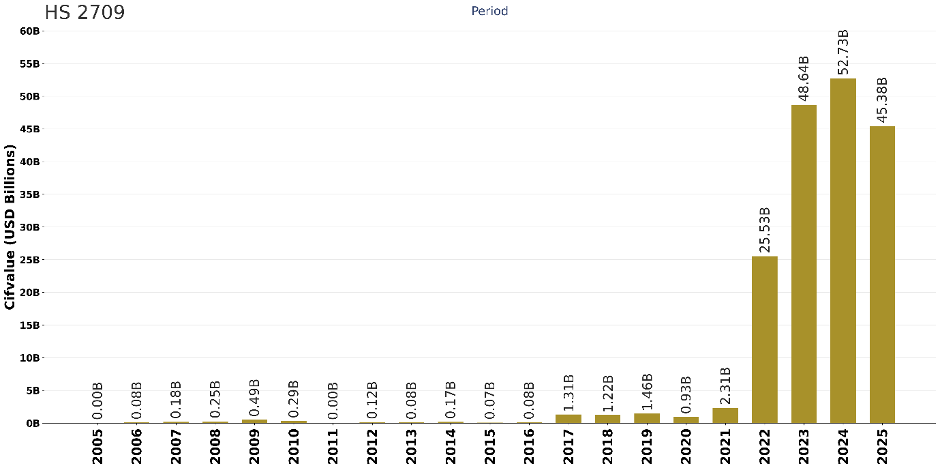
Fig 1: India’s Imports of Crude Oil from Russia (HS 2709), 2005–2025
Source: Compiled using UN Comtrade data
Note: Values are indicated in US$ billion, and the year indicated represents the calendar year (Jan to Dec)
This raises an important question. If Russia had abundant oil, India had a large and growing demand for oil, and the two countries had enjoyed a long-standing political relationship built on mutual trust, why did Russian crude remain a relatively small part of India’s energy basket for so long? The argument that India and Russia were natural energy partners and that a substantial energy relationship was therefore bound to emerge overlooks the realities that shape energy trade. Political relations alone do not determine the direction of energy flows. Geography, infrastructure, transportation costs, refining capacity, crude compatibility, established supply chains, and commercial considerations, are equally important. It took a major disruption in the global energy market to bring these factors into alignment and transform the scale of India–Russia energy trade.
There are therefore two related questions that need to be examined: why was Russian crude largely absent from India’s energy landscape before 2022, and why did it become so important afterwards? The answers also help explain why, despite external pressures, it may be neither easy nor necessarily prudent for India to remove Russian crude completely from its energy basket. At the heart of both questions lies the often-overlooked cost and complexity of diversification.
In principle, diversification appears straightforward. A country that depends heavily on imported energy should maintain a broad supplier base so that it can switch between sources when geopolitical disruptions, price shocks or supply constraints arise. In practice, however, diversification is not simply a matter of replacing oil from one country with oil from another. Importing crude requires an entire ecosystem of infrastructure and logistics. Crude arrives primarily by tanker, is unloaded at ports or offshore Single Point Mooring (SPM) facilities, as shown in Figure 2, transferred through subsea and onshore pipelines into storage tanks, and then transported to refineries. From there, the crude must be processed into products such as petrol, diesel, aviation turbine fuel and other petroleum products, which are subsequently moved through pipelines, railways, road networks and coastal shipping to markets across the country.
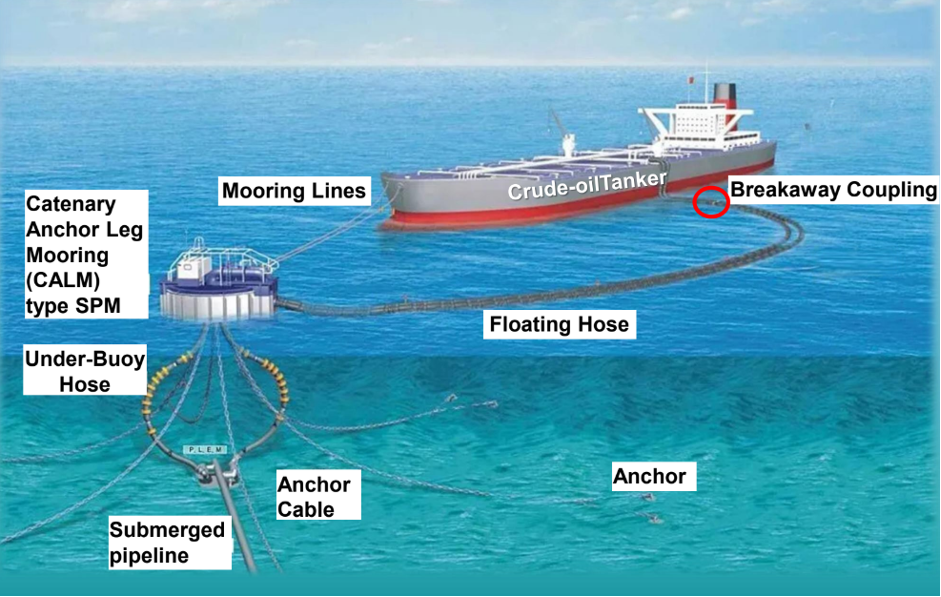
Figure 2: Schematic Representation of a Single Point Mooring (SPM) System for Offshore Crude Oil Transfer
Source: Internship Lecture at the National Maritime Foundation by VAdm Pradeep Chauhan (DG), “Imperatives of India’s Seaborne Trade,” 07–08 April 2026.
India’s existing energy infrastructure has, therefore, evolved around particular geographical and commercial relationships. SPMs allow large crude carriers, including Very Large Crude Carriers (VLCCs), to unload crude offshore, where it is transferred through subsea pipelines to coastal storage facilities before entering the wider pipeline network. For instance, Indian Oil’s facilities at Vadinar receive crude through SPMs and transport it through pipelines to refineries at Koyali, Mathura and Panipat. At Paradip, three SPMs located approximately 25 kilometres offshore allow VLCCs to discharge crude, which is then transported to the Paradip refinery and, through the pipeline network, towards refineries and markets in eastern and northern India.[4]
The location and design of refineries also matter because not all crude is identical. Crude oil differs in characteristics such as density, sulphur content and acidity, and refineries are designed or configured to process particular ranges of crude. India’s refining system, however, has developed considerable flexibility over time, with several refineries not only being capable of processing heavier and higher-sulphur crude but being specifically designed to refine heavy, sour crude. Why this is so has much to do with the very low import-cost of heavy, sour crude oil compared to lighter and sweeter alternatives. Thus, one finds that the Paradip refinery, for example, was specifically designed to process 100 per cent high-sulphur crude, while India’s large refining complexes — especially those at Jamnagar and Vadinar — have the capacity to process a much more diverse range of crude. As of April 2025, India’s total installed refining capacity stood at approximately 258 million tonnes per annum, spread across refineries located in different parts of the country.[5]
This infrastructure-consideration helps explain why India’s crude oil supply relationships cannot be changed overnight. A new supplier must be commercially competitive, the crude being supplied must be compatible with available refining configurations, tankers must be available to transport it, insurance and financing must be accessible, and the imported crude must be capable of entering India’s existing storage and pipeline network at an economically viable cost. Obviously, the closer a supplier is to India’s existing maritime routes and infrastructure, the lower some of these logistical barriers become. This helps explain the historical importance of West Asian suppliers. India had long-established commercial relationships with producers in the region, relatively well-developed shipping routes and infrastructure, and a refining system that had evolved to accommodate a wide range of crude from these markets.
Russia, by contrast, faced a different set of circumstances. Although it possessed enormous oil reserves and production capacity, its principal export markets before 2022 were geographically oriented towards Europe, supported by established pipelines and shorter maritime routes. Under normal market conditions, India would have had little commercial reason to substantially reorient its crude procurement towards a distant Russian supplier when oil was readily available from established producers in West Asia and other regions. The absence of a large-scale India–Russia crude oil relationship was thus not necessarily a consequence of weak bilateral ties or a lack of Russian interest in the Indian market. It was, to a considerable extent, a product of the existing geography and transport-economics related to the global oil trade.
What changed after 2022 was not simply India’s demand for oil or Russia’s ability to produce it. The global energy map itself was disrupted. Sanctions, and the withdrawal of European buyers from Russian energy markets, forced Russia to redirect a much larger share of its seaborne crude exports towards Asia.[6] At precisely the same time, India was seeking more competitively priced supplies while remaining heavily dependent on imports. The resulting convergence was unprecedented. Russia needed alternative markets for its crude, while India found an opportunity to diversify its supplier base and secure large volumes at significant discounts. Russia’s crude exports to India rose from approximately 50,000 barrels per day in 2020 to around 1.7 million barrels per day in 2024, making India the second-largest recipient of Russian crude after China.[7]
The Cost of Diversification
For the longest time, India’s crude oil imports were heavily dependent on West Asia. This was not unique to India. The Persian Gulf region has remained at the centre of the global oil market for decades, owing to its enormous reserves, established production capacity and proximity to some of the world’s largest energy-consuming markets. West Asia holds around 55–56 per cent of the world’s proven crude oil reserves, with Saudi Arabia alone accounting for approximately 17 per cent of global proven reserves.[8] Saudi Arabia is also among the world’s largest oil producers and exporters. This combination of reserves, production capacity and established export infrastructure made the Gulf a natural source of crude for countries such as India.
Yet, reserves alone do not determine a country’s ability to supply oil to international markets. Production capacity, refining infrastructure, export terminals and the ability to transport crude at commercially viable costs are equally important. Venezuela, for instance, possesses the world’s largest proven crude oil reserves, but its production has remained far below its potential because of years of underinvestment, operational difficulties and sanctions.[9] Its experience demonstrates that possessing oil underground does not automatically translate into being a reliable supplier in the international market. For an importing country, therefore, the question is not simply where oil exists, but where it can be produced, transported, and delivered reliably and economically.
India’s own energy infrastructure has also shaped its crude sourcing patterns. As of April 2025, India had a total refining capacity of approximately 258.12 million tonnes per annum (MMTPA) across 23 refineries.[10] This capacity, however, is not evenly distributed across the country. Gujarat alone accounts for approximately 102 MMTPA, or nearly 40 per cent, of India’s total refining capacity, with major facilities located at Jamnagar, Koyali and Vadinar.[11] The western and north-western coastal corridor is further strengthened by refining capacity in Maharashtra and Karnataka. The concentration is partly historical and partly geographical, with the western coast offering access to deep-water ports, crude import terminals and large-scale Single Point Mooring (SPM) systems, as well as proximity to major oil-producing countries of the Gulf. The infrastructure built around this geography has created a degree of path dependence in India’s energy trade. Imported crude arriving at western ports can be transported through dedicated crude pipelines to refineries in Gujarat and further inland towards major consumption centres in northern India, while similar infrastructure around eastern ports such as Paradip serves refineries and markets in eastern India. Thus, although India has substantial refining capacity, its infrastructure remains geographically fragmented, with the location of crude imports and the choice between the east and west coasts shaped by existing refinery, port and pipeline linkages.
This infrastructure matters when considering the question of diversification. In theory, an oil-importing country can simply replace one supplier with another. In practice, the process is considerably more complicated. Crude oil is not a homogeneous commodity. Different grades have different characteristics, including density, sulphur content and other properties, and refineries are designed and calibrated to process particular combinations of crude. A refinery that has been optimised over several years for a particular crude slate cannot necessarily switch between all grades without adjustments to its operations, blending practices and processing units. The availability of crude is therefore only one part of the equation. The ability to transport it to the right port, receive it through existing infrastructure and process it efficiently is equally important.
When the volumes and quantities of Russian crude entering India began to increase significantly, the timing was particularly important. The COVID-19 pandemic had already produced one of the most dramatic disruptions in the global oil market in 2020, when the collapse in demand contributed to a sharp decline in crude prices. As Figure 3 illustrates, global crude oil prices have historically responded sharply to major political, economic and geopolitical disruptions.[12] The pandemic-induced collapse in demand pushed prices sharply lower in 2020, before the global economic recovery and subsequent geopolitical tensions contributed to a renewed rise. The outbreak of the Ukraine conflict in 2022 added another major shock to the market. Russian Urals crude, which had traditionally been sold largely to European markets, was redirected towards Asia at substantial discounts. For India, the combination of a long-standing bilateral relationship with Russia, established refining capacity and the economic attraction of discounted crude created the conditions for an unprecedented expansion in bilateral energy trade.
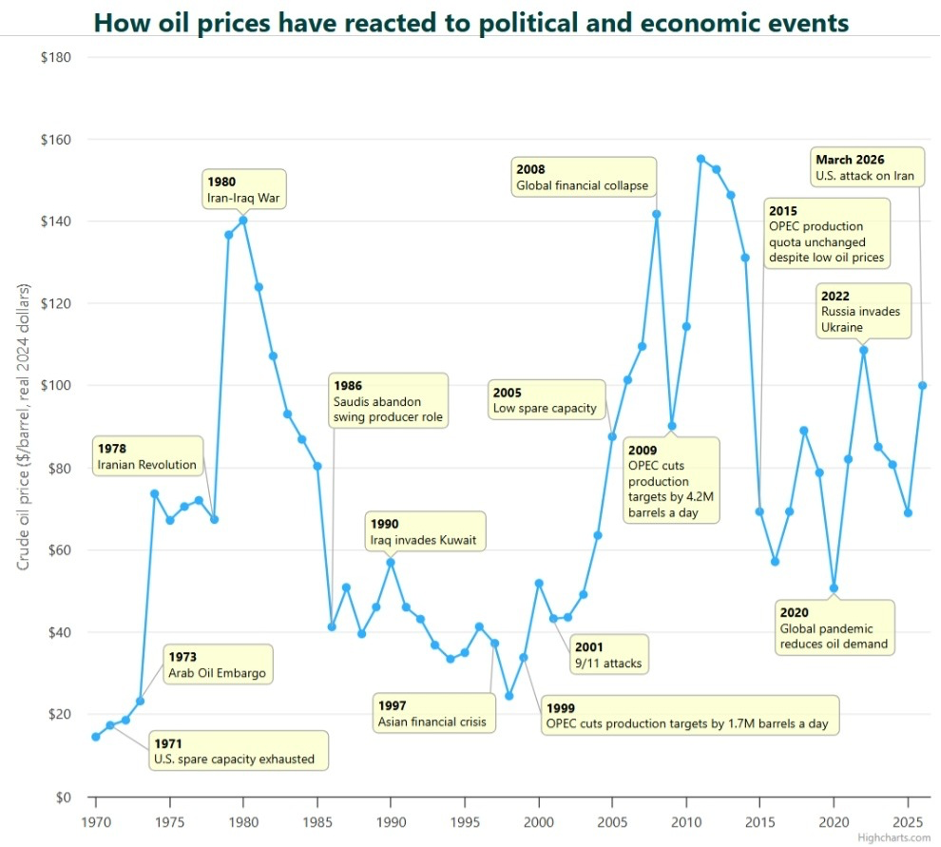
Figure 3. Global Crude Oil Price Trends and Major Geopolitical and Economic Disruptions, 1968–2024
Source: Stanford University, Understand Energy Learning Hub, “Understand Crude Oil”.
India’s crude import bill also highlights the broader context in which this shift occurred. The value of India’s crude oil imports increased from approximately US$59.47 billion in 2020–21 to US$134.71 billion in 2025–26.[13] The rise reflects not only an increase in the quantity of crude imported but also fluctuations in international oil prices. India’s demand for crude has continued to grow alongside economic expansion, increasing the importance of securing supplies at competitive prices. In such circumstances, Russian crude offered an opportunity to reduce the cost of an import bill that India could not easily avoid.
The shift, however, was not entirely frictionless. Russian crude grades, particularly Urals, differ from the grades traditionally sourced from some Gulf suppliers. Indian refiners therefore had to adjust their crude slates and optimise their operations to accommodate larger quantities of Russian oil. This involved changes in crude blending, refinery configuration and processing strategies to ensure that the imported crude could be converted efficiently into the desired mix of petroleum products.[14] These adjustments involved costs, but the substantial discounts available on Russian crude more than compensated for them during the initial period.
The costs associated with the shift included:
- Refinery adjustments: Indian refiners had to optimise crude blends and processing strategies to accommodate larger quantities of Russian grades and maintain desired product yields.
- Longer voyages: Crude from the Persian Gulf generally travels a shorter distance to India’s western coast, whereas Russian supplies from the Baltic and Black Sea regions involve substantially longer maritime journeys. Depending on the route, these voyages can take around 30–35 days, compared with approximately 4–7 days for shipments from the Persian Gulf. This increases freight costs and the amount of capital tied up in crude that remains “on water” for longer periods.
- Shipping and insurance: Sanctions created additional complications involving shipping arrangements, insurance and compliance with international restrictions.
- Financial arrangements: The need to navigate payment mechanisms and sanctions-related restrictions added another layer of complexity to transactions that had previously followed more established commercial arrangements.
Yet, despite these additional costs, the discounts available on Russian crude were sufficiently large to make the shift commercially viable. The economic calculation was therefore relatively straightforward: even after accounting for additional freight, longer voyages and operational adjustments, the overall cost of acquiring and processing Russian crude remained sufficiently attractive. India was willing to absorb the cost of diversification because the benefits exceeded those costs.
This distinction is important. Diversification is often understood as a process of moving away from one supplier towards another, but in reality, it involves an entire ecosystem of infrastructure, logistics, refinery compatibility, shipping, insurance and financial arrangements. The experience of Russian crude demonstrated that India could diversify at scale, but also that such a shift involved costs that were acceptable only because the economic benefits of the new source were sufficiently large.
The same logic now applies in reverse. Moving away from Russian crude would also involve costs. India’s refiners have spent the past several years adapting their operations to process larger quantities of Russian grades and integrating these supplies into their broader crude procurement strategies. Replacing Russian crude with alternative supplies would therefore require another adjustment of the crude slate. The costs would include:
- Higher dependence on West Asia: Replacing Russian volumes would inevitably increase the relative importance of West Asian suppliers and partially reverse one of the major outcomes of India’s post-2022 diversification.
- Greater exposure to the Strait of Hormuz: Much of the crude originating from West Asia passes through the Strait of Hormuz, one of the world’s most important energy chokepoints. Greater reliance on this route would increase India’s exposure to disruptions arising from regional instability.
- Higher import costs: If Russian crude is replaced by crude available at higher market prices, India’s overall import bill could increase. This would be particularly significant given the country’s already high import dependence and the scale of its crude requirements.
- Refinery adjustments: Indian refiners that have adapted their crude procurement and processing strategies to accommodate Russian grades may need to rebalance their crude slates if supplies are replaced by grades with different characteristics.
- Higher logistical costs: Alternative suppliers from the United States, Latin America or West Africa could provide geographical diversification, but they too may involve longer shipping distances, different crude characteristics and higher transportation costs.
The choice, therefore, is not between a risk-free Russian option and a risk-free alternative. It is a question of which combination of economic, logistical and geopolitical risks India is willing to absorb.
This became particularly evident when the economic advantages of Russian crude began to change. As sanctions intensified and restrictions on Russian oil trade became more stringent, the discounts that had initially made Russian crude exceptionally attractive narrowed. Yet, even when the price advantage declined, India’s established refining and logistical ecosystem meant that the cost of immediately abandoning Russian supplies remained significant. Once a new supply source becomes integrated into a country’s energy system, reversing the process is not as simple as changing the supplier on paper.
At the same time, it would be incorrect to argue that India was not diversifying before Russia’s rise. India imported crude from 53 countries in 2020–21 and 49 countries in 2025–26, demonstrating that its supplier base has remained geographically broad.[15] The problem, however, lies in the distinction between the number of suppliers and the significance of those suppliers. A country may import small quantities from dozens of countries while remaining substantially dependent on a few major sources. Diversification, therefore, cannot be measured simply by counting the number of countries from which crude is imported. The more meaningful question is whether the diversification is large enough to materially alter the country’s dependence on a particular region.
It is here that Russia made a fundamental difference to India’s energy landscape. Figures 4 and 5 compare the value and geographical composition of India’s crude oil imports in 2020–21 and 2024–25, respectively, based on TradeStat data for HS 2709 imports by value in US dollars.[16] The comparison demonstrates how the emergence of Russia as a major supplier altered the distribution of India’s crude import sources. While West Asia remained an important component of India’s import basket, the rise of Russian crude significantly reduced the region’s relative dominance. The significance of this shift lies not in the disappearance of West Asia from India’s energy landscape—it remains indispensable—but in the fact that India now has a second major source capable of supplying crude at a scale large enough to materially affect the composition of its import basket.
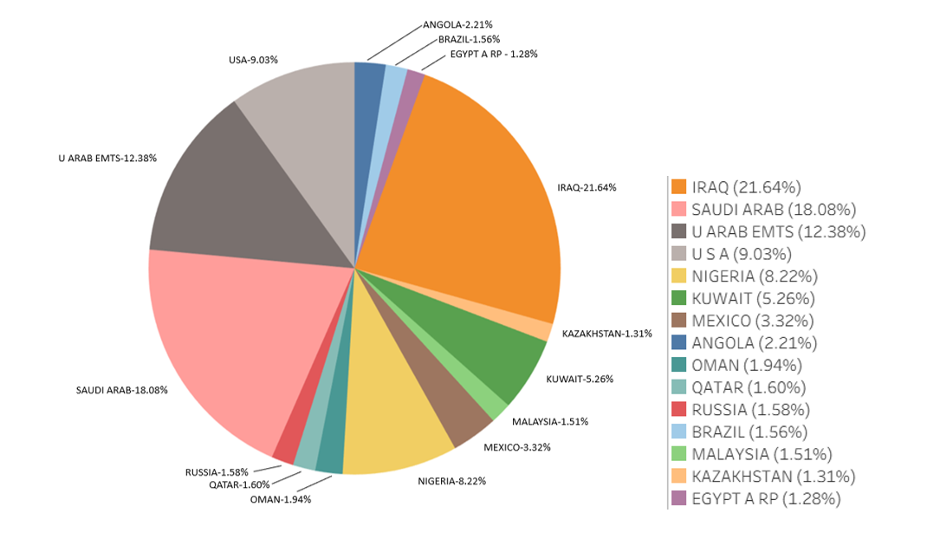
Figure 4: India’s Crude Oil Import Sources by Value, 2020–21 (US$)
Source: Tradestat, Ministry of Commerce and Industry, Government of India.
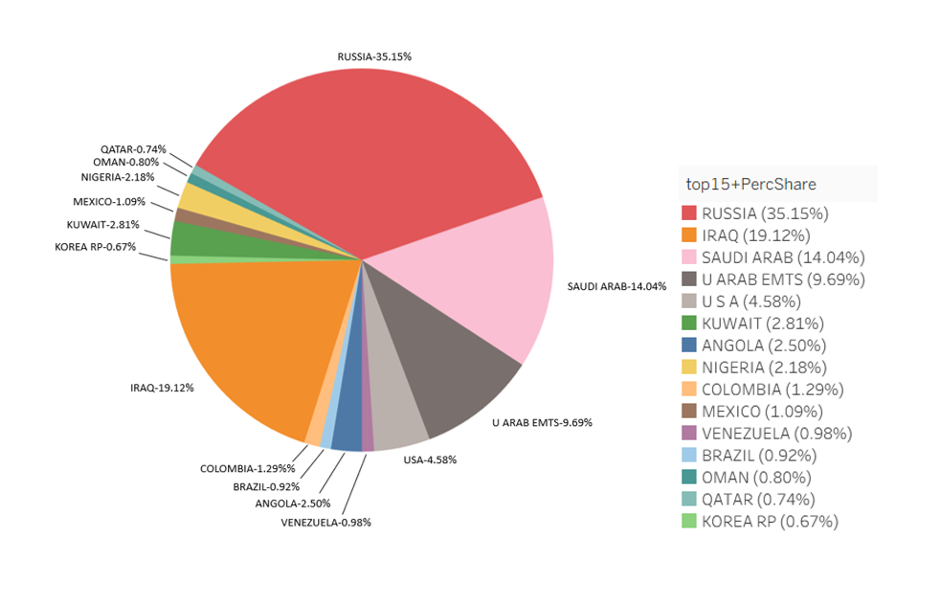
Figure 5: India’s Crude Oil Import Sources by Value, 2024–25 (US$)
Source: Tradestat, Ministry of Commerce and Industry, Government of India.
The paradox, therefore, is that India’s diversification has simultaneously reduced one form of dependence while creating another. Russia has helped India reduce its earlier concentration on West Asian crude, but the rapid expansion of Russian imports has itself created a new degree of dependence on a single supplier. The question is consequently not whether India should choose Russia over West Asia, or Russia over other suppliers. The more important question is how India can maintain the benefits of Russian crude while continuing to expand its supplier base sufficiently to ensure that no single country or region becomes indispensable.
The Way Forward: Future Possibilities
The way forward will depend largely on how the sanctions regime evolves and how effectively India can continue managing the associated risks, particularly the threat of secondary sanctions. As sanctions increasingly target entities directly involved in the Russian energy trade, including refineries with significant Russian ownership such as Nayara Energy, maintaining the existing flow of Russian crude may become progressively more difficult.[17] Nevertheless, as long as the economic benefits and profit margins from Russian crude continue to outweigh the costs and associated risks, India is likely to retain an incentive to sustain these imports.
A second possibility is that sanctions are eased or temporarily waived, as occurred during the 2026 Iran crisis, when the United States provided temporary waivers amid disruptions to West Asian energy supplies and the Strait of Hormuz. Even as Russian crude became significantly more expensive—and, at points, traded at a premium—Indian refiners continued to purchase it because the cost of securing alternative supplies or switching established supply chains was, at that moment, considered greater than paying the premium.[18] However, if normal market conditions return, price differentials narrow or disappear, and the logistical costs associated with longer voyages become more significant, the economic rationale for sustaining high volumes of Russian crude could weaken. In such a scenario, India may increasingly turn towards alternative suppliers. One possible long-term response is to strengthen alternative maritime supply corridors, but the geographical structure of India’s refining system must also be considered. At present, much of the Russian crude received by India is processed through refineries on the western coast, where extensive crude-import infrastructure and pipeline networks are already established. Routing such supplies through the proposed Chennai–Vladivostok Maritime Corridor would not, by itself, provide a direct alternative to this system: crude arriving on India’s eastern coast would generally need to be processed at eastern refineries or incur additional costs if moved inland, while there is no integrated east–west crude pipeline network connecting the two coastal refinery systems. Thus, the future of India’s Russian crude imports will depend not only on sanctions and prices, but also on whether the economic benefits of retaining these supplies continue to outweigh the costs of logistics, infrastructure adaptation and geopolitical risk.
********
Acknowledgements
The author gratefully acknowledges the contributions of Mr Pranav Chandna, Research Intern at the National Maritime Foundation (NMF), for his research assistance and support with data collection and the preparation of graphs and charts for this study.
About the Author
Ms Aditi Thakur is a Research Associate at the National Maritime Foundation. She holds a master’s degree in Political Science from Centre for Political Studies, Jawaharlal Nehru University, New Delhi. Her research primarily focuses upon the manner in which India’s own maritime geostrategies in the Indo-Pacific are impacted by those of Russia and Turkey. She may be contacted at irms3.nmf@gmail.com.
Endnotes:
[1] Ministry of Statistics and Programme Implementation, Government of India, Energy Statistics 2026, 33rd ed (New Delhi: National Statistics Office, 2026). https://www.mospi.gov.in/uploads/publications_reports/publications_reports1774859128428_05e8ebb5-0598-4112-844c-bbe00e04aab8_33rd_Edition_of_ES-2026_Final.pdf
[2] Ministry of Statistics and Programme Implementation, Energy Statistics 2026.
[3] U.S. Energy Information Administration, Country Analysis Brief: Russia, last updated 24 July 2025. https://www.eia.gov/international/analysis/country/RUS
[4] Indian Oil Corporation Limited, “Crude Oil Pipelines,” accessed 29 July 2026. https://iocl.com/crude-oil-pipelines
[5] Ministry of Petroleum and Natural Gas, Government of India, “Inter-Ministerial Briefing on Recent Developments in West Asia,” Press Information Bureau, 13 March 2026. https://www.pib.gov.in/PressReleasePage.aspx?PRID=2239794®=48&lang=2
[6] Robert Perkins, “Russian Crude Exports Pivot to Asia after EU Sanctions, Price Cap Bite,” S&P Global Commodity Insights, 12 December 2022. https://www.spglobal.com/energy/en/news-research/latest-news/crude-oil/121222-russian-crude-exports-pivot-to-asia-after-eu-sanctions-price-cap-bite
[7] Reuters, “India Overtakes China as Russia’s Top Oil Importer in July,” The Moscow Times, 22 August 2024. https://www.themoscowtimes.com/2024/08/22/india-overtakes-china-as-russias-top-oil-importer-in-july-reuters-a86109
[8] Organization of the Petroleum Exporting Countries (OPEC), Annual Statistical Bulletin 2025, 60th ed (Vienna: OPEC Secretariat, 2025). https://www.opec.org/assets/assetdb/asb-2025.pdf
[9] US Energy Information Administration, Country Analysis Brief: Venezuela (Washington, DC: US Department of Energy, February 8, 2024). https://www.eia.gov/international/content/analysis/countries_long/Venezuela/pdf/venezuela_2024.pdf
[10] Ministry of Statistics and Programme Implementation, Government of India, Energy Statistics 2026, 33rd ed (New Delhi: National Statistics Office, 2026). https://www.mospi.gov.in/uploads/publications_reports/publications_reports1774859128428_05e8ebb5-0598-4112-844c-bbe00e04aab8_33rd_Edition_of_ES-2026_Final.pdf
[11] Ministry of Statistics and Programme Implementation, Energy Statistics 2026, 33rd ed.
[12] “Understand Crude Oil,” Understand Energy Learning Hub, Stanford University, 25 February 2026. https://understand-energy.stanford.edu/news/understand-crude-oil
[13] Department of Commerce, Ministry of Commerce and Industry, Government of India, Trade Statistics: Commodity-wise All Countries Import (TRADESTAT), accessed 01 July 2026. https://tradestat.commerce.gov.in/eidb/commodity_wise_all_countries_import
[14] Shrikant Madhav Vaidya, “India’s Refiners’ Margin Squeeze: The Cost of Russian Crude Oil,” ETEnergyWorld, 28 April 2026. https://energy.economictimes.indiatimes.com/news/oil-and-gas/indias-refiners-margin-squeeze-the-cost-of-russian-crude-oil/130578550
[15] Department of Commerce, Trade Statistics: Commodity-wise All Countries Import.
[16] The 2024–25 data have been deliberately used in Figure 5 to capture and examine the peak in Russian crude imports. Although 2025–26 data are available, imports declined during the subsequent year before rising again in 2026; using 2024–25 therefore provides a clearer illustration of the peak period.
[17] “Beyond Nayara: The EU Sanctions as a Challenge to India’s Energy Trade,” Centre for Security, Diplomacy and Strategy (CSDR), 28 July 2025. https://csdronline.com/blind-spot/beyond-nayara-the-eu-sanctions-as-a-challenge-to-indias-energy-trade/
[18] Smriti Jain, “Iran War: Trump Sanctions Waiver or Not—Why India Continues to Buy Russian Oil,” The Times of India, 22 April 2026. https://timesofindia.indiatimes.com/business/india-business/iran-war-trump-sanctions-waiver-or-not-why-india-continues-to-buy-russian-oil/articleshow/130444719.cms


Leave a Reply
Want to join the discussion?Feel free to contribute!