
NATIONAL MARITIME FOUNDATION · POLICY NOTE
Ideas distilled for maritime action
Focused research translated into clear policy propositions for decision-makers, maritime institutions and strategic stakeholders.
FEATURED POLICY NOTE
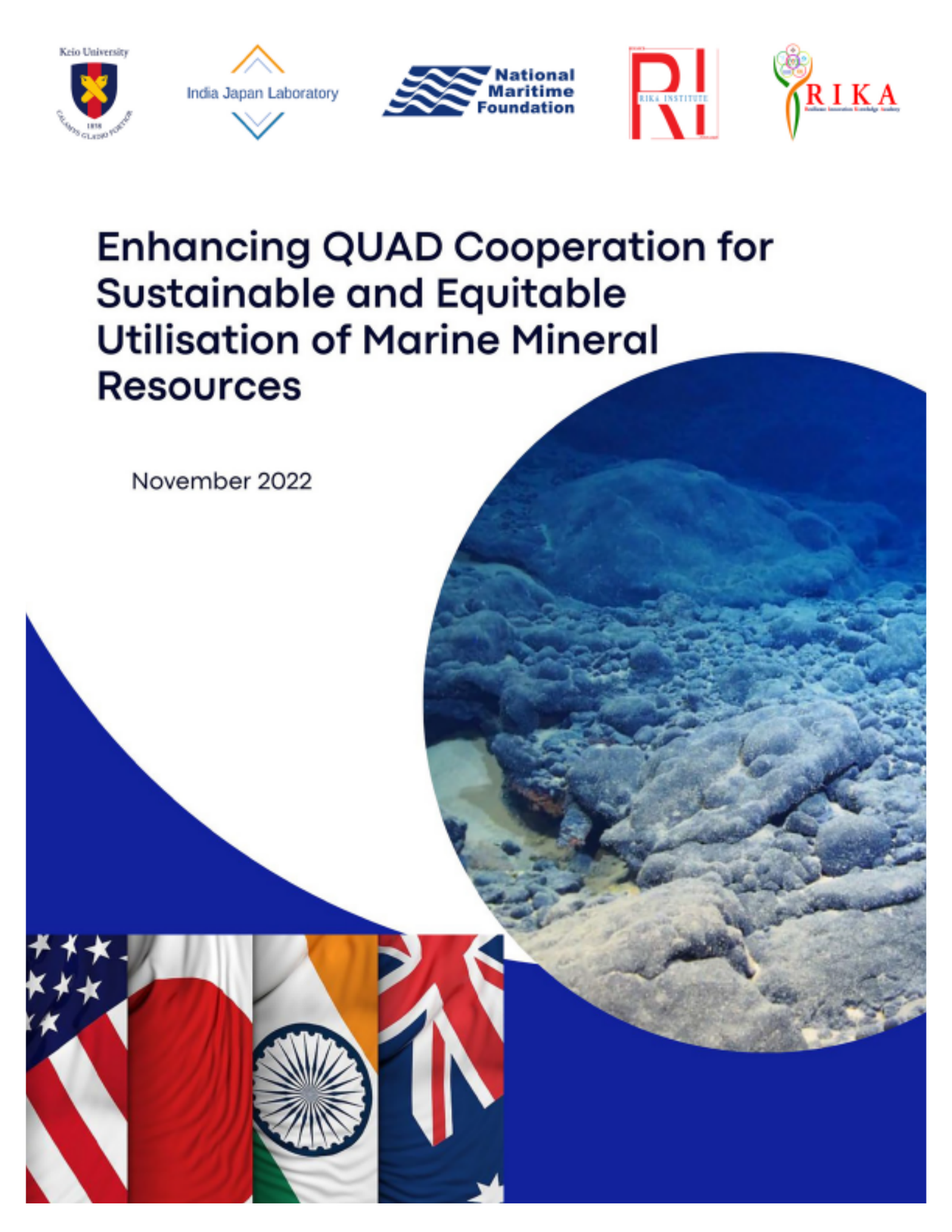
Enhancing QUAD Cooperation for Sustainable and Equitable Utilisation of Marine Mineral Resources
A collaborative study examining the potential of marine mineral resources in the Indo-Pacific and the opportunities for operationalising the QUAD framework beyond the traditional domain of hard security.
SUPPLY CHAINS
Critical-Mineral Resilience
Strengthening cooperation around the production, processing and supply of strategically important minerals.
SUSTAINABILITY
Responsible Marine Resources
Balancing resource utilisation with environmental safeguards, social equity and long-term ocean health.
COOPERATION
A Broader QUAD Agenda
Expanding the QUAD’s practical cooperation beyond conventional security into shared economic and environmental priorities.
THE POLICY PROPOSITION
From resource potential to cooperative action
The global transition towards renewable energy has sharply increased demand for critical minerals such as cobalt, lithium, nickel, manganese and rare-earth elements.
This policy note examines non-living marine resources in the Indo-Pacific and considers how the four QUAD countries could work together to strengthen resilient supply chains, develop responsible technologies and promote sustainable utilisation of seabed resources.
It positions marine minerals not simply as an extractive opportunity, but as a policy challenge involving environmental protection, technological capability, institutional coordination and equitable benefit-sharing.
COLLABORATIVE RESEARCH
Three institutions. One shared maritime question.
The publication brings together maritime-policy, resilience and Indo-Pacific expertise from institutions in India and Japan.
National Maritime Foundation
Keio University India–Japan Laboratory
Resilience Innovation Knowledge Academy
View all contributors +
NATIONAL MARITIME FOUNDATION
KEIO UNIVERSITY INDIA–JAPAN LABORATORY AND RIKA