
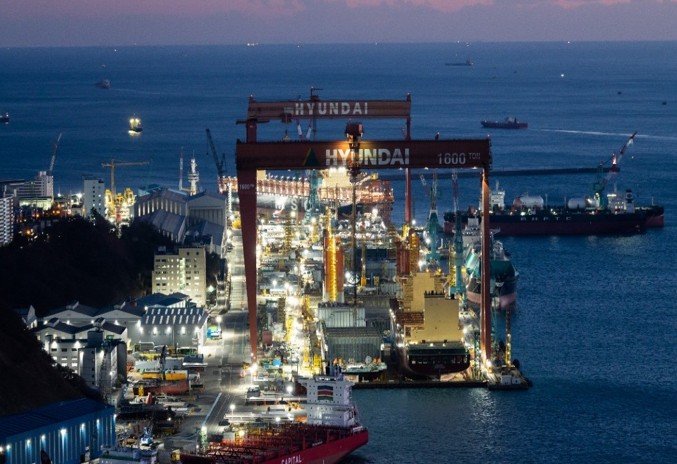
Keywords: India–Republic of Korea Relations; Shipbuilding; VOYAGES Framework; Thoothukudi Greenfield Shipyard; Maritime Amrit Kaal Vision 2047; Technology Transfer; National Shipbuilding Mission; Maritime Industrial Cooperation.
The India–ROK relationship has often been characterised as sporadic and lacking strategic depth. Bilateral ties have evolved under two broad frameworks: the “Comprehensive Economic Partnership Agreement” (2009), which provides the economic foundation, and the “Special Strategic Partnership” (2015), which serves as the strategic umbrella. However, the visit undertaken by ROK President Lee Jae Myung to India in April 2026 has been widely regarded as having been one that revitalised the bilateral relationship and injected renewed momentum into the partnership.[1] The significance of this visit extended beyond diplomatic symbolism. By restoring top-level political engagement and catalysing cooperation in shipbuilding, the summit reflected a strategic convergence between the ROK’s industrial expertise and India’s ambition to emerge as a global maritime manufacturing hub.[2]
Against this backdrop, on 20 April 2026, three entities — “HD Korea Shipbuilding & Offshore Engineering Co Ltd” (HD KSOE), “National Shipbuilding & Heavy Industries Park, Tamil Nadu Ltd” (NSHIP-TN), and “SM Finance Corporation Ltd” (SMFCL) — signed a tripartite Memorandum of Understanding (MoU) for the development of India’s first mega greenfield shipyard at Thoothukudi, Tamil Nadu. The MoU was concluded in the presence of India’s Union Minister of Ports, Shipping, and Waterways, Mr Sarbananda Sonowal and provided, in the Ministry’s own words, “a foundation for the joint development, financing, construction and operation of a world-class mega shipyard at Thoothukudi with an envisaged annual capacity of 2.5 million Gross Tonnage (GT).”[3] Upon the stabilisation of operations, the project is expected to generate approximately 15,000 direct jobs in addition to substantial indirect employment across Tamil Nadu.
This paper argues that the MoU signed for the construction of the greenfield shipyard at Thoothukudi extends far beyond being just another diplomatic deliverable appended to a State visit. Rather, it represents the most concrete execution-stage commitment yet produced under India’s efforts to transform shipbuilding from a declared national priority into investable, bankable infrastructure.
Why the MoU Constitutes a Strategic Inflection Point
The strategic significance of the Thoothukudi Greenfield Shipyard is the tangible support that it extends India endeavour to position itself among the world’s leading maritime powers under its “Maritime Amrit Kaal Vision 2047”. Not only does the project represent a convergence of industrial policy, strategic planning, and international partnership, it offers a practical mechanism to address longstanding structural constraints that have limited India’s shipbuilding competitiveness. Its significance can be understood across five interrelated dimensions:
- Closing a Structural Demand–Capacity Gap. India moves the overwhelming majority of its trade (by volume) through maritime routes, yet its domestic shipbuilding industry accounts for only a marginal share of global output, with most of India’s own seaborne trade carried on foreign-flagged vessels.[4] This generates a persistent outflow of freight and insurance payments while creating a latent strategic vulnerability whenever access to foreign-owned shipping capacity is disrupted. The Government of India has separately announced plans to acquire more than 400 vessels worth approximately ₹2 lakh crore (roughly US$25 billion) through public sector agencies, a procurement pipeline first signalled during the “India Maritime Week 2025” and reaffirmed at the April 2026 summit.[5] Against the “Maritime Amrit Kaal Vision 2047” (MAKV 2047) target of achieving 4.5 million GT of annual shipbuilding capacity, the Thoothukudi facility’s envisaged capacity of 2.5 million GT represents more than half of the national target, concentrated within a single greenfield project.[6] The project, therefore, represents far more than an incremental expansion of capacity; it constitutes a foundational component of India’s long-term shipbuilding ambitions, and its timely execution will significantly influence the realisation of the 2047 vision.
- Technology-Transfer and Productivity Enhancement. ROK operates several of the world’s largest and most efficient shipyards, and HD KSOE’s participation is expected to introduce advanced “block fabrication” methods to India—a production technique in which large ship sections are pre-fitted with piping, cabling, and electrical systems prior to final assembly, thereby substantially reducing construction timelines compared to conventional, sequential methods.[7] The MoU also creates opportunities for Indian professionals to undergo training at HD KSOE’s facilities in Korea, directly addressing the skills deficit that has historically constrained productivity at public sector shipyards. Further, the Ministry has indicated that the Thoothukudi project is intended to catalyse ancillary and component manufacturing clusters, localisation of marine equipment and engineering supply chains, workforce skilling initiatives, and the adoption of advanced manufacturing, digital shipbuilding, and green shipping technologies.[8] Collectively, these measures indicate an ambition to develop not merely a standalone shipyard, but an integrated maritime industrial ecosystem.
- Validating an Existing Institutional Architecture. The Thoothukudi MoU should also be viewed as the practical validation of an institutional architecture that the Government of India had already established in anticipation of precisely this type of investment. In September 2025, the Union Cabinet approved a ₹69,725 crore package based on a four-pillar approach encompassing long-term financing, domestic capacity and infrastructure expansion, technical capability and skilling, and policy and regulatory reforms.[9] Under this package, the “Shipbuilding Financial Assistance Scheme” (SBFAS) was extended until 31 March 2036, with an allocation of ₹24,736 crore including a Shipbreaking Credit Note of ₹4,001 crore. Simultaneously, the “Shipbuilding Development Scheme” (SbDS), with an outlay of ₹19,989 crore, was designed specifically to support mega shipbuilding clusters and expand domestic capacity to the same 4.5 million GT target.[10] A “Maritime Development Fund” of ₹25,000 crore, alongside an “Interest Incentivisation Fund” of ₹5,000 crore, was also established to reduce the cost of long-term capital for shipbuilding projects. Importantly, the SbDS guidelines, notified in December 2025, provide for 100 per cent capital support for common maritime and internal infrastructure through a 50:50 Centre–State “Special Purpose Vehicle” (SPV), a framework that closely mirrors NSHIP-TN’s institutional structure as a joint SPV promoted by the VO Chidambaranar Port Authority (VoCPA) and the State Industries Promotion Corporation of Tamil Nadu (SIPCOT).[11] In this respect, the Thoothukudi project represents the first substantive test of whether the institutional and financial mechanisms created over the preceding months can be effectively operationalised through a large-scale strategic investment.
- Regional Economic Multipliers. The Government of Tamil Nadu has informed Parliament that the shipbuilding industry carries an employment multiplier of 6.4, while the broader NSHIP-TN cluster initiative—of which the Thoothukudi project forms the anchor—is expected to generate more than 55,000 direct and indirect jobs across shipbuilding, ship repair, marine engineering, fabrication, logistics, and port services, with spillover benefits extending to neighbouring coastal districts such as Ramanathapuram. This estimate is substantially larger than the approximately 15,000 direct jobs associated specifically with the Thoothukudi shipyard under the MoU, highlighting the distinction between employment generated by the anchor facility itself and the wider cluster-level multiplier effects envisaged under the “Tamil Nadu Shipbuilding Policy 2026”, which provides equity support, production-linked incentives, and plug-and-play infrastructure.[12] Beyond its economic implications, the project also represents a significant alignment of Union and State priorities, particularly as Tamil Nadu competes with Gujarat, Andhra Pradesh, and Maharashtra to attract large-scale maritime manufacturing investment.
- Financing Innovation as a Strategic Signal. The inclusion of SMFCL, rather than a conventional public sector shipyard, as the third signatory to the MoU is institutionally significant in and of itself. It suggests that the Government of India is seeking to institutionalise blended, mission-oriented financing mechanisms for shipbuilding instead of relying solely on annual budgetary allocations or the balance sheets of public sector enterprises. SAGARMALA Finance has separately outlined plans to establish a maritime fund of approximately ₹10,000 crore during FY 2026–27.[13] Read alongside the Maritime Development Fund’s blended-capital structure comprising 49 per cent concessional and 51 per cent commercial financing, this indicates that the Thoothukudi project is intended to serve as a replicable model for future greenfield shipbuilding initiatives rather than as an isolated investment.[14]
How This MoU Differs from Earlier India–ROK Shipbuilding Arrangements
While India and the Republic of Korea have steadily expanded cooperation in the shipbuilding sector over the past year, the Thoothukudi Greenfield Shipyard MoU marks a qualitative departure from earlier bilateral initiatives. Rather than constituting another standalone memorandum, it represents the culmination of a progressively evolving institutional partnership that has moved from exploratory collaboration towards implementation-oriented industrial cooperation. Its distinctiveness lies not merely in its scale, but in the manner in which it integrates project readiness, financing, and leader-level political commitment within a single framework. Three characteristics, in particular, distinguish the Thoothukudi MoU from its predecessors.
First, scale and greenfield execution readiness. Earlier instruments notably the CSL–HD KSOE MoU of September 2025 and HD Hyundai’s MoU with the Government of Tamil Nadu in December 2025 were instrumental in building institutional trust between Indian and Korean shipbuilding stakeholders but stopped short of committing to a specific greenfield project with defined production targets. By contrast, the Thoothukudi MoU identifies a designated site, specifies an envisaged annual capacity of 2.5 million GT, and is supported by a completed Techno-Economic Feasibility Report (TEFR), with the Detailed Project Report (DPR) under active preparation and an in-principle approval from the National Shipbuilding Mission already secured.[15] These features collectively indicate a transition from exploratory engagement to execution-stage commitment.
Second, an explicitly tripartite financing structure. Previous India–ROK shipbuilding agreements were generally bilateral in nature, involving either an Indian public sector shipyard or a state government alongside a Korean industrial partner. The Thoothukudi MoU departs from this model by incorporating a dedicated financing institution—SMFCL—as a co-equal signatory alongside the industrial developer (NSHIP-TN) and the technology partner (HD KSOE). This institutional innovation directly addresses what has consistently been identified as one of the principal constraints on India’s shipbuilding competitiveness: the shortage of long-term, affordable capital and adequate export credit support.[16] Unlike earlier agreements, financing is not treated as a downstream implementation issue but is embedded within the project’s institutional architecture from the outset.
Third, formal embedding within a leader-level bilateral framework. Unlike the 2025 agreements, which preceded an overarching strategic architecture, the Thoothukudi MoU was concluded as a designated implementation outcome under the “Korea–India Comprehensive Framework for Partnership in Shipbuilding, Shipping and Maritime Logistics” — one of only four official documents adopted alongside the “Joint Strategic Vision” during President Lee Jae Myung’s State Visit. The remaining documents comprised the Joint Strategic Vision itself, a “Joint Statement on Sustainability”, and a “Joint Statement on Energy Resource Security”.[17] Consequently, the project transcends the status of a sectoral industrial agreement and becomes embedded within the formal bilateral strategic framework. It is further reinforced through complementary initiatives, including the “Korea International Cooperation Agency” (KOICA), which has committed its support to training programmes and collaborative research between the Indian Maritime University and the Korea Maritime and Ocean University on green shipping and autonomous vessels.[18] Additionally, the “Korea Marine Equipment Association” (KOMEA) has established its first overseas branch in Mumbai, marking a significant step towards building a localised maritime supply chain and ancillary ecosystem to support India’s expanding shipbuilding sector. The Mumbai office would facilitate the transfer of Korean shipbuilding expertise, promote the localization of marine equipment manufacturing, and foster a cluster-based maritime industrial ecosystem in India, modelled on the success of ROK’s Ulsan shipbuilding hub.[19] Thus far, KOMEA operates in eight countries including China, Japan, Singapore, US, Greece, Saudia Arabia, Brazil and Russia.[20] This institutional embedding raises both the political visibility of the project and the diplomatic costs associated with implementation failure.
In essence, the evolution of India–ROK shipbuilding cooperation reflects a progression from relationship-building to project execution. Whereas the agreements concluded during 2025 primarily established channels for future collaboration, the Thoothukudi MoU represents a concrete commitment to implementation. Supported by an approved feasibility framework, an embedded financing mechanism, and formal endorsement within a leader-level bilateral architecture, it marks the first India–ROK shipbuilding initiative that combines political intent, industrial capability, and institutional preparedness within a single execution-oriented framework.
Thoothukudi as the Flagship Implementation Project of the VOYAGES Framework
The strategic significance of the Thoothukudi Greenfield Shipyard becomes even more apparent when situated within the broader bilateral architecture established during President Lee Jae Myung’s April 2026 State Visit. The Prime Minister’s Office records that the two leaders adopted a “Joint Strategic Vision” to guide the India–ROK Special Strategic Partnership over the period 2026–2030.[21] Accompanying this vision were three additional bilateral documents, including the “Korea–India Comprehensive Framework for Partnership in Shipbuilding, Shipping and Maritime Logistics”. Official and government-linked accounts further indicate that this framework was encapsulated in the acronym VOYAGES (“Vision for Operation of Yard Assisted Growth with Efficiency and Scale”).
Within VOYAGES, the principal emphasis is on “building together, from greenfield shipbuilding clusters to upgrading existing yards and strengthening supply chains”.[22] The Thoothukudi MoU represents the framework’s most significant execution-stage initiative within this shipbuilding pillar, serving as its primary capacity-creation project rather than merely another bilateral agreement. This positioning is reinforced by the cluster of complementary initiatives concluded during the same period. For instance, the separate Memorandum of Understanding involving Bharat Earth Movers Limited (BEML), HD KSOE, and HD Hyundai Samho for the development of next-generation port cranes aligns more closely with the logistics and port-modernisation dimensions of VOYAGES, supporting India’s broader ₹90,000 crore port modernisation programme.[23] Viewed collectively, these initiatives demonstrate that VOYAGES is not merely a collection of isolated MoUs but an integrated maritime cooperation framework in which Thoothukudi serves as the flagship industrial project anchoring the shipbuilding pillar, while parallel agreements operationalise its logistics, port development, and human capital dimensions.
The strategic significance of the Thoothukudi project, therefore, extends beyond the creation of shipbuilding capacity. As the flagship execution vehicle of the VOYAGES framework, it represents the first tangible attempt to translate a leader-level bilateral vision into an institutionalised programme of maritime industrial cooperation with measurable strategic outcomes.
Way Forward Recommendation
The Thoothukudi Greenfield Shipyard MoU represents one of the most significant implementation-stage outcomes of the India–ROK Special Strategic Partnership. Its success, however, will ultimately be a function not of the signing of the agreement but on the effectiveness of its execution, institutional coordination, and long-term capability-creation. The following recommendations are therefore intended to strengthen governance, improve implementation oversight, enhance technology absorption, and establish measurable indicators through which policymakers can assess whether the MoU is translating into sustained industrial and strategic outcomes.
- Constitute a Thoothukudi Project Monitoring Unit (TPMU). The MoPSW, in coordination with the Government of Tamil Nadu through the VoCPA and the “State Industries Promotion Corporation of Tamil Nadu” (SIPCOT), should establish a dedicated “Thoothukudi Project Monitoring Unit” (TPMU). The TPMU should comprise representatives from NSHIP-TN, SMFCL, HD KSOE, the Tamil Nadu Pollution Control Board, and the National Shipbuilding Mission. It should coordinate inter-agency implementation, facilitate timely regulatory approvals, monitor construction milestones, and publish an agreed construction commencement timeline, thereby addressing the principal execution risks associated with the project.
- Institutionalise a Performance Monitoring and Evaluation Framework. MoPSW and the National Shipbuilding Mission should develop a structured “Performance Monitoring and Evaluation (PM&E) Framework” comprising measurable Key Performance Indicators (KPIs) that extend beyond construction milestones. Indicators should include DPR completion, financial closure, environmental and Costal Regulation Zone (CRZ) clearances, construction progress, technology-transfer milestones, workforce training, localisation of marine equipment and suppliers, annual shipbuilding capacity commissioned, and employment generated. Measuring these outcomes would enable policymakers to assess whether the MoU is progressing from political commitment to measurable maritime capability.
- Publish Quarterly Implementation Dashboards. NSHIP-TN and SMFCL should publish quarterly implementation updates against the agreed performance indicators through a publicly accessible dashboard. Regular disclosure of project milestones, financial progress, regulatory approvals, and implementation timelines, would strengthen transparency, improve investor confidence, and facilitate timely policy interventions where implementation bottlenecks emerge.
- Strengthen Technology Absorption and Localisation. The definitive joint venture agreement should incorporate phased technology-absorption and localisation commitments, drawing upon established defence offset and localisation frameworks. These provisions should establish progressive local-content targets, supplier-development objectives, workforce-skilling milestones, and knowledge-transfer obligations linked to milestone-based disbursements under the Shipbuilding Development Scheme (SbDS). Such an approach would ensure that collaboration extends beyond technology transfer to the development of enduring domestic industrial capability.
- Secure Long-Term Commercial Demand. To enhance commercial viability, the Government of India must facilitate advance offtake commitments from major public sector maritime stakeholders, including the Shipping Corporation of India, ONGC, the Indian Navy, the Indian Coast Guard, and other SAGARMALA-linked entities. Securing a baseline order book prior to financial closure would reduce commercial uncertainty, strengthen investor confidence, and improve the long-term sustainability of the project.
- Publish an Official VOYAGES Implementation Framework. The Ministry of External Affairs (MEA) and the MoPSW should jointly publish an authoritative VOYAGES Implementation Framework that standardises the expansion of the acronym, clearly defines its operational pillars, identifies implementing agencies, and maps relevant financing mechanisms including the Shipbuilding Financial Assistance Scheme (SBFAS), Shipbuilding Development Scheme (SbDS), and Maritime Development Fund (MDF) to specific implementation objectives. Such a document would eliminate inconsistencies in official terminology while strengthening institutional coherence across the broader India–ROK maritime partnership.
Conclusion
The Thoothukudi Greenfield Shipyard MoU marks an important inflection point in India–ROK maritime cooperation. Unlike earlier bilateral shipbuilding arrangements, which were largely exploratory or relationship-building in nature, the agreement represents the first execution-stage commitment anchored in a defined project, an institutional financing framework, and leader-level political endorsement under the VOYAGES framework. Its significance therefore extends beyond the establishment of a single shipyard. It reflects a broader convergence between India’s ambition to emerge as a global maritime manufacturing hub and the Republic of Korea’s globally recognised shipbuilding capabilities.
At the same time, the strategic value of the MoU should not be measured by the scale of investment announced or the symbolism of its signing. Rather, it will depend on whether the project succeeds in generating enduring industrial capability through technology absorption, workforce development, supply-chain localisation, and timely execution. Realising this potential, however, will require sustained institutional coordination, transparent implementation, and measurable performance rather than continued reliance on declaratory commitments.
If implemented effectively, the Thoothukudi project has the potential to become more than India’s first mega greenfield shipyard. It could establish a replicable model for future India–ROK industrial partnerships, demonstrate the practical value of leader-level strategic frameworks, and contribute meaningfully to the objectives of the MAKV 2047. In doing so, it would not only strengthen India’s maritime industrial base but also transform the India–ROK Special Strategic Partnership from one often characterised by unrealised potential into one defined by sustained execution and measurable strategic outcomes.
******
About the Author
Ms Arijita Sinha-Roy is a Research Associate at the National Maritime Foundation, New Delhi. Her research focuses on the manner in which the maritime geostrategies of India are impacted by those of East Asia in general and the Republic of Korea (RoK) in particular. She holds a Master’s degree in East Asian Studies, Department of East Asian Studies, University of Delhi. She is also an alumnus of the Yeosu Academy of the Law of the Sea (2024). Arijita can be reached out at irms4.nmf@gmail.com
Endnotes:
[1] Government of India, Ministry of External Affairs, “Joint Strategic Vision for India-ROK Special Strategic Partnership”, Media Releases, 20 April 2026. https://www.mea.gv.in/bilateral-documents?dtl/41066/Joint_Strategic_Vision_for_IndiaROK_Special_Strategic_Partnership
[2] Abhishek Sharma, “India’s Shipbuilding Ambitions Can Set Sail with Korea”, The Hindu, 28 June 2025. https://www.thehindu.com/opinion/op-ed/indias-shipbuilding-ambitions-can-set-sail-with-korea/article71146842.ece
[3] Government of India, Press Information Bureau, “Landmark MoU Signed for India’s First Mega Greenfield Shipyard at Thoothukudi”, Ministry of Ports, Shipping and Waterways, 13 May 2026. https://www.pib.gov.in/PressReleasePage.aspx
[4] Aroonim Bhuyan, “Why India’s Shipbuilding Pact with South Korea Could Reshape its Maritime Future”, ETV Bharat, 20 April 2026. https://www.etvbharat.com/en/international/why-india-shipbuilding-pact-with-south-korea-could-reshape-its-maritime-future-enn26042005747
[5] India’s World Explainer, “India-South Korea Partnership: What the New Five-Year Roadmap Means”, India’s World, 22 April 2026. https://indiasworld.in/india-south-korea-partnership-what-the-new-five-year-roadmap-means/
[6] Government of India, “Maritime India-Empowering Progress”, Directorate General of Shipping, 02 April 2026. https://dgma.gov.in/gallery/about-us/maritime-india-empowering-progress
[7] Rishabh Sharma, “How South Korea Tie-Up Could Help India Reduce Costly Freight Dependence”, Business Standard, 22 April 2026. https://www.business-standard.com/economy/news/india-south-korea-shipbuilding-tie-up-cut-freight-dependence-126042200163_1.html
[8] Government of India, Press Information Bureau, “Landmark MoU Signed for India’s First Mega Greenfield Shipyard at Thoothukudi”, Ministry of Ports, Shipping and Waterways.
[9] Government of India, Press Information Bureau, “Comprehensive 4-Pillar Approach to Strengthen Shipbuilding, Maritime Financing, and Domestic Capacity”, Ministry of Ports, Shipping and Waterways, 24 September 2025. https://www.pib.gov.in/PressReleasePage.aspx
[10] Government of India, Press Information Bureau, “Govt Notifies Guidelines for Shipbuilding Assistance, Development Schemes; ₹44,700 Crs Outlay to Boost India’s Shipbuilding Capacity”, Ministry of Ports, Shipping and Waterways, 27 December 2025. https://www.pib.gov.in/PressReleasePage.aspx
[11] Government of India, Press Information Bureau, “Govt Notifies Guidelines for Shipbuilding Assistance, Development Schemes; ₹44,700 Crs Outlay to Boost India’s Shipbuilding Capacity”, Ministry of Ports, Shipping and Waterways.
[12] Government of India, Press Information Bureau, “Shipbuilding Clusters in Tamil Nadu”, Ministry of Ports, Shipping and Waterways, 14 March 2026. https://www.pib.gov.in/PressReleasePage.aspx
[13] Nitin SJ Asariparambil, “India Ropes in South Korea to Help Build the World’s Next Great Shipbuilding Nation”, The Week, 22 April 2026. https://www.theweek.in/news/maritime/2026/04/21/india-south-korea-maritime-partnership.html
[14] Vasudha Mukherjee, “Govt Raises Maritime Development Fund to ₹70,000 cr to Spur Shipbuilding”, Business Standard, 15 August 2025. https://www.business-standard.com/amp/industry/news/govt-maritime-development-fund-70000-cr-shipbuilding-ports-125081500634_1.html
[15]The Shipping Tribune, “Landmark MoU Signed for India’s First Mega Greenfield Shipyard at Thoothukudi”, 13 May 2026. https://www.shippingtribune.com/news/shipping/Landmark+MoU+Signed+for+India%E2%80%99s+First+Mega+Greenfield+Shipyard+at+Thoothukudi
[16] Rishabh Sharma, “How South Korea Tie-Up Could Help India Reduce Costly Freight Dependence”
[17] Government of India, Press Release, “Joint Strategic Vision for India-ROK Special Strategic Partnership”, Ministry of External Affairs, 20 April 2026. https://www.mea.gov.in/bilateral-documents?dtl/41066/Joint_Strategic_Vision_for_IndiaROK_Special_Strategic_Partnership
[18] Government of India, Press Information Bureau, “India-ROK Comprehensive Framework for Partnership in Shipbuilding, Shipping and Maritime Logistics”.
[19] Government of India, Press Information Bureau, “India-ROK Comprehensive Framework for Partnership in Shipbuilding, Shipping and Maritime Logistics”.
[20] P Manoj, “South Korea’s KOMEA Offers to Jointly Modernise an Indian Shipyard for Building Small Sized Ships”, ET Infra, 11 August 2025. https://infra.economictimes.indiatimes.com/news/ports-shipping/south-koreas-komea-offers-to-jointly-modernise-an-indian-shipyard-for-building-small-sised-ships/123226317
[21] Government of India, Prime Minister’s Office, “Joint Strategic Vision for India-ROK Special Strategic Partnership”, Media Releases, 20 April 2026. https://www.pmindia.gov.in/en/news_updates/joint-strategic-vision-for-india-rok-special-strategic-partnership/
[22] Arijita Sinha-Roy, “Assessing the Prospects of the India–Rok VOYAGES Framework“, National Maritime Foundation, 12 June 2026. https://maritimeindia.org/assessing-the-prospects-of-the-india-rok-voyages-framework/
[23] Arijita Sinha-Roy, “Assessing the Prospects of the India–Rok VOYAGES Framework“.


Leave a Reply
Want to join the discussion?Feel free to contribute!