
Keywords: VOYAGES framework; India-ROK maritime partnership; shipbuilding cooperation; maritime skilling; supply chain resilience; South Korea-India maritime logistics; greenfield shipyard development; maritime heritage cooperation
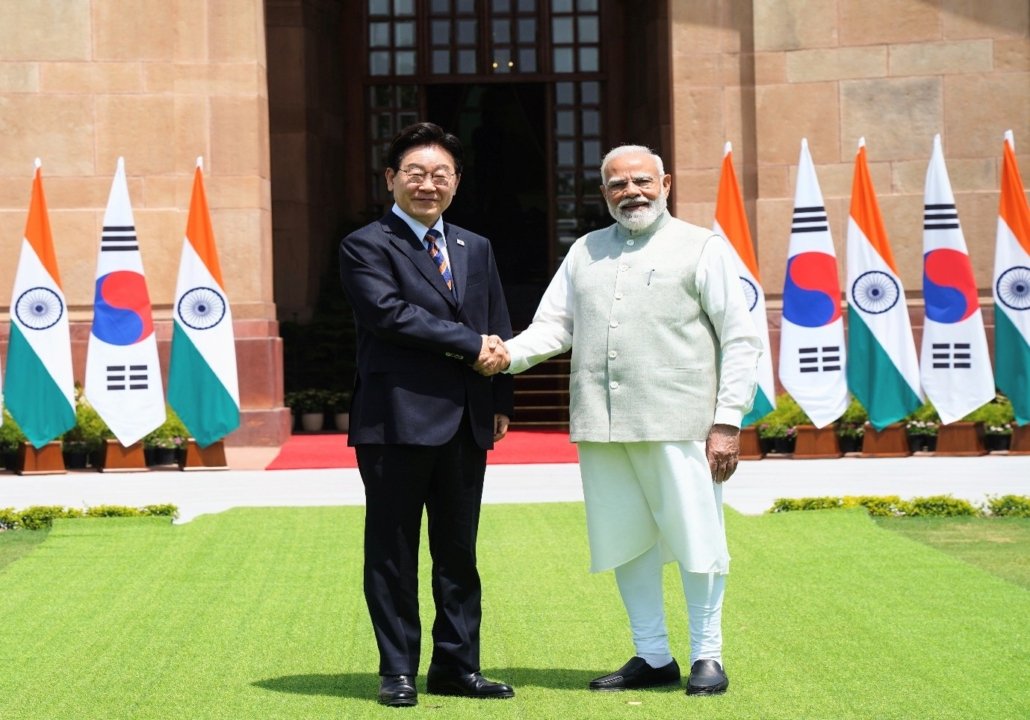
The VOYAGES (Vision for Operation of Yard Assisted Growth with Efficiency and Scale) Framework, formalised during the April 2026 State Visit of Republic of Korea (ROK), President Lee Jae-myung to New Delhi, represents the first comprehensive, multi-pillar maritime partnership between India and the ROK. Spanning greenfield shipbuilding clusters, brownfield upgrades, port infrastructure worth US$ 13.3 billion, maritime crane co-manufacturing, skills development, vessel flagging incentives, and cultural heritage cooperation, VOYAGES maps a strategic convergence of India’s Maritime Amrit Kaal 2047 vision with South Korea’s world-class shipbuilding ecosystem. This paper argues that while VOYAGES constitutes a genuinely transformative departure from prior project-by-project engagements, its realisation depends critically upon sustained political commitment, the depth of industrial collaboration beyond MOU-stage intent, and the creation of durable implementation architecture.
The Idea Behind VOYAGES
India is a maritime civilisation whose shipbuilding capacity remains disproportionately small relative to its maritime stakes. That observation, stark in its precision, captures the central strategic contradiction the VOYAGES Framework — formalised on 20 April 2026 between Prime Minister Narendra Modi and Republic of Korea President Lee Jae-myung — was designed to resolve. India commands an 11,098-kilometre coastline (including island territories), operates thirteen major ports, sustains a seafarer community exceeding 320,000 and has announced a public vessel acquisition pipeline of over 400 ships worth approximately US$ 25 billion. Yet its share of global shipbuilding output remains below one per cent, and it lacks the capacity to build the majority of commercial vessels it requires.
In contrast, the Republic of Korea has, for decades, been one of the world’s leading shipbuilding powers, accounting for roughly 25 per cent of global output. This capacity is concentrated in the highest-value vessel categories — LNG carriers, Very Large Crude Carriers, and increasingly autonomous platforms — anchored by three industrial giants: HD Hyundai, Samsung Heavy Industries, and Hanwha Ocean. Korean yards currently hold order books extending to 2028.[1]
Into this alignment of Indian ambition and Korean capacity has come “VOYAGES” — the “Vision for Operation of Yard Assisted Growth with Efficiency and Scale” — a framework that is worth examining not merely for what it announces but for what it represents: the first time that India and the ROK have attempted to translate a 53-year diplomatic relationship, a decade-old “Special Strategic Partnership”, and US$ 27 billion in annual bilateral trade, into a structured industrial partnership in the one domain that matters most to India’s long-term sovereignty — the maritime domain.
The choice of the maritime domain was neither coincidental nor ceremonial. Lee Jae-myung’s April 2026 State visit to New Delhi was accompanied by a business delegation of 150–200 executives drawn from the commanding heights of Korean industry — Samsung, Hyundai, SK Group, LG — signalling that this was a partnership conceived at the level of industrial strategy, not diplomatic protocol.[2] The MOU between HD KSOE, India’s Maritime Development Fund, and a cluster developer for a large greenfield shipyard in southern India; the US$ 13.3 billion port infrastructure pipeline opened to Korean developers; the joint crane manufacturing agreement between BEML and HD Hyundai: these are not aspirational gestures. They are, or aspire to be, the load-bearing columns of a new industrial architecture.[3]
India’s prior experience with sectoral partnership frameworks — across energy, defence, and digital infrastructure — instructs that the distance between a well-designed framework and a functioning industrial system is measured not in diplomatic communiqués but in implementation architecture, sustained political commitment, and the willingness of private actors to convert non-binding instruments into equity commitments and production relationships. VOYAGES is the most comprehensive maritime partnership India has ever concluded with the ROK.[4]
Strategic Context: Complementarity and the Structural Rationale
The analytical case for a comprehensive India–ROK maritime partnership rests on structural complementarity. The global shipbuilding market, valued at approximately US$ 163.66 billion in 2024, is dominated by three Asian giants — China (~47%), ROK (~25%), and Japan (~18%) — whose existing order books extend to 2028.[5] As has already been mentioned, Indian shipbuilding, in comparison, comprises less than one percent share; and yet, dismaying as it appears, this capacity ought to be recognised as a strategic opening. India possesses precisely what congested Korean and Japanese yards cannot readily deploy: abundant coastal land, a cost-competitive labour pool (with a seafarer community exceeding 320,000), a policy architecture offering production-based financial incentives under the Shipbuilding Development Scheme, and state-level enthusiasm in Andhra Pradesh, Gujarat, Odisha, and Tamil Nadu.[6] On it part, the ROK brings technological depth that India’s domestic industry simply does not possess: advanced design capability, precision manufacturing in specialised vessel categories (LNG carriers, Very Large Crude Carriers, autonomous vessels), and a regulatory quality framework embedded in its major shipbuilders. The three dominant Korean yards — HD Hyundai, Samsung Heavy Industries, and Hanwha Ocean — collectively represent decades of accumulated productivity frontier capability.
From a geopolitical perspective, the VOYAGES Framework is also a hedge. Both India and the ROK share an interest in supply-chain de-risking from Chinese dominance, a convergent reading of the principles underpinning a free and open Indo-Pacific, and a mutual stake in a consensually derived rules-based maritime order. South Korea’s 2022 Indo-Pacific Strategy and India’s Act East Policy have found increasing alignment, and Lee Jae-myung’s visit — described as a ‘strategic reboot’ in Seoul — incorporated the visit of a very large business delegation from major Korean conglomerates, emphasising that the strategic intent was accompanied by industrial earnestness.[7]
India’s sub-one-per cent share makes the scale of ambition embedded in VOYAGES all the more remarkable — and renders the institutionalisation question all the more consequential. The framework’s success would represent not merely a bilateral achievement but a restructuring of the global hierarchy of shipbuilding nations.[8]
Anatomy of the Framework: Pillars and their Transformative Vectors
Greenfield Shipbuilding Clusters: The Industrial Core. The centrepiece of VOYAGES is the creation of large-scale greenfield shipbuilding clusters in coastal India, to be anchored by Korean technological and industrial investment. The most advanced initiative involves a non-binding MoU among HD Korea Shipbuilding & Offshore Engineering (HD KSOE), an identified cluster developer and facilitator, and the capital provider Maritime Development Fund (MDF) for joint development, financing, and operation of a large greenfield shipyard in southern India.[9] The significance of this pillar cannot be overstated. India has historically lacked large-volume commercial shipbuilding infrastructure; existing yards such as Mazagaon Dock and Garden Reach Shipbuilders are primarily oriented toward naval and defence output. The VOYAGES greenfield model envisions Korean firms not merely as technology licensors but as production engineering and quality framework integrators — a form of industrial deepening that is qualitatively different from equipment supply or training assistance.
Brownfield Upgrades and Component Ecosystem. Alongside greenfield ambition, the framework additionally addresses brownfield capacity expansion. India’s existing yards, with government financial support, are invited to collaborate with Korean businesses to upgrade facilities, including a “Block Fabrication Facility” in southern India designed to support a new dry-dock for large and specialised vessels. Interestingly, the proposal also includes a Block Fabrication Facility in Kochi over 80 acres with an annual capacity of 1,20,000 MT.[10] Critically, the framework recognises that shipbuilding competitiveness is not only a function of the primary shipyards but also of the ancillary component ecosystem. The opening of a branch of the Korea Marine Equipment Association (KOMEA) in Mumbai and the engagement of Korea Marine Equipment Research Institute (KOMERI) signals an intent to develop local production of specialised components — a development that would materially reduce India’s import dependence and generate broader industrial spillovers.[11]
Port Infrastructure and Terminal Development. The framework’s port development pillar is the most immediately quantified: an estimated US$ 13.3 billion PPP pipeline over five years. Anchor projects include the 23 million TEU container port in Vadhavan, Maharashtra, a 150 MTPA multipurpose terminal at Bahuda (Odisha), and a 135 MTPA expansion of the Deendayal Port (Gujarat). A bilateral MOU MoPSW and the RoK’s Ministry of Oceans and Fisheries provide the formal basis for Korean developers and terminal operators to participate in India’s port modernisation programme.[12]
Crane Co-Manufacturing and Autonomous Systems. In a development with significant dual-use and industrial implications, the framework includes an MoU between “Bharat Earth Movers Limited” (BEML), HD KSOE, and HD Hyundai Samho Co Ltd, for the joint design, manufacture, and support of next-generation conventional and autonomous maritime and port cranes in India. This pillar extends the partnership beyond hulls into sophisticated port-handling technology and introduces an autonomous systems dimension with potential applications beyond commercial ports.[13]
Skills, Human Capital, and Academic Linkages. The KOICA–MoPSW skills training project represents one of the most institutionally durable elements of VOYAGES. An ecosystem that actively promotes contemporary and future technical skills is foundational to shipbuilding competitiveness, especially given that India’s current workforce pipeline has historically been calibrated for labour-intensive activities rather than precision manufacturing. The parallel initiative, linking the “Indian Maritime University” (IMU) with the “Korea Maritime & Ocean University” (KMOU) in joint programmes covering naval architecture, marine engineering, green shipping technologies, and autonomous vessel development, adds an R&D and human capital dimension.[14]
Vessel Flagging and Maritime Services. Within the VOYAGES framework, India has invited Korean shipping companies to explore vessel-flagging opportunities through the Gujarat International Finance Tec-City (GIFT City), which has been developed as an international financial centre offering incentives for ship leasing and maritime finance. The initiative seeks to leverage GIFT City’s regulatory framework and tax advantages to encourage the registration and financing of vessels under the Indian flag. Beyond attracting Korean investment, this reflects India’s ambition to develop a comprehensive maritime ecosystem, encompassing not only physical infrastructure but commercial and financial services as well.
However, vessel flagging cannot be institutionalised through incentives alone. Success depends upon regulatory predictability, efficient administrative procedures, competitive taxation regimes, and internationally credible dispute resolution mechanisms. Established registries such as Singapore and Hong Kong derive their attractiveness from ease of doing business and legal certainty rather than fiscal incentives alone. If effectively implemented, cooperation under VOYAGES could strengthen India’s position within the global maritime services sector, transforming GIFT City from an emerging financial centre into a credible hub for maritime finance, leasing, and vessel registration. Such an outcome would signify a transition from maritime infrastructure development towards a more holistic conception of maritime power.[15]
Maritime Cultural Heritage and People-to-People Linkages. Although VOYAGES is primarily framed around economic and industrial cooperation, the sustainability of maritime partnerships often depends upon the societal linkages that underpin them. Beyond symbolic narratives, the ROK has demonstrated a growing interest in India’s maritime heritage, particularly through its engagement with the National Maritime Heritage Complex (NMHC) at Lothal, Gujarat. Conceived as a centre for preserving and showcasing India’s maritime legacy, Lothal offers opportunities for collaboration in museum development, heritage interpretation, archaeological exchanges, and cultural tourism. Korean participation in such initiatives reflects a recognition that maritime connectivity is not merely economic but also civilisational in character.[16]
Unlike capital-intensive industrial projects, cultural initiatives can be institutionalised through partnerships amongst museums, universities, local governments, and civil society organisations. While these are unlikely to generate immediate commercial returns, they nevertheless strengthen public ownership of the bilateral relationship and enhance resilience during periods of political uncertainty. Consequently, maritime cultural heritage must always be viewed as a strategic enabler, capable in the instant case, of embedding VOYAGES within a broader and more enduring India–ROK partnership. The key pillars of the VOYAGES framework have been summarised in Table 1:
|
Table 1. VOYAGES Framework: Constituent Pillars and Institutional Architecture |
||
| Pillar | Key Provisions | Institutional / Industry Anchors |
| (I) Greenfield Shipbuilding Clusters | Large-scale yards in southern India; India’s Shipbuilding Development Scheme incentives; state-level support (AP, Gujarat, Odisha, Tamil Nadu) | HD KSOE (HD Korea Shipbuilding & Offshore Engineering); Maritime Development Fund (MDF); MoPSW, GoI |
| (II) Brownfield Capacity Upgrade | Block Fabrication Facilities; expansion of existing dry-docks for large and specialised vessels; production-based financial incentives | Indian private shipyards; HD KSOE; KOMEA / KOMERI (Mumbai branch) |
| (III) Port Infrastructure | USD 13.3 bn PPP pipeline (5-yr); Vadhavan container port (23 mn TEU); Bahuda (150 MTPA); Deendayal Port (135 MTPA) | MoPSW-MoOF MOU; Korean port developers and terminal operators |
| (IV) Cranes & Equipment | Co-design and manufacture next-generation conventional & autonomous cranes | BEML (India); HD KSOE; HD Hyundai Samho-MOU signed Apr 2026 |
| (V) Skills & Human Capital | KOICA–MoPSW capacity-building project; IMU–KMOU academic partnership | Korea International Cooperation Agency (KOICA); Indian Maritime University; Korea Maritime & Ocean University (KMOU) |
| (VI) Vessel Flagging & Finance | GIFT IFSCA / E-Samudra incentives; relaxed ownership structures for Korean ship-owners | GIFT City; IFSCA; Korean shipping companies |
| (VII) Maritime Heritage | NMHC Lothal (Gujarat); joint exhibitions; artefact exchange; academic linkages | Culture ministries; universities; MOU signed Apr 2026 |
Source: Compiled from the India–ROK Comprehensive Framework for Partnership in Shipbuilding, Shipping and Maritime Logistics, Prime Minister’s Office of India, April 20, 2026
Institutionalisation: Where Transformation Succeeds or Fails
The central analytical question is not whether VOYAGES is strategically coherent (it is, indeed) but whether the partnership can transition from a framework of declarations into a system of durable institutional routines that survive changes in government, economic cycles, and competing strategic priorities.
Several institutionalisation deficits are apparent at the time of writing. First, the MOU architecture is predominantly non-binding. The flagship project — HD KSOE greenfield agreement — is explicitly described as a ‘non-binding MOU,’ which means that RoK industrial commitments carry no legally enforceable weight.[17]
Second, there is an absence — at least in publicly documented form — of a dedicated bilateral implementation secretariat or “VOYAGES joint committee” with defined timelines, performance indicators, and review mechanisms. India’s prior experience with sectoral frameworks, including its experience within the ASEAN context, suggests that high-level declarations require subsequent institutionalisation through working-level mechanisms to achieve tangible outcomes.
Third, the framework’s green transition dimension — autonomous vessels, green shipping technologies, and LNG-fuelled design — is structurally important but remains at the MoU and ‘encouraged-discussion’ stage. Given that the IMO’s “Carbon Intensity Indicator” and “Energy Efficiency” Indices are already reshaping vessel procurement globally, India’s aspiration to become a 10 per cent global shipbuilding force by 2047 must be a green shipbuilding ambition from the outset, not a retrofit.
Finally, domestic political economy challenges deserve acknowledgment. Indian shipbuilding’s historically constrained cost competitiveness relative to China — on labour, land, financing, and logistics — cannot be resolved by diplomatic frameworks alone. Korea’s success was built on decades of directed industrial policy, state-backed financing, and a workforce trained in precision manufacturing culture. India’s “Shipbuilding Development Scheme” is a necessary condition but hardly a sufficient one. Its fiscal quantum and duration must be calibrated against project investment cycles that extend well beyond five-year planning horizons.[18]
Implementation Challenges
While VOYAGES is welcomed and should set the India-RoK Bilateral (with sharp focus on the maritime domain) in context for the next few years, there are challenges that must shape tangible deliverables in the near future:
- Institutional Fragmentation and Governance Deficit. The success of VOYAGES will depend on effective coordination among a diverse set of stakeholders across both countries, including ministries responsible for shipping, commerce, defence, industry, and skills development. The absence of a dedicated implementation mechanism risks creating fragmented efforts, overlapping mandates, and bureaucratic competition, potentially reducing VOYAGES to a broad political vision rather than a coherent and actionable framework.
- Divergent Maritime Industrial Ecosystems. India and the Republic of Korea possess markedly different maritime industrial capabilities. While Korea is home to a globally competitive and technologically advanced shipbuilding sector, India’s maritime industry continues to face constraints in industrial scale, technological sophistication, supplier networks, and manufacturing efficiency. These asymmetries could generate differing expectations regarding technology transfer, industrial integration, and the pace of cooperation, complicating efforts to build a truly complementary maritime partnership.
- Political Cycles and Strategic Drift. The long-term sustainability of maritime cooperation will remain vulnerable to changing domestic political priorities and evolving strategic circumstances. Korea’s focus may periodically shift towards developments on the Korean Peninsula, while India could prioritise continental security challenges or other strategic partnerships. As a result, initiatives launched with considerable political momentum during the 2026 Summit may gradually lose visibility and support in the absence of sustained high-level engagement.
- Infrastructure and Regulatory Bottlenecks. Many of the proposed areas of cooperation, including shipbuilding facilities, port modernisation projects, and maritime industrial clusters, require long-term investments and complex regulatory approvals. Delays associated with land acquisition, environmental clearances, financing arrangements, and administrative procedures could impede project implementation, undermine investor confidence, and slow the realization of anticipated economic benefits.
- Supply Chain Vulnerabilities. The maritime sector relies upon highly interconnected global supply chains for critical materials, components, and technologies. Geopolitical tensions, export controls, sanctions, or disruptions affecting major manufacturing hubs could adversely impact joint shipbuilding and maritime industrial projects. Such vulnerabilities are particularly significant given the growing securitisation of global supply chains and intensifying competition over critical technologies.
- Financing and Commercial Viability Concerns. Shipbuilding, port infrastructure, and maritime technology projects are inherently capital-intensive and dependent upon long-term market confidence. Fluctuations in global trade, economic downturns, changing shipping demand, or adverse financial conditions could reduce investor appetite and challenge the commercial viability of large-scale bilateral initiatives, particularly those requiring substantial upfront investments.
- Human Capital and Maritime Skilling Gaps. While workforce development is frequently identified as a pillar of India–ROK cooperation, significant gaps remain between the skills required by Korea’s advanced maritime industries and the existing capabilities available within India’s maritime workforce. The growing emphasis on digital shipbuilding, automation, green technologies, and advanced maritime systems may widen this gap further, creating additional constraints on industrial collaboration and technology absorption.
- Public Perception and Stakeholder Resistance. Large-scale industrial partnerships often encounter domestic sensitivities relating to foreign investment, technology dependence, labour displacement, and national economic interests. If maritime cooperation is perceived as disproportionately benefiting one side or becomes entangled in broader political narratives, public and stakeholder resistance could emerge, complicating implementation and reducing long-term political support.
- Maintaining Post-Summit Momentum. Perhaps the most significant challenge lies in sustaining momentum beyond the 2026 Summit itself. India–ROK relations have historically experienced periods of strong political engagement followed by implementation gaps. Since the partnership is driven more by shared opportunities than by immediate security imperatives, maintaining continuity will require sustained political attention, institutional commitment, and industry participation. Without these, ambitious initiatives announced during the Summit risk remaining symbolic rather than transformative.
Overall, the greatest challenge facing VOYAGES is the risk of under delivery. The framework is intentionally ambitious, encompassing cooperation across shipbuilding, ports, maritime logistics, green technologies, workforce development, supply-chain resilience, and industrial investment. While such breadth reflects the growing strategic convergence between India and the Republic of Korea, it also raises expectations among policymakers, industry stakeholders, and investors. Failure to translate summit-level commitments into tangible outcomes within the proposed timelines could undermine confidence in the partnership’s effectiveness and weaken the political momentum generated by the 2026 Summit. This risk is particularly significant given the historical tendency of India–ROK relations to produce strong political declarations that are not matched by implementation on the ground. Delays in flagship projects, slow progress in industrial collaboration, or the absence of measurable deliverables could create perceptions that VOYAGES is aspirational rather than transformational. Over time, such credibility gaps may discourage private-sector participation, reduce bureaucratic commitment, and limit the willingness of both governments to invest political capital in future bilateral initiatives, thereby constraining the partnership’s long-term strategic potential.
Recommendations
The challenges identified above are not merely implementation hurdles but structural constraints that could shape the trajectory of India–ROK maritime cooperation over the coming decade. Addressing them requires a combination of institutional reforms, sustained political commitment, industrial collaboration, and capacity-building measures. Accordingly, the following recommendations are designed to strengthen the resilience, credibility, and long-term sustainability of the VOYAGES framework, while ensuring that the momentum generated by the 2026 Summit translates into tangible and enduring outcomes:
- Establish a Dedicated Maritime Cooperation Architecture. The successful implementation of VOYAGES requires a permanent institutional mechanism capable of coordinating the diverse ministries, agencies, and industry stakeholders involved in bilateral maritime cooperation. A dedicated framework for monitoring progress, resolving bureaucratic bottlenecks, and ensuring policy coherence would help transform summit-level commitments into long-term outcomes and prevent implementation gaps.
- Pursue Phased Industrial and Technological Integration. Given the asymmetries between India’s developing maritime sector and South Korea’s advanced shipbuilding ecosystem, cooperation should prioritise gradual industrial integration through joint ventures, co-production arrangements, collaborative research, and supplier ecosystem development. Such an approach would facilitate technology absorption while creating commercially sustainable partnerships.
- Institutionalise Long-Term Political and Strategic Engagement. To safeguard cooperation from political transitions and shifting strategic priorities, maritime collaboration should be embedded within regular ministerial dialogues, annual review mechanisms, Track 1.5 engagements, and industry-led consultations. Sustained political oversight will be essential for maintaining momentum beyond the 2026 Summit and ensuring continuity in implementation.
- Strengthen Maritime Supply Chain and Economic Resilience. Both countries should deepen cooperation in critical maritime supply chains, logistics networks, shipbuilding inputs, and emerging technologies to reduce vulnerabilities arising from geopolitical disruptions and market volatility. Greater integration of trusted regional partners and diversification of sourcing arrangements would further enhance resilience.
- Develop Maritime Human Capital as a Strategic Pillar. Maritime skilling should be elevated from a supporting initiative to a central pillar of the partnership. Expanded cooperation in vocational training, advanced shipbuilding skills, digital maritime technologies, and professional exchanges would help address workforce gaps while supporting the long-term competitiveness of both countries’ maritime industries.
- Focus on Deliverables and Demonstration Projects. The credibility of VOYAGES will ultimately depend on its ability to produce tangible outcomes. Prioritising a select number of high-impact and commercially viable projects — particularly in shipbuilding, port modernisation, maritime logistics, and green shipping — would generate early successes, strengthen investor confidence, and create momentum for broader cooperation in the years following the 2026 Summit.
Conclusion
The VOYAGES initiative has the potential to transform India–ROK relations from episodic engagement into a sustained maritime strategic partnership. By integrating cooperation in shipbuilding, maritime logistics, port development, supply-chain resilience, workforce development, and emerging maritime technologies, the framework seeks to align the economic and strategic interests of two key Indo-Pacific stakeholders. However, the realisation of this vision will depend not on the ambition of the framework alone, but on its effective implementation.
The credibility of VOYAGES will ultimately rest on its ability to deliver tangible outcomes. Early successes in areas such as joint shipbuilding projects, maritime skilling initiatives, logistics cooperation, and technology partnerships will be critical in building confidence among governments, industry stakeholders, and investors. Conversely, implementation delays or the absence of measurable progress could weaken momentum and diminish the framework’s strategic value. Ultimately, sustained political commitment, clear performance benchmarks, and adaptable planning will determine whether VOYAGES emerges as a durable pillar of India–ROK cooperation or remains an ambitious vision that falls short of its transformative potential.
*******
About the Author
Ms Arijita Sinha-Roy is a Research Associate at the National Maritime Foundation, New Delhi. Her research focuses on the manner in which the maritime geostrategies of India are impacted by those of East Asia in general and the Republic of Korea (RoK) in particular. She holds a Master’s degree in East Asian Studies, Department of East Asian Studies, University of Delhi. She is also an alumnus of the Yeosu Academy of the Law of the Sea (2024). Arijita can be reached out at irms4.nmf@gmail.com
Endnotes:
[1] Government of India, “India–ROK Comprehensive Framework for Partnership in Shipbuilding, Shipping and Maritime Logistics”, Prime Minister’s Office, 20 April 2026.
https://www.pmindia.gov.in/en/news_updates/india-rok-comprehensive-framework-for-partnership-in-shipbuilding-shipping-and-maritime-logistics/
[2] Embassy of India, Seoul, “India–ROK Bilateral Relations”, June 2026.
https://www.indembassyseoul.gov.in/india-rok-bilateral-relations
[3] Government of India, Ministry of Ports, Shipping and Waterways, “Landmark MoU Signed for India’s First Mega Greenfield Shipyard at Thoothukudi”, Press Information Bureau 13 May 2026. https://www.pib.gov.in/PressReleasePage.aspx?PRID=2260712®=3&lang=2
[4] Government of India, “India–ROK Comprehensive Framework for Partnership in Shipbuilding, Shipping and Maritime Logistics”.
[5] “Shipbuilding Market Share Analysis and Insights 2025-2030”, Next Move Strategy Consultancy. https://www.nextmsc.com/report/shipbuilding-market-at3301
Also see: “The Future of Shipbuilding in India: Technological Innovations and Market Trends”, India Brand Equity Foundation, June 2025. https://www.ibef.org/research/case-study/the-future-of-shipbuilding-in-india-technological-innovations-and-market-trends
[6] Government of India, Ministry of Ports, Shipping and Waterways “Govt Notifies Guidelines for Shipbuilding Assistance, Development Schemes; ₹44,700 Crs Outlay to Boost India’s Shipbuilding Capacity”, Press Information Bureau, 27 December 2026. https://www.pib.gov.in/PressReleasePage.aspx?PRID=2209139®=3&lang=2
Read More:
P Manoj, “Gujarat and Andhra Pradesh Aim to Develop Shipyard Infrastructure to Supplement Centre’s Efforts”, ET Infra, 31 January 2026. https://infra.economictimes.indiatimes.com/news/ports-shipping/gujarat-and-andhra-pradesh-aim-to-develop-shipyard-infrastructure-to-supplement-centres-efforts/117779947
[7] Government of India, “India–ROK Comprehensive Framework for Partnership in Shipbuilding, Shipping and Maritime Logistics”.
[8] “India, South Korea Set Sail on New Maritime Partnership”, DD News, 26 April 2026. https://ddnews.gov.in/en/india-south-korea-set-sail-on-new-maritime-partnership/
[9] Abhishek Bhattacharya, “The Deepening India-South Korea Cooperation in Arms Production and Shipbuilding”, MP-IDSA, 29 May 2026. https://idsa.in/publisher/comments/the-deepening-india-south-korea-cooperation-in-arms-production-and-shipbuilding
[10] Government of India, “India–ROK Comprehensive Framework for Partnership in Shipbuilding, Shipping and Maritime Logistics”.
Also see:
Cochin Shipyard Inks Pact with HD KSOE to Build Large Vessels in India”, ET Infra, 23 September 2025. https://infra.economictimes.indiatimes.com/news/ports-shipping/cochin-shipyard-partners-with-hd-ksoe-to-revolutionize-indias-shipbuilding-industry/124069207
[11] Government of India, “India–ROK Comprehensive Framework for Partnership in Shipbuilding, Shipping and Maritime Logistics”.
Also see:
P Manoj, “South Korea’s KOMEA Offers to Jointly Modernise an Indian Shipyard for Building Small Sized Ships”, ET Infra, 11 August 2025. https://infra.economictimes.indiatimes.com/news/ports-shipping/south-koreas-komea-offers-to-jointly-modernise-an-indian-shipyard-for-building-small-sized-ships/123226317
[12] Government of India, “India–ROK Comprehensive Framework for Partnership in Shipbuilding, Shipping and Maritime Logistics”.
[13] Government of India, “India–ROK Comprehensive Framework for Partnership in Shipbuilding, Shipping and Maritime Logistics”.
Also see:
“BEML, KSOE and HSHI Forge Strategic Partnership to Build Next Generation Maritime and Port Crane Ecosystem in India”, BEML Press Release, 05 December 2025. https://www.bemlindia.in/wp-content/uploads/2025/12/pressrelease051225.pdf
[14] Government of India, “India–ROK Comprehensive Framework for Partnership in Shipbuilding, Shipping and Maritime Logistics”.
[15] Government of India, “India–ROK Comprehensive Framework for Partnership in Shipbuilding, Shipping and Maritime Logistics”.
Also see:
Abhishek Bhattacharya, “The Deepening India-South Korea Cooperation in Arms Production and Shipbuilding”.
[16] Government of India, “India–ROK Comprehensive Framework for Partnership in Shipbuilding, Shipping and Maritime Logistics”.
[17] “India-South Korea Strategic Partnership 2026 Explained”, BeHorizon, 22 April 2026. https://behorizon.org/special-strategic-partnership/?utm_source=chatgpt.com
[18] Aroonim Bhuyan, “Why India’s Shipbuilding Pact with South Korea Could Reshape Its Maritime Future”, ETV Bharat, 20 April 2026. https://www.etvbharat.com/en/international/why-india-shipbuilding-pact-with-south-korea-could-reshape-its-maritime-future-enn26042005747


Leave a Reply
Want to join the discussion?Feel free to contribute!