
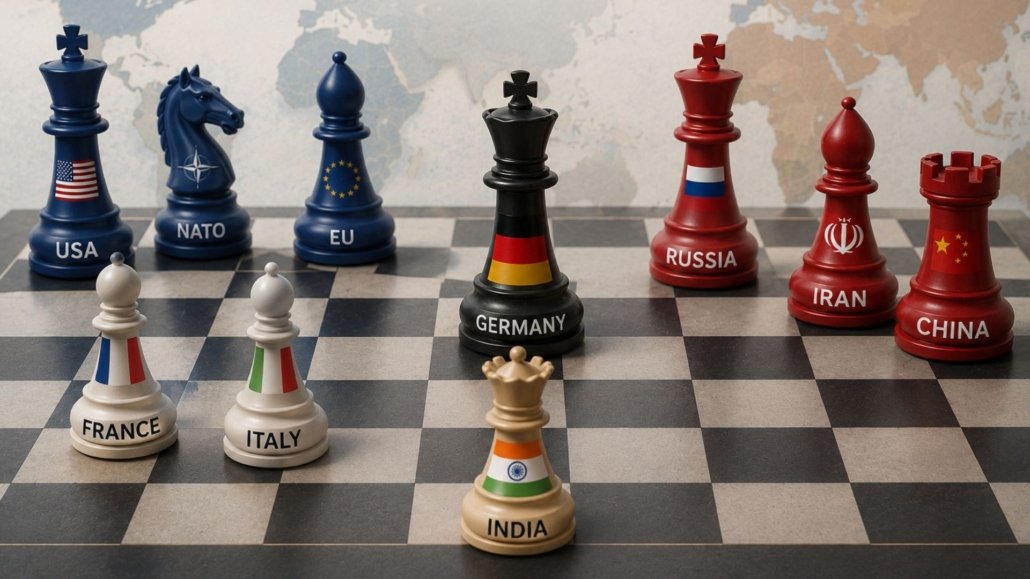
The release of Germany’s first standalone military strategy, titled Verantwortung für Europa (Responsibility for Europe), on 22 April 2026, marks a watershed moment in the history of the Federal Republic’s security and defence policy.[1] Presented by Defence Minister Boris Pistorius, this comprehensive strategic package represents the most profound overhaul of the Bundeswehr’s planning, personnel and procurement structures since the founding of the modern German military.[2] For decades, Germany’s defence posture was defined by strategic restraint, a heavy reliance on the United States (the US) security umbrella and a fragmented approach to regional crisis.[3] The 2026 Strategy replaces this paradigm with a proactive, effects-based model aimed at transforming Germany into the strongest conventional fighting force in Europe by 2039.[4]
Central to this transformation is a doctrinal shift toward a “one theatre approach” which recognises that the security of NATO territory is inextricably linked to the stability of West Asia and the maritime order of the Indo-Pacific.[5] As Germany recalibrates its role as a “pacemaker” for European defence, its relationship with India has transcended traditional trade-based cooperation to become a deep strategic-industrial alliance, anchored by massive naval projects as the “Project-75 India” (P-75 I) and shared visions for a rules-based maritime order.
Yet, despite the scale of Berlin’s ambition, the success of the German military transformation remains far from guaranteed. Structural constraints ranging from demographic decline and industrial bottlenecks to fiscal pressures and intra-European strategic competition may complicate Germany’s attempt to emerge as Europe’s leading conventional military power by 2039. This article analyses the key pillars of Germany’s military transformation, evaluates the challenges that may impede its implementation and assesses how Berlin’s evolving strategic outlook could reshape Indo-German maritime cooperation across defence industrial collaboration, maritime domain awareness and regional security governance.
The Strategic Pivot
The “Responsibility for Europe” strategy is born from the realisation that the European security architecture has been irrevocably altered by the revanchism of the Russian Federation and the intensifying systemic rivalry in the Indo-Pacific.[6] While the 2022 Zeitenwende served as the initial catalyst for rearmament, the 2026 strategy provides the institutionalised, long-term roadmap for this transition. The strategy formally identifies Russia as the primary existential threat to Germany and the Euro-Atlantic area, noting that Moscow seeks to strategically decouple the US from Europe and expand its sphere-of-influence through both “hybrid” and conventional means.[7]
However, Germany’s strategic recalibration is also shaped by uncertainty regarding long-term American commitments to European security. The possibility of fluctuating US political engagement has intensified debates within Berlin over strategic autonomy, defence industrial resilience and Europe’s capacity to independently sustain deterrence on the continent.
The 2029 Readiness threshold. A critical innovation of the 2026 strategy is the establishment of a specific readiness threshold: the year 2029.[8] German defence planners, supported by assessment from the Bundeswehr’s Joint Operations Command, assume that the Russian Federation could be prepared for a large-scale military operation against NATO territory by the end of the decade.[9] This 2029 deadline has been turned into a governing discipline for German industry, budget cycles and conscription planning. The Strategy mandates that the Bundeswehr must be able to maximise its deterrence and defence capabilities within this condensed timeframe, focusing on rapid ammunition replenishment and the closure of critical capability gaps that have plagued the force for decades.[10]
Table 1.1. Bundeswehr Modernisation Timeline under Verantwortung für Europa
(2026-2029)
| Modernisation Stage | Timeline | Strategic Objective |
| Phase I: Readiness | By 2029 | Maximising defence sustainability and ammunition stocks; closing NATO gaps |
| Phase II: Capability | 2030-2035 | Full-spectrum growth across land, air, sea, cyber and space; European leadership |
| Phase III: Superiority | 2036-2039+ | Technological dominance through AI and “innovations of the day after tomorrow” |
The Doctrinal Shift to Effects-based Planning. The 2026 Strategy moves away from rigid hardware quotas — toward a flexible, effects-based model. In this new paradigm, the value of the military is measured by the strategic and tactical effects it can produce rather than by the sheer number of tanks or aircraft it possesses.[11] Defence Minister Pistorius highlighted that the military must prioritise capabilities that were previously neglected or non-existent in the German arsenal, such as deep precision strike, hypersonic missile defence, and high-end drone warfare. By focusing on effects, the Bundeswehr can adapt more rapidly to the evolving character of warfare, which is increasingly defined by battlefield transparency, automation and the blurring of ethical and legal boundaries.[12]
Structural Reforms and the Modernisation Agenda. To support its ambitious strategic goals, Germany has launched a comprehensive structural overhaul of its military apparatus, designed to dismantle the “bureaucratic fortress” that has historically hampered defence procurement and personnel growth. This reform is anchored by the Entburokratisierungs-und Modernisierungagenda 2026 (EMA26), a package of 15 concrete measures and 580 implementation steps, all designed to digitise workflows and streamline administrative processes. A key novelty in EMA26 is that all internal regulations will be assigned automatic expiry dates, forcing a periodic review and preventing the accumulation of unnecessary bureaucracy.[13]
Personnel Expansion and the Return of the Reserve. The strategy envisions a massive expansion of the Bundeswehr’s manpower to meet the demands of high-intensity continental defence and global maritime presence. The target for active-duty soldiers is an increase from the current 185,420 to 260,000 by the mid-2030s. Perhaps even more revolutionary is the redesign of the reserve strategy, which now positions the reserve force “on par with the active force.”[14] The reserve is projected to grow from 60,000 to at least 200,000 assigned reservists, creating a combined total of 460,000 combat-ready troops.[15]
Table 1.2 Planned Expansion of Bundeswehr Active and Reserve Personnel
| Personnel Category | Current Strength (2026) | Target Strength
(2035-2039) |
Strategic Role |
| Active-Duty | 185,420 | 260,000 | Core combat operations; NATO defence |
| Assigned Reserve | 60,000 | 200,000 | Homeland defence; logistics for NATO movement |
| Combined Force | 245,420 | 460,000 | Total combat power for continental deterrence |
To ensure that these targets are met, the German government enacted new legislation in January 2026 that enshrines the milestones in law.[16] While recruitment is currently outperforming previous years — with applications having increased by approximately 20 per cent in early 2026 — the law includes “lottery-based compulsory conscription” as a legal fallback if voluntary targets are missed. This signals a profound shift in the social contract of the Federal Republic, as the State reassumes the power to mandate military service in response to existential threats.[17]
Technical Capability Priorities: Deep Strike and Defensive Shields
The “Responsibility for Europe Strategy” identifies three priority areas where Germany is effectively “starting from scratch” and must rapidly build capability to ensure deterrence.[18]
Deep Precision Strike. The war in Ukraine has demonstrated that the ability to hit targets far behind the frontline is crucial for weakening enemy structures early in a conflict. Germany is investing heavily in long-range precision weapons to take out enemy command centres, supply routes and critical infrastructure.[19] While the Taurus cruise missile, with its 500 km range, remains the primary system in this category, the strategy calls for the development and production of next-generation “Taurus Neo” and other long-range systems to extend the Bundeswehr’s reach.[20]
Hypersonic Defence and Sky Shield. As adversaries increasingly deploy hypersonic missiles and massed drone swarms, Germany is leading the “European Sky Shield Initiative” (ESSI).[21] This initiative seeks to integrate high-end systems such as the Patriot, IRIS-T and the Arrow-3 (sourced from Israel) into a layered defensive shield across Europe.[22] The strategy emphasises the need for domestic production of these systems to ensure supply chain resilience, with the Skyranger 30 self-propelled anti-aircraft gun serving as a critical mobile component for protecting manoeuvring land forces.[23]
The Autonomy Revolution: Drones and AI. The Bundeswehr is undergoing a digital transformation that places artificial intelligence and autonomous systems at the centre of the battlefield.[24] The strategy assumes a “transparent battlefield” where movements are constantly monitored, requiring a focus on low-cost, quantitative drone solutions that can overwhelm more expensive, high-end systems.[25] While Germany has faced setbacks in integrating certain UAVs, the 2026 strategy re-commits to a wide range of strike and reconnaissance drones across all domains.[26]
While these reforms primarily address Germany’s capacity for deterrence and for defence against threats in the Euro-Atlantic theatre, the strategy’s significance extends beyond continental Europe. The Bundeswehr’s modernisation is embedded within a broader conceptual shift that views European security as inseparable from developments in West Asia and the Indo-Pacific. It is this logic that underpins Germany’s growing maritime engagement with India.
The “One Theatre Approach” and the Indo-Pacific Strategic Pivot
The doctrinal core of the 2026 Strategy is the “one theatre approach”, which recognises that the security of Europe is no longer a discrete geographical concern.[27] This holistic perspective views the “NATO territory”, the “Middle East” (West Asia in Indian strategic discourse) and the “Indo-Pacific”, as interconnected security spaces. By framing the Indo-Pacific as part of Germany’s connected security space, Berlin is signalling to global powers, particularly Russia and then China and Iran, that regional conflicts will have immediate global repercussions.[28]
Maritime Security as a Global Imperative. Germany’s economic survival depends on the freedom of navigation and the security of maritime corridors. With approximately 82,000 vessels annually moving through key maritime chokepoints in the Indo-Pacific, any disruption in the region impacts German prosperity and European stability.[29] Consequently, the German Navy is undergoing a modernisation program involving €36.6 billion in new investments for frigates, submarines, auxiliary ships, etc.[30]
The naval expansion is focused on two primary axes: the North Atlantic/Baltic Sea for the defence of NATO’s northern flank against Russian undersea threats and the Indo-Pacific for protection of global trade routes/ISLs.[31] This dual focus is exemplified by the deployment of P-8A patrol aircraft to Scotland to track Russian submarines and the increased presence of German warships in the Indian Ocean and the South China Sea.[32]
The ambition of the strategy is undeniable. However, the transition from strategic vision to military capability will depend on Germany’s ability to overcome longstanding structural constraints. As Berlin seeks to transform itself into Europe’s strongest conventional military power by 2039, several political, economic and institutional challenges could influence the pace and effectiveness of implementation.
The 2039 Horizon: Challenges and Critical Success Factors
While the Verantwortung fur Europa strategy sets a bold and necessary course for the Bundeswehr, several factors will determine its ultimate success as Germany looks towards the 2039 horizon.
Financial Sustainability and the Debt Brake. The ambitious buildup of the German military requires sustained increases in defence spending, projected to reach €152 billion annually by 2029.[33] However, maintaining this pace after the 2029 parliamentary elections will be a challenge, as the current exemption from the national debt brake may face political opposition. The strategy’s success is intrinsically tied to Germany’s ability to maintain economic growth while financing the most comprehensive military overhaul in its post-war history.[34]
Additionally, Germany remains heavily dependent on American military enablers including ISR assets, strategic airlift, missile defence and the US nuclear umbrella.[35] Berlin’s ambition to emerge as Europe’s strongest conventional force may therefore remain constrained in the possible absence of parallel European investments in high-end strategic capabilities that have traditionally been provided by Washington.
Bureaucratic Inertia and Technological Integration. The EMA26 agenda aims to cut bureaucracy but the Bundeswehr’s procurement systems are notoriously slow and complex. [36] The integration of “innovations of the day after tomorrow” — such as AI-driven battlefield management and autonomous swarms — requires not just new equipment but a fundamental shift in military culture and organisational agility.[37] If the 153 measures of the EMA26 are not fully implemented, Germany risks falling behind the 2029 readiness threshold. Priority could be placed on modular, scalable production of high-attrition items (ammunition, drones, missiles) rather than bespoke, low-volume, high prestige platforms. Germany’s defence industrial ecosystem — Rheinmetall, KNDS, MBDA, Diehl Defence, Airbus Defence and Space — has the technical depth to deliver but only if procurement rules allow the speed and volume required.[38]
Demographic Constraints and Recruitment Challenges. While the “2029 Readiness” threshold creates urgency within German defence planning, the expansion targets face significant demographic and societal constraints. Germany’s ageing population, shrinking workforce, and historically cautious military culture, may complicate recruitment efforts over the long term.[39] Although applications to join the Bundeswehr have increased following the Russian invasion of Ukraine, sustaining personnel growth to nearly 460,000 active and reserve personnel may require politically contentious measures such as selective conscription, immigration-based recruitment and expanded financial incentives.[40]
The Geopolitical Balancing Act. Germany’s “one theatre approach” and its goal of becoming Europe’s strongest conventional force may cause friction within the EU, particularly with France, and also the UK (non-EU European countries).[41] Managing these intra-European dynamics while maintaining a strong transatlantic bond and expanding partnership in the Indo-Pacific will require a high degree of diplomatic finesse.
Credible Naval power projection through partnership. Germany may not be able to achieve the Indo-Pacific reach implied by its “One-theatre Approach” alone. It may struggle to simultaneously sustain continental deterrence in Eastern Europe, secure North Atlantic maritime routes, and maintain a meaningful Indo-Pacific naval presence, without significantly larger force structures and defence industrial capacity. Critically, success requires a deepening of naval interoperability with partners who have complementary interests and geographic positioning — France, the Netherlands, Italy — within Europe, and India, Japan and Australia — in the Indo-Pacific. For the maritime domain specifically, these partnerships are not optional supplements to the strategy; they are the strategy. Germany’s value as a maritime security partner in the Indo-Pacific will depend on how well it can integrate its platforms and doctrine with those of partners who carry the regional burden. This is where India assumes the role that goes far beyond P-75I. Arguably, in the event of further prolonged confrontation with Russia, Berlin might ultimately find itself forced to prioritise the NATO’s eastern flank over sustained maritime engagement in the Indo-Pacific.
Of course, Germany’s strategic reorientation towards maritime security and the Indo-Pacific is not occurring in isolation. Among Berlin’s regional partners, India occupies a uniquely important position owing to its maritime geography, defence industrial capabilities, and shared interest in maintaining a rule-based order at sea. Consequently, Germany’s military transformation is likely to have a direct implication for the future trajectory of India-German strategic cooperation.
The Transformation of India-Germany Maritime Relations
The visit of Chancellor Friedrich Merz to India in January 2026 highlighted the high priority Germany attached to this relationship. During his meeting with Prime Minister Modi in Gujarat, both leaders reaffirmed their commitment to a rules-based international order and signed multiple declarations on critical raw materials, semiconductors and telecommunications.[42] The visit also signalled that Germany viewed India not just as a market but as a key industrial partner for the co-development of high-technology platforms. In essence, India is increasingly viewed by Berlin as an indispensable democratic counterweight in the Indo-Pacific, a sentiment formally codified in Germany’s 2024 “Focus on India” strategy paper.[43]
Project 75-India and the Undersea Partnership. The centrepiece of Indo-German maritime cooperation in 2026 is the $8 billion Project-75 I deal. This project, one of India’s largest-ever defence contracts, involves the construction of six advanced conventional submarines equipped with German air-independent propulsion (AIP) technology.[44] This agreement is structured around substantial technology transfer, ensuring that India builds the capacity to maintain and upgrade these platforms domestically. The target of 60 per cent indigenous content by the sixth vessel is intended to foster a local ecosystem for undersea warfare expertise, potentially transforming Indian shipyards into regional hubs for submarine servicing.[45] For India, this project is a foundational pillar of its strategic autonomy, reducing reliance on single-source suppliers and insulating the nation from geopolitical tech vulnerabilities.[46]
It hardly bears emphasising that the P-75 I project should be the beginning, not the ceiling, of the Indo-Germany defence industrial partnership. The broader Defence Industrial Cooperation Roadmap signed during Defence Minister Rajnath Singh’s visit to Germany offers a framework.[47] Specific areas of maritime co-development include:
- Autonomous Undersea Vehicles (AUVs): Germany’s Fraunhofer Institute and the Indian Defence Research Organisation (DRDO/NSTL) have complementary capabilities in undersea robotics, sensor integration and AI-driven autonomous navigation.[48] Joint development of AUV systems for mine detection, seabed mapping and maritime surveillance is technically feasible.
- Naval Combat Management Systems: Both navies are investing in AI-integrated combat management and sensor fusion.[49] Co-development, or at minimum interoperability standards, would enhance combined operational capability in any future combined naval task group.
Operational Convergence (MILAN 2026). In February 2026, the German Navy participated with naval assets in Exercise MILAN, India’s flagship biennial multilateral naval exercise hosted by the Indian Navy’s Eastern Naval Command in Visakhapatnam. This participation, which included the first-time participation of a German P8-A Poseidon (MPA), demonstrates a level of operational trust and naval friendship that was previously absent from the bilateral relationship.[50]
Table 1.3. Germany Participation and Planned Engagement with India and the Indian Ocean Region (2026)
| Exercise Name | Date | Participants | Objectives |
| MILAN 2026 | 15-25 February 2026 | Over 70 nations, including first-time participants such as Germany, Philippines, and the UAE | Multilateral cooperation; naval friendship |
| TARANG SHAKTI | September 2026 | Multinational Air Forces; Germany | Large Force employment; combat drills |
| IONS Conclave | February 2026 | Indian Ocean Navies; Germany | Regional Maritime governance and security |
Source: Compiled by author using various sources
Maritime Domain Awareness & Enhancing Information Fusion. A significant step towards deepening security integration is Germany’s decision to deploy a liaison Officer to the Information Fusion Centre – Indian Ocean Region (IFC-IOR) in 2026.[51] For Germany, it provides persistent eyes in a theatre where the Bundeswehr Navy has only intermittent physical presence. This deployment enhances the real-time sharing of relevant maritime information which would allow for coordinated responses to non-traditional security threats, including hybrid threats against maritime infrastructure. Furthermore, Germany’s intent to participate in the 9th Indian Ocean Naval Symposium (IONS) and the Air Combat Exercise TARANG SHAKTI in 2026 reflects a sustained commitment to regional security governance.[52]
Undersea Infrastructure Protection. The sabotage of the Nord Stream pipeline in September 2022 was Germany’s visceral encounter with seabed infrastructure vulnerability. India has its own critical undersea cable and pipeline infrastructure connecting to Southeast Asia and the Gulf.[53] It is clear that both States have compelling national interests in the protection of critical maritime infrastructure; a ‘Joint Indo-German Initiative on Critical Maritime Infrastructure (including undersea infrastructure)’ — encompassing a shared analysis of what constitutes critical maritime infrastructure, a shared threat assessment, combined patrol protocols, co-development of undersea surveillance technology and legal frameworks for intervention — would fill a genuine gap in this facet of the maritime domain. Germany brings to the table advanced acoustic sensor technology and submarine expertise; India brings geography, regional maritime relationships and an established and reliable naval presence across the Indian Ocean.
While defence cooperation remains the most visible dimension of the relationship, the convergence between India and Germany extends beyond security. The broader strategic partnership is increasingly supported by shared economic, technological and maritime development objectives that create additional avenues for long-term collaboration.
Opportunities on the Horizon
Alignment of National Visions: MIV 2030 and MAKV 2047
India’s maritime sector is undergoing a transformation guided by the Maritime India Vision (MIV) 2030 and the Maritime Amrit Kaal Vision (MAKV) 2047.[54] These ambitious roadmaps aim to make India a global maritime powerhouse by 2047, with a port handling capacity projected to increase to 10,000 Million Tonnes Per Annum (MTPA).[55] The 2026 German military strategy and its accompanying economic focus on India are perfectly aligned with these goals.[56]
Green ports and Shipbuilding Leadership. India targets becoming one of the world’s top five shipbuilding nations by 2047 and a leading hub for green fuels such as hydrogen and ammonia.[57] Germany, with its advanced engineering and its role as a primary financial and technical enabler for India’s low-carbon transition, is an ideal partner for this modernisation effort.[58] The German-Indian ‘Green and Sustainable Development Partnership’ (GSDP) has already resulted in projects for green hydrogen ecosystems and the decarbonisation of port infrastructure, creating a technological nexus that benefits both nations.[59]
Economic De-risking and the Skilled Labor Dividend. The strategic partnership is anchored by a shared goal of “economic de-risking” —reducing dependency on concentrated supply chains that are vulnerable to political coercion. Germany serves as India’s most critical economic anchor within the European Union, functioning as a catalyst for industrial modernisation[60]. In early 2026, the conclusion of negotiations for a comprehensive EU-India Free Trade Agreement marked a historic milestone that will create one of the world’s largest free trade zones, encompassing almost two billion people.
Addressing the demographic deficit. One of the most significant areas of synergy is the alignment of India’s demographic dividend with Germany’s acute skilled labour shortage. With the German economy needing an estimated 400,000 skilled workers annually, Indian professionals in IT, healthcare and engineering are being prioritised for fast-track relocation under the 2024 “Focus on India” agreement.[61] As of 2026, over 60,000 Indian students are integrated into the German educational system, benefiting from targeted pathways that nurture future intellectual-capital in vital fields like semiconductor design and green energy systems.[62]
Conclusion
“Horizon 2039” is Germany’s most consequential strategic commitment since reunification. Its success is not guaranteed — the challenges of personnel scaling, procurement pace, political sustainability and naval capacity are real and structurally difficult. Yet, the critical success factors are knowable and the strategy’s effects-based, partnership-dependent logic points in exactly the right direction. Germany’s military transformation should, therefore, be understood not simply as a national rearmament effort but as a broader attempt to redefine Europe’s role in an increasingly interconnected security environment. The strategy’s emphasis on maritime security, industrial resilience and technological innovation and strategic partnerships reflects a larger understanding that military prestige can no longer be generated in isolation. For India, this transformation creates opportunities to deepen cooperation in submarine construction, maritime domain awareness, protection of critical maritime infrastructure and emerging naval technologies. If implemented successfully, the convergence of German strategic ambition and India’s maritime identity could elevate the Indo-German partnership into one of the most consequential maritime relationships linking Europe and the Indo-Pacific.
The submarines will eventually navigate in silence. The strategic architecture that surrounds them, on the other hand, need not be quiet at all.
*******
About the Author
Ms Saaz Lahiri is an experienced Research Associate at the National Maritime Foundation (NMF). She holds a Bachelor’s degree in ‘History and International Relations’, and a Post Graduate Diploma in ‘International Relations’ from Ashoka University. Her research focuses upon the manner in which India’s maritime strategies interface and interact with those of the European Union (EU). She can be reached at eu4.nmf@gmail.com
Endnotes:
[1] Linus Holler, “Germany unveils strategy for becoming Europe’s Strongest military by 2039,” Defense News, 22 April 2026. https://www.defensenews.com/global/europe/2026/04/22/germany-unveils-strategy-for-becoming-europes-strongest-military-by-2039/
[2] Linus Holler, “Germany Unveils Strategy for becoming Europe’s Strongest Military by 2039.”
[3] Stuard Dowell, “How Germany is Building Europe’s Biggest Army for Europe but not with Europe”, TVP World, https://tvpworld.com/92892932/germany-reveals-plan-to-build-europes-strongest-army, 24 April 2026.
[4] Linus Holler, “Germany unveils strategy for becoming Europe’s Strongest military by 2039.”
[5] Linus Holler, “Germany unveils strategy for becoming Europe’s Strongest military by 2039.”
[6] The Overall Concept of Military Defence: Military Strategy and Plan for the Armed Forces (Responsibility of Europe),” Bundeswehr – Federal Ministry of Defence, Pg 15, April 2026. https://www.bmvg.de/resource/blob/6093998/678875025812878cfa657f9801f62ffc/dl-gesamtkonzeption-der-verteidigung-eng-data.pdf
[7] Bundeswehr – Federal Ministry of Defence, (Responsibility of Europe)
[8] Mustapha Bature Sallama, “Germany Unveils First-Ever Military Strategy for the Bundeswehr,” Modern Ghana, 25 April 2026. https://www.modernghana.com/news/1488405/germany-unveils-first-ever-military-strategy-for.html
[9] Newsroom, “Russia may test NATO militarily before 2029, German general warns,” Türkiye Today, 15 May 2026. https://www.turkiyetoday.com/world/russia-may-test-nato-militarily-before-2029-german-general-warns-3220021?s=1
[10] Tahir Azad, “Germany’s Military Reawakening and the Future of European Security,” Small Wars Journal, 31 March 2026. https://smallwarsjournal.com/2026/03/31/germanys-military-reawakening/
[11] Linus Holler, “Germany unveils strategy for becoming Europe’s Strongest military by 2039.”
[12] Mustapha Bature Sallama, “Germany Unveils First-Ever Military Strategy for the Bundeswehr.”
[13] Linus Holler, “Germany unveils strategy for becoming Europe’s Strongest military by 2039.”
[14] Linus Holler, “Germany unveils strategy for becoming Europe’s Strongest military by 2039.”
[15] Linus Holler, “Germany unveils strategy for becoming Europe’s Strongest military by 2039.”
[16] Linus Holler, “Germany unveils strategy for becoming Europe’s Strongest military by 2039.”
[17] Roman Prygodko, “Germany Plans Lottery-Based Conscription Under Military Service Reform,” Militarnyi, 13 October 2025. https://militarnyi.com/en/news/germany-plans-lottery-based-conscription-under-military-service-reform/
[18] Linus Holler, “Germany unveils strategy for becoming Europe’s Strongest military by 2039.”
[19] Kate Connolly, “Germany and Ukraine reach deal for long-range weapons production,” The Guardian, 28 May 2025. https://www.theguardian.com/world/2025/may/28/zelenskyy-merz-germany-ukraine-sumy
[20] Jodesz Gavilian, “Germany orders TAURUS NEO Missiles to boost Deep-Strike Capability,” The Defense Post, 23 December 2025. https://thedefensepost.com/2025/12/23/germany-taurus-neo-missiles/
[21] Rafael Loss, “A Roof over Europe? Ground-based Air Defence after the Zeitenwende,” Federal Academy for Security Policy, 2024. https://www.baks.bund.de/en/working-papers/2024/a-roof-over-europe-ground-based-air-defence-after-the-zeitenwende
[22] Sibel Düz, Muhammed Sefa Koçakoğlu, “European Sky Shield Initiative Capacities, Criticisms,
and Türkiye’s Contribution,” SETA, February 2025. https://media.setav.org/en/file/2025/02/european-sky-shield-initiative-capacities-criticisms-and-turkiyes-contribution.pdf
[23] Mustapha Bature Sallama, “Germany Unveils First-Ever Military Strategy for the Bundeswehr,” Modern Ghana, 25 April 2026. https://www.modernghana.com/news/1488405/germany-unveils-first-ever-military-strategy-for.html
[24] Mustapha Bature Sallama, “Germany Unveils First-Ever Military Strategy for the Bundeswehr,” Modern Ghana, 25 April 2026. https://www.modernghana.com/news/1488405/germany-unveils-first-ever-military-strategy-for.html
[25] “The Overall Concept of Military Defence: Military Strategy and Plan for the Armed Forces (Responsibility of Europe),” Bundeswehr – Federal Ministry of Defence, Pg 15, April 2026. https://www.bmvg.de/resource/blob/6093998/678875025812878cfa657f9801f62ffc/dl-gesamtkonzeption-der-verteidigung-eng-data.pdf
[26] Jodesz Gavilian, “Germany to manufacture thousands of Autonomous Strike drones for Ukraine,” The Defense Post, 15 April 2026. https://thedefensepost.com/2026/04/15/germany-auterion-drones-ukraine/
[27] Linus Holler, “Germany unveils strategy for becoming Europe’s Strongest military by 2039.”
[28] Thomas O Falk, “Germany’s Gamble to make Europe Defensible,” Eagle Intelligence Reports, 28 April 2-26. https://eagleintelreports.com/germanys-gamble-to-make-europe-defensible/
[29] Prannavan Surendran, “German turns to the Indo-Pacific: From Strengthening Bilateral Partnerships to Balancing China in Asia and Deterring Russia in Europe,” Rahusvaheline Kaitseuuringute Keskus International Centre for Defence and Security, 12 March 2026. https://icds.ee/en/german-turns-to-the-indo-pacific-from-strengthening-bilateral-partnerships-to-balancing-china-in-asia-and-deterring-russia-in-europe/
[30] Tahir Azad, “Germany’s Military Reawakening and the Future of European Security,” Small Wars Journal, 31 March 2026. https://smallwarsjournal.com/2026/03/31/germanys-military-reawakening/
[31] Tahir Azad, “Germany’s Military Reawakening and the Future of European Security.”
[32] Samuel Drake, “Germany moves to Deploy P-8A Poseidon in Scotland as Russian Submarine Pressure Grow,” The Defense Watch, 29 April 2026. https://thedefensewatch.com/naval-maritime/germany-deploys-p-8a-poseidon-to-scotland-to-track-russian-submarines/
[33] Tahir Azad, “Germany’s Military Reawakening and the Future of European Security.”
[34] Bhavya Velani, “This Country to Have Europe’s Strongest Defense Force by 2039,” Aviation A2Z, 23 April 2026. https://aviationa2z.com/index.php/2026/04/23/germany-to-have-europes-strongest-defense-force-by-2039/
[35] “Trump’s Germany Troop Drawdown Renews Debate over Europe’s Reliance on US Security Guarantees,” Defence Matters EU, https://defencematters.eu/trumps-germany-troop-drawdown-renews-debate-over-europes-reliance-on-us-security-guarantees/
[36] Thomas O Falk, “Germany’s Gamble to make Europe Defensible.”
[37] Mustapha Bature Sallama, “Germany Unveils First-Ever Military Strategy for the Bundeswehr,” Modern Ghana, 25 April 2026. https://www.modernghana.com/news/1488405/germany-unveils-first-ever-military-strategy-for.html
[38] Brett Swaney, “The German Defense-Industrial Zeitenwende: Implications for Transatlantic Security,” INSS Strategic Perspectives, 2025. https://digitalcommons.ndu.edu/inss-strategic-perspectives/43
See also,
Levente Bartha, “Germany’s Path to Kriegstüchtigkeit: The 2026 Defence Budget,” Atlas Institute International Affairs, 19 December 2025. “https://atlasinstitute.org/germanys-path-to-kriegstuchtigkeit-the-2026-defence-budget/
[39] “Report says German Military is ageing and shrinking as parties seek funding,” Reuters, 11 March 2025. https://www.reuters.com/world/europe/report-says-german-military-is-ageing-shrinking-parties-seek-funding-2025-03-11/
[40] Nina Werkhauser, “Germany unveils first-ever military strategy for Bundeswehr,” DW, 23 April 2026. https://www.dw.com/en/germany-bundeswehr-nato-russia-ukraine-military-strategy-boris-pistorius/a-76914837
[41] Stuard Dowell, “How Germany is Building Europe’s Biggest Army for Europe but not with Europe,” TVP World, 24 April 2026. https://tvpworld.com/92892932/germany-reveals-plan-to-build-europes-strongest-army
[42] Ministry of External Affairs, “India-Germany Joint Statement (12 January 2026), Government of India, 12 January 2026. https://www.mea.gov.in/incoming-visit-detail.htm?40581/India++Germany+Joint+Statement+January+12+2026
[43] Government of the Federal Republic of Germany, “Focus on India,” https://www.auswaertiges-amt.de/blob/2680288/8909ac2c501ab85d55defff7d1b8b75d/241016-fokus-indien-data.pdf
[44] Ayush Pandey, “Project-75 I: How India’s $8 Billion Submarine Upgrade Reshapes the Pakistan, China Equation,” Times of India, 31 January 2026. https://timesofindia.indiatimes.com/india/project-75i-how-indias-8-billion-submarine-upgrade-reshapes-the-pakistan-china-equation/articleshow/126480351.cms
[45] Ayush Pandey, “Project-75 I: How India’s $8 Billion Submarine Upgrade Reshapes Pakistan.”
[46] Raunak Kunde, “India-Germany Hybrid Submarine Deal Nears Finalisation with Deliveries Starting 2033,” Indian Defence Research Wing, 08 May 2026. https://idrw.org/india-germany-hybrid-submarine-deal-nears-finalisation-with-deliveries-starting-2033/
[47] Ministry of Defence, “Raksha Mantri & his German Counterpart Hold Bilateral Talks in Berlin to Bolster Strategic Defence Partnership,” Press Information Bureau, 22 April 2026, https://www.pib.gov.in/PressReleasePage.aspx?PRID=2254600®=3&lang=2
[48] Department of Underwater Robotics, “Underwater Robotics,” Fraunhofer IOSB, https://www.iosb-ast.fraunhofer.de/en/departments/Underwater-Robotics.html
See also,
“DRDO develops next-generation autonomous underwater vehicles for mine detection,” DD News, 15 November 2025. https://ddnews.gov.in/en/drdo-develops-next-generation-autonomous-underwater-vehicles-for-mine-detection/
[49] Saurabh Trivedi, “India invites German firms for defence co-development, emphasises trusted partnerships amid global uncertainty,” The Hindu, 23 April 2026. https://www.thehindu.com/news/national/india-invites-german-firms-for-defence-co-development-emphasises-trusted-partnerships-amid-global-uncertainty/article70897910.ece
[50] Ministry of Defence, “MILAN 2026 Concludes Successfully: Closing Ceremony Onboard INS VIKRANT Marks Maritime Mileston,” Press Information Bureau, 25 February 2026. https://www.pib.gov.in/PressReleasePage.aspx?PRID=2232853®=3&lang=1
See also, Siddharth Singh, India’s Maritime Multilateralism in Vishakhapatnam: IFR-MILAN-IONS 2026 Naval Trifecta,” India Foundation, 27 February 2026. https://indiafoundation.in/articles-and-commentaries/indias-maritime-multilateralism-in-visakhapatnam-ifr-milan-ions-2026-naval-trifecta/
[51] Prime Minister’s Office, “India-Germany Joint Statement,” Press Information Bureau, 12 January 2026. https://www.pib.gov.in/PressReleasePage.aspx?PRID=2213765®=3&lang=2
[52] Prime Minister’s Office, “India-Germany Joint Statement.”
[53] Saaz Lahiri, “From Hamburg to the Indian Ocean: Securing Maritime Horizons,” National Maritime Foundation, 05 May 2025. https://maritimeindia.org/from-hamburg-to-the-indian-ocean-securing-maritime-horizons/
[54] Ministry of Ports, Shipping and Waterway, “Maritime India Vision 2030,” Press Information Bureau, 03 December 2024. https://www.pib.gov.in/PressReleasePage.aspx?PRID=2080012®=3&lang=2
See also,
PIB Backgrounder, “Maritime India: From Vision 2030 to Amrit Kaal 2047,” Government of India, 26 October 2025. https://www.pib.gov.in/PressReleasePage.aspx?PRID=2182563®=3&lang=2
See also,
Ministry of Ports, Shipping and Waterways, “Maritime Amrit Kaal Vision 2047,” Government of India, 18 February 2047. https://shipmin.gov.in/sites/default/files/Maritime%20Amrit%20Kaal%20Vision%202047%20%28MAKV%202047%29_compressed.pdf
[55] Puneet Kumar Bahl, “Maritime Sector Development: A Gateway to Viksit Bharat,” Observer Research Foundation, 02 February 2026. https://www.orfonline.org/research/maritime-sector-development-a-gateway-to-viksit-bharat
[56]Press Information Bureau, “Germany to Collaborate with India to improve rail connectivity of Indian Ports,” Ministry of Road Transport & Highways, 14 October 2016, https://www.pib.gov.in/newsite/PrintRelease.aspx?relid=151659®=3&lang=2
See also,
“Hamburg and Mumbai seek closer port cooperation,” Hansa News Global, 24 February 2026. https://hansa.news/hamburg-and-mumbai-seek-closer-port-cooperation/
[57] Puneet Kumar Bahl, “Maritime Sector Development: A Gateway to Viksit Bharat.”
[58] ESG News Editorial Team, “Germany, India Expand Just Energy Transition Partnership to Scale Renewables, Grids and Green Jobs,” ESG News, 29 May 2026. https://esgnews.com/germany-india-expand-just-energy-transition-partnership-to-scale-renewables-grids-and-green-jobs/
[59] Ministery of External Affairs, “India-Germany Vision to enhance cooperation in Innovation and Technology,” Government of India, 25 February 2023. https://www.mea.gov.in/bilateral-documents.htm?dtl/36298/IndiaGermany_Vision_to_Enhance_Cooperation_in_Innovation_and_Technology
[60] Ministry of External Affairs, “Indo-German Roadmap on Higher Education,” Government of India, 10 January 2026. https://www.mea.gov.in/Portal/LegalTreatiesDoc/DE26B4633.pdf
[61] Shairee Malhotra,” India in the German Zeitenwende,” Observer Research Foundation, 16 January 2026. https://www.orfonline.org/expert-speak/india-in-the-german-zeitenwende,
[62] Ministry of External Affairs, “Indo-German Roadmap on Higher Education.”


Leave a Reply
Want to join the discussion?Feel free to contribute!