
Keywords
Seychelles; India; Maritime Diplomacy; Blue Economy; Maritime Security; Non-Traditional Maritime Security Threats; Small Island Development States (SIDS)
On 12 March 2025, during his visit to Mauritius, Prime Minister Modi unveiled India’s enhanced maritime policy, vision or outlook — MAHASAGAR (Mutual and Holistic Advancement for Security and Growth Across Regions) — an evolution of its earlier framework, SAGAR (Security and Growth for All in the Region).[1] The most significant and welcome feature of this upgraded articulation is the inclusion of the term “holistic”, a concept notably absent from most maritime policy frameworks worldwide. While India’s adoption of this formulation is commendable, its policy and diplomatic establishments have yet to fully internalise and operationalise its substantive implications. The deliberate coupling of the adjective “holistic” with the maritime domain signals an integrated and comprehensive approach — one that encompasses the blue economy and its diverse sectors and stakeholders; evolving security threats and the mechanisms designed to address them; the navy and coast guard in their military, constabulary, diplomatic, and benign roles; marine environmental stewardship; legal and regulatory frameworks; and the broader architecture of maritime governance.
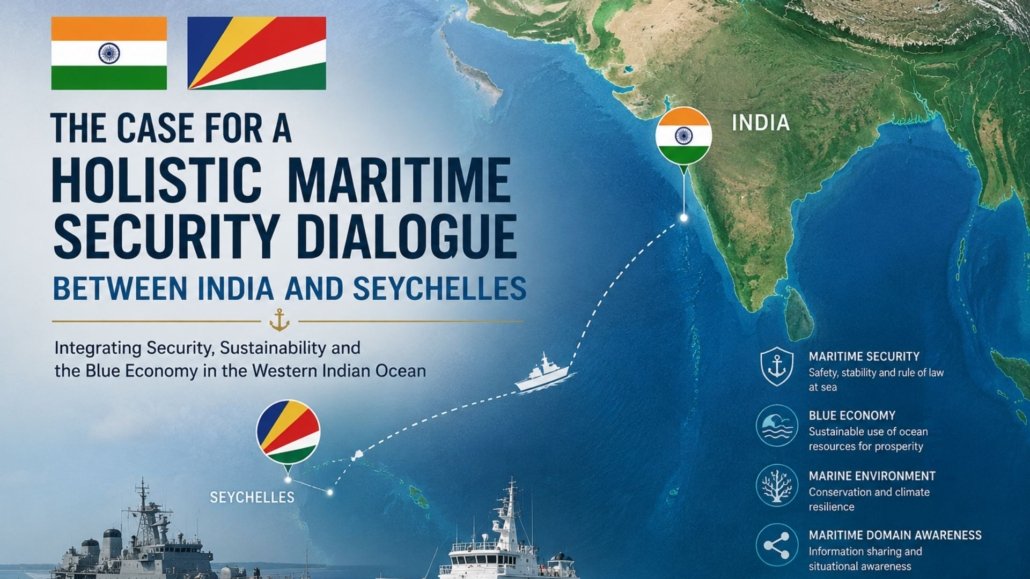
The relevance of this conceptual shift is particularly evident in India’s engagement with Seychelles, a country whose strategic outlook and national development trajectory are deeply embedded in the maritime domain. The recent State visit of Seychelles’ President, Dr Patrick Herminie, to India therefore offered an opportunity to translate the principles underlying MAHASAGAR into concrete bilateral cooperation. Both sides reiterated that maritime security and defence are long-standing pillars of India–Seychelles relations. Yet the visit also signalled an effort to broaden the scope of engagement beyond traditional security cooperation. The most significant outcome was the release of the “India–Seychelles Joint Vision for Sustainability, Economic Growth, and Security through Enhanced Linkages” (SESEL), a structured roadmap for future cooperation.[2] To translate this vision into actionable outcomes, India announced a special economic assistance package of US$175 million. Designed as a blended financing arrangement — comprising a US$125 million rupee-denominated line of credit and a US$50 million grant — the package is directed toward identifiable projects across social housing, mobility, vocational training, health, defence, and maritime security.[3] The design reflects an effort to combine development financing with strategic capacity-building, while formally aligning implementation with Seychelles’ national priorities.
Institutional cooperation was further reinforced through the signing of seven Memoranda of Understanding, two of which directly advance collaboration in specialised maritime sectors. One of these, an agreement between the Indian Meteorological Department and the Seychelles Meteorological Authority (SMA), seeks to strengthen technical and scientific cooperation in weather and climate services. A parallel MoU between the Indian National Centre for Ocean Information Services (INCOIS) and the SMA seeks to strengthen collaboration in ocean observation, ocean services, data sharing, capacity building, and maritime scientific research. Such initiatives strengthen the knowledge infrastructure underpinning maritime governance—an often-overlooked yet critical dimension of maritime partnerships.[4] India will also undertake the refit of the PS Zoraster, originally handed over to the Seychelles Coast Guard in 2021, at no cost. In addition, ten utility vehicles and five sets of Laser Radial-class boats, along with spares, will be gifted to the Seychelles Defence Force.[5]
For India, these considerations take on added significance in New Delhi’s westward maritime outreach, which seeks to consolidate engagement across the eastern African maritime domain. By way of its extended maritime posture, India’s land area, which is 3.274 Mn sq km, is almost equal to its maritime area, which is [(EEZ = 2.02 Mn sq km) + (continental shelf + 1.2 Mn sq km)] = 3.22 Mn sq km. India’s geographical conformation is somewhat like an inverted triangle, with the trans-Himalayan boundary forming the uppermost side and the Indian peninsula constituting the two remaining sides. Given that nearly intractable problems in dealing with Pakistan (at the northwestern vertex) and equally problematic geopolitical constrictions imposed by China at the northeastern vertex, India is a de facto island State. On the other hand, the landmass of the Seychelles is just about 455 square kilometres, juxtaposed against an Exclusive Economic Zone (EEZ) that covers approximately 1.4 million square kilometres—the second largest in Africa — meaning its maritime space far outweighs its terrestrial footprint. As has been stated on multiple occasions, India’s principal maritime interest is “holistic” maritime security, i.e., freedom from threats arising, ‘in’, ‘through’, or ‘from’ the sea. This means that the entire blue economy must be safeguarded by military and non-military maritime security. This too, resonates with Seychelles, where the blue economy is estimated to account for approximately 27.4 per cent of GDP and 41 per cent of national employment.[6]
Seychelles lies within India’s proximate maritime neighbourhood Both countries share a geography shaped by the vast expanse of the Indian Ocean. This shared geography underscores the imperative of forging maritime partnerships, grounded not only in mutual gains but also in the effective leveraging of each country’s comparative advantages within their respective maritime domain. For Seychelles, its comparative advantage lies in the huge potential of its blue economy — realising this potential fully makes maritime security indispensable. This perspective aligns closely with Africa’s Integrated Maritime Strategy for 2050 (AIMS 2050), which seeks not only to secure Africa’s maritime domain but also to transform it into a driver of sustainable economic growth. The strategy’s overarching objective is “to foster increased wealth creation from Africa’s oceans and seas by developing a sustainable, thriving blue economy in a secure and environmentally sustainable manner.” In doing so, AIMS 2050 reconceptualises the maritime domain as both a security priority and a development opportunity — a space through which Africa can advance leadership, cooperation, and innovation.
Blue Economy: Vast Potential of Vast Oceans
Seychelles has been among the global pioneers in advancing international leadership on the blue economy. As one of the earliest proponents of elevating the blue economy onto the global policy agenda, the country has also built its national development framework around this concept. This commitment was institutionalised through the establishment of the Department of Blue Economy within the Ministry of Fisheries, Agriculture and Blue Economy, tasked with advancing a knowledge-driven, innovation-led model to unlock development potential while safeguarding marine ecosystems for future generations.[7] The approval of the Blue Economy Strategic Framework and Roadmap on 31 January 2018 further formalised this integrated approach to ocean governance and sustainable development.[8] Positioned as a distinctive national development strategy grounded in strong sustainability credentials, Seychelles’ blue economy framework aims to balance economic growth, environmental protection, and social well-being.
India’s own conception of the blue economy reflects a shift from an extractive, “brown” economy model towards a sustainability-driven blue one. Rather than prioritising resource exploitation with limited regard for ecological consequences, India’s approach emphasises cleaner energy transitions, efficient resource-usage, and the long-term health of marine ecosystems. In this sense, it aligns with what is often described as the “new blue economy.” India’s Blue Economy policy, though still in draft form, identifies seven priority areas for focused intervention. Notably, New Delhi does not conceptualise the blue economy merely as a discrete sector within the broader national economy; rather, it envisions the progressive “blue-ing” of the entire economic architecture by integrating ocean-based sustainability principles across all sectors of the national economy. The blue economy lies at the core of maritime geo-economics, and against this backdrop, India–Seychelles cooperation in the blue economy should be mutually reinforcing. For Seychelles, India’s expanding capabilities in maritime transport — particularly in green shipping, port modernisation, maritime connectivity, logistics, and renewable ocean energy — offer tangible avenues to strengthen and diversify its blue economy framework. Likewise, India can benefit from Seychelles’ inherent experience in sustainable fisheries management, aquaculture and mariculture, coastal tourism, marine biotechnology, scientific research, and emerging domains such as deep-sea resource management.
India would do well to derive lessons from Seychelles. In 2015, Seychelles restructured US$22 million of its sovereign debt through a debt-for-nature swap with “The Nature Conservancy” (TNC), resulting in the designation of 13 marine protected areas (MPAs) covering more than 400,000 square kilometres. The debt, purchased at a discount from creditor countries, enabled the protection of extensive coral reef systems and associated marine biodiversity.[9] Within these MPAs, extractive activities such as fishing and oil exploration have either been prohibited or strictly regulated. In terms of blue financing, too, Seychelles has made landmark strides and, in 2018, launched the world’s first sovereign blue bonds. This has been acknowledged worldwide as a particularly innovative financial solution that unlocked the capital needed for marine conservation and sustainable fisheries. Seychelles and Mauritius have established a Joint Management Area (JMA), creating a mechanism of shared jurisdiction over an extended area of the seabed and its underlying subsoil in the Mascarene Plateau region. This arrangement represents an important example of cooperative marine resource management.
Seychelles is also the first African country to have officially ratified the BBNJ Treaty and did so on 13 April 2024 itself.[10] (India’s own formal ratification of the BBNJ treaty, on the other hand, remains pending, as the country needs to amend legislation such as the Biological Diversity Act.)[11] The internalisation of such an international instrument by Seychelles is particularly significant. Nearly 50 per cent of Seychelles’ maritime boundary is adjacent to the high seas, and ratification provides access to a robust legal framework to protect up to 99 per cent of its ocean territory. This enables more effective management of migratory fish stocks, such as tuna, while also ensuring equitable access to marine genetic resources. Moreover, Seychelles has mainstreamed the blue economy within its academic and policy discourse, embedding it as a core area of teaching and research in its universities and leveraging its national experience to inform global conversations on sustainable ocean management. The University of Seychelles’ “James Michel Blue Economy Research Institute” advances research and policy engagement on sustainable ocean governance; the “Seychelles Marine Spatial Plan” provides a science-based blueprint for managing its vast maritime domain; and the “Seychelles National Park Authority”, along with conservation NGOs such as the “Save Our Seas Foundation” and “Nature Seychelles”, supports marine protection, biodiversity research, and ecosystem stewardship.[12]
Islands around the world serve as living laboratories, offering valuable lessons in sustainability and resilience—an approach that Seychelles has effectively leveraged. In contrast, despite its growing emphasis on the blue economy as both a policy priority and a subject of academic discourse, India has yet to fully internalise this approach at the university level. However, India has certainly taken important institutional steps towards blueing its economy,[13] by establishing, in 2019 itself, the “National Centre for Sustainable Coastal Management” (NCSCM) under the Ministry of Environment, Forest and Climate Change. Conceived as a world-class knowledge institution, the Centre advances research on coastal zones, marine ecosystems, and environmental processes; promotes integrated and sustainable coastal management for the benefit of traditional coastal and island communities; and provides scientific and policy advice to both Union and State governments on Integrated Coastal Zone Management. Seychelles, on the other hand, currently lacks a comparable institutional framework. Therefore, President Herminie’s visit to NCSCM during his official trip to Tamil Nadu was particularly significant, marking a step towards knowledge exchange and institutional collaboration. This engagement was reinforced by Seychelles’ decision to join the “Coalition for Disaster Resilient Infrastructure” (CDRI) — a long-anticipated move that signals growing convergence with India on climate resilience and sustainable infrastructure development.
In Seychelles, coastal tourism and fisheries constitute the two principal pillars underpinning the national economy. Tourism has historically been the dominant revenue generator, contributing roughly 31 per cent of GDP and accounting for about 41 per cent of the country’s exports.[14] This structural reliance on tourism has also underscored the need to strengthen other ocean-based sectors, particularly sustainable fisheries, as complementary sources of economic stability. Within the fisheries sector, economic activity is highly concentrated on the tuna industry,[15] with canned tuna exports contributing significantly to national income. Seychellois waters are a prime spot for tuna fishing, with yellowfin, bigeye (Thunnus Obesus) and skipjack (Katsuwonus pelamis) forming the major catches.[16] In India’s case, coastal tourism is an emerging sector, with the country’s SAGARMALA programme prioritising cruise tourism and lighthouse-based tourism. Under its Maritime Amrit Kaal Vision (2047), India has also proposed a ferry circuit route between Kochi and the Seychelles.[17] India is the second-largest fish-producing country in the world, accounting for about 8 per cent of global production and supporting nearly 30 million livelihoods. [18] In recent years, India has extended comprehensive support to fishers and their cooperatives through training programmes, international exposure visits, and capacity-building initiatives such as the “Pradhan Mantri Matsya Sampada Yojana” (PMMSY), the “EEZ Sustainable Harnessing Rules”, and the “ReALCRaft” platform.[19]
Marine aquaculture remains relatively underdeveloped in both India and Seychelles, albeit for different reasons. In India, aquaculture is dominated by freshwater and brackish-water farming, focused particularly on carp and shrimp production, while marine aquaculture — such as open-sea cage farming and seaweed cultivation — is still in a nascent stage of development.[20] In Seychelles, on the other hand, aquaculture activity is limited, with the fisheries sector largely centred on marine capture fisheries, [21] although pilot initiatives in mariculture are being explored as part of the country’s broader blue economy strategy. The extent to which the blue economy contributes to the respective national economies of both countries requires a methodology grounded in a comprehensive assessment. However, a key constraint is that not all sectors of the blue economy have reached their full potential, thereby limiting the ability to accurately assess their overall contribution. According to current accounting methodologies and INCOIS research, ocean-based activities conservatively contribute approximately 4.1 per cent to India’s GDP.[22] Seychelles has piloted a Blue Economy Valuation Toolkit to systematically assess the economic contribution of its marine assets.[23] According to a 2020 assessment, the blue economy accounted for approximately 27.4 per cent of GDP and 41 per cent of national employment.[24] These figures, however, are widely regarded as conservative, reflecting methodological constraints and persistent challenges in sectoral data disaggregation within ocean-based industries.
The other major constraint is the lack of capacity to utilise this immense ocean potential. The fisheries sector in Seychelles is highly concentrated, with the tuna industry — particularly canned tuna exports — serving as a dominant revenue generator. Port Victoria functions as the country’s primary maritime gateway and remains one of the most prominent tuna transshipment hubs for purse seine fleets operating in the western Indian Ocean. However, the heavy concentration of economic activity within a single industry also introduces structural vulnerabilities. A case in point is “Indian Ocean Tuna Ltd” (IOT), one of Africa’s largest tuna-processing facilities and the single largest employer in Seychelles. The company operates under a joint-ownership structure, with 40 per cent held by the Seychelles government and 60 per cent by the global seafood conglomerate, “Thai Union Group”.[25] The facility employs approximately 1,800 workers and has the capacity to process around 335 metric tonnes of tuna per day.[26] Its role in the national economy is considerable, accounting for about 95 per cent of Seychelles’ manufacturing exports and nearly 88 per cent of exports to the European Union.[27]
Seychelles maintains several key foreign fishing access agreements with partners, including the European Union, China, and Taiwan. The fees generated by these agreements constitute a significant source of national revenue and serve as a primary incentive to enter into such arrangements. However, questions persist regarding the long-term sustainability of these fishing partnerships. Ensuring sustainability requires a high degree of transparency, particularly to demonstrate that commercial agreements can meaningfully contribute to sustainable fisheries management. In this context, it is noteworthy that in February of 2026, Seychelles was granted “compliant status” by the FiTI International Board—the global supervisory body of the “Fisheries Transparency Initiative” (FiTI), responsible for assessing the progress of participating countries.[28] The FiTI framework outlines 12 requirements specifying the types of information public authorities should disclose regarding the fisheries sector. This includes fisheries regulations, agreements granting foreign entities access to national resources, employment data, and details on the beneficial ownership of companies operating within the sector.[29] While it remains uncertain whether Seychelles will fully meet all twelve requirements, the country has already made notable progress. For instance, it has published most of its foreign fishing-access agreements on the fisheries ministry’s website, reflecting a growing commitment to transparency and accountability in the sector. In contrast, other blue economy sectors — particularly Seychelles’ offshore extractive industry — remain at a nascent stage. In 2022, the Government of Seychelles, through “PetroSeychelles Ltd.”, signed an agreement with “Adamantine Energy”, a Canada-based oil exploration company, to advance offshore hydrocarbon exploration.[30] Preliminary assessments indicate that the southern offshore shelf, located approximately 80 kilometres southeast of Mahé, may contain reserves of up to 200 million barrels of oil.[31]
Taken in aggregate, these developments highlight the expanding opportunities within Seychelles’ blue economy and its evolving sectoral landscape. This expansive maritime stretch holds considerable economic potential, especially through the sustainable development of established and emerging blue economy sectors. Yet realising this potential is contingent upon a resilient maritime security architecture. Without effective monitoring, surveillance, and enforcement mechanisms, economic opportunity remains exposed to non-traditional maritime security threats and other strategic pressures. In the case of Seychelles, the interdependence between development and security is particularly pronounced. A fishery and maritime tourism-driven economy imposes substantial surveillance and regulatory burdens on a small island State with limited institutional and material capacity. Maritime security, therefore, is not simply a strategic imperative; it is a developmental prerequisite and, in many respects, an existential necessity.
Indispensability of Maritime Security in Seychelles’ Expanding Blue Economy
The pre-eminence of maritime security within the India–Seychelles strategic partnership is well established. The defence relationship between the two countries has consistently included naval cooperation and intervention. For instance, in 1986, India’s security role in Seychelles became particularly pronounced during a series of coup attempts against President France-Albert René, led by Seychelles’ Minister of Defence at the time, Ogilvy Berlouis. In response, the Indian Navy deployed INS Vindhyagiri to the port of Victoria to thwart the coup attempt—an operation known as Operation FLOWERS ARE BLOOMING. [32] Building upon this early engagement, India further institutionalised its support by establishing the Seychelles Defence Academy in 1989, which continues to play a vital role in strengthening the country’s security architecture.
Subsequently, during the height of piracy concerns in the mid-2000s, India expanded its role from episodic intervention to sustained maritime security cooperation. In February of 2005, at the request of the Seychellois government, INS Tarmugli (T64) became the first Indian naval vessel to patrol the Exclusive Economic Zone (EEZ) of Seychelles.[33] This marked the beginning of regular Indian naval deployments to safeguard the region’s waters. Over time, this engagement reflects a broader shift in India’s defence partnership with Seychelles—from traditional, hard security interventions to addressing non-traditional maritime security challenges.
This evolution has also shaped India’s emphasis on capacity building and capability enhancement. Under the Indian Technical and Economic Cooperation (ITEC) programme, nearly one per cent of the population of Seychelles has received training under the ITEC programme, underscoring its extensive reach and impact, particularly in Africa.[34] In addition to training initiatives, India has supported Seychelles through hydrographic surveys and the provision of maritime assets. It has gifted several patrol vessels to the Seychelles Coast Guard, including PS Topaz (2005), PS Constant (2014), and PS Zoroaster (2021).[35] A Fast Interceptor Craft (FIC) C-449 was also handed over in 2025. More recently, in March 2026, INS Trikand contributed critical ship spares to the Seychelles Defence Forces, further reinforcing operational readiness.[36] The significance of these maritime assets has extended well beyond their original security functions. In May of 2026, the decommissioned PS Topaz, originally gifted by India in 2005, was deliberately scuttled to create an artificial reef and underwater diving attraction.[37] Beyond its environmental and tourism value, the initiative symbolises the evolution of the India–Seychelles partnership from one centred primarily on maritime security assistance to one that increasingly integrates conservation, sustainable development, and blue economy objectives. By transforming a former coast guard platform into a catalyst for marine conservation and sustainable tourism, the project demonstrates how bilateral cooperation can generate enduring benefits long after the asset’s operational life has ended.
Given the evolving nature of the maritime threat-scape, maritime insecurity and its associated drivers have become increasingly multidimensional. Littoral and island States across the eastern African seaboard experience significant asymmetries in impact, as maritime threats do not affect all countries uniformly, nor does any single threat dominate the region. For instance, illegal, unreported, and unregulated (IUU) fishing poses a pervasive challenge across coastal States, but its impact varies according to national-level vulnerabilities and assessment capacities. Seychelles, in this context, remains susceptible to a broad spectrum of maritime crimes. A case in point is that of a marine oil spill and its ever-destructive impact on critical and unique marine life. The 2020 MV Wakashio incident laid bare not only the vulnerabilities of Mauritius but also those of adjacent coastal and island States.[38] With more than 10,000 tankers and other vessels transiting through the EZ of Seychelles annually, the country remains persistently exposed to similar risks. Although Seychelles’ “National Oil Spill Contingency Plan” (NOSCP) was established well before 2020 as a framework to manage and mitigate oil spill incidents within its vast Exclusive Economic Zone (EEZ)—with the coast guard as the nodal authority, operational and equipment limitations continue to constrain effective large-scale response capabilities.[39] Seychelles is not alone in facing these challenges; other Small Island Developing States (SIDS) share similar concerns regarding the conservation of their terrestrial and marine resources. While Seychelles has taken some proactive steps, such as mapping environmentally sensitive areas, recent incidents underscore the urgent need for strengthened regional cooperation—ideally preceding and complementing international responses.
Disturbingly, Seychelles’ vulnerability to maritime threats is not unidimensional restricted to, say, illegal, unreported, and unregulated (IUU) fishing alone. It is true that the this is, indeed, a serious threat, as witness the fact that the country’s 2025 IUU Fishing Index score of 2.32, alongside a coastal vulnerability score of 4.33, points to governance challenges in effectively addressing this issue.[40] However, an equally persistent and perhaps even more deeply concerning threat to Seychelles emanates from maritime drug trafficking. Approximately 10 per cent of the nation’s population—nearly 100,000 people—is estimated to be affected by drug addiction, giving Seychelles one of the highest heroin addiction rates globally, a figure that has nearly doubled since 2018. [41] Seychelles’ strategic location in the southwestern Indian Ocean further compounds these challenges, positioning it as a transhipment hub for layered maritime crimes. For instance, traffickers in marine wildlife exploit the geography of Seychelles, using the archipelago both as a source and a transit point. Activities such as illegal shark finning and turtle poaching are often carried out under the cover of IUU fishing, while terrestrial species—including the Aldabra giant tortoise—are trafficked via both maritime and air routes. According to a TRAFFIC report, such illicit networks are frequently sustained by sophisticated money-laundering mechanisms designed to conceal the proceeds of illegal wildlife trade.[42]
Like many other island states, Seychelles tries to adopt a multi-agency approach to maritime security, coordinated by the Seychelles Defence Forces, the Coast Guard, the Anti-Narcotics Bureau, and the Marine Police Unit.[43] Maritime law-enforcement serves as a critical node of international cooperation, with initiatives such as the “United Nations Office on Drugs and Crime’s Global Maritime Crime Programme” (UNODC GMCP) supporting capability-enhancement through targeted workshops and training.[44] Seychelles is also increasingly equipped to respond to the seasonal resurgence of Somali piracy. In 2024, the Seychelles Coast Guard intercepted suspected pirates near Denis Island in the northeastern part of the archipelago using the patrol vessel, the Topaz.[45] This episode illustrates a broader point: with sustained capacity-building and capability-enhancement incorporating effective institutional coordination, coastal and island states can, indeed, play a decisive role in countering maritime threats.
These national efforts are further reinforced by complementary multilateral mechanisms such as the “Combined Maritime Forces” (CMF) and the “Maritime Security Centre – Horn of Africa” (MSCHOA), which strengthen maritime situational- and domain awareness, and promote operational coordination. Notably, Seychelles has emerged as a key regional hub for the prosecution of piracy cases, addressing the longstanding challenge of “legal finish” in counter-piracy operations. In this regard, Operation ATALANTA has concluded legal agreements with several States in its Area of Operations, including Seychelles, enabling the transfer and trial of suspected pirates apprehended by participating warships.[46] This framework ensures continuity across the full spectrum of counter-piracy responses—from deterrence and arrest to detention and prosecution—in accordance with international law.
At the regional level, Seychelles hosts the “Regional Centre for Operational Coordination” (RCoC), which has recently expanded its mandate and now coordinates operations aimed at the countering of illicit maritime activities, across 21 countries. Information-sharing frameworks among the “Regional Maritime Information Fusion Centre” (RMIFC), the RCoC, and India’s “Information Fusion Centre – Indian Ocean Region” (IFC-IOR), have significantly improved maritime domain awareness, offering a more comprehensive operational picture.[47] Given the layered and evolving nature of maritime crime, Seychelles’ cooperative strategies must be guided by more such granular, intelligence-driven insights.
In parallel, India’s role in the region as “a net provider of security” is evolving and the Indian Navy is now well acknowledged as a “preferred security partner,” largely due to its sustained diplomatic engagement and benign operational presence. Regular port calls by Indian Navy ships at Port Victoria, as part of operational and long-range deployments, reaffirm India’s commitment to enhancing the capacity and readiness of its maritime partners and ensuring stability in the shared maritime domain.[48] To further deepen this partnership and move towards a more holistic maritime security architecture, the subsequent editions of Exercise AIKEYME (Africa-India Key Maritime Engagement) need to incorporate scenario-based exercises and tabletop simulations tailored for the threat landscape of the Island States. Additionally, the Indian Navy’s memorandum of understanding with RCoC Seychelles should be leveraged to establish more efficient, real-time data-sharing protocols and harmonised information exchange mechanisms.
Recommendations
- Leveraging International Engagement. Cooperation remains central to achieving maritime security. The eastern African maritime domain hosts a relatively dense network of multilateral frameworks focused on maritime security, encompassing both regional and international memberships. India and Seychelles are members of several such platforms, while India also participates as an observer in others—such as the Indian Ocean Rim Association (IORA), the Djibouti Code of Conduct (Jeddah Amendment), and the Indian Ocean Commission (IOC). A recent development in this landscape is Seychelles’ formal accession as a full member of the Colombo Security Conclave (CSC) during the 7th National Security Advisor (NSA)-level meeting held in New Delhi on 20 November 2025. Maritime security, as a key pillar of cooperation within the CSC, provides a valuable platform for articulating shared concerns—particularly non-traditional maritime threats—at a more granular, operational level.
- Indo-Pacific Oceans Initiative (IPOI). First-order specificity to India’s current maritime policy of ‘MAHASAGAR’ is provided by the IPOI, which was launched on 04 November 2019 by PM Modi at the 14th East Asia Summit in Bangkok, as an open, non-treaty-based, global initiative aimed at cooperatively addressing maritime challenges that the international community faces in the Indo-Pacific. It has seven maritime lines of thrust: maritime security; marine resources; trade connectivity and maritime transport; capacity building and resource sharing; maritime ecology; science, technology, and academic cooperation; and disaster risk reduction and management. Unfortunately, no African nation has thus far stepped forward to take the lead singly or jointly in any one of these seven maritime lines-of-thrust. It is important for India to encourage Seychelles to take a joint lead in one or more of the initiative’s pillars. If necessary, India could also consider creating a dedicated area of focus to better integrate African stakeholders into the IPOI architecture.
*******
About the Author
Ms Anum Khan is an Associate Fellow at the National Maritime Foundation. Her research is centred upon the multiple maritime facets of the eastern African littoral, about which she is deeply passionate. She may be contacted at amgs2.nmf@gmail.com
Endnotes:
[1] Government of India, “Prime Minister Shri Narendra Modi Announced Vision MAHASAGAR – ‘Mutual and Holistic Advancement for Security and Growth Across Regions’ for the Global South in Mauritius.” Ministry of External Affairs, 12 March 2025, https://www.mea.gov.in/newsdetail1.htm?13355/.
[2] Prime Minister’s Office, Government of India, “English Translation of Prime Minister’s Press Statement during the Joint Press Statement with the President of Seychelles,” Press Information Bureau, 09 February 2026, https://www.pib.gov.in/PressReleasePage.aspx?PRID=2225348®=3&lang=1.
[3] Press Trust of India , “India Announces $175 Million Economic Package to Seychelles”, The Hindu, 09 February 2025, https://www.thehindu.com/news/national/seychelles-president-patrick-herminie-visit-to-india-pm-modi-economic-package/article70610200.ece.
[4] Ministry of External Affairs, Government of India, “List of Outcomes: State Visit of President of Seychelles (5-10 February 2026)”, Media Releases, 09 February 2026, https://www.mea.gov.in/bilateral-documents.htm?dtl/40720/List_of_Outcomes_State_Visit_of_President_of_Seychelles_February_05__10_2026.
[5] Ministry of External Affairs, “List of Outcomes: State Visit of President of Seychelles.”
[6] United Nations Economic Commission for Africa (UNECA), Preliminary Analytical Report: Seychelles (Addis Ababa: United Nations Economic Commission for Africa, 2021), https://www.uneca.org/sites/default/files/SROs/Preliminary Analytical Report Seychelles.pdf.
[7] Ministry of Fisheries, Agriculture and Blue Economy, Republic of Seychelles, “Know More About the Department of Blue Economy”, https://mofbe.gov.sc/blue-economy/.
[8] Seychelles Marine Spatial Planning Initiative, “Blue Economy Strategic Framework and Roadmap,” Government of Seychelles, accessed 01 March 2026, https://seymsp.com/resources/blue-economy-roadmap/.
[9] Seychelles Marine Spatial Planning Initiative, “Outputs: Management Plans,” accessed on 01 March 2026, https://seymsp.com/outputs/management-plans/.
[10]High Seas Alliance, “Seychelles Becomes the First African Nation to Ratify the High Seas Treaty,” highseasalliance.org, 16 April 2025, https://highseasalliance.org/2024/04/16/seychelles-becomes-the-first-african-nation-to-ratify-the-high-seas-treaty.
[11] Jacob Koshy, “India Unlikely to Ratify ‘High Seas Treaty’ at U.N. Ocean Conference,” The Hindu, 11 June 2025. https://www.thehindu.com/news/national/india-unlikely-to-ratify-high-seas-treaty-at-un-ocean-conference/article69682778.ece.
[12] Dennis Hardy, “Don’t Forget the Islands: Extending Africa’s Boundaries of Knowledge,” The Conversation, 19 October 2015, https://theconversation.com/dont-forget-the-islands-extending-africas-boundaries-of-knowledge-49061.
[13] The concept of the “blueing” of the economy emerged from discussions at the National Maritime Foundation and Vice Admiral Pradeep Chauhan’s deliberate effort to emphasise that the blue economy is often used interchangeably with ‘ocean economy’, thereby limiting its scope to fewer ministries, industrial sectors, and related bodies; Rather, ‘blue economy’ reflects the change towards ‘blue-ing’ the economy as a whole. Therefore, the metric for accurately assessing the true value of the blue economy should encompass all sectors that contribute to the national GDP.
[14] Ameer Ebrahim and Katy Sleta, “Seychelles’ Balancing Act: Transforming Fisheries to Preserve Biodiversity”, Economist Enterprise, 21 June 2024, https://insights.economistenterprise.com/energy-environment/seychelles-balancing-act-transforming-fisheries-to-preserve-biodiversity.
[15] Laura Pillay, “Tuna Fishery Management Plan to Focus on Sustainability”, Seychelles Nations, 03 March 2023, https://www.nation.sc/articles/17009/tuna-fishery-management-plan-to-focus-on-sustainability.
[16] Food and Agriculture Organization of the United Nations (FAO), Fishery Country Profile: The Republic of Seychelles (Rome: FAO, 2005), https://www.fao.org/fishery/docs/DOCUMENT/fcp/en/FI_CP_SC.pdf.
[17] Government of India, Maritime Amrit Kaal Vision 2047 (New Delhi: Ministry of Ports, Shipping and Waterways, 2023), 74.
[18] Government of India, Ministry of Fisheries, Animal Husbandry and Dairy, “Strengthening Marine Resources and Livelihoods: India Celebrates World Fisheries Day 2025,” Press Information Bureau, 20 November 2025, https://www.pib.gov.in/PressReleasePage.aspx?PRID=2192114®=3&lang=2.
[19] Government of Delhi, Ministry of Fisheries, Animal Husbandry and Dairying “Prime Minister’s Fisheries Resource Scheme”, Press Information Bureau, 03 February 2026, https://www.pib.gov.in/PressReleasePage.aspx?.
[20] Government of India, Fish Production has Increased to 197.75 Lakh Tonnes in FY 2024-25 from 95.79 Lakh Tonnes Fish Production in FY 2013-14 Increasing a Significant 106%, Press Information Bureau, 12 January 2026, https://www.pib.gov.in/PressReleasePage.aspx?PRID=2213532®=3&lang=1.
[21] Case Study, “Development of an Aquaculture Industry in Seychelles (on-going)”, The Commonwealth, 30 September 2020, https://thecommonwealth.org/case-study/case-study-development-aquaculture-industry-seychelles-going.
[22] Shashwat Mohanty, “Blue economy comprises 4.1% of GDP, says Secretary of Earth Sciences”, The Economist, 31 January 2020, https://economictimes.indiatimes.com/news/economy/finance/blue-economy-comprises-4-1-of-gdp-says-secretary-of-earth-sciences/articleshow/73809904.cms?from=mdr.
[23] United Nations Economic Commission for Africa, Blue Economy Valuation Toolkit: Seychelles Preliminary Socio-Economic Assessment (Addis Ababa: United Nations Economic Commission for Africa, 2021).
[24] United Nations Economic Commission for Africa, Blue Economy Valuation Toolkit: Seychelles Preliminary Socio-Economic Assessment, 15.
[25] Delegation of the European Union to the Republic of Mauritius and the Republic of Seychelles, “Team Europe Success Story No. 23: Seychelles—The EPA as a Key Driver of Investment in the Tuna Industry, Enabling Growth and Employment Opportunities,” 11 October 2024, https://www.eeas.europa.eu/delegations/mauritius/trade-success-no23-seychelles-epa-key-driver-investment-tuna-industry-enabling-growth-and-employment_en.
[26] Delegation of the European Union, “Team Europe Success Story No. 23: Seychelles.”
[27] Delegation of the European Union, “Team Europe Success Story No. 23: Seychelles.”
[28] Malavika Vyawahare, “Seychelles Becomes First Country to Comply with Fisheries Transparency Standard”, Mongabay, 14 April 2025, https://news.mongabay.com/2025/04/seychelles-becomes-first-country-to-comply-with-fisheries-transparency-standard/.
[29] Vyawahare, “Seychelles Becomes First Country to Comply with Fisheries Transparency Standard.”
[30] Lain Esau, “Could Seychelles Exploration Deal Boost Interest in Billion-Barrel Oil Play?”, Upstream, 10 November 2025, https://www.upstreamonline.com/exploration/could-seychelles-exploration-deal-boost-interest-in-billion-barrel-oil-play-/2-1-1898062.
[31] Patrick Joubert, “Seychelles Gears Up for Oil Exploration in its Waters”, Seychelles Nations, 03 September 2022, https://www.nation.sc/articles/14900/-seychelles-gears-up-for-oil-exploration-in-its-waters–by-patrick-joubert-.
[32] David Brewster and Cmde Ranji Rai, “Flowers are Blooming: The Story of The India Navy’s Secret Operation in The Seychelles”, Australian National University, https://openresearch-repository.anu.edu.au/server/api/core/bitstreams/0b5c01ca-fd67-4913-afc2-591b16124f9f/content.
[33] Story, “Navy to Hand Over Attack Craft To Seychelles”, The Times of India, 18 February 2005, https://timesofindia.indiatimes.com/india/navy-to-hand-over-attack-craft-to-seychelles/articleshow/1024434.cms.
[34] Betymie Bonnelame, “Seychellois Urged to Make Use of ITEC Training Courses Fully Funded by Indian Government”, Seychelles News Agency, 24 March 2026, https://www.seychellesnewsagency.com/articles/21831/seychellois-urged-to-make-use-of-itec-training-courses-fully-funded-by-indian-government.
[35] Sidhant Sibal, “India to Gift Patrol Vessel Worth Rs 100 Cr to Seychelles at Modi-Ramkalawan Virtual Meet”, WION, 08 April 2021, https://www.wionews.com/india-news/india-to-gift-patrol-vessel-worth-rs-100-cr-to-seychelles-at-modi-ramkalawan-virtual-meet-375965.
[36] Government of India, Ministry of Defence,“Indian Naval Ship Trikand Concludes Port Call at Port Victoria, Seychelles” Press Information Bureau, 22 March 2026, https://www.pib.gov.in/PressReleasePage.aspx?PRID=2243504®=3&lang=1.
[37] Dive into History: Seychelles Submerges Military Vessel PS Topaz to Create Ultimate Ecotourism Reef,” Travel and Tour World, May 2026, https://www.travelandtourworld.com/news/article/dive-into-history-seychelles-submerges-military-vessel-ps-topaz-to-create-ultimate-ecotourism-reef/.
[38] Malavika Vyawahare, “More than 5 Years after Wakashio Oil Spill, Questions Linger in Mauritius”, Mongabay, 26 January 2026, https://news.mongabay.com/2026/01/more-than-5-years-after-wakashio-oil-spill-questions-linger-in-mauritius/.
[39] International Tanker Owners Pollution Federation (ITOPF), “Seychelles,” Knowledge & Resources: Countries, Territories & Regions, accessed on 3 June2026, https://www.itopf.org/knowledge-resources/countries-territories-regions/seychelles/.
[40] IUU Score Trends, “Country Profiles: Seychelles”, 2025, IUU Fishing Risk Index, https://iuufishingindex.net/profile/seychelles.
[41] ADF STAFF, “Seychelles Demonstrates How Smaller Nations Can Effectively Combat Piracy”, African Defence Forum, 21 May 2024, https://adf-magazine.com/2024/05/seychelles-demonstrates-how-smaller-nations-can-effectively-combat-piracy/.
[42] News, “Protecting Nature and Livelihoods in Indian Ocean by Tackling Money Laundering Buried within Illegal Wildlife Trade”, TRAFFIC, 10 June 2024, https://www.traffic.org/news/protecting-nature-and-livelihoods-in-indian-ocean-by-tackling-money-laundering-buried-within-illegal-wildlife-trade/.
[43] SAFE SEAS, Maritime Security in Seychelles, SAFE SEAS Concept Note No. 4 (Cardiff: SAFE SEAS, August 2017). https://www.safeseas.net/wp-content/uploads/2017/01/Concept-Note-4-Maritime-Security-in-Seychelles.pdf.
[44] United Nations Office on Drugs and Crime (UNODC), Global Maritime Crime Programme: Briefing Package 2024 (Vienna: United Nations Office on Drugs and Crime, 2024), https://www.unodc.org/documents/Maritime_crime/briefing_package_2024_en_web_version.pdf.
[45] ADF STAFF, “Seychelles Demonstrates How Smaller Nations Combat Piracy.”
[46] Newsroom, “Alleged Pirates Already in Seychelles for Trial”, EU Naval Force
Operation ATALANTA, 14 May 2024, https://eunavfor.eu/news/alleged-pirates-already-seychelles-trial.
[47] Home: Press Release, “Maritime Security: Memorandum of Understanding (MoU) between The Information Fusion Centre – Indian Ocean Region (IFC-IOR) and Regional Coordination Operations Centre (RCOC)”, Indian Navy, accessed on 03 June 2026, https://indiannavy.gov.in/node/35588.
[48] Government of India, Ministry of Defence, “Visit of Indian Naval Ship Savitri to Seychelles for Joint EEZ Surveillance”, Press Information Bureau, 22 November 2025, https://www.pib.gov.in/PressReleaseIframePage.aspx?PRID=2192956®=3&lang=2.


Leave a Reply
Want to join the discussion?Feel free to contribute!