
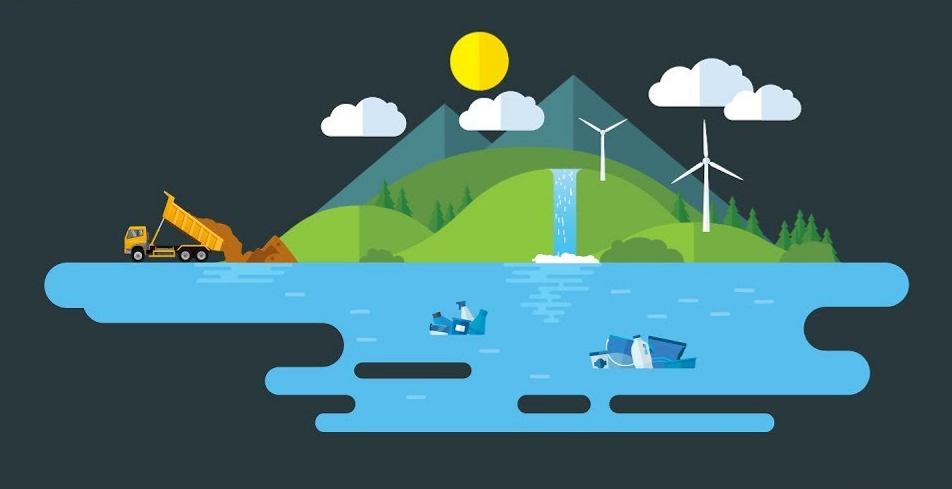
The Blue Economy is often described as a sector of the economy — placed alongside the maritime sector or conflated with the “ocean economy” — limited to industries such as shipping, fisheries, offshore energy, and tourism. This narrow framing fundamentally underestimates both the scale of the ocean and the depth of humanity’s relationship with it. The ocean is not merely one component of the global economy; it is the foundation that makes all economies possible.
Less than one-third of Earth’s surface lies above sea level; the remaining two-thirds is covered by oceans and seas that contain 97% of the planet’s water. Far from being empty, this vast marine realm forms the largest living environment on Earth, covering every climatic zone and containing extraordinary ecological diversity — from polar seas and fjords to coral reefs, lagoons, kelp forests, open-ocean gyres, and the unexplored depths of the Challenger Deep.
Because of its sheer scale and diversity, the ocean influences all of humanity — coastal, inland, and hinterland alike. It shapes weather and climate patterns, produces nearly half the oxygen we breathe, drives the global water cycle, provides food and employment for millions, supports trade and energy systems, enriches cultural identity, and sustains and supports most of the planet’s biodiversity.
Recognising this broader reality is essential. The Blue Economy is not a specialised domain relevant only to maritime nations; it is a conceptual lens for understanding how the ocean underpins ecological stability, human wellbeing, and economic resilience everywhere. To treat it as merely a set of specific economic sectors or maritime industries is to get the concept hopelessly wrong. Yet, this is precisely how several nations, seduced by the word “economy” tend to view it.
This article accordingly seeks to re-centre the ocean in public understanding and policy discourse. It outlines the many ways in which humans depend on the ocean, explores the current wave of ocean industrialisation known as the “Blue Acceleration”, and argues that the future of the Blue Economy needs to be a function of the entire economy — one that must prioritise resilience, equity, and ecosystem health over narrow efficiency and sectoral expansion.
The Ocean and Human Wellbeing: A Deep, Often Unseen Connection
The ocean supports human life in ways far deeper and broader than most people realise. It is easy to overlook just how dependent we are on a healthy ocean — especially if we live far from the coast. Yet, the ocean influences our daily lives in countless, often invisible ways. It feeds us, stabilises our climate, powers economies, fuels innovation, protects communities, enriches culture, and sustains biodiversity on a planetary scale. These contributions become clearer when we look at the specific ways the ocean underpins human wellbeing.
Food and Livelihood: Although only 1% of Earth’s living organisms inhabit the sea, they make up about 78% of all animal biomass, forming the base of rich marine food webs.[1] This biological abundance provides critical food security: marine fisheries contribute 17% of global animal protein and 7% of total protein,[2] while seafood consumption has risen from 10 kg per person in the 1960s to nearly 20 kg in 2022.[3] Fish and shellfish offer high-quality protein, essential micronutrients, and Omega-3 fatty acids known to reduce risks of heart disease, diabetes, and certain cancers. Both wild fisheries and aquaculture are central to meeting growing demand. Marine plants also play a major role — seaweed farming exceeded 34 million tonnes in 2019, generating USD 14.7 billion — and more than 600 million people depend on fisheries and aquaculture for their livelihood.[4] Even those who do not eat seafood benefit through fishmeal used in livestock feed and organic fertilisers.
Freshwater Supplies: The ocean also supplies freshwater — indirectly but fundamentally. Although seawater is not drinkable in its natural form, evaporation from the ocean drives the global water cycle, generating the rainfall that replenishes rivers, lakes, groundwater, and glaciers. As freshwater scarcity intensifies due to overuse, pollution, depletion of groundwater reserves, many regions are forced to rely upon desalination to convert seawater into drinking water. This is now vital for numerous coastal and small island States, particularly those in arid regions: 48% of the world’s 95 million m³ of daily desalinated water is produced in West Asia and North Africa.[5]
Oxygen Production: Around 50% of all atmospheric oxygen comes from the sea, produced mainly by microscopic phytoplankton that collectively outperform all terrestrial forest.[6] Among them, the tiny bacterium Prochlorococcus contributes up to 20% of the planet’s total oxygen — more than all tropical forests combined.[7] Coastal habitats such as kelp forests, seaweed beds, and seagrass meadows add even more oxygen, especially in nearshore waters.
Climate Regulation and Coastal Protection: As Earth’s primary climate regulator, the ocean absorbs, stores, and circulates heat across the global. Major currents such as the Gulf Stream move warm water toward the poles and return cooler water to the topics, moderating temperatures and shaping weather patterns across continents.[8] Without this continuous heat redistribution, extreme weather would be far more frequent and severe. Moreover, coastal ecosystems — mangroves, coral reefs, wetlands, and marshes — serve as natural protective barriers, absorbing wave energy, reducing erosion, weakening storm surges, and buffering communities against floods.
Economic Powerhouse: The ocean generates trillions of dollars annually and supports millions of jobs across shipping, tourism, fisheries, biotechnology, and offshore energy. Marine tourism — surfing, diving, sailing, whale watching, for instance — brings millions of visitors into direct contact with the sea and sustains coastal economies.
Cultural Inspiration and Human Wellbeing: For countless communities, the ocean is a source of identity, heritage, and meaning. Coastal areas are also proven therapeutic environments. Research describes them as “therapeutic landscapes”[9] and the “blue gym”,[10] where sea air, open horizons, and natural soundscapes enhance physical and mental wellbeing, reduce stress, and improve mood.
Global Trade and Connectivity: The ocean is the backbone of global commerce: Very nearly 90% of world trade moves by sea.[11] More than 95% of international data travels through undersea fibre-optic cables, enabling global internet, finance, and communication.[12] Without these systems, modern life would simply not function.
Carbon Storage: The ocean absorbs 25–30% of human CO₂ emissions, storing carbon in deep waters for centuries or millennia and slowing the pace of climate change.[13]
Energy and Medicine: The ocean also provides an expanding portfolio of energy resources. Offshore wind farms are growing rapidly where land-based options are limited, complemented by emerging tidal, current, and wave energy technologies. In tropical regions, Ocean Thermal Energy Conversion (OTEC) offers further renewable potential. Likewise, marine organisms — sponges, corals, algae, bacteria — produce compounds with antiviral, antibacterial, antifungal, and anticancer properties. Several modern drugs originate from marine species, and yet, much of the ocean’s biomedical potential remains unexplored.
Human–Ocean Connections and the New Global Understanding of the Ocean
Human connections to the ocean are diverse, profound, and deeply rooted. Across the world, communities relate to the sea in economic, cultural, spiritual, legal, and emotional ways — shaped by centuries of navigation, migration, fishing, trade, storytelling, healing practices, recreation, and artistic expression. For some, the ocean is livelihood and survival; for others it is identity, memory, belonging, or spiritual grounding. These relationships are embedded in both formal institutions — laws, rights, policies — and informal ones such as customs, norms, and traditional knowledge. Together, they shape how people access, value, and steward marine spaces.
Yet, despite these profound longstanding connections, the ocean remained marginal in global governance for decades. International climate negotiations under the UNFCCC focused largely on land-based emissions, forests, and energy transitions, treating the ocean — Earth’s largest climate regulator — as a peripheral backdrop rather than a central actor. This began to shift only after the IPCC Special Report on the Ocean and Cryosphere (2019),[14] which showed that the ocean absorbs over 90% of excess heat, is rapidly acidifying and losing oxygen, and is experiencing accelerating sea-level rise, changes with cascading impacts on economies, food systems, and societies everywhere.
COP25, often called the “Blue COP”,[15] marked a turning point by explicitly elevating the ocean–climate nexus and establishing pathways for strengthened science, adaptation, and coastal resilience. Since then, global initiatives such as the “Great Blue Wall”,[16] the “Ocean-Climate Dialogue”,[17] and the “Blue NDC Implementation Taskforce”[18] have helped move the ocean from the periphery toward the centre of climate discussions. While implementation remains uneven and still in early stages, these efforts have encouraged many countries to begin integrating ocean-based mitigation and adaptation measures into their national strategies, even if full adaptation and operationalisation are yet to be realised.
This shift within the UNFCCC has also influenced G20 governance as well. Ocean issues entered the G20 agenda only recently, initially through issues such as marine litter,[19] plastic pollution,[20] and marine biodiversity,[21] but have expanded rapidly. India’s 2023 G20 Presidency framed the Blue Economy as a driver of resilient, inclusive, and climate-ready growth,[22] while South Africa’s 2024 Presidency launched Ocean 20 (O20)[23] to integrate ocean sustainability into G20 economic decision-making and promote cooperation on blue finance, marine conservation, and coastal resilience.
Together, developments across the UNFCCC and the G20 signal a converging global recognition: the ocean is indispensable for climate stability, economic resilience, and sustainable development—and must be treated as a core pillar of global governance, not a peripheral concern.
The Blue Acceleration: A Growing Threat to Human–Ocean Connections
However, even as the ocean gains visibility in global forums, emerging trends threaten to erode these diverse connections and threaten the very relationships that bind people to the sea. Humanity is experiencing what is being called a “Blue Acceleration” — a period marked by an unprecedented surge in industrial activity at sea. Expanding offshore energy, aquaculture, bioprospecting, seabed exploration, and maritime transport are intensifying claims over ocean space. This expansion has attendant risks: accelerating pollution and cumulative ecological pressures, habitat degradation and fragmentation, declining ecological resilience, and the erosion of traditional, cultural, and community-based governance systems. As marine spaces become increasingly privatised, zoned, and securitised, the ocean risks being reduced to a commercial or strategic asset — disconnected from the cultural, ecological, and livelihood ties that have sustained human societies for generations. The ocean is no longer merely enabling development; it is being rapidly reshaped by it.
This moment raises a critical question: How can we manage accelerating ocean use without accelerating ecological, social, and economic harm?
The Evolution—and Drift—of the Blue Economy
The concept of the Blue Economy emerged as a response to these very concerns. First articulated and championed by Small Island Developing States (SIDS) during the Rio+20 Conference, it sought to correct the limitations of the Green Economy, which largely overlooked the ocean. For SIDS — whose identities, economies, and survival depend on healthy seas — the Blue Economy was intended to place the ocean at the centre of sustainable development.
Accordingly, the Blue Economy provided a broad and far more relevant framework than is the case today. It recognised that the oceans — including the high seas, often described as humanity’s common heritage — represented one of the last frontiers for sustainable development. Early initiatives, such as the UNEP’s “Green Economy in a Blue World”, attempted to integrate ecological limits, conservation, and equity into ocean governance.[24]
This conceptualisation of the Blue Economy moved the term far beyond traditional ocean-based industries and beyond the idea of oceans as national domains alone. It framed the ocean as a holistic development space, where integrated spatial planning wove together conservation, sustainable use, marine transport, renewable energy, bioprospecting, cultural values, and ecosystem protection. Crucially, it challenged the outdated view of the ocean as a limitless reservoir for resource extraction or waste disposal; and instead, sought to mainstream ecological boundaries and ocean services, into policy and economic decision-making.
However, as countries developed their own blue economy policies over the past decade, the very concept has changed, privileging immediate or short-term economic gains over sustainability.
On the one hand, Small Island Developing States (SIDS) continue to frame it as a survival and adaptation framework, centred on food security, livelihoods, and climate resilience, and ocean health. Seychelles’ “Blue Economy Strategy” of 2013, for instance, emphasises “the sustainable use of ocean resources for economic growth, improved livelihoods and jobs, while preserving the health of the ocean ecosystem.”[25] Fiji and Kiribati similarly prioritise “climate-resilient fisheries, coastal protection, and community-based marine management”.[26] Across SIDS, the Blue Economy is framed by the “SIDS Accelerated Modalities of Action” (SAMOA) approach, commonly referred-to as the “SAMOA Pathway”.[27] Likewise, the “Alliance of Small Island States” (AOSIS) positions it as a “tool for sustainable development and poverty eradication, by fostering economic diversification, food security, and resilience to climate change through sustainable ocean use.”[28]
On the other hand, large emerging economies offer a sharp contrast in their approach to the concept, often adopting a sectoral, growth-oriented interpretation. The USA defines the blue economy in terms of “sustainable use of aquatic resources in support of economic development objectives,” [29] while the European Union includes the full suite of “maritime activities—fisheries, ports, shipping, tourism, aquaculture, and marine renewable energy”.[30] India defines it as “a subset of the national economy comprising an entire ocean resource system and human-made economic infrastructure in marine, maritime, and onshore coastal zones within the country’s legal jurisdiction.”[31] In each of these contexts, the Blue Economy increasingly resembles a modern extension of the traditional ocean economy, centred on industrial expansion, infrastructure growth, and the capitalisation of marine resources.
These divergent approaches have gradually shifted the global discourse. Instead of remaining a transformative framework grounded in equity, conservation, and resilience, the Blue Economy is now frequently used as an umbrella for expanding ocean-based industries — from fisheries and tourism to offshore wind, aquaculture, biotechnology, and seabed exploration.
The Central Weakness: Prioritising Efficiency Over Resilience
As global attention to the ocean grows, a critical weakness has emerged in the manner in which several States interpret the Blue Economy. There is a growing tendency to treat it primarily as a platform for industrial expansion. This interpretation reinforces a familiar pattern in global development — the prioritisation of efficiency over resilience. Efficiency seeks maximum output at the lowest cost, favouring high-yield sectors such as aquaculture, shipping, offshore energy, and large-scale coastal infrastructure. While this approach can generate short-term gains, it produces long-term vulnerabilities. Natural ecosystems do not survive by maximising efficiency; they persist through redundancy, diversity, flexibility, and the capacity to absorb shocks. A Blue Economy built around efficiency rather than resilience becomes unstable, unsustainable, and ultimately self-defeating.
The consequences of this imbalance are already visible. Efficiency-driven aquaculture increases production but destabilises nutrient cycles and weakens coastal ecosystems. Efficiency-driven shipping boosts trade competitiveness but increases and externalises emission, noise, and waste. Infrastructure built for maximum throughput locks societies into rigid systems that cannot adapt to climatic uncertainty. These dynamics mirror boarder global crises such as climate change, ecological collapse, and inequality, all of which stem from privileging speed, scale, and growth over stability justice, and long-term resilience.
Correcting this trajectory requires, first, reorienting the Blue Economy toward resilience as its primary design principle. This means investing in ecological redundancy and diversity by restoring mangroves, seagrasses, and coral ecosystems, which sequester carbon, support fisheries, and buffer coasts. It means diversifying coastal and marine livelihood to reduce dependence on single sectors and building adaptative governance systems capable of learning and adjusting over time. Efficiency need not be discarded, but it must be balanced against ecological resilience limits and long-term stability.
This need is reinforced not only by the “economics of happiness”,[32] which shows that rising material output does not automatically increases life satisfaction once basic needs are met,[33] but also by Amartya Sen’s broader insight that development is ultimately about expanding people’s substantive freedoms.[34] As Sen argues in “Development as Freedom”, development lies not in producing more goods, but in enabling people to live meaningful, flourishing lives.[35] A Blue Economy focused narrowly on output risks undermining the wider freedoms, cultural foundations, and ecological conditions that healthy marine systems support.
A second argument comes from Earth-system science. Human–ocean relationships are often understood through coastal and maritime experiences, yet these connections extend far inland. High mountain regions such as the Himalayas and the Tibetan Plateau, located thousands of kilometres from the coast and standing at elevations of 4,000 to 5,500 metres above sea level,[36] are intimately linked to the ocean through hydrological, climatic, and ecological processes. [37] Glaciers in these regions feed Asia’s major rivers, whose freshwater eventually enters the Bay of Bengal. Accelerated glacier-melt contributes to global sea-level rise, alters ocean–atmosphere interaction, increases stratification, reduces oxygen levels, and adversely influences coastal ecological dynamics, including phenomena such as Noctiluca scintillans blooms.[38] The influence is also bidirectional: plastics, chemicals, and waste discarded upstream in mountain catchments travel through river systems and eventually degrade marine ecosystems.
These two-way linkages underscore an important truth: landlocked and high-altitude regions are inseparable from the health and stability of the ocean. They show that the ocean cannot be governed as a self-contained economic space. Its condition is shaped by ecological, climatic, and hydrological processes that originate far inland, and human wellbeing depends on oceanic processes that extend far beyond the coast. Governance models that focus narrowly on efficiency or sectoral expansion overlook these interdependencies and risk weakening both ecosystems and societies. What is needed instead is an approach centred on resilience — one that recognises the ocean’s integrated role in social, ecological, and planetary systems. Correcting this trajectory requires, first, reorienting the Blue Economy toward resilience as its primary design principle, and second, shifting from narrow sectoral expansion to a holistic, systems-based approach that reflects the ocean’s ecological, social, and economic interconnectedness.
Conclusion: A Path Forward
The ocean cannot be treated as a mere economic sector or a new frontier for industrial expansion. It is the ecological, cultural, and economic foundation of human life — regulating climate, sustaining biodiversity, supporting livelihoods, and grounding identities across coastal, inland, and high-altitude regions. Recognising this reality demands a fundamental shift in how the Blue Economy is understood and governed. To secure human wellbeing into the future, ocean governance must move beyond narrow efficiency-driven, sectoral approaches. It must place resilience — ecological-, social-, cultural-, and economic resilience — at its core, reflecting the ocean’s role as an interconnected Earth-system rather than a collection of industrial spaces. It must also adopt holistic, systems-based governance that honours the full spectrum of human–ocean relationships, including cultural, spiritual, and community ties that are often overlooked in policy processes.
A holistic Blue Economy policy must therefore:
- Recognise and safeguard diverse human–ocean relationships, not only those that generate measurable economic value.
- Prioritise resilience over efficiency, ensuring that ecosystems and communities can cope with shocks.
- Embed ecological limits and planetary boundaries into all ocean-related decision-making.
- Protect cultural continuity, traditional rights, and community stewardship, strengthening identity and belonging.
- Ensure equitable access to ocean resources and benefits, particularly for SIDS, coastal communities, and traditional users.
- Ensure fair and equitable access to marine resources and benefits, preventing the ocean from becoming increasingly privatised or exclusionary.
The future of the Blue Economy must be grounded in what the ocean truly is — not a space for accelerating extraction, but rather, a life-support system that connects all societies. Understanding our connection to the ocean is the first step; designing governance that protects and strengthens this connection is the path forward.
*******
About the Author
Dr Chime Youdon is a Research Fellow at the National Maritime Foundation and heads its “Resilience, Sustainability, and Ocean Resources” (RSOR) Cluster. Her research is centred upon climate risk, resilience, and sustainable transitions in the coastal and maritime domain. She works at the intersection of climate science, governance, and ocean policy, with a regional focus on India and the broader Indo-Pacific.
Endnotes:
[1] Hannah Ritchie, “Humans Make Up Just 0.01% of Earth’s Life — What’s the Rest?”, Our World in Data, https://ourworldindata.org/life-on-earth
[2] Food and Agriculture Organization of the United Nations (FAO), “The State of World Fisheries and Aquaculture” (Rome: FAO, 2022). https://www.msc.org/docs/default-source/se-files/fn_2022_worldfisheriesandaquaculture.pdf?sfvrsn=7781456d_1
[3] Food and Agriculture Organization of the United Nations (FAO), “The State of World Fisheries and Aquaculture 2022 – Towards Blue Transformation” (2022). https://www.msc.org/docs/default-source/se-files/fn_2022_worldfisheriesandaquaculture.pdf?sfvrsn=7781456d_1
[4] Vincent Doumeizel, “The Seaweed Revolution: How Seaweed Has Shaped Our Past and Can Save Our Future”, trans. Charlotte Coombe, London: Legend Press, 2023, 288. https://www.google.co.in/books/edition/The_Seaweed_Revolution/6umzEAAAQBAJ?hl=en&gbpv=0
[5] “Water Desalination System: The Global Leader is the Middle East” Infrastructure Related News from Italy and the Rest of the World, 24 September, 2024, https://www.webuildvalue.com/en/facts/water-desalination-system.html.
[6] United Nations, “Ocean and Climate Change”. https://www.un.org/en/climatechange/science/climate-issues/ocean.
[7] National Oceanic and Atmospheric Administration, “Ocean Oxygen,” NOAA — Ocean Service. https://oceanservice.noaa.gov/facts/ocean-oxygen.html
[8] Stefan Rahmstorf, “Ocean Circulation and Climate during the Past 120,000 Years”, Nature 419 (2002), 207-14. https://doi.org/10.1038/nature01090
[9] Jessica Finlay, Thea Franke, Heather McKay, and Joanie Sims-Gould, “Therapeutic Landscapes and Wellbeing in Later Life: Impacts of Blue and Green Spaces for Older Adults,” Health & Place 34 (July 2015), 97-106. https://doi.org/10.1016/j.healthplace.2015.05.001
[10] Michael H Depledge and William J Bird, “The Blue Gym: Health and Wellbeing from Our Coasts,” Marine Pollution Bulletin 58, No 7 (July 2009), 947–48. https://doi.org/10.1016/j.marpolbul.2009.04.019
[11] UN Conference on Trade and Development (UNCTAD), “Shipping Data: UNCTAD Releases New Seaborne Trade Statistics,” 23 April 2025. https://unctad.org/news/shipping-data-unctad-releases-new-seaborne-trade-statistics
[12] Daniel F Runde, Erin L Murphy, and Thomas Bryja, “Safeguarding Subsea Cables: Protecting Cyber Infrastructure amid Great Power Competition”, Center for Strategic and International Studies, 16 August 2024. https://www.csis.org/analysis/safeguarding-subsea-cables-protecting-cyber-infrastructure-amid-great-power-competition.
[13] NASA, “The Ocean’s Carbon Balance,” Earth Observatory, 01 July 2008. https://science.nasa.gov/earth/earth-observatory/oceans-carbon-balance/.
[14] Intergovernmental Panel on Climate Change (IPCC), “IPCC Special Report on the Ocean and Cryosphere in a Changing Climate”, ed. H.-O. Pörtner et al. (Geneva: IPCC, 2019). https://www.ipcc.ch/srocc/
[15] UNFCCC, “The COP 25 Presidency and the Incoming Presidency”. Joint Presidency Ocean Event Information Note, United Nations Framework Convention on Climate Change, 2019.
[16] International Union for Conservation of Nature (IUCN). “Global Launch of the Great Blue Wall.” IUCN Secretariate News, 10 November 2021. https://iucn.org/news/secretariat/202111/global-launch-great-blue-wall.
[17] United Nations Framework Convention on Climate Change (UNFCCC). “Ocean and Climate Change Dialogue 2025 Mandated Event.” https://unfccc.int/event/ocean-and-climate-change-dialogue-2025-mandated-event-0
[18] United Nations Framework Convention on Climate Change, “The Blue NDC Challenge”, 26 June 2025.
https://unfccc.int/sites/default/files/resource/The_Blue_NDC_Challenge.pdf.
[19] Government of Japan, Ministry of Foreign Affairs, “Message from G20 Summit Osaka 2019”.
https://www.mofa.go.jp/policy/economy/g20_summit/osaka19/en/summit/message/
[20] G20 Marine Plastic Litter Initiative, “How is the Global Community Approaching Marine Plastic Litter?”, Policy Summary of the G20 Report on Actions against Marine Plastic Litter, 22 March 2022. https://g20mpl.org/wp-content/uploads/2022/03/G20MPL_factsheet_220322-final.pdf.
[21] “G20 Rome Leaders’ Declaration”. 31 October 2021.
https://www.governo.it/sites/governo.it/files/G20ROMELEADERSDECLARATION_0.pdf. governo.it
[22] Pushp Bajaj and Chime Youdon, “Towards a Holistic Blue Economy Framework: Adoption of High-Level Principles for Blue Economy by the G20.” National Maritime Foundation Website, 02 March 2024. https://maritimeindia.org/towards-a-holistic-blue-economy-framework-adoption-of-high-level-principles-for-blue-economy-by-the-g20/.
[23] World Economic Forum. “First Oceans20 Communiqué Urges Bold G20 Action for Ocean Stewardship.” Friends of Ocean Action, 18 November 2024. https://www.weforum.org/friends-of-ocean-action/first-oceans-20-communique-urges-bold-g20-action-for-ocean-stewardship-9879367393/.
[24] UNEP, “Green Economy in a Blue World”, United Nations Environment Programme, Nairobi, 2012.
https://wedocs.unep.org/bitstream/handle/20.500.11822/11343/Green_Economy_Blue_World.pdf
[25] Government of Seychelles, “The Blue Economy: Seychelles’ Blue Economy Strategy, 2013”.
[26] Republic of Fiji, “Fiji National Ocean Policy 2020–2030”, 2020. https://fijiclimatechangeportal.gov.fj/wp-content/uploads/2021/01/Fiji_NationalOceansPolicy_2020.pdf
[27] United Nations. “SIDS Accelerated Modalities of Action (SAMOA) Pathway”, 2014.
https://sustainabledevelopment.un.org/samoapathway.html
[28] Alliance of Small Island States (AOSIS), “Enhancing Support for the Sustainable Blue Economy: Scaling Innovative, Transformative and Durable Investments in SIDS.”, 30 June 2022. https://www.aosis.org/enhancing-support-for-the-sustainable-blue-economy-scaling-innovative-transformative-and-durable-investments-in-sids/.
[29] US Department of Commerce, National Oceanic and Atmospheric Administration (NOAA), “NOAA Blue Economy Strategic Plan 2021–2025”, 2021. https://oceanservice.noaa.gov/economy/blue-economy-strategy/
[30] European Commission, “The EU Blue Economy Report 2023”, 2023. https://oceans-and-fisheries.ec.europa.eu/publications/2023-eu-blue-economy-report_en
[31] Government of India, “India’s Blue Economy: A Draft Policy Framework”, Indian National Center for Ocean Information Services (INCOIS), 2020. https://services.incois.gov.in/documents/Blue_Economy_policy.pdf.
[32] Carol Graham, “The Economics of Happiness: Insights on Globalization from a Novel Approach”, Brookings Institution, 2005, https://www.brookings.edu/wp-content/uploads/2016/06/200509.pdf.
[33] Daniel Kahneman and Alan B Krueger, “Developments in the Measurement of Subjective Well-Being,” Journal of Economic Perspectives 20, No 1 (2006), 3–24. https://inequality.stanford.edu/sites/default/files/media/_media/pdf/Reference%20Media/Kahneman_2006_Measurement.pdf
Also see: Ed Diener and Martin EP Seligman, “Beyond Money: Toward an Economy of Well-Being,” Psychological Science in the Public Interest 5, No 1 (2004), 1–31. https://journals.sagepub.com/doi/10.1111/j.0963-7214.2004.00501001.x
[34] Amartya Sen, “Development as Freedom”, 1999. https://kuangaliablog.wordpress.com/wp-content/uploads/2017/07/amartya_kumar_sen_development_as_freedombookfi.pdf.
[35] Ibid
[36] Tianyi Wu, “The Qinghai–Tibetan Plateau: How High Do Tibetans Live?”, High Altitude Medicine & Biology 2, No 4 (2001), 489–99. https://doi.org/10.1089/152702901753397054
[37] Yimin Liu, Haoming Xiao, Lijuan Chen, Jiang Zhu, Weipeng Zheng, Tongwen Wu, and Tianjun Zhou, “Land–Atmosphere–Ocean Coupling Associated with the Tibetan Plateau and Its Climate Impacts”, National Science Review 7, No 3 (2020), 534–52. https://pmc.ncbi.nlm.nih.gov/articles/PMC8906512/
[38] Sarita Fernandes and Pushp Bajaj, “Implications for India of Noctiluca scintillans in the Maritime Domain”, Maritime Research Center (MRC), 06 May 2021. https://maritimeindia.org/implications-for-india-of-noctiluca-scintillans-in-the-maritime-domain/


Leave a Reply
Want to join the discussion?Feel free to contribute!