
 Image Credits: The Times of India
The recent Maritime India Summit 2016 in Mumbai was the first ever large scale global maritime event hosted by India. It was also an opportune moment for the Indian Prime Minister to announce his vision of a ‘maritime India’ built around robust infrastructure to complement the hinterland development plans. The thrust of his speech was on ‘leveraging the long coastline and natural maritime advantages’ and invigorating the ocean economy through the Sagarmala project, which focuses on port-led development integrated with special economic zones, smart cities, industrial parks, logistics hubs and transport corridors. The Summit also served as a platform for investors to explore business opportunities in various maritime sectors.
One of the focus areas among these was the development of coastal and marine tourism along the 7,500 kilometers long coastline, which is dotted with pristine beaches, tranquil waterfronts and picturesque island territories. These are home to mangrove forests, nesting sites for sea turtles, sea grass beds, coral reefs and the adjacent waters are home to a variety of fish and mammals.
The renewed focus on marine tourism comes after decades of neglect by various governments; and Indian policy makers never envisioned marine tourism as an important part of the engine for the growth of national economy. The 1982 national policy on tourism did not succeed due to the closed nature of the Indian economy and restrictive licensing policy which denounced private and foreign participations. But the 2002 National Tourism Policy acknowledged tourism as an engine of economic growth and envisioned the sector as an economic multiplier under the framework of ‘Government-led, private-sector driven and community-welfare oriented’ and stressed the need to develop tourism in an environmentally sustainable environment manner.
Marine tourism industry has developed well along India’s west coast – particularly around Goa along the Konkan belt, and in Kerala along the Malabar Coast. Goa – referred to as ‘Pearl of the Orient’ – is a tourist paradise, and has received 895 international charter flights in 2015. Similarly, Kerala, which is promoted as ‘God’s own country’, attracts international tourists for its beaches, picturesque backwaters, canals, and lagoons, which are home to abundant marine life.
The Andaman and Nicobar Islands are an excellent tourism destination, but have been selectively opened for tourism due to environmental and security concerns. The islands are closer popular tourist destinations such as Phuket in Thailand and Langkawi in Malaysia, but have remained closed to international cruise liners. Likewise, the Lakshadweep Islands offer the finest underwater marine life for scuba divers, but have remained insulated to tourism primarily due to security and controlled development reasons.
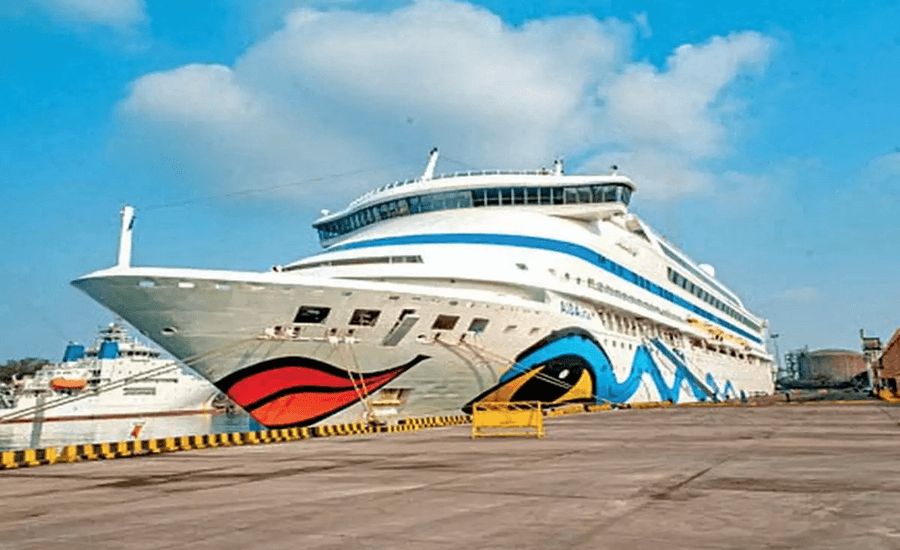
The Indian government initiative to boost marine tourism is laudable, and a number of agencies are engaged in promoting coastal and marine tourism through projects such as cruise shipping and lighthouse tourism. Cruise tourism is a neglected and overlooked industry, and Indian ports have not been a popular cruise destination among the cruise line industry. Significantly, most cruise liners bypass India, either to Southeast Asia or the Middle East; and in 2014, the sea arrivals constituted about 0.4 per cent of country’s total foreign arrivals. The Indian government is conscious of infrastructure inadequacies and has a vision and plan for promotion of cruise tourism and increase sea arrivals to 1.2 million tourists by 2030-31. Cruise terminals are under development at Goa, Cochin, Mumbai and Chennai and these can potentially boost the domestic hospitality industry that is also developing infrastructure and services to support port city excursions and domestic tourism.
Another innovative marine tourism initiative by the government is lighthouse tourism. There are nearly 190 lighthouses along the Indian coast and the surrounding areas offer opportunities for development of hotels, resorts, viewing galleries, adventure sports, thematic restaurant and allied tourism facilities. The Directorate General of Lighthouses and Lightships have identified 78 lighthouses, and adjacent areas around 8 lighthouses are being developed for tourism.
There are at least three more marine tourism segments which merit attention. The first is marinas. The Kerala Tourism Development Corporation (KTDC) marina at Bolgatty Island in Kochi is of international standard, and can berth around 30 yachts. A number of foreign luxury yachts sailing through the Indian Ocean call at Kochi. Interestingly, it is the world’s only marina with a golf course. Two new marinas are under development in Mumbai and Kolkata. Although the ownership and use of luxury yachts in India is not quite popular, and only about 500 registered leisure boats are berthed in existing port facilities, setting up marinas can be a major growth industry for building yachts, encourage ownership of luxury boats, revenue for ports and create jobs.
The second segment is water sports which is a major attraction for marine leisure and entertainment industry in India. Several facilities have sprung up along India’s coast line and offer sailing, windsurfing, boating, water scooter rides, parasailing and jet skiing and their popularity is fast catching up. Most of the sea front tourist resorts and hotels too have now begun to offer these facilities. The National Institute of Water Sports (NIWS) at Goa offers training in Lifesaving Techniques and Powerboat Handling that is essential for running water sports facilities in India.
Third, India is also endowed with 14,500 kilometres of rivers, canals, backwaters, creeks and lakes of which 5600 kilometres is navigable by mechanized vessels. The government plans to develop 101 new waterways as national waterways and these have the potential of becoming tourism hubs. The Goa government has invited investments to develop its 250-kilometre inland waterways for connectivity, as also to attract tourism.
While marine tourism and recreation business is expected to be a growth industry in India and the government is committed to provide necessary policy and fiscal support and encouragement, many such infrastructure projects come under Coastal Regulation Zones. Given the fragile nature of the marine environment and the delicate marine biodiversity, any tourism and recreation development projects would have to be subjected to stringent environmental laws and regulations.
**********
About the Author:
The author is the Director, National Maritime Foundation, New Delhi. He can be reached at sakhuja.v@gmail.com
 Image Credits: Global Banking and Finance Review
  Image Credits: Bulk Energy
  Image Credits: ORF
  Image Credits: The Ministry of Ports, Shipping and Waterways, GOI

 Image Credits: Pinterest
 Image Credits: The Quint
Leave a Reply
Want to join the discussion?Feel free to contribute!