
 Image Credit- Asian Mint
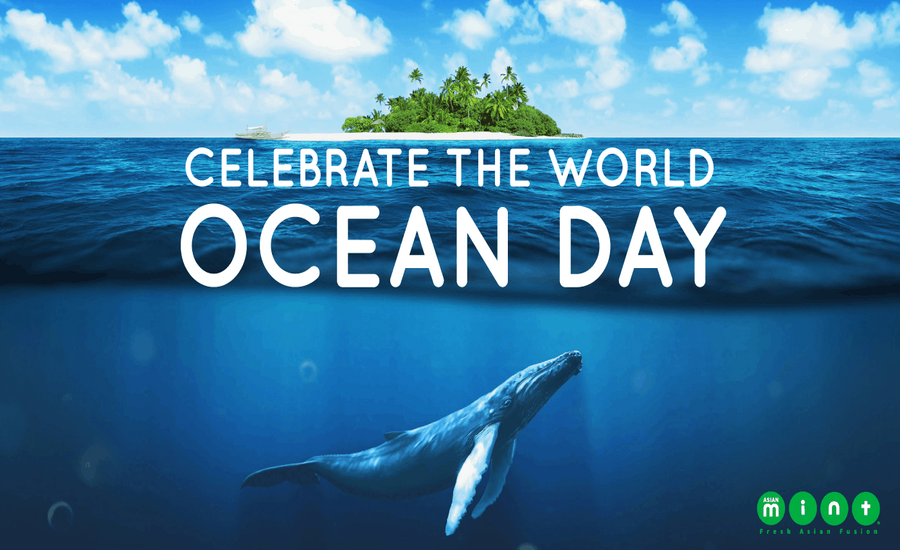
World Ocean Day (WOD), celebrated on 08 June every year, brings an opportunity to raise global awareness of the impacts of human actions on the ocean, and to mobilize support for sustainable global ocean management. It was first proposed in 1992 by the Government of Canada at the Earth Summit in Rio de Janeiro, Brazil to highlight the importance of the ocean and to appreciate its intrinsic value. But it took 16 long years for the United Nations General Assembly to pass a resolution to this effect and was first celebrated officially in 2009.
A waiting time of sixteen years to build support for such a benign and non- controversial issue, does convey a sense of disregard and the relatively low importance of oceans in the global agenda. It is therefore apt that the relevance of the oceans is reiterated by the theme adopted for WOD, 2015-16, ‘Healthy Oceans, Healthy Planet’. This year will focus on plastic pollution in the ocean which is a serious threat due to its low rate of degradation and its potentially catastrophic consequences for marine life.
Oceans are essential to life on earth as they drive global weather systems and oceanic currents sustain marine life. They create more than 50 percent of the earth’s oxygen which comes from phytoplankton – tiny ocean plants that live near the water’s surface. They also play a crucial role in reducing the impact of growing terrestrial CO2 emissions and it is estimated that oceans have absorbed approximately 28 percent of the cumulative anthropogenic emissions released from 1750 – 2011. Due to this large absorption of CO2, the pHi of ocean surface water has decreased by 0.1, since the beginning of the industrial era. This is a significant increase in acidity, which corresponds to a 26% increase in hydrogen ion concentration and is about 30 times greater than the natural variation.
Oceans act as natural buffers and it is estimated that 93.4 percent of the total heat for the period 1993 to 2003, has been absorbed by the oceans. This has degraded the buffering capacity of oceans and led to warming of the upper 75 m of the oceans by 0.11°C per decade. Ocean thermal expansion has also been the single largest factor contributing to approximately 40 percent to the rise in sea level, which is threatening the existence of several low lying island nations. Long-term ocean monitoring has also revealed that oxygen concentration in the ocean is progressively declining and Oxygen Minimum Zones (OMZs), which are naturally occurring regions of low oxygen areas present at 100-1000m depths, are increasing in number, volume, and intensity. The deadly trio of acidification, ocean warming and de-oxygenation of the oceans is impacting marine life and evidence suggests that this has led to lower ocean productivity, suppression of parts of the marine carbon and heat sink and has a significant impact on coral reefs and other forms of marine life.
The year 2015 may eventually turn out to be seminal in world history as it is arguably the last chance to take collective action for limiting global warming (to within two degrees centigrade of temperature rise above pre-industrial levels, by 2100). While reaching an agreement between 196 countries may not be an easy task, it is time that the world leaders commit to take definitive action on climate change. In the build up to the climate change talks, to be held at Paris in December, 2015, it is worth recalling the theme of the first WOD in 2009, ‘One Ocean, One Climate, One Future’. Representatives from various countries are meeting in Bonn, Germany from 01 June-11 June, 2015, to finalise the negotiating text for reaching a legally binding and equitable climate deal. In order to highlight the two way relationship between oceans and climate, the Intergovernmental Oceanographic Commission of UNESCO (IOC- UNESCO) organized a special event in Bonn, in the form of scientific workshops and plenary sessions by bringing together scientists, political decision-makers and civil society to focus on the ocean’s role in the climate system and the need for taking ocean-sensitive actions. What the Conference of Parties (COP 21) negotiations achieves is yet to be seen but it is important that the centrality of the oceans in the earth’s climate system is noted and acknowledged by all countries.
Climate change and oceans are inter-twined and healthy oceans are vital for a healthy planet. Countries in the Indian Ocean Region need to be concerned as simulations using global ocean–sea ice model has indicated that there has been increased heat uptake in the Pacific Ocean accompanied by increased heat transport to the Indian Ocean, through the passages of the Indonesian Archipelago. In fact, the Indian Ocean accounts for 70 per cent of all the global oceans heat gain up to 700 metres depth during the past decade. While efforts are being undertaken in India by Ministry of Environment and Forests (MoEF), Department of Ocean Development (Ministry of Science and Technology), and by regional organizations such as the Bay of Bengal Large Marine Ecosystem (BOBLME) project, much more needs to be done.
Raising awareness about the impact of the human actions on the oceans is the key to build public opinion and to mobilize support for protecting the oceans. As the leading maritime think tank, the National Maritime Foundation (NMF) can play a vital role in leading this awareness drive. Another way could be to develop global partnerships with like-minded civil society organization to encourage a multi-actor approach for interdisciplinary action. The potential partner institutes of the NMF could be – The Global Ocean Forum, World Ocean Network, Pew Charitable Trust, The Global Ocean Commission, The High Seas Alliance, The Deep Sea Conservation Coalition, and The Coastal and Marine Union which are frontrunners in leading this initiative. The last aspect would be to engage policy makers both in India and abroad for the taking action to protect the oceans. All these aspects are mutually reinforcing and need to be simultaneously pursued to generate decisive action in conserving oceans.
Healthy oceans contribute to a healthy planet and the celebration of the WOD is a reminder to protect our oceans. A pledge to protect our oceans and a commitment to work for a clean and healthy global ocean would be each one’s personal tribute to Lord Varuna, the Indian God of the Seas.
About the Author
The author is a Research Fellow at the National Maritime Foundation, New Delhi. The views expressed are those of the author and do not reflect the official policy or position of the Indian Navy or National Maritime Foundation. He can be reached at kapilnarula@yahoo.com
End Notes
i pH = log10 (1/aH ) where aH is the hydrogen ion activity in the solution. Pure water has a pH of 7.0 at 25+ + i pH = log10 (1/aH +) where aH + is the hydrogen ion activity in the solution. Pure water has a pH of 7.0 at 25 degree C.
 ROK Navy- Cheonghae_anti-piracy_unit. Image credit- www.imagur.com
  Image Credits: Asian Voice
  Image Credits: ThoughtCo
 Image Credits: DNA India
  Image courtesy- Indian Navy Website https://indiannavy.nic.in/content/malabar-exercise-20
  Image Credit - U.S. NAVAL INSTITUE
 Image Credit- Politics Now
Leave a Reply
Want to join the discussion?Feel free to contribute!