
Backdrop
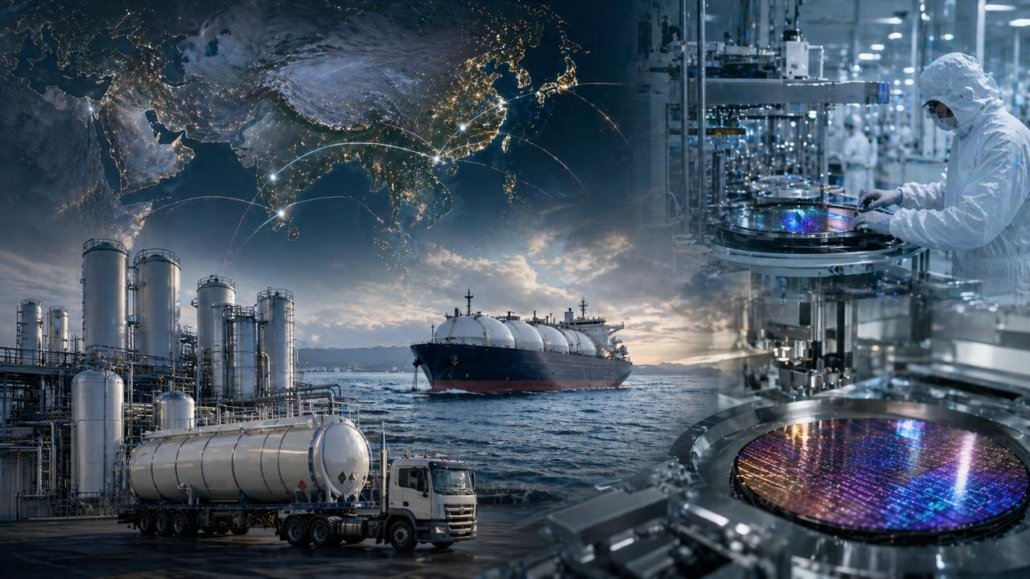
The global semiconductor industry’s near-total dependence on maritime logistics for the movement of critical inputs imposes a set of structural vulnerabilities that remain curiously underexamined in contemporary discourse on supply chain resilience. While prevailing analyses emphasise on aspects such as diversification or redundancy, they frequently lay insufficient stress upon the actual physical realities of transport — particularly the maritime systems that underpin the movement of high-value, high-sensitivity industrial inputs. This omission is not trivial, as it obscures the extent to which logistical fragility at sea can cascade into systemic disruptions across technologically advanced economies, while compounding the strategic vulnerability of middle powers that remain dependent on imported end-use technologies. This article interrogates the maritime dimensions of semiconductor supply chains through the specific case of neon gas, with an analysis on operational logistics, infrastructure dependencies, and strategic exposure.
Neon gas, a critical input in deep ultraviolet (DUV) lithography processes, is a quintessential example of how geographically concentrated production, combined with specialised transport requirements, generates disproportionate systemic risk.[1] The movement of semiconductor-grade neon gas is not merely a question of availability but of precision logistics, as it requires ultra-high purity standards and cryogenic containment through uninterrupted cold-chain integrity along lengthy maritime routes. The vulnerability of this particular supply was starkly revealed during the 2022 Russia–Ukraine War, which disrupted anywhere between 40-54% of global semiconductor-grade neon supply.[2] Ukraine’s prior dominance in purification capacity— built atop inherited Soviet-era industrial infrastructure— meant that the conflict translated almost immediately into supply shocks resulting in a ninefold increase in prices.[3] What this episode exposed was not merely overdependence on a single geography, but the fragility of a maritime-dependent network in which production nodes, purification facilities, and shipping routes are tightly coupled and difficult to reconfigure under crisis conditions.
The case of Taiwan further sharpens this vulnerability. As a semiconductor manufacturing hub whose economy is structurally dependent on seaborne trade — over 98% of its total trade volume — Taiwan’s access to ultra-high purity industrial gases is inseparable from the reliability of maritime logistics. On any given day these inputs must traverse congested sea lanes and chokepoints and arrive within tightly calibrated timeframes to sustain fabrication cycles. Any geopolitical, environmental, or infrastructural disruption would render this system, which is inherently intolerant of delays, latent. Taiwan’s semiconductor dominance — manufacturing 60% of global semiconductors and 90% of advanced chips below 10 nanometres — rests upon a maritime logistics foundation that remains relatively underexamined.[4] The fabrication facilities of the Taiwan Semiconductor Manufacturing Company (TMSC) require continuous flows of supply. Supply interruptions of 7 to 14 days are the operational tolerance or threshold due to just-in-time inventory models.[5] This temporal constraint transforms maritime logistics from ancillary concern to production-critical determinant. The maritime dimension manifests itself through multiple layers of vulnerability. The first is geographic concentration, given that Taiwan’s port infrastructure is concentrated in Kaohsiung (handling over 10 million TEU annually) and Taichung, which in turn creates single-point failure risks.[6] The second is the issue of route dependency, since primary shipping corridors traverse the Malacca Strait before crossing the contested South China Sea. The third is vessel specialisation, as semiconductor-grade gases require cryogenic ISO tank containers— a globally limited fleet numbering in hundreds rather than thousands, with the US-Iran conflict stranding approximately 200 such containers near the Strait of Hormuz in March-April 2026.[7]
Within the present geopolitical landscape, India occupies a paradoxical position. It is an underutilised producer of neon, generating substantial volumes as a by-product of its steel industry, yet lacking the advanced purification infrastructure required to elevate this output to semiconductor-grade standards. This gap is not merely industrial but strategic. With targeted investments, India could transition from a peripheral supplier of raw inputs to a critical node within the global semiconductor ecosystem. Maritime transit times from India’s eastern seaboard to Taiwan— estimated at approximately 7 to 10 days[8] — offer a decisive logistical advantage over European suppliers, whose routes extend to 25–30 days.[9] Moreover, the availability of alternative shipping corridors through Indonesian straits provides a degree of route diversification that mitigates overreliance on the Strait of Malacca, thereby enhancing resilience against chokepoint disruptions. These factors collectively position India as a potentially agile and reliable supplier within a system that increasingly values both speed and redundancy.
Realising this opportunity demands a conceptual shift: maritime logistics must be treated not as passive infrastructure but as an active strategic enabler. This entails aligning industrial policy with port-led development and maritime capability-building. Importantly, this shift must be situated within India’s evolving semiconductor partnerships— particularly with Taiwan, which remains central to global fabrication capacity. Recent engagements and ongoing negotiations involving firms such as Foxconn and Tata Electronics reflect a gradual and careful advancement of India–Taiwan semiconductor cooperation. While TSMC declined invitations to establish a major fabrication facility in India — opting instead for expansions in the US, Japan, and Germany — the Powerchip Semiconductor Manufacturing Corporation (PSMC) has advanced through a landmark technology-transfer agreement with Tata Electronics for an $11 billion greenfield fab in Dholera, Gujarat, targeting 50,000 wafers per month by late 2026.[10] Large-scale fabrication thus progresses via PSMC-Tata and other approvals (six facilities in all, including HCL-Foxconn[11]), emphasising collaborative design, assembly, testing, and ecosystem development. Within this framework, India’s potential role as a supplier of critical inputs — such as semiconductor-grade neon — becomes strategically consequential rather than peripheral.
A few policy directions emerge as particularly salient. First, the establishment of port-based neon purification clusters — particularly at Visakhapatnam, Chennai, and Paradip — would enable the co-location of industrial processing and export infrastructure, reducing handling inefficiencies and contamination risks. Crucially, such facilities will require substantial capital investment in advanced gas separation and ultra-high purity refinement technologies, areas in which India currently lacks industrial depth and must rely on technology partnerships or targeted capability acquisition. Second, the development of specialised cryogenic maritime logistics capabilities, including dedicated ISO tank container fleets and associated port handling systems, is essential to ensure the safe and efficient transport of ultra-high purity gases. Third, the institutionalisation of bilateral and minilateral maritime security protocols — potentially embedded within broader Indo-Pacific frameworks — would safeguard critical shipping routes against both conventional and non-traditional threats. Finally, the creation of strategically positioned stockpiles at both production and consumption nodes would introduce a buffer against supply shocks, allowing for temporal flexibility in the event of disruption.
Geopolitical Context and Strategic Vulnerabilities
These policy directions, however, do not operate in isolation; they are conditioned by a broader geopolitical environment that continues to shape both the risks and feasibility of maritime supply chains.
Shipping Modalities, Vessel Specifications, and Fleet Requirements
The maritime transport of neon gas operates through two distinct modalities, each defined by its own infrastructural demands and logistical limitations. The primary mode is cryogenic transport, in which neon gas is liquefied and stored within double-walled, vacuum-insulated ISO tank containers. Maintaining ultra-low temperatures, typically between –150°C and –200°C, they are efficiently moved in large volumes within standard 20-foot equivalent units (TEU).[12] These tanks require specialised onboard support despite their compatibility with conventional container vessel configurations, including dedicated plug-in points for continuous temperature monitoring and system integrity.
The secondary modality involves the transport of neon in its gaseous state under high pressure, using specialised cylinder racks. While this approach avoids the technical complexity associated with cryogenic systems, it is significantly constrained by volumetric inefficiency, rendering it unsuitable for bulk maritime trade. As a result, large-scale neon logistics are overwhelmingly dependent on the cryogenic modality, despite its greater infrastructural and operational demands. This dependence introduces a critical structural vulnerability. The global fleet of cryogenic ISO tank containers represents a highly constrained logistical resource, numbering only in the low thousands — far fewer than the millions of standard dry containers circulating within global shipping networks. Unlike generic containers, these units cannot be easily repurposed; each must be dedicated to specific gas types to prevent contamination, subjected to rigorous pre-shipment testing, and maintained under strict technical protocols. This specialised nature imposes both cost and inflexibility, limiting the system’s capacity to absorb shocks.
The implications of this constraint were clearly demonstrated during the US–Iran tensions, when the stranding of approximately 200 cryogenic containers in the Persian Gulf region triggered immediate global shortages. The challenge extended beyond simple retrieval. Repositioning and redeploying these units required a time-intensive sequence of inspection, refilling, and logistical coordination, stretching over months rather than weeks. A relatively localised disruption thus cascaded into a global supply constraint, underscoring the narrow operational margins within which this system functions.
These structural limitations carry direct consequences for maritime routes linking India and Taiwan, particularly in the context of semiconductor supply chains. Vessels operating along this corridor must allocate sufficient reefer capacity — typically 10 to 20% of total slots — to accommodate temperature-sensitive cargo. However, the transport of ultra-high-purity gases such as neon necessitates a more specialised configuration. Dedicated services would require mid-sized vessels in the 4,000–6,000 TEU range, balancing efficiency with routing flexibility, alongside enhanced reefer capacity of approximately 25 to 30% to support concentrated chemical cargo loads. Further requirements include reinforced securing systems to stabilise ISO tank containers under dynamic sea conditions, as well as integrated real-time monitoring capabilities to continuously track temperature, pressure, and location parameters. Taken together, these dynamics reveal that the maritime transport of neon relies on specialised equipment, limited container availability, and stringent operational requirements.
Chokepoint Dependencies
The Malacca Strait exemplifies how geographic constraints create strategic vulnerabilities transcending normal commercial risk. For semiconductor supply chains, chokepoint vulnerability manifests itself through temporal sensitivity. Unlike bulk commodities where inventory buffers absorb multi-week disruptions, semiconductor-grade gases operate on 07 to 21-day inventory cycles driven by working capital optimisation and contamination concerns (stored gases degrade over time even under controlled conditions). A closure of the Strait of Malacca extending beyond 10 to 14 days would exhaust buffer stocks, forcing fabrication slowdowns or stoppages.[13]
The South China Sea compounds this vulnerability through geopolitical contestation. Overlapping sovereignty claims among China, Taiwan, Vietnam, Philippines, Malaysia, and Brunei create legal ambiguities affecting commercial shipping. China’s construction of artificial island and militarisation of features including Subi Reef, Mischief Reef, and Fiery Cross Reef, establish forward deployment capabilities projecting power across commercial shipping lanes.[14] Whilst outside of a major conflict, outright interdiction of neutral commercial vessels remains unlikely, grey-zone tactics including fishing fleet swarming, coast guard harassment, and arbitrary regulatory enforcement create uncertainty affecting shipping costs and maritime insurance premiums.
Route Architecture
The structural fragility of neon transport does not end at container availability or vessel configuration. It extends directly into the geography of maritime routing itself. Once loaded, these highly sensitive cargoes must traverse a set of Indo-Pacific sea lanes that are efficient by design, yet increasingly exposed to congestion, geopolitical risk, and chokepoint vulnerability. In this context, route selection becomes not merely a logistical decision, but a strategic calculation balancing transit efficiency against systemic exposure. Three principal maritime corridors connect India’s eastern seaboard — particularly ports such as Chennai and Visakhapatnam — to Taiwan’s industrial hubs.
Each route offers a distinct trade-off between key determinants of efficiency.
The most direct and commercially dominant pathway runs through the Strait of Malacca. Vessels departing Indian ports transit this narrow, approximately 2.8-km-wide chokepoint, before entering the South China Sea en-route to Taiwan. This corridor offers optimal efficiency, with transit times typically ranging between 10 to 14 days. However, this efficiency comes at the cost of concentration risk. As brought out earlier, the Malacca Strait handles upwards of 90,000 vessel transits annually, making it one of the most congested and strategically sensitive maritime passages globally.[15]
An alternative pathway is provided by the Sunda Strait, which routes vessels between the islands of Java and Sumatra. While this corridor adds approximately 2 to 3 days to transit time, it offers partial mitigation of Malacca-related risks by dispersing traffic and reducing dependence on a single critical passage. However, the Sunda Strait itself presents navigational constraints, including strong currents, shallow depths, and narrow navigable channels, all of which limit vessel size and impose operational constraints. The most strategically resilient, albeit the least efficient one, route runs through the Lombok Strait and onward via the Makassar Strait. This corridor, passing east of Java, adds approximately 4 to 5 days to overall transit time but provides the greatest degree of chokepoint avoidance.[16] Its deeper waters and lower traffic density make it particularly suitable for high-value cargo requiring enhanced security and reduced exposure to congestion-related disruptions. For sensitive shipments such as semiconductor-grade gases, this route offers a form of logistical redundancy, trading time for resilience. Taken together, these corridors illustrate a fundamental tension within Indo-Pacific maritime logistics. The most efficient routes are often the most vulnerable, while more secure alternatives impose temporal and cost penalties. In the context of neon transport — where delays, temperature deviations, or supply interruptions can have cascading industrial impacts — this trade-off assumes heightened significance. Maritime routeing, therefore, must be understood not simply as a question of distance, but as a critical component of supply chain risk management within an increasingly contested and climate-stressed seascape. This is summarised in Table 1.
Table 1: India-Taiwan Maritime Route Comparative Analysis
| Route | Transit Time | Primary Vulnerabilities | Strategic Application |
| Malacca Strait | 10-14 days | Chokepoint congestion, piracy exposure, geopolitical closure risk | Primary commercial route for routine shipments |
| Sunda Strait | 12-17 days | Volcanic activity, seismic risk, narrower passage | Secondary route during Malacca congestion or elevated geopolitical tension |
| Lombok-Makassar | 14-19 days | Extended transit time, less developed port infrastructure | Crisis route for maximum chokepoint avoidance, strategic cargo only |
Table 1: India-Taiwan Maritime Route Comparative Analysis
India’s Strategic Position: Capabilities and Constraints
Industrial Gas Production Potential.
India’s steel production—exceeding 150 million tonnes annually and ranking second globally—generates substantial volumes of neon gas as by-products from air separation units (ASUs) supplying oxygen for blast furnaces. Each ASU processing atmospheric air captures neon alongside nitrogen, oxygen, and argon, through fractional distillation. However, India’s industrial gas sector has historically focused on bulk oxygen and nitrogen production, capturing minimal value from rare gas fractions including neon.
The critical capability gap lies in purification infrastructure. Semiconductor fabrication demands ultra-high purity neon (5N to 6N grade: 99.999-99.9999%), achievable through multi-stage purification involving cryogenic distillation, chemical absorption, and molecular sieve processing. India’s current installed capacity produces primarily industrial-grade neon gas (98-99% purity), which is suitable for welding, lighting, and general applications, but insufficiently pure for semiconductor use. Upgrading existing ASU facilities at major steel complexes — particularly in Odisha (SAIL Rourkela, Tata Steel Kalinganagar), Jharkhand (Tata Steel Jamshedpur), and Chhattisgarh (SAIL Bhilai) — requires estimated investments of USD 50-100 million per facility for purification train additions.[17]
Comparative Advantages in Maritime Geography
India’s eastern seaboard confers significant advantages in respect of transit time, compared to that faced by alternative suppliers. European sources—including potential Ukrainian capacity restoration—face 25–30-day maritime transit times to Taiwan via the Suez Canal and Malacca Strait route. Chinese suppliers, whilst geographically proximate, introduce political dependencies that Taiwan seeks explicitly to reduce, especially following Beijing’s assertive posture and semiconductor industry weaponisation efforts.
India’s 07–10-day transit advantage translates into multiple operational benefits. First, inventory optimisation: shorter supply cycles enable reduced buffer stock requirements, lowering working capital demands. Second, demand responsiveness: rapid replenishment enables fabrication facilities to adjust procurement patterns matching production scheduling changes. Third, disruption recovery: faster transit times compress the temporal window during which supply interruptions impact production, reducing just-in-time vulnerability.
Strategic positioning extends beyond transit time to geopolitical risk distribution. India’s non-aligned foreign policy tradition, strengthening security partnerships through QUAD and bilateral frameworks, and structural incentives for stable maritime commerce create a reliability profile attractive to Taiwan’s supply chain diversification imperatives. Unlike dependencies on autocratic regimes or conflict zones, India-Taiwan maritime trade aligns with broader Indo-Pacific stability frameworks supported by regional stakeholders.
Table 2 summarises the foregoing arguments.
| Supplier Region | Transit Time | Geopolitical Risk | Current Capacity | Strategic Assessment |
| China | 3-5 days | High | 50% global share | Proximity advantage offset by political dependency risk |
| Ukraine/Russia | 25-30 days | Critical | Severely disrupted | Historical supplier, ongoing conflict precludes reliable sourcing |
| Europe (General) | 25-30 days | Low-Moderate | Limited expansion | Stable but distant, transit time disadvantage |
| India | 7-10 days | Low | Potential, requires investment | Optimal transit-risk balance, infrastructure development required |
Table 2: Neon Supply Source Comparative Assessment for Taiwan (Source: Compiled by Author)
Infrastructure and Capability Deficits
India’s emergence as a viable neon supplier confronts three structural constraints requiring policy intervention. First, it requires purification infrastructure. Second, port-based specialisation— current port facilities lack dedicated semiconductor gas handling capabilities including controlled-environment transfer systems and cryogenic tank storage. Lastly, India needs maritime logistics coordination. These deficits are addressable through targeted investment and policy alignment. The Production Linked Incentive Scheme could incorporate semiconductor-grade industrial gas purification as an eligible activity, incentivising established. Port infrastructure development through extensions to the SAGARMALA Programme could prioritise semiconductor logistics capabilities at strategically positioned eastern seaboard facilities.
Conclusion
The foregoing analysis demonstrates that semiconductor supply chain resilience cannot be meaningfully addressed without confronting its maritime foundations. The case of neon gas reveals a system in which production, purification, and transport are not discrete stages but tightly coupled components vulnerable to disruption across geography and time. Events such as the Russia–Ukraine War have already exposed the fragility of this arrangement, while Taiwan’s structural dependence on uninterrupted maritime flows underscores the systemic stakes involved. Within this landscape, India’s position is neither incidental nor assured. Its capacity to emerge as a viable supplier of semiconductor-grade neon rests on its ability to bridge critical gaps in purification infrastructure, maritime logistics, and institutional coordination. The opportunity is therefore conditional, not inherent. It requires a deliberate alignment of industrial policy with port-led development and maritime security frameworks. Ultimately, maritime logistics must be reconceptualised as strategic infrastructure rather than a passive conduit. For India, this shift offers the possibility of converting latent industrial capacity into geopolitical relevance. For the wider Indo-Pacific, it represents a pathway towards a more distributed, resilient, and secure semiconductor ecosystem.
*******
About the Author
Mr Chemi Rigzin is a Research Associate at the National Maritime Foundation. He holds an MPhil in Geography from the University of Delhi. His current research concentrates on Taiwan’s evolving security posture, its geopolitical dynamics, and its role in the contemporary Indo-Pacific security environment. This is an important part of his overall research on key hard-security issues, including the PLA Navy’s modernisation, China’s overseas port development, and broader Chinese maritime strategy across the Indo-Pacific region.
Endnotes:
[1] Ukraine News Agency, “Expert Analysis: Can Neon Gas Be Used in Military Applications?”, Interfax Ukraine, 20 January 2026, https://en.interfax.com.ua/news/promo/1138029.html?utm
[2] The Daily Star, “Global Neon Production Limited due to Russia-Ukraine War”, The Daily Star, 17 March 2022, https://www.thedailystar.net/toggle/news/global-neon-production-limited-due-russia-ukraine-war-2985381?utm
[3] Anurag Awasthi, “Neon for Semiconductor Manufacturing: A Strategic Opportunity that India Cannot Afford to Miss”, ET Government, 18 November 2024, https://government.economictimes.indiatimes.com/blog/neon-for-semiconductor-manufacturing-a-strategic-opportunity-that-india-cannot-afford-to-miss/115388412
[4] Economy Insights, “Taiwan’s Chip Leadership”, Economy Insights, 10 January 2026, https://www.economyinsights.com/p/taiwans-chip-leadership
[5] Carra Globe, “Semiconductor Supply Chain Disruption 2026: How the Helium Crisis is Hitting Chip Fabs and What Electronics Importers Must Do Now”, Carra Globe, 20 March 2026, https://carraglobe.com/semiconductor-supply-chain-disruption-2026/
[6] Ivy Tse, “Exploring Taiwan’s Strategic Ports: A Comprehensive Guide for Shippers”, Freight Amigo, March 15, 2026, https://www.freightamigo.com/en/blog/logistics/exploring-taiwans-strategic-ports-a-comprehensive-guide-for-shippers/
[7] News Desk, “The Iran War Has a Semiconductor Problem Nobody Is Talking About”, Semiconductor Insights, 18 March 2026, https://semiconductorsinsight.com/iran-war-semiconductor-impact-2026/
[8] Fluent Cargo Website, “India to Taiwan by Container Ship”, https://www.fluentcargo.com/routes/india/taiwan
[9] Maersk, “A Short Guide on Ocean Freight Transit Times”, Maersk Website, 27 September 2023, https://www.maersk.com/logistics-explained/transportation-and-freight/2023/09/27/sea-freight-guide#
[10] https://economictimes.indiatimes.com/industry/cons-products/electronics/tsmc-declined-indias-invitation-to-set-up-plant-report/articleshow/121306183.cms?from=mdr
[11] https://www.newindianexpress.com/business/2025/May/14/government-approves-hcl-foxconn-semiconductor-joint-venture-in-uttar-pradesh-2
[12] INOXCVA website, “Guide to ISO Tank Containers: Everything You Need to Know”, INOXCVA, https://inoxcva.com/blog/guide-to-iso-tank-containers/#
[13] Muflih Hidayat, “Systemic Commodity Chain Disruption Threatens Global Markets in 2026”, Discovery Alert, 05 April 2026, https://discoveryalert.com.au/systemic-commodity-chain-disruption-2026-vulnerability-impact/
[14] Asia Maritime Transparency Initiative, “China Island Tracker”, CSIS, https://amti.csis.org/island-tracker/china/
[15] Spencer Feingold & Andrea Willige, “These are the world’s most vital waterways for global trade”, World Economic Forum, 15 February 2024, https://www.weforum.org/stories/2024/02/worlds-busiest-ocean-shipping-routes-trade/
[16] USEIA, “World Oil Transit Chokepoints”, US Energy Information Administration, 03 March 2026, https://www.eia.gov/international/analysis/special-topics/World_Oil_Transit_Chokepoints
[17] Shenger Gas Website, “Cryogenic Air Separation Cost per Ton O₂: CAPEX/OPEX, Power, and Argon Credit”, Shenger HK, https://www.shengerhk.com/zh/cryogenic-asu-cost-per-ton-o2/?utm


Leave a Reply
Want to join the discussion?Feel free to contribute!