
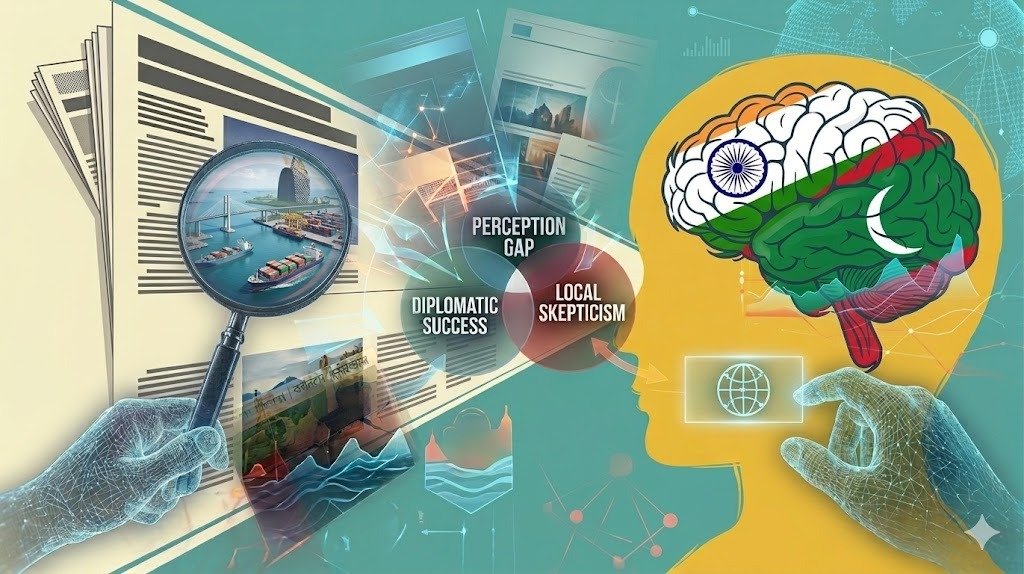
India’s engagement with the Maldives represents one of the most significant examples of development diplomacy in South Asia. Over the past two decades, India has emerged as one of the foremost development and security partners of the Maldives, supporting the island nation through infrastructure financing, capacity-building and capability-enhancement initiatives, humanitarian assistance, financial support mechanisms, and maritime security cooperation. These efforts are anchored in India’s “Neighbourhood First” policy, which places the country’s immediate neighbours at the centre of its foreign policy priorities, while also reflecting New Delhi’s broader vision of fostering a stable, secure, and prosperous Indian Ocean region —better thought-of as the western segment of the Indo-Pacific.
This outlook has been articulated through a series of evolving policy frameworks. Prime Minister Narendra Modi’s maritime policy encapsulated in the acronym “SAGAR” (Security and Growth for All in the Region), which was unveiled in 2015, positioned maritime cooperation and regional stability at the centre of India’s external engagement. A decade later, this framework was expanded into the policy of “MAHASAGAR” (Mutual and Holistic Advancement for Security and Growth Across Regions), reflecting India’s growing emphasis on comprehensive regional partnerships that would integrate security, economic development, connectivity, capacity-building and capability-enhancement, with a specific focus upon the “Global South”. The Maldives occupies a central place within all these policy frameworks.
Yet material preponderance has conspicuously failed to translate into durable strategic goodwill. The “India Out” campaign that propelled Mohamed Muizzu to the presidency in September of 2023, consolidated by the parliamentary sweep by his “People’s National Congress” in April of 2024, laid bare a persistent and structurally significant disjunction between India’s physical presence and its perception amongst the Maldivian polity. This disjunction warrants careful analytical disaggregation. Maldivian electoral politics has historically produced oscillating foreign policy orientations, with competing blocs routinely positioning themselves in opposition to their predecessors’ external alignments. Anti-India sentiment, in this reading, partly reflects the logic of domestic political differentiation rather than an irreversible strategic reorientation.
Nevertheless, such episodes illuminate a broader limitation of India’s engagement model. Aid effectiveness cannot be assessed through project delivery alone; it requires that assistance be anchored in local ownership, political legitimacy, and public acceptance.[1] India’s development-centric approach, whilst substantively significant, has remained insufficiently attentive to these perceptual and communicative dimensions. If India is to sustain long-term influence in the Maldives, its engagement must be as substantive as it is substantial.
This article argues that India’s approach in the Maldives remains heavily project-centric, with insufficient attention devoted to perception management and societal engagement. While infrastructure, financial assistance, and security cooperation remain essential pillars of bilateral relations, they are inadequate on their own. This article contends that influence in contemporary geopolitics is shaped not only by material capabilities but also by the ability to shape narratives, build trust, and cultivate legitimacy.
The Architecture of Indian Development Assistance
Infrastructure and Connectivity
India’s most visible developmental commitments in the Maldives cluster around infrastructure and connectivity. The Greater Malé Connectivity Project (GMCP), valued at roughly US$ 500 million and funded through India’s Exim Bank, represents the single largest foreign-funded infrastructure project in Maldivian history. Spanning 6.74 kilometres, the bridge-and-causeway link connecting Malé with Villingilii, Gulhifalhu, and Thilafushi is designed to fundamentally transform the economic geography of the capital region, integrating port facilities, industrial land reclamation, and residential zones.[2] Despite roadblocks, the project is slated for completion by 2026.[3]
In Addu City, the southernmost atoll and the Maldives’ second-largest urban centre, India has simultaneously financed 184 hectares of land reclamation valued at US$ 80 million, the development of 111 kilometres of roads, 106 kilometres of drainage works, and 160 kilometres of street lighting at a further cost of approximately US$ 70 million.[4] India has also delivered 4,000 social housing units in Hulhumalé under a Buyer’s Credit facility, of which 700 units were formally handed over during President Muizzu’s October 2024 state visit to New Delhi, and the remaining during Prime Minister Modi’s July 2025 visit to Malé.[5]
Maritime Security
India’s security cooperation with the Maldives National Defence Force (MNDF) constitutes a pivotal strand of bilateral engagement. The October 2024 Vision for Comprehensive Economic and Maritime Security Partnership, committed India to provisioning advanced radar systems and other equipment to enhance MNDF surveillance and monitoring capabilities, supporting the ‘Ekatha’ harbour project at Uthuru Thila Falhu (UTF), providing hydrographic capacity-building and training, and extending financial assistance to develop MNDF infrastructure.[6]
India has also committed to a gratis refitting of the Maldivian Coast Guard Ship Huravee,[7] and gifted 72 heavy vehicles to the MNDF and immigration authorities during PM Modi’s 2025 visit to the country.[8] Further, INS Sunayna, deployed as IOS SAGAR, with a multinational crew drawn from 16 friendly foreign countries, made its first port call at Malé in April 2026, where it conducted seamanship, small‑arms and damage‑control drills at sea, a Passage Exercise with the MNDF Coast Guard ship Ghazee, and engaged in professional, sporting and cultural exchanges with Maldivian personnel.[9]
Regionally, India’s Information Fusion Centre for the Indian Ocean Region (IFC-IOR), established in Gurugram in 2018 and linked to Maldivian maritime agencies, provides real-time maritime situational awareness. This architecture of shared surveillance constitutes India’s most institutionally durable security contribution to the archipelago. The broader coastal surveillance radar network that India has installed across Indian Ocean Island States, including Mauritius, Seychelles, and Sri Lanka, reflects a systematic approach to maritime situational awareness that serves both partner-nation sovereignty and India’s own interests.[10]
The Perception Management Imperative for India
Taken together, these initiatives illustrate the breadth of India’s developmental and security engagement with the Maldives. Yet, the effectiveness of foreign assistance is determined not only by the scale of resources committed, but also by how such contributions are perceived, interpreted, and communicated within the recipient society. This raises an important question: to what extent have India’s substantial investments translated into positive public perceptions among Maldivians? Understanding this gap requires an examination of the information ecosystem within which India’s engagement is interpreted and contested.
The ‘India Out’ Campaign and Information Ecosystems
The ‘India Out’ campaign, systematically operationalised by the Progressive Party of Maldives under former President Yameen from 2020 onwards and adopted as a central electoral motif by Muizzu’s People’s National Congress, exploited three structural vulnerabilities in India’s communication strategy: the opacity of bilateral agreements, the low visibility of Indian project branding, and the absence of a credible Maldivian-language public diplomacy framework.
The campaign systematically targeted the presence of Indian military personnel as evidence of sovereignty compromise, generating anxieties about Indian surveillance, intelligence penetration, and creeping military encirclement. Disinformation circulated on Maldivian social media platforms portrayed routine maritime cooperation as covert occupation. The governing MDP’s failure to proactively publicise the terms of bilateral agreements, and India’s own reluctance to engage in assertive counter-narrative, allowed this information vacuum to be filled by adversarial narratives.
The Visibility Deficit
A structural comparison with Chinese public diplomacy in the Maldives is instructive. The Sinamalé Bridge, completed in 2018 and officially designated the ‘China-Maldives Friendship Bridge’, has been consistently framed by both Chinese and Maldivian officials as a symbol of bilateral friendship and cooperation. Through sustained official messaging, extensive media coverage, and its association with the Belt and Road Initiative, the project has become embedded in public consciousness as a visible representation of China’s developmental presence in the Maldives, despite ongoing debates surrounding debt sustainability and the broader implications of Chinese financing.
By contrast, the Greater Malé Connectivity Project, a substantially larger, more technically complex, and more locally significant undertaking has attracted markedly lower brand recognition among the public-at-large, both Indian and Maldivian. Systematic public communication linking the project to Indian development partnership has been inconsistent. India’s high impact community development investments in education, housing and sanitation projects, most visible to ordinary citizens, are similarly under-communicated. This visibility deficit is not merely a communications failure; it reflects an assumption within India’s development diplomacy that good work speaks for itself.
Comparative Engagement and Takeaways for India: China, Türkiye, Pakistan, KSA and UAE
China
China’s engagement with the Maldives illustrates the appeal of high-visibility and fast-disbursing infrastructure financing. Beijing’s BRI investments in the Sinamalé Bridge, Velana International Airport expansion, urban road networks in Malé, and a series of smaller projects were characterised by rapid implementation, aggressive branding, high-level political attention, and quick delivery. Beyond infrastructure, China has opened a cultural centre at Maldivian universities while plans were drawn up to establish a Confucius Institute in the Maldives, an institution for language instruction, scholarship pipelines, and long-term socialisation. China has also focused systematically on cultivating local political leadership, intelligentsia, media houses, and youth through a combination of soft power instruments. The China-Maldives Cultural Association, established in December 2015, promotes cultural exchanges, educational cooperation, youth engagement, and people-to-people linkages between China and the Maldives through language programmes, exchange visits, and institutional partnerships.[11] Similarly, Chinese cultural messaging at the ambassadorial-level frequently appears in Maldivian outlets. In 2025, the Chinese ambassador published a signed article in Maldivian media highlighting long-standing historical ties, including ancient Maritime Silk Road contacts, and framing China-Maldives relations as part of a broader narrative of mutual learning between civilisations.[12] This reflects a strategic soft-power narrative that combines history, infrastructure achievements, and development cooperation to portray China as a long-term, trustworthy partner of the Maldives.
China’s model in the Maldives has been more effective at strategic communication than India’s because it couples high‑visibility physical symbols with a dense ecosystem of cultural, educational and media outreach. India can learn three core lessons. First, projects must be strategically branded and narrated in local terms, not left to speak for themselves. Second, hard infrastructure and security cooperation should be complemented by deep cultural and educational presence like language centres, exchanges, scholarships, and creative industries that continually humanise India’s role. Third, India needs a permanent Dhivehi communication architecture that explains agreements, showcases benefits and rapidly counters disinformation, rather than episodic English‑language press releases.
Türkiye
Türkiye’s rapid inroads in the Maldives combine religious‑cultural affinities with security assistance, creating a politically palatable pathway for hard‑security engagements. Türkiye has funded visible Islamic infrastructure, including large mosques, and Ankara increasingly presents itself as an Islamic partner supportive of Maldivian sovereignty and defence modernisation. Turkish firms have financed prominent Islamic and social infrastructure, while Ankara now supplies the Bayraktar TB2 drones that President Muizzu publicly credits for enabling indigenous aerial surveillance for the first time.[13] At the heels of this follow reports that Türkiye might pursue the establishment of a strategic strong point (SSP) at Maafaru in Noonu Atoll to support the recently acquired military drones.[14] Türkiye is also gifting and training Maldivian crews on a Doğan‑class fast attack craft, commissioned as Maldivian CGS Dharumavantha.[15] Malé frames this as fraternal support from an Islamic partner, suggesting that India must similarly align security cooperation with culturally resonant narratives.
Pakistan
Pakistan’s engagement is narrower but growing. In 2018, defence heads of the two countries allegedly discussed the possibility of joint patrols of the Maldivian EEZ.[16] In February 2026, the MDNF bagged a gold medal in Pakistan’s 09th International Army Team Spirit (PATS) exercise.[17] In October 2025, Pakistan’s Chairman of the Joint Chiefs of Staff Committee of Pakistan, General Sahir Shamshad Mirza, visited Malé and held talks with President Muizzu. Key discussions focused on the changing regional and global security environment, bilateral defence cooperation, and expanding military-to-military engagements. Both sides reaffirmed their commitment to strengthening defence ties and strategic partnership. The Maldivian leadership also praised the professionalism of Pakistan’s armed forces and their counter-militancy experience.[18] A month later, PNS Saif called on the Port of Malé in November 2025 as part of an overseas deployment, conducting a passage exercise with Maldives Coast Guard vessels.[19]
Official communiqués routinely describe ties as rooted in common faith and mutual solidarity of the Islamic ummah, which makes military cooperation in training, counter‑terrorism, officer exchanges and stepped‑up defence engagements easier to market in Malé.[20] The situation is further complicated by Pakistan’s ability to situate its military engagements with the Maldives within a narrative that draws upon shared religious affinities and its “concerns” regarding developments in Kashmir, thereby generating messaging that extends beyond the material scope of the cooperation itself.[21] For India, the lesson is that hard‑security partnerships must be framed within credible narratives of cultural respect and equality.
KSA and UAE
Saudi Arabia and the UAE represent the most socially embedded and therefore most strategically consequential of all external actors operating in the Maldives. This is because their investment is not merely viewed as investments, rather they are showcased as an outcome of shared faith. The tangible physical expression of this transformation is the King Salman Mosque in Malé, funded by the Kingdom of Saudi Arabia at a cost of approximately US$ 24 million, capable of hosting 10,000 worshippers, and currently the most prominent religious structure in the country.[22]
The UAE’s engagement is more transactional but equally strategic: a US$ 80 million investment in Velana International Airport was announced immediately after Muizzu’s pre-inauguration visit to Abu Dhabi.[23] In May 2025, this religious-diplomatic fusion reached its most visible expression when President Muizzu personally inaugurated the Makkah Route Initiative at Velana Airport allowing Maldivian pilgrims to complete Saudi immigration and customs procedures on home soil before departure.[24] By early 2026, Muizzu had formally declared that his government would “prioritise relations with Islamic States”.[25] This illustrates how soft power foundations rooted serve as the enabling layer through which strategic engagements are accepted. In 2025, the UAE supplied the Maldives with NIMR Ajban 442A 4×4 armoured vehicles (produced by the UAE’s EDGE Group). Given the Maldives’ geography and the existing trajectory of Gulf States’ engagement, it is plausible to anticipate that Saudi Arabia and the UAE could, over time, extend their involvement from primarily soft power and infrastructure domains into more direct forms of maritime and naval cooperation in the region.
The critical insight for India is that Gulf influence is perceived by ordinary Maldivians not as foreign interference but as religious belonging, an entirely different category of soft power, immune to the nationalist backlash that Chinese debt or Indian military presence can generate. India cannot replicate the religious legitimacy strand; but it can draw lessons:
First, the actor who controls the meaning-making infrastructure of a society, its societal spaces, its educational content and its ritual life, shapes perceptions in ways that no amount of development finance can easily override.
Second, economic investment must be accompanied by narrative investment: the UAE’s airport commitment was announced before Muizzu’s inauguration, signalling intent and generating goodwill at the precise moment of political transition. India’s neighbourhood strategy must reckon seriously with this dimension, not as a competition it cannot win, but as a reminder that strategic communication must engage identity, not just interest.
The Limits of the Project-Centric Model
India’s current engagement architecture is structurally project-centric: it disburses resources through State-to-State channels, relies on Maldivian government intermediaries to communicate developmental impact, and measures success primarily through completion rates. This model is appropriate for the construction phase of a developmental relationship but is insufficient for the consolidation of durable strategic influence.
A project-centric model generates several structural vulnerabilities. It makes Indian influence legible only to political elites and government officials, leaving civil society, media, academia, and renders the general public under-engaged. It concentrates Indian visibility at the level of inaugural ceremonies, which attract political attention but fade from popular memory, while daily interactions with Indian-funded infrastructure are not systematically associated with their Indian origins. It creates dependency relationships that generate resentment as readily as gratitude, particularly when projects involve Indian contractors, imported materials, and foreign presence which is perceived as alien to the local populace.
Policy Roadmap
The following policy recommendations are proposed by this author for a reconstituted India-Maldives engagement strategy.
- Visibility, Branding, and Strategic Communication. India must establish a dedicated India-Maldives Development Partnership Communications Unit within the High Commission in Malé, staffed with Dhivehi-speaking media specialists, data journalists, and social media managers. This unit should systematically document and communicate in Dhivehi, on platforms used by Maldivian citizens the outputs, employment generated, and community benefits of every Indian-funded project. Every major Indian-financed structure should carry visible, durable, and professionally designed bilingual branding in Dhivehi and English, identifying the Indian government as the principal financing partner. The HICDP should be relaunched as a branded ‘India-Maldives Community Partnership Programme’ with its own visual identity and participatory communication strategy.
- Timely Neutralisation of Adversarial Narratives. India must also invest in countering disinformation systematically, through a coordinated engagement with Maldivian media organisations, support for independent Maldivian journalism, and the publication of all bilateral agreements in Dhivehi translation for eliminating the opacity that has historically been exploited by counter-narratives. The diplomatic instinct to operate quietly and allow results to speak must be abandoned in favour of a communications-forward strategy. An example is how China countered ‘debt‑trap’ claims in the Maldives by locking in joint language that branded both sides as ‘sincere friends’ benefitting from BRI, while the China Global Television Network and other outlets spotlighted Maldivian beneficiaries of Chinese projects, reframing contentious loans as win‑win development. While the author in no way supports this narrative, the timely coordination and synchronisation of reporting between the Chinese government and media illustrates an integrated communication architecture that can rapidly blunt adversarial framings.
- Utilisation of the Indian Information Service (IIS). The Indian Information Service was founded in 1959 with the basic function of informing, educating, and communicating government views, policies, and programmes to the masses, and collecting feedback for the government. In March 2026, the Indian government announced it is considering deploying 10 senior IIS officers in key global economies for narrative building, perception management and direct communication with global audiences. A parallel proposal from the Ministry of Information and Broadcasting seeks to create 40 IIS cadre posts across Indian embassies and missions abroad, where officers would directly engage with foreign media, communicate India’s narratives.[26] The appointment of one senior IIS officer to the High Commission in Malé with a dedicated mandate of covering proactive project branding for all Indian-funded infrastructure, media engagement with Maldivian print, broadcast, and digital outlets, monitoring, and management of the High Commission’s Dhivehi-language social media presence could significantly bolster India’s perception management in the region.
- Augment Economic and Military Engagement with Cultural and Societal Linkages. Rather than being conceptualised as an ancillary dimension of cooperation, cultural linkages should be understood as a foundational layer that underpins the development of more tangible forms of partnership. India should establish a structured, multi-strand cultural partnership programme, jointly administered by the Indian Council for Cultural Relations (ICCR), the Ministry of Information and Broadcasting, and the High Commission in Malé. Similarly, India and the Maldives are linked by centuries of shared Islamic oceanic history: Islam reached the archipelago via Arab and South Asian traders plying the Malabar coast.[27] This history needs to be mobilised to frame India not only as a secular neighbour but also as a historic Islamic interlocutor.
Conclusion
India’s experience in the Maldives demonstrates that development assistance, security cooperation, and financial support, while indispensable, are not sufficient in and of themselves to secure enduring strategic influence. Influence is shaped not only by what States build, but also by how their presence is perceived, communicated, and embedded within local society. The Maldives demonstrates that the effectiveness of external assistance is determined not only by what is delivered, but also by how those contributions are perceived and internalised by local communities. For India, the challenge is not the absence of commitment but the absence of narrative. A sustainable partnership will therefore require India to complement material investments with sustained societal engagement, strategic communication, and locally resonant public diplomacy. Only by coupling tangible assistance with effective communication and societal engagement can India ensure that its contributions generate enduring strategic dividends.
*******
About the Author
Ms Junyali Gusain is a Research Associate at the National Maritime Foundation. She was awarded her BA (Hons) in Political Science with a minor in History from Maitreyi College, University of Delhi; and holds a Master’s degree in “Diplomacy, Law and Business”, with a specialisation in “Economics and Foreign Policy”, from OP Jindal Global University, Sonipat, Haryana. Her current research focuses upon the manner in which India’s own strategies in the Bay of Bengal and the Indo-Pacific are impacted by collectives such as BIMSTEC and IORA. She can be reached at irms5.nmf@gmail.com.
Endnotes:
[1] David Booth, “Aid Effectiveness: Bringing Country Ownership (and Politics) Back In”, Conflict Security and Development 12(5), 2011, https://media.odi.org/documents/6028.pdf.
[2] Government of India, Ministry of External Affairs, “US$ 500 Million Grant Shared by India for the Greater Male Connectivity project in favour of infrastructure development”, Economic Diplomacy Division, 09 November 2020, https://indbiz.gov.in/us-500-million-grant-shared-by-india-for-the-greater-male-connectivity-project-in-favour-of-infrastructure-development/.
[3] Maldives Financial Review, “Delays and challenges surround the Greater Male’ connectivity project”, MFR, 25 November 2023, https://mfr.mv/male/delays-and-challenges-surround-the-greater-male-connectivity-project.
[4]The Print, “Afcons makes its mark in Maldives: Completes Addu City Project, Greater Malé Connectivity Project on fast-track”, 25 July 2025, https://theprint.in/ani-press-releases/afcons-makes-its-mark-in-maldives-completes-addu-city-project-greater-male-connectivity-project-on-fast-track/2701972/.
[5]Press Release, “Maldives and India hold virtual inauguration of key development projects”, The President’s Office, Republic of Maldives, 25 July 2025, https://presidency.gov.mv/Press/Article/34391.
[6] Government of India, Press Information Bureau, “India and Maldives: A Vision for Comprehensive Economic and Maritime Security Partnership”, Prime Minister’s Office, 07 October 2024, https://www.mea.gov.in/bilateral-documents.htm?dtl/38384/India_and_Maldives_A_Vision_for_Comprehensive_Economic_and_Maritime_Security_Partnership.
[7] Government of India, Press Information Bureau, “Refit Completion of MNDF Huravee Strengthens India-Maldives Defence Cooperation”, Ministry of Defence, , 21 April 2025, https://www.pib.gov.in/PressReleasePage.aspx?PRID=2123218®=3&lang=2.
[8] Government of India, Press Information Bureau, “Prime Minister meets the President of Maldives”, Prime Minister’s Office, 25 July 2025, https://www.pib.gov.in/PressReleasePage.aspx?PRID=2148655®=3&lang=2.
[9] Government of India, Press Information Bureau, INS Sunayna (IOS SAGAR) Arrives at Malé, Strengthening Maritime Ties with Maldives, Ministry of Defence, 07 April 2026, https://www.pib.gov.in/PressReleseDetailm.aspx?PRID=2249747®=3&lang=1.
[10] Viraj Solanki, “India steps up defence and security engagement with its island neighbours”, The International Institute for Strategic Studies, 23 April 2025, https://www.iiss.org/online-analysis/online-analysis/2025/04/india-steps-up-defence-and-security-engagement-with-its-island-neighbours/.
[11] China-Maldivian Cultural Association, “About Us”, https://www.cmca.org.mv/about-us.
[12]Chinese Embassy in Maldives, “Chinese Ambassador to the Maldives Kong Xianhua Publishes Signed Article Titled “China and the Maldives: Sailing Together on Rising Tides” in Leading Maldivian Media”, Ministry of Foreign Affairs, People’s Republic of China, 05 May 2025, https://www.fmprc.gov.cn/mfa_eng/xw/zwbd/202505/t20250507_11616556.html.
[13] The President’s Office, Republic of Maldives, “The President express gratitude to the Turkish President for his continuous assistance to Maldives in augmenting military capabilities”, Press Release, 15 March 2024, https://presidency.gov.mv/Press/Article/30468.
[14] Aishath Shuba Solih, “Establishing a base in Maafaru to operate military drones”, The Edition, 03 July 2024, https://edition.mv/rome/32225.
[15] Nordic News, “Turkey gifts warship to Maldives while selling the country armed drones produced by Erdogan’s son-in-law”, 26 August 2025, https://nordicmonitor.com/2025/08/turkey-gifts-warship-to-maldives-while-selling-armed-drones-produced-by-erdogans-son-in-law/.
[16] Dr Tara Kartha, “Pakistan Army chief visits Maldives: India keeps watchful eye as Islamabad, Male discuss joint patrol of EEZ”, First Post, 04 April 2018, https://www.firstpost.com/world/pakistan-army-chief-visits-maldives-india-keeps-watchful-eye-as-islamabad-male-discuss-joint-patrol-of-eez-4418215.html.
[17] The President’s Office, Republic of Maldives, “Gold medal win by MNDF Special Forces in Pakistan Army Team Spirit Competition is a great honour for both the military and the nation: President”, Press Release, 09 February 2026, https://presidency.gov.mv/Press/Article/36188.
[18] Arab News, “Pakistan, Maldives to boost military cooperation amid shifting regional dynamics”, 24 October 2025, https://www.arabnews.com/node/2620128/%7B%7B.
[19] Arab News, “Pakistan Navy ship visits Maldives as part of regional maritime security cooperation”, 09 November 2025, https://www.arabnews.com/node/2621991/pakistan.
[20] Sohail Majeed, “Pakistan, Maldives Vow to Strengthen Parliamentary Ties, Regional Cooperation”, The Diplomatic Insight, 18 September 2025, https://thediplomaticinsight.com/pak-maldives-vow-to-strengthen-parliamentary-ties/.
[21] Sohail Majeed, “Pakistan, Maldives Vow to Strengthen Parliamentary Ties, Regional Cooperation”, The Diplomatic Insight, 18 September 2025, https://thediplomaticinsight.com/pak-maldives-vow-to-strengthen-parliamentary-ties/
[22] Malika Shahid, “Salman Mosque name board installed four years after opening”, The Edition, 21 May 2026, https://edition.mv/news/51158?ref=cat-sub.
[23] Adhadhu, “UAE pledges USD 80 million needed to complete airport project”, 09 November 2023, https://adhadhu.com/45204.
[24] The President’s Office, Republic of Maldives, “Maldivian pilgrims to complete Saudi immigration procedures prior to departure under Makkah Route Initiative”, Press Release, 26 May 2025, https://presidency.gov.mv/Press/Article/33813.
[25] Ajit Amar Singh, “Maldives Distances From US, Edges Closer to Muslim World Amid Iran War Stances”, Organiser, 18 April 2026, https://organiser.org/2026/04/18/349219/world/maldives-distances-from-us-edges-closer-to-muslim-world-amid-iran-war-stance/.
[26] Divya A, “On the table: Global media outreach proposal with IIS officers in foreign missions”, The Indian Express, 18 March 2026, https://indianexpress.com/article/india/on-the-table-global-media-outreach-proposal-with-iis-officers-in-foreign-missions-10587609/.
[27] Ibrahim Rasheed, “Tracing the Spread of Islam Through the First Mosques in India, Sri Lanka, and the Maldives.” Cowry Route, 06 April 2025,
https://www.cowryroute.com/post/tracing-the-spread-of-islam-through-the-first-mosques-in-india-sri-lanka-and-the-maldives-which-.


Leave a Reply
Want to join the discussion?Feel free to contribute!