
Keywords: Indo-Philippines; Defence Industry Cooperation; Defence Technology; Indo-Pacific; South China Sea; Maritime Cooperation
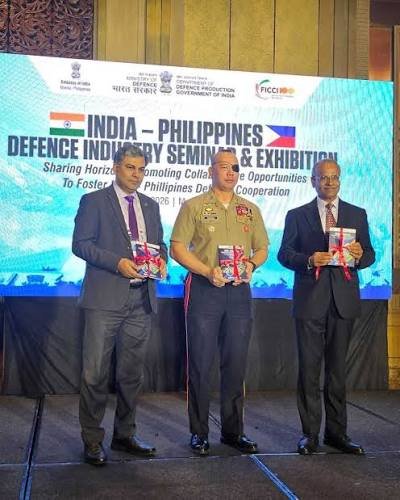
The India-Philippines BrahMos missile deal of 2022 made headlines globally.[1] It announced the arrival of India, hitherto known as the world’s largest arms importer,[2] as an emerging defence exporter, and drew the interest of other Southeast Asian nations in acquiring the platform. Apart from the economic gains, the deal also marked a strategically significant move by India in the South China Sea (SCS), in light of the Philippines’ tenuous, and at times openly hostile, relationship with China. Thus, while India may well have been pursuing its defence export target, it was simultaneously seen as ‘arming the Philippines’ and enabling that country to defend itself against potential future confrontations with China in the West Philippine Sea (WPS). In many ways, the deal became the cornerstone of growing trust between India and the Philippines, underpinned by a mutual interest in preserving the consensually-derived rules-based order and fostering a peaceful, stable, and secure Indo-Pacific. Since then, India has been making efforts to solidify the defence industrial cooperation with the Philippines, and the Philippines has, likewise, demonstrated interest in acquiring helicopters and submarines from India.[3] This necessitates advancing beyond defence exports and exploring the possibility of establishing joint ventures in shipbuilding, unmanned and autonomous systems, artificial intelligence (AI) integration, and cybersecurity. In this regard, the Indian industry is increasingly demonstrating an interest in setting up local defence production facilities in the Philippines, thereby supporting the latter’s “Self-reliant Defense Posture” (SRDP) programme (Republic Act No 12024) of 2024.[4] This paper provides an overview of the current defence industrial landscape and related policies of the Philippines, assesses the opportunities and challenges in deepening India-Philippines defence industrial cooperation, and concludes with policy recommendations for India’s Ministry of Defence MoD) and the Ministry of External Affairs (MEA), captains of defence industry, defence start-up founders, and industry associations, especially the Society for Indian Defence Manufacturers (SIDM), the Confederation of Indian Industry (CII), and the Federation of Indian Chambers of Commerce and Industry (FICCI).
Overview of the Existing Defence Industrial Landscape of the Philippines
Philippines’ defence budget (as a percentage of its GDP) has consistently remained below 2 per cent since the late 1990s.[5] However, consequent upon the rise in tensions with China over the Scarborough Shoal in 2012, the defence budget increased from USD 2.9 billion in 2012 to USD 6.12 billion in 2026.[6] Since 2024, the defence industrial landscape of the Philippines has been undergoing a significant shift from an earlier focus on internal security to the development of modern and technologically advanced domestic defence production capacities and capabilities in alignment with the country’s defence strategy, encapsulated in the “Comprehensive Archipelagic Defence Concept” (CADC) announced in 2024. Defence procurement is primarily handled by the Department of National Defense (DND) and the Armed Forces of the Philippines (AFP), with the modernisation and procurement budget being managed by the Department of Budget and Management (DBM).[7] The New Government Procurement Act (Republic Act No 12009), enacted in July 2024, emphasised cost effectiveness, lifecycle considerations, accountability, and more flexible procurement modalities.[8]
Modernisation of the AFP is being progressed under the legal aegis of the “Revised Armed Forces of the Philippines Modernisation Act” (RAFPMP), which was initiated in the mid-1990s but was revived under the Aquino government in 2013 when there was a significant rise in tensions with China. This notwithstanding, the first two phases of the programme, namely “Horizon 1 (2013-17)” and “Horizon 2 (2018-22)”, are yet to be fully implemented and have been affected by fiscal constraints, inefficient planning, and corruption scandals (Table 1 refers).[9] In 2024, under the third phase, namely, the “Re-Horizon–3 (2023-36)”, of the RAFPMP, the Philippine government allocated USD 31 billion for defence acquisition — a substantial increase in the modernisation budget in comparison to the USD 1.7 billion allocated during the first phase, (“Horizon 1 [2013-17]”) of the programme.[10]
|
Table 1 Status of the Revised AFP Modernization Program (as of September 2024) Source: Justin Baquisal (based on Philippine Department of National Defense Data)[1] |
|||||||
| Horizon 1 (2013-17) | Horizon 2 (2018-22) | Re-Horizon 3 (2023-36) | |||||
| Approved | Completed | Completion Rate | Approved | Completed | Completion Rate | Approved | |
| Projects | 53 | 36 | 68% | 98 | 22 | 22% | 37 |
| Cost
(in PHP) |
96.7 | 71.2 | 73% | 451.4 | 50.3 | 11% | 1,893.7 |
Current Status of India-Philippines Defence Industrial Cooperation
At the institutional level, defence industrial cooperation between India and the Philippines is underpinned by an MoU on “Defence Industry and Logistics Cooperation” signed in November of 2017, and is steered by the “Joint Defence Industry and Logistics Committee” (JDILC) set-up under the MoU.[11] The BrahMos deal, worth USD 375 million, was signed with the Philippines in 2022 with India committing to supply three batteries of the shore-based variant of this anti-ship missile system. This deal was seen as both India’s flagship defence export of an advanced strategic weapon system to Southeast Asia as well as an announcement of its emergence as a defence exporter globally.[12] Building on the success of the deal, India, during the 5th meeting of the “India-Philippines Joint Defence Cooperation Committee” (JDCC) held in September of 2024, offered the Philippines a partnership in co-development and co-production of defence equipment.[13] India is also reportedly in the process of negotiating a USD 200 million-deal for exporting the Akash missile system to the Philippines.[14] In the private sector, an MoU was recently signed between the Indian defence manufacturer, SMPP Ltd, known for manufacturing ammunition, drones, and personal- as well as platform-protection products, and the Philippine defence firm, Asia Defence and Firepower Corporation (ADFC), to establish a joint venture company (JVC).[15] The firm will have majority Filipino ownership, thereby qualifying for tax incentives and streamlined approvals under the “CREATE Act” of the Philippines, as well as qualifying for direct defence contracts as a local enterprise, without the need for submitting a public bid.[16]
Opportunities in Key Areas for Enhancing Defence Industrial Collaboration
- Autonomous Underwater and Surface Vehicles (AUSVs) and Swarm Drones. In its effort to address the capacity deficit it faces vis-à-vis China in terms of naval platforms and equipment, the Philippines sees considerable potential in naval drones. It received four solar-powered Ocean Aero Triton autonomous underwater and surface vehicles (AUSVs) from the United States earlier this year.[17] The AUV swarm drones being developed by India’s Mazagon Dock Shipbuilders Limited (MDL) in collaboration with Sagar Defence Engineering Pvt Ltd could prove to be cost-effective force multipliers for the PN and PCG. India’s Defence Research and Development Organisation (DRDO) — particularly its “Naval Science and Technology Laboratory” (NSTL) could also co-develop AUV and swarm drone systems with the PN’s Naval Research and Technology Development Centre and the Cebu Technological University, both of which are currently working on developing indigenous maritime autonomous systems.[18]
- Coastal Surveillance Technologies. Coastal Surveillance was identified as a potential area of cooperation in the “Declaration on the Establishment of a Strategic Partnership” between the two countries. Although India has offered coastal surveillance radar systems to the Philippines in the past, a deal is yet to be finalised.[19] Notably, the Philippines recently received five coastal surveillance radars from Japan under the latter’s “Official Security Assistance” (OSA) framework.[20] Following the successful deployment of coastal radar systems in Mauritius, Seychelles, Sri Lanka, and Maldives,[21] India could similarly offer attractive defence lines of credit to the Philippines to provide radars supplied by Bharat Electronics Limited (BEL) and integrating this critical archipelagic nation astride the South China Sea into its own coastal radar chain.[22]
- Naval Shipbuilding. The PN and PCG are heavily reliant on naval platforms imported from the US, South Korea, Japan, and Israel, and would require additional surface combatants, offshore patrol vessels, and amphibious platforms during the ongoing “Re-Horizon-3” phase of the RAFPMP. Indian shipbuilders such as Mazagon Docks Ltd (MDL), Cochin Shipyard Ltd CSL), Garden Reach Shipbuilders & Engineers Limited (GRSE), and Goa Shipyard Ltd (GSL) have significant expertise in indigenously building a range of surface combatants including OPVs, fast patrol vessels, interceptor craft, floating dry docks, and a slew of amphibious vessels.[23] With the improving commercial shipbuilding infrastructure in the Philippines due to strategic push by the Philippine government, and investments by the US and South Korea in the Subic Bay shipyard, the Philippines has been advancing its domestic shipbuilding ambitions. Taking a cue from Larsen & Tubro’s partnership with the Hong Ha Shipyard in Vietnam to jointly build 12 high-speed guard boats,[24] Indian shipbuilders could pursue collaboration with local Philippine shipbuilders such as the Propmech Corporation and Josefa Slipways Inc. to build fast attack craft, patrol vessels, and Landing Craft [Utility] (LCUs) either under licensed production in the Philippines or as a joint venture, which could be further complemented by the established Indian strengths in warship design, warship repair, and weapon-sensor system integration.[25]
- Local Maintenance, Repair and Overhaul (MRO) of BrahMos and Other Defence Equipment Supplied by India. By offering to establish local MRO facilities and training the Philippine workforce, Indian defence equipment suppliers could reduce turnaround times and bolster operational resilience of the AFP. This would eventually lead to the development of local supply chains within the Philippines for selected components, including electrical and communication systems, and launcher subsystems, thereby supporting the aim of the “Self-reliant Defence Posture (SRDP) Act” to develop integrated logistics support, aid technology transfer and local skill development, lower the lifecycle cost, and establish resilient domestic defence supply chains.[26]
Challenges in Advancing Defence Industrial Cooperation with the Philippines
- Preference Accorded to In-country Enterprises during the Procurement Process in the Philippines. According to the SRDP Act of 2024, the Philippine Government will “rely primarily on and give preference to in-country enterprises” during the defence procurement process.[27] This clause, mandating 60 per cent Filipino ownership for a joint venture in order to be considered an “in-country enterprise” complicates market entry-considerations for Indian defence firms.[28] This could potentially give rise to concerns among Indian defence firms regarding the transfer of sensitive technologies and investing substantial capital without adequate control over intellectual property rights (IPR) and decision-making.
- Competition from Established Foreign OEMs. South Korea has established a dominant position in the aerospace and naval domains, with the supply of twelve FA-50 fighter jets, frigates, and securing contracts for several OPVs.[29] Similarly, Israel has supplied a range of equipment, including UAVs, radars, fast-attack interdiction craft, missiles, and land systems. While the US remains the primary treaty ally and defence-equipment supplier, Japan has, in recent years, expanded security assistance through its “Official Development Aid” (ODA). Along with established European “original equipment manufacturers” (OEMs) of defence equipment, Indonesian and Turkish firms, too, have, in recent years, secured contracts to supply aerospace and naval platforms.[30] Given this market scenario, Indian firms need to offer cost-competitive bids, combined with co-production, technology transfer, workforce training packages, joint ventures, and lifecycle maintenance. Along with all this, they need to build domestic supply chains in the Philippines to meet the enhanced local content requirements in line with the SRDP Act.
- Underdeveloped Domestic Defence Industrial Base in the Philippines Could Constrain Genuine Co-development and Co-production. While domestic Philippine defence firms have the capacity to manufacture small arms and ammunition, small craft, and communications equipment, the capacity and capability to design and manufacture missile systems, advanced radars, large naval surface combatants, combat management systems, and advanced defence electronics is fairly limited. As a result, advanced technology transfer programmes might face hurdles pertaining to lack of workforce readiness, underdeveloped testing infrastructure, and lack of standardised certification and quality assurance criteria for the parts and components supplied locally in the Philippines to comply with the local content requirements.
- Limited Demand in the Philippines Could Constrain the Long-term Viability of Significant Investments in Local Manufacturing Facilities for Advanced Defence Equipment. Even though the Philippines is keen on progressing from merely exporting advanced defence equipment to manufacturing them locally through transfers of technology, “‘in-country enterprise”, and local content requirements under the SRDP 2024, significant investments into local manufacturing facilities would only be viable from a long-term standpoint for Indian defence manufacturers if the Philippines could serve as a regional hub for advanced defence exports to neighbouring countries as well. However, given that several countries in Southeast Asia are simultaneously specifying similar local content and indigenisation requirements, Indian defence firms are likely to prioritise neighbouring markets such as Malaysia and Indonesia which enjoy comparatively better-developed domestic defence supply chains.
Policy Recommendations
- Develop a Consortium-based Approach Integrating Shipbuilding, Naval Technologies, and Naval MRO Cooperation. Considering the Manila’s urgent need to bolster the country’s maritime security, India’s “Department of Defence Production” (DDP), and its “Defence Export Promotion Wing” in particular, should partner with leading DPSUs and private defence firms, including MDL, GSL, GRSE, CSL, BEL, L&T, etc., to develop a consortium-based approach integrating shipbuilding, naval technologies, and naval MRO cooperation.[31] The offer should include design, co-development, joint production, advanced naval technologies and combat-systems integration, workforce training, development of local testing infrastructure, mid-life upgrades, and ship repair cooperation as a combined package. Indian shipyards and the Indian Navy should proactively establish naval MRO partnerships with commercial and naval facilities in Subic Bay, Cebu, and the Naval Sea Systems Command in Cavite, as a practical albeit initial step towards deeper bilateral shipbuilding and ship-repair cooperation by catering for skill-development of the local Filipino workforce.
- Establish Sustainable Government-supported Financing Mechanisms for Defence Exports and Defence Industrial Cooperation. Indian defence firms face intense competition from established foreign defence OEMs, and the pressure to meet local content and ownership requirements in joint ventures is acute. Additionally, the “Horizon 2” and “Horizon 3” modernisation programmes of the AFP have faced delays due to funding constraints.[32] While the option of affordable financing through the EXIM Bank and defence lines of credit (LOCs) could make buying Indian platforms and equipment attractive for the Philippines, India needs to ensure that the defence LOCs and affordable loans do not remain unutilised for several years, as was the case with Vietnam, or, worse, become the primary funding mechanism for defence exports to the Philippines in the medium to long-term.
- Foster Defence R&D Linkages between the DRDO and the Department of Science and Technology (DOST) of the Philippines. India’s DRDO and the Department of Science and Technology (DOST) of the Philippine Government spearhead defence R&D and technological innovation in their respective countries. Akin to the DRDO, DOST is at the forefront of defence indigenisation in the Philippines and the “DOST-Metals Industry Research and Development Centre” (DOST-MIRDC) recently handed over the “Controller-operated Battle Ready Armament” (COBRA) prototype to the Philippine Army, which is a “remote-operated, stabilised weapons mount equipped with an integrated camera system, […] a laser range finder; a built-in ballistic computer; and automated target tracking capabilities.”[33] Research collaboration could initially involve co-developing operationally critical technologies, such as counter-UAS systems, maritime sensors, UAVs, loitering munitions, AUVs and swarm technologies, AI-integrated defence electronics, coastal surveillance, and communication systems.
Conclusion
Defence industrial cooperation between India and the Philippines is gathering the momentum required to evolve from an export-led model based on the flagship BrahMos deal into a co-development and co-production-based partnership. This transition is expected to aid in the growth of the domestic defence industry in the Philippines and provide India a diversified and well-integrated presence in the Philippine defence market. The Filipino shift of focus towards archipelagic defence, as reflected in its CADC and the Re-Horizon 3 phase of the RAFPMP, has created greater demand for advanced maritime, air, land, surveillance, missile, and communication capacities and capabilities. At the same time, the SRDP has led to the creation of a domestic policy framework for indigenisation, local content integration, technology transfer, and the nurturing of a domestic defence industry workforce. Consequently, India’s DDP and the Indian defence industry needs to approach the Philippines as a reliable long-term partner for the development of the domestic defence industry in the Philippines. Potential areas for advancing initial co-development and co-production cooperation include unmanned and autonomous aerial and maritime systems, coastal surveillance technologies, naval shipbuilding, defence electronics and communication systems, and MRO cooperation. However, the Indian government and industry would need to adopt an integrated, consortium-based approach, especially in shipbuilding and naval technologies cooperation, establish sustainable government-backed financing mechanisms for defence industrial cooperation with the Philippines, and foster defence R&D linkages between DRDO and leading defence research organisations in the Philippines such as DOST. A successful transition from the export-led model to integrated defence industrial supply chains would make the India-Philippines defence industrial partnership symbiotic, deepen strategic trust between the two countries, and contribute to diversifying defence industrial supply chains across the Indo-Pacific.
********
About the Author
Ms Sushmita Sihwag is a Research Associate at the National Maritime Foundation. She holds a master’s degree in liberal studies from Ashoka University, Sonipat, Haryana. Her research focuses upon how India’s own maritime geostrategies are impacted by the maritime geostrategies of ASEAN and its member-states in the Indo-Pacific. She may be contacted at indopac6.nmf@gmail.com
Endnotes:
[1] “Philippines to acquire missile system from India for $375 mln,” Reuters, 15 January 2022. https://www.reuters.com/world/asia-pacific/philippines-acquire-missile-system-india-375-mln-2022-01-15/
[2] Pieter D Wezeman et al., “SIPRI Fact Sheet: Trends in International Arms Transfers, 2023,” Stockholm International Peace Research Institute, March 2024, accessed 21 August 2026, 1. https://www.sipri.org/sites/default/files/2024-03/fs_2403_at_2023.pdf
[3] “Philippines’ Chief of Staff of Armed Forces on Buying Indian Helicopters, Submarines,” YouTube video, 04:15, “Firstpost,” 06 March 2026, https://www.youtube.com/watch?v=fV_pOzW2M2k
[4] “India Offers Local Defense Production to Philippines Amid Modernization Push,” Business World, 02 March 2026. https://bworldonline.com/the-nation/2026/03/02/733565/india-offers-local-defense-production-to-philippines-amid-modernization-push/
[5] “Military Expenditure (% of GDP) – Philippines,” World Bank, accessed 21 August 2026. https://data.worldbank.org/indicator/MS.MIL.XPND.GD.ZS?locations=PH
[6] “Military Expenditure (Current USD) – Philippines,” World Bank, accessed 21 August 2026. https://data.worldbank.org/indicator/MS.MIL.XPND.CD?locations=PH
[7] “AFP Modernization Fund to be Raised by P10 Billion in 2027,” INQUIRER.net, 25 August 2026. https://newsinfo.inquirer.net/2292416/afp-modernization-fund-to-be-raised-by-p10-billion-in-2027
[8] Government of the Republic of the Philippines, Government Procurement Policy Board (GPPB), “The Implementing Rules and Regulations of Republic Act No. 12009 or the New Government Procurement Act,” 10 July 2024. https://ngpa1.gppb.gov.ph
[9] Miguel Galang, “Manila’s Piecemeal Military Modernization,” The Diplomat, 01 May 2026. https://thediplomat.com/2026/05/manilas-piecemeal-military-modernization/
[10] Justin Baquisal, “Forward and Seaward: Archipelagic Defence as a Military Strategy for the Philippines,” International Institute for Strategic Studies, 09 December 2025, 13. https://www.iiss.org/globalassets/media-library—content–migration/files/research-papers/2025/12/phillipines-maritime-strategy/archipelagic-defence-as-a-military-strategy-for-the-philippines.pdf
[11] Government of India, Ministry of External Affairs (MEA), “Brief on India-Philippines Relations,” accessed 24 August 2026. https://www.mea.gov.in/Portal/ForeignRelation/India-Philippines-Mar-2025.pdf
[12] Government of India, Press Information Bureau (PIB), “India’s Defence Leap: From Indigenous Production to Global Exports, Redefining National Security,” Press Information Bureau (PIB), 10 June 2025. https://www.pib.gov.in/PressNoteDetails.aspx?NoteId=154617&ModuleId=3®=48&lang=2
[13] Government of India, Press Information Bureau (PIB), “5th India-Philippines Joint Defence Cooperation Committee Meeting held in Manila,” Press Information Bureau (PIB), 11 September 2024. https://www.pib.gov.in/PressReleaseIframePage.aspx?PRID=2053803®=48&lang=2
[14] Shivam Patel, “India Expects $200 Million Missile Deal with Philippines this Year, Sources Say,” Reuters, 13 February 2025. https://www.reuters.com/world/india/india-expects-200-million-missile-deal-with-philippines-this-year-sources-say-2025-02-13/
[15] “India to Set Up Defence Joint Venture Company in Philippines,” SMPP, accessed 25 August 2026. https://smgroupindia.com/india-to-set-up-defence-joint-venture-company-in-philippines/
[16] “India to Set Up Defence Joint Venture Company in Philippines,” SMPP.
[17] “US Gives Philippines Solar-powered Sea Drones to Boost Maritime Surveillance,” Reuters, 23 June 2026. https://www.reuters.com/world/china/united-states-gives-philippines-four-underwater-vehicles-worth-13-million-2026-06-23/
[18] Government of India, Press Information Bureau (PIB), “DRDO Develops New Generation Man-portable Autonomous Underwater Vehicles for Mine Countermeasure Missions” Press Information Bureau (PIB), 14 November 2025. https://www.pib.gov.in/PressReleasePage.aspx?PRID=2190096®=48&lang=2
Also see: Frances Mangosing, “Philippine Navy Develops Prototypes of Autonomous Logistics Drones,” Naval News, 10 April 2026. https://www.navalnews.com/naval-news/2026/04/philippine-navy-develops-prototypes-of-autonomous-logistics-drones/
[19] Indrani Bagchi, “Eye on China, India Works to Enhance Philippine Ties,” Times of India, 09 November 2020. https://timesofindia.indiatimes.com/india/eye-on-china-india-works-to-enhance-philippines-ties/articleshow/79119960.cms
[20] Priam Nepomuceno, “PH Gets 5 Coastal Surveillance Radars from Japan’s Security Aid,” Philippine News Agency, 11 February 2026. https://www.pna.gov.ph/articles/1268861
[21] Dinakar Peri, “India Looks at Integrating More Countries into Coastal Radar Network,” The Hindu, 20 December 2020. https://www.thehindu.com/news/national/india-looks-at-integrating-more-countries-into-coastal-radar-network/article33379243.ece
[22] “Coastal Radar System,” Bharat Electronics Limited (BEL), accessed 27 August 2026. https://bel-india.in/product/coastal-radar-system/
[23] Government of India, Ministry of Defence, Department of Defence Production, Indian Defence Industry Going Global, 32- 41. https://www.ddpmod.gov.in/sites/default/files/35ebb7337b289af1303b16b970331b186ba0e13dc0dca5c0732488c28d38d935/3c2f40289eef63c1df21a5f72e03a0bcd7f7f792cd6e16c2134f878684b4c21e.pdf
[24] Government of India, Press Information Bureau (PIB), “Raksha Mantri Shri Rajnath Singh hands over 12 High Speed Guard Boats, constructed under India’s $US 100 million Line of Credit, to Vietnam,” Press Information Bureau (PIB), 09 June 2022. https://www.pib.gov.in/PressReleasePage.aspx?PRID=1832495®=48&lang=2
[25] Wilnard Bacelonia, “Ship Builder Willing to Work with Gov’t to Boost Local Industry,” Philippine News Agency, 13 April 2023. https://www.pna.gov.ph/articles/1199357
[26] Government of the Republic of the Philippines, Congress of the Philippines, “Republic Act No. 12024: An Act Revitalizing and Strengthening the Self-Reliant Defense Posture Program and Promoting the Development of a National Defense Industry Pursuant Thereto and Providing Funds Therefor,” The Lawphil Project, 08 October 2024. https://lawphil.net/statutes/repacts/ra2024/ra_12024_2024.html
[27] “Republic Act No. 12024: An Act Revitalizing and Strengthening the Self-Reliant Defense Posture Program”
[28] “Republic Act No. 12024: An Act Revitalizing and Strengthening the Self-Reliant Defense Posture Program”
[29] “Philippines, South Korea boost defence cooperation, upgrades ties to strategic partnership”, Reuters, 07 October 2024, https://www.reuters.com/world/asia-pacific/philippines-south-korea-upgrade-ties-strategic-partnership-2024-10-07/.
Also see: Priam Nepomuceno, “Delivery of primary weapons for Navy frigates set for 2021, 2022”, Philippine News Agency, 30 December 2020, https://www.pna.gov.ph/articles/1125958.
[30] “Arms Transfer Database,” Stockholm International Peace Research Institute, accessed 30 August 2026, https://armstransfers.sipri.org/ArmsTransfer/TransferData
[31] Indian Defence Industry Going Global, 32- 41.
[32] Rex Espiritu, “AFP Needs P126.97B for Modernization in 2027,” Manila Standard, 25 August 2026. https://manilastandard.net/news/314783284/afp-needs-p126-97b-for-modernization-in-2027-dnd.html
[33] Margarita V Atienza, “DOST-MIRDC Leads Project COBRA: Advancing Filipino Defense Engineering and Self-reliance,” Metals Industry Research and Development Center, accessed 31 August 2026. https://mirdc.dost.gov.ph/dost-mirdc-leads-project-cobra-advancing-filipino-defense-engineering-and-self-reliance/

Leave a Reply
Want to join the discussion?Feel free to contribute!