
Rear Admiral Monty Khanna (Retd) – ‘Dabolim Diaries’ Issue No 26 dated 09 Jul 2026
China expeditionary capabilities continue to grow from strength to strength. While this has been a long-term enterprise dating back several decades and rooted in the conquest of Taiwan, more recently its expeditionary assets have been observed to grow in both size and capabilities. Since 2007 China has designed and constructed three new classes of large amphibious vessels. These are eight of the Type 071 (Yuzhao Class) LPD, four of the Type 075 (Yushen Class) LHD, and a single iteration of the even larger Type 076 (Yulan Class), which is currently undergoing sea trials
HuDong ZhongHua (HDZH) Expansion
With the exception of the lone Type 076, all the above-mentioned vessels have been constructed at the large drydock at the erstwhile location of HuDong ZhongHua (HDZH) shipyard located up the Huangpu River in Shanghai (Fig 1).
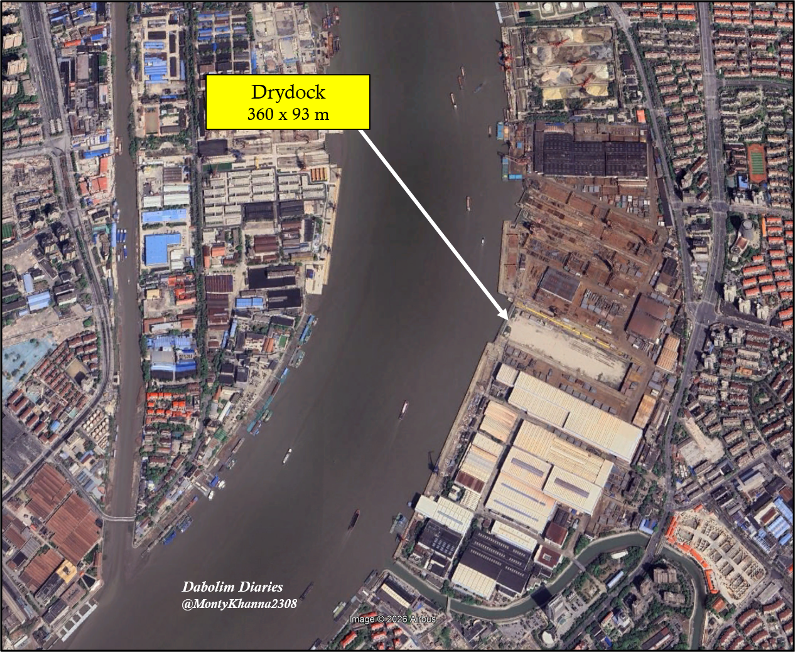 Fig 1: HDZH Shipyard at Pudong, Shanghai
The location of this facility has its limitations. Recent development of the city of Shanghai has gravitated towards Pudong, the locality where HDZH is located. The pressure on the land for alternate use aligned with urban planning is immense and has been responsible for another prominent shipyard, Jiangnan, to find an alternate location in Changxing Island. For similar reasons, the part of HDZH located on the western bank of the Huangpu shut shop in 2021 and the land it occupied has been redeveloped. Cognizant of the limitations associated with the current site, the management of yard decided to build a new yard on Changxing Island abutting the existing JiangNan ChangXing (JNCX) yard. Work at this facility included the dredging of a large wet basin of dimensions 750 x 240 m and the construction of two drydocks. Drydock No 1 measures 440 x 90 m and Drydock No 2 measures 350 x 50 m, along with associated fabrication and logistics sheds (Fig 2).
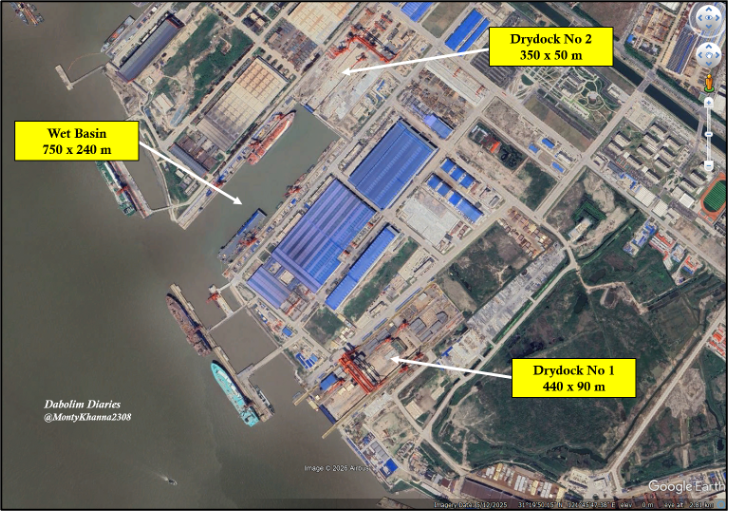 Fig 2: New Facilities of HDZH Shipyard on Changxing Island
These facilities were rapidly brought into use by 2024, most notably with the inaugural construction activity in Drydock No 1 being the first of class Type 076 LHD along with three Type 54A frigates (Fig 3).
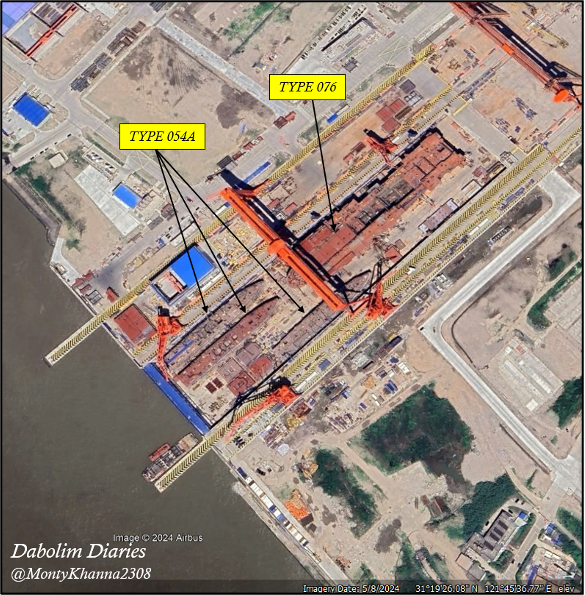 Fig 3: Drydock No 1 of HDZH with One Type 076 and Three Type 054A Under Construction
As of 2026, Drydock No 1 has been seen to be getting extended by 230 m. Once this work has been completed, the Drydock will be 670 m long (Fig 4).
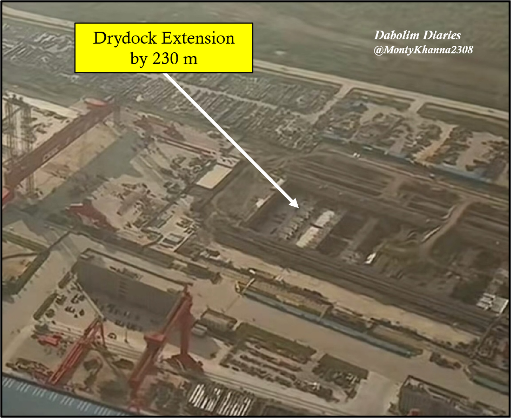 Fig 4: Drydock No 1 Under Extension by 230 m
As ship construction activity at this site has gathered momentum, the use of the old site on the Huangpu River has diminished. In all probability, this will shortly be shut down with the land it occupies being redeveloped. HDZH, even at its new location, continues to be the primary yard for the construction of expeditionary assets. This is reenforced by recent images of this site, which have captured the ongoing construction of three large amphibs, details of which are contained in the subsequent paragraphs.
Type 071 Yuzhao Class
This was the first large expeditionary vessel built by China. Its primary function is the ferrying of troops along with their equipment (Fig 5).
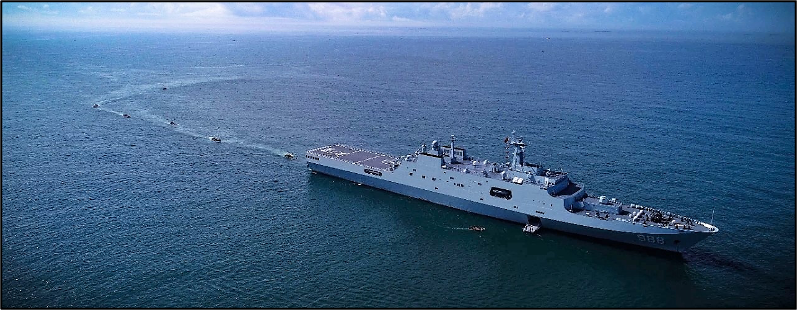 Fig 5: Type 071 Carrying Out Operations with ZBD 05s
The aviation component of the ship is limited with a hangar capacity of up to four Z-8/Z-18 sized helicopters (Fig 6).
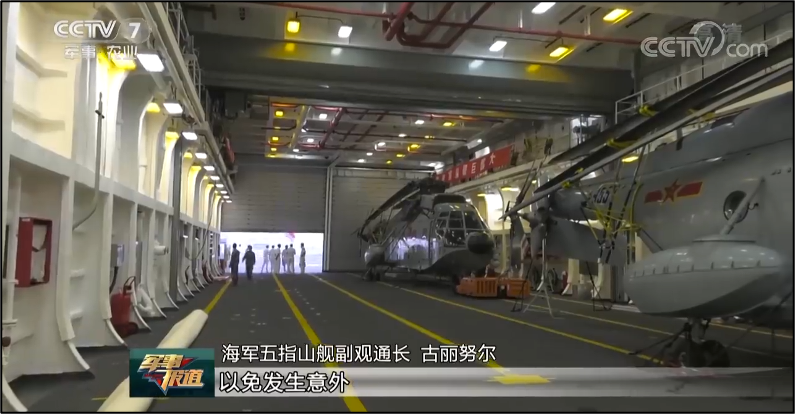 Fig 6: Hangar of Type 071 with Space to Accommodate Four Helicopters
The vessel is, however, optimised for carrying the Type 726 Yuyi Class LCACs and has an ability to embark four of them simultaneously (Fig 7).
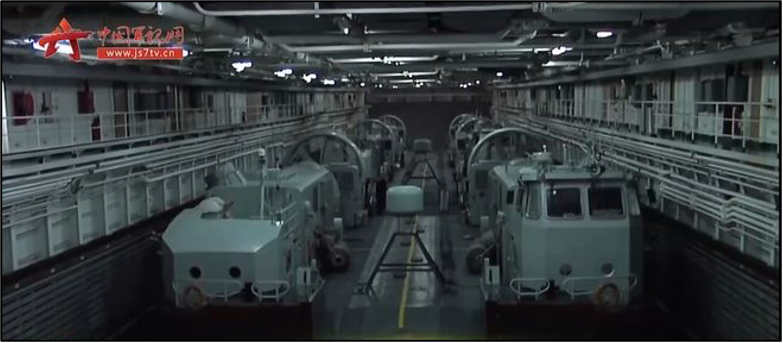 Fig 7: Well Deck of Type 071 with Type 726 LCACs Embarked
Her floodable well deck allows for easy egress as well as recovery of the ZBD 05 family of Infantry Fighting Vehicles (IFVs) and other amphibians (Fig 8).
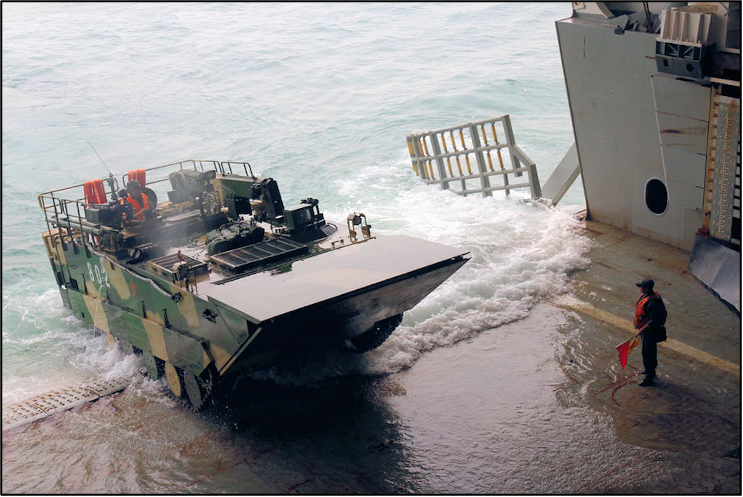 Fig 8: ICV Being Recovered in Well Deck of Type 071
Eight of these vessels were commissioned between 2007 and 2020. In addition, one was exported to Thailand in 2023. This vessel had minor modifications as compared to those built for the PLAN.
Assessments that this would be an eight-ship programme have been upset by recent sightings of more vessels of the class under construction. A photograph of Drydock No 1 of HDZH recently posted on line shows one vessel of this class in an advanced stage of construction and another adjacent to it (not clearly visible in Fig 9) under fabrication.
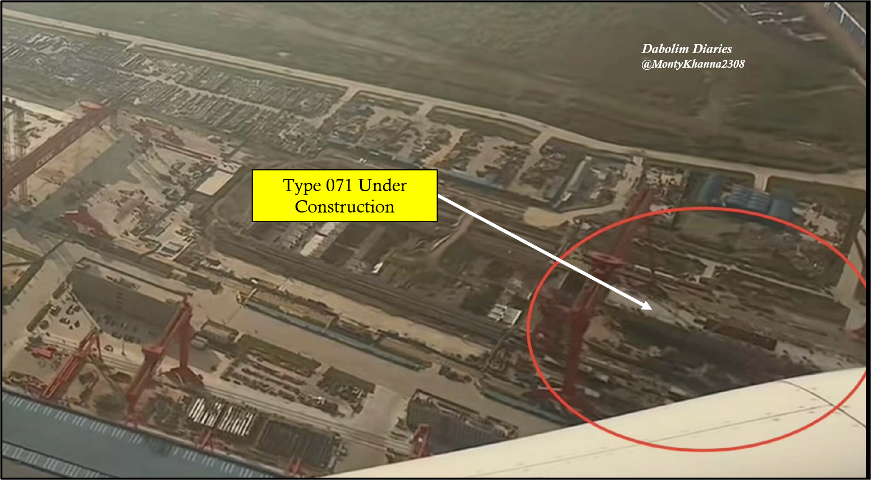
Fig 9: Two Type 071 LPDs Under Construction at Drydock No 1 of HDZH (New Facility)
Type 075 Yushen Class
These are large vessels that fall under the category of LHDs. Like the 071s, they have a floodable well deck. They are however far larger and possess a large through-deck for flight operations along with a large hangar below it, access to which is provided by two lifts. They are optimised for the vertical envelopment role and are capable of embarking up to about 30 helicopters (Fig 10). This has been achieved through a reduction in the size of the well deck as consequence of which, its LCAC embarkation capacity has been reduced to two.
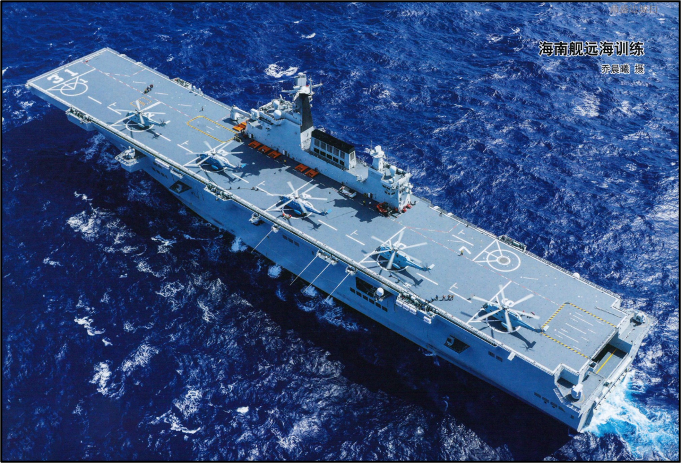 Fig 10: Type 075 with Helicopters Embarked on Flight Deck
Four of these vessels have been commissioned to date between 2021 and 2025. Another vessel that was initially assessed to be a Type 075 has recently been sighted to be under construction in Drydock No 2 of HDZH new facilities. However, a closer assessment of its dimensions (Length 210 m and beam 26 m) leads to the conclusion that this too is a Type 071, the third undergoing simultaneous construction in this facility (Fig 11).
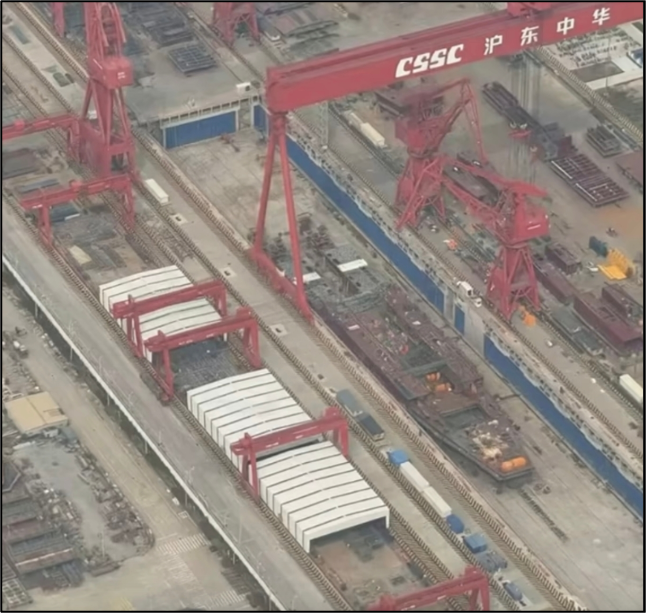 Fig 11: Type 071 Under Construction at Drydock No 2 of HDZH (New Facility)
Type 076 Yulan Class
Construction of the lead vessel of this class commenced at Drydock No 1 in October 2023. As mentioned in Dabolim Diaries Brief No 23, this vessel has broken new ground in ship design by marrying an EMALS catapult and arrestor wires with an LHD hull. While it is speculated that this will primarily be used for the launch and recovery of large drones, operations with manned fighters/AEW aircraft cannot be ruled out. The first and only vessel of the class (Sichuan) is currently undergoing sea trials and is likely to be commissioned in the last quarter of this year or early next year.
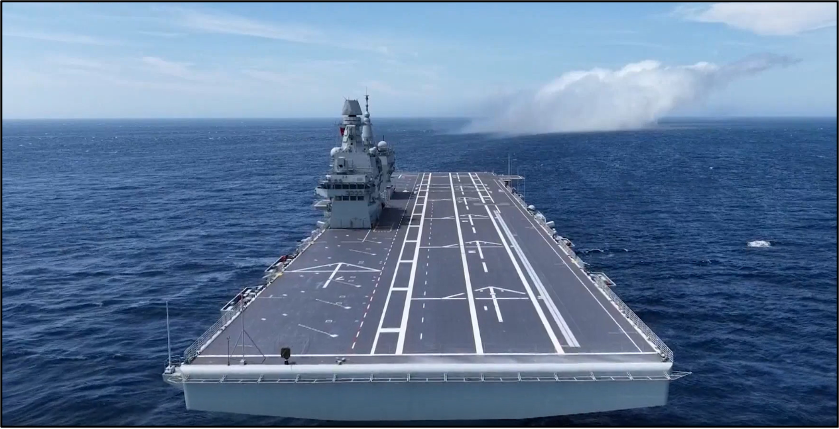 Fig 12: Type 076 Undergoing Sea Trials (EMALS Catapult Clearly Visible)
So far, there is no evidence of more vessels of the class to be under construction. However, it is assessed that this too will enter series construction with at least three to four ships being built.
Ship-to-Shore Connectors
All the vessels described above require a growing number of LCACs and helicopters to fulfil the role of ship-to-shore connectors. Series production of the Type 726 Yuyi Class LCAC started on a slow note with several design and technical issues. It, however, appears that these have been resolved over the years. Their numbers have now started to grow significantly. Similarly, earlier bottlenecks pertaining to the build capacity of transport helicopters seem to have also been resolved with adequate numbers being fielded to meet the requirements of the growing fleet of expeditionary vessels.
Assessment
China’s expeditionary capability buildup needs to primarily be seen through the prism of a Taiwan contingency. An attempt to forcefully integrate Taiwan with the PRC will primarily comprise of three campaigns. These are as listed below: –
- Blockade Campaign. The purpose of this would be to prevent anyone from reinforcing Taiwan’s military preparedness through the transfer/basing of weapons. It would also serve the purpose of conveying a sense of isolation to the Taiwanese populace thereby impacting morale with the hope that this would reduce their desire to resist invading forces.
- Strike Campaign. This campaign would be to degrade the ability of Taiwan to resist an invasion by inflicting attrition on its defending forces and along with their enablers (logistic hubs, communication nodes, command and control centers, etc). The campaign could also extend to key civil/industrial facilities to impact morale.
- Expeditionary Campaign. This would be the campaign that would transport the invading force from mainland China to Taiwan with the aim of subjugating it and forcing the leadership to accept integration with the PRC. It is in this phase that the large amphibians will play a major role, using their stand-off ship-to-shore capabilities to land heliborne forces as well as ICVs/Tanks/Artillery with LCACs in addition to those which can swim ashore on their own.
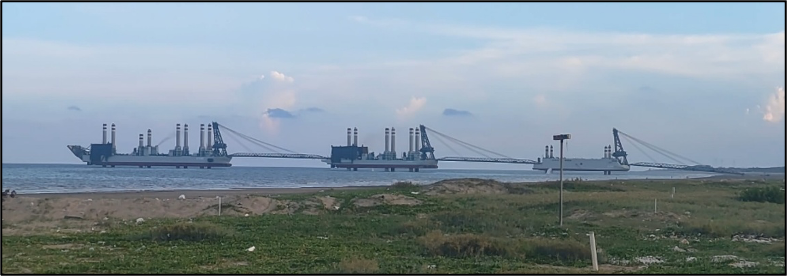
While China has been consistently augmenting its fleet of large expeditionary vessels, we are not witnessing the same zeal when it comes to building newer LSTs to either replace or build upon the existing fleet of variants of Type 072 vessels. The implication of this is that the PLA Navy has deprioritised the requirement of hard beaching, possibly assessing that the risks of doing so would be large, even after a sustained strike campaign. The preferred option would be to use the limited capabilities of airborne, heliborne and LCAC delivered /self-propelled forces to either capture an existing harbour or to sanitise a suitable beach that would allow the positioning on invasion barges (Fig 13).
Fig 13: Artificial Causeway Created by Positioning of Invasion Barges
Both these options would permit the rapid buildup of forces without necessarily resorting to hard beaching. For such an option to be executed with a reasonable probability of success, the role of large expeditionary vessels will be critical. It therefore comes as no surprise that China continues to invest into its fast-growing inventory of such vessels.


Leave a Reply
Want to join the discussion?Feel free to contribute!