
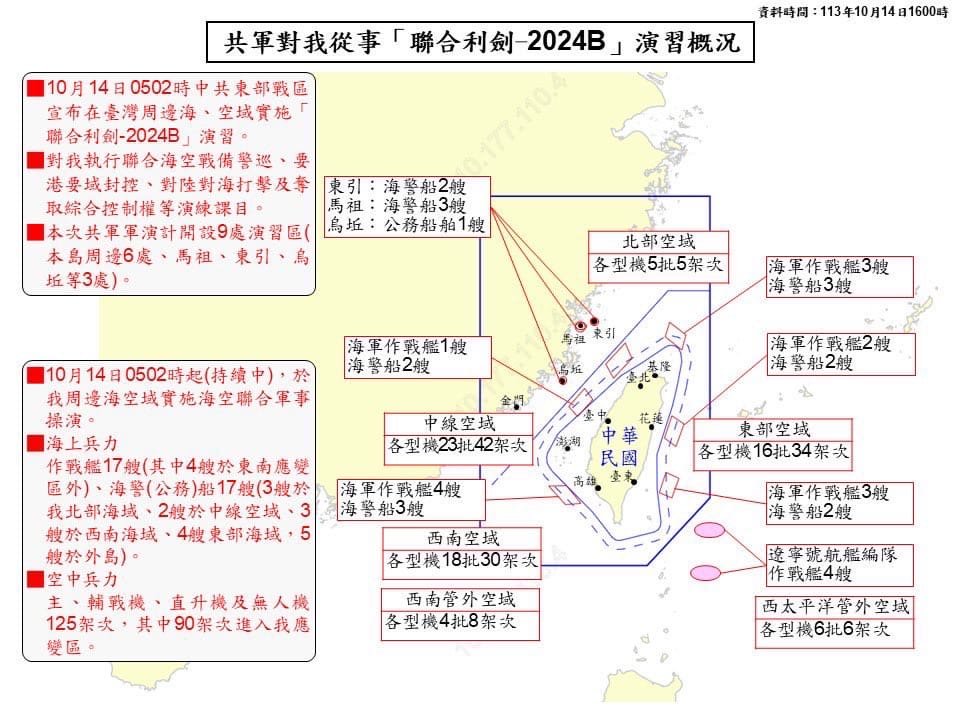
President Lai Ching-Te made his first public National Day speech on 10 October 2024 as part of the Taiwan’s 113th anniversary celebrations. The event, widely attended by foreign delegates, opposition party members, government functionaries and military personnel, was also well-publicised in the domestic and international media. Major highlights of the Presidential speech were: (1) China has “no right to represent Taiwan”; (2) Mainland China and Taiwan were not subordinate to each other; and (3) his main mission was to “resist annexation or encroachment upon our sovereignty.”[1] The Chinese reaction to the Taiwanese President’s public assertion was, of course, along expected lines. The Chinese media severely criticised the Presidential statement as being an unacceptable expression of separatist tendencies, aimed at seeking independence. The Global Times, an acknowledged mouthpiece of Chinese communist Party, went to the extent of asserting that President “… Lai’s blatant declaration that the two sides of the Taiwan Strait are “not subordinate to each other” constitutes a serious act of illegal provocation. Such open violations of the law must be met with a strong response.[2]
The “strong response” that the Global times advocated came in the form of an unannounced and rapidly organised Exercise JOINT SWORD 2024B by the Chinese People’s Liberation Army (PLA) on 14 October 2024, wherein the PLA Navy, Army and Air Force units from China’s Eastern Theatre Command participated along with some elements of the PLA Rocket Force. The major segment of the exercise was concentrated at six specific locations all around the main island of Taiwan, with the stated objective of “testing the joint operations capabilities of the Eastern Theatre command units in conducting sea- and air-based combat-readiness patrol, laying blockade against key Taiwanese ports, carrying out assault on maritime and ground targets, as also seize joint superiority in the combat-zone”.[3]
A concurrent ‘show of force’ posture involved proactive Chinese Coast Guard (CCG) presence in the vicinity of the outlying Taiwanese islands of Dongyin, Matzu, and Wuqiu. The pictographic representation of the PLA’s exercise JOINT SWORD 2024B released by the Taiwanese media, indicating the six areas of deployment around Taiwan and the affected outlying islands, is at Figure 1.[4]
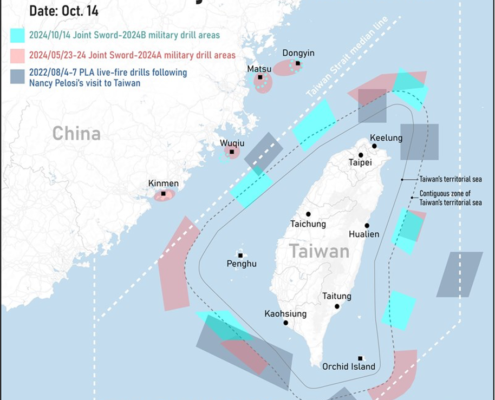
Figure 1: Areas of Exercise JOINT SWORD 2024 – Comparison between A and B Series
Source: Focus Taiwan/ CNA English News
Comparison: Exercises JOINT SWORD 2024A and JOINT SWORD 2024B
In order to get a comparative insight into the scale and scope of JOINT SWORD series of exercises — two of which have been conducted this year — it is necessary to visualise the conduct of the first exercise, the JOINT SWORD 2024A. The PLA engaged in a public display of aggressive brinkmanship, by conducting Exercise JOINT SWORD 2024A on 23 May 2024 — just three days after the newly elected President of Taiwan, Lai Ching-Te, took the oath of office on 20 May 2024 — at an unprecedented scale, all around Taiwan. The exercise, lasting 24 hours — from 0600 hours local time on 23 May 2024 to 0600 hours the next day — involved PLA Army troops, PLA Navy ships and submarines, PLAAF aircraft, PLA Rocket Force units, and, for the first time, CCG ships as well.[5] The large-scale exercise also covered many additional areas including its outlying islands of Kinmen, Matsu, Wuqiu, and Dongyin. Known differences in the number of participating forces between ‘A’ and ‘B’ series of exercises are tabulated below:
| Ser | Key Aspects of Difference | JOINT SWORD 2024A[6] | JOINT SWORD 2024B[7] |
| a. | Participating PLA Navy and CCG Ships | 53 (Details not known) | 26 (14 PLA Navy +12 CCG) |
| b. | Participating PLA AF Aircraft | 111 | 153 |
| c. | PLA AF Aircraft crossed Median Line and entered Taiwan’s air defence identification zone (ADIZ) | 82 | 111 |
Even a perfunctory look at Figure 1 reveals the following disconcerting characteristics related to the present edition of the exercise series:
- The number of exercise areas around Taiwan increased to six (blue boxes), as against five in the 2024A edition (brown boxes).
- The inner limits of the exercise areas were not very far from Taiwan’s territorial sea and often transgressed into its adjacent contiguous zone, which was not the case in the previous (May 2024) edition.
- There was, thankfully, no posturing near Kinmen Island, unlike during the last edition.
It can also be inferred from Figure 1 above that a relatively new pattern of major PLA exercises in areas surrounding Taiwan has emerged over past couple of years — having commenced in August 2022 in the run-up to US House Speaker Nancy Pelosi’s visit to Taiwan, which had been followed by a similar exercise in April 2023. They are timed to broadly coincide with major political events in Taiwan’s calendar, so as to make the linkage ominously clear to Taiwan, as also to the rest of the world. Even though specific coordinates of the exercise areas have not been released by either party, the general areas depicted in the admittedly ‘not-to-scale’ graphics, do point to the fact that the PLA forces are progressively inching closer to Taiwan with every iteration of the exercise.
However, a quantum jump in the force level — and consequently implied threat quotient — as compared to the 2024A edition was more than evident, with the Liaoning aircraft carrier group, which was exercising in the South China Sea, also joining in the current exercise and deploying to the east of Taiwan.[8] While there is insufficient clarity on the composition of participating PLA Navy and CCG units in exercise JOINT SWORD 2024B, it is instructive to note that an operationally effective carrier battle group (CBG) comprises at least four to five surface units (Destroyers and/or frigates) in addition to the carrier itself and a replenishment ship — along with a nuclear submarine in support role for those countries which possess the latter.[9]
The Threat Quotient – Operational and Tactical Issues
While the doctrines for operating aircraft carrier groups differ from country to country on the basis of the capabilities of aircraft carrier and associated air wing, number of escorts and their weapon systems, robustness of integrated intelligence, surveillance and reconnaissance (ISR) architecture, and the ability of other defence forces to support overall national objectives, certain generic and foundational commonalities do exist between their operating philosophies. Two particular aspects pertain to the need for achieving extended-range offensive coverage, and ensuring a large area of ‘sea denial’ to the adversary. In the context of Liaoning carrier group’s deployment on the east coast of Taiwan for the exercise, it is worth noting that the physical length of Taiwan is a mere 395 km (245 miles) from end to end. For a moderate capability CBG — such as the one centred around the aircraft carrier Liaoning whose offensive or defensive umbrella would easily cover a radius of 200 km — it is well within its operational capabilities to sanitise the entire length of Taiwan and its adjoining maritime areas.
Thus, a PLA Navy CBG — and its surface action group(s) — would be quite well suited to perform all the stated objectives that Beijing laid down with regard to the JOINT SWORD series of exercises, viz., conduct sea-air combat-readiness patrol, blockade key ports and areas, assault maritime and ground targets, as well as accomplish joint seizure of comprehensive superiority.[10] Taiwan, hamstrung by the limitations of its geography, has very few major ports, mainly at Keelung in the north, Kaohsiung in south-west, Taichung in the west and Hualien on east coast. The largest Taiwanese naval base (at Suao) also lies on the east coast. A CBG, dynamically deployed on the east coast of Taiwan, would be able to effectively blockade all ports along an arc running clockwise from Keelung in the north to Kaohsiung in the southwest, and would be in a position to prosecute any maritime or even ground targets which try to breach its blockade, either from landward or seaward.
A further point to note is that the CBG was deployed further seaward of the two exercise locations on the east coast of Taiwan, so as to provide air cover to both these locations. The PLA certainly deployed additional naval ships at all the six locations around Taiwan, even though their deployment details are not readily available in public domain. As regards the outlying islands farthest from Taiwan, but closest to China, the CCG ship-manoeuvres during both ‘A’ and ‘B’ editions of this exercise series sent an unambiguous message of isolating and cutting them off, if required. This intent was borne out by the publicised tracks of CCG ships manoeuvring in the restricted waters around Wuqiu and Dongyin islands during Exercise JOINT SWORD 2024A, wherein they transited as close as 2.8 Nautical Miles (NM) from Wuqiu and 3.1 NM from the Dongyin coast.[11] The graphic at Figure 1 indicates that a similar pattern of CCG deployment was repeated in close proximity of Dongyin, Matsu and Wuqiu island during the follow-on 2024B exercise, too.
The actual operational scenario during hostilities will, however, never be as simple and straight-forward as projected above. The Taiwanese national defence establishment — including its shore-based anti-ship and air defence ordnance, as well as its Air Force — will oppose this Chinese intent to the best of its capabilities. A high probability of the US Navy committing its forces to the defence of Taiwan in accordance with the provisions of the Taiwan Relations Act 1979 [12], will also have to factored. However, despite this longstanding US security guarantee, Beijing, in the current environment of uneasy peace, does appear to be largely succeeding in its endeavours vis-à-vis Taiwan by this blatant and repeated display of the aggressive brinkmanship. Concurrently, the PLA units are getting trained on the operational and tactical methodologies of executing the laid-down tasks in fulfilment of the stated objectives; and the troops are slowly getting used to the idea of taking the fight to Taiwan and internalising it by way of repeated drills.
The Bigger Picture
China has conveyed the firmness of its intent of reunifying Taiwan in its 2022 White Paper entitled ‘The Taiwan Question and China’s Reunification in the New Era’, by articulating that the “rejuvenated China of the new era considered this time as a new starting point for reunification”.[13] Over the next couple of years since that time, the PLA has followed-up on this national objective by relentlessly exerting incremental pressure through ‘show-of-force’ exercises around Taiwan — four of which including the JOINT SWORD series that have been conducted to date. These major exercises are, of course, in addition to the almost daily intrusions of the PLAAF aircraft across the median line and into Taiwan’s ADIZ.
In addition to the reunification pitch being linked to the Chinese territorial integrity and ‘core interest’ rhetoric, Taiwan is also of huge geostrategic significance to Beijing in its bid to project power into the Pacific Ocean and beyond. The strategic significance of Taiwan’s geographical location has been widely acknowledged from the available historical records pertaining to previous invasions. A Chinese warrior chieftain named Koxinga (Cheng Cheng-kung) reportedly attacked Taiwan in 1662, and upon its capture, pushed the Dutch colonisers out of the Island. Using this new conquest as a base, he went on to raid numerous locations in the Philippines and even sought tribute from the Filipinos.[14] While these threats did not materialise (largely due to the untimely demise of that crafty warrior), the idea of using Taiwan as a sheet anchor for southward expansion took root, and continues to persist. Subsequently, the Japanese Imperial Army invaded Taiwan in 1874, and followed up its eventual capture by launching its military and economic campaign into southern China and Southeast Asia, using Taiwan as a launch pad.[15] The relevance of this historical context in the current environment — one in which China appears to be poised for forcible reunification like never before — is brought home quite starkly in this ominous forewarning: “That south-pointing history of Taiwan should be remembered whenever Taiwan’s future under PRC occupation is discussed. History is not going to stop. It will continue, and like all history, it will echo what has gone on before.”[16]
The strategic importance of Taiwan — and the military concerns for the US, should China manage to succeed in forcibly absorbing Taiwan into the PRC — was summed up quite succinctly by General Douglas McArthur in the 1950s: “Formosa in the hands of the Communists can be compared to an unsinkable aircraft carrier and submarine tender, ideally located to accomplish Soviet offensive strategy and at the same time, checkmate counter-offensive operations by United States Forces based on Okinawa and the Philippines.”[17] The same concerns continue to hold good for the US — as also for various western Pacific littorals — in the present day, even though a quarter of the century has gone by.
Conclusion
Beijing, with its publicly evident actions of creating ‘ever-new normals’ vis-à-vis Taiwan by conducting unannounced military editions of the JOINT SWORD series of exercises, is certainly testing the resolve of Washington, while its allies and like-minded partners observe the ‘power-play’ dynamics from the sidelines, all the while mulling the options available to them so as to preserve their own national interests. The Global Times opinion piece certainly seems to have sounded the bugle by mincing no words this time:
“The ‘Joint Sword-2024B’ exercise is intended to make the Lai authorities (sic) acutely aware that two swords hang over the ‘Taiwan independence’ separatist forces: One is the sword of military punishment, and the other is the sword of judicial punishment.”[18]
Against this backdrop, the most obvious question that must cause the greatest worry to political leaders across the globe is this: “Is the security situation in the Taiwan Strait actually poised on a razor’s edge at this moment?”
*****
About the Author:
Captain Kamlesh K Agnihotri, IN (Retd) is a Senior Fellow at the National Maritime Foundation (NMF), New Delhi. His research concentrates on the manner in which the maritime ‘hard security’ geostrategies of India are impacted by those of China, Pakistan, Russia, and Turkey. He also delves into holistic maritime security challenges in the Indo-Pacific and their associated geopolitical dynamics. Views expressed in this article are personal. He can be reached at kkumaragni@gmail.com
Endnotes:
[1] Teng Pei-ju, “China has ‘no right to represent Taiwan,’ Lai says in National Day address”, Focus Taiwan/ CNA English News, 10 October 2024, https://focustaiwan.tw/cross-strait/202410145001
[2] Wang Wenjuan, “’Joint Sword-2024B’ drill indicates two swords hanging over ‘Taiwan independence’ separatists: expert”, The Global Times, 14 October 2024, https://www.globaltimes.cn/page/202410/1321173.shtml
[3] Li Weichao, “Chinese Eastern Theater Command Conducts Joint Sword 2024B Drills”, China military, 14 October 2024, http://eng.chinamil.com.cn/CHINA_209163/TopStories_209189/16345114.html
[4] Christie Chen, “Taiwan condemns China’s military drills as ‘irrational provocations’”, Focus Taiwan/ CNA English News, 14 October 2024, https://focustaiwan.tw/cross-strait/202410145001
[5] Yang Tai-yuan, “Differences between the Three Military Exercises of the People’s Liberation Army Encircling Taiwan”, Institute of Chinese Communist Studies, 27 May 2024, https://iccs.org.tw/en/NewsContent/190
[6] Yu-Cheng Chen, “Joint Sword-2024A: Blockades and Gray Zone Tactics”, The Jamestown Foundation’s China Brief, Volume 24, Issue 15, 26 July 2024, pp. 13-18, https://jamestown.org/wp-content/uploads/2024/07/CB-V-24-Issue-15-July-26.pdf
[7] Dzirhan Mahadzir, “Chinese Carrier Strike Group Operating in South China Sea After Drills Surrounding Taiwan”, USI News, 15 October 2024, https://news.usni.org/2024/10/15/chinese-carrier-strike-group-operating-in-south-china-sea-after-drills-surrounding-taiwan?mc_cid=50ea721a97&mc_eid=52bfb7c103
[8] Ibid.
[9] United States Naval Reserve Intelligence Program, “Ready-for-Sea Handbook Module 2—Carrier Battlegroup & Amphibious Ready Group (ARG) Platforms and Missions”, https://irp.fas.org/doddir/navy/rfs/part02.htm
[10] Li Weichao, “Chinese Eastern Theater Command Conducts Joint Sword 2024B Drills”, China military, ibid.
[11] Fan Wei, “Unprecedented CCG-PLA joint operation around Taiwan ‘clear intent to deter’, The Global Times, 23 May 2024, https://www.globaltimes.cn/page/202405/1312871.shtml
[12] US Congress, “All Information (Except Text) for H.R.2479 – Taiwan Relations Act, 96th Congress (1979-1980)”, https://www.congress.gov/bill/96th-congress/house-bill/2479/all-info#:~:text= Taiwan%20Relations%20Act%20%2D%20Declares%20it, other%20people%20of%20the%20Western
[13] The State Council of People’s Republic of China, “China releases white paper on Taiwan question, reunification in new era”, 10 August 2022, https://english.www.gov.cn/archive/whitepaper/202208/10/ content_WS62f34f46c6d02e533532f0ac.html
[14] Michael Turton, “Taiwan: A dagger pointed where?’, Taipei Times, 22 April 2024, https://www.taipeitimes.com/News/feat/archives/2024/04/22/2003816763
[15] Ibid.
[16] Ibid.
[17]US Department of State, Office of the Historian, “Memorandum on Formosa, by General of the Army Douglas MacArthur, Commander in Chief, Far East, and Supreme Commander, Allied Powers, Japan”, 14 June 1950, in Foreign Relations of the United States, 1950, Korea, Volume VII, https://history.state.gov/historicaldocuments/ frus1950v07/d86
[18] Wang Wenjuan, “’Joint Sword-2024B’ drill indicates two swords hanging over ‘Taiwan independence’ separatists: expert”, The Global Times, ibid.


Leave a Reply
Want to join the discussion?Feel free to contribute!