
Keywords: ASEAN; Code of Conduct; South China Sea; Maritime Security; 1982 UNCLOS
At the 19th East Asia Summit held in Vientiane, Laos, on 11 October 2024, Indian Prime Minister Narendra Modi expressed support for the development of “a robust and effective Code of Conduct” (COC) in the South China Sea (SCS).[1] This statement followed a series of public declarations by the top echelons of Indian leadership, all endorsing the finalisation of the COC in the SCS “in accordance with international law, including the 1982 UNCLOS”.[2] On the face of it, these statements read as measured expressions of diplomatic tact, reflecting an attempt to balance India’s support for ASEAN-centrality and ASEAN-led processes with a commitment to the existing rules-based international order. However, a closer examination raises several pertinent questions about the rationale underpinning India’s balancing act.
This article examines the COC from an Indian perspective and argues that its stated objectives are unlikely to be achieved realistically. It advocates for prioritising support for the strengthening of existing legally binding international conventions, rules, and regulations, which have already been ratified by the relevant parties. Finally, it considers the risks of prioritising an informal, potentially non-binding sub-regional mechanism over the multilateral, rules-based international order.
Insofar as India is concerned, a COC for which India has not been consulted may well prove detrimental for the pursuit of its legitimate maritime interests in the SCS. Hence, it seeks to offer caution to India’s Ministry of External Affairs (MEA), the Prime Minister’s Office (PMO), the Ministry of Defence (MoD), and the Indian Navy (IN) that it might be premature to issue public statements supporting the COC that potentially risks undermining the centrality and effectiveness of the existing international legal frameworks. Instead, efforts need to be made through private bilateral negotiations with ASEAN and its member States to ensure that India’s interests — and those of other seafaring nations, too, — are preserved.
Analysis of the Objectives of the COC
Before weighing in on India’s support for the conclusion of the COC in the SCS, it is important to consider whether the Code’s stated objectives can be realistically achieved. In official statements, both ASEAN and China agree on the importance of fostering mutual trust, preventing and managing incidents, and creating a conducive environment for peaceful dispute resolution.[3] However, in practical terms, the underlying aims and objectives of the two parties have diverged sharply. While ASEAN has viewed the negotiations on the COC for de-escalating tensions and managing the conflict, China’s increasingly aggressive manoeuvres have exposed its actual intent to utilise them as a delaying tactic to consolidate its claims in the SCS and alter the facts ‘at sea’.[4] For China, the negotiations serve to contain the issue at a sub-regional level and limit the involvement of external powers.[5]
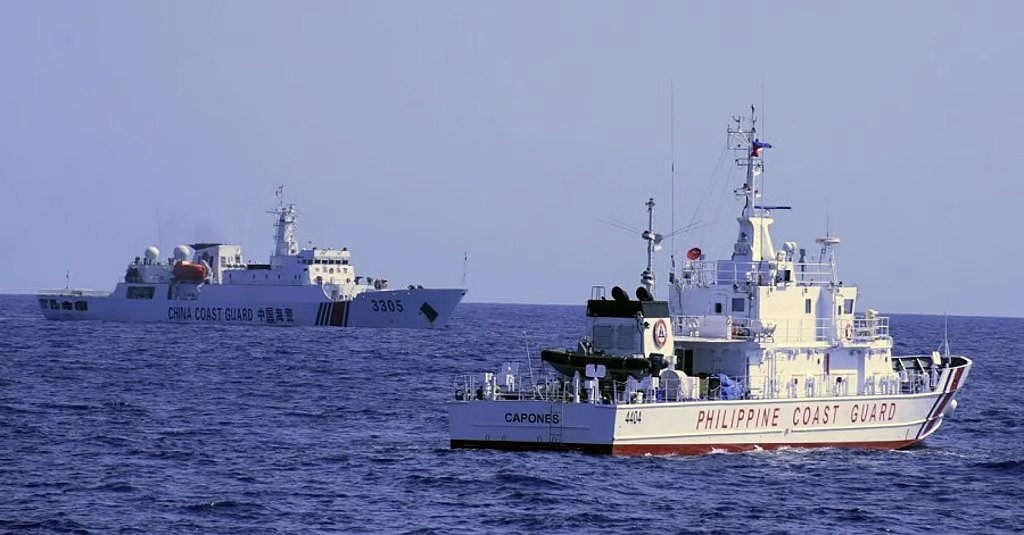
Consequently, it has repeatedly agreed to ASEAN’s calls for negotiations following tense episodes in the SCS, only to resume its island-building activities and harassment of the maritime enforcement agencies and fisherfolk from other littoral States soon thereafter. For instance, after it seized the Scarborough Shoal from the Philippines in 2012, causing the latter to file an international arbitration case under Annex VII of the 1982 United Nations Convention on the Law of the Sea (UNCLOS) a year later, [6] China adopted a more cooperative stance on COC consultations with ASEAN.[7] This notwithstanding, it pressed ahead with its island-building campaign on the seven reefs that it had occupied in the Spratly Islands, at an even more frenetic pace.[8] Similarly, in 2016, after the Arbitral Tribunal ruled entirely in favour of the Philippines, China exhibited renewed enthusiasm for the COC negotiations, while refusing to comply with the Award or giving up its strongarm tactics in the SCS (Figure 1 refers).[9]

Figure 1. Timeline representing the Negotiation History of the Code of Conduct (COC)
Source: Compiled by the Author from Various Sources
The divergence in actual objectives possibly explains the failure of the negotiations and the preceding documents in effectively preventing or managing the disputes in the SCS thus far. The lack of mutual intention to implement the documents adopted is certainly a recipe for failure. Over the last two decades since its signing in 2002, the non-binding Declaration on the Conduct of Parties in the South China Sea (DOC)[10] has arguably been reduced to little more than a political statement of noble intent. Its provisions on the freedom of navigation and overflight, refraining from undertaking activities on uninhabited islands, and humane treatment of persons in distress have been repeatedly disregarded, principally by China.[11]
Since the COC is not intended to be an instrument for settling territorial disputes or the delimitation of maritime boundaries,[12] it does not address issues related to sovereignty, which are, in fact, at the root of the conflict in the SCS. It is evident that the DOC and negotiations on the COC have failed to create a “favourable environment”[13] for the settlement of disputes.
Thus, even if the COC were to be adopted, it is unrealistic to expect that it could aid in “preventing” or “managing”[14] disputes while the underlying cause of the conflict continues to fester. It is important to bear in mind that when China employs aggressive manoeuvres against relatively weaker littoral States in the SCS, it acts on the narrative of asserting its sovereignty in the SCS, derived from its historic claims,[15] represented initially by the ‘nine-dash line’, and later the “Four Shas” claim.[16] At this point in time, there is enough evidence to support the argument that its “grey zone” tactics are intentional acts of hostility, and not an outcome of misunderstandings or lack of communication which could be resolved by Confidence-Building Measures (CBMs) or emergency hotlines.[17]
In addition, several key areas of disagreement have emerged during the course of negotiations on the Single Draft Negotiating Text (SDNT) of the COC. These disagreements, pertaining to the defining of the geographic scope, the “duty to cooperate”, the role of third parties, and the legal status of the COC, have repeatedly delayed the finalisation of the Code.[18] If ASEAN and China are unable to find consensus on these critical issues, the COC risks becoming yet another political declaration like the DOC which ultimately lacks effective implementation. Reaching consensus on these contentious issues, however, is easier said than done as it may require the parties to compromise on their positions regarding sovereignty and foreign policy independence in the SCS.
Moreover, divisions amongst the claimant and non-claimant States within ASEAN have further weakened its collective negotiating position on the COC vis-à-vis China.[19] Thus, while the COC may achieve secondary diplomatic and strategic aims, such as fostering regional dialogue and lending a semblance of ‘ASEAN centrality’ to the negotiations, it is unlikely to fulfil its stated objectives of guiding the behaviour of the concerned parties at sea and promoting peace and stability in the South China Sea.
Existing International Legal Frameworks under the Consensually derived Rules-based International Order
Regardless of the progress, or lack thereof, on finalising the COC, it is important to give due consideration to the existing legally binding conventions, rules, and regulations, which govern the behaviour of sea-going entities. The universally-recognised framework for maritime law, the 1982 UN Convention on the Law of the Sea (UNCLOS) — often described as “the Constitution for the Oceans”[20] — establishes the rules for the delimitation of maritime boundaries and entitlements, innocent passage, management of resources, protection of marine resources, conduct of marine scientific research, and lays down clear dispute settlement mechanisms.[21] Importantly, it has been signed and ratified by all the parties involved in the COC negotiations, including China.
Apart from the 1982 UNCLOS, the International Maritime Organization’s (IMO) “Convention of the International Regulations for Preventing Collisions at Sea” (COLREGs), which was signed in 1972 and entered into force in 1977, outlines rules that govern the behaviour of “all vessels upon the high seas and all waters connected to the high seas and navigable by seagoing vessels”[22] and provides unambiguous guidelines. By establishing responsibility for safe navigation and specifying measures pertaining to speed, ascertaining the risk of collision, the use of sound and light signals, and manoeuvring in any condition of visibility,[23] COLREGs already provides a strong foundation for ensuring safe and responsible navigation at sea, including in the SCS.
The COLREGs is supplemented by the “Radio Regulations” of the International Telecommunication Union (ITU),[24] along with several other consensually-established and internationally accepted rules and regulations, such as the IMO’s Code of Signals[25] and the IMO’s Standard Marine Communication Phrases,[26] which guide radio- and other forms of communication amongst vessels at sea.[27] The non-binding “Code for Unplanned Encounters at Sea” (CUES),[28] signed in 2014, provides an additional set of guidelines for naval forces to follow in situations where they might encounter other military vessels or aircrafts in unplanned, non-combat situations, with the goal of avoiding misunderstandings and preventing clashes. These rules and regulations are particularly relevant for the SCS, where military vessels of multiple countries operate in close proximity, often in disputed waters.
In the specific context of Southeast Asia, the legally binding 1976 “ASEAN Treaty of Amity and Cooperation (TAC) in Southeast Asia” already provides a broad framework for the peaceful resolution of disputes through the provision for a “High Council”.[29] If the failure of the parties to institute the High Council in all these years is any indicator of the likely outcome of the non-binding COC, it would be more effective to operationalise and utilise the binding TAC mechanisms in earnest. Further, unlike the COC which seeks to limit, if not exclude, the involvement of external powers under China’s influence, the TAC allows for accession by external States and regional organisations. Notably, India along with China, was the first non-ASEAN State, to sign the instrument of accession in 2003.[30]
It has been well argued that these existing conventions, rules, and regulations already constitute an “international code of conduct”, and, if a country does not comply with them, then “concerted social- (rather than economic-) ‘ostracization’, along with a ‘collective’ leveraging of extant legal arbitral mechanisms, are more likely to produce the desired behavioural change” than are the signing of additional regional declarations and agreements intended to bring about “good order at sea”.[31] This is exemplified by the international attention, and corresponding censure, that China’s hostile actions in the SCS drew following the 2016 SCS Arbitration Award,[32] which forced it to endorse a voluminous legal rebuttal[33] and come to the negotiating table, even if with an intention to bind ASEAN to talks and to deflect international attention from the issue.
The Award of the Arbitral Tribunal, constituted under Annex VII of the 1982 UNCLOS, was seminal because it was the first international legal ruling that afforded clarity on several contentious issues involved in the conflict unfolding in the SCS, and was salient for maritime disputes involving similar legal conundrums globally. It dismissed China’s extensive historic claims in the SCS for being in contravention of the 1982 UNCLOS,[34] found that “none of the high-tide features in the Spratly Islands is a fully entitled island for the purposes of Article 121 of the Convention” and did not generate maritime entitlements beyond a 12-nautical mile (nm) Territorial Sea, and ruled that low-tide elevations such as the Mischief Reef and the Second Thomas Shoal could not be appropriated by China as they did not generate any entitlements and lay within the exclusive economic zone (EEZ) of the Philippines.[35] By corollary, it found China’s construction of installations and artificial islands at the Mischief Reef without the permission of the Philippines to be violative of Articles 60 and 80 of the 1982 UNCLOS.[36]
Further, its finding that the actions of Chinese law enforcement vessels had infringed upon the traditional fishing rights of Filipino fisherfolk by hindering their activities at the Scarborough Shoal was notable for bringing some of China’s “grey zone” tactics under the purview of international law. It found the actions of Chinese-flagged vessels under consideration to be in violation of rules 2, 6, 7, 8, 15, and 16 of the COLREGs, and attributed these to China, which was, as a result, in breach of Article 94 [“Duties of the Flag State”] of 1982 UNCLOS”.[37] In addition, it held China liable for violating its obligations under Article 58(3) of 1982 UNCLOS due to Chinese maritime law enforcement vessels escorting and protecting Chinese fishing vessels illegally fishing in the EEZ of the Philippines.[38]
China’s own policy of “no acceptance, no participation, no recognition, and no implementation”[39] notwithstanding, the binding Award provided international legal and diplomatic recognition of the legitimate claims and concerns of the other littoral States of the SCS. As a result, it aided them in moving the needle on the core issues of maritime delimitation, sovereignty, and jurisdiction.[40] Unsurprisingly then, the arbitration proceedings were characterised by Chinese analysts as “a tool of political contests” [41] and an “obstacle to the management of conflicts and resolution of disputes”.[42] Thus, it becomes crucial to frame the central issue in the SCS in terms of China’s coercive actions violating international law.
Insofar as India is concerned, it has called for adherence to the 2016 SCS Award more openly,[43] signalling a marked shift in its stance since 2023, one that is quite in contrast to its cautious response in 2016.[44] Arguably, making regular public declarations championing the binding Award would be more effective in bolstering the rules-based international order and putting pressure on a non-compliant State for violating international law, instead of statements supporting an informal, potentially non-binding, regional mechanism.
COC and the Risks of the Decline in Multilateralism
In any case, the attempt to ‘regionalise’ the issue by shifting the focus to the COC negotiations, as opposed to its ‘internationalisation’, despite the Philippines filing, and eventually winning, the SCS arbitration case, has only served China’s interests and allowed it to continue its harassment of other littoral SCS countries. This shift towards regionalisation could be seen as a part of the larger trend of the decline in multilateralism and the growing preference for minilateral and regional maritime-security solutions.[45] Problematically, however, this leads to siloed regional approaches to emerging global maritime-security challenges, while also making it difficult to hold States legally accountable.[46] For instance, it is increasingly becoming evident that “grey zone” tactics are not limited to China or the SCS.[47] Thus, the eminent maritime security expert, Dr Christian Bueger, recommends the need for a better balance between ‘formal’ global and ‘informal’ regional approaches to addressing maritime-security challenges, along with bolstering multilateral institutions and fora to develop global solutions.[48]
However, while the Framework Agreement and the SDNT do mention commitment to the general principles of international law, the latter concerningly omits any reference to the binding dispute mechanism provided under Annex VII of 1982 UNCLOS or compliance with the 2016 Arbitration Award.[49] In a way, then, the COC actually dilutes the dispute resolution provisions provided under international law by prioritising “friendly negotiations” and resolution at the cost of “the consent of the concerned Parties”.[50] This is in line with China’s rejection of any “third party dispute settlement” on matters pertaining to the SCS and its preference for dealing bilaterally with the States concerned “on the basis of respecting historical facts”.[51] Regardless of the attempts by ASEAN member-States such as Vietnam to reconcile the COC with existing international law through a “global-regional nexus”,[52] it is difficult to imagine that such a balance could be achieved considering China’s vehement opposition to binding dispute-settlement mechanisms. Thus, an excessive focus on finalising the COC risks undermining the centrality of the existing, consensually established international legal framework.
Conclusion
The foregoing arguments do not purport to recommend that India should eschew support for regional mechanisms. However, it is important to be clear-eyed about what they can or cannot realistically achieve. While ASEAN member States hope that the COC will emerge as a critical framework for managing tensions in the SCS, its potential to clarify or dilute existing international legal norms — particularly 1982 UNCLOS — depends heavily upon the final text of the agreement. The secondary analysis of the SDNT, regrettably, does not hold much promise in this regard.
As an external but key stakeholder in the developments in the SCS, India has consistently supported the adoption of a COC consistent with a rules-based order and existing international legal frameworks, such as the 1982 UNCLOS. While it is beneficial to support a COC “in principle”, especially if the agreement emphasises freedom of navigation, peaceful dispute resolution, and regional cooperation, it is nevertheless critical to bear in mind that existing legal frameworks which form the foundation of a consensually established rules-based international order contain detailed provisions and guidelines which sufficiently address these issues. Thus, to strengthen the multilateral rules-based international order, it would be more effective to strongly demand adherence to the existing international legal framework and compliance with the 2016 Arbitration Award.
Policy Recommendations for India
- Tread with Caution. India must continuously monitor the developments of the negotiations and be cautious about publicly supporting the COC without fully understanding the potential risks of legitimising China’s territorial claims in the SCS or undermining the binding dispute resolution mechanisms under international law.
- Ensure that the COC does not Undermine the Rules-based International Order and Legitimate Interests of non-COC negotiating Parties, including India. India needs to prioritise safeguarding the integrity of the rules-based international order and the legitimate interests of non-COC negotiating parties, including India, within any regional cooperative framework.
- Prioritise Advocacy of Existing International Legal Mechanisms and Frameworks. India should strongly endorse existing international legal mechanisms and frameworks, such as the 1982 UNCLOS, as well as the 2016 Arbitration Award, as the primary tools for managing disputes in the SCS, rather than focussing on a potentially non-binding agreement.
******
About the Author
Ms Sushmita Sihwag is a Research Associate at the National Maritime Foundation. She holds a master’s degree in liberal studies from Ashoka University, Sonipat, Haryana. Her research focuses upon how India’s own maritime geostrategies are impacted by the maritime geostrategies of ASEAN and its member-states in the Indo-Pacific. She may be contacted at indopac6.nmf@gmail.com
Endnotes:
[1]Ministry of External Affairs, Government of India, “English Translation of Prime Minister’s Intervention at the 19th East Asia Summit, Vientiane, Lao PDR”, 11 October 2024, https://www.mea.gov.in/Speeches-Statements.htm?dtl%2F38404%2FEnglish_Translation_of_Prime_Ministers_Intervention_at_the_19th_East_Asia_Summit_Vientiane_Lao_PDR=
[2] Ministry of External Affairs, Government of India, English Translation of “Remarks by Prime Minister Shri Narendra Modi at the Banquet Hosted by the Sultan of Brunei”, 04 September 2024, https://www.mea.gov.in/Speeches-Statements.htm?dtl/38255/English+Translation+of+Remarks+by+Prime+Minister+Shri+Narendra+Modi+at+the+banquet+hosted+by+the+Sultan+of+Brunei;.
See Also: Rahul Singh, “Rajnath stresses rules-based order in the Indo-Pacific”, Hindustan Times, 22 November 2024, https://www.hindustantimes.com/india-news/rajnath-stresses-rules-based-order-in-the-indopacific-101732214585575.html.
[3] Carlyle A Thayer, “ASEAN-China: Framework of a COC”, Thayer Consultancy Background Brief, 06 August 2017, https://www.scribd.com/document/355938565/Thayer-ASEAN-China-Framework-of-a-COC-August-6-2017.
See Also: “Declaration on the Conduct of Parties in the South China Sea”, ASEAN, 14 May 2012, https://asean.org/declaration-on-the-conduct-of-parties-in-the-south-china-sea-2/
[4] “China Island Tracker”, Asia Maritime Transparency Initiative, accessed 25 January 2025, https://amti.csis.org/island-tracker/china/.
[5] Ministry of Foreign Affairs, The People’s Republic of China, “Statement of the Ministry of Foreign Affairs of the People’s Republic of China on the Award of 12 July 2016 of the Arbitral Tribunal in the South China Sea Arbitration Established at the Request of the Republic of the Philippines”, 12 July 2016, https://www.mfa.gov.cn/eng/zy/gb/202405/t20240531_11367334.html.
[6] “Timeline: China’s Maritime Disputes (1895-2024)”, Council on Foreign Relations, accessed 12 January 2025, https://www.cfr.org/timeline/chinas-maritime-disputes.
[7] ASEAN, ASEAN Maritime Outlook, First Edition, August 2023, 16, https://asean.org/wp-content/uploads/2023/08/AMO-1.pdf.
[8] “China Island Tracker”, Asia Maritime Transparency Initiative, accessed 25 January 2025, https://amti.csis.org/island-tracker/china/.
[9] “China refuses South China Sea arbitration award”, Xinhua Net, 12 July 2016, http://www.xinhuanet.com/english/2016-07/12/c_135507844.htm.
[10] “Declaration on the Conduct of Parties in the South China Sea”, ASEAN, 14 May 2012, https://asean.org/declaration-on-the-conduct-of-parties-in-the-south-china-sea-2/.
[11] “China military says it ‘drove away’ US destroyer in South China Sea” Reuters, 10 May 2024, https://www.reuters.com/world/asia-pacific/china-military-says-it-drove-away-us-destroyer-south-china-sea-2024-05-10/.
See Also: “China Island Tracker”, Asia Maritime Transparency Initiative, accessed 25 January 2025, https://amti.csis.org/island-tracker/china/.
See Also: “South China Sea: tensions over Beijing’s continued detention of Vietnam fishermen”, South China Morning Post, 08 November 2024, https://www.scmp.com/week-asia/politics/article/3285786/south-china-sea-beijings-detention-vietnamese-fishermen-sparks-tensions-challenges-unclos.
See Also: Timeline: China’s Maritime Disputes (1895-2024)”, Council on Foreign Relations, accessed 12 January 2025, https://www.cfr.org/timeline/chinas-maritime-disputes.
[12] Carlyle A Thayer, “ASEAN-China: Framework of a COC”, Thayer Consultancy Background Brief, 06 August 2017, https://www.scribd.com/document/355938565/Thayer-ASEAN-China-Framework-of-a-COC-August-6-2017.
[13] Thayer, “ASEAN-China: Framework of a COC.”
[14]Thayer, “ASEAN-China: Framework of a COC.”
See Also: Carl Thayer, “A Closer Look at the ASEAN-China Single Draft South China Sea Code of Conduct”, The Diplomat, 03 August 2018, https://thediplomat.com/2018/08/a-closer-look-at-the-asean-china-single-draft-south-china-sea-code-of-conduct/ .
[15] “The South China Sea Arbitration Awards: A Critical Study”, Chinese Journal of International Law, Volume 17, Issue 2 (June 2018): 554-6, https://doi.org/10.1093/chinesejil/jmy012.
[16] “Law on the Territorial Sea and Contiguous Zone of 25 February 1992”, accessed 15 January 2025, United Nations, https://www.un.org/depts/los/LEGISLATIONANDTREATIES/PDFFILES/CHN_1992_Law.pdf.
[17] “China says Philippines has ‘provoked trouble’ in the South China Sea with US backing”, Reuters, 14 December 2024, https://www.reuters.com/world/asia-pacific/china-says-philippines-has-provoked-trouble-south-china-sea-with-us-backing-2024-12-13/.
See Also: Joel Guinto, “Philippines says China used ‘military-grade’ laser against boat,” BBC, 13 February 2023, https://www.bbc.com/news/world-asia-64621414.
[18] Carl Thayer, “A Closer Look at the ASEAN-China Single Draft South China Sea Code of Conduct”, The Diplomat, 03 August 2018, https://thediplomat.com/2018/08/a-closer-look-at-the-asean-china-single-draft-south-china-sea-code-of-conduct/ .
[19] “ASEAN Chair Laos faces rising tensions in the South China Sea”, Benar News, 17 January 2023, https://www.benarnews.org/english/news/philippine/laos-asean-chair-south-china-sea-01172024112405.html.
[20] Tullio Treves, “United Nations Convention on the Law of the Sea”, Audiovisual Library of International Law, United Nations, 10 December 1982, https://legal.un.org/avl/ha/uncls/uncls.html.
[21] United Nations Convention on the Law of the Sea, 10 December 1982, 1833 UNTS 397, (entered into force 16 November 1994), 25, https://www.un.org/depts/los/convention_agreements/texts/unclos/unclos_e.pdf.
[22] Convention on the International Regulations for Preventing Collisions at Sea, 20 October 1972, 1050 UNTS 16, 22 (entered into force 15 July 1977), https://treaties.un.org/doc/Publication/UNTS/Volume%201050/volume-1050-I-15824-English.pdf.
[23] Convention on the International Regulations for Preventing Collisions at Sea.
[24] International Telecommunication Union, “Regulatory Publications”, accessed 20 January 2025, https://www.itu.int/pub/R-REG.
[25] International Maritime Organization, “International Code of Signals for Visual, Sound, and Radio Communications”, https://www.dco.uscg.mil/Portals/9/NMC/pdfs/examinations/01_international_code_of_signals_pub_102_2005_ed.pdf.
[26] International Maritime Organization, “Resolution A 918(22)”, 29 November 2001, IMO Standard Marine Communication Phrases”, https://dokumen.tips/download/link/imo-standard-marine-communication-phrases-a91822.
[27] Pradeep Chauhan, “Confidence-Building Measures (CBMs) In the Indian Ocean”, National Maritime Foundation, 09 December 2024, https://maritimeindia.org/confidence-building-measures-cbms-in-the-indian-ocean/#_ftn1.
[28] Code for Unplanned Encounters at Sea, accessed 23 January 2025, 7-9 https://maritimesafetyinnovationlab.org/wp-content/uploads/2016/12/cues_2014.pdf.
[29] “Treaty of Amity and Cooperation in Southeast Asia”, ASEAN, accessed 23 January 2025, https://asean.org/our-communities/asean-political-security-community/outward-looking-community/treaty-of-amity-and-cooperation-in-southeast-asia-tac/.
[30] Susumu Yamakage, “Evolving ASEAN and Changing Roles of the TAC”, Building ASEAN Community: Political Security and Socio-cultural Reflection, Volume 4: 43, https://www.eria.org/ASEAN_at_50_4A.3_Yamakage_final.pdf.
[31] Pradeep Chauhan, “Confidence-Building Measures (CBMs) In the Indian Ocean”, National Maritime Foundation, 09 December 2024, https://maritimeindia.org/confidence-building-measures-cbms-in-the-indian-ocean/#_ftn1.
[32] Nguyen Hong Thao and Nguyen Thi Lan Huong, “The South China Sea Arbitration Award: 5 Years and Beyond”, The Diplomat, 12 July 2021, https://thediplomat.com/2021/07/the-south-china-sea-arbitration-award-5-years-and-beyond/.
[33]“The South China Sea Arbitration Awards: A Critical Study”, Chinese Journal of International Law, Volume 17, Issue 2 (June 2018): 554-6, https://doi.org/10.1093/chinesejil/jmy012 https://www.mfa.gov.cn/eng/wjb/zzjg_663340/bianhaisi_eng_665278/plpbo/202406/P020240606690256291745.pdf.
[34]“Award, PCA Case No 2013-19”, The South China Sea Arbitration (Philippines v China), 12 July 2016, 117. https://pcacases.com/web/sendAttach/2086
[35] “Award, PCA Case No 2013-19,” 260.
[36] “Award, PCA Case No 2013-19,” 415.
[37] “Award, PCA Case No 2013-19,” 435.
[38] “Award, PCA Case No 2013-19,” 297.
[39] Fu Ying, “Why China Says No to the Arbitration on the South China Sea”, Foreign Policy, 10 July 2016, https://foreignpolicy.com/2016/07/10/why-china-says-no-to-the-arbitration-on-the-south-china-sea/.
[40] Nguyen Hong Thao and Nguyen Thi Lan Huong, “The South China Sea Arbitration Award: 5 Years and Beyond”, The Diplomat, 12 July 2021, https://thediplomat.com/2021/07/the-south-china-sea-arbitration-award-5-years-and-beyond/.
[41] Zheng Zhihua, “Is China Ready for a Second South China Sea Arbitration?”, South China Sea Strategic Situation Probing Initiative, 15 June 2020, http://www.scspi.org/en/dtfx/1592210057.
[42] Hu Bo, Lei Xialou, et al., “The 20th Anniversary of DOC and Prospects of COC”, South China Sea Strategic Situation Probing Initiative, 19 August 2022, http://www.scspi.org/en/dtfx/20th-anniversary-doc-and-prospects-coc.
[43] Ministry of External Affairs, Government of India, “Joint Statement on the 5th India-Philippines Joint Commission on Bilateral Cooperation”, 29 June 2023, https://www.mea.gov.in/bilateral-documents.htm?dtl/36743/Joint_Statement_on_the_5th_IndiaPhilippines_Joint_Commission_on_Bilateral_Cooperation.
[44] Ministry of External Affairs, Government of India, “Statement on Award of Arbitral Tribunal on South China Sea Under Annexure VII of UNCLOS”, 12 July 2016, https://www.mea.gov.in/press-releases.htm?dtl/27019/statement+on+award+of+arbitral+tribunal+on+south+china+sea+under+annexure+vii+of+unclos.
[45] Christian Bueger and Timothy Edmunds, Understanding Maritime Security, (New York: Oxford University Press, 2024), 215.
[46] Christian Bueger, “Indo-Pacific Regional Dialogue in New Delhi — Special Address”, Christian Bueger, 05 October 2024, accessed 27 January 2025, https://bueger.info/indo-pacific-regional-dialogue-in-new-delhi-special-address/.
[47] Elisabeth Braw, “Russia’s Cable-Cutting Could Threaten Europe’s Whole Energy Supply”, Foreign Policy, 03 January 2025, https://foreignpolicy.com/2025/01/03/russia-baltic-sea-cable-cutting-incidents-gas-oil-energy-norway/.
[48] Christian Bueger, “Indo-Pacific Regional Dialogue in New Delhi — Special Address”, Christian Bueger, 05 October 2024, accessed 27 January 2025, https://bueger.info/indo-pacific-regional-dialogue-in-new-delhi-special-address/.
[49] Carl Thayer, “A Closer Look at the ASEAN-China Single Draft South China Sea Code of Conduct”, The Diplomat, 03 August 2018, https://thediplomat.com/2018/08/a-closer-look-at-the-asean-china-single-draft-south-china-sea-code-of-conduct/.
[50] Carl Thayer, “A Closer Look.”
[51] Ministry of Foreign Affairs, The People’s Republic of China, “Statement of the Ministry of Foreign Affairs of the People’s Republic of China on the Award of 12 July 2016 of the Arbitral Tribunal in the South China Sea Arbitration Established at the Request of the Republic of the Philippines”, 12 July 2016, https://www.mfa.gov.cn/eng/zy/gb/202405/t20240531_11367334.html.
[52]Hoang Thi Ha, “ASEAN and the South China Sea Code of Conduct: Raising the Aegis of International Law, ISEAS Yusof Ishak Institute, 21 September 2020, https://www.iseas.edu.sg/media/commentaries/asean-and-the-south-china-sea-code-of-conduct-raising-the-aegis-of-international-law/.


Leave a Reply
Want to join the discussion?Feel free to contribute!