
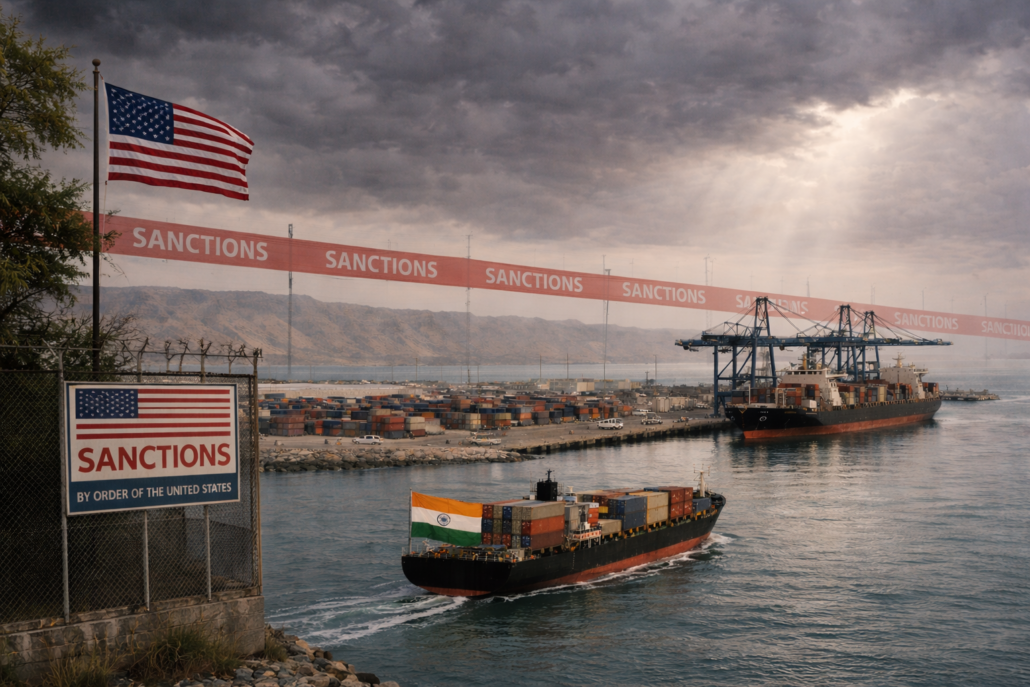
The joint development by India and Iran (later augmented by commitments from Afghanistan and sustained interest from Uzbekistan) of the Iranian port of Chabahar has long been subjected to operational uncertainty. It would be recalled that the US first imposed sanctions on Iran in November 1979.[1] The US withdrawal from the “Joint Comprehensive Plan of Action” (JCPOA) in 2018[2] deepened this uncertainty. In that same year (2018), some relief was felt by New Delhi and Tehran thanks to the US granting a temporary waiver, specifically for the development of Chabahar port by India, in order to promote and support Afghanistan’s connectivity.[3] Although this waiver was revoked in September of 2025, India used its good offices to secure a six-month, renewable extension, allowing certain port-development activities until April of 2026. This deadline is now upon us and raises a question of fundamental importance to India and Iran, given the still ongoing armed conflict between the USA, Israel, and Iran — should Chabahar remain an exception, or be subsumed within the USA’s broader logic of “maximum pressure” on Iran?
The imposition by the US of a blockade of all Iranian ports notwithstanding,[4] this article argues that Chabahar is not some anomaly needing to be managed but is rather an instrument to be leveraged. However, the terms of that leverage have fundamentally changed. What was once a question of sanctions exemption has now evolved into a question of operational viability under conditions of active maritime coercion. In this altered context, sustaining — and ultimately institutionalising — the waiver aligns with core US interests by enabling US influence in Afghanistan while reinforcing India’s role as a regional connectivity provider. At the same time, the viability of Chabahar now depends not only upon policy exemptions but upon the resolution of emerging constraints such as maritime risk, insurance coverage, and financial facilitation. The policy challenges for the US administration, therefore, lie not merely in preserving an exception, but in integrating Chabahar coherently within a sub-regional framework that is increasingly shaped by conflict dynamics rather than mere regulatory design.
From Sanctions to Maritime Coercion
The present crisis in the Persian Gulf marks a decisive shift in the nature of constraints surrounding Chabahar. For much of its history, the project operated under regulatory uncertainty — sanctions, waivers, and periodic reversals. What has emerged since early 2026 is qualitatively different. The escalation of hostilities between the United States and Israel on the one hand and Iran on the other has transformed the operating environment from one of legal ambiguity to one of physical risk. The US decision to impose a naval blockade on all Iranian ports,[5] coupled with Iranian counter-measures in and around the Strait of Hormuz, has effectively militarised the maritime space in which Chabahar operates. Even though Chabahar lies outside the Strait of Hormuz, its accessibility is shaped by the same risk environment. Commercial shipping is not governed by legal distinctions alone; it responds to risk perception. Once insurers withdraw coverage and shipping lines reassess exposure, geography offers only limited insulation.
This distinction is important. Chabahar is not directly targeted in the same manner as ports deeper within the Persian Gulf. Yet, the blockade regime and the associated uncertainty create a functional equivalence. If vessels cannot be insured, financed, or routed with reasonable predictability, the port’s operational status becomes irrelevant. In effect, coercion has shifted from sanctions on paper to constraints at sea. This transition also alters the policy question. The issue is no longer whether Chabahar should be “exempted” from sanctions, but whether it can remain operational in an environment where maritime access itself is contested. The answer depends on a combination of diplomatic positioning, financial innovation, and strategic signalling.
Geography Reconsidered
Chabahar’s enduring value lies in its geography. Situated in Iran’s Sistan and Baluchistan Province and on the Makran coast, it is one of the country’s limited ports with direct access to the Arabian Sea, bypassing the Strait of Hormuz. It is a deep-water port, with an alongside depth of approximately 16-17 metres,[6] capable of handling large bulk carriers, including partially loaded “Capesize” vessels. The port comprises two terminals — Shahid Beheshti and Shahid Kalantari — with the former developed with Indian assistance. While the port of Jask, located farther west, and just outside the Strait’s mouth, offers a similar geographic advantage, Chabahar remains more closely integrated with overland connectivity into Afghanistan and Central Asia. This feature has long been central to its strategic appeal, particularly for India. In scenarios of disruption within the Persian Gulf, Chabahar offers an alternative point of access — one that is not immediately constrained by the narrow chokepoint of the Strait of Hormuz through which a significant portion of global energy flows.
However, geography is not an absolute advantage; it is contingent on context. The current crisis demonstrates the limits of spatial insulation. While Chabahar lies outside the Strait, it remains within a broader theatre of maritime contestations. Naval deployments, surveillance operations, and the potential for escalation extend the zone of risk beyond formal boundaries. In practical terms, this means that vessels approaching Chabahar are not completely immune to the dynamics affecting the Persian Gulf.
At the same time, Chabahar’s proximity to Afghanistan — approximately 90 kilometres from the Iranian border — anchors its significance. The port connects to the Zaranj-Delaram highway, constructed by India,[7] which integrates the road network (See Map 1). This creates a direct maritime-to-land corridor linking India to Afghanistan and, by extension, to Central Asia.[8] Few other routes offer this combination of accessibility and reach.
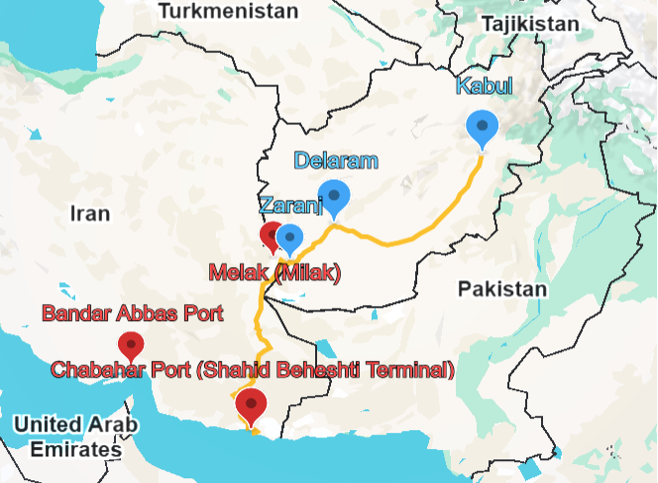 Map 1: Chabahar-Melak-Zaranj-Delaram-Kabul Corridor
Source: Google Earth
This dual character — maritime access coupled with continental connectivity — positions Chabahar as more than a port. It functions as a gateway. Yet, this potential remains only partially realised. The absence of fully developed hinterland connectivity, particularly the delayed railway link to Zahedan and Hajigak in Afghanistan, limits throughput.[9] The port is operational, but not optimised. Volumes remain modest relative to capacity.
Under stable conditions, this gap between potential and utilisation reflects implementation challenges. Under the current conditions, it becomes a structural constraint. Limited traffic reduces commercial incentives for shipping lines to absorb high risk. In an environment where insurance costs have surged and uncertainty remains high, scale matters. Without sufficient volume, the economics of risk become unfavourable.
This creates a paradox. Chabahar’s strategic value is highest precisely when its operational environment is most constrained. Its location outside Hormuz becomes critical during periods of disruption, yet those same disruptions limit its usability. The challenge, therefore, is not merely to recognise its geographic advantage, but to operationalise it under adverse conditions. For India, this requires a more integrated approach. Investments in port infrastructure must be matched by parallel progress in hinterland connectivity. Without this, Chabahar risks remaining a concept rather than a functional corridor.
India’s Imperatives
India’s engagement with Chabahar is driven by a set of structural imperatives that extend beyond immediate economic considerations. These imperatives are interconnected, reinforcing the port’s significance across multiple dimensions — strategic, economic, and geopolitical.
The most immediate of these is the need to bypass Pakistan. For decades, Pakistan’s denial of overland transit has constrained India’s access to Afghanistan and Central Asia.[10] This constraint is not merely logistical; it is political. It limits India’s ability to engage with the region on its own terms. Chabahar, linked to Afghanistan through the Zaranj-Delaram corridor (see Map 1), provides a maritime workaround. It allows India to circumvent Pakistani territory entirely.
This bypass has broader implications. By reducing Pakistan’s role as a transit intermediary, it redistributes regional leverage. Afghanistan, in particular, benefits from alternative access to the sea, reducing its dependence on Karachi and Gwadar. For India, it enables a more autonomous engagement with Kabul, including the delivery of humanitarian aid and development assistance.
Beyond Afghanistan, Chabahar functions as India’s gateway to Central Asia and the wider Eurasian region. Despite increasing from approximately US$ 500 million in FY 2010 to around US$ 2.5 billion in FY 2024,[11] India’s trade with Central Asia remains modest relative to its potential. This gap reflects infrastructural and geographical constraints rather than limited economic complementarity.
An indicative picture of this relation is captured in existing trade patterns (see Table 1). While aggregate volumes remain limited, the composition of trade reveals a clear structural complementarity between India and Central Asia.
Table 1: India-Central Asia Trade (2024)
| Ser | Country | Import | Top Product | Export | Top Product |
| 1. | Kazakhstan | $637M | Crude Petroleum
($303M) |
$432M | Packaged Medicament
($112M) |
| 2. | Kyrgyzstan | $73.5M | Silver ($55.2M) | $92.2M | Telephones ($30.2M) |
| 3. | Tajikistan | $8.04M | Ores ($8.01M) | $40.1M | Packaged Medicament ($31.1M) |
| 4. | Turkmenistan | $263M | Potassic Fertilisers (2024) | $45.9M | Packaged Medicament ($23.3M) |
| 5. | Uzbekistan | $223M | Silver ($93.3M) | $792M | Packaged Medicament ($246M) |
| 6. | Central Asia (Total) | $1204.54M | 1404.2M |
Source: The Observatory of Economic Complexity
The data reflects two interrelated trends. First, India’s imports from Central Asia remain heavily resource-oriented, including crude petroleum, fertilisers, and metals. Second, India’s exports are concentrated in high-value manufactured goods, particularly pharmaceuticals and engineering products. Despite this complementarity, trade remains well below potential. Connectivity constraints — distance, cost, and reliability — continue to limit scale. Chabahar, integrated with the International North-South Transport Corridor (INSTC), offers a pathway to address these constraints. It reduces transit times, bypasses chokepoints, and creates a more direct link between the markets of India, Central Asia, Eurasia and Eastern Europe (see Map 2).
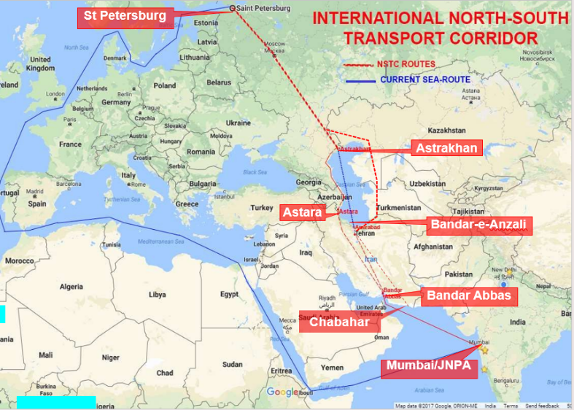 Map 2: International North-South Transport Corridor
Source: Google ORION-ME, 2017
Beyond trade considerations, Central Asia and Afghanistan acquire importance for India due to their resource endowments. The region holds substantial reserves of crude oil, natural gas (about five per cent of the world’s oil and gas resources are distributed across Central Asia), uranium, and critical minerals such as lithium, copper, iron ore and other rare earth elements. Kazakhstan alone accounts for nearly 2 per cent of global oil reserves[12] and is the top uranium producer,[13] while Turkmenistan possesses some of the world’s largest natural gas fields, such as South Yolotan-Osman (the seventh largest) and Dauletabad-Donmez (the thirteenth largest).[14]
Afghanistan, despite its political instability, is estimated to hold untapped mineral resources valued at over US$ 1 trillion, including Lithium, iron ore (notably the area around the Hajigak Pass), and rare earths — resources that are critical for energy transition technologies and industrial supply chains.[15]
India’s dependence on imported crude oil — exceeding 85 per cent — remains heavily concentrated in the Gulf region.[16] This concentration exposes the country to risks associated with geopolitical instability in critical chokepoints such as Hormuz and Bab-el-Mandeb. In this context, Chabahar offers a potential pathway for diversification. By linking maritime access with overland corridors into Central Asia, it enables access to alternative sources of hydrocarbons and minerals. This reduces concentration risk and enhances supply chain resilience. Over time, integration with the INSTC could further expand access to Eurasian energy markets.
Thus, Chabahar must be understood not only as a trade corridor, but as a hedge against disruptions in West Asia.
Sanctions, Waivers, and Strategic Ambiguity
Chabahar’s operational trajectory has been shaped by the evolving sanctions regime imposed by the United States. Since the US withdrawal from the Joint Comprehensive Plan of Action (JCPOA) in 2018, sanctions on Iran have been imposed and expanded, creating a complex regulatory environment. Within this framework, Chabahar has occupied a unique position — formally sanctioned, yet periodically exempted.
The initial waiver granted in 2018 recognised the port’s role in supporting Afghanistan’s connectivity. It allowed India to continue development activities despite broader restrictions. However, this exemption has not been stable. The revocation in September 2025, under renewed sanctions guidance, specifically under National Security Presidential Memorandum (NSPM-2), which called for the elimination of waivers that “provide Iran any degree of economic or financial relief.”[17] This was followed by a reinstatement in October (extending the waiver for six months, until April 2026) and illustrates the volatility of US policy.[18] This pattern of exemption and reversal has created persistent uncertainty.
For the United States, this ambiguity reflects a deeper tension. On one hand, the objective of “maximum pressure” requires strict enforcement of sanctions. On the other, Chabahar serves specific US interests, particularly in Afghanistan. The result is a policy that oscillates between enforcement and accommodation.
This inconsistency has practical consequences. Even when waivers exist, the perception of risk persists. Banks, insurers, and logistics firms operate based on risk assessment, not just legal provisions. If policy signals are unclear, they tend to err on the side of caution. This reduces the effectiveness of exemptions. The current crisis amplifies these challenges. The extension of pressure into the maritime domain introduces additional layers of uncertainty. It is no longer sufficient to secure a waiver; operational viability must also be ensured.
For India, this raises a critical question: how to sustain engagement in an environment where policy signals are inconsistent and operational risks are rising. The answer lies in a combination of diplomatic engagement and domestic capacity-building. Reliance on external exemptions alone is insufficient.
Insurance and the Problem of Operational Viability
The most immediate constraint on Chabahar today is not sanctions in the formal sense, but the interaction between embargo conditions and maritime insurance. This is where the current crisis departs most sharply from earlier phases. In the past, the principal question was whether activities at Chabahar were legally permissible under US sanctions. Today, the more pressing question is whether they are commercially executable.
The escalation in early 2026 triggered a rapid withdrawal of war-risk insurance cover by major Protection and Indemnity (P&I) clubs.[19] Several global insurers suspended coverage for vessels operating in Iranian waters and adjacent regions, including the Gulf of Oman.[20] This decision was not merely precautionary; it reflected an assessment that the risk environment had crossed a threshold where standard underwriting models were no longer viable.
The consequences have been immediate. War-risk premiums, which typically hover around 0.25 per cent of a vessel’s value in stable conditions, have surged to between three and eight per cent, with some estimates even higher at the peak of hostilities.[21] In practical terms, this transforms the economics of shipping. For many operators, the issue is no longer cost but insurability. Without adequate coverage, vessels cannot secure financing, ports cannot process cargo, and trade flows stall.
India has moved to partially offset this constraint. On 18 April 2026, the government approved a ₹ 129.8 billion (US$ 1.4 billion) “Maritime Insurance Pool”, structured as a ten-year sovereign-backed mechanism.[22] The pool is intended to underwrite hull and machinery, cargo, and war-risk coverage for Indian vessels, with participation from GIC Re and other domestic insurers that had previously withdrawn from high-risk exposure. The objective is not merely to reduce premiums, but to ensure continuity of operations in environments where private insurance has effectively receded. In doing so, India is signalling a shift towards a “sovereignty” approach to maritime trade — where the State steps in to absorb risk in order to sustain trade.
This dynamic is compounded by the US naval blockade. Reports indicate that vessels have been effectively immobilised at Chabahar, with commercial traffic severely disrupted.[23] Even in cases where physical access is not entirely denied, the combination of interception risks and insurance withdrawal creates a functional embargo. The distinction between formal sanctions and an operational blockade begins to collapse.
It is within this context that India’s recent deliberations on its stake in Chabahar must be understood. New Delhi is exploring options, including the temporary transfer of its operational stake to an Iranian entity, while continuing negotiations with Washington on extending the waiver.[24] This is not a withdrawal in the conventional sense. It is an attempt to preserve long-term positioning while managing short-term exposure.
This dual-track approach reflects the underlying reality: Chabahar’s viability is no longer determined solely by policy exemptions. It depends on the restoration of a minimum level of commercial confidence. Without this, even the most favourable waiver regime will remain largely symbolic.
The China Factor
Chabahar’s trajectory cannot be assessed in isolation. Its significance is shaped in part by the presence of Gwadar Port in Pakistan, developed under China’s Belt and Road framework. The proximity of the two ports — approximately 170 kilometres apart — creates an implicit comparison, even if their functional roles differ.
Gwadar represents a State-driven, bilateral project with clear integration into China’s broader connectivity architecture. It is embedded within the “China-Pakistan-Occupied-Kashmir- Economic Corridor” (CPoKEC), backed by sustained financial and political commitment. Chabahar, by contrast, is a more complex, trilateral initiative involving India, Iran, and Afghanistan, with a primarily civilian operation.
The risk lies not in direct competition but in asymmetry of execution. Where one project is driven by centralised decision-making and consistent funding, the other has been subject to delays, policy uncertainty, and external constraints. In such a context, relative underperformance carries consequences. If India’s engagement with Chabahar weakens — whether due to sanctions, insurance constraints or domestic prioritisation — Iran is likely to seek alternative partners. China, given its existing economic presence in Iran and its willingness to operate in sanctioned environments, emerges as the most plausible candidate.
This possibility is not hypothetical. China has already demonstrated its capacity to expand infrastructure engagement under conditions of political risk. A greater Chinese role in Chabahar would not merely alter the ownership structure of the port; it would reconfigure the regional connectivity landscape. It would extend China’s logistical footprint from Gwadar westwards into Iran, creating a more continuous presence along the northern Arabian Sea.
For India, the implications are clear. The loss of Chabahar would not result in a neutral outcome. It would reduce strategic options while enhancing those of a competitor. Conversely, sustaining Chabahar preserves plurality within regional connectivity frameworks. It ensures that no single actor dominates the sub-region’s infrastructure landscape.
From a US perspective, this dynamic is equally relevant. A rigid application of sanctions that inadvertently facilitates Chinese expansion would be strategically counterproductive. Chabahar, in this sense, is not merely an Indian project; it is part of a broader balance within the region.
The future of Chabahar is closely tied to the trajectory of US–Iran relations. Under the Trump administration, the policy framework has been defined by “maximum pressure,” characterised by expansive sanctions and, more recently, maritime enforcement measures.
The current blockade represents an extension of this approach into the operational domain.
The question for India is whether this framework is likely to persist, and if so, in what form. A change in administration could, in theory, lead to a recalibration of policy, particularly with regard to sanctions. However, the underlying strategic tension — nuclear concerns, regional influence, and security dynamics — is unlikely to disappear.
In this context, a purely passive “waiting game” carries risks. Infrastructure projects such as Chabahar are time-sensitive. Prolonged uncertainty erodes both physical assets and political commitments. At the same time, premature escalation of investment in a volatile environment exposes India to financial and diplomatic costs.
A more calibrated approach is required. This involves maintaining a baseline level of engagement — sufficient to preserve the project’s viability — while avoiding irreversible commitments under uncertain conditions. It also requires active diplomatic engagement with both the United States and Iran, aimed at shaping outcomes rather than merely reacting to them.
Strategic patience, therefore, must be understood not as inaction, but as controlled engagement. India cannot afford to disengage from Chabahar, but neither can it proceed as if the external environment were stable. The challenge lies in navigating this middle ground.
Why India Must Lobby for Chabahar
India’s case for Chabahar aligns closely with broader US strategic interests, particularly in relation to Afghanistan. The port provides a channel for economic engagement and humanitarian assistance that does not depend on Pakistani transit routes. For a landlocked Afghanistan, such access is critical.
From a US perspective, this translates into indirect influence. By supporting India’s role at Chabahar, Washington can facilitate connectivity to Afghanistan without requiring a direct presence. This is particularly relevant in the post-withdrawal context, where options for engagement are limited.
The China factor further strengthens this argument. Enabling Chabahar contributes to a more balanced regional infrastructure landscape. It provides an alternative to Chinese-led projects, reducing the risk of monopolisation. Crucially, this does not require direct US investment or military involvement. Diplomatic support – primarily through waivers – can achieve similar outcomes.
India’s engagement with the United States on this issue must therefore be framed in strategic rather than transactional terms. The argument is not for an exception as a favour, but for a policy alignment that serves shared interests. This includes stability in Afghanistan, diversification of regional connectivity, and the reinforcement of the US–India partnership.
At present, the waiver framework remains ad hoc and timebound. Moving towards a more institutionalised arrangement would reduce uncertainty and enable long-term planning. This does not necessitate a broad relaxation of sanctions on Iran. A narrowly tailored, conditional waiver specific to Chabahar would suffice.
Way Forward: From Exception to Integration
The future of Chabahar depends on a shift in how it is conceptualised. It can no longer be treated as a narrowly defined exception within the US sanctions regime. It must be integrated into a broader regional strategy that accounts for both geopolitical tensions and economic imperatives.
In the short term, the priority is operational continuity. This requires securing an extension of the US waiver, stabilising insurance arrangements – potentially through sovereign-backed mechanisms – and maintaining minimum cargo flows. Without this, the project risks stagnation.
In the medium term, the focus must shift to institutionalisation. A multi-year, conditional waiver framework would reduce policy uncertainty. Parallel efforts to restore private sector participation, particularly in insurance and finance, are essential. Government support can bridge gaps temporarily, but long-term viability depends on market confidence.
In the long term, Chabahar must be embedded within a resilient connectivity network. This includes completing hinterland infrastructure, particularly rail links, expanding trade volumes, and integrating the port more fully with the INSTC. It also requires sustained diplomatic engagement to ensure that the project remains aligned with evolving regional dynamics.
Ultimately, the question is not whether Chabahar can be insulated from geopolitical tensions. It cannot. The question is whether it can be made resilient within them. That resilience will depend not only on India’s commitment, but on the willingness of external actors – particularly the United States – to recognise its strategic value.
Chabahar, in this sense, is not an exception to be managed. It is an instrument to be leveraged.
******
About the Author:
Mr Suraj Palavalsa is a Research Associate at the National Maritime Foundation. He has a Bachelor’s degree in Sociology, History, Political Science, and Economics (Ancillary) from Banaras Hindu University (BHU), and earned his MA degree in International Relations (South Asian Studies) from Pondicherry University, Puducherry. His current research focuses on reviving India’s maritime consciousness, as also on ports and maritime connectivity, adopting an interdisciplinary approach to both areas. He can be reached at emc1.nmf@gmail.com.
Endnotes:
[1] Clayton Thomas, “Iran: Background and U.S. Policy”, Library of Congress, Congress of the United States of America, 22 May 2025, https://www.congress.gov/crs-product/R47321.
[2] “U.S. Decision to Cease Implementing the Iran Nuclear Agreement”, Congressional Research Service, Version 21, 09 May 2018. https://www.congress.gov/crs_external_products/R/PDF/R44942/R44942.21.pdf.
[3] Saeed Ghasseminaejad & Janatan Sayeh, “US Should Revoke Chabahar’s Sanction Waiver”, Foundation for Defence of Democracies, Policy Brief, 22 May 2024, https://www.fdd.org/analysis/2024/05/22/u-s-should-revoke-chabahars-sanctions-waiver/.
[4] Al Jazeera Staff, “US military threatens to blockade all Iranian ports starting on Monday”, Al Jazeera, 13 Apr 2026, https://www.aljazeera.com/news/2026/4/13/us-military-threatens-to-blockade-all-iranian-ports-starting-on-monday.
[5] Jake Lapham and Anna Lamche, “Why and how is the US blockading Iranian ports in the Strait of Hormuz?” BBC, 30 Apr 2026, https://www.bbc.com/news/articles/c5yv6xr6me3o.
[6] Port and Maritime Directorate General of Sistan and Balochistan Province, “Chabahar Port”, Business Standard, https://bsmedia.business-standard.com/_media/bs/data/general-file-upload/2017-10/Chabahar%20port.pdf.
[7] External Publicity Division, “India and Afghanistan: A Development Partnership,” Ministry of External Affairs (MEA), GoI, Aug 2008, 05, https://www.mea.gov.in/uploads/publicationdocs/176_india-and-afghanistan-a-development-partnership.pdf.
[8] External Publicity Division, “India and Afghanistan: A Development Partnership,” Ministry of External Affairs (MEA), GoI, Aug 2008, 05, https://www.mea.gov.in/uploads/publicationdocs/176_india-and-afghanistan-a-development-partnership.pdf.
[9] Jayanth Jacob & Saubhadra Chatterji, “India’s Track 3: Afghan-Iran rail link”, Hindustan Times, 01 Nov 2011, https://web.archive.org/web/20111101124210/http://www.hindustantimes.com/india-news/newdelhi/india-s-track-3-afghan-iran-rail-link/article1-763448.aspx.
[10] South Asia, “Pakistan turns down demand to make India part of its transit trade,” The Hindu, 04 Dec 2021, https://www.thehindu.com/news/international/south-asia/Pakistan-turns-down-Afghan-demand-to-make-India-a-part-of-its-transit-trade-with-Kabul/article61766071.ece.
[11] Special Eurasia OSINT Team, “India-Central Asia’s Trade and Economic Performance Between Opportunities and Challenges”, Special Eurasia, 15 Sep 2025, https://www.specialeurasia.com/2025/09/15/india-central-asia-trade/.
[12] “Crude oil production, global ranking, 2023”, International Energy Agency, 2026, https://www.iea.org/world/oil.
[13] “World Uranium Mining Production”, World Nuclear Association, 20 Jan 2026, https://world-nuclear.org/information-library/nuclear-fuel-cycle/mining-of-uranium/world-uranium-mining-production.
[14] “20 Largest Natural Gas Fields in the World”, WorldListMania, 12 Aug 2021, https://www.worldlistmania.com/20-largest-natural-gas-fields-in-the-world/.
[15] Asia Edition, “Afghanistan’s resources could make it the richest mining region on earth”, Independent, 15 June 2010, https://www.independent.co.uk/news/world/asia/afghanistan-s-resources-could-make-it-the-richest-mining-region-on-earth-2000507.html.
[16] Mrityunjay Bose, “India to touch 6 million barrels crude oil per day consumption: Hardeep Singh Puri”, Deccan Herald, 29 Oct 2025, https://www.deccanherald.com/business/india-to-touch-6-million-barrels-crude-oil-per-day-consumption-hardeep-singh-puri-3779092.
[17] Government of India (GoI), Ministry of External Affairs (MEA), Media Centre, “Parliament Q&A: Question No- 1103 Revocation of Sanctions Waiver on Chabahar Port”, Ministry of External Affairs (MEA), GoI, 05 Dec 2025, https://www.mea.gov.in/lok-sabha.htm?dtl%2F40404%2FQUESTION+NO+1103+REVOCATION+OF+SANCTIONS+WAIVER+ON+CHABAHAR+PORT.
[18] TOI News Desk, “India remains engaged with the US on Chabahar sanctions; meets $120 million obligation”, Times of India, 24 Mar 2026, https://timesofindia.indiatimes.com/india/india-remains-engaged-with-us-on-chabahar-port-sanctions-meets-120-million-obligation/articleshow/129783831.cms.
[19] Mayank Mishra and John J Vachaparambil, “Insurance and Indemnification for Maritime India”, National Maritime Foundation, 30 Apr 2026, https://maritimeindia.org/insurance-and-indemnification-for-maritime-india/.
[20] Konica Bhatt, “Insurers pull war risk cover for Gulf waters”, Engine, 02 Mar 2026, https://www.engine.online/news/insurers-pull-war-risk-cover-for-gulf-waters-7819.
[21] Jean Eaglesham, “Insurers Tighten Requirements for Ships in Strait of Hormuz”, Wall Street Journal, 27 Apr 2026, https://www.wsj.com/livecoverage/iran-war-strait-of-hormuz-2026/card/insurers-tighten-requirements-for-ships-in-strait-of-hormuz-wzABOacCdLEkidP1rjWi.
[22] News Updates, “Cabinet approves proposal for creation of ‘Bharat Maritime Insurance Pool’ (BMI pool) with a sovereign guarantee of Rs 12,980 crore to facilitate continuous maritime insurance coverages”, PMIndia.Gov. In, 18 Apr 2026, https://www.pmindia.gov.in/en/news_updates/cabinet-approves-proposal-for-creation-of-bharat-maritime-insurance-pool-bmi-pool-with-a-sovereign-guarantee-of-rs-12980-crore-to-facilitate-continuous-maritime-insurance-coverage/.
[23] “US Iran Blockade Stalls Chabahar Port; Hormuz Sanctions Threatened,” Hamer Intel, 28 Apr 2026, https://hamerintel.com/data/alerts/4980.
[24] Sudhi Ranjan Sen and Mihir Mishra, Bloomberg, “India may temporarily transfer Chabahar Port stake to an Iranian entity before US sanctions kick in”, The Economic Times, 24 Apr 2026, https://economictimes.indiatimes.com/news/india/india-mulls-options-on-irans-chabahar-port-stake-before-us-sanctions-kick-in/articleshow/130495945.cms.


Leave a Reply
Want to join the discussion?Feel free to contribute!