
Keywords: Saudi Arabia, Multinational Maritime Defence Alliance (MMDA), Indian Ocean, Red Sea, Maritime Security, Regional Maritime Security Architecture, Institutional Proliferation, India–Saudi Arabia Relations, India’s Indian Ocean Strategy, Maritime Interoperability
The months of July and August 2026 marked a notable expansion of Saudi Arabia’s role in regional security. Within eight days, Riyadh announced two significant initiatives: the establishment of the “Multinational Maritime Defence Alliance” (MMDA) on 30 July[1] and the “Makkah Joint Defence Agreement” with Türkiye and Pakistan on 07 August.[2] While the latter quickly became the focus of international debate over the changing regional security order and its implications for existing security partnerships, the former received comparatively less attention, partly because it was carefully presented as a defensive framework focused on maritime security. Yet the two developments should not necessarily be viewed in isolation. While the Makkah Agreement establishes a political and security commitment between the three States, the MMDA has the potential to provide a degree of institutional and operational depth to such cooperation, through its proposed command structures, maritime operations centre, intelligence-sharing mechanisms and joint operational arrangements. In this sense, the two initiatives may represent complementary dimensions of Saudi Arabia’s emerging approach to regional security rather than entirely separate developments.
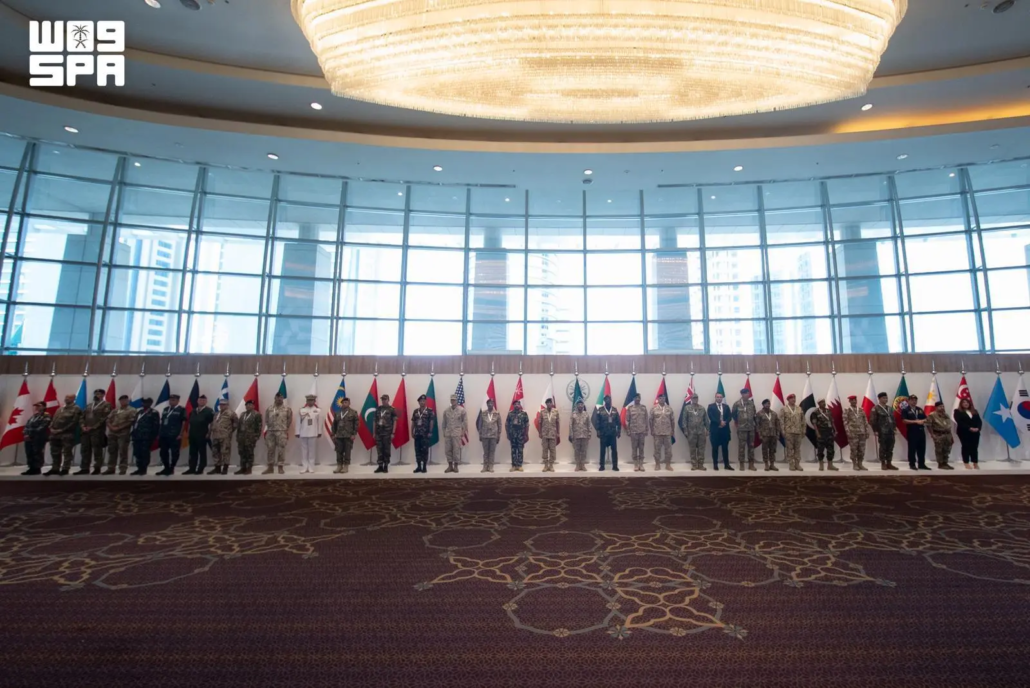
The MMDA emerged from a Saudi-hosted meeting in Riyadh that brought together representatives of 43 countries and the European Union. Fourteen States subsequently signed a joint declaration establishing the alliance, with Saudi Arabia as its founding- and leading State.[3] The proposed framework focuses on the Bab el-Mandeb, the Red Sea, and the Gulf of Aden, with an agenda centred on protecting freedom of navigation, international trade, and energy-supply routes, through information and intelligence sharing, operational planning, joint exercises, training, capacity-building, and combined maritime operations. Its planned permanent headquarters, command-and-control centre, combined maritime operations centre and general secretariat, all in Riyadh, indicate an ambition that extends beyond a temporary maritime response.[4]
The immediate context of the MMDA is the worsening security environment in the Red Sea and the threat posed by attacks on commercial shipping.[5] Yet its emergence raises a question that goes beyond the current crisis: why another maritime-security coalition in an already crowded Indian Ocean security environment? The region already hosts multiple mechanisms, ranging from the Indian Ocean Naval Symposium (IONS), the Indian Ocean Rim Association (IORA), and the Djibouti Code of Conduct and its Jeddah Amendment, to the Combined Maritime Forces and its task forces, as well as the European Union’s Operation ASPIDES. The Red Sea and Gulf of Aden, in particular, already have several arrangements addressing maritime security, information-sharing and naval operations.
The question, therefore, is not simply whether the MMDA duplicates existing institutions. Its stated design appears to offer something different: a regionally led and permanently structured maritime-security mechanism rather than a dialogue forum, coordinating body, or externally led task force. Whether this distinction is sufficient to justify a new coalition, however, remains unclear. Does the MMDA fill a genuine operational or institutional gap, or does it add another layer to an already crowded and potentially overlapping architecture? And how might its emergence alter the balance between regional ownership and external security provision?
These questions are particularly relevant for India. New Delhi already has an established maritime-security footprint in the Indian Ocean and maintains growing bilateral defence engagement with Saudi Arabia. Saudi Arabia, meanwhile, participates in several regional frameworks that also include India, most notably IONS (where it is a member) and IORA (where it is a Dialogue Partner). At the same time, the MMDA brings Pakistan and Bangladesh into a Saudi-led maritime framework whose geographical focus extends towards the western Indian Ocean.
This article, therefore, examines the MMDA through three interconnected questions: (1) what is genuinely new about the Saudi-led alliance; (2) how does it differ-from or overlap-with existing maritime-security arrangements; and (3) what does its emergence mean for India?
Understanding the MMDA
The Context and Institutional Design. The environment in which the alliance came to life is important to understanding its purpose. The MMDA did not emerge in response to an entirely new maritime-security threat. The Red Sea, the Strait of Bab el-Mandeb, and the Gulf of Aden, have all faced persistent challenges from piracy, maritime terrorism, smuggling and other forms of transnational crime. More recently, however, Houthi attacks on commercial shipping have transformed the nature of the threat.[6] The use of missiles and drones against merchant vessels has turned the Red Sea into an active security theatre, with consequences extending well beyond the immediate region to international trade, energy supplies, and freedom of navigation.[7]
It was against this backdrop that the Saudi Ministry of Defence convened a meeting in Riyadh on 30 July 2026 to discuss the Kingdom’s proposal for a multinational maritime defence alliance. Of 51 States and organisations invited, representatives of 43 countries and the European Union attended. Fourteen participating States—Saudi Arabia, Kuwait, Bahrain, Qatar, Pakistan, Türkiye, Egypt, Jordan, Yemen, Bangladesh, Nigeria, Sudan, Djibouti, and Somalia—signed the joint declaration establishing the alliance.[8] The arrangement, however, was not intended to remain restricted to these fourteen States. The declaration allowed other participating countries to join after completing their domestic procedures, and the membership subsequently began to expand.
Saudi Arabia was designated the “Founding and Leading State”, with Riyadh hosting the alliance’s permanent headquarters, command-and-control centre, combined maritime operations centre, and general secretariat.[9] A commander was subsequently appointed, while later planning meetings began the process of integrating officers from member States into the emerging joint command structure.[10] The alliance’s proposed functions include information- and intelligence-sharing, operational planning, joint exercises, training, capacity-building, and combined maritime operations. Its declared geographical focus is the Bab el-Mandeb, the Red Sea, and the Gulf of Aden, with the stated objective of protecting freedom of navigation, international trade, and energy-supply routes.[11]
The institutional design is significant because it moves the MMDA beyond a political declaration. The creation of a permanent headquarters and command structures, alongside a joint maritime operations centre and intelligence mechanisms, suggests an effort to develop an enduring capacity for coordination and interoperability. At the same time, Saudi Arabia has carefully framed the alliance as defensive in nature, operating in accordance with the UN Charter, international law, and internationally recognised maritime norms, and not directed against any particular State, alliance, or international organisation.
This defensive framing partly explains why the MMDA received considerably less attention than the “Makkah Joint Defence Agreement”, announced only eight days later. The “Makkah Agreement”, with its explicit mutual-defence commitment between Saudi Arabia, Türkiye, and Pakistan, was immediately interpreted through the language of alliance formation and regional power politics. The MMDA, by contrast, was presented as a functional maritime-security arrangement responding to threats to shipping. Yet this distinction may be misleading. The MMDA is the initiative that is acquiring the more visible institutional and operational infrastructure, while the “Makkah Agreement” will require mechanisms through which its political commitments can eventually be translated into practical military cooperation.
The timing also raises a more fundamental question. The Houthi threat was not new in July of 2026, nor were mechanisms to address maritime insecurity absent. The region already had the Djibouti Code of Conduct and its Jeddah Amendment, the Combined Maritime Forces and its task forces, the US-led Operation PROSPERITY GUARDIAN, and the European Union’s Operation ASPIDES. Wider regional platforms such as IONS and IORA also contribute to the broader maritime-security architecture.
The question, therefore, is not simply why another response to the Red Sea crisis was necessary. It is why Saudi Arabia considered a new institutional mechanism necessary when several mechanisms were already operating in the same strategic space.
One explanation lies in the changing regional security environment. Much of the operational maritime-security architecture around the Red Sea and Gulf of Aden has historically relied upon the capabilities and leadership of external powers, particularly the United States and its partners. The persistence of maritime insecurity despite these arrangements, combined with declining confidence in the sustainability of a US-led regional security architecture, has strengthened the argument for greater regional responsibility. The MMDA can therefore be read, not necessarily as a replacement for existing Western-led mechanisms, but as an attempt to establish a Saudi-led regional layer of maritime-security provision.
The Founding Membership: An Islamic Coalition? The MMDA’s all-Muslim founding membership may suggest an Islamic security grouping, but such an interpretation is too simplistic. Geography is the primary explanation: most of the initial members — Saudi Arabia, Egypt, Sudan, Yemen, Djibouti, Somalia, and Jordan — have direct stakes in the Red Sea–Bab el-Mandeb–Gulf of Aden security environment. The inclusion of Pakistan, Türkiye, and Bangladesh, however, reflects Saudi Arabia’s wider political, economic and defence partnerships, extending the coalition beyond its immediate geography. Türkiye and Pakistan are particularly significant given their deepening defence ties with Riyadh and their parallel participation in the “Makkah Joint Defence Agreement”, while Bangladesh provides the coalition with a South Asian dimension.
The absence of the UAE and Oman, despite their Muslim-majority status, further suggests that religious identity is not the determining principle of membership. Rather, the MMDA appears to be attempting to prioritise geographical exposure and established security partnerships. For India, the more important issue is not, therefore, its Islamic character but the capabilities and relationships being consolidated within it — particularly Pakistan’s participation in a developing multinational maritime command and Bangladesh’s entry into a Saudi-led security framework. The membership consequently says more about the expanding network of Saudi Arabia’s security partnerships than the emergence of an explicitly Islamic maritime bloc.
MMDA and the Makkah Agreement: An Operational Backbone?
The eight-day gap between the establishment of the MMDA on 30 July and the signing of the Makkah Joint Defence Agreement on 7 August raises a further question: could the MMDA eventually provide institutional and operational depth to the Makkah framework?
There is no formal declaration establishing a relationship between the two, and the two arrangements are different in membership, legal basis and stated purpose. The Makkah Agreement is a trilateral Saudi–Türkiye–Pakistan mutual-defence arrangement, whereas the MMDA is a multinational maritime-security framework with a specific geographical focus. They should therefore not be treated as formally integrated components of a single alliance.
Yet, the overlap is difficult to ignore. Saudi Arabia, Türkiye, and Pakistan, are all members of both arrangements, while the MMDA is developing precisely the institutional mechanisms that the “Makkah Agreement” currently lacks: a permanent headquarters, command-and-control structure, combined maritime operations centre, intelligence mechanisms and integrated personnel. The “Makkah Agreement” establishes a political commitment to mutual defence; the MMDA is developing an institutional platform through which participating militaries can acquire practical experience of joint planning, coordination and interoperability.
The MMDA could, therefore, provide an operational platform through which some of the military capabilities envisaged by the “Makkah Agreement” acquire greater practical depth, particularly in the maritime domain. This should nevertheless be treated as a possibility rather than an established relationship. The two initiatives have different institutional lineages and neither has publicly placed the MMDA under the authority of the Makkah Agreement.
The next 12 to 18 months will, therefore, be important. If the Makkah framework develops formal liaison arrangements with the MMDA, or if Saudi, Turkish, and Pakistani forces increasingly use MMDA structures for joint planning and interoperability, the connection between the two will become more substantive. If no such relationship emerges, they would remain analytically distinct.
For India, however, the formal distinction may ultimately be less important than the capacities and capabilities generated through these overlapping arrangements. Military forces do not operate in completely compartmentalised institutional spaces. Training, exercises, intelligence-sharing, and command experience acquired through one framework can strengthen a State’s ability to operate with the same partners elsewhere. The question for New Delhi is, therefore, not simply whether the MMDA is formally the operational arm of the Makkah Agreement, but whether the institutionalisation of Saudi–Turkish–Pakistani military cooperation through the MMDA produces capabilities that can subsequently be leveraged within their wider defence relationship.
India and the MMDA: An Absence That Needs Explanation
Was India Invited? The question of India’s absence from the MMDA begins with a basic question: was India invited to participate in its founding process? Saudi Arabia invited 51 countries and organisations to the 30 July meeting in Riyadh, of which representatives of 43 countries and the European Union participated, either physically or virtually. However, the Saudi statement does not identify all 51 invitees, and neither India nor the other participating countries are individually listed among the 43 attendees. The fourteen States that subsequently signed the founding declaration are explicitly identified, and India is not among them.
Perhaps it would be premature to conclude that India was either deliberately excluded or formally invited and declined. What can be established, however, is that India was not part of the founding group, despite the alliance being described by Saudi Arabia as an open initiative that welcomes countries sharing its objectives and principles.
Also noteworthy is the fact that India’s absence received little attention in the immediate discussion surrounding the coalition, particularly when compared with the repeated attention given to the absence of the United Arab Emirates and Oman. This difference itself is revealing. The UAE and Oman would have been expected participants because of their geographical proximity, GCC membership and direct interests in the Red Sea and Gulf of Aden. India’s absence, by contrast, was less surprising because the MMDA’s primary operational geography does not fall within India’s immediate maritime neighbourhood.
The more useful question, therefore, is not simply why India was not included, but whether India would have had compelling reasons to join even if it had been invited.
Why India May Not Have Opted to Join. There are several reasons why India’s non-participation is consistent with its established maritime-security posture:
First, India has demonstrated a preference for independent naval deployments over formal participation in externally constituted coalitions when responding to threats to commercial shipping. The experience of the Red Sea crisis since 2023 is instructive. Rather than becoming part of the US-led maritime coalition established in response to Houthi attacks, India deployed its own naval assets under its existing maritime-security arrangements and continued to protect Indian-linked shipping and respond to incidents in the wider Arabian Sea and Gulf of Aden.[12] This approach allowed New Delhi to contribute to maritime security without accepting the political and operational obligations of another coalition. The creation of the MMDA does not fundamentally alter this preference. India can cooperate with Saudi Arabia and other members on maritime security without necessarily placing its forces within a Saudi-led multinational command structure.
Second, Pakistan’s founding membership introduces a structural complication. The MMDA is explicitly defensive and Saudi Arabia has stressed that it does not target any State or alliance. Nevertheless, if India were to join, Pakistan’s participation would place Indian and Pakistani naval forces within the same multinational operational framework. India has participated alongside Pakistan in broader multilateral maritime forums, most notably IONS, but these are primarily cooperative and dialogue-oriented mechanisms rather than structures built around joint command and combined maritime operations. Participation in a given forum does not necessarily create the same degree of operational proximity as participation in a common command structure.
Third, India’s approach to West Asian security has generally been characterised by strategic flexibility rather than alignment with a single regional security architecture. New Delhi has maintained deepening defence and maritime relationships simultaneously with Saudi Arabia, the UAE, Oman, Israel and other regional actors, while also maintaining its own channels with countries whose strategic positions may diverge from those of its partners. Joining a Saudi-led coalition could potentially narrow some of that flexibility, particularly if the coalition gradually acquires a more defined regional political identity.
Fourth, there is also a question of geographical mandate. The MMDA is specifically focused on the Bab el-Mandeb, Red Sea and Gulf of Aden. These waters are undoubtedly important to India: they carry a substantial proportion of India’s trade and energy flows, and developments there directly affect India’s maritime interests. Yet India’s response to insecurity in this area has not depended upon membership of a dedicated Red Sea coalition. The Indian Navy already maintains a sustained presence across the western Indian Ocean and has demonstrated its capacity to deploy independently when circumstances require.
India’s absence should not, therefore, be interpreted as an absence from the maritime security of the region. The distinction is between being outside the MMDA and being disengaged from the maritime space in which it operates. These are not the same.
Finally, joining the MMDA could also place India in an uncomfortable position vis-à-vis intra-Gulf differences. The absence of the UAE and Oman from the founding group is significant because both remain important partners for India. New Delhi has little incentive to become institutionally associated with one particular Saudi-led regional security arrangement if doing so could be interpreted as taking a position within existing Gulf strategic divergences.
Should India Join? There is, nevertheless, a case for considering participation. Membership would give India a direct seat within an emerging mechanism that intends to shape maritime-security practices in the Red Sea and Bab el-Mandeb. It could provide greater access to regional maritime-security information, enhance operational coordination with Saudi Arabia and other participating navies, and ensure that Indian interests are represented as the coalition develops its institutional and operational procedures.
This argument should not be dismissed. The MMDA is potentially more consequential than a conventional dialogue forum precisely because it is developing a standing command structure and combined maritime operations mechanism. If the coalition becomes durable, remaining entirely outside it could eventually limit India’s ability to influence its evolution.
Yet the case for formal membership remains less compelling than the case for engagement without accession. India already possesses the ability to operate independently in the region and has demonstrated this through its sustained maritime deployments. At the same time, Saudi Arabia remains an important Indian defence and maritime partner, with cooperation extending into exercises, port calls and the broader strategic partnership framework.[13]
The more coherent approach, therefore, may be to deepen bilateral maritime engagement with Saudi Arabia while retaining independent operational presence in the Red Sea–Gulf of Aden corridor, rather than immediately joining another multinational command structure. Such an approach would also allow India to maintain parallel maritime relationships with the UAE and Oman without becoming entangled in the internal configuration of Gulf security partnerships.
The issue, therefore, is less about whether India should be physically inside the MMDA and more about whether New Delhi can ensure that being outside the coalition does not translate into being outside the emerging maritime-security conversation. India need not join every institution that emerges in the Indian Ocean. But it does need to remain sufficiently engaged with the States and mechanisms shaping the region to ensure that its interests are neither overlooked nor indirectly affected by decisions taken without it.
The Crowded Indian Ocean: What Does the MMDA Add?
The MMDA enters an Indian Ocean security environment that is already institutionally dense. Maritime security in the western Indian Ocean and Red Sea is addressed through a combination of regional organisations, multinational naval coalitions, information-sharing mechanisms and ad hoc operations. Saudi Arabia itself is already embedded in several of these arrangements, including the Combined Maritime Forces (CMF), the International Maritime Security Construct (IMSC), the Djibouti Code of Conduct/Jeddah Amendment, IONS, the Council of Arab and African States Bordering the Red Sea and Gulf of Aden, etc.
The proliferation of these mechanisms, however, does not mean that they perform the same function. The central distinction lies between dialogue, coordination and operational command. IONS, for instance, provides a platform for naval dialogue and cooperation; the Djibouti Code of Conduct provides a framework for information-sharing and capacity-building;[14] and the Red Sea Council offers a regional political mechanism for coordination.[15] CMF, by contrast, provides an established multinational operational structure through its task forces, including CTF-153 in the Red Sea, Bab el-Mandeb, and Gulf of Aden.[16] More recently, Operation PROSPERITY GUARDIAN[17] and the European Union’s Operation ASPIDES have added further operational responses to the deterioration of maritime security in the Red Sea.[18]
From Participation to Regional Command. The most important difference is that the MMDA seeks to combine the political breadth of a regional coalition with a permanent operational structure. Its proposed headquarters, command-and-control centre, joint command, combined maritime operations centre and general secretariat in Riyadh give it an institutional character that is absent from several of the mechanisms that preceded it. This distinguishes it from the Council of Arab and African States Bordering the Red Sea and Gulf of Aden, which brought together many of the same regional States but remained primarily a coordinating body.[19] It also distinguishes the MMDA from CTF-153. Although CTF-153 has an operational mandate in precisely the waters targeted by the MMDA, it operates as a task force within the wider CMF framework. The MMDA, by contrast, is intended to develop its own permanent regional command arrangements.
This is also significant for Saudi Arabia. Riyadh has participated in externally established security arrangements for years, including CMF and IMSC. With the MMDA, it is attempting to assume the role of security architect rather than security participant. The establishment of permanent institutions under Saudi leadership indicates an ambition to give regional states greater ownership over the maritime security of their surrounding waters.
What the MMDA Could Add. The MMDA nevertheless possesses three characteristics that could give it value within this crowded architecture:
First is regional ownership. Unlike the case with Operation PROSPERITY GUARDIAN or Operation ASPIDES, the coalition is not being established by an external power to respond to a regional crisis. Its political centre is Riyadh, and its membership is predominantly composed of regional States and States with established interests in the surrounding maritime space.
Second is permanence. A standing headquarters, secretariat, and combined operations centre, provide the possibility of institutional memory, regular training, and established procedures. These are important differences from arrangements created primarily as temporary responses to particular crises.
Third is interoperability. If the proposed joint command develops meaningful procedures for intelligence-sharing, operational planning, training and combined exercises, the MMDA could create capabilities that individual bilateral relationships or dialogue forums cannot easily produce. This would be particularly important for States whose navies have different levels of capability but share an interest in protecting the same maritime routes.
The MMDA’s contribution, therefore, should not be measured by the number of functions it performs that are already performed elsewhere. Its potential value lies in bringing regional forces together within a permanent Saudi-led operational structure.
Way Forward: Points India Should Keep a Watch On
For India, the emergence of the MMDA calls for calibrated engagement rather than immediate participation. Three considerations should guide New Delhi’s approach:
- Remain engaged without becoming part of intra-Gulf politics. India should avoid being drawn into Saudi–Gulf strategic differences, particularly given the absence of the UAE and Oman, while ensuring that it does not remain completely distant from an emerging security architecture in waters critical to Indian trade and energy flows. India’s existing bilateral maritime engagement with Saudi Arabia provides sufficient space to remain connected without formal alignment.
- Watch the MMDA–Makkah Pact linkage carefully. India should assess whether the MMDA’s emerging command and interoperability mechanisms gradually provide the operational depth for the “Makkah Joint Defence Agreement”. Any institutional linkage between Saudi Arabia, Türkiye, and Pakistan, within the MMDA, could strengthen Pakistan’s military interoperability and regional operational reach. The coalition should, therefore, not inadvertently become an additional capability multiplier for the Makkah arrangement.
- Prioritise functionality over membership. India should monitor whether the MMDA develops genuine operational capabilities, how it coordinates with existing mechanisms such as CTF-153 and Operation ASPIDES, and whether it remains regionally focused or expands its mandate. If it develops into a credible regional maritime-security provider, India should deepen structured engagement; if it remains yet another overlapping, largely declaratory framework, maintaining bilateral cooperation and independent naval presence would remain the more prudent course.
Conclusion
The emergence of the Saudi-led MMDA marks an important development in the maritime security architecture of the western Indian Ocean, albeit one whose geopolitical ramifications are still uncertain impact. Its immediate significance lies less in the creation of yet another mechanism for securing the Red Sea and more in the fact that it reflects Saudi Arabia’s attempt to assume greater responsibility for that security through a permanent, regionally led and operationally oriented structure. The coalition has emerged from an immediate security crisis, but its institutional design suggests that Riyadh’s ambitions extend beyond a temporary response to Houthi attacks. At the same time, its considerable overlap with existing frameworks means that its success cannot be assumed. Without clear coordination, adequate naval capabilities, and sustained political commitment, the MMDA could simply add another layer to an already crowded architecture.
For India, the coalition presents neither an immediate threat nor an obvious imperative for membership. Its founding composition, particularly the participation of Pakistan and Türkiye, requires closer observation, while its regional character makes disengagement equally unwise. India’s interests are better served by remaining engaged without becoming institutionally entangled — deepening its bilateral maritime relationship with Saudi Arabia, maintaining its independent naval presence in the Red Sea and Gulf of Aden, and closely monitoring the coalition’s operational evolution. Most importantly, New Delhi should watch whether the MMDA develops an independent maritime-security identity or gradually becomes an operational capability that reinforces the wider Saudi–Türkiye–Pakistan security alignment embodied in the Makkah Agreement.
Ultimately, the MMDA’s durability will be determined not by the circumstances of its announcement but by what follows it. If Saudi Arabia can translate political consensus into interoperable forces, sustained operations and effective coordination with existing mechanisms, the coalition could represent a meaningful shift towards regional ownership of Indian Ocean security. If not, it risks becoming just another crisis-driven institution in an already crowded maritime landscape. For India, the prudent approach is, therefore, neither to dismiss the MMDA as redundant nor to embrace it prematurely, but to watch its evolution closely and engage where Indian maritime interests converge.
********
About the Author
Ms Aditi Thakur is a Research Associate at the National Maritime Foundation. She holds a master’s degree in Political Science from Centre for Political Studies, Jawaharlal Nehru University, New Delhi. Her research primarily focuses upon the manner in which India’s own maritime geostrategies in the Indo-Pacific are impacted by those of Russia and Turkey. She may be contacted at irms3.nmf@gmail.com.
Endnotes:
[1] Saudi Press Agency, “Founding States Issue Joint Declaration on Establishing Multinational Maritime Defense Alliance”, 30 July 2026. https://www.spa.gov.sa/en/N2644911
[2] Saudi Press Agency, “Saudi Arabia, Türkiye, and Pakistan Issue Joint Statement of the Makkah Al-Mukarramah Summit for Joint Defence”, 07 August 2026. https://www.spa.gov.sa/en/N2649227
[3] “Saudi Arabia Leads International Initiative to Establish ‘Maritime Defense Coalition’”, Asharq Al-Awsat, 30 July 2026. https://english.aawsat.com/gulf/5301776-saudi-arabia-leads-international-initiative-establish-%E2%80%98maritime-defense-coalition%E2%80%99
[4] “Saudi Arabia Reimagines Maritime Security”, The Beiruter, 17 August 2026. https://www.thebeiruter.com/article/saudi-arabia-reimagines-maritime-security/2329
[5] “Statement on Recent Attacks on Ships in the Red Sea”, International Maritime Organization, 23 July 2026. https://www.imo.org/en/mediacentre/pressbriefings/pages/statement-on-recent-attacks-in-the-red-sea.aspx
[6] Frank Gardner, “Houthi Attacks Raise Fears of Wider Middle East Conflict and More Global Economic Damage”, BBC News, 24 July 2026. https://www.bbc.com/news/articles/cvgve0vxy1yo
[7] Anmol Singla, “Cruise Missiles, Drones and More… The Deadly Arsenal of the Houthis”, Firstpost, 23 July 2026. https://www.firstpost.com/explainers/what-weapons-do-the-houthis-have-red-sea-attacks-explained-14033355.html
[8] Saudi Press Agency, “Founding States Issue Joint Declaration”.
[9] Saudi Press Agency, “Founding States Issue Joint Declaration”.
[10] Ministry of Defense of the Kingdom of Saudi Arabia, “Ministry of Defense Announces Appointment of Commander of the Joint Maritime Forces”, Saudi Press Agency, 06 August 2026. https://www.spa.gov.sa/en/N2648564 and “Saudi-led Maritime Coalition Begins Integrating Officers from Member States into Joint Command”, Arab News, 13 August 2026. https://www.arabnews.com/node/2654589/amp
[11] Saudi Press Agency, “Founding States Issue Joint Declaration”.
[12] Captain KS Vikramaditya, “The Red Sea Conundrum,” National Maritime Foundation Website, 17 January 2024. https://maritimeindia.org/the-red-sea-conundrum/
[13] “India-Saudi Bilateral Relations”, Embassy of India, Riyadh, 01 June 2026. https://www.eoiriyadh.gov.in/page/india-saudi-bilateral-relations/
[14] Anum Khan, “India and the Djibouti Code of Conduct: Towards a Bottom-Up Approach to Regional Maritime Security—Part 1”, National Maritime Foundation Website, 11 August 2026. https://maritimeindia.org/india-and-the-djibouti-code-of-conduct-towards-a-bottom-up-approach-to-regional-maritime-security-part-1/
[15] Eleonora Ardemagni, “Saudi Arabia Has a Red Sea Vision, Not Yet a Strategy”, Arab Gulf States Institute in Washington, 17 May 2024. https://agsi.org/analysis/saudi-arabia-has-a-red-sea-vision-not-yet-a-strategy/
[16] US Navy, “Combined Maritime Forces”, U.S. Naval Forces Central Command. https://www.cusnc.navy.mil/Combined-Maritime-Forces/
[17] “Statement from Secretary of Defense Lloyd J Austin III on Ensuring Freedom of Navigation in the Red Sea,” US Department of War, 18 December 2023. https://www.war.gov/News/Releases/Release/Article/3621110/statement-from-secretary-of-defense-lloyd-j-austin-iii-on-ensuring-freedom-of-n/
[18] Sebastian Dodd, “EU Renews Red Sea Mission as Maritime Security Pressures Persist,” European Relations, 26 February 2026. https://europeanrelations.com/briefing/eu-renews-red-sea-mission-as-maritime-security-pressures-persist/
[19] UAE Ministry of Foreign Affairs and International Cooperation, “UAE Welcomes Establishment of Council of Arab and African States Bordering the Red Sea and Gulf of Aden”, 06 January 2020. https://www.mofa.gov.ae/en/mediahub/news/2020/1/6/06-01-2020-uae-red-sea

Leave a Reply
Want to join the discussion?Feel free to contribute!