
Abstract
The Persian Gulf conflict of 2025–26 has exposed a structural vulnerability at the intersection of geopolitics, maritime logistics, and high-technology supply chains— the global helium market. This article argues that the disruption of helium is not merely an industrial inconvenience but a geostrategic signal of the first order that India, as a maritime power with 100% import dependency on this critical gas, cannot afford to misread. Drawing on the helium supply-chain crisis precipitated by missile strikes on Qatar’s Ras Laffan complex and the effective inaccessibility of the Strait of Hormuz due to conflict, the analysis examines the structural, logistical, and maritime dimensions of helium insecurity.[1] The article focuses on building concrete policy recommendations for India regarding the same.
Veiled Dependency
When discussions of connectivity in the Indo-Pacific arise, attention invariably centres upon the narrow sea passages that shape connectivity across India’s maritime periphery. The Strait of Malacca, the Lombok Strait, and the wider South China Sea frequently occupy a prominent place in strategic assessments due to their role in facilitating trade and maritime traffic between the Indian and Pacific Oceans. The recent conflict in the Persian Gulf, however, has shifted the Indian gaze decidedly westward. The Strait of Hormuz is generally recognised as a critical artery for global flows of energy, but its significance is now increasingly being examined in relation to temporally sensitive high-technology supply chains that depend upon the uninterrupted movement of specialised resources and commodities.
The developments in West Asia have balanced out the analytical tilt with striking force — not through oil prices alone, but through the sudden, global scarcity of a gas that had rarely been in limelight for its strategic relevance — helium. Helium is best understood as a geological inheritance, as it is not manufactured, synthesised, or renewable. It is the product of radioactive decay over billions of years, trapped beneath ancient rock formations and extracted only as a by-product of the processing of natural gas.[2] Once released into the atmosphere, it escapes Earth’s gravitational field permanently. In essence, Helium is indispensable, irreplaceable, and deeply fragile. This irreversibility, combined with radically sparse geographic concentration — nearly 70-75% of global supply originates from the United States and Qatar — produces a commodity profile unlike any other in the lexicon of strategic minerals.[3]
A helium crisis is categorically different from other commodity shocks primarily due to its physical properties. The infrastructure requirements — specialised Dewar containers,[4] cryogenic tankers, and refrigeration systems — are expensive, technically complex, and not interchangeable with standard industrial gas logistics. A single cryogenic ISO container suitable for helium transport can range between 500,000 US$ to one million US$. The number of ships carrying such containers is limited, and their reallocation across disrupted shipping routes is a matter wherein timelines can easily stretch up to months. Open-source data suggests that even a two-week disruption in production can require three to six months of supply-chain normalisation.[5] Unlike petroleum, which can be stored in surface tanks, salt caverns, or dedicated strategic reserves for years, helium cannot be economically stockpiled at scale. There is no global strategic helium reserve equivalent to the US Strategic Petroleum Reserve.[6]
Consequently, the global supply map of helium, from a ‘dependence’ context, is one of extraordinary concentration. The United States, which once held near-total global dominance through the Federal Helium Reserve, has seen its share decline as the reserve is wound down. Qatar, leveraging its enormous natural gas reserves at Ras Laffan, became the world’s second-largest producer and the dominant supplier to Asian markets. Russia’s Gazprom Amur plant emerged as a significant new source, but western sanctions following the Ukraine war have effectively caused Russian helium to disappear from within the supply calculus for most industrially advanced economies. Algeria provides secondary supply but lacks the capacity to absorb demand redirected from Qatar.[7]
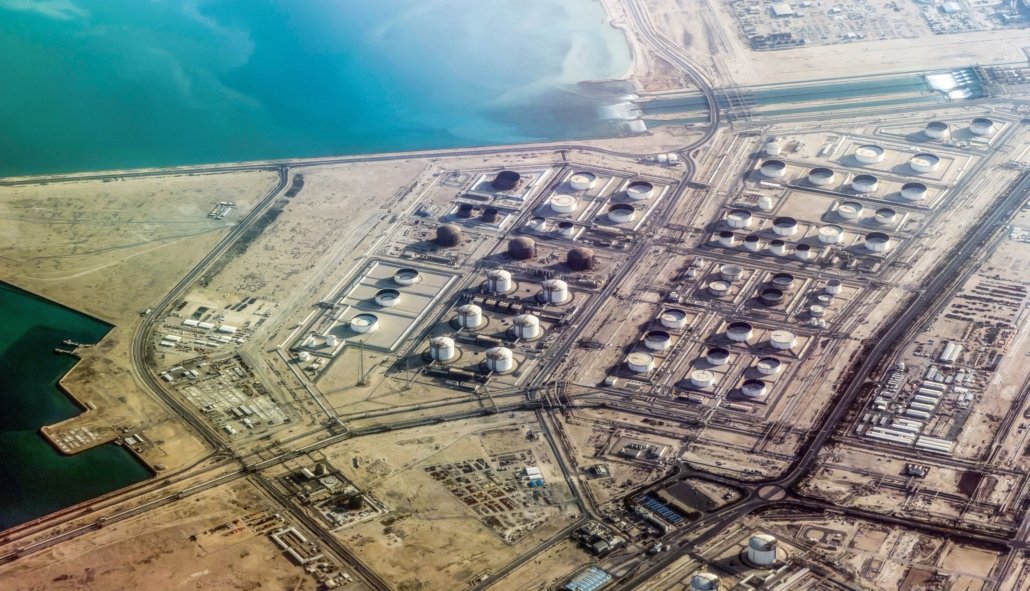
Missile strikes on Qatar’s Ras Laffan industrial complex beginning in mid-March 2026 removed approximately one-third of global helium production capacity from the market.[8] The Strait of Hormuz, through which Qatar’s cryogenic tankers must transit, became operationally hazardous. This precarious state of affairs caused the near-simultaneous exposure of vulnerability across every sector involved in the technological neural network, for example, semiconductor fabrication, magnetic resonance imaging, fibre-optic cable production, quantum computing research, and aerospace testing. This dilemma draws close parallels to the case of neon gas shortage for Taiwan from Ukraine which produced around 70% of the worlds demand.[9]
The implications for India in this scenario are especially acute as the country is almost entirely import-dependent for helium, with more than half its supply sourced from Qatar.[10] This is so because India’s domestic production stands below 0.2% of requirements, with commercial viability of indigenous sources assessed at lying five to ten years into the future.[11] Domestic helium inventory in India at the time of the crisis, for instance, was estimated to last less than two weeks. Against this backdrop, the Ras Laffan disruption represents not a temporary market inconvenience but a systemic stress test for India — and one that must now catalyse a fundamental recalibration of strategy.
To take up examples further east of India, South Korea sources approximately 65% of its helium from Qatar. Even Taiwan, the world’s most advanced semiconductor manufacturer, sources roughly 69% from Gulf Cooperation Council nations.[12] Therefore, findings within reports such as the “Fitch Ratings” which designated South Korea as “among the most vulnerable” serve to obfuscate the fact that this vulnerability is broadly shared across the entire East Asian technology ecosystem, especially when seen in the broader perspective of an interconnected exponential breakdown down of the supply chain.[13]
The damage assessment at Ras Laffan is sobering to say the least. Estimates suggest that restoration of full production capacity could require some three to five years.[14] The 2026 disruption, therefore, revealed that Asian helium demand— from South Korea, Taiwan, Japan, China, Singapore, and India— was substantially routed through a single industrial complex on the Qatari coast and a single maritime chokepoint in the Persian Gulf. Furthermore, not all helium consumers are equal. The market’s allocation logic under scarcity follows a hierarchy that reveals the political economy of technological dependency. Healthcare systems — particularly MRI infrastructure — command first-tier priority. Semiconductor fabrication, particularly for advanced-node chips used in AI accelerators and high-bandwidth memory, occupies second-tier priority. Below this tier, allocation becomes discretionary. Leisure applications, lower-margin industrial uses, and research institutions face sharper cutbacks and longer rationing periods.[15] Bloomberg Intelligence data indicates that chipmakers currently hold approximately six months’ worth of helium inventory.[16] This buffer appears substantial until it is measured against a disruption with a multi-year restoration timeline. Critically, allocation decisions begin well before inventory is exhausted, meaning that the effective window for strategic adjustment is shorter than the inventory number implies.
For India, this tiered logic now becomes doubly problematic. India is not a significant semiconductor manufacturer and, therefore, lacks the commercial leverage that secures priority allocation for countries, which maybe possess similar dependency-based vulnerabilities, such as South Korea and Taiwan. Simultaneously, India’s largest domestic helium end-use sector —healthcare and MRI diagnostics — is precisely the sector that global suppliers will seek to protect, creating an implicit political vulnerability. In a tight market, India’s healthcare infrastructure thus becomes hostage to supplier discretion.[17]
Hormuz as a Technology Chokepoint
The Strait of Hormuz is the primary means of egress for Qatar’s helium exports to Asia, for the cryogenic tankers that service the East Asian technology corridor, and for a range of speciality gases and industrial chemicals that underpin semiconductor manufacturing across the region. Given helium’s near-zero stockpiling capacity, even a sustained threat to transportation — as distinct from actual physical interdiction — is sufficient to halt tanker voyages and trigger allocation crises downstream. The instinctive policy response to chokepoint vulnerability is route diversification. For petroleum, this has some practical basis as longer Cape routes, pipeline alternatives, and regional overland connections exist. For cryogenic helium, the options are considerably more constrained. The gas must move in specialised containers that cannot be readily converted for alternative use. Rerouting supplies so as to avoid the Strait of Hormuz — whether through the Suez Canal corridor (leveraging Mediterranean sources) or via the Cape of Good Hope — adds very significant transit time, cost, and evaporation losses that compound the effective supply reduction.[18]
Algerian helium, which transits through Mediterranean routes and the Suez Canal, offers a partial alternative but Algeria’s production capacity is insufficient to absorb the Gulf’s displacement.[19] Moreover, Suez Canal transit introduces its own geopolitical dependencies, as the 2021 Ever Given incident and ongoing Houthi attacks on Red Sea shipping have demonstrated. Australian helium, which is potentially the most consequential long-term alternative given the Future Energy Exports Cooperative Research Centre (FEnEx CRC’s) estimate of 3.6 bn cubic metres in recoverable reserves, requires new extraction infrastructure, new processing facilities, and new shipping routes before it can contribute meaningfully to supply.[20] The timeline is measured in years, not months. The maritime conclusion is uncomfortable but clear. For the foreseeable medium term, there is no routeing alternative to the Gulf-Hormuz-Indian Ocean-Malacca corridor for the bulk of Asian helium supply. India’s maritime security architecture — most especially the Indian Navy — must, therefore, understand this corridor as a technology-supply artery, warranting active strategic attention.
India’s Port Infrastructure and Cryogenic Logistics Gap
India’s engagement with cryogenic commodity-logistics is still at a very nascent stage. The country’s major ports — Mundra, JNPA, Visakhapatnam, Kochi, etc. — have very limited specialised infrastructure for handling liquefied gases beyond LNG.[21] The absence of domestic cryogenic storage and handling infrastructure at Indian ports in times of significant duress, is a liability that extends well beyond logistical inconvenience. Addressing this gap requires a well-coordinated programme across ministries treating port infrastructure for critical industrial gases as strategic national infrastructure, with investment commitments and regulatory frameworks to match.
India currently owns no cryogenic tanker capacity for helium or related gases. As such, the country is entirely dependent for its helium imports on foreign-flagged vessels operated by international gas majors — primarily “Air Products”, “Linde”, and “Air Liquide”, and sourced from Qatar.[22] This dependency is deeply worrying as in a tight market, foreign vessel operators are likely to prioritise commercially larger or more strategically significant customers, disadvantaging India in the allocation queue. The development of Indian-flagged cryogenic vessel capacity is a maritime strategic priority that has not yet entered the mainstream policy agenda. The SAGARMALA Programme and the Maritime India Vision 2030 document provide frameworks that could accommodate this ambition, but explicit policy direction is required.
The Concentration Risk Parallels
Helium’s supply-chain profile is not unique, but it is the most acute current expression of a broader structural pattern that pervades critical technology inputs, namely, high importance, low visibility, and concentrated supply controlled by a handful of geographies and actors. Neon — critical for excimer lasers in chip lithography — is concentrated in a small number of processing facilities. Palladium — essential for catalytic converters — depends heavily on Russian mines. Rare earth elements (REE), which underpin everything from electric motors to precision-guided munitions, are dominated by Chinese processing capacity.[23] India has already experienced the strategic risks associated with excessive dependence on a single source for critical industrial inputs. During the COVID-19 pandemic, for instance, disruptions in supplies of “Active Pharmaceutical Ingredients” (APIs) from China exposed huge vulnerabilities in India’s pharmaceutical sector. Similar concerns have emerged in the case of rare earth elements from China. [24]
The governance of critical minerals and industrial gases has become an increasingly important area of international diplomacy. Major economies are actively working to secure and diversify their supply chains to reduce strategic vulnerabilities. The United States has established the “Minerals Security Partnership” to strengthen cooperation among partner nations, while the European Union’s “Critical Raw Materials Act” seeks to reduce dependence on a limited number of suppliers.[25] Similarly, Japan has pursued long-term engagement with helium-producing countries to ensure stable access to this critical resource. South Korea’s Ministry of Trade, Industry and Energy has placed helium on its fourteen-item critical semiconductor materials watchlist and activated government-level supply security protocols.[26]
Policy Recommendations
(1) Establish an Inter Ministerial Feedback Loop. An inter-ministerial task force needs to be constituted immediately to develop a “Critical Input Resilience Strategy”. Its mandate must encompass helium, neon, specialty process gases, rare earths, and advanced battery materials. The task force should report directly to the National Security Council and be given a mandate to coordinate and inform associated ministries or initiative-oriented bodies such as the Ministry of Chemicals and Fertilisers, the Ministry of Commerce and Industry, the India Semiconductor Mission, the Department of Biotechnology, and the Ministry of Ports, Shipping and Waterways.
(2) Commission Research on Strategic Inventory Infrastructure. The government must commission studies, on an urgent basis, to inform the infrastructure requirements at a minimum of three major Indian ports — Mundra, JNPA, and Kochi — capable of storing a minimum buffer of helium for sixty-day of national supply.
(3) Launch Critical Supply Chain Security Dialogues with Diplomatic or Industrial Partners. The Ministry of External Affairs and the India Semiconductor Mission, in coordination with Track 1.5 institutions such as the NMF, need to urgently establish a structured dialogue with like-minded countries, to address joint vulnerability, create a coordinated procurement strategy, and to ensure supply-chain resilience specifically within the semiconductor sphere. This dialogue mechanism should meet at least once every six months and generate actionable recommendations for the respective governments. This also provides India with an opportunity to engage beyond military or strictly diplomatic avenues and involve partners such as Taiwan into strategic discussion fora.
Conclusion
India’s geographic position at the centre of the Indian Ocean — between Gulf production sites, Australian emerging sources, and East Asian consuming nations — offers a structural opportunity for a strategic role that transcends simple import dependence. With appropriate infrastructure, Indian-flagged logistics capability, and commercial frameworks developed in partnership with producing and consuming nations, India could develop into a reliable and robust hub for regional supply chains and value chains as well. This would transform India from a passive consumer in a tight market to an active infrastructure provider with leverage over regional supply-chain architecture — a transformation entirely consistent with India’s broader maritime ambitions in the Indo-Pacific.
******
About the Author
Mr Chemi Rigzin is a Research Associate at the National Maritime Foundation. He holds an MPhil in Geography from the University of Delhi. His current research concentrates on Taiwan’s evolving security posture, its geopolitical dynamics, and its role in the contemporary Indo-Pacific security environment. This is an important part of his overall research on key hard-security issues, including the PLA Navy’s modernisation, China’s overseas port development, and broader Chinese maritime strategy across the Indo-Pacific region.
Endnotes:
[1] Haik Gugarats and Annemarie Pettinato, “Qatar’s Ras Laffan comes under attack: Update 2”, Argus Media, 19 March 2026, https://www.argusmedia.com/en/news-and-insights/latest-market-news/2802994-qatar-s-ras-laffan-comes-under-attack-update-2?utm
[2] Ballentine, Chris J., and Peter Burnard. “Production, Release and Transport of Noble Gases in the Continental Crust.” Reviews in Mineralogy and Geochemistry 47, no. 1 (2002): 481–538.
[3] Niccolo Conte, “Charted: Helium Production by Country”, Visual Capitalist, 27 April 2026, https://elements.visualcapitalist.com/charted-helium-production-by-country/?utm
[4] Sun, Runlin & Li, Yingke & Li, Guangzhao & Cui, Hao. (2025), “Helium Storage and Transport” 10.1007/978-981-96-4086-7_7.
[5] Luke James, “Qatar helium shutdown puts chip supply chain on a two-week clock — SK Hynix forced to diversify after 30% of global supply removed from the market”, Tech Edition-TOM’s Hardware, 12 March 2026, https://www.tomshardware.com/tech-industry/qatar-helium-shutdown-puts-chip-supply-chain-on-a-two-week-clock?utm
[6] Olivier Massol & Omer Rifaat, “Phasing out the U.S. Federal Helium Reserve: Policy insights from a world helium model”, Resource and Energy Economics Volume 54, November 2018, Pages 186-211.
[7] Rabia Abdul Salam, “Can Algerian gas help plug a gap in Qatari supply?”, AL MAJALLA, 10 March 2026, https://en.majalla.com/node/330049/business-economy/can-algerian-gas-help-plug-gap-qatari-supply
[8] Luke James, “Qatar helium shutdown puts chip supply chain on a two-week clock — SK Hynix forced to diversify after 30% of global supply removed from the market”
[9] Dr. Mohamed Shadi, “Strait of Hormuz Closure: Strategic Implications for the Global Semiconductor Industry”, Al Habtoor Research centre, 19 March 2026, https://www.habtoorresearch.com/programmes/hormuz-closure-global-semiconductor/
[10] Arijit Dutta, “Helium: The Lesser Known Necessity”, Kotak Mutual Fund Blogs, 16 April 2026, https://www.kotakmf.com/Information/blogs/helium-shortage-global-supply-chain-risks
[11] Chaudhuri, Hirok & Seal, Kankana & Maji, Chiranjit & Pal, Supriya & Mandal, Mrinal. (2019). The unrevealed facts on helium resources of India. Arabian Journal of Geosciences. 12. 10.1007/s12517-019-4369-1.
[12] Luke James, “Qatar helium shutdown puts chip supply chain on a two-week clock — SK Hynix forced to diversify after 30% of global supply removed from the market”,
[13] Wency Chen, “Korea, Taiwan chip sectors most exposed to helium shortage amid Middle East war: Fitch”, SCMP, 18 March 2026, https://www.scmp.com/tech/article/3347005/korea-taiwan-chip-sectors-most-exposed-helium-shortage-amid-middle-east-war-fitch
[14] Corey Paul and Matt Hoisch, “QatarEnergy expects 3-5 years to repair LNG facilities after strikes”, S&P Global, 19 March 2026, https://www.spglobal.com/energy/en/news-research/latest-news/electric-power/031926-qatarenergy-expects-3-5-years-to-repair-lng-facilities-after-strikes?utm
[15] Arunima Kumar, Sumit Saha and Toby Sterling, “Helium prices soar as Qatar LNG halt exposes fragile supply chain”, Reuters, https://www.reuters.com/business/energy/helium-prices-soar-qatar-lng-halt-exposes-fragile-supply-chain-2026-03-12/?utm
[16] Bloomberg, “Iran war puts helium supply, Chip production at Risk”, Bloomberg News, 13 March 2026, https://www.bloomberg.com/news/videos/2026-03-13/iran-war-helium-supply-chip-production-at-risk-video
[17] Arijit Dutta, “Helium: The Lesser-Known Necessity”, Kotak Mutual Fund Blogs, 16 April 2026,
[18] Muflih Hidayat, “Iran’s Helium Shortage Crisis Threatening Global Chip Supply”, Discovery Alert, 06 May 2026, https://discoveryalert.com.au/iran-helium-shortage-chip-supply-semiconductor-crisis-2026/
[19] Bart Reijs, “When a Commodity Becomes Rare: The Helium Crisis, the Ras Laffan Shock, and the Fragility of Global Supply”, Rare Earth Exchanges, 23 March 2026, https://rareearthexchanges.com/news/when-a-commodity-becomes-rare-the-helium-crisis-the-ras-laffan-shock-and-the-fragility-of-global-supply/
[20] Future Energy Exports, “Identifying existing opportunities for helium production”, Future Energy Exports Website, https://www.fenex.org.au/case-study/identifying-existing-opportunities-for-helium-production/?utm
[21] Fuelengineering, “List Of LNG Terminals in India: Infrastructure, Capacity, Trends, and Strategic Importance”, Fuelengineering Website, https://fuelengineering.in/lng-terminals-in-india-terminal-wise/?utm
[22] Arunima Kumar, Sumit Saha and Toby Sterling, “Helium prices soar as Qatar LNG halt exposes fragile supply chain”
[23] Arijit Dutta, “Helium: The Lesser Known Necessity”, Kotak Mutual Fund Blogs, 16 April 2026
[24] Government of India, “TIFAC releases report on Active Pharmaceutical Ingredients- Status, Issues, Technology Readiness and Challenges”, Ministry of Science & Technology, https://dst.gov.in/tifac-releases-report-active-pharmaceutical-ingredients-status-issues-technology-readiness-and
[25] U.S. Department of State, “Minerals Security Partnership”, U.S. Department of State Website, https://2021-2025.state.gov/minerals-security-partnership/
[26] Majeed Ahmad, “Middle East Turmoil: Materials Shortage, Fuel Price Hike Disrupting Chip Industry”, EETImes, 16 March 2026, https://www.eetimes.com/middle-east-turmoil-materials-shortage-fuel-price-hike-disrupting-chip-industry/


Leave a Reply
Want to join the discussion?Feel free to contribute!