
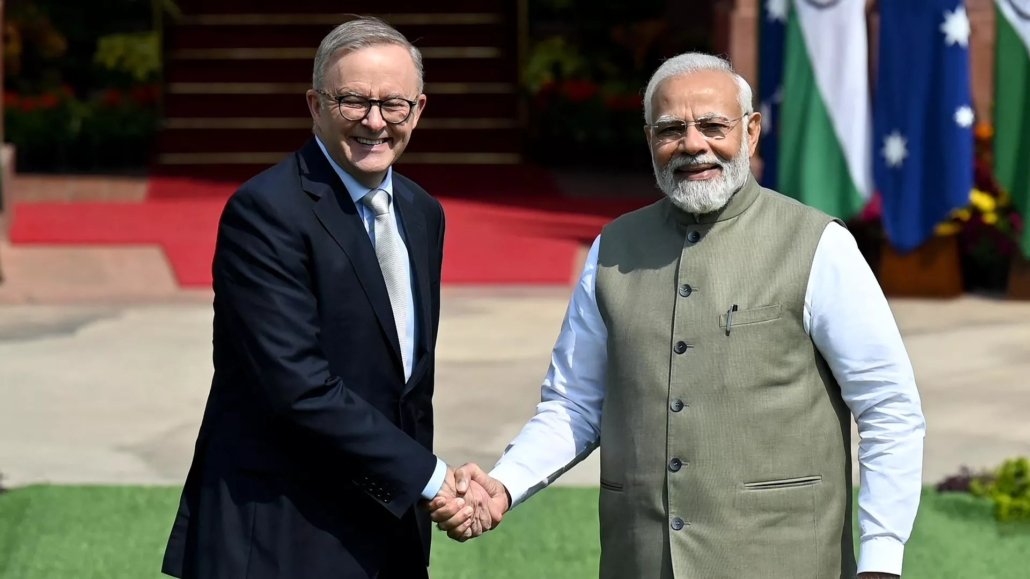
India’s evolving approach to the Indo-Pacific should place greater emphasis on Oceania, a region of rising economic, diplomatic, and geostrategic relevance. However, this shift presents both opportunities and challenges. It is important to recognise that for India, the Indian Ocean region is not a strategy in and of itself but is rather, a strategic geography within which multiple strategies—political, economic, military, and maritime—are formulated and executed.[1] Extending this outlook into the wider Pacific will require India to navigate longstanding alignments between Australia, the US, and the PICs, while asserting its own vision for regional engagement.
This paper explores how India can deepen its presence without inviting pushback from established partners, especially by leveraging underutilised regional mechanisms such as the Forum for India–Pacific Islands Cooperation (FIPIC) and the Pacific Islands Forum (PIF), which offer structured, inclusive platforms for India’s engagement in the Pacific. It examines Australia’s strategic limitations, such as its inconsistent approach and narrow focus in the South Pacific, contrasting this with India’s growing maritime capacity and willingness to engage in development-oriented initiatives. India’s evolving maritime policy encapsulated in the acronym MAHASAGAR (Mutual and Holistic Advancement for Security and Growth Across Regions)—announced by Prime Minister Modi in Mauritius in March 2025—underscores this approach by framing maritime cooperation as a blend of mutual security, developmental partnerships, and inclusive regionalism.[2] As an expansion of the earlier SAGAR (Security and Growth for All in the Region) policy, MAHASAGAR offers a coherent strategic outlook that extends from the Indian Ocean into the wider Indo-Pacific.[3] By leveraging its CSP with Australia, strengthening multilateral engagement through FIPIC and PIF, and positioning itself as a rules-respecting, inclusive actor, India can counterbalance China’s growing influence while reinforcing its own image as a stabilising and developmental partner in the Pacific.
Maritime Geography, Power Shifts, and Policy Gaps
The South Pacific covers nearly 15 per cent of the Earth’s surface, with PICs spread across over 30 million square kilometres—more than 98 per cent of which is ocean.[4] The combined landmass is under 600,000 square kilometres, with Papua New Guinea accounting for 84 per cent of the total landmass.[5] Despite its vast geography, the region has just 11.2 million people, out of which nearly nine million live in Papua New Guinea.[6] Pacific States often describe themselves as “big ocean countries,” reflecting their stewardship of a vast maritime domain, which faces threats from rising sea levels, illegal fishing, deep-sea mining, and vulnerabilities in submarine cables.[7]
The region remains fragmented and focused on non-traditional security concerns, such as climate change, natural disasters, and fragile economies—while external actors often view it strategically. China’s growing presence through loans, infrastructure, and partnerships, adds pressure. In response, the United States, Japan, New Zealand, and Australia engage in the region, though Australia is often seen as focusing more on its own strategy than on local Pacific priorities.[8]
This context opens space for India–Australia cooperation. India seeks a larger Indo-Pacific role but remains active in the South Pacific mainly through the Forum for India–Pacific Islands Cooperation (FIPIC). Australia, despite its proximity and stakes, lacks a consistent Indian Ocean–Pacific policy. Together, the two could bridge gaps: Australia could contribute local knowledge, historical links, and operational capacity, while India could offer to build strengths in climate adaptation, renewable energy, digital connectivity, and capacity-building. Joint efforts, such as protecting undersea cables, supporting sustainable fisheries, and funding renewable infrastructure, would strengthen regional resilience and present a more credible alternative to Pacific partners than do unilateral initiatives.
This engagement builds on a historical backdrop of India–Australia relations, which were once strained by political differences between Prime Ministers Nehru and Menzies. Menzies strongly aligned with the US, viewing communism as an imminent threat and dismissing India’s nonalignment as naive.[9] Nehru, by way of contrast, rejected Cold War bloc politics, focusing instead on decolonisation, racial equality, and the rise of Asian nationalism.[10] He believed regional autonomy mattered more than siding with either superpower. This divergence in worldview strained relations for decades.
However, in a 1963 letter to Menzies, following the India-China war, Nehru wrote:
“The Chinese aggressiveness and desire for domination is not confined to India or the countries in South-East Asia, but is also a bid for world domination. All of us, India as well as other countries in Asia, have to prepare ourselves to meet the long-term threat that China, with its 700 million people, a totalitarian and expansionist regime and a land army of several million, poses.”[11]
Yet it was not until the 1980s that the India–Australia relationship began to improve substantially, with the launch of a series of high-level visits. A 1990 Australian Senate inquiry acknowledged India’s regional importance but noted that bilateral ties remained underdeveloped.[12] Initiatives such as the establishment of the “Australia–India Council” in 1992 aimed to strengthen people-to-people and institutional links[13] but strategic focus still remained elsewhere. The 2013 Defence White Paper marked a conceptual shift, with Australia formally adopting the Indo-Pacific as its strategic geography.[14] This recalibration was driven by the simultaneous rise of India and China—particularly China’s growing assertiveness through the Belt and Road Initiative (BRI).[15]
It is now increasingly obvious that India and Australia need to work assiduously together to counter China’s growing influence in the Pacific, not only to safeguard their respective strategic interests, but also to support regional stability. Both countries will also need to step up their engagement with Pacific Island Countries in a manner that is coordinated and responsive to local priorities. The India–Australia CSP offers a valuable framework for such joint and complementary efforts.
The India-Australia Comprehensive Strategic Partnership
The CSP was originally announced during a virtual summit between the Indian and Australian Prime Ministers in June 2020, upgrading the 2009 Strategic Partnership to a more robust and multidimensional framework.[16] It reflects both countries’ growing alignment on regional and global challenges.
Anchored in mutual trust, shared democratic values, and common strategic interests, the CSP aims to address contemporary global issues while promoting a free, open, and rules-based Indo-Pacific. It aligns with both India’s “Indo-Pacific Oceans Initiative” (IPOI) and Australia’s Indo-Pacific approach, emphasising inclusive regional institutions and respect for sovereignty. This alignment is being operationalised through mechanisms such as the “Australia-India Indo-Pacific Oceans Initiative Partnership” (AIIPOIP), which offers a delivery platform for collaborative projects across maritime security, climate resilience, and regional capacity-building.[17]
Marking its fifth anniversary in June 2025, the India–Australia CSP has made steady strides.[18] Although both sides deny that the partnership is directed at countering China, it was formalised in the wake of renewed India–China border tensions in 2020 and has since become a key pillar of Indo-Pacific cooperation.[19]
At a commemorative event held on 04 June 2025 in New Delhi, External Affairs Minister S Jaishankar described Australia as one of India’s “closest political friends and strongest security partners,” noting a “real transformation” in defence and energy collaboration.[20] Australian Deputy Prime Minister and Defence Minister Richard Marles echoed this sentiment, stressing the importance of deepening defence ties in pursuit of a free, open, and stable Indo-Pacific.
Defence cooperation has been a key driver, bolstered by regular strategic dialogues, joint military exercises, and frameworks such as the Mutual Logistics Support Arrangement and the 2+2 Dialogue between Foreign and Defence Ministers.[21] Key outcomes of the CSP may be readily discerned from the following tabulation:
| Domain | Key Achievements |
| Defence & Security
|
– Mutual Logistics Support Agreement (2020) |
| – Regular military exercises: AUSINDEX, PITCH BLACK, MALABAR | |
| – Maritime domain awareness and naval cooperation | |
| – Counter-terrorism and cyber security collaboration | |
| Regional Cooperation
|
– Strong alignment on a free, open, and inclusive Indo-Pacific |
| – Quad coordination on infrastructure, tech, health | |
| – Joint support for ASEAN, IORA, PIF, FIPIC | |
| – Australia leads “Maritime Ecology” spoke/pillar of India’s Indo-Pacific Oceans Initiative (IPOI) | |
| Trade & Economy
|
– Ind-Aus ECTA (2022): tariff reductions, services access, mobility |
| – Negotiations underway for CECA | |
| – Collaboration on critical minerals, green tech, supply chains | |
| Education & Mobility
|
– Mutual Recognition of Educational Qualifications (2023) |
| – IIT Madras to open a campus in Australia | |
| – Migration and Mobility Partnership Arrangement (2023) | |
| Climate & Energy
|
– India–Australia Energy Dialogue |
| – Joint work on green hydrogen, solar, and critical minerals | |
| – Support for infrastructure in Pacific Island Countries | |
| Science & Tech
|
– Joint R&D in AI, quantum computing, space |
| – Partnerships on emerging and critical technologies |
Table 1: Source: Various sources, compiled by author.
Despite these achievements, the CSP remains under-leveraged in the Pacific Islands—a region where both India and Australia share converging interests but have yet to fully align their strategic and development efforts. While cooperation has deepened across defence, critical minerals, and digital connectivity, the Pacific remains largely peripheral to the partnership’s formal agenda. Tapping the CSP’s full potential in this theatre will require more institutionalised collaboration, joint delivery mechanisms, and sustained political attention to offer credible alternatives to China’s expanding influence.
While China’s expanding influence in the Pacific—through debt-heavy infrastructure projects and strategic port-access in countries such as the Solomon Islands, Papua New Guinea, and Kiribati, has triggered concern, it has also created space for coordinated responses.[22] Beijing’s model of engagement has often left PICs burdened with unsustainable debt and limited local benefit. In contrast, India’s grant-based assistance, climate-resilient infrastructure, and emphasis on local capacity-building offer a viable alternative, one that is more aligned with the long-term interests of the PICs. India must deepen its presence while maintaining strategic autonomy, complementing Western efforts without becoming dependent on them. India’s credibility in the region lies in its non-interventionist, development-first approach, grounded in respect for sovereignty and partnership.
That said, cooperation with like-minded partners remains vital for sustainable engagement in the Pacific Island region. India, the US, and Australia need to pursue collaboration in key areas that align with the priorities of Pacific Island Countries. However, the extent to which the United States remains a reliable partner—particularly under the current Trump administration, remains uncertain.
India–US Strategic Drift and the Case for Deeper India–Australia Engagement in the Pacific
Even before the latest political churn in Washington, marked by Donald Trump’s return to office in January 2025, the India–US relationship had begun to show signs of strategic drift. While events like Howdy Modi (2019)[23] and Namaste Trump (2020)[24] reflected peak optics, they masked deeper structural tensions, misaligned expectations, and persistent asymmetries. With the Trump administration now reviving threats of unilateral tariffs and reasserting an “America First” economic agenda, confidence in the durability of the partnership has weakened further, raising new questions about the future of joint Indo-Pacific frameworks.[25]
Despite shared Indo-Pacific goals, India–US alignment remains uneven and is strained by Washington’s criticism on issues such as Kashmir and religious freedoms, and by New Delhi’s caution on Ukraine, Iran, and other global flashpoints. While diaspora networks and business lobbies such as the “US-India Business Council” (USIBC)[26] have opened important avenues, India still lacks a coordinated advocacy ecosystem capable of countering sudden policy shocks, whether through sanctions-focused debates such as those that led to the “Countering America’s Adversaries Through Sanctions Act” (CAATSA)[27] or abrupt trade-related moves. As US domestic politics becomes more polarised and interventionist, India remains vulnerable to unpredictable shifts that may affect its strategic space and economic interests.
The consequences are particularly visible in the Pacific Islands, where China continues to entrench its presence amid the absence of consistent, coordinated regional strategies. Any weakening of American credibility—whether through wavering commitments to initiatives such as AUKUS[28] or disruptive economic moves—diminishes regional confidence in US-led frameworks. For India, this underlines the risk of over-reliance on a transactional Washington, especially when long-term Indo-Pacific stability is at stake.
Under the Trump administration’s “America First” approach, US credibility in the Pacific has taken a sharp hit. In April 2025, President Trump signed an executive order opening nearly 500,000 square miles of the “Pacific Islands Heritage Marine National Monument” to commercial fishing—a move that benefits US tuna fleets but undermines long-standing conservation and casts doubt on the 1987 “South Pacific Tuna Treaty”, which links US fishing access to aid and licensing revenue for Pacific Island nations.[29] Simultaneously, the US withdrew from the Paris Agreement, scaled back USAID, and froze large segments of foreign aid—including programmes that were critical for climate adaptation and health in Pacific nations.[30] This sudden retreat from the region’s most pressing priorities, including climate resilience, development and resource stewardship, has created a leadership vacuum that China is increasingly ready to fill.
The sole silver lining to this otherwise uniformly dark cloud is that it gives India and Australia a strategic opening to play a stabilising role within the PICs. This strengthens the case for a more robust India–Australia partnership. Their shared concerns—from maritime security and climate adaptation to infrastructure development and resilience against debt traps—create a strong basis for more autonomous cooperation. Politically too, Australia has shown greater alignment with India’s core sensitivities and strategic priorities.
For Indian policymakers, the India–Australia CSP must be seen as more than symbolic. It must become the operational basis for Pacific engagement, particularly in sectors such as climate finance, health systems, digital infrastructure, and the blue economy. These bilateral efforts can supplement and strengthen multilateral forums like the Quad, while being less vulnerable to the unpredictability of US domestic politics.
On the other hand, while India and Australia have substantially expanded their cooperation in the Pacific, developments in Australia’s broader South Asia policy merit close attention. In May 2024, Australia’s Chief of Defence Forces, Lieutenant General Angus Campbell, visited Pakistan’s Army Chief General Syed Asim Munir in Rawalpindi, where both sides agreed to expand military‑to‑military cooperation—marking a notable shift in bilateral security ties.[31] Simultaneously, Australia gifted a patrol vessel to the Maldives in 2024, signalling its deepening engagement across the Indian Ocean region.[32] While the Maldives is clearly not part of the Pacific Island Countries group, such moves reflect Canberra’s expanding defence diplomacy in India’s maritime periphery. Although there is no formal defence agreement with Pakistan yet, even symbolic or low-level outreaches could complicate India’s strategic calculus. For the CSP to retain strategic coherence, clarity on red lines and mutual alignment is essential.
India–US ties still hold long-term value but, in the short to medium term, India must reduce its exposure to strategic uncertainty. This means investing in relationships that are grounded in shared geography, mutual trust, and steady political commitment. In a fragmented Indo-Pacific, it will be regional actors like India and Australia that carry the responsibility for leading from the front.
Recommendations
- Institutionalise a Dedicated India–Australia–Pacific Engagement Track. Between 2023 and 2024, India and Australia held over 32 high-level visits,[33] including ministerial meetings (e.g., Education, Trade, Defence), culminating in key agreements across energy, education, and minerals. To sustain this momentum and give regional direction, India should propose a formal India–Australia–Pacific dialogue mechanism, co-chaired annually by both foreign ministries. This would enable coordinated development initiatives in PICs, align diplomatic messaging, and counterbalance external influence (particularly Chinese State-led investment) through transparent, rules-based engagement.
- Leverage the ECTA for Developmental Engagement in the Pacific Islands. The India–Australia Economic Cooperation and Trade Agreement (ECTA), signed in 2022, has further cemented the CSP and created a strong framework for joint economic and strategic initiatives.[34] Amid renewed tariff threats from the United States and growing unpredictability in the latter’s trade and foreign policy posture, the ECTA provides India with a more stable and rules-based platform for cooperation with a like-minded Indo-Pacific partner. This bilateral framework now needs to be extended to drive developmental engagement in the Pacific Islands, particularly with nations like Fiji, Papua New Guinea, and Solomon Islands, where India and Australia have converging interests in digital infrastructure, climate resilience, maritime security, and capability enhancement and capacity-building. The ECTA’s elimination of tariff barriers on 90% of Indian exports to Australia opens up new opportunities for Indian MSMEs, including those in defence and technology, to co-develop and deliver solutions tailored to the needs of these island nations.[35] Joint supply chains, co-financed infrastructure, and collaborative R&D under the ECTA framework can make India-Australian initiatives more cost-effective and locally responsive—positioning both countries as dependable partners for PICs while reinforcing norms-based development in the region.
- Leverage the AIIPOIP for Regional Delivery in the Pacific. India and Australia should more systematically utilise the Australia–India Indo-Pacific Oceans Initiative Partnership (AIIPOIP) to implement joint projects in the Pacific. With a focus on areas such as the blue economy, maritime domain awareness, ocean governance, and climate resilience, the AIIPOIP provides a flexible and inclusive framework to coordinate initiatives aligned with local priorities. Leveraging this mechanism for delivery in PICs would not only operationalise India’s Indo-Pacific Oceans Initiative (IPOI) but also elevate the India–Australia Comprehensive Strategic Partnership as a vehicle for tangible, regionally relevant cooperation.
- Expand Joint Military Presence and Exercises in the Pacific. India’s participation in Exercise TALISMAN SABRE 2025[36] (its first, alongside 18 countries) and existing naval exercises like AUSINDEX,[37] AUSTRAHIND,[38] and MALABAR,[39] all signal growing trust. Going forward, India and Australia should coordinate rotational joint deployments or port visits to key PICs such as Fiji, Papua New Guinea, and Solomon Islands. These efforts would project a shared commitment to maritime stability and open sea lanes—essential to the free and open Indo-Pacific vision.
- Integrate Defence Engagement with Climate Resilience. Given the existential threat that climate change poses to PICs, defence cooperation should also encompass humanitarian assistance, disaster relief (HADR), and early warning systems. Through the “India–Australia Centre of Excellence for Disaster Management”[40] and collaboration under the QUAD–CDRI,[41] India and Australia can deploy dual-use naval assets—ships, aircraft, and logistics platforms that serve both security and civilian purposes—for climate response missions. Embedding climate-security logic into defence engagement would expand soft power while addressing urgent regional priorities.
- Co-Develop Infrastructure and Critical Mineral Supply Chains in PICs. India and Australia are already cooperating on critical minerals, and this partnership can be extended to the Pacific through targeted co-investment. A proposed Pacific Infrastructure and Minerals Partnership under the CSP could focus on renewable energy, digital connectivity, and transport — such as solar farms in Fiji, resilient undersea cables in Papua New Guinea, green transport in the Solomon Islands, etc. Financing could draw on the four-billion AUD “Australian Infrastructure Financing Facility for the Pacific” (AIFFP)[42], and India’s EXIM Bank concessional credit lines[43] to provide attractive alternatives to Chinese loans. Joint supply chains for critical minerals (nickel from PNG, cobalt from New Caledonia) could link Pacific extraction to India’s EV sector and Australia’s processing hubs, while meeting OECD transparency standards and Pacific sustainability ones. This would also complement the “Quad Critical Minerals Initiative” of 2025[44] by embedding the Pacific into broader supply-chain diversification efforts, strengthening resilience and sovereignty.
- Launch a Skills and Education Platform for the Pacific. Building on past education MoUs and joint skill initiatives, India and Australia should offer scholarships, vocational training, and technical exchange programs for Pacific youth. This would project both countries as long-term, people-first partners, with tangible benefits to local communities. The model could draw on Australia’s Pacific Labour Mobility Scheme[45] and India’s ITEC program.[46]
- Build a “Resident Powers” Coalition, Supplementing but Not Dependent on the Quad. India, Japan, Indonesia, France, Australia, and New Zealand are resident Indo-Pacific powers with territorial, diaspora, or geographic stakes in the Pacific. They should establish a coordinated mechanism for capacity-building, maritime domain awareness, and climate-resilient infrastructure. While aligned with Quad initiatives, this coalition must remain independently viable and politically insulated. By pooling resources and reducing duplication, it would provide Pacific Island countries with a credible and sustainable alternative to Chinese financing, while ensuring that India–Australia cooperation is embedded within a wider, locally legitimate framework.
Conclusion
The recent US decision to arbitrarily enhance a set of steep tariffs on Indian exports, aimed at pressuring India over its energy ties with Russia, highlights how fragile Indo-Pacific cooperation becomes when India–US ties are shaped more by global power politics than by stable regional priorities. That the 2025 Quad Leaders’ Summit in India had to be abandoned due to President Trump’s refusal to attend underscores the fragility of partnerships built on individual leadership dynamics. While India and the US have shared interests in the Indo-Pacific, the volatility of this relationship highlights the need for India to invest in more predictable, geography-anchored partnerships.
In this context, India’s CSP with Australia has assumed greater strategic weight. However, this partnership is not merely a hedge against US unpredictability. It stands on its own merits: Australia and India are both Indo-Pacific powers with increasing economic and defence complementarities, shared interests in regional stability, and a common stake in the sustainable development of the Pacific Islands.
Bilateral convergence offers an opportunity to translate shared interests into regional impact. By co-investing in climate resilience, maritime capacity-building, and digital infrastructure, India and Australia can shape a more inclusive Pacific order; one less vulnerable to extractive great power politics. The road ahead requires both sides to move beyond episodic cooperation and embrace sustained, programmatic engagement rooted in mutual trust and shared responsibility.
********
About the Author
Ms Kripa Anand is a Research Associate at the National Maritime Foundation (NMF). Her research encompasses maritime security issues, with special focus upon the manner in which India’s own maritime geostrategies are impacted by the maritime geostrategies of the island-States of Oceania in general and Australia and New Zealand in particular. She may be reached at ocn1.nmf@gmail.com.
Endnotes:
[1] Vice Admiral Pradeep Chauhan, “Maritime Security in the Indo-Pacific — A Contemporary Perspective,” National Maritime Foundation, 12 June 2025. https://maritimeindia.org/maritime-security-in-the-indo-pacific-a-contemporary-perspective/.
[2] “What is ‘Mahasagar’ Vision? New policy for Global South unveiled by PM Modi in Mauritius,” Times of India, March 2025. https://timesofindia.indiatimes.com/india/what-is-mahasagar-vision-new-policy-for-global-south-unveiled-by-pm-modi-in-mauritius/articleshow/118942589.cms.
[3] “What is ‘Mahasagar’ Vision? New policy for Global South unveiled by PM Modi in Mauritius,” Times of India.
[4] “How big is the Pacific Ocean?”, Ocean Exploration Facts, National Oceanic and Atmospheric Administration. https://oceanexplorer.noaa.gov/facts/pacific-size.html
[5] Department of Foreign Affairs and Trade, “Papua New Guinea country brief”, Australian Government. https://www.dfat.gov.au/geo/papua-new-guinea/papua-new-guinea-country-brief?
[6] “Papua New Guinea country brief”, DFAT, Australian Govt.
[7] “Building a Blue Pacific Agenda for the Twenty-First Century”, Centre for Strategic and International Studies, June 2022. https://www.csis.org/analysis/building-blue-pacific-agenda-twenty-first-century.
[8] Graeme Dobell, “Framing the Islands: Strategic Denial and Integration”, The Strategist, Australian Strategic Policy Institute, December 2019.
https://www.aspistrategist.org.au/framing-the-islands-strategic-denial-and-integration/.
[9] Meg Gurry, “Leadership and Bilateral Relations: Menzies and Nehru, Australia and India, 1949-1964,” Pacific Affairs 65, no. 4 (1992): 510–26, https://doi.org/10.2307/2760317.
[10] Meg Gurry, “Leadership and Bilateral Relations: Menzies and Nehru, Australia and India, Pacific Affairs.”
[11] Selected Works of Jawaharlal Nehru, “To R.G. Menzies: Updating on China War,” Jawaharlal Nehru Memorial Fund, 81 (February 1963 – April 1963): 654, https://nehruselectedworks.com/pdfviewer.php?style=UI_Zine_Material.xml&subfolder=&doc=August_1963-October_1963-Series2-Vol83.pdf|6|892#page=6.
[12] Joint Standing Committee on Foreign Affairs, Defence and Trade, “Chapter 2: Australia’s Trade Relationship with India,” Parliament of Australia, https://www.aph.gov.au/Parliamentary_Business/Committees/Joint/Completed_Inquiries/jfadt/india/Indch2.
[13] Australian High Commission, “Australia- India relationship,” Australian High Commission, New Delhi.
[14] Department of Defence, Defence Whitе Рареr 2013, Australian Government. https://www.defence.gov.au/about/strategic-planning/defence-white-paper.
[15] Defence Whitе Рареr 2013, Australian Government.
[16] Department of Foreign Affairs and Trade, “Bolstering our ties with India,” Australian Government, https://www.dfat.gov.au/geo/india/bolstering-our-ties-india.
[17] Australian High Commission, New Delhi, “Australia-India Indo-Pacific Oceans Initiative Partnership: Grant Round 2: About the Program,” Australian Government, https://india.highcommission.gov.au/ndli/AIIPOIP1.html.
[18] Ministry of External Affairs, “Remarks by EAM Dr. S. Jaishankar at the 5th anniversary of India– Australia Comprehensive Strategic Partnership”, Government of India, June 2025. https://www.mea.gov.in/Speeches-Statements.htm?dtl/39637/Remarks+by+EAM+Dr+S+Jaishankar+at+the+5th+anniversary+of+India+Australia+Comprehensive+Strategic+Partnership.
[19] Department of Foreign Affairs and Trade, “Bolstering our ties with India”, Australian Government, https://www.dfat.gov.au/geo/india/bolstering-our-ties-india.
[20] Media Centre, Speeches and Statements, “Remarks by EAM Dr. S. Jaishankar at the 5th anniversary of India– Australia Comprehensive Strategic Partnership”, Ministry of External Affairs, Government of India, June 2025, https://www.mea.gov.in/Speeches-Statements.htm?dtl/39637/Remarks+by+EAM+Dr+S+Jaishankar+at+the+5th+anniversary+of+India+Australia+Comprehensive+Strategic+Partnership.
[21] Department of Foreign Affairs and Trade, “India Country Brief: Overview,” Australian Government, https://www.dfat.gov.au/geo/india/india-country-brief.
[22] Anne-Marie Brady, The Strategist, “China in the Pacific: From ‘Friendship’ To Strategically Placed Ports and Airfields,” Australian Strategic Policy Institute, April 2022, https://www.aspistrategist.org.au/china-in-the-pacific-from-friendship-to-strategically-placed-ports-and-airfields/#:~:text=From%20Kiribati%2C%20to%20Vanuatu%2C%20to,resources%20in%20the%20Southwest%20Pacific.
[23]“‘Howdy, Modi!’: Trump hails Indian PM at ‘historic’ Texas rally,” BBC News, September 2019,
https://www.bbc.com/news/world-us-canada-49788492.
[24] Hannah Ellis Petersen, “‘Namaste Trump’: India welcomes US president at Modi rally” The Guardian, Feb 2020, https://www.theguardian.com/world/2020/feb/24/namaste-donald-trump-india-welcomes-us-president-narendra-modi-rally.
[25] Express Web Desk, “Trump’s first tranche of tariffs comes into effect, hitting over 90 countries”, The Indian Express, August 2025. https://indianexpress.com/article/world/us-president-donald-trump-tariffs-10174758/.
[26] “U.S.-India Business Council,” US Chamber of Commerce, https://www.uschamber.com/program/international-affairs/south-asia-program/us-india-business-council.
[27] Office of Foreign Assets Control, “Countering America’s Adversaries Through Sanctions Act-Related Sanctions,” US Department of the Treasury. https://ofac.treasury.gov/sanctions-programs-and-country-information/countering-americas-adversaries-through-sanctions-act-related-sanctions.
[28] US Department of Defence, “AUKUS: The Trilateral Security Partnership Between Australia, U.K. and U.S” The United States Government. https://www.defense.gov/Spotlights/AUKUS/.
[29] Sam Mauhay-Moore, “Trump signs executive order ending years of protections in Pacific monument”, SF Gate, April 2025. https://www.sfgate.com/hawaii/article/trump-order-hawaii-pacific-monument-fishing-20284449.php.
[30] Lagipoiva Cherelle Jackson, “Explainer: what will the withdrawal of USAid mean for the Pacific?”, The Guardian, Feb 2025.
https://www.theguardian.com/world/2025/feb/17/donald-trump-usaid-withdrawal-impact-pacific-explainer.
[31] News Desk, “Pakistan, Australia agree to further expand military-to-military cooperation,” The Express Tribune, August 2025, https://tribune.com.pk/story/2467321/pakistan-australia-agree-to-further-expand-military-to-military-cooperation.
[32] The Hindu Bureau, “Australia to gift Guardian-class patrol boat to Maldives”, The Hindu, 02 June 2025, https://www.thehindu.com/news/international/australia-to-gift-guardian-class-patrol-boat-to-maldives/article69648696.ece.
[33] Ambika Vishwanath and Treesa Shaju, “Five years of India-Australia CSP: From framework to forward momentum,” Kubernein Initiative, June 2025. https://kuberneininitiative.com/article/five-years-of-india-australia-csp-from-framework-to-forward-momentum/.
[34] “Australia-India Economic Cooperation and Trade Agreement (ECTA),” Department of Foreign Affairs and Trade, Australian Government.
https://www.dfat.gov.au/trade/agreements/in-force/australia-india-ecta.
[35] “Australia-India Economic Cooperation and Trade Agreement (ECTA).” Department of Foreign Affairs and Trade, Australian Government.
[36] “India joins 18 nations for Australia-led Talisman Sabre 2025 military exercise,” Ministry of External Affairs, Government of India, July 2025.
https://indbiz.gov.in/india-joins-18-nations-for-australia-led-talisman-sabre-2025-military-exercise/.
[37] “5th Edition of Ausindex-23 At Sydney,” Press Information Bureau, Government of India, August 2023. https://www.pib.gov.in/PressReleasePage.aspx?PRID=1952521.
[38] “India- Australia Joint Military Exercise Austrahind Commences in Maharashtra,” Press Information Bureau, Government of India, 08 November 2024, https://www.pib.gov.in/PressReleasePage.aspx?PRID=2071767.
[39] “Maritime Exercise Malabar 2024, Commencing at Visakhapatnam on 08 Oct Hosted by India, USA, Australia and Japan in Participation,” Press Information Bureau, Government of India, October 2024, https://www.pib.gov.in/PressReleasePage.aspx?PRID=2062316.
[40] Deakin University, “Deakin University Strengthens India-Australia Collaboration for Disaster Resilience with Landmark Centre of Excellence and Strategic MoU,” PR Newswire, March 2025, https://www.prnewswire.com/in/news-releases/deakin-university-strengthens-india-australia-collaboration-for-disaster-resilience-with-landmark-centre-of-excellence-and-strategic-mou-302404539.html#:~:text=At%20the%20’Resilient%20Communities%2C%20Stronger,knowledge%20exchange%2C%20and%20capacity%20building.
[41] “Quad Climate Working Group (QCWG) Side Event on Capturing the Resilience Dividend: Quad Achievements under the Climate Adaptation Pillar,” Press Information Bureau, Government of India, 11 December 2023, https://www.pib.gov.in/PressReleasePage.aspx?PRID=1984909.
[42] Department of Foreign Affairs and Trade, “Australian Infrastructure Financing Facility for the Pacific Two-Year System-Wide Review and Management Response”, Australian Government.
https://www.dfat.gov.au/publications/development/australian-infrastructure-financing-facility-pacific-two-year-system-wide-review-and-management-response.
[43] “Lines of Credit”, India Exim Bank. https://www.eximbankindia.in/lines-of-credit.
[44] Aggam Walia and Soumyarendra Barik, “Quad comes together to create supply chains for critical minerals: Can it counter China?”, The Indian Express, July 2025. https://indianexpress.com/article/business/quad-supply-chains-critical-minerals-china-10103507/.
[45] Department of Foreign Affairs and Trade, “Pacific Labour Mobility,” Australian Government, https://www.dfat.gov.au/geo/pacific/engagement/pacific-labour-mobility.
[46] “The Indian Technical and Economic Cooperation Programme,” Ministry of External Affairs, Government of India. https://www.itecgoi.in/index.
 (image credit: Generated by AI)
Leave a Reply
Want to join the discussion?Feel free to contribute!