
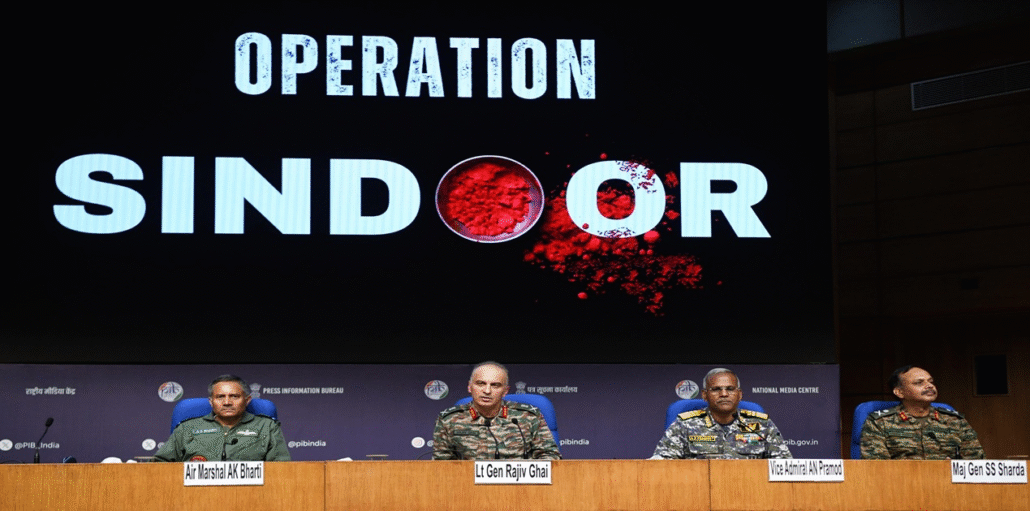
The term “strategic communication” has emerged as a buzzword within the existing public discourse in India. While the term has been a part of the strategic lexicon since time immemorial, it has acquired renewed interest and piqued the curiosity of policymakers in recent times, due to the skirmishes/military strikes witnessed between India and Pakistan in May of 2025. This enhanced degree of interest is a by-product or consequence of the misinformation and disinformation campaigns carried out by Pakistan; and has led to calls for a structural overhaul of the strategic communication infrastructure in India.
However, instead of providing greater conceptual clarity/salience to the term, or a roadmap indicating how India could potentially improve strategic communication in medium-to-long term, a doctrinal fracture has occurred, which has led, in far too many cases, to the term itself being used erroneously. Accordingly, in order to address this doctrinal problem, this article — which is intended to be the first in a series on the subject of strategic communication — seeks to first provide conceptual clarity on what the term actually connotes, before delving into the finer nuances attached to it. This piece, therefore, dwells on the nature of strategic communication as practised in India, especially in the aftermath of Operation SINDOOR, and offers concrete recommendations for consideration by relevant ministries such as the Ministry of External Affairs (MEA), and the Ministry of Information and Broadcasting (MIB) in the hope for improved and more effective strategic communication.
Understanding Strategic Communication
Strategic Communication constitutes “timely, truthful, accurate communication”[1] to the intended target audiences (civilian and military) in a bid to ensure that these audiences understand/comprehend the host nation/organisation’s intentions, actions, capabilities and capacities during military/non-military operations or other engagements. It is also a tool of soft persuasion that governments can use to influence select domestic constituencies as well as specific constituencies in foreign countries to achieve stated strategic objectives. In this context, “strategic communication puts audience understanding at the heart of policy and service design, resulting in better decision-making and improved delivery”[2] and is deemed to be an effective instrument of communication within the diplomatic toolkit of international States. It affords the State and its interlocutors the opportunity to ingenuously interact with intended audiences and deliberate upon the complexities, uncertainties and challenges that the State faces in a given dispute/conflict/war or any other event of importance.[3] It also enables States to counter misinformation and disinformation[4] campaigns emanating from external entities or estranged internal ones.
The United States refers to “strategic communication” as the “synchronisation of words and deeds and how they will be perceived by select audiences” and the programmes, activities, and interactions that promote US interests and opinions. For the US, a key element of strategic communication entails the creation/forging of close relations between the military and the American public, so that direct recipient(s) are aware, and understand the ramifications of the decisions taken by the State.[5] Similarly, the United Nations, as an agency, attempts to use strategic communication to engage the public through an “issue based communication approach”,[6] that could be used to disseminate critical messages, and engage with public and policy audiences. In this regard, the UN, through its “Campaigns and Country Operations Division” (CCOD), works to ensure that it achieves its stated objectives such as maintenance of peace of security.[7] Similarly, NATO uses strategic communication to advance the interest of the alliance, including its policies, operations and activities.[8]
Strategic Communication in India
In India, strategic communication has been relevant within the Indian national security/military discourse at the conceptual and the operational levels:
Conceptual Level
Strategic Communication is deliberately used to shape the intellectual / cognitive / operational battlespace and support the construction of an ‘indigenous perspective’ as India pursues its strategic ambitions and attempts to gain the support of likeminded international actors.[9] Thus, in addition to capacity-building and capability-enhancement, strategic communication potentially forms the third pillar of an effective deterrence policy for the Indian State. This is important considering the fact that the (dissemination of), “information/(communication) should not be seen as a subcomponent of warfare but as warfare itself.”[10]
Drilling down to the Indian Navy (IN), at the conceptual level the IN pursues strategic communication, “to inform, engage and shape the perception of stakeholders and audiences for strategic purposes”.[11] It is also used as a deterrent to undermine the confidence of potential adversaries who have a pursued an aggressive posture/stance against India and counter the Cognitive Centres of the Adversary (CCA) which is understood to be a critical subset of the conventional notion of Centre of Gravity (CoG).[12]
Operational Level
At the operational level, the Directorate of Public Relations (DPR) within the Ministry of Defence (MoD) is the nodal wing/agency that controls the dissemination of information within the public domain. This Directorate, located within the Department of Defence within the Ministry, corresponds with all relevant stakeholders and informs public opinion. It houses a number of administrative sections, including the photo unit, the broadcast news and analysis unit, and the official inhouse journal of the MoD, entitled “Sainik Samachar”.[13]
Within the Indian Army (IA), strategic communication falls within the domain/pivot-of-work of the Directorate General of Public Information (ADG-PI), which works in conjunction with the Military Operations (MO) Directorate and the Directorate of Military Intelligence (MI). More importantly, within the Indian Army, the Additional Directorate General of Strategic Communication (ADG-Strat Comm) is responsible for communicating with intermediaries such as social media platforms and other regional bodies. This appointment of the ADG-Strat Comm was made under the aegis of the Information Technology Act of 2000, and the Information Technology (Intermediate Guidelines and Digital Media Ethics Code) Rules of 2021.[14]
Within the Indian Navy (IN), the responsibility for communicating with the various stakeholders and general populace lies with the “Spokesperson of the Navy”, whose office is located within Naval Headquarters (NHQ) in New Delhi, and the Directorate of Public Relations (DPR) at the MoD.[15] The spokesperson works with various directorates of NHQ, coordinating action and effort to counter misinformation and disinformation campaigns. NHQ has also created a Media and Public Relations (MPR) cell that is based in Kota House in New Delhi, which assists the PRO (Navy) in managing information that is to be disseminated to the public.[16] In addition, the Media and Public Information (MPIC) division of the Indian Navy acts as the bridge between the government and other key stakeholders and entities.[17]
However, despite the prevalence, practice, and presence of strategic communication as a strategy within the various echelons of power, the use of strategic communication as a decisive tool of warfare has remained rather ad-hoc in its usage within the Indian defence forces. Although strategic communication has been used in specific situations, it has remained firmly ensconced within an ethos of strategic restraint, with the executive leadership and the military interacting with the domestic constituents largely through official engagements, and commemorative events. For instance, former Indian Prime Minister Mrs Indira Gandhi used public diplomacy and strategic communication to raise awareness about the plight of Bangladeshi (then East Pakistani) refugees during the 1971 conflict with Pakistan. In this regard, Mrs Gandhi chose to visit most western capitals to strategically communicate India’s politico-military objectives to them. The use of public diplomacy as a subset of strategic communication was crucial in this regard.[18] This initiative on her part, enabled India to generate goodwill that could later be translated into real-time leverage to accrue benefits, when viewed within the context of India-Bangladesh relations of that period.
Similarly, another instance relates to India communicating its intentions, capabilities and capacities to western audiences and stakeholders after conducting the Pokhran nuclear tests in May of 1998. At a time when India’s conduct was being viewed as antithetical to strategic stability in South Asia, then-Indian Foreign Minister Jaswant Singh had engaged in dialogue with multiple agencies, stakeholders and parties to reiterate India’s “no-first use policy” that clearly stated that India had acquired nuclear weapons to ensure “credible minimum deterrence”, and that it would never engage in nuclear proliferation of any kind.
India had also stated that it was also committed to nuclear disarmament subject to its security needs being met in the foreseeable future. Such a clear articulation of India’s nuclear weapons policy, in conjunction with verbal messaging, ensured that in 2008, India received waivers (even though these were withdrawn in 2011) from the International Atomic Energy Agency (IAEA) so that it could use nuclear energy for peaceful purposes. India’s responsible behaviour in the nuclear domain ensured that India was given membership of major export control regimes / groups including the “Missile Technology Control Regime” (MTCR).[19]
However, despite these very tangible examples of strategic communication within India’s contemporary history, strategic communication has not emerged as a tool of preference, and its use has been reactive as opposed to being proactive. This limitation / infirmity on India’s part has often led to India having to correct narratives, as opposed to setting them in the first instance. A glaring example in this regard is that of Operation SINDOOR, which was launched by India to counter terrorist attacks emanating from non-State actors with connections to Pakistan. A brief description of the information exchanged between Indian, Pakistani and international stakeholders is provided below.
Operation SINDOOR and Strategic Communication
On April 22, 2025, the town of Pahalgam in Indian administered Kashmir was witness to an unprecedented terrorist attack that resulted in 26 fatalities. What added to the brutality of the attacks was that the intended targets were chosen on the basis of their faith and gender, with Hindu men being specifically chosen and killed.[20]
Tension fuelled by widespread national fury throughout India remained high in the weeks that followed. On 07 May 2024, India carried out, “focused, measured and non-escalatory precision strikes at terrorist camps” in Pakistan,[21] hitting nine terrorist facilities in Pakistan and Pakistan Occupied Kashmir, targeting the prevalent “terrorist infrastructure from where the (April 22) terrorist attacks were planned”, (and potentially executed) against India. [22]
Pakistan responded by conducting what it termed a “defensive counterair operation”[23] later named Bunyan-al Marsoos by the Pakistani administration[24] and suggesting that several Indian jets were shot down by Pakistan.[25] However, Indian agencies did not confirm the number of jets that were downed by Pakistan during the conflict, although senior officials stated that, “losses (were) a part of combat.”[26] This purported downing of jets made significant headlines worldwide.[27]
In a subsequent development, the Indian Chief of Defence Staff, General Anil Chauhan confirmed that India did lose aircraft during the counter operations launched by Pakistan,[28] but emphasised that the loss of aircraft was not to be viewed in isolation. In this regard, a leading scholar stated, “That some Indian aircraft were lost on the opening day of the operation was a direct consequence of a consciously limited rules of engagement. In effect, India accepted heightened operational risk in pursuit of clear strategic messaging.”[29] Hence, this solitary incident ought not to have driven the narrative of Op SINDOOR. The fact, however, was that it did and, in so doing, made India’s spectacular operational successes appear less significant than they were.
In the ensuing escalation that had followed, the fragile ceasefire on the Line-of-Control (LoC) in Kashmir collapsed, as small arms, mortars and artillery firing became frequent. Tanks and anti-tank guided missiles were also employed by India to ensure that potential Pakistani infiltration bids could be effectively countered.[30] Drone and artillery strikes added a new dimension to rapidly spiralling military situation in the region.[31] Hostilities officially ended with a ceasefire being brokered between India and Pakistan after the hotline between the Directors General of Military Operations (DGMOs) India and Pakistan was officially activated by the Pakistani side.[32]
Information related to this round of conflict between the two neighbours was disseminated by leading news platforms, and international media channels. However, as Pakistan focused more on the creation/generation of a sensational narrative while India focused on actual on-ground operations, the public messaging by the Pakistani side initially caught the attention of the international media. This necessitated a response from the Indian side and the eventual fact-checking of information disseminated from the India side. This included holding regular press briefings to provide authentic information related to Indian operations with audio-visuals and satellite imagery. The Government of India blocked websites and social media handles that were spreading false information related to India-led military operations.[33] However, despite considerable Indian efforts, Pakistan was successful in creating a perception that India was keen to engage in tit-for-tat responses to the terrorist attack[34] which could eventually impact strategic stability in South Asia. It also furthered the belief in international thinktank / policy circles that India had “benignly neglected” improving its relationship with Pakistan.[35] Such perceptions require course-correction, and this has necessitated the creation of a strategy to ensure more effective communication with international stakeholders and audiences. The need for strategic communication is now widely acknowledged as being essential to deter and counter misinformation campaigns mounted by an adversary.
As a consequence, the evolution of strategic communication has accelerated within India in recent months and is being increasingly used to support/define the appropriation of an ‘Indian perspective’. As India pursues its geoeconomic and non-geoeconomic goals, it is seeking to gain the support of international audiences and key stakeholders, so as to win each ‘battle of narratives’, especially during periods of tension and armed conflict. It is noteworthy that in contrast to this late start, a nuanced understanding / assessment of ‘strategic communication’ has long existed within the Indian naval and maritime discourse.[36] Nevertheless, India does need to come up with a comprehensive strategy such that operational gains on the ground are accompanied by the proactive narration of facts across different media outlets such that enemy propaganda can be fought at the outset and Indian narratives get primacy in front of an international audience.
Recommendations
- Define governmental objectives within the context of strategic communication, specifying immediate gains that are sought, as against more enduring ones over the medium- to long-term.
- Urgently create a national strategic communication strategy at the level of the National Security Council Secretariat (NSCS) so as to generate a blueprint on what needs to be done to improve India’s image, influence, and agency, within the national and international community.
- Create a national centre of excellence on strategic communication along the lines of the NATO Strategic Communications Centre of Excellence in Riga, Latvia, which has often acted as “hub for debate” amongst its various stakeholders.[37]
- Create a “Centre for Countering Disinformation” along the lines of the one present in Ukraine, using the Russia-Ukraine conflict as a test case.[38]
- Establish an Artificial Intelligence Laboratory to exploit the enormous potential of Artificial Intelligence (AI) for strategic communication.
- Allocate funds (through the Ministry of Information and Broadcasting) to launch a world class international news channel to facilitate favourable narrative-building such that India’s truth gets primacy in this post-truth era. This news channel should be the ‘voice’ of India. If Doordarshan is to be persisted-with for this purpose, it will require a monumental image make-over. This is probably best done by professionals drawn from the private media industry rather than by bureaucrats (whether uniformed or in civilian attire) attempting to undertake an activity in which they have little training and less expertise.
- Formally teach “Strategic Communication” by incorporating this subject into the curriculum of India’s various civilian and military training institutions. Illustrative examples would include the National Defence College (NDC), the Lal Bahadur Shastri National Academy of Administration (LBSNAA), the Sushma Swaraj Institute of Foreign Service (SSIFS), the Sardar Vallabhbhai Patel National Police Academy, the Central Reserve Police Force (CRPF) Academy, the National Academy of Broadcasting and Multimedia (NABM), the Indian Council for Cultural Relations (ICCR), the Defence Services Staff College (DSSC), and the higher command colleges of the three defence forces.
- Leverage internationally renowned think-tanks and educational institutes of excellence, as also specialist agencies such as the Policy, Planning and Research (PP&R) division of the Ministry of External Affairs, the Defence Public Relations organisation, etc., to undertake regular convening activities such as conferences, symposiums, workshops, and seminars, where the Indian position can be explained by the most engaging of speakers/ presenters, and in which representative staff from foreign embassies, high commissions, and other international organisations, are proactively induced to participate. A good example that could be followed is the “Aligning Strategic Communication for Enduring Narrative Dominance” (ASCEND) dialogue which, in its inaugural edition in 2025, focused on the generation of a whole-of-government approach to deal with misinformation and disinformation and highlighted how, “strategic communication had emerged as a core function of national security…”[39].
- Leverage existing annual convening platforms such as the Raisina Dialogue, the Indo-Pacific Regional Dialogue (IPRD), the Indian Ocean Dialogue, etc., to enable and facilitate strategic communication.
******
About the Author
Anuttama Banerji is a Research Associate at the National Maritime Foundation. She graduated with a Master’s degree in international relations from the London School of Economics and Political Science (LSE) in Her research dwells upon the maritime geostrategies of India and how these are likely to be impacted by those of the Indo Pacific powers of North and South America, especially the US. She has prior published work to her credits across different national and international platforms. She can be reached at usa2.nmf@gmail.com.
Endnotes:
[1] European Parliament, “NATO Strategic Communications – An Evolving Battle of Narratives”, July 2016. https://www.europarl.europa.eu/RegData/etudes/BRIE/2016/586600/EPRS_BRI(2016)586600EN.pdf
[2] UK Government Communication Office, “Strategic Communication”, 12 March 2020. https://gcs.civilservice.gov.uk/guidance/strategic-communication/
[3] UK Government Communication Service, “Strategic Communication: MCOM function guide”, 2021. https://gcs.civilservice.gov.uk/wp-content/uploads/2020/03/Cabinet_Office_Strategic-Communications_Function_Guide.pdf
[4] Misinformation refers to “false or inaccurate information”. It includes rumours, insults, and pranks.
Disinformation involves malicious content such as “hoaxes, spear phishing, and pernicious propaganda”.
In popular culture, both misinformation and disinformation are often used/transmitted interchangeably, especially because some types of misinformation and disinformation can be quite similar. For example, satire, parody, misleading content, amongst others. For more information please see:
United Nations High Commission for Refugees Factsheet, “Factsheet 4: Misinformation and Disinformation”, UNHCR, https://www.unhcr.org/innovation/wp-content/uploads/2022/02/Factsheet-4.pdf
[5] Dunstin J Schouten, “US Strategic Communications against Islamic Fundamentalists”, March 2016, p 4-5.
[6] United Nations Sustainable Development Group, “Guidelines for Communications and Advocacy Strategy for the Cooperation Framework”, January 2022. https://unsdg.un.org/sites/default/files/2022-02/EN-UNSDG-Guidelines-for-Communications-Advocacy-Strategy-for-Cooperation-Framework.pdf
[7] Department of Global Communications, “Campaigns and Country Operations”, https://www.un.org/en/department-global-communications/campaigns-and-country-operations
[8] NATO Strategic Communications Centre of Excellence, “About Strategic Communications”, 22 October 2025. https://stratcomcoe.org/about_us/about-strategic-communications/1#.
[9] Think tanks such as the National Maritime Foundation (NMF) in New Delhi have highlighted the importance of strategic communication within the maritime domain. This is essential as India positions itself as a “preferred security partner” in the Indian Ocean Region. See: VAdm Pradeep Chauhan, “India’s Proposed Maritime Strategy”, National Maritime Foundation Website, 03 February 2020. https://maritimeindia. org/indias-proposed-maritime-strategy/
[10] Col Rajesh Kalia, “Indian Armed Forces’ PR Mechanism is Sluggish. Information is Warfare Now”, The Print, 30 June 2025. https://theprint.in/opinion/indian-armed-forces-pr-mechanism-is-sluggish-information-is-warfare-now/2674801/
[11] Indian Naval Strategic Publication, “Ensuring Secure Seas: Indian Maritime Security Strategy”, Naval Strategic October 2015, p 57. https://bharatshakti.in/wp-content/uploads/2016/01/Indian_Maritime_Security_Strategy_Document_25Jan16.pdf
[12] Lt Col Akshat Upadhyay, “Strategic Communication and the Military”, Synergy Journal, Centre for Joint Warfare Studies, Volume 4, February 2025, p 192. https://cenjows.in/wp-content/uploads/2025/05/Lt-Col-Akshat-Upadhyay-Article.pdf
[13] Col Anil Shorey, “Media Policies of the Defence Forces and the Way Ahead”, United Services Institution of India, 07 May 2008. https://usiofindia.org/pdf/USI%20Journal%20July%20-%20Sept%202008-20-25.pdf
[14] Aditi Agrawal, “Army Can Now Directly Issue Notices to Remove Online Posts”, Hindustan Times, 31 October 2024. https://www.hindustantimes.com/india-news/army-can-now-directly-issue-notices-to-remove-online-posts-101730313177838.html
[15] Twitter (X) Account, “Spokesperson Navy”, https://x.com/indiannavy?lang=en
[16] Col Anil Shorey, “Media Policies of the Defence Forces and the Way Ahead”, 2008.
[17] Vice Admiral Pradeep Chauhan in conversation with the author in September 2025.
[18] Anuttama Banerji, “Bangladesh’s Freedom wasn’t all about Indian Military. Public Diplomacy Played a Huge Role”, The Print, 26 March 2021. https://theprint.in/opinion/bangladeshs-freedom-wasnt-all-about-indian-military-public-diplomacy-played-a-huge-role/627354/
[19] Arka Biswas, “India’s Approach to Nuclear Disarmament at Crossroads”, South Asian Voices, 09 March 2015. https://southasianvoices.org/indias-approach-to-nuclear-disarmament-at-crossroads/
[20] Press Information Bureau, “Global Solidarity with India: A United Front Against Cross-Border Terrorism”, Ministry of Information and Broadcasting, 14 May 2025. https://www.pib.gov.in/PressReleasePage. aspx?PRID=2128747
[21] Press Information Bureau, “Operation Sindoor: Indian Armed Forces carried out Precision Strike at Terrorist Camps”, Ministry of Defence, 07 May 2025. https://www.pib.gov.in/PressReleasePage.aspx?PRID=2127370
[22] All India Radio, “New Delhi Asserts it is Well Prepared to Retaliate if Islamabad Escalates Situation after ‘Operation Sindoor’,” 07 May 2025. https://www.newsonair.gov.in/indian-armed-forces-launches-operation-sindoor/
[23] Christopher Clary, “Four Days in May: The India-Pakistan Crisis in 2025”, Stimson Center, 28 May 2025. https://www.stimson.org/2025/four-days-in-may-the-india-pakistan-crisis-of-2025/
[24] Abid Hussain, “Pakistan launches Operation Bunyan Marsoos: What we know so far”, Al Jazeera, 10 May 2025. https://www.aljazeera.com/news/2025/5/10/pakistan-launches-operation-bunyan-marsoos-what-we-know-so-far
[25] There is no compelling evidence to state the exact number of jets that were shot/not shot down. Pakistani claims that six jets fell is a fabrication, although Le Monde reported that at least one Rafael aircraft fell. For more information, please see: Sophie Landrin, “Military Operation in Pakistan Reveals Weaknesses of India’s Air Force”, Le Monde, 08 May 2025. https://www.lemonde.fr/en/international/article/2025/05/08/military-operation-in-pakistan-reveals-weaknesses-of-india-s-air-force_6741047_4.html
The Washington Post made similar claims, although numbers vary. For more information, please see: The Washington Post, “At Least Two Indian Jets Appear to have Crashed during Pakistan Strikes, Visuals Show”, 09 May 2025. https://www.washingtonpost.com/world/2025/05/09/fighter-jets-india-pakistan-attack/
[26] Dinakar Peri, “Operation Sindoor Objectives Achieved; Losses are Part of Combat but Pilots are Back Home. says IAF”, The Hindu, 11 May 2025. https://www.thehindu.com/news/national/operation-sindoor-objectives-achieved-losses-are-part-of-combat-but-pilots-are-back-home-says-iaf/article69564934.ece
[27] Georg Häsler and Cian Jochem, “Downing of French Rafale during Indian attack on Pakistan Offers Lessons for West”, Neue Zürcher Stiftung, 16 May 2025. https://www.nzz.ch/english/downing-of-indian-fighter-jet-offers-lessons-for-west-ld.1884492
[28] Haslinda Amin and Philips Heijmans, “India Confirms it Lost Jets in Recent Pakistan Conflict”, Bloomberg, 31 May 2025. https://www.bloomberg.com/news/articles/2025-05-31/india-confirms-it-lost-fighter-jets-in-recent-pakistan-conflict
[29] Walter J Ladwig, “Calibrated Force: Operation Sindoor and the Future of Indian Deterrence”, RUSI Blog, 21 May 2025. https://www.rusi.org/explore-our-research/publications/commentary/calibrated-force-operation-sindoor-and-future-indian-deterrence
[30] Vishnu Som, “Indian Tanks Operated From LoC during Op Sindoor, Took out Pak Posts”, NDTV, 19 May 2025. https://www.ndtv.com/india-news/indian-tanks-operated-from-loc-during-op-sindoor-took-out-pak-posts-8453878
[31] Indian Ministry of Defence Twitter (X) Post, 09 May 2025. 07:05 PM IST https://x.com/SpokespersonMoD/status/1920834920101867887
[32] Government of India, “Statement by Foreign Secretary”, 10 May 2025”, Ministry of External Affairs Press Release. https://www.mea.gov.in/press-releases.htm?dtl/39488/Statement_by_Foreign_Secretary_May_10_2025
[33] Press Release, “Government Debunks Pakistani Propaganda Against India and Armed Forces via Official Fact-Check Unit”, Ministry of Information and Broadcasting, 30 July 2025. https://www.pib.gov.in/PressReleasePage. aspx?PRID=2150213
[34] Arzan Tarapore, “Operation Sindoor and the Evolution of India’s Military Strategy Against Pakistan”, War on the Rocks, 19 May 2025. https://warontherocks.com/2025/05/operation-sindoor-and-the-evolution-of-indias-strategy-against-pakistan/
[35] Dr Chietigj Bajpaee, “The Kashmir Attack will Renew Hostilities between India and Pakistan”, The Royal Institute of International Affairs, 30 April 2025. https://www.chathamhouse.org/2025/04/kashmir-attack-will-renew-hostilities-between-india-and-pakistan
[36] Think tanks such as the National Maritime Foundation (NMF) in New Delhi have highlighted the importance of strategic communication within the maritime domain. This is essential as India positions itself as a “security provider”/ “preferred security partner” in the Indian Ocean Region. For a more detailed assessment of India’s maritime strategy, please see: VAdm Pradeep Chauhan, “India’s proposed Maritime Strategy”, National Maritime Foundation Website, 03 February 2020. https://maritimeindia.org/indias-proposed-maritime-strategy/
[37] European Parliament, “NATO Strategic Communications – An Evolving Battle of Narratives”, 04 July 2016. https://www.europarl.europa.eu/thinktank/en/document/EPRS_BRI(2016)586600
[38] Centre for Countering Disinformation, “Activities of the Centre”, https://cpd.gov.ua/en/
[39] Ministry of Defence, “Southern Command Leads National Dialogue on Strategic Communication through ASCEND 2025 Seminar”, 11 October 2025. https://www.pib.gov.in/PressReleasePage.aspx?PRID=2177819


Leave a Reply
Want to join the discussion?Feel free to contribute!