
Keywords: AIKEYME Exercise, IOS SAGAR, Capacity Building, Capability enhancement, Western Indian Ocean, Maritime Security Architecture
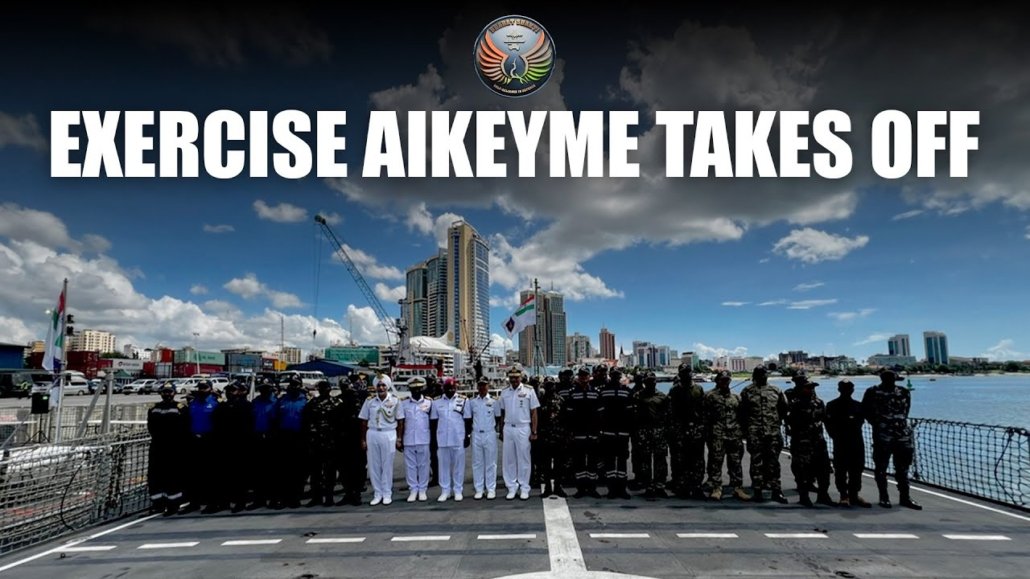
April 2025 has been a milestone month for India’s maritime ambitions, marked by two unprecedented initiatives. On 05 April, while celebrating the 62nd National Maritime Day, the Indian Ocean Ship (IOS) SAGAR set sail from the naval facility at Karwar in the Indian state of Karnataka, embarking on a six-week mission to the southwestern Indian Ocean. INS Sunayna was designated IOS SAGAR and ceremoniously flagged off by Defence Minister Mr Rajnath Singh.[1] This indigenously built Advanced Offshore Patrol Vessel (AOPV) is crewed by a 44-member team composed of personnel from nine Friendly Foreign Nations (FFN) to boost interoperability and greater cooperation. With the deployment of IOS SAGAR, the Indian Navy has also launched the maiden edition of Exercise AIKEYME (Africa-India Key Maritime Engagement)— meaning “Unity” in Sanskrit— with ten eastern African coastal and island nations.
AIKEYME is a multilateral maritime exercise co-hosted by India and the Tanzania People’s Defence Force (TPDF). The exercise was inaugurated on 13 April 2025 and ended on 18 April 2025, completing its six-day planned course, which was divided into two phases.[2] The African phase of this inaugural edition of Exercise AIKEYME (it is expected to be held once every two years) began off the coast of Dar-es-Salaam, bringing together the navies and maritime agencies of Comoros, Djibouti, Eritrea, Kenya, Madagascar, Mauritius, Mozambique, Seychelles, and South Africa, along with the co-hosts. The exercise is aimed at enhancing operational interoperability, building collective capacity to address shared security challenges, and strengthening maritime cooperation among the participating nations. AIKEYME-2025 was conducted in two phases. The harbour phase included Tabletop- and Command-Post Exercises focusing on anti-piracy responses and information sharing, along with seamanship training and visit, board, search, and seizure (VBSS) drills. The sea phase involved seamanship evolutions, search-and-rescue operations, VBSS exercises, small-arms firing, and helicopter operations. Through these engagements, AIKEYME sought to improve coordination in tackling piracy and illegal, unreported, and unregulated fishing (IUUF) while also reinforcing intelligence-sharing mechanisms.
In May of 2025, IOS SAGAR successfully completed its mission and returned to Kochi after its month-long deployment. During this period, the vessel made port calls at Dar-es-Salaam (Tanzania), Nacala (Mozambique), Port Louis (Mauritius), Port Victoria (Seychelles), and Malé.[3] It was joined by two Indian Navy ships— INS Chennai (a guided-missile destroyer) and INS Kesari [a Landing Ship Tank (Large)]— for Exercise AIKEYME.[4] The exercise was hugely successfully, exemplifying the spirit of regional maritime cooperation between India and African States of the Western Indian Ocean (WIO). Prior to the departure of IOS SAGAR from Karwar, personnel from these nine FFN underwent a two-week training programme at specialist schools and establishments of the Indian Navy’s training command (Southern Naval Command [SNC]), which is headquartered in Kochi, in the Indian state of Kerala. During this period, they received comprehensive instruction in naval communication— covering communication warfare, visual signalling, and Communications and Information Systems (CIS)— at the SNC’s Signal School. Additionally, they were trained in damage-control procedures, including shipboard and basic firefighting techniques. This capability-enhancement component of the two initiatives (IOS SAGAR and Exercise AIKEYME) enhanced the operational effectiveness of foreign personnel while aboard the Indian warships.
While these key initiatives have been widely praised across India’s maritime policy and strategic circles, they also offer a valuable opportunity to reassess India’s maritime engagement with African States of the WIO. The WIO has long been a focal point of international security attention due to its persistent and evolving threats that tend to undermine regional stability. A security environment that was once characterised by the singular issue of Somali piracy has transformed into a far more complex and multidimensional security one. The region now faces a spectrum of non-traditional and transnational threats— ranging from maritime mixed migration in the Mozambique Channel, to drug- and wildlife trafficking, IUUF, and maritime terrorism. These threats are increasingly shaped by land-based dynamics and actors operating within the sovereign jurisdiction of the States comprising coastal eastern Africa, complicating enforcement and governance. The dominance of such illicit activities has elevated non-traditional maritime security threats to a central concern— necessitating a more focused investment in maritime law enforcement capabilities, legal frameworks, and inter-agency coordination mechanisms. Due to the interconnected nature of these challenges, a maritime security threat in one domain can quickly become a shared concern for the entire region. In response, the WIO has witnessed increased international cooperation— both multilateral and bilateral— in maritime capacity-building and capability-enhancement. From counter-piracy assistance that peaked at the height of Somali piracy in 2008, it has since evolved into a network of cooperative initiatives. These include regional frameworks and institutions such as the Djibouti Code of Conduct (Jeddah Amendment) [DCoC (JA)], the Combined Maritime Forces (CMF), the European Union Naval Force (EUNAVFOR) Operation ATALANTA, SafeSeas Africa (a continuation of the EU’s MASÉ programme), along with sustained capacity-building support from international partners. Despite this intricate network of maritime cooperation, region maritime security issues have not only persisted but have been evolving. Therefore, a critical question remains: when maritime security challenges are distinct and domain-specific, can capacity-building efforts genuinely follow a standardised template? The experience of the WIO offers valuable insights, demonstrating both notable successes and enduring limitations in these efforts.
The expression “capacity-building” as a maritime security practice is frequently misunderstood in its operational application. The interchangeable use of “capacity-building” and “capability-enhancement” has led to conceptual confusion— a direct result of the terminological inexactitude that pervades much of the wider strategic community. “Capacity-building”, which typically encompasses material wherewithal such as infrastructure, platforms, and equipment (e.g., ships, aircraft, submarines, dockyards, workshops, hospital buildings, etc.), is often but wrongly conflated with human skill development and personnel training— components more appropriately classified under “capability enhancement”.[5] Ideally, maritime security discourse should treat these practices with analytical precision; regrettably, that clarity is often lacking. Extensive efforts have been undertaken to conceptualise maritime security capacity-building, which typically aims to reform and strengthen a country’s institutional frameworks, governance mechanisms, operational procedures, and management systems across a wide range of maritime sectors.[6]
In the African context, the African Union’s Africa Integrated Maritime Strategy 2050 (2050 AIMS) places strong emphasis on “capacity and capability development”, positioning it as a cornerstone of both regional and sub-regional cooperation. Further, the document suggests establishing ‘Maritime Sector Reform’ (MSR) as a process that involves mapping and assessing existing capabilities and identifying gaps.[7] This approach is intended to enhance cooperation, capacity-building, capability-enhancement, and coordination among all stakeholders, ultimately contributing to wealth creation within a safe and secure African Maritime Domain (AMD).[8] The strategy identifies 21 focus areas for maritime capacity-building in which it seeks collaboration with regional and international partners. India has been contributing to capability-enhancement in Africa since 1964 through its Indian Technical and Economic Cooperation (ITEC) programme, demarcating that even before maritime security gained prominence within India’s national security agenda, it had already been deeply involved in capacity-building and capability-enhancement initiatives across Africa. ITEC is considered India’s most successful development partnership initiative and has the broadest reach across the African continent. Through the ITEC I, II, and III programmes, India has provided Navy-to-Navy training— either by invitation or upon request— which has included support such as developing staff college curricula for African countries. In addition, India became a member of the Africa Capacity Building Foundation (ACBF) in 2005.[9] The foundation focuses on enhancing capabilities to promote sustainable development, aligning its efforts with the African Union’s Agenda 2063 and the United Nation’s Sustainable Development Goals (SDGs) for 2030.[10]
India’s maritime capacity-building and capability-enhancement initiatives in eastern Africa are most prominently reflected in defence cooperation agreements, asset deliveries, infrastructure development, and joint military patrols. In this sub-region, India holds a comparative advantage in traditional capacity-building, having supplied coastal radar systems, Offshore Patrol Vessels (OPVs), and a slew of other technologies that empower recipient countries to deploy these assets effectively and efficiently. For instance, India gifted four fast interceptor boats to the Mozambican Navy in 2019 and 2021 and delivered two waterjet-powered fast interceptor boats in 2024 (all examples of capacity building) , along with associated training (capability enhancement).[11] To Mauritius, India has donated several patrol vessels over the years, including the MCGS Amar (a seaward defence patrol craft), nine Mandovi Class patrol boats (later replaced by five Praga Class patrol craft), and notably, the MCGS Barracuda— India’s first-ever exported warship.[12] In the case of Seychelles, India has provided four patrol vessels to date: the PS Topaz, PS Constant, Patrol Boat Hermes, and PS Zoroaster, along with a Dornier maritime patrol aircraft.[13] These are just a few illustrative— although not exhaustive— examples of India’s maritime capacity-building and capability enhancement efforts across the WIO.
Thanks to its robust and proactive presence in the Indian Ocean, the Indian Navy has been able to respond effectively to capacity needs arising from natural disasters. This preparedness is particularly evident in the WIO, where the Indian Navy has earned the reputation of being the “first responder in the face of calamity”. This is largely due to the region’s combination of political volatility and its vulnerability to frequent tropical cyclones. India’s Non-Combatant Evacuation Operations (NCEOs)— including Operation RAJDOOT, Operation BLOSSOM, Operation RAHAT, and most recently, Operation KAVERI, during which 3,862 Indian nationals were evacuated from Sudan aboard INS Sumedha— exemplify its rapid crisis-response capabilities.[14] India has also been a leading actor in regional Humanitarian Assistance and Disaster Relief (HADR) operations. A series of missions— including Operations SAGAR (I, II, IV, and V) and VANILLA— have been launched in response to the recurrent tropical cyclones impacting the eastern seaboard of Africa, which caused severe disruption in countries such as Mozambique, Comoros, and Madagascar. Following Cyclone Idai in March of 2019, the Government of India deployed three naval ships— INS Sujata, INS Shardul, and ICGS Sarathi— drawn from its First Training Squadron, to support rescue operations, deliver relief supplies, and establish medical camps.[15] This pattern of tangible engagement is mirrored in other countries such as Seychelles, Comoros, Madagascar, Mozambique, and Mauritius, where India has played a pivotal role in bolstering maritime security through the provision of physical assets and collaborative defence frameworks.
India’s maritime policy in Africa has not just grown but has evolved. In 2015, the policy of SAGAR was initiated, and its aims have been progressively realised. Prime Minister Modi’s recent visit to Mauritius expanded this maritime policy to MAHASAGAR (Mutual and Holistic Advancement for Security and Growth across Regions), extending India’s maritime strategic outlook to the wider Indo-Pacific.[16] This policy amplification underscores a more inclusive and cooperative approach, aimed at addressing a broader range of evolving threats across maritime domain. Clearly, India’s capacity-building and capability-enhancement initiatives exhibit a clear maritime orientation but adopting a more tailored, need based approach to better address the specific requirements of partner countries is the need of the hour. As a sub-region in its ow right, the WIO requires enhanced capabilities to detect and respond swiftly to illicit maritime activities. The prevalence of such activities has elevated non-traditional maritime security threats to a central concern—necessitating focused investment in maritime law enforcement, legal frameworks, and inter-agency coordination. India’s strategic engagement with the region must, therefore, be grounded in a nuanced understanding of these evolving dynamics to ensure its support is relevant, impactful, and genuinely value-adding.
Over the years, India’s maritime initiatives have matured to the extent that it is increasingly viewed as a “preferred security-partner” in the WIO. India’s growing participation in regional security frameworks such as the Djibouti Code of Conduct [Jeddah Amendment] [DCoC (JA)], Indian Ocean Commission (IOC), Combined Maritime Forces (CMF), and the Contact Group on Illicit Maritime Activities (CGIMA), strongly exemplify the five pillars of India’s international cooperation endeavours — (1) information sharing, (2) capacity building, (3) capability enhancement, (4) operational coordination, and (5) public messaging.
India’s engagement with the DCoC (JA) stands out particularly sharply. As an observer within the DCoC [JA] construct, India has been a committed contributor to the former’s capacity-building and capability-enhancement initiatives. Notably, India recently hosted the first “Maritime Information-Sharing Workshop” for DCoC member States at the Information Fusion Centre – Indian Ocean Region (IFC-IOR).[17] Efforts are currently underway to position the first multilateral liaison officer from the DCoC to the IFC-IOR. If realised, this would mark a significant step toward a unified regional voice across the WIO. In a recent development, India’s point of contact (POC), who liaises with various DCoC Working Groups, reported that following consistent inputs from the Indian side, the DCoC has agreed to rename its “capacity-building matrix” to “assistance matrix”—a subtle yet meaningful shift in nomenclature that reflects India’s influence within the framework.[18] Such developments are noteworthy, reinforcing as they do, India’s credibility within a multilateral setting. That said, much ground still remains to be covered— particularly in terms of strengthening bilateral engagements. Nevertheless, it is worth acknowledging the evolving direction of India’s efforts and the fact that several partner States have concurrently enhanced their own maritime capacities and capabilities.
For the record, the Indian Navy promotes capacity-building and capability enhancement, principally (albeit not exclusively) through the discharge of its diplomatic role. To elaborate more on its capability enhancing activities, over the years, the Indian Navy has engaged with FFNs to help build regional maritime forces against common threats and to enhance the perception of India as a friendly, supportive, reliable, and trustworthy partner. Maritime exercises are considered coordinated training activities aimed at strengthening maritime security and cooperation. These exercises serve as tools for capability enhancement, offering navies— which are long-standing agents of maritime security— opportunities for training and the exchange of knowledge and best practices. Such engagements foster mutual trust and contribute to strengthening collective capabilities. India has gained and given substantial operational exposure through the numerous exercises it conducts or participates in. While Exercise AIKEYME is not India’s first outreach to the subregion, it stands out as the most extensive in both scope and focus. Eastern African coastal and island States have actively and inclusively participated in India’s maritime exercises, ranging from Exercise MILAN to the Indian Ocean Naval Symposium (IONS) Maritime Exercise (IMEX). Notably, the inaugural IMEX-22 was specifically centred upon Humanitarian Assistance and Disaster Relief (HADR)— a domain in which the Indian Navy holds acknowledged strategic expertise.[19] Eastern African coastal and island States have consistently been among the most frequent and favoured recipients of India’s HADR efforts. Additionally, trilateral initiatives such as IBSAMAR (India, Brazil, and South Africa) and IMT TRILAT (India, Mozambique, and Tanzania Trilateral), held biennially and annually respectively, have demonstrated India’s sustained commitment to constructive maritime engagement with eastern Africa.[20]
Beyond these India-led efforts, the Indian Navy has also participated in multilateral platforms that reflect a spirit of deconfliction and shared responsibility in this mutual area of interest. For instance, India, as an associate partner of the Combined Maritime Forces (CMF)— a US-led multinational maritime security construct— has taken part in a number of CMF initiatives. In September of 2022, INS Sunayna participated in Operation SOUTHERN READINESS in and off Seychelles, marking the first time that an Indian Navy ship had joined a CMF exercise.[21] Such associations also enable India to enhance its own maritime capabilities. In 2024, following its elevation to full membership in the CMF, India participated in operations under Combined Task Force (CTF) 150. In April 2024, the Indian Navy conducted its first successful interdiction of narcotics, resulting in the seizure of 940 kilograms of drugs. As part of this effort, INS Talwar took part in Operation CRIMSON BARRACUDA, which focused on countering terrorist and transnational criminal networks.[22]
These international engagements show India’s unwavering commitment towards building collective strength of the WIO. However, to be able to sustain this particular string of maritime engagement its efforts need to evolve to suit the present needs of coastal and islandic Africa. A project undertaken by SafeSeas to examine maritime security capacity building in the WIO led to the development of a best-practice toolkit manual titled Mastering Maritime Security: Reflexive Capacity Building and the Western Indian Ocean Experience. This document advocates a model in which capacity building and capability enhancement are locally owned and led by recipient countries. It emphasises the principle of “reflexivity” in maritime capacity building— encouraging maritime security practitioners to critically examine their own assumptions and to engage with the inherent tensions and complexities of maritime security as a cross-jurisdictional, multi-agency endeavour. The document prescribes three necessary pathways to be adopted by donor capacity builders:
- Develop a comprehensive understanding of the political environments in which recipient countries operate, in order to clearly identify their specific needs, limitations, and constraints.
- Capacity builders (and capability-enhancers) should actively seek local knowledge to better understand how systems function in practice. This includes identifying available human and institutional resources, as well as accessing local technical expertise
- The capacity provided and capabilities instilled should not be redundant. Given the constantly evolving nature of maritime security challenges, the solutions offered must be equally adaptive. Capacity-building and capability-enhancement programmes should be designed with flexibility to respond to changing circumstances. Additionally, the time gap between the planning and implementation phases must be minimised. Donor countries must recognise the time-sensitive nature of training and operational needs, and ensure their support remains aligned with the real-time requirements of recipient countries.[23]
While these proposed pathways provide a solid starting point for India— or any country aiming to engage with WIO— it is equally crucial to understand the region’s immediate capacity and capability needs. A fundamental gap among WIO States lies in their ability to obtain and generate vital information on the maritime crimes plaguing their territorial seas.
Regionally, two prominent bodies— the Regional Maritime Information Fusion Centre (RMIFC) and the Regional Coordination and Operations Centre (RCOC)— are based in Madagascar and Seychelles, respectively. The RMIFC was established in 2016, while the RCOC became operational in 2018, following the signing of two regional agreements aimed at enhancing information-sharing and coordinating maritime operations. The RMIFC gathers, processes, stores, and shares information received from member States, while the RCOC utilises the information provided by Madagascar’s fusion centre. Typically, the RMIFC detects a vessel of interest and sends the information to the RCOC for further action. For instance, a vessel carrying narcotics may be interdicted using resources from Seychelles and Mauritius. Captain Sam Gontier, Director RCOC, has elaborated on operations conducted by regional States to deter illegal activities. India, too, has recognised the importance of these centres.[24] On 21 February 2023, the Information Fusion Centre – Indian Ocean Region (IFC-IOR) signed an MoU with RCOC to develop a shared maritime understanding aimed at countering non-traditional maritime security threats.[25] However, despite their centrality to the WIO’s regional maritime security architecture, there remain capacity gaps and constraints in information sharing among member States. Another issue is the lack of coordination between neighbouring States in terms of information sharing, and maritime operations. It needs to be borne in mind that maritime situational awareness at the national level serves as the foundation for sub-regional and regional information-sharing frameworks. Consequently, it is absolutely essential that individual States strengthen their respective maritime situational awareness (MSA) and thence their maritime domain awareness (MDA)— and, in this process of strengthening MSA and MDA, they are effectively assisted by India. This includes developing robust capabilities for collecting and disseminating information and intelligence so that local knowledge can be effectively channelled into regional systems like RMIFC.
Secondly, WIO coastal and island States do not possess uniform national structures for ensuring maritime security. While navies have traditionally served as the primary agents of maritime security in these States, it is coast guards that are entrusted with maritime policing and enforcement duties. States across Africa tend to allocate limited human resources to their maritime security services. Across the entire eastern African coast, only in Mauritius and Seychelles do maritime security personnel constitute more than 30 per cent of the overall security personnel, compared to the regional average of 13.5 per cent.[26] Additionally, the lack of infrastructure and resources further hinders the effectiveness of maritime enforcement efforts.
Thirdly, the absence of national maritime-security strategies (NMSS) has hobbled the ability of these States to fully realise their maritime respective potential. Such strategies are essential for coordinating and harmonising the implementation of maritime security measures. By identifying capability gaps, they also serve as critical tools for guiding capacity-building efforts— such as training, resource allocation, and international support. A well-defined maritime strategy enables a State to map relevant stakeholders and assess their capacities, establish a unified approach to maritime defence, and develop awareness of its own strengths and limitations. In the WIO, there is a need not only for States to develop NMSS, but also for Regional Economic Communities (RECs) such as the Southern African Development Community (SADC), the East African Community (EAC), and the Intergovernmental Authority on Development (IGAD) to formulate compatible plans for an Integrated Maritime Security Strategy (IMSS). Both SADC and IGAD have IMSS frameworks in place, but these need to be shaped by the actual maritime requirements of their coastal members rather than imposed as prescriptive plans of action.
Despite these lags, WIO States have significantly enhanced their maritime security capabilities in response to evolving threats and strategic interests. Out of nine WIO States, at least five or six have meaningfully heightened their maritime security posture, albeit to varying degrees and with external support. However, there is a reverse trend that has been noticed in the national maritime strengths of these nations. Countries that earlier used to have strong maritime capabilities have got weakened over time. For example, South Africa, once home to one of the strongest navies in sub-Saharan Africa, is now facing significant challenges due to years of budgetary constraints. Prolonged financial tightening has forced the navy to forgo essential maintenance and recruitment.[27] Currently, South Africa’s defence spending stands at less than one per cent of its GDP. In the 2020–2021 financial year, the total defence budget was R 52.4 billion, of which the South African Navy received R 4.9 billion— approximately 9 per cent of the total allocation. The fiscal erosion of South Africa’s naval capabilities has significantly undermined its ability to conduct offshore patrols and renew maintenance contracts for its existing vessels. Budget constraints have also prevented the execution of long-range patrols under Operation COPPER, due to the unavailability of key mission-equipment. Initially conceived as a sub-regional initiative to counter the southward spread of Somali piracy into the Mozambique Channel, the operation has seen renewed political commitment. President Cyril Ramaphosa has extended its maritime security deployment through 2025–2026, reaffirming SADC’s maritime security mandate along the East African coast. Additionally, South Africa is amongst the first African nations to have visioned the establishment of National Maritime Information Sharing Centres (NMISC), although these eventually could not materialise due to a lack of political will.
While South Africa continues to address its own capacity challenges, Kenya has been particularly active in enhancing information-sharing towards better MSA/ MDA, law enforcement, and regional cooperation. Kenya recently established the National Maritime Security Committee—a central, multi-agency body tasked with coordinating maritime security governance across the country’s maritime domain. This committee also participated in USALAMA BAHARINI ’24, a joint initiative involving EUNAVFOR ATALANTA, the International Maritime Organisation (IMO), and Kenya’s State Department for Shipping and Maritime Affairs.[28] This collaborative effort stands out for demonstrating how multiple domestic agencies can work together effectively to build maritime security capabilities and improve information sharing, coordination, and interoperability. This committee has also been involved in actualising the National Maritime Security Risk Register (NMSRR), an IMO-led effort to assess threats, vulnerabilities, and potential impacts on Kenya’s maritime interests. This risk register informs the creation of Kenya’s National Maritime Security Strategy, outlining the country’s long-term vision for safeguarding its maritime domain. Specialised agencies such as the IMO have been pivotal in delivering to the most immediate maritime enforcement needs of African States. The IMO, DCoC-JA and like organisations and frameworks have done some much-needed capacity-building and capability-enhancement by understanding the institutional gaps in maritime enforcement of these States.
Table 1 below outlines the national maritime security apparatus of selected WIO States, illustrating the progress they have made over the years. While not exhaustive, the data provides sufficient insight to assess how countries such as India can more effectively forge maritime cooperative partnerships with these States.
| Ser | Country | Maritime Security Governance Tools | |||
| Maritime Security Strategy | Maritime Coordination Committee | Maritime Law Enforcement Entities | Active Maritime Law Enforcement Agencies | ||
| 1. | Somalia | Somali Maritime Resource and Security Strategy (SMRSS) (2013), facilitated by Kampala Process and agreed upon by the Federal Government of Somalia, Galmudug, Puntland, and Somaliland | Present: The United Nations Assistance Mission in Somalia (UNSOM), has supported the Federal Government of Somalia in the formation of the National Maritime Coordination Committee | · Maritime Rescue Coordination Centre: Inaugurated on 05 December 2024 with the support of EUCAP Somalia and the EU’s civilian crisis management mission
· SOMSEA Community Area: An online national community using the EU’s IORIS platform |
· Somalia Maritime Authority
· Somaliland Coast Guard · Puntland Maritime Police Force (PMPF) |
| See | Country | Maritime Security Strategy | Maritime Coordination Committee | Maritime Law Enforcement Entities | Active Maritime Law Enforcement Agencies |
| 2. | Seychelles | Strategy under development (as announced by President Danny Faure in 2018)[29] | There is no overall coordination committee, but Seychelles has a National Information Sharing Coordination Centre | · Seychelles Regional Fusion and Law Enforcement Centre for Safety and Security at Sea (REFLECS3)
· Regional Coordination of Operations Centre (RCOC) · National Information Sharing Coordination Centre (NISCC) |
· Seychelles Coast Guard (maritime, military, multi-mission service)
· Anti-Narcotics Bureau · Marine Police Unit · Seychelles Maritime Safety Authority · Seychelles Port Authority |
| 3. | Mauritius | Nil | In Planning Phase:
India has offered help in building a National Maritime Information Sharing Centre |
The IMO has helped Mauritius to create an effective National Oil Spill Contingency Plan | · National Coast Guard (NCG)
|
| 4. | Kenya | Under development (with the help of the IMO, Kenya is first developing a National Maritime Security Risk Register (NMSRR) | National Maritime Security Committee (NMSCO | Directorate of Enforcement and Emergency Response (DEER) | · Kenya Coast Guard Service (KCGS) |
| 5. | South Africa | Under development: South Africa is preparing an NMSS with the help of the SADC | Maritime Security Coordination Centre (MSCC) | South Africa Search and Rescue Organisation (SASAR) | · South Africa Maritime Safety Authority (SAMSA)
· No dedicated Coast Guard present |
|
Table 1: National Maritime Security Apparatus Source: Author |
|||||
It is evident that these States have made significant strides in advancing their maritime security capabilities. However, their inherent resource constraints mean they will continue to rely on international partnerships. The following recommendations are offered for India to enhance its role as an effective partner in capacity building and capability enhancement for WIO.
Action and Policy-Driven Recommendations for India
- India-led Maritime Risk Assessment: The maritime threat landscape in the WIO is complex— marked by intersecting, intermingling, and cascading risks. While forging maritime security partnerships is essential, they must be grounded in comprehensive risk assessments tailored to the specific conditions of each country. In this regard, India should assist WIO nations in developing their own maritime risk profiles. These profiles serve as a strategic stocktaking of region-wide threats that manifest differently depending on each country’s economic and socio-political context. For instance, Kenya’s Maritime Security Risk Register (MSRR) represents a foundational tool that can guide decision-making at various levels. This process should not be prescriptive; rather, it must empower recipient States to identify and assess their own risks—with India playing a facilitative role in helping them establish a robust, locally driven framework.
- Upgrading Maritime Bilateral Engagements: India must move beyond its conventional approach to capacity-building and capability enhancement. While acknowledging the utility of White Shipping Agreements, Hydrographic Surveys, and the donation of equipment have bolstered coastal surveillance capabilities in these States, it is now imperative to develop more targeted and strategic engagement plans. India’s strategic partnerships with coastal African nations must adopt a stronger maritime focus. A noteworthy example is the India-Kenya Joint Vision Statement on Maritime Cooperation in the Indian Ocean Region (IOR), titled ‘BAHARI’, signed in 2023. This initiative marked a significant shift, as it was the first to explicitly highlight the need for ‘operational coordination’ at sea— thereby broadening the scope of maritime collaboration.
- National Level Coordination: Leading by example is often the most effective approach. With the appointment of a National Maritime Security Coordinator (NMSC), India has established a top-tier institution to bridge the gap between the civilian and military maritime sectors. The NMSC operates under the National Security Council Secretariat (NSCS) and reports directly to the National Security Adviser. Its primary mandate is to serve as the nodal authority for fostering a unified and integrated approach to maritime security among the diverse stakeholders—spanning both central and state levels, and across military and civilian agencies. Following India’s lead at the sub-regional level, Kenya has formed a National Maritime Security Committee, which coordinates efforts across multiple entities, including the Coast Guard, maritime agencies, port authority, Navy, national intelligence, wildlife service, and prosecutorial authorities. India needs to actively share its institutional experience with Kenya and encourage the replication of such structural reforms across the WIO.
- Information Sharing and Nodal National Information Sharing Centres: The critical importance of MSA and MDA has prompted several countries to pursue the establishment of National Maritime Information Sharing Centres (NMISCs). Comoros and Kenya are actively working towards creating such national centres. However, their respective plans of action need to be accelerated. Setting up these centres is resource-intensive and requires significant technical expertise. As demonstrated through the partnership between India and Mauritius, India must extend similar support to other WIO States in establishing NMISCs. To enhance coordination with regional and international stakeholders, it is essential that a formal national maritime information-sharing structure is put in place. Further, the Information Fusion Centre – Indian Ocean Region (IFC-IOR) must mandatorily include International Liaison Officers (ILOs) from all WIO States in order to improve interoperability and communication. Information is key— but only when it is analysed and transformed into actionable intelligence. The entire WIO region must work toward standardising information-sharing protocols and harmonising procedures at national, regional, and international levels. At the national level, personnel should be trained in standard operating procedures (SOPs) for first-level reporting and evidence collection. Such training can significantly reduce delays in data gathering during interdiction of suspect vessels. In addition, India must assist WIO States in developing or acquiring terrestrial technologies to enhance the maritime situational picture and improve capabilities for tracking ‘dark’ or non-cooperative vessels.
- Training to suit the needs: While combined maritime exercises are valuable training tools, these countries also require focused law enforcement training to effectively combat maritime crime— particularly those involving suspicious vessels, most of which operate under the guise of fishing.
- Legal finish and Prosecution of Maritime Crimes: in 2022, India enacted the Maritime Anti-Piracy Act, which criminalises maritime piracy and provides a legal framework for prosecution. In the WIO region, however, significant legal and logistical challenges remain in prosecuting maritime crimes— particularly concerning evidence collection, chain of custody, mutual legal assistance, and extradition. The WIO requires a burden-sharing arrangement, especially as countries like Kenya and Seychelles have been handling the prosecution of captured pirates, while Somali prisons remain overburdened. To achieve a comprehensive ‘legal finish,’ national laws across the region must incorporate clear provisions for penalising maritime offenders. As India continues to internalise its own legal and institutional reforms in this domain, there is ample scope for mutual learning and collaboration with WIO States.
******
About the Author
Ms Anum Khan is an Associate Fellow at the National Maritime Foundation. Her research is centred upon the multiple maritime facets of the eastern African littoral, about which she is deeply passionate. She may be contacted at amgs2.nmf@gmail.com
Endnotes:
[1] “IOS Sagar Flag-off Ceremony by Indian Navy”, YouTube Video, 34:54, “Indian Navy,” 05 April 2025, https://www.youtube.com/watch?v=5v1HMAzEmno&t=546s
[2] The Hindu Bureau, “Inaugural India, Africa Maritime Engagement Exercise Begins in Tanzania,” The Hindu, 13 April 2025, https://www.thehindu.com/news/national/inaugural-india-africa-maritime-engagement-exercise-begins-in-tanzania/article69446598.ece
[3] Government of India, Press Information Bureau, “INS Sunayna (IOS SAGAR) Returns to Kochi on Successful Completion of Month-long Deployment”, Ministry of Defence, Press Release, 08 May 2025. https://www.pib.gov.in/PressReleasePage.aspx?PRID=2127730.
[4] Government of India, Press Information Bureau, “IOS SAGAR makes first call at Dar-es-Salaam, Tanzania”, Ministry of Defence Press Release, 13 April 2025. https://pib.gov.in/PressReleaseIframePage.aspx?PRID=2121381
[5] Vice Admiral Pradeep Chauhan, “Pervasive Intangible Challenges for the Indian Navy”, Bharat Shakti website, https://bharatshakti.in/pervasive-intangible-challenges-for-the-indian-navy/
See Also:
Vice Admiral Pradeep Chauhan, “Defence Capacity and Capability: Not A Conjurer’s Trick”, South Asia Defence and Strategic Review Vol 14, Issue 2, May-June 2020, https://www.defstrat.com/magazine_issues/vol-14-issue-02-may-jun-2020/
[6] Christian Bueger and Timothy Edmunds, “Mastering Maritime Security: Reflexive Capacity Building and the Western Indian Ocean Experience-A Best Practice Toolkit,” Safeseas, 2018. https://www.safeseas.net/wp-content/uploads/2018/02/Mastering-Maritime-Security-final.pdf
[7] African Union, “Africa’s Integrated Maritime Security Strategy (2050 AIMS),” 2012, https://au.int/sites/default/files/documents/30929-doc-2050_aim_strategy_eng_0.pdf
[8] African Union, “2050 AIMS,” 29.
[9] Ruchita Beri and Rajeesh Kumar, eds., “India and Africa: Deepening the Security Engagement”, New Delhi: Pentagon Press, 2024
[10] ACBF Website, “About ACBF”, Accessed 10 April 2025, https://www.theacbf.org/index.php/who-we-are/about-us.
[11] Ekene Lionel, “Mozambican Navy Receives Two Fast Interceptor Boats from India”, Military Africa, 31 July 2019, https://www.military.africa/2019/07/mozambican-navy-receives-two-fast-interceptor-boats-from-india/
See Also: Government of India, Press Information Bureau, “Handing Over Two Interceptors to Mozambique at Nacala”, Ministry of Defence Press Release, 09 November 2024, https://www.pib.gov.in/PressReleasePage.aspx?PRID=2072061
[12] Blog Post, “40 Years of the Maritime Wing of the Mauritius Police Force (1974-2014)”, Mauritius Philatelic Club, 12 July 2015, http://mauritianphilatelicblog.blogspot.com/2015/07/40-years-of-maritime-wing-of-mauritius.html
See Also: Government of India, Press Information Bureau, “Text of the PM’s Remarks on the Commissioning of Coast Ship Barracuda”, Prime Minister’s Office Press Release, 12 March 2015, https://www.pib.gov.in/newsite/printrelease.aspx?relid=116881
[13] PTI, “India Gifts Second Fast Attack Craft INS Tarasa to the Seychelles Coast Guard”, The Economic Times, 08 November 2014, https://economictimes.indiatimes.com/news/politics-and-nation/india-gifts-second-fast-attack-craft-ins-tarasa-to-the-seychelles-coast-guard/articleshow/45082936.cms?from=mdr
[14] PTI, “Operation Kaveri Wraps up with 3,862 Indians Now Home from Sudan”, The Hindu, 06 May 2023, https://www.thehindu.com/news/national/17-iaf-flights-five-sorties-of-navy-ships-rescue-3862-indians-from-sudan/article66817960.ece
[15] Government of India, Ministry of External Affairs Media Centre Brief, “India-Madagascar Unclassified Bilateral Brief”, Ministry of External Affair, October 2023, https://www.mea.gov.in/Portal/ForeignRelation/Unclassified_brief_Madagascar_October_2023.pdf
[16] Government of India, Ministry of External Affairs Media Centre Brief “Prime Minister Shri Narendra Modi Announced Vision MAHASAGAR- “Mutual and Holistic Advancement for Security and Growth Across Regions” for the Global South in Mauritius”, 12 March 2025, https://www.mea.gov.in/newsdetail1.htm?13355/
[17] Government of India, Press Information Bureau, “Maritime Information Sharing Workshop 2023”, Ministry of Defence Press Release, 12 September 2023, https://www.pib.gov.in/PressReleaseIframePage.aspx?PRID=1956612
[18] Dialogue with the Director (DISA Division), Ministry of External Affairs, Government of India.
[19] Government of India, Press Information Bureau, “IONS Maritime Exercise 2022 (IMEX 22)”, Ministry of Defence Press Release, 30 March 2022, https://www.pib.gov.in/PressReleasePage.aspx?PRID=1811590
[20] PTI, “Exercise IBSAMAR’ between India, South Africa, Brazil Begins Tomorrow”, The Economic times, 12 July 2018, https://economictimes.indiatimes.com/news/defence/exercise-ibsamar-between-india-south-africa-brazil-begins-tomorrow/articleshow/51046402.cms?from=mdr
See Also: Government of India, Press Information Bureau, “India – Mozambique –Tanzania Trilateral (IMT TRILAT 24) Exercise Concludes at Nacala, Mozambique”, Ministry of Defence Press Release, 29 March 2024, https://www.pib.gov.in/PressReleaseIframePage.aspx?PRID=2016626
[21] Dinaker Peri, “Indian Navy Participates in Maiden Exercise with CMF as Associate Partner,” The Hindu, 30 September 2022, https://www.thehindu.com/news/national/indian-navy-participates-in-maiden-exercise-with-cmf/article65947101.ece
[22] Combined Maritime Forces Public Affairs, “Indian Navy Carries Out First Drug Interdiction as CMF Member,” Combined Maritime Forces, 16 April 2024, https://combinedmaritimeforces.com/2024/04/16/indian-navy-carries-out-first-drug-interdiction-as-cmf-member/
[23] Bueger, Mastering Maritime Security, 29
[24] Presentation given at ANU-NMF workshop in April 2024.
[25] Government of India, Press Information Bureau, “Maritime Security: Memorandum Of Understanding (MOU) between the Information Fusion Centre – Indian Ocean Region (IFC-IOR) and Regional Coordination Operations Centre (RCOC)”, Ministry of Defence Press Release, 22 February 2023, https://www.pib.gov.in/PressReleasePage.aspx?PRID=1901371.
[26] Kelly Moss and Maisie Pigeon, “Stable Seas: Western Indian Ocean”, One Earth Futures, March 2022, https://www.stableseas.org/post/stable-seas-western-indian-ocean
[27] Daily News, “Years of Budget Cuts Leave South Africa’s Navy Struggling to Stay Afloat,” Africa Defence Forum, 31 October 2024, https://adf-magazine.com/2024/10/years-of-budget-cuts-leave-south-africas-navy-struggling-to-stay-afloat/
[28] Media News, “Multi-agency exercise tackles piracy, illicit maritime activities in Kenya”, International Maritime Authority, 29 May 2024, https://www.imo.org/en/MediaCentre/Pages/WhatsNew-2083.aspx
[29] Archive-Seychelles, “National Maritime Security Strategy for Seychelles”, Seychelles Nations, 01 March 2018, https://www.nation.sc/archive/257868/national-maritime-security-strategy-for-seychelles-


Leave a Reply
Want to join the discussion?Feel free to contribute!