
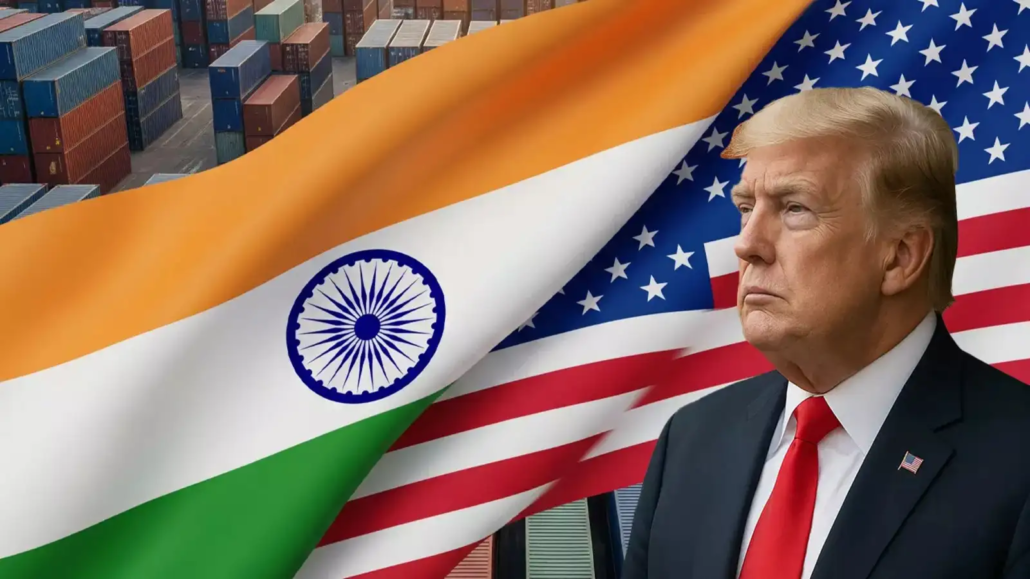
There has been a cataclysmic outpouring of both disappointment and anger across the world, and more recently in India, with President Trump’s aggressive use of tariffs as a repressive tool to preserve the hegemony and dominance of the United States over world trade and commerce, by fair means or foul.
In India, news and opinion outlets as well as the blogosphere at large over the last week, have been dominated by the breakdown of the supposedly ‘carefully nurtured’ relationship between the United States and India. There is the usual handwringing by those who would foresee a great future of geopolitical, military, and economic cooperation between the United States and India on several fronts, including their shared mutual interests in containing China.
Conversely, the explosion of disappointment and anger from the entire apparatus of government, as well as the blogosphere of opinionators across the board, is palpable. They see the impositions of arbitrary tariffs on India as a great betrayal by the current US President, Donald Trump, and a direct repudiation of the hard-won gains made by several successive US and Indian administrations over the last 25 years.
Much will be written in the coming days in column-inches “a mile high”, on the reasons why (and how) this travesty in international diplomacy and trade came to pass. The innards of the problem should however, have been obvious to India-US watchers keeping track over several universally recognised signs and markers that have traditionally measured the progress and well-being of any nation across the arc of world history.
Put simply, the “US Empire”, like its forerunners — the Greek, Roman and the British Empire — is nearing its demise as a unilateral world power. The desperate attempts of the current US administration are but visible manifestations of a dying empire long bereft of its ability to exercise absolute control over the globe with any consequence, as it did over the last 80 years after WW-II. The world will, in short order, become a multipolar one. India is on track to become the third- and then the second-largest world economy by 2075, and will likely be seen as a threat by the US at some stage along the way. Any cooperation between these two powers needs to recognise this dynamic — a point that is repeatedly made in this paper at several places.
President Trump will leave office one way or another, but the real danger to countries like India is not Trump, but the neo-liberals, the hard core conservatives, the architects of Plan 2025 and their ilk, who clearly understand that unless they can actively shape the construct of the current global geo-political environment to their advantage, America’s day is done, and that the American empire, like the empires before it, will wane irrevocably.
Understanding the real threat lurking under the surface tensions that the US has with India’s long-term interests, and vice versa, is critical. It is one that India’s governing class appears to have finally understood, even if the public at large has not. The new enemy that the US sees is not China alone, but any country that challenges America’s national competitive advantage and hegemony over the ‘knowledge economy’ of the world.
The BRICS group therefore present a clear and present danger to the United States, not because of their increase in GDP or trade, but in how they have seized large sections of the knowledge economy, that was hitherto the preserve of the erstwhile western powers alone. In the last five years alone, the GDP of the BRICS nations has far surpassed the GDP of the G7.
What is more threatening to the US, however, is that key sectors of the knowledge economy ranging from manufacturing, high-technology products/services, pharmaceuticals and even advanced rocketry and aerospace engineering have seen exponential growth within the BRICS nations, understandably giving both the US and the other Western economies serious pause. China and now India, more than any of the other BRICS, are at the helm of this disruptive change in the traditional dynamics of power across the globe. Any expansion of the BRICS nations will represent a clear danger to the ability of the US to influence world affairs
The ‘Thucydides’ and ‘Kindleberger’ Traps
Graham Allison (2015), in a comprehensive study of the writings of the Greek historian Thucydides on the Peloponnesian war between Athens and Sparta in 431 BC described what he termed as the ‘Thucydides Trap’. It was based on the analytical inference by Thucydides, that War between Athens and Sparta was inevitable because Sparta, the ruling power at that time, feared the rise and challenge to its authority by Athens. Athens rise, through a series of innovations in a number of disciplines and sectors was a direct and existential threat to Sparta.
Alison’s work has a few detractors no doubt, but it forms a useful armature around which the structural concepts that lead to a war might be defined. If the Thucydides Trap could apply to a possible conflagration between the US and China, one could argue that over time, the Thucydides trap could just as easily be applied to the conflicting ambitions of China and India, as the Indians begin to flex their strengths in the IOR or the Greater Asia Region (GAR). An ascendant China could just as easily see India as a rising threat to its power and hegemony.
In fact, Allison did not argue that war was inevitable, but rather, it would additionally take an external event that could trigger a conflict. Most strategists accordingly recognise the inherent danger of falling into the ‘Kindleberger Trap’ first described by Charles Kindleberger who argued that it was the failure of the existing world power in the 1930s (Great Britain) or even its challengers (the US or Germany) to provide ‘Global Public Goods’ or GPGs, that ultimately led to the collapse of the global economy, the great depression in the 1920s, genocide, pogroms, famine and eventually world war. He recognised the need for a world power to enforce the public good as a critical ingredient in the framework for any kind of world peace.
Kindleberger essentially argued that smaller countries have little incentive to pay for these GPGs, preferring to ‘free ride’ rather than taking on the responsibility themselves. Fast forward to today, many of the major global benefits and public goods are once again at great risk as the current US President does not appear to understand, or connect, the strategic ramifications of power, with the responsibility it comes with. It is also a lesson for China and India who would seek to replace the US at the top of the table of nations in the years to come.
To avoid the Kindleberger Trap an authority (usually a global power(s)) needs to enforce the Global Order in ways where the response to global risks like pandemics, climate change, world trade treaties, arms proliferation treaties and even the full faith and credit of the United Nations as a means of ensuring peace, are not compromised. The failure in the case of Ukraine voluntarily surrendering its nuclear weapons after being provided with security assurances by Russia, the UK and the US in the “Budapest Memorandum” demonstrates this failure.
The Economics of Geography (EoG)
There has been a rapid and arguably, a tectonic shift, away from the global power and reach of the United States in recent years. Even more surprising however, has been the very speed at which the dynamics of global power have begun to leach away from almost all traditional western powers of yesteryear in favour of China for the most part, but more recently in favour of the BRIC countries, and towards India in particular.
The underlying cause has been the fundamental shifts in power dynamics across the globe in the last few decades that were never quite controlled or envisaged by the Western powers. This upending of the world order was driven in part by a “convergence marketplace” of information, technology and its conversion into real time knowledge-sharing at mind-numbing speeds, across a free Internet, acting as an unregulated information highway. It was followed in short order by the rapid deregulation of even hitherto protected industries that in turn, led to ‘globalisation’ and the creation of giant conglomerates producing products and services, across international and even ownership boundaries to earn super-profits and economic rents.
Ergo, the real problem is not about bilateral tariffs or trade (a fact that the current US president and his compliant administration do not seem to get). When used intelligently and rationally, tariffs, at least in times past, were a smart way of addressing the unemployment created by free trade, with disadvantaged economies that lacked the capacity or expertise to compete in free markets. The Great Global Supply chains (GSCs)of the world changed all that. It is this aspect of global trade that is not quite understood by the world, and is elaborated in this paper.
To understand India’s place in this global give-and-take, it is important to understand not just the underlying dynamics of the geo-political and economic heft that makes winners and losers in many of these international trade and commercial transactions, but the ‘Economics of Geography’ in this 21st century that drives this seemingly unstoppable engine of global growth and wealth creation (or destruction as the case may be).
The EoG concept is based on the ‘spatial advantages of labour’ and/or the geographic ‘spheres of specialisations’ that exist around the globe, driven in part by the Western powers who orchestrated major disruptions through deregulation, globalisation and the revolution in information-technology and knowledge-sharing, at the beginning of this century. It effectively divided the world to their advantage into the low-cost production economies in the regions of the ‘Global South’, and high value knowledge-economies in the ‘Global North’.
The Upstream Downstream Economic Divide
The low cost ‘Production Economies’ were the developing economies at the time, namely China, Vietnam, Bangladesh (even India) located upstream, where products were produced with cheap labour readily available. In this avatar of the EOG, the western powers saw themselves as ‘knowledge-economies’ downstream where these products were designed and paid for by high value customers, and where a lion’s share of the value was captured.
There was a rapid understanding between all parties upstream and downstream, that each would manipulate the EOG and the special advantages of low-cost labour, or highly specialised expertise by geography, to their mutual advantage. Traditional rivalries between nations rapidly gave way to a new way of doing business called ’Co-opetition’ — a word originally coined by Noorda (1992) and later used by Brandenberg et al. (2021), to describe the ability of any entity to both ‘cooperate and compete’ at the same time, usually in different regions.
The concept took hold rapidly with governments as well. The US and China make a good example. Their relationship until recently has been based on being sometimes trusting, sometimes distrusting, sometimes cooperating, and sometimes competing, particularly in how they trade. They found ways of balancing out the clear conflicts between their global ambitions and between the geopolitical, economic, or military levers of power wielded by each of them.
Manipulating the Economics of Geography rapidly became a win-win for all parties. There were clear benefits for both sides. The low wage low GDP countries in Asia used their spatial advantages of cheap labour to build products and services at the lowest possible cost, creating enormous profits for the great big global behemoths that owned them. Governments at both ends of the divide profited enormously as well.
The greatest benefits accrued from the concept of being Lean (upstream) and Agile (downstream), in turn creating the Global Supply Chains (GSCs) of the world, which became sleek and streamlined. Globalisation coupled with the march of technology and information sharing, allowed them to super-specialise as Contract Manufacturers, Original Equipment or Design or Brand Manufacturers, or as Value Added Resellers (VARs). The GSCs evolved with techniques like delay-manufacturing and delay assembly. Traditional Gateway ports and Freight Hubs became ‘Eco-Centres’ of value-added facilities and logistics, in turn converting the traditional logistics HUB from a physical location into a commercial decision. Instead of companies competing, entire GSCs now competed with each other.
Digital factories using the fourth industrial revolution (4IR) began to appear upstream, connecting the production shop floor to the far ends of the GSCs using advanced sensors, Big Data, AI and Machine Learning, Industrial Internet of Things (IIOT) devices and edge computing to streamline manufacturing upstream. More recently, block chains have begun to be used to share secure detailed information amongst GSC members end to end. It is this seamless knowledge-sharing that right up to the advent of tariffs, has kept the GSCs lean upstream, yet enabling them to ramp up supply to match demand downstream seamlessly.
If this avatar of the great GSCs had been allowed to continue as envisaged by the US and the Western powers, low wage workers in Asian countries would have continued to provide cheap labour, and cheap products, creating super profits for these global conglomerates that straddled these GSCs across international boundaries, whilst additionally providing a windfall for their parent governments.
The Fundamental Disruptions to the Status Quo
Four fundamental powers shifts took place that would profoundly alter the balance of power between these upstream and downstream economies. Each of these shifts would augur poorly for the West with harsh consequences that were never envisaged by them.
The First Consequential Disruption – The Creation of Scale and Scope Economies
The first disruption that upended this equilibrium was that China used large scale, economies of scale and scope, combined with massive investments in capital, to become the de-facto manufacturing economy of the world. They soon began to rival Japan and Korea in manufacturing complexity, and quality, at costs that were significantly lower than anything seen previously. They created a strangled hold on major sectors of the world markets literally displacing workers in almost all manufacturing sectors, in turn devastating low-end manufacturing in the west from which they are yet to recover.
Almost immediately, low-cost manufacturing across the board in the west was immediately offshored to China and the other production economies and replaced by robotic factories with little use for traditional factory labour. Little was done to re-skill many of these low-end workers in the Western economies, especially in the US, whose workforce languished at minimum wage for decades. It is the unhappiness prevalent in this cohort that support Trump’s tariffs, which are a rather ill-conceived attempt to ‘onshore’ jobs back to the US, even if these jobs will never compete profitably against the Asian production economies. Not surprisingly it is this cohort that falls prey to many venal politicians who use their naivety to gain access to power.
The Second Consequential Disruption – Strategic Value Chain Invasion
The second disruption came when these supposedly ‘low cost, lean manufacturing economies began to super-specialize. Using economies of scale and scope they began to cluster these high-end specialisations into geographic zones of expertise. Taiwan became the world’s largest provider of high-end electronic chips across all industry sectors, India became a powerhouse in software engineering, Korea and Japan began to specialize in displays, analytics and digital manufacturing. More recently the race to build the next big-data, AI projects and quantum computing is underway, and will likely appear outside the US and the West.
Delay Manufacturing which was originally designed to enhance supply chain agility allowed these production economies to invest in research and development and move forward and invade the value chains nearer the customer, creating a conflict at the supply-chain value chain boundary, where information and knowledge was shared. In the process of which, many of these supposedly low-end production economies themselves became knowledge economies with a high-tech production grunt, far in excess of their western counterparts.
The US and its Western counterparts see these value chain invasions as an existential threat to their dominance of the knowledge economy; more so because these countries (China and India in particular), are able to produce these high-tech products at a lower cost and far better quality than their counterparts in the US and the West. India sent a long-range rocket to Mars and later to the Moon at a fraction of the price it cost NASA. China has cornered the world’s marketplaces for EVs and batteries, Taiwan has cornered the market for high-end chips.
These low-cost providers to Western companies, have reinvented themselves to now become alternative providers to the world’s marketplaces. The US and Europe have discovered to their chagrin that the loyalty of the CEOs of their own global companies is to their bottom line and not to their home country. Not surprisingly they happily buy products and services from India, China, Korea or Taiwan instead of the US. Trump’s desperation in trying to enforce tariffs is a rather ham-handed way of addressing a problem for which the US clearly has no solution.
The Third Consequential Disruption — the Dollar and the US Bond Market
Many of these new knowledge economies have since begun to challenge the supremacy of the US dollar as the international currency for trade. China has already ditched the US dollar as have many other countries in Africa and Asia, particularly in respect of China’s Belt and Road Initiative (BRI) infrastructure expansion. The BRICs countries have followed suit and are reducing their dependency on the US dollar. There is a similar downward trend with the sale and purchase of US bonds a significant part of which are financed through their sale and purchase to these very same production economies in the main.
US debt has already reached astronomical proportions, especially in the last 15 years. Washington DC is finding it harder to get many of these countries across the globe to buy their bonds due to the increased risk that are now associated with high debt. While the impact is slow, and often imperceptible, there has nevertheless been a steady leaching in the value of these bonds as interest rates demanded by these international buyers began to climb. Many traditional buyers like China, Japan, Canada have begun to move away from repurchasing US bonds.
The fall in usage of the US dollar as the default currency for world trade and the increase in the perceived risk of their external Bond Market, are both bellwether markers which individually, or together, do not augur well for the US economy moving forward. They will be an existential threat to the full faith and credit of the US economy and will not be well received.
The Fourth Consequential Disruption – The Impact of Social Media
The advent of unregulated and unfettered social media platforms and services, which have harnessed the social interactions, and even the aspirations of entire national and international subscriber-populations, into ‘willing products’ that can be monetized, should be recognised as a clear and present danger to the democratic ideal. Social media today uses complex algorithms, to gather into protected silos large cohorts of likeminded population groups often running into the tens of millions, into which they allow both information (and even misinformation) to be drip-fed by several influencing actors pursuing their own agendas, or to channelise the way people think towards a desired direction.
For the people in their protected silos with pre-ordained belief systems, having likeminded believers in their silos, constantly agreeing with them, makes their belief systems into self-fulfilling prophecies. The possibility of these algorithms being enabled and even empowered by the recent advances in Artificial Intelligence (AI) exacerbates how humans behave and defy any prediction. People often act against their governments, or even against their own interests!
This is particularly true for democratic countries where power lies at the ballot box and where social media silos can upend the logic and predictability of an election with nihilistic abandon. Unsurprisingly, venal politicians tend to play to their base, often acting against the interests of their country or government. This might explain, in some small way, the sudden breakdown in the US- India relationship. There is no other rationale that makes a modicum of sense as to why the US-India relationship is in the mess that it is currently in.
A New World Order Emerging from the Global South
Until the COVID -19 pandemic, almost all macro-economic markers of growth, by any measure, had all but forecasted the almost foregone conclusion, that China would become the largest economy in the world by the middle of the 21st century. These forecasts have since had to be revised. Rising debt, an ageing population as a direct result of China’s misguided one-child policy for many years, the ongoing property crisis with stranded assets across China, will likely delay these forecasts to nearer 2080.
Nevertheless, either way, China will remain a global powerhouse in the ensuing years. Statista (2024) which compiles reports of global economic markers worldwide, currently lists 12 Chinese corporations amongst the top one hundred of the world’s largest global corporations. Fortune Global 500 counts as many as 128 Chinese companies in its list of 500 corporations. Chinese companies like Huawei, Alibaba or Xiaomi have become behemoths with vast global footprints.
Conversely, India’s balance sheet of power and influence feature some interesting (and at times completely baffling) sets of strategic assets and liabilities, which have often puzzled western strategists. In recent years it has shrugged off much of this deadweight. The current Modi administration is undoubtedly one of the most business-friendly administrations in the world. There are clear markers that India is in the process of reinventing itself into a new geo-political, economic and military powerhouse in its own right.
Several India watchers, including Forbes (2025) and India Briefing (2024), recognise India’s long-term investments in the high-tech sector, its policy pivots towards the specialised knowledge sector and the ability of its private sector to outperform international competition in industries with high entry barriers worldwide. These include ‘difficult to emulate’ industries like pharmaceuticals, advanced software engineering, software value-added services, E-commerce, Mobile and Mobile based value adds, ‘Electronics System Design and Manufacturing’ (ESDM) biochemistry, pharmacology, nuclear physics and advanced rocketry.
Using the same economic markers by the World Bank (2025), India is expected to be the third largest economy in the world as early as 2030 and will likely equal or surpass the GDP of the United States by 2075. The Chinese economy during this period will likely face headwinds as the impact of its ageing population is felt over the next 50 years. Conversely India with a median population age of 29 years and its investment in the knowledge economy will likely drive high growth projections for some time. As a case in point, it would not be lost on China and the world, that almost all the CEO’s of the Giant-Tech companies worldwide (or even the deep lower tier ranks of their senior managers), are all members of the Indian diaspora.
This does not suggest that they will act in India’s interest. What it does suggest, however, is that India has managed to create and sustain a model of knowledge dominance in the technology sector and associated industries, due to the sheer volume of trained engineers and scientists that are churned out by the Indian education system each year. Put together year upon year, they give India a massive competitive advantage that is difficult to either replicate or emulate easily. Eventually, if the numbers are large enough, they will change the rules of the game in India’s favour.
It is this ability to leverage its size and expertise to capture an extraordinarily large share of the ‘knowledge economy’ that makes India a powerful player across the board. If India is able to streamline and efficiently cascade its bureaucracy and governance systems, it can exploit vast economies of scale and scope across its entire geo-political and economic macro-environment, to join a rarified top tier oligopoly of a few dominant nation States that straddle the IOR, the Indo-Pacific, and eventually, the globe.
This is the reason why the US and India, by their very make-up, cannot be anything more than a strategic alliance of convenience. It is time India recognises that merely having a good relationship between its leaders does not necessarily translate into foreign policy, although it does help when both leaders are rational in their dealings — of which Trump is certainly not.
More appropriately, the entire apparatus of the government and industry have to be in synch for any such alliance to work. There will always be naysayers, making any strategic relationship between these two competing nations a huge ask at any given time. Each step forward often results in a step backwards, as the different cohorts in government and industry address the objections of key naysaying constituencies before trust is developed between both parties.
Trump’s reason for slapping tariffs on India for buying Russian oil needs to be viewed through this lens. India is not the only nation to buy oil and gas from Russia. CREA (2025) reports that China, Turkey, Brazil, South Korea and even members of the EU and the G7 continue to buy Russian Oil and gas despite sanctions. None of them have been penalised as severely.
The more likely reason for this impasse, is that India has been rapidly re-architecturing the entire construct of its national competitive advantage in key sectors of the knowledge economy, that until now were the preserve of the United States. Not surprisingly the Trump administration would likely have been pressured (from within), to put the brakes on any future economic cooperation until the impact of India’s investments in both expertise and coin are understood, and actions taken to mitigate them from the US end. Conversely if this impasse is another irrational outburst by an unpredictable administration, India needs to be transactional in its relationship. Sooner or later, the possibility of a breakdown always remains.
The Way-ahead for India
The US views its relationships with the world at large through a ‘longitudinal’ or long-term lens over its friends and foes alike. It is this lens that should instruct India on how it needs to deal with the US, be it be in the bilateral trade deals with or without tariffs, or the QUAD grouping. As a case in point the current ‘CHINA PLUS ONE’ (CHINA +1) strategy being employed by the large US companies to mitigate their global supply chain risks has been touted as a boon to India. Apple has already begun developing alternate manufacturing facilities in India. There is an expectation that others will follow.
These are heady times with several conflicting pathways each representing risks that range across the gamut of Rumsfeld’s “‘Known-Knowns” to the “Unknown-Unknowns” and are where the range of likely problems and their solutions, too, lie. There are critical markers that India needs to achieve before it can signal that it is a reliable, worthy alternate to China’s ‘nous’ as the manufacturing economy of the world, which is no easy task. The current Indian administration appears open to shouldering risks and even uncertainties, that previous administrations and particularly its bureaucrats have shied away from. This is an encouraging sign.
A few critical changes in its political, economic, social, technological, legal and environmental (PESTLE) approach in dealing with the macro-environment at large are already underway. There is clear recognition by both, government and industry in India, that this is a critical moment in India’s history, and that they cannot be found wanting when the moment comes upon them. This review accordingly recommends at least four critical shifts in both intellectual and investment capital that India needs to make, to stimulate high growth and national wealth.
The Global Supply Chain (GSC)Approach to Product-Service Development
Apple products are high value products that are both lean upstream and agile downstream nearer the customer. If India is to step up and become the ‘China + 1’ preferred supplier of high-tech products to the US and Western Europe, it must restructure the entire construct of its global supply chains towards a constant ‘cadence and rhythm’, which requires a change in the culture in both their design and delivery. These include:
- An end-to-end solution that melds the shipping corridors of its maritime zones with its hinterland transportation corridors, to provide seamless supply lines that are both lean and agile. Whilst Indian ports like Mundra have become ‘gateway ports’ that are models in their own right, the hinterland corridors that connect these ports have not yet been streamlined to the rhythm and cadence of a typical GSC such as the ‘Blue Banana’ and the ‘Motorways of the Sea’ in Europe, Walmart’s ‘Pendulum Services’ with cross docks, or Amazon’s factory floor to the customer door using Fulfilment Centres (FFCs) and Delivery Service Providers (DSPs), all of which are examples of the types of GSCs that are needed.
- The concept of the GSC Eco-Centre as a commercial hub rather than a physical location needs to lodge itself in the minds of the main producers, logistics providers, and the bureaucracy, and enable each of them to act in tandem. Efficiencies are created and risks mitigated when these the hubs are not protected, but rather, made to compete for business. Hubs must be commercial decisions rather than physical locations.
- Digital factories with 4th Industrial Revolution (4IR), Block Chain communication links between the Gateway Ports and Logistics Eco-Centres, need to drive information and knowledge all along the supply chain, end to end. Much of this seems difficult to comprehend. Yet almost all these high-tech solutions have between developed for the most part, by IIT trained engineers from the Indian diaspora.
- The Global Lighthouse Network (GLN) initiative by the World Economic Forum (WEF) to recognise and celebrate manufacturing excellence in 4IR has identified 189 companies worldwide at the leading edge of manufacturing and digital technology. The WEF (2025) has identified 16 Indian companies as Global Lighthouses. Similarly, WEF (2025) lists ten Indian pioneering companies as global leaders in their fields. These include ‘CynLr’ which is revolutionising industrial automation and robotics, and Freight Tiger providing real time visibility in logistics.
- The technical nous to upgrade to a front end GSC in the hinterland should not be difficult. The real difficulty is in the management of its bureaucracy.
A Need to Shift from “Incremental’ To ‘Radical’ Innovation at the Cutting Edge.
It has been barely ten years since India launched its Mangalyaan mission to Mars and a mere two years since it landed a Rover on the dark side of the moon at a fraction of the price of similar missions by NASA. Likewise, by launching Production Linked Incentive (PLI) schemes India has, in many cases, combined the strengths of its private and public sector to successfully launch a phalanx of high-tech projects, to boost domestic manufacturing across the board.
These include high-end assets ranging from advanced medical devices, EV solutions and mobile components to ballistic missiles, stealth warships, space technology and rocketry. The Department for the Promotion of Industry and Internal Trade (DPIIT-2025) lists India as the third largest ‘’startup-ecosystem’ in the world, with nearly 159,000 startups as of January 2025.
Most of these innovations are directed towards leveraging technology to create products and services to address local needs. Almost all of these examples demonstrate India’s ability to achieve extraordinary efficiencies in delivering high end solutions at a fraction of the cost. This ability demonstrates an absolute mastery of ‘Mee-Too’ engineering, rather than in high-risk blue-sky ventures. More recently, the landscape has begun to change as a few of these start-ups have made it to the WEF (2025) list of the top 100 global technology pioneers. These include AGNIKUL for rocketry, CynLr which is revolutionising factory automation, and Digantara a spaced traffic management platform, to name just a few.
Investing in blue sky high-risk ventures that have no antecedents has not attracted as much attention, although the marketplace has begun to change. There is a growing appetite for risk amongst newer generation Indians, especially in the high-tech sector. Start-ups have begun to appear in emerging technology at high risk which would not have happened earlier. The risk averse nature of the Indian managers and bureaucracy, however, persists, as a fear of failure especially at the working level of most projects, remains a stumbling block.
The Indian government clearly recognises these limitations. The current government has already signalled an appetite for higher risk with the unveiling of the National Quantum Mission (NQM 2023) to build a robust Quantum technology eco-system in India, even as the first Quantum computers are as yet in research labs. While it might not be true-blue-sky as yet, it signifies a jump start in investing at a time when India might actually develop the first applications for a technology that is as yet unready for widespread practical application.
Cascading the Indian Bureaucracy – Delegating Decision-Making to the Coalface.
The dominant levers of power exercised by any nation State that have driven State-sanctioned responses to any perceived threats, both foreign and domestic, have always coalesced around a geo-political response, a socio-economic response and a military response, often enabled by information and technology. Each of these strategic levers accordingly place equally compelling demands on the purse of a nation State.
There is a symbiotic relationship between the State and its ability to raise sufficient resources organically from within the State, or externally from its allies and supporters. Each of these strategic levers exist in an ‘administrative-bureaucratic bubble’ or a fourth dimension, which is essentially charged with identifying and collating resources to support each of the dimensional responses of the state. Since resources are rarely enough, the bureaucratic dimension tends to dwarf the imperatives of the State. The bureaucracy then administers a zero-sum-game where trade-offs and compromises have to be made, and where failure is rarely tolerated.
There has always been a perception that India runs arguably the most paralytic and stifling bureaucracy in the world. And yet the IAS attracts the sharpest minds in the country, and which, through competitive examinations, selects the best and brightest. The real solution, therefore, lies in the need for India to change its mindset, especially within its administrative class, and in how it executes policy at the coal face of day-to-day operations.
The fundamental problem is not one of efficiency but of trust. India’s administrative services have not been able to cascade decision making down to the actual coalface, where the rubber meets the road. Whilst the fear of corruption entering the process of administration is often cited as the reason for managerial oversight, the real reason is a paternalistic view that staff at the coalface cannot be entrusted to make real time decision-making without supervision.
The result is an arcane, overcomplicated system of procedural hurdles. Attempts to speed up the process usually focus on the use of technology rather that in decision making. At senior managerial levels, the IAS runs a super-fast decision process. At the level of the clerk or the customs inspector, however, the pace is glacial. The world over, administrative reforms have focused on trust and delegation to make ‘decision making on the spot’ in the first instance, rather than on using technology to speed up an arcane decision process.
The real problem with India’s bureaucracy is that front-end thinking does not easily cascade easily down to the front line and the coal face, where many of these initiatives need to be executed on the ground. This is a critical requirement that needs to be addressed in any ‘’CHINA + 1’’ strategy that India wishes to be a part of.
Concluding Remarks
The Resource-Driven view of the ‘US–INDIA’ Relationship: Moving Forward
The United States is currently mired in what appears to be a series of self-inflicted wounds that have created a deep and widening schism between the right and left leaning segments of its population. Each sees the other as an existential threat. The internal and external policies of the US are dictated not just by which end of the spectrum is in power, but which personality dominates a particular end of the spectrum. This is not an economically sustainable construct and is, therefore, one that will rapidly come to a conclusion one way or the other.
President Trump represents an extreme example of this political quagmire in which the US finds itself. He is not a professional politician or statesman. His worldview is based on the hurly-burly of the real estate marketplace of yesteryears, where the rules of naked competition dominated, and where there were no win-wins, only winners and losers. Nevertheless, countries like India, which have to deal with the US, need to understand that behind this administration are serious players, who do understand the gravitas of the moment. The US may be on the back foot, but it still owns the greatest economy and largest military in history.
If India and the BRICS are to survive and flourish, they need to take the long-term view of their dealings with the US. There are obviously many strategic imperatives that India might pursue across its geopolitical and PESTLE environment. This paper has focused upon the elements of trade that are intrinsic to the longevity of the Global Supply Chains of the world. The GSCs have, for the last 20 odd years, delivered both trade and prosperity across the globe. Whilst there may be some conniptions and value-chain conflicts between the various actors, or even the various nations operating on the GSC, there is recognition that it is a system that has worked to the advantage of trade across the globe.
Punitive tariffs destroy the very construct of the GSC, which are based on their ability to be lean upstream and agile downstream. Tariffs that existed were minimal, and standardised in ways, whereby their presence did not affect the price, or quality, of the product service offerings. In fact, any increases in tariffs were carefully planned, as the GSCs were fiercely competitive and tended to operate in countries where the tariffs were lowest.
The Indian government is right to stand up to the US against the arbitrary and punitive methodology it has used to impose tariffs, that appear to depend on the mood of the current US President and his administration, on a given day. However, there is a hidden warning and a harbinger of what is to come, post the Trump administration. Of all BRICS countries, India in particular, shows no signs of slowing down its growth progression. It is India’s invasion of the knowledge-economy that seriously threatens the United States hegemony. This will not go unanswered. Whilst the current threat of Tariffs might well end-up as a storm in a teacup that will likely die down to a manageable level, there is no doubt that a more studied, perhaps even more lethal response will arrive with the next US administration —whichever party is in power.
After many false starts, India has thrown down a gauntlet to the world. It must expect and accordingly prepare for a multi-layered response.
******
About the Author
Allan Rodrigues retired from the Indian navy in 1994. He is the ‘Sword of Honour’ of his course and ‘Lentaigne’ medal winner at DSSC Wellington. His career includes the command of IN Ships Nipat, Himgiri and Subhadra. He was cleared promotion to Captain but chose to leave and join industry, eventually moving overseas to New Zealand. He has held senior management and consulting positions with the Hinduja Group, KPMG (NZ), TVNZ and as the head of the largest MBA in New Zealand. He has been a company director in Australia and New Zealand and an industry-based guest lecturer at the master’s degree level in Australia and New Zealand. He is currently the MD of a management consulting firm in New Zealand. His qualifications include an MSC (Def Studies) and an MBA (Elective Finance) from Henley Management College, Oxfordshire, Henley on Thames, UK.
Endnotes:
- Adhia, N. (2015). “The history of economic development in India since independence ” Education about Asia Winter 2015 Volume 20(3): 18-.
- Allison, G. (2017). Destined for War. CanAmerica and China escape the Thucydides trap. London. U.K., Scribe Publications
- Bank, W. (2023) The World Bank China. Overview World Bank
- Brandenberg, A., & Nalebuff, B. (2021). “The Rules of Coopetition ” Harvard Business Review (January-February 2021).
- Brooks, S. G., Ikenberry, G.J., & Wohlforth, W.C. (2012) Don’t Come Home, America: The Case against Retrenchment. International Security 37, 7-51
- Budjeryn, M., & Bunn, M. (2020). Budapest memorandum at 25. Between Past and Future Budapest Memorandum 25 Harvard Kennedy School Belfer centre for science and internationalAffairs
- Butler, C. (2023) The G20 lives on, but mistrust between the West and China hampers progress Journal of Conflict Solutions. 52 (3): 401–425.
- Corbett, J. S. (1988). Some Principles of Maritime Strategy. Classics of Sea power series., Naval Institute Press. Annapolis. MD.
- DeCarlo, S. (2023). Fortune Global 500 Fortune 40 Fulton Street New York. USA, Fortune Media
- Dickson, B. (2003). Red capitalism in China: The party, private entrepreneurs, and prospects for political change. Cambridge U.K., Cambridge university Press
- Dobratz, B., Wladner, L., Buzzell, T.L. (2011). Power, Politics, and Society: An Introduction to Political Sociology. London, U.K., Pearson.
- Garnaut, R., Song, L., & Fang, C. (2018). China’s 40 years of Reform and Development Australian National University Press
- Harvey, D. (2017). Marx, Capital and the Madness of Economic Reason. London, Profile Books
- Hendersen, B. (1976:2012) The Rule of Three and Four BCG Classic
- Jones, L. (2020). Beyond China Inc. Understanding Chinese Companies State of Power 2020Amsterdam, Netherlands Transnational Institute
- Kaplan, R. D. (2012). The Revenge of Geography What the Map Tells Us About Coming Conflicts and the BattleAgainst Fate, Random House Publishing Group.
- Kay, J. (1993). Foundations of corporate success: How business strategies add value Oxford, U.K., Oxford University Press.
- Katinas. P. (2025). CREA. Centre for https://energyandcleanair.org/june-2025-monthly-analysis-of-russian-fossil-fuel-exports-and-sanctions/
- Krogerus, M., Tschappeler, R. (2023). The decision book: Fifty models for strategic thinking., W.W. Norton & company
- Lall, S. (2002). Transnational Corporations and Technology Flows Governing Globalization: Issues and Institutions D. Nayyar. U.K., Oxford University Press 78-107.
- Mazarr, M. J. (2023) Defending Without Dominance: Accelerating the Transition to a New U.S. Defence Strategy. Expert Insights 48
- Myers, L. (2023). G20 Final declaration Washington D.C. USA Library of Congress
- Nishkanen, W. J. (1971, 2017). Bureaucracy and Representative Government.
- Nye, J. S. (2023) Is Globalisation Over? Belfer Centre for Science and InternationalAffairs
- Nye, J. S. (2023). Soft power and great power competition. Shifting sands in the balance of power between the United States and China. Cambridge, MA. USA., Springer Publishing.
- Olinga-Shannon, S., Barbesgaard, M., Vervest, P. (2020). The Belt and Road Initiative (BRI): AnAEPF Framing Paper. Amsterdam, Holland., Asia Europe People’s Forum (AEPF), Transnational Institute: 2-11
- Platias, A. g., Koliopoulos, C. (2017). Thucydides on Strategy. Grand Strategies in the Peloponnesian War and Their Relevance Today. New York Oxford University Press,
- Pollitt, C. (2008) Bureaucracies remember, post-bureaucratic organizations forget? Public Administration. Journal of Public Administration 87, 198-218
- Sen, K. (2023) India’s economic development since independence: An interpretative survey Wider Working Paper 2023/47
- Sneha, P., Sinha, N., Durani, A., Patel,A. Var ghese, A. (2021). Bureaucratic indecision and risk aversion in India IDFC Institute Mumbai India IDFC institute
- Souza, G. C., Bayus, B.L., & Wagner, H.M. (2004). “New-Product Strategy and Industry Clock speed ” Management Science 50(4): 537-549.
- Waldman, T. (2016). War, Clausewitz and the Trinity. Abingdon, OXON, Routledge, Taylor & Francis Group
- Wilmoth, J. (2022). World population prospects 2022 New York United Nations Department of Economic and SocialAffairs. Population Division UN DESA/POP/2021/TR/NO. 3: 1-38.
- World Economic Forum. (2025). https://initiatives.weforum.org/global-lighthouse-network/lighthouses


Leave a Reply
Want to join the discussion?Feel free to contribute!