
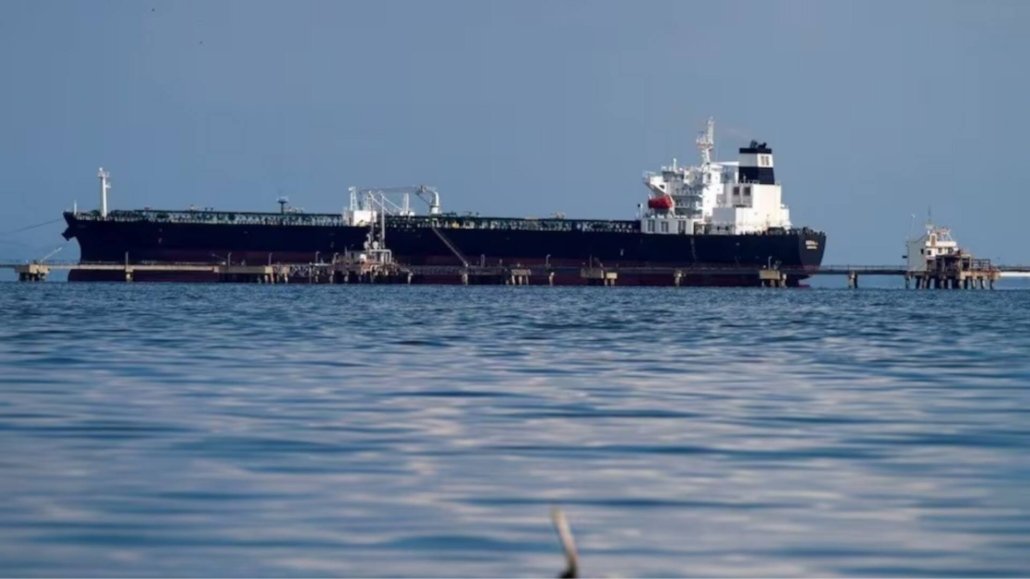
On 05 February 2026, India’s Ministry of Defence, through a Press Information Bureau release, informed of an interception, investigation, and apprehension by the Indian Coast Guard (ICG) of three oil tankers, approximately 100 nautical miles west off Mumbai.[1] The ICG operation was purportedly launched to dismantle an international oil-smuggling racket wherein there was an “illicit” ship-to-ship transfer of oil cargo, thereby “evading substantial duties owed to coastal states, including India”. While not made explicit in the press release, subsequent analysts and newspapers have identified the vessels as the MT Al Jafzia, the MT Asphalt Star, and the MT Stellar Ruby. These vessels had been placed under US sanctions in 2025 and were part of Iran’s ‘dark fleet’ or ‘shadow fleet’ — a term defined by the IMO in Assembly Resolution A. 1192(33) dated 11 December 2023 to involve “ships engaged in illegal operations aimed at circumventing sanctions, evading compliance with safety or environmental regulations, avoiding insurance costs, or engaging in other illegal activities which may include:
- carrying out unsafe operations which do not adhere to international regulations and well-established and strict industry standards and best practices;
- not maintaining adequate liability insurance or other financial security;
- intentionally taking measures to avoid ship detection such as switching off their AIS or LRIT transmissions or concealing the ship’s actual identity when there is no legitimate safety or security concern sufficient to justify such action;”[2]
The dark fleet has recently been a particular concern for States trying to enforce unilateral sanctions against the movement of Russian — and more recently, Venezuelan and Iranian — oil.[3] Oil tankers constitute a significant portion of the ‘dark fleet’ and often undertake ship-to-ship transfers at sea to obfuscate the port of origin of the cargo, and hence bypass sanctions.[4] This action by India is another in a series of such interdictions made by States against vessels on the high seas as seen in Table 1 below.[5]
| Ser | State taking Action | Vessel / Target | Action Taken | Location/Area | Date |
| 1 | Sweden | Jin Hui (oil-tanker, false Syrian-flag)
Caffa (false Guinean flag, cargo ship)
Flora 1 (false-flagged shadow tanker)
Hui Yuan (Panama-flagged bulk carrier) |
Detained, captain arrested for using false documents
Detained; crew arrested on suspicion of document falsification.
Boarded and detained after causing an oil spill off Gotland.
Boarded for dumping Russian coal residue while sailing Ust-Luga → Las Palmas. |
Baltic Sea
Swedish territorial sea.
Off Sweden’s southern coast |
May 2026
Early March 2026
April 2026 |
| 2 | Finland | Eagle S (Cook Islands-flagged tanker)
Fitburg (SVG-flagged cargo ship) |
Instructed into Finnish territorial waters from EEZ; boarded and detained
Instructed into Finnish territorial waters and detained
|
Initiated in Finnish EEZ; boarding executed in Finnish territorial sea (Gulf of Finland).
Finnish territorial sea (after instruction from Finnish EEZ). |
December 2024
2025 |
| 3 | Estonia | 500+ suspected shadow vessels
Kiwala
Jaguar |
Requested proof of P&I insurance
Instructed into Estonian territorial waters from EEZ; detained for sailing without valid flag registration (false Djibouti flag);
Attempted detention; vessel refused instructions to enter territorial waters; Russian fighter jet breached Estonian airspace in response |
Estonian EEZ / territorial sea / Gulf of Finland
Initiated in Estonian EEZ; detention executed in Estonian territorial sea.
Estonian EEZ (vessel refused to enter territorial sea). |
April – May 2025 |
| 5 | Ukraine | Qendil (Oman-flagged shadow tanker)
Dashan (Comoros-flagged shadow tanker) |
Drone strike en route to Port Said.
Drone strike near the Russian port of Novorossiysk. |
Mediterranean / high seas (~2,000 km from Ukraine).
Near Russian territorial sea / port approaches, Black Sea. |
December 2025
December 2025 |
| 7 | United Kingdom | 600+ suspected shadow vessels | Requested proof of insurance | English Channel (mix of UK territorial sea, EEZ and international waters). | By January 2026 |
| 8 | France | Boracay (former Kiwala)
Grinch |
Detained for refusing to provide evidence of claimed Benin flag registration; captain (Chinese national) later convicted in absentia in March 2026.
Detained for sailing without valid flag registration.
|
French maritime zone — Bay of Biscay off French Atlantic coast (territorial sea / EEZ; exact zone not specified in source).
Between Spain and Morocco — Strait of Gibraltar / Alboran Sea (international waters / strait used for international navigation). |
Mid-January 2026 |
| 9 | United States | Bella 1 / Marinera | Boarded and detained after en-route reflagging from false Guyanese to Russian; warrant unsealed on terrorism-linked civil-forfeiture grounds (Hezbollah / IRGC Quds Force). | High seas — between Iceland and the United Kingdom. | January 2026 |
| 10 | India | Al Jafzia, Asphalt Star, Stellar Ruby | Boarding and seizure of oil tankers | Indian EEZ / Arabian Sea approx. 100 nm west of Mumbai. | February 2026 |
| 11 | Belgium (with French air support) | Ethera (false Guinean flag) | Boarding of tanker. | Belgian EEZ (North Sea). | Early March 2026 |
|
Table 1: State Practice against ‘Suspected Shadow Fleet’ Source: Compiled by Author from Elisabeth Braw, “The Shadow Fleet is Undermining the Maritime Order More Brazenly than Ever” |
|||||
The measures taken by States (particularly the EU Member States and the UK) include administrative responses such as disclosure of insurance requirements. Britain, Denmark, Sweden, Poland, Finland, and Estonia, have stated that they will begin checking insurance documents of vessels in the Channel, the Danish straits, the Gulf of Finland and the strait between Sweden and Denmark.[6] This has also been followed-up by the amendment to the EU directive on the ship reporting systems, now requiring ships to disclose their insurance certificates even if they are merely transiting a Mandatory Reporting Area.[7]
These measures seem to have set the groundwork for future boarding and enforcement action. There is, indeed, a demonstrated increase in the willingness of States to undertake enforcement operations at sea. While political objectives may justify the visit, board, search and seizure operations conducted by States, it is imperative that every such operation has a sound legal basis to not only ensure its legitimacy but also to shield the State from any future legal challenge by the foreign flag-State or shipowners. The failed prosecution of the Eagle S case, which was dismissed on the grounds of lack of jurisdiction, has made the Finnish State liable to the tune of EUR 192, 722 in terms of legal costs of defendants and any potential civil claim filed by the shipowners.[8] This article seeks to analyse the legal position of India’s recent enforcement action in the context of international law. At the outset, the article does not discuss the issues of Ukrainian use of force against foreign-flagged vessels suspected to be linked to the Russian-oil trade, as that raises independent questions on the law of armed conflict and law of neutrality which are outside the scope of this article.
Issues of International Law
Assimilated to a Ship without Nationality. The core legal argument on the basis of which such enforcement action is being undertaken is the “assimilation of a ship to [being] without nationality”. As per Article 92(2) of the United Nations Convention on the Law of the Sea, “a ship which sails under the flags of two or more States, using them according to convenience, may not claim any of the nationalities in question with respect to any other State, and may be assimilated to a ship without nationality”. This enables the ‘Right of Visit’ courtesy of Article 110 (d) UNCLOS which enables a warship on the high seas to board a foreign ship if there is reasonable ground for suspecting that the ship is without nationality. This provision is being increasingly utilised by States to act against sanctioned vessels. In May 2026, Sweden detained the Jin Hui and arrested her captain on suspicion of using false documents. Earlier registered in Panama, it was de-registered by the Panamanian authorities after it was placed on an EU-sanctions list, subsequent to which, it began ‘broadcasting’ a Syrian flag. However, the Syrian maritime authority notified the IMO that it had not flagged this particular vessel, thereby making it a ‘false flag’.[9] There is, thus, coordinated action of the registry — either by de-listing sanctioned vessels or through active notification by registries of not having registered sanctioned vessels — which enables the boarding of the vessels in question by the coastal State/intervening State.
In the case of the Indian seizures, the official press release does not indicate whether there was a false flag on any of the vessels and limits itself to stating that “the vessels frequently changed identities to evade detection by maritime law enforcement agencies”. Third party information service providers have indicated that Al Jafzia was broadcasting a Nicaraguan flag but was formerly false flagged in Guyana, Asphalt Star was “falsely broadcasting” a Malian flag, and Stellar Ruby was flagged in Iran. The legality of this operation could, therefore, be contingent upon the factual determination of whether on inspection the ICG discovered that the vessels were indeed Stateless. The construction of Article 110(3) UNCLOS seeks to introduce some caution against boarding as it makes the warship liable for compensation if the suspicions are unfounded and the ship boarded has not committed any act justifying them. In any case Article 110(2) requires that the first line of inquiry that an officer makes is the right of the ship to fly its flag and only if suspicion remains after documents have been checked “further examination” on board the ship may be taken. Therefore, if we were to look at the boarding of Al Jafzia, while a former false flag may give rise to suspicion (and therefore justify the visit) the prosecution may first have to establish that the officers satisfied themselves on reasonable grounds that the Nicaraguan flag was indeed a false flag. If the defence manages to dispute the existence of such an enquiry before the “sustained rummaging of the vessels”, then any subsequent action on board may attract Article 110(3) and be a violation of the freedom of navigation of that vessel.
This line of defence may only be useful for the defence if the vessel indeed had an official Nicaraguan flag. However, another question that arises is whether identity concealment through AIS spoofing can amount to “sailing under the flag of two or more nationalities”.[10] Therefore, if the vessel is properly flagged in for example, the Cook Islands, but is on AIS disclosing a Nicaraguan flag, can this fact go beyond just raising mere suspicion and assimilate the ship to without nationality? At the outset the answer seems to be in the affirmative as the vessel is using these flags according to convenience and any interpretation of “sails under the flags of two or more States” to require that the vessel must be validly registered in both States is unlikely to be accepted. The manner in which AIS and other vessel monitoring systems have developed in modern shipping can probably equate AIS disclosures with ‘flying the flag’ of a State as it demonstrates the nationality of the State under which the vessel is currently sailing.
Re-flagging mid-Voyage. A related issue is that of ‘re-flagging’ mid-voyage. While re-flagging is a common commercial and even operational practice (Tanker Wars), doing so mid-voyage has raised the question of whether this constitutes ‘a real transfer of ownership or change of registry’ (Article 92(1) UNCLOS). This question was discussed in the boarding and arrest of Bella 1/ Marinera which re-flagged to Russia after it escaped an initial attempt at boarding by the US Coast Guard.[11] Russia repeatedly stated — through official channels— that the vessel was, indeed, flying its flag and once the vessel was eventually seized, issued a statement condemning the seizure as a violation. While American scholars argue that ‘hot pursuit’ was still underway, and that the arrest was undertaken pursuant to domestic US terrorism laws which gave the State sweeping powers of arrest and forfeiture,[12] the seizure’s legality under international law is contested.[13]
Refusal by Master of a Vessel to Permit Boarding. There is also the question of the consequences of refusal by the master of the vessel to allow an officer to board the vessel on grounds of refusal by the flag State or the shipowner. The Boracay, a Benin-flagged, EU-sanctioned vessel, was boarded, and the master and two members of the crew were arrested and eventually convicted in absentia on grounds of refusing to comply with orders.[14] The vessel was intercepted more than 50 km (approximately 27 nautical miles) from Saint-Nazaire, and the defence lawyer for the master has made predictable arguments. He argues that the master was awaiting orders from the shipowners to permit the boarding of French authorities and France had no jurisdiction over the vessel as it had the high seas freedom of navigation.[15] A core issue here, therefore, is whether the right of the officer to verify the right of the vessel to fly a flag persists in light of opposition to such boarding by (a) the shipowner and (b) the flag-State itself. It also begs the question: can mere unilateral sanctions be a ground for ‘suspicion’ of Statelessness that enables the right of officers to board the vessel on the pretext of document verification. UNCLOS does not elaborate on these issues. This conviction establishes French State practice of placing a legal obligation with criminal consequences on the foreign master of a foreign vessel merely transiting the French EEZ to prove the vessel’s nationality. There is clearly a reversal of the burden of proof from the intervening State to the master of the vessel on proving nationality once the warship suspects Statelessness. During its voyage towards Russia, the Jaguar, which had been de-listed by both Guinea-Bissau and Gabon after it was sanctioned by the UK, nevertheless refused to cooperate with orders from the Estonian Navy. At this point, Russia mobilised a Russian Air Force fighter jet into Estonian airspace, which has been reported to be when the Estonian Navy decided to escort the vessel outside Estonian EEZ as opposed to boarding it.
From Boarding to Arrest and Seizure. Once boarding is complete, and verification done with respect to the Statelessness of the vessel, on what grounds can the State arrest and seize the vessel? Article 110 is silent on this aspect and limits itself to boarding and inspection. Furthermore, Article 110(d) on vessels without nationality differs from the other ‘crimes’ listed in Article 110 such as piracy, slave trade, and unauthorised broadcasting for which separate provisions exist authorising arrest and seizure.[16] The omission of providing for such powers explicitly for Statelessness may indicate that it is viewed with a lesser degree of ‘criminality’. Consensus on this issue is still developing, and State practice is evolving to plug the jurisprudential gap. Some scholars have argued that Art 110 has been interpreted to authorise ‘universal jurisdiction’ against Stateless vessels while others contend that jurisdiction is limited to ‘ensuring seaworthiness and compliance with relevant international regulations’.[17] The broad evolving view is that the boarding State may choose the scope of its jurisdiction as it wishes. This is important when the State decides to extend its criminal jurisdiction over the vessel, its cargo and crew beyond its territorial sea/contiguous zone limits.
In the Indian seizures of February 2026, a First Information Report (FIR) was filed at the Yellow Gate Police Station in Mumbai against one “Shyam Bahadur Chauhan” in respect of the Asphalt Star, on grounds of AIS spoofing (cheating/forgery), suspicious movement near Pakistan’s territorial sea, illegal distribution of diesel without a valid licence (customs and distribution offences), and failure to produce the vessel’s statutory documents.[18] It invokes the provisions of the Bharatiya Nyaya Sanhita (India’s Penal Code), the provisions of the Customs Act 1962, the Petroleum Act 1934, and the Merchant Shipping Act 1958. Without going into the merits of each of these charges, even the applicability of these provisions in the present factual circumstances in India’s EEZ may be contested. However, if the position is taken that a boarding State can exercise complete jurisdiction over the vessel, then all these provisions would be applicable. It is unclear on what grounds these provisions might apply to the Stellar Ruby, whose flag has not yet been contested. It is unlikely to be accepted that the AIS Spoofing and ship to ship transfers are illegal in India, especially when the vessel has been interdicted outside the contiguous zone and was not bound for India. It is also surprising that the vessels were not charged under any prevention of pollution provisions as those provisions have clear applicability in the EEZ and can be extended to foreign flagged vessels too.
The US State practice in this regard has been made explicit in the US Commander’s Handbook on the Law of Naval Operations which states that since Stateless vessels are not entitled to the protection of any nation, they are subject to the jurisdiction of all nations.[19] The prosecutions in France and Sweden, and evolving State practice increasingly demonstrate this view. The UK[20] and the Netherlands[21] are both deliberating the enactment of law authorising the boarding, seizure and forfeiture of the ‘shadow fleet’.
Conclusion
In conclusion, the sanctity of ‘flag-State’ jurisdiction is under stress with greater State practice developing to enable the undertaking of law enforcement action at sea. While much of the American, European, and British enforcement action is tied to the enforcement of unilateral sanctions, attempts are being made to ground these efforts under prevailing international law and consciously develop favourable State practice in areas where there exist gaps in the law. India must consciously decide her legal position on these emerging issues particularly on what constitutes Statelessness and the extent of jurisdiction that may be exercised over these vessels. India must also streamline her maritime legislative framework with respect to enforcement actions at sea and the grounds for boarding, search, seizure, and forfeiture to prevent liability from any future enforcement action.
********
About the Author:
Mr Soham Agarwal, a Delhi-based lawyer, holds a Bachelor of Law (Honours) degree from the University of Nottingham, UK. He is currently an Associate Fellow with the Public International Maritime Law and Resilience Sustainability and Ocean Resources Cluster of the National Maritime Foundation, New Delhi. While he continues to address issues of relevance to the formulation and execution of public international maritime law (PIML) as in this particular paper, his research is increasingly focused upon issues relevant to resilience, sustainability, ocean resources (including those upon or below the seabed), and ocean governance. He may be contacted at law10.nmf@gmail.com
Endnotes:
[1] Ministry of Defence, Government of India, “Indian Coast Guard Busts International Oil Smuggling Racket through Coordinated Sea-Air Operation”, Press Information Bureau, Release ID 2224805, 07 February 2026. https://www.pib.gov.in/PressReleasePage.aspx?PRID=2224805®=3&lang=2
[2] International Maritime Organization, Resolution A.1192(33), Urging Member States and All Relevant Stakeholders to Promote Actions to Prevent Illegal Operations in the Maritime Sector by the “Dark Fleet” or “Shadow Fleet”, adopted by the Assembly at its 33rd Session on 06 December 2023, A 33/Res.1192. https://wwwcdn.imo.org/localresources/en/KnowledgeCentre/IndexofIMOResolutions/AssemblyDocuments/A.1192(33).pdf. The list has been truncated for the sake of brevity.
[3] Emilio Rodriguez-Diaz, Juan Ignacio Alcaide, and Nieves Endrina, “Shadow Fleets: A Growing Challenge in Global Maritime Commerce,” Applied Sciences 15, No 12 (June 2025): 6424, https://www.mdpi.com/2076-3417/15/12/6424#B1-applsci-15-06424
[4] Rodriguez-Diaz, “Shadow Fleets: A Growing Challenge in Global Maritime Commerce”
[5] Elisabeth Braw, “The Shadow Fleet is Undermining the Maritime Order More Brazenly than Ever”, Atlantic Council, 22 April 2026. https://www.atlanticcouncil.org/in-depth-research-reports/the-shadow-fleet-is-undermining-the-maritime-order-more-brazenly-than-ever/
[6] Andrius Sytas, “Russian ‘Shadow Fleet’ to Be Boarded or Sanctioned if It Refuses to Prove Insurance”, Reuters, 17 December 2024. https://www.reuters.com/world/europe/russian-shadow-fleet-be-boarded-or-sanctioned-if-it-refuses-prove-insurance-2024-12-17/
[7] European Commission, Commission Delegated Directive (EU) 2025/811 of 19 February 2025 amending Annex I to Directive 2002/59/EC of the European Parliament and of the Council as regards information to be notified to ship reporting systems, OJ L 2025/811, 28 April 2025. http://data.europa.eu/eli/dir_del/2025/811/oj
[8] Helsinki District Court, Judgment in Case No R 706/2025/12270 (the Eagle S case), 3 October 2025. https://www.ejiltalk.org/wp-content/uploads/2025/11/Tuomio-asiassa-706-2025-12270-EN.pdf
[9] Windward, “Sweden Seizes Shadow Fleet Tanker Jin Hui: The False Flag Problem is Bigger than One Ship”, Windward Knowledge Base, 07 May 2026. https://windward.ai/knowledge-base/sweden-seizes-shadow-fleet-tanker-jin-hui-the-false-flag-problem-is-bigger-than-one-ship/
[10] Rob McLaughlin and Conor McLaughlin, “Was the Visit and Seizure of the Skipper off the Coast of Venezuela Lawful?”, Just Security, 15 December 2025. https://www.justsecurity.org/127199/seizure-skipper-venezuela-lawful/
[11] Konstantinos Deligiannis Virvos, Vito De Lucia, and Jan Jakub Solski, “Interceptions in the High Seas: From a Question of Legality to a Question of Legal (Re-)Ordering”, The NCLOS Blog, 10 March 2026. https://site.uit.no/nclos/2026/03/10/interceptions-in-the-high-seas-from-a-question-of-legality-to-a-question-of-legal-re-ordering/
[12] Benjamin M Robinson, “What Next? A Follow-on Analysis of US Tanker Seizures”, The Arrest News, Issue 52, April 2026. https://shiparrested.com/wp-content/uploads/2026/04/The-Arrest-News-52.pdf
[13] Ihsan Faruk Kılavuz, “Stretching the Law of the Sea: Statelessness and the Seizure of the Skipper”, TRT World Research Centre, 31 December 2025. https://researchcentre.trtworld.com/publications/analysis/stretching-the-law-of-the-sea-statelessness-and-the-seizure-of-the-skipper/
[14] Clea Caulcutt, “French Military Arrests Crew of Russian Shadow Fleet Vessel Boracay”, Politico EU, 02 October 2025. https://www.politico.eu/article/french-military-arrests-crew-russian-shadow-fleet-vessel-boracay/
[15] Marion Solletty, “Chinese Captain of Shadow Fleet Vessel Sentenced in France amid Shadow Fleet Crackdown”, Politico EU, 30 March 2026. https://www.politico.eu/article/china-captain-shadow-fleet-vessel-sentenced-france-amid-shadow-fleet-crackdown/
[16] R McLaughlin and C McLaughlin, “Skipper Seizure.”
[17] Allyson Bennet, “That Sinking Feeling: Stateless Ships, Universal Jurisdiction, and the Drug Trafficking Vessel Interdiction Act”, Yale Journal of International Law 37 (2012): 433. https://openyls.law.yale.edu/server/api/core/bitstreams/027548f2-fa68-40a3-b25d-6d889571768a/content
[18] Captain Raghu Sharma, “India’s EEZ Tanker Detention: AIS and Legal Exposure”, The DeepDraft, 20 February 2026. https://thedeepdraft.com/2026/02/20/_arrested_at_sea/
[19] Rob McLaughlin, “Authorizations for Maritime Law Enforcement Operations”, International Review of the Red Cross 98, No 2 (2016): 465–490. https://international-review.icrc.org/sites/default/files/irc98_6.pdf
[20] Louis Hayes and Iain Overton, “A Briefing Note for Journalists on Whether the British Military Can Legally Board Sanctioned Vessels off the UK’s Coasts”, AOAV, 31 March 2026. https://aoav.org.uk/2026/a-briefing-note-for-journalists-on-whether-the-british-military-can-legally-board-sanctioned-vessels-off-the-uks-coasts/
[21] Dutch Gov’t Working on Laws against Russian Fleet of Espionage Ships”, NL Times, 31 January 2026. https://nltimes.nl/2026/01/31/dutch-govt-working-laws-russian-fleet-espionage-ships


Leave a Reply
Want to join the discussion?Feel free to contribute!