
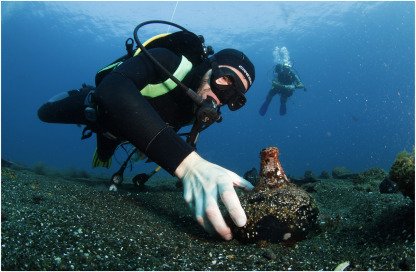
The seas around India are not merely peripheral frontiers; they are repositories of history. Beneath the surface lies an archive of trade, migration, knowledge, and technology that stretches across millennia. India, with its vast coastline of 11,098.81 km,[1] has been a corridor of interaction, binding the kingdoms of India to the Roman world, the Islamic caliphates, the Buddhist circuits of East and Southeast Asia, and the mercantile networks of Africa and Europe. And yet, despite all this depth and antiquity of connection, India’s underwater cultural heritage remains, to this day, insufficiently explored and inadequately safeguarded.[2] While terrestrial monuments are protected under the Ancient Monuments and Archaeological Sites and Remains Act of 1958 (AMASR), submerged sites have received only sporadic, albeit recently-increasing, attention.[3]
This paper argues for the centrality of systematic underwater archaeology to enhance India’s maritime consciousness. Its core objectives are: first, to map and document India’s underwater sites with rigorous, scientifically guided fieldwork; second, to analyse legal and institutional frameworks essential for effective protection of underwater heritage; third, to assess contemporary threats such as climate change and unregulated salvage, and fourth, to advance policy priorities that integrate submerged cultural heritage into national identity, diplomacy, and sustainable development.
The revival of the Archaeological Survey of India’s (ASI’s) Underwater Archaeology Wing (UAW) in 2025[4] – dormant since its establishment in 2001[5] – marks a turning point in these efforts. Field explorations such as those currently underway off the coast of Dwarka, Bet Dwarka, and Poompuhar, employ remote sensing, photogrammetry, and marine sediment analysis, supported by dedicated budget allocations and partnerships with the Indian Navy and other agencies. These advances reflect the urgency of exploring and safeguarding underwater heritage.
Underwater archaeology, therefore, is not an antiquarian pursuit but a vital discipline with cultural, legal, and strategic stakes. While the practice is still establishing its institutional foundations in India, or perhaps precisely because of this, conceptual clarity is essential for formulating effective policy and directing research. The governing international standard, the 2001 UNESCO Convention on the Protection of the Underwater Cultural Heritage, stipulates in Article 2(5): “The preservation in situ of underwater cultural heritage shall be considered as the first option before allowing or engaging in any activities directed at this heritage.[6]” While India has not yet ratified this Convention,[7] the principle it articulates is unambiguous – sites beneath water are cultural sites, not mere commodities to be salvaged or commercialised. International best practice makes clear that responsible engagement with India’s submerged past demands precise and context-sensitive definitions.
In several disciplines taught and practised in India, terminology often remains undifferentiated. Thus, in India, “maritime archaeology,” “marine archaeology,” “nautical archaeology,” and “underwater archaeology” are used interchangeably in both public discourse and several official documents, too, even though each term reflects distinct genealogies, methods, and spheres of significance.[8]
Maritime Archaeology forms the broadest conceptual frame, encompassing all human interaction with water. It traverses physical, economic, and cultural domains – studying coastal settlements, harbour complexes, shipyards, navigation towers, waterfront religious sites, and even the intangible traditions of seafarers. Sites such as Lothal, with its dockyard, or the ancient emporium of Muzris, referenced in Greco-Roman texts, fall within this ambit. Such sites are not exclusively submerged: many remain on land but are shaped by their relationships to the sea or to navigable rivers.
Marine Archaeology narrows the frame to focus primarily on material remains preserved within saltwater environments. Its purview is the investigation of artefacts and structures lost to the sea – submerged ports and cities such as Dwarka or Poompuhar, anchorage sites like Mamallapuram (Mahabalipuram), and the wrecks of ships embedded in reefs. Saltwater presents unique preservation challenges, including bioerosion and corrosion, making scientific protocols for discovery and documentation especially critical.
Nautical Archaeology centres its attention on ships themselves: their construction, operation, and evolution through time. This sub-field reconstructs hull forms, sail technology, joinery methods, and traditions of navigation. Stone anchors, rudders, rigging, and hull remains recovered from sites off the coasts of Gujarat and Tamil Nadu are technical blueprints illuminating the region’s indigenous and cross-cultural seafaring knowledge. Nautical archaeology, by examining technical details and technological transfer, bridges the worlds of engineering and social history.
Underwater Archaeology refers most specifically to the applied practice of excavation, conservation, and interpretation in submerged contexts, whether marine, riverine, or lacustrine. It is a discipline rooted in technical innovation: diving technologies, remotely operated vehicles (ROVs), underwater mapping, 3D photogrammetry, coring, sediment analysis, and conservation chemistry. The ethical stakes are pronounced. All recoveries are conducted against the backdrop of fragile underwater topographies and urgent cultural threats; artefacts destabilise rapidly when removed from their saline context, necessitating specialised conservation and elaborate documentation from the moment of discovery.
Distinguishing clearly between these approaches is not a mere exercise in semantics but an imperative for law, funding, and the development of institutional protocols. A single stone anchor, for example, recovered from the seabed off Gujarat, may be studied under different regimes: as a component of shipbuilding and navigation under nautical archaeology; as a node within a broader palaeo-port context for marine archaeology; and as a subject of technical excavation under underwater archaeology. This taxonomic precision avoids conflating registers and ensures that preservation protocols, academic training, and legal frameworks are suitably tailored. Policymakers and academics alike must guard against blurring these boundaries, for such conceptual clarity underlies the efficient allocation of resources, the definition of conservation goals, and effective governance.
The situation in India is further complicated by the dispersed stewardship of submerged heritage. Different institutions – ranging from the ASI, state departments, the Indian Navy, and the NIO, to local fishing and other coastal communities – all bring divergent perspectives and priorities. Some cases require solely archival or surface-level survey work; others demand hazardous underwater recovery operations involving both scientists and technical divers. Only a harmonised and technically grounded understanding of these conceptual frames will help guide multi-agency response, facilitate international cooperation, and embed best practices.
The argument advanced here is explicit: without deeply ingrained conceptual clarity, underwater archaeology in India is at risk of being left perennially undervalued and underprotected. In a country of such immense maritime diversity, precision in framing submerged heritage is not an academic luxury but an existential necessity. The next sections of this paper will deploy these definitions to analyse and map India’s underwater heritage, examine specific case studies, and elaborate an agenda for reform in law, policy, conservation, and public engagement.
Mapping India’s Underwater Heritage
India’s maritime frontiers preserve a submerged archive as vast as its land-based monuments. Over the past four decades, cumulative surveys conducted by the Archaeological Survey of India (ASI), the National Institute of Oceanography (NIO), and state archaeological departments, have identified and documented more than 200 shipwrecks and submerged structures along the subcontinent’s coast, rivers, and island chains. These finds range from ancient stone anchors and amphorae to warehouse foundations, colonial vessels, and even temple complexes. Precise estimates fluctuate due to the ongoing nature of scientific exploration and the challenges posed by underwater conditions – currents, visibility, technological limitations, and site preservation. Nevertheless, the magnitude and diversity of India’s underwater archaeology landscape are now considered among the most significant in the world. Refer to Map 1 for an overview of documented sites in Indian waters.

Map 1: Documented Underwater Sites of India
The densest concentration of underwater archaeology finds in India lies along the western coast, particularly between Gujarat’s Saurashtra peninsula and the Gulf of Khambhat. This stretch of coastline has yielded Indo-Arab and Roman stone anchors, amphorae, and artefacts clustered amid submerged reef systems, alongside the remains of the legendary city of Dwarka.[9] No other Indian site so vividly demonstrates the interplay of legend and empirical archaeology.
Immortalised in scripture as Krishna’s golden city, Dwarka has long oscillated between mythic imagination and the rigour of marine science. Systematic underwater exploration began in the 1980s under the direction of SR Rao, who recovered monumental stone blocks, anchors, and wharves from depths exceeding ten metres, suggesting an organised settlement with commercial circuits as early as the second millennium BCE.[10] The adjacent site of Bet Dwarka has similarly produced seals, pottery, and copper artefacts, situating it within Indo-Roman trade and indigenous navigation networks.[11]
The revival of the UAW in 2025 has significantly expanded the investigations, employing side-scan sonar, photogrammetry, sediment coring, and environmental monitoring. This campaign also marked a notable social shift: three of the five lead archaeologists were women, signalling a change in what has traditionally been a male-dominated discipline.[12] Dwarka thus stands not only as an archaeological epicentre and site of cultural memory but also as an asset in India’s broader narrative construction within the Indo-Pacific.
Farther south, Goa’s seabed preserves a dense concentration of colonial-era wrecks, particularly at Sunchi Reef, St George’s Reef, and Amee Shoals. Surveys here have revealed Portuguese storage jars, Ming and Qing dynasty porcelain, bronze cannonry, Venetian glass, timber remains, and even elephant tusks, reflecting the composite cargoes of Indo-Portuguese maritime trade between the sixteenth and eighteenth centuries.[13] These assemblages position Goa as a pivotal node in the Indian Ocean world, where Asian, African, and European commodities converged within overlapping circuits of commerce.[14] The excavation environment, however, poses formidable challenges. Strong currents, sudden weather shifts, and poor visibility complicate survey and recovery, while artefacts raised from the seabed are vulnerable to accelerated decay, demanding rapid and sophisticated conservation measures. Goa’s wrecks, in this sense, embody vast potential for research and heritage tourism, provided conservation practices and regulatory frameworks are strengthened.
On the Coromandel coast, the submerged remains of Poompuhar (Kaveripattinam), capital of the early Cholas, exemplify the combined forces of deltaic transformation and maritime ambition. Underwater surveys have uncovered stone foundations of warehouses and wharves now lying beneath the Bay of Bengal,[15] corroborating literary references in the Tamil epic Silappatikaram[16] and historical accounts of voyages to Sumatra and Southeast Asia.[17] These finds align with inscriptions detailing trade routes and naval expeditions, underscoring both the technological capability and strategic orientation of the Cholas toward overseas trade and conquest in the eleventh century CE.
Material evidence is further reinforced by Buddhist sculptures recovered from the deltas of Andhra Pradesh, attesting to the integration of pilgrimage and commerce along the eastern seaboard.[18] At Arikamedu, near Pondicherry, Roman pottery and amphorae first brought to light by Mortimer Wheeler in the 1940s continue to anchor Indo-Roman connections within this broader network.[19] Environmental studies add another dimension, tracing the gradual submergence of deltaic sites such as Poompuhar to shifting coastlines and rising sea levels – processes that persist today under the pressures of climate change and sediment dynamics. Collectively, these sites situate the Coromandel coast firmly within the nexus of Indian Ocean commerce, religion, and cultural exchange.
In the Lakshadweep archipelago, which lies astride major historical sea routes, archival records from the eighteenth and nineteenth centuries document frequent ship losses caused by monsoon storms and reef hazards, giving the region one of the highest densities of recorded wrecks in India.[20] The excavation by joint teams of the ASI and the Indian Navy, of the Princess Royal, a British vessel wrecked in 1810, marked a milestone in Indian underwater archaeology.[21] The recovery of cannons, navigational instruments, ceramics, and personal goods not only added to the historical record but also provided a training ground for developing deep-water excavation methods and conservation protocols. Today, however, Lakshadweep’s heritage faces increasing vulnerability from coral bleaching, sediment dredging, and unregulated tourism. Preserving its wrecks requires policies that integrate environmental management and heritage protection as complementary, rather than competing, objectives.
The Andaman and Nicobar Islands, situated at the crossroads of Bay of Bengal transit corridors, remain a largely untapped frontier for maritime archaeology.[22] Initial surveys have identified British-era wrecks, protohistoric traces, and remains associated with penal transport infrastructure, yet systematic underwater exploration is still in its infancy. The islands embody a layered maritime history that spans indigenous navigation, colonial expansion, and twentieth-century geopolitics. Given their strategic role as forward bases in contemporary security frameworks, advancing underwater archaeology here is not only an academic imperative but also a tool of cultural diplomacy and political assertion. Building comprehensive archives and integrating discoveries into wider policy frameworks would strengthen both cultural memory and
What unites these discrete examples is the realisation that India’s submerged heritage is neither marginal nor monolithic. Each site encodes a different register and faces variable threats: sediment burial, currents, ecological fragility, and legal ambiguity. These examples collectively illustrate why underwater archaeology must be accorded central status in India’s maritime strategy, legal development, institutional architecture, and diplomacy.
Building on this mapping of sites, the next section examines how India’s underwater heritage carries not only cultural value but also strategic and economic stakes that link archaeology to identity, diplomacy, and development.
Cultural, Strategic, and Economic Stakes
India’s submerged heritage is not only an archaeological resource but also a living archive, a cultural marker, and a powerful instrument of diplomacy, development, and national identity. The wrecks, wharves, and temples that lie beneath Indian waters transmit stories that cut across conventional divides: they are at once testaments to ancient trade, evidence of robust technological practice, signposts of spiritual mobility, and nodes within global circuits of commerce, religion, and migration.
The artefacts recovered from India’s seabed upend the pervasive historical tendency to envision India as an insular or predominantly continental civilisation. Finds such as the Roman amphorae of Arikamedu,[23] Chinese porcelain from Goa’s shipwrecks,[24] Buddhist sculptures in the Andhra River deltas,[25] or Indo-Arab stone anchors on the western coast,[26] are not mere curiosities: they are proof of India’s long-standing ocean-facing orientation and cultural pluralism. These finds foreground the centrality of maritime exchanges, repositioning the seas as cultural landscapes where diverse civilisations intersected, competed, and collaborated.
This rebalancing of the narrative has academic, cultural, and political consequences. Emphasising maritime heritage not only revises received history, but also expands the symbolic repertoire available for forging a plural and outward-looking national identity. The restoration of India’s seaborne past serves to enrich school curricula, museum exhibitions, and public discourse – reconfiguring how citizens, policymakers, and the world at large perceive India’s historic and strategic place in Asia and the Indo-Pacific.
In the contemporary Indo-Pacific theatre, history is neither neutral nor politically inconsequential. Stewardship of underwater heritage reinforces India’s credibility as a responsible custodian of shared history and an asset that confers legitimacy, builds trust, and buttresses diplomatic engagement. By promoting collaborative surveys, maritime museum exchanges, exhibitions, and heritage-themed diplomacy, India can leverage what may be termed “narrative capital” – the ability to advance contemporary geopolitical aims by mobilising the credibility inherited from stewardship of shared, tangible history.[27] Project MAUSAM exemplifies this approach. Conceived to recreate ancient maritime routes and reconnect Indian Ocean countries, it embodies a multilayered heritage diplomacy that is equally archaeological and geopolitical.[28] Underwater sites – ports, wrecks, traded goods – provide empirical bedrock for these linkages, anchoring cultural agreements, and forming the basis for multilateral cooperation. In maritime domains where sovereignty is uncertain or contested, robust documentation and stewardship of heritage are powerful supports for strategic and legal claims.
The economic stakes of underwater archaeology are neither hypothetical nor marginal. International models provide empirical validation: heritage tourism, especially dive-tourism grounded in well-managed underwater parks, can transform economies. The Caribbean’s Blue Hole or Italy’s Underwater Archaeological Park at Baiae are instructive precedents, drawing thousands of visitors and involving local communities in guiding, conservation, handicrafts, hospitality, and environmental stewardship. Indian sites offer similar potential – if policies align conservation with controlled access and sustainable development. Experience elsewhere shows that multiplier benefits flow primarily to coastal communities when heritage protection and economic strategy are integrated. For India, with its ambitious SAGARMALA port modernisation programme and burgeoning domestic tourism market, linking underwater heritage with development initiatives could generate enduring value without sacrificing the integrity of sites. Local communities stand to benefit most: as stakeholders, entrepreneurs, stewards, and cultural interpreters.
Underwater archaeology also fosters scientific research and innovation. Analysis of shipwreck woods and metals advances materials science; sediment studies offer invaluable data for modelling sea-level rises and coastal geomorphological change – information that can inform climate adaptation and disaster policy.[29] The sector fosters cross-linkages between the humanities and sciences, ensuring its relevance far beyond the bounds of academic archaeology alone.
None of these stakes can be fully realised if heritage remains fragmented – as isolated artefacts or disconnected research projects. The challenge is integration: bridging the gaps between conservation, tourism, education, foreign policy, and economic development. Only when maritime heritage is embedded into the mainstream of cultural policy, public life, and strategic planning does it come into its own as a true national asset. The next section examines how modern methods of mapping, recording, and creating inventories provide the essential foundation for conservation, governance, and public engagement.
Technology and Documentation
The introduction of modern technology has fundamentally reconfigured the scope and precision of underwater archaeological mapping in India. Side-scan sonar, sub-bottom profiling, and photogrammetry now allow systematic, large-scale documentation of shipwrecks and submerged settlements, overcoming the perennial obstacles posed by visibility, depth, and sediment movement. Geographic Information Systems (GIS) and remote sensing techniques facilitate the integration of archaeological data with coastal geomorphological analysis.[30]
Despite these advances, significant challenges remain. Data on underwater heritage is fragmented, scattered across multiple agencies and institutions. The absence of a unified, accessible National Digital Atlas of Underwater Heritage impedes coherent policy planning and public engagement; without such integration, sites remain effectively invisible to development authorities and vulnerable to neglect or exploitation. The urgency of completing and publicising such an atlas is now universally recognised among policymakers and researchers.
The submerged sites of India are chronologically stratified, stretching continuously from the second millennium BCE through the medieval era and into the colonial period. Each site represents a discrete “time capsule,” preserving technological evidence (ship structures), economic data (cargo, trading goods, currencies), and environmental records (sedimentary processes, climate impacts).[31] Mapping and dating these sites are not merely an academic endeavour – it is the indispensable precursor to conservation and the integration of underwater heritage into public historical consciousness.
The UNESCO 2001 Convention on the Protection of the Underwater Cultural Heritage explicitly mandates that States Parties maintain an inventory of sites and promote their non-intrusive documentation.[32] Although India has not ratified this Convention, its guidelines are recognised as best practice within the domestic research community.
Technology and documentation thus underpin the entire framework of underwater archaeology. Yet, their effectiveness depends on coherent governance. The next section examines the legal and institutional frameworks that must evolve if documentation and conservation are to translate into durable protection and policy impact.
Legal and Institutional Frameworks
India’s underwater cultural heritage (UCH) is situated at the confluence of multiple governance regimes, creating inherent tensions that complicate effective protection. While the recent revival of the Archaeological Survey of India’s Underwater Archaeology Wing (ASI-UAW) has added new technical capacity and visibility, the legal and institutional architecture remains fragmented, marked by overlapping jurisdictions and regulatory ambiguity.
The principal legislative instruments governing heritage are the Ancient Monuments and Archaeological Sites and Remains (AMASR) Act of 1958 (amended 2010),[33] the Indian Treasure Trove Act of 1878, and the Merchant Shipping Act of 1958. However, each falls short of providing a comprehensive legal framework for submerged sites. The AMASR Act, while foundational for terrestrial archaeological protection, neither explicitly defines nor robustly protects underwater or submerged cultural heritage. This omission leaves a critical interpretative gap about how and to what extent underwater sites, such as sunken cities, shipwrecks, or submerged religious complexes, fall within its ambit. Enforcement is often hindered by this ambiguity, allowing loopholes in heritage policing.
Moreover, this lacuna is exacerbated by jurisdictional conflicts between the Union government and the states. While heritage protection falls under the Ministry of Culture and centrally through the ASI, coastal states maintain significant authority over local land and coastal zone management, including archaeological sites lying within their territorial waters or adjoining coastal seaside areas.[34] This often leads to fragmented governance, where permissions for surveys or conservation require protracted negotiations.[35] State departments may assert jurisdiction but lack technical capacity and capability, increasing reliance on the ASI. This centre-state friction creates bureaucratic bottlenecks that risk delaying time-sensitive archaeological initiatives.
Compounding this complexity is the Coastal Regulation Zone (CRZ) framework, regulated under the Ministry of Environment, Forest and Climate Change, which intersects with heritage management. Originally intended to safeguard fragile coastal ecosystems, CRZ rules now affect submerged sites along dynamic coastlines. However, while the CRZ notification mandates environmental safeguards, it currently lacks explicit provisions addressing the identification, protection, or management of underwater cultural heritage.[36] This regulatory gap translates into missed opportunities to integrate heritage conservation into coastal zone management plans. As coastal development accelerates under schemes like SAGARMALA, state and central authorities must update CRZ regulations to mandate underwater heritage impact assessments alongside ecological reviews. Without such integration, heritage sites remain vulnerable to erosion, seabed disturbance, or accidental destruction resulting from port expansion, industrial activity, or tourism infrastructure.
The Indian Treasure Trove Act (1878),[37] drafted in the colonial period, privileges artefact recovery as “treasure” rather than cultural patrimony. It incentivises reporting by finders but does not provide for scientific conservation, undermining the principle of heritage as a public good. Similarly, the Merchant Shipping Act (1958)[38] treats shipwrecks largely as hazards or salvageable property, overlooking their archaeological value. This reinforces uncertainty about ownership, salvage rights, and preservation, particularly where wrecks have transnational histories or lie in busy shipping lanes.
The absence of a dedicated Underwater Heritage Protection Act leaves India vulnerable to exploitation by unscrupulous salvagers and private collectors, as enforcement agencies lack clear jurisdiction, prescribed penalties, and operational protocols for underwater interventions. Prosecutions for illegal looting and illicit exports of submerged artefacts are rare, fostering a market and practice that reinforces loss rather than protection.
At the international level, India’s non-ratification of the 2001 UNESCO Convention on the Protection of Underwater Cultural Heritage has delayed the establishment of formalised cooperation frameworks, access to technical capacity-building, and alignment with global best practices. Neighbours such as Thailand have demonstrated how accession can catalyse national reforms, strengthen heritage diplomacy, and improve in-situ conservation.[39] India’s accession holds particular urgency given its vast and diverse maritime past, and would signal an unequivocal commitment to global norms that transcend sovereignty anxieties often cited as reasons for delay.
The current governance architecture sprawls unevenly across ministries – the Ministry of Culture oversees the ASI-UAW, the Ministry of Defence coordinates the Indian Navy and Coast Guard’s diving support, the Ministry of Shipping governs wreck management and port development, the Ministry of External Affairs manages UNESCO and diplomatic heritage dialogues, while the Ministry of Environment regulates coastal environmental clearances. Additionally, the National Institute of Oceanography provides scientific expertise, and state archaeological departments assert territorial claims over local submerged sites. Non-governmental organisations such as INTACH (Indian National Trust for Art and Cultural Heritage) contribute to community engagement and documentation efforts. Despite this broad institutional spread, the lack of a permanent, empowered inter-ministerial coordinating mechanism results in fragmented, ad hoc action, often reliant on individual goodwill or project-specific committees.
For resilient governance, India needs a central coordinating entity reporting to the Ministry of Culture and ASI, empowered to harmonise underwater activities, enable rapid emergency response, mobilise conservation resources, and integrate policy across culture, defence, environment, and commerce. This coherence would transform underwater archaeology from episodic exploration into sustainable management, embed heritage in coastal development, and provide certainty to investors, developers, and communities. Comprehensive reform is therefore essential. A dedicated UCH law, ratification of the UNESCO Convention, centre–state coordination, integration of heritage into CRZ policies, and an inter-ministerial body are indispensable steps. Without them, India risks fragmentation and loss; with them, it can become a leader in underwater heritage stewardship.
Even with strong legal frameworks, however, India’s underwater heritage faces another dimension of risk: the accelerating impacts of climate change and environmental stressors. The next section addresses these challenges.
Climate Change and Environmental Threats
The future of India’s underwater cultural heritage is increasingly imperilled not just by human actions like looting or unregulated salvage but by the profound and accelerating impacts of climate change. Rising sea temperatures, sea-level rise, intensifying cyclones, and shifting sediment dynamics are transforming coastal and marine environments in ways that outpace traditional conservation methods, placing submerged archaeological sites at unprecedented risk.[40]
The Indian Ocean, warming at nearly twice the global average, has seen a significant uptick in marine heatwaves since the 1980s.[41] This warming has triggered severe coral bleaching events, particularly in ecologically sensitive areas such as the Lakshadweep archipelago, where coral reefs serve both as natural protective buffers and as custodians of submerged heritage. The collapse of coral structures leaves shipwrecks and submerged ruins, once safely encased within reef frameworks, exposed to direct wave action and erosive forces, accelerating their physical degradation.
Sea-level rise compounds these pressures. Since 1993, satellite altimetry data report an average rise of 3.3 millimetres annually in the Indian Ocean, with hotspots such as the Bay of Bengal facing even higher rates.[42] Coastal erosion, driven by both gradual sea-level rise and episodic storm surges, has already resulted in the submergence of terrestrial heritage sites in Odisha, Andhra Pradesh, and Tamil Nadu. Exacerbating the situation, intensified cyclone activity has increased the frequency of damaging storm surges. Cyclones suddenly lay such sites bare, placing them at acute risk of theft or destruction.
Ocean chemistry further threatens preservation. Rising CO₂ levels drive ocean acidification, eroding calcareous materials such as shells, corals, and lime mortar critical to many submerged sites. Metal artefacts also corrode more rapidly under these changing biochemical conditions, while organic materials like wooden hulls and ropes destabilise as water temperature and oxygen levels fluctuate. The fragile equilibrium that maintained underwater preservation for centuries is now under systemic stress.
Responding to these environmental challenges demands a shift in conservation philosophy and governance. Rigid reliance on excavation and artefact recovery is increasingly counterproductive, as premature removal often accelerates decay outside protective underwater contexts. The UNESCO 2001 Convention’s emphasis on in situ preservation remains the best-practice benchmark, recommending site stabilisation techniques such as sandbagging, artificial reefs, and biodegradable shielding to mitigate erosion and scouring. India has initiated experiments with such strategies in coral-rich areas like Lakshadweep, though these efforts require significant scaling and institutional support.[43]
Equally critical is enhancing documentation and digital preservation. Technologies such as high-resolution 3D photogrammetry, sonar mapping, and Geographic Information System (GIS) integration enable detailed, non-invasive recording of underwater sites, even if the physical structures are irreversibly compromised. These digital archives serve as invaluable scientific records and form the basis for public awareness and policy decisions.
Despite the growing risks identified by scientific assessments, India’s current national and regional climate adaptation frameworks conspicuously neglect cultural heritage conservation, focusing predominantly on infrastructure and ecological resilience. This disconnects risks irreversible loss of invaluable submerged assets, notably in coastal states disproportionately affected by sea-level rise and storm surges. Embedding heritage protection in disaster preparedness plans, coastal zone regulations, and environmental justice initiatives is not merely an option but an inescapable imperative. The ministries of Culture, Environment, and Shipping must urgently develop a joint, integrated policy framework that positions heritage conservation as mutually reinforcing rather than competing with environmental and economic goals.
The stakes are particularly high given the warning of the 2021 Intergovernmental Panel on Climate Change (IPCC) report that coastal cultural heritage is among the most vulnerable assets with limited adaptive capacity.[44] For India, which has only recently begun systematising underwater archaeology and heritage management, the window for decisive action is rapidly closing. Without proactive governance and adequate resources, centuries-old submerged archives could be lost within the next few decades, depriving future generations not only of their cultural inheritance but also of unique scientific data relevant to climate resilience.
Academic, Research, and Public Engagement
A persistent challenge that has historically constrained India’s underwater archaeology has been a deficit of trained professionals and limited public awareness. For decades, the discipline remained marginal within mainstream archaeological education, with university curricula focused predominantly on terrestrial sites. Consequently, underwater heritage was often seen as a niche interest, separated from broader cultural narratives and devoid of clear career pathways.
Since the revival of the ASI’s Underwater Archaeology Wing (UAW), significant strides have been made to address these deficits. The Pt Deen Dayal Upadhyaya Institute of Archaeology inaugurated intensive field schools at key maritime sites such as Dwarka and Bet Dwarka[45].
These programmes, designed for archaeologists, scientists, and conservators, incorporate training in scuba diving, operation of remotely operated vehicles (ROVs), advanced photogrammetry, and conservation chemistry, reflecting a multidisciplinary approach vital to modern underwater exploration. Alongside technical training, curricula now emphasise indigenous maritime technologies and seafaring traditions, incorporating boat-building and traditional navigation modules. This integration not only enriches academic rigour but also fosters respect for living maritime cultures, linking scientific enquiry with intangible heritage. Such educational scaffolding – combining coursework, internships, and independent research – provides a clear professional pathway for underwater archaeology in India.
Research capacity should also be expanded, supported by competitive fellowships and specialised chairs funded by the Ministry of Culture and ASI. These initiatives will catalyse projects ranging from shipwreck mapping to material science analyses, including dendrochronology of wooden hulls and metallurgical studies of ship fittings. Collaboration with institutions like the National Institute of Oceanography deepens interdisciplinary inquiry, integrating sedimentology, ocean chemistry, and marine biology into archaeological interpretation. Moreover, partnerships with the Indian Navy facilitate logistical support and embed cultural heritage perspectives within the strategic training of naval divers, highlighting the symbiotic relationship between cultural preservation and national security.
International engagement has become an increasingly vibrant component of India’s underwater archaeological agenda. Joint workshops and training initiatives with UNESCO and other regional partners will promote methodological exchange and cultural diplomacy, positioning underwater heritage as an instrument of soft power in the Indo-Pacific.
Concurrent with academic and research advancements, public awareness and community engagement constitute vital pillars for sustainable heritage stewardship. Museums across coastal states have embraced outreach by hosting mobile exhibitions that showcase artefacts recovered from sites such as Dwarka, Goa, and Poompuhar. Digitally enhanced exhibits – employing high-resolution 3D models, virtual reality scenarios, and interactive kiosks – make underwater sites accessible to the public despite their physical inaccessibility. These measures democratise heritage and invite broader societal ownership.
Citizen science further strengthens stewardship. Fishing communities, dive operators, and tourism stakeholders are trained to report finds, extending the reach of formal monitoring. This grassroots participation not only increases early detection of threats but also nurtures custodianship among coastal populations for whom heritage is tied to livelihoods and identity. Complementing this, the planned National GIS-based Inventory of Underwater Heritage aims to merge professional survey data with citizen-submitted observations, creating an open-access archive that enhances transparency and participatory governance.
International exemplars provide instructive models for India’s ambitions. Sites such as Italy’s underwater archaeological parks at Baiae enable recreational diving amidst ancient ruins, blending conservation with experiential tourism.[46] Mexico’s Cancun Underwater Museum harnesses art installations to engage visitors and promote marine protection.[47] The Mary Rose Museum in Portsmouth balances meticulous conservation of an iconic warship with vibrant public education programs.[48] Planned underwater heritage parks at Okhamandal and Sunchi Reef offer India opportunities to emulate such integrative models, albeit with careful regulation to safeguard fragile marine ecosystems from overexploitation.
Policy Priorities and Recommendations
The record of India’s underwater archaeology, while impressive, remains incomplete and fragile. Discoveries at Dwarka, Goa, Poompuhar, Lakshadweep, and the Andaman–Nicobar Islands have revealed immense potential, but they also highlight the scale of threats posed by climate change, industrial development, and legal gaps. To secure this resource, India must concentrate its efforts on a set of interlinked priorities that align scientific practice, institutional frameworks, and community participation.
The first priority must be comprehensive mapping and documentation. Without a unified record, heritage remains invisible to policy and vulnerable to loss. India requires a national atlas of underwater cultural heritage that consolidates past surveys with new data from sonar mapping, photogrammetry, and citizen science. Such an atlas must be publicly accessible, not only to researchers but also to local communities and policymakers. Ground-truthing expeditions should focus on underexplored regions such as the Odisha–Bengal deltas, Lakshadweep, and the Andamans, ensuring that the national picture is not skewed towards Gujarat and Goa alone. As UNESCO has repeatedly stressed, invisible heritage is always vulnerable heritage; making sites visible through documentation is the essential first step.
The second priority is science-driven conservation. Excavation should never be the default; in most cases, stabilisation in situ offers the best long-term protection. Fragile remains can be shielded using biodegradable materials, artificial reef structures, or sediment management techniques, buying time for future interventions. Where excavation is unavoidable, conservation laboratories capable of handling organic remains, corroded metals, and fragile ceramics must be established in coastal regions. At present, most recovered artefacts are transported to inland facilities ill-suited for their immediate treatment, leading to deterioration. Regional laboratories in Gujarat, Goa, Tamil Nadu, and Port Blair could ensure that conservation begins at the point of recovery.
A third priority is inter-agency and international collaboration. Underwater archaeology sits at the intersection of culture, science, security, and diplomacy, and no single institution can manage it in isolation. The Indian Navy and Coast Guard bring essential logistical and diving capabilities; the National Institute of Oceanography contributes environmental expertise; the Ministry of External Affairs links heritage to India’s cultural diplomacy; and UNESCO provides global frameworks and technical assistance. Establishing a permanent inter-ministerial task force, reporting to the Cabinet, would streamline responsibilities and create coherence where fragmentation currently prevails. At the international level, India’s accession to the 2001 UNESCO Convention on the Protection of the Underwater Cultural Heritage would formalise cooperation, providing access to networks of training, funding, and legitimacy that remain beyond reach as long as India remains outside the regime.
The fourth priority is public awareness, capacity-building and capability-enhancement. Training programmes at universities and research institutes must continue to expand, supported by fellowships and field schools that ensure a steady pipeline of professionals. Just as important is public legitimacy. Museums, mobile exhibitions, digital reconstructions, and heritage trails can transform underwater archaeology from an elite concern into a shared cultural responsibility. Citizen science – through partnerships with fishermen, divers, and coastal youth – should be integrated into monitoring systems, extending the state’s capacity while fostering local ownership. Embedding maritime history and heritage into school curricula would nurture maritime consciousness from an early stage.
These priorities are mutually reinforcing. Accurate mapping enables effective conservation; conservation strengthens collaboration; collaboration builds legitimacy; and legitimacy sustains political will. Together, they form a cycle in which underwater archaeology becomes not reactive but integrated into national policy.
The question is no longer whether underwater archaeology matters. The evidence from Dwarka, Goa, Poompuhar, Lakshadweep, and Goa makes that case beyond doubt. The question is whether India can move fast enough, and decisively enough, to protect what remains before it is lost.
India’s underwater heritage is more than a catalogue of shipwrecks or submerged cities. It is a living archive that speaks to centuries of trade, technology, migration, and cultural exchange. The artefacts resting on the seabed are not static relics but testimonies to India’s role as a maritime civilisation, one whose history extends beyond continental empires into the networks of the Indian Ocean.
The revival of underwater archaeology since 2024 marks a turning point, but it also highlights the urgency of building structures that can outlast political cycles and withstand environmental pressures. The future of this discipline lies not only in excavation but in governance, conservation, and the ability to embed maritime consciousness into national identity. In a region where history and strategy are intertwined, stewardship of submerged heritage strengthens India’s credibility as a cultural leader and diplomatic partner.
To neglect these archives would be to forfeit a dimension of India’s past that has direct resonance for its future. To protect them is to affirm that the seas are integral to the Indian story, shaping its economy, diplomacy, and imagination. Underwater archaeology, properly sustained, is therefore not a peripheral pursuit but a national responsibility – one that carries as much weight for India’s standing in the Indo-Pacific as it does for the integrity of its historical record.
*******
About the Author
Mr Suraj Palavalsa is a Junior Research Associate at the National Maritime Foundation. He holds an MA in International Relations (South Asian Studies) from Pondicherry University, Puducherry. He obtained his Bachelor’s Degree in Sociology, History, Political Science, and Economics (Ancillary) from Banaras Hindu University (BHU). His current research focuses on matters pertaining to reviving India’s maritime consciousness through an interdisciplinary approach. He can be reached at emc1.nmf@gmail.com.
Acknowledgement
The author would like to acknowledge and thank Ms Sonali Talreja, former Research Intern at the NMF, for the research assistance.
Endnotes:
[1] “Length of Coastline of India,” Survey of India, https://www.surveyofindia.gov.in/UserFiles/files/Length%20of%20Coastline%20of%20India.pdf.
[2] Sila Tripati et al, “Marine Archaeology in India,” Indian Society for Prehistoric and Quaternary Studies 29, no 1 (2004): 28-41, https://drs.nio.res.in/drs/bitstream/handle/2264/30/?sequence=3.
[3] “The Ancient Monuments and Archaeological Sites and Remains Act 1958,” Archaeological Survey of India, Chennai Circle, https://asichennai.gov.in/downloads/amasr_act_1958.pdf.
[4] Parvez Sultan, “New impetus to historical remnants as ASI plans to expand underwater wing,”
[5] “Underwater Archaeology Wing Begins Explorations in Dwarka.” Press Information Bureau, GoI, 18 February 2025, https://www.pib.gov.in/PressReleasePage.aspx?PRID=2104411.
[6] “Article 2(5) – Convention on the Protection of the Underwater Cultural Heritage,” UNESCO, https://www.unesco.org/en/legal-affairs/convention-protection-underwater-cultural-heritage?hub=412.
[7] “World Maritime Day: India holds incredible underwater riches waiting to be discovered and recognised,” The Indian Express, 24 September 2020, https://indianexpress.com/article/lifestyle/art-and-culture/world-maritime-day-2020-india-holds-incredible-underwater-riches-waiting-to-be-discovered-recognised-6607411/.
[8] World Archaeological Congress, Underwater and Maritime Archaeology, convened by Mark Staniforth and Dolores Elkin, WAC-5 Theme Details (2003), https://worldarchaeologicalcongress.com/wac5/wac-5/wac5-program/underwater-and-maritime-archaeology/.
[9] A S Gaur and B K Bhatt, “Marine archaeological exploration on the western coast, Gulf of Khambhat,” Indian Society for Prehistoric and Quaternary Studies 29, no 2 (2008): 99-104, https://www.researchgate.net/publication/27669365_Marine_archaeological_exploration_on_the_western_coast_Gulf_of_Khambhat.
[10] S R Rao, “Further Excavations of the Submerged City of Dwarka,” CSIR National Institute of Oceanography (NIO), 1991, https://drs.nio.res.in/drs/bitstream/handle/2264/3290/Recent_Adv_Mar_Archaeol_Proc_1991_51.pdf?sequence=2&isAllowed=y.
[11] A S Gaur et al, “Evidence for Indo-Roman trade from Bet Dwarka Waters, West Coast of India,” CSIR National Institute of Oceanography (NIO), 2006, https://drs.nio.res.in/drs/bitstream/handle/2264/538/Int_J_Naut_Archaeol_35_117.pdf?sequence=1.
[12] Parvez Sultan, “ASI conducts another round of underwater exploration in Dwarka,” The New Indian Express, 27 March 2025, https://www.newindianexpress.com/nation/2025/Mar/27/asi-conducts-another-round-of-underwater-exploration-in-dwarka.
[13] “Shipwrecks in Goa Waters,” CSIR – National Institute of Oceanography, https://www.nio.res.in/galleries/show/shipwrecks-in-goa-waters#:~:text=The%20Portuguese%20ships%20wrecked%20in,vary%20from%20site%20to%20site.
[14] “Shipwrecks in Goa Waters,” CSIR – National Institute of Oceanography.
[15] “DST takes up digital reconstruction of Chola Heritage site in Tamil Nadu,” Department of Science & Technology, Government of India, https://dst.gov.in/sites/default/files/DST%20takes%20up%20digital%20reconstruction%20of%20Chola%20Heritage%20site%20in%20Tamil%20Nadu.pdf.
[16] N Sai Charan, “Poompuhar Heritage City tourism project phase – I near completion,” The Hindu, 07 April 2023.
[17] Sundaresh et al, “Submergence of Poompuhar – Study Based on Underwater Explorations and Coastal Processes,” (Paper presented at 3rd Indian Ocean Conference on Harbour & Ocean Engineering, National Institute of Oceanography, Goa, 07-09 December 2004), https://drs.nio.res.in/drs/bitstream/handle/2264/1161/INCHOE_Proc_2004_2_820.pdf?sequence=2&isAllowed=y.
[18] Ven Phramaha Chakrapol Thepa et al, “Early Buddhism and Buddhist Archaeological Sites in Andhra South India,” RESEARCH REVIEW International Journal of Multidisciplinary 04, no 12 (December 2019), https://www.researchgate.net/publication/353660110_Early_Buddhism_and_Buddhist_Archaeological_Sites_in_Andhra_South_India.
[19] Vimala Begley, “The Dating of Arikamedu and its Bearing on the Archaeology of Early Historical South India,” Institut Français de Pondichéry, École française d’Extrême-Orient, (Pondicherry, 2004): 513-537, https://books.openedition.org/ifp/7861?lang=en.
[20] Sila Tripati and P Gudigar, “Shipwreck archaeology of the Lakshadweep Islands, west coast of India,” International Journal of Nautical Archaeology 30, no 1 (April 2001), 37-47, https://doi.org/10.1111/j.1095-9270.2001.tb01354.x.
[21] Ayanjit Sen, “’Wrecked British ship’ found off India,” BBC World Edition, 24 June 2002.
[22] Zarine Cooper, “Archaeological explorations in the Andaman Islands,” Bulletin of the Indo-Pacific Prehistory Association 6 1(1985), https://journals.lib.washington.edu/index.php/BIPPA/article/view/11234.
[23] “Finding an amphora in Arikamedu,” The Hindu, 03 February 2023, https://www.thehindu.com/society/history-and-culture/finding-an-amphora-in-arikamedu/article26148454.ece.
[24] Sila Tripati et al, “Study of Chinese Porcelain sherds of Old Goa, India: Indicators of Trade Contacts,” Man Environ., CSRI- National Institute of Oceanography 36, no 2 (2011): 107-116. https://drs.nio.res.in/drs/bitstream/handle/2264/4156/Man_Environ_36_107a.pdf?sequence=1&isAllowed=y.
[25] Ven Phramaha Chakrapol Thepa et al, “Early Buddhism and Buddhist Archaeological Sites in Andhra South India,” Research Review International Journal of Multidisciplinary 04, no 12 (December 2019).
[26] A S Gaur et al, “The Biggest Stone Anchors (Indo-Arab type) from Mithi Virdi, Bhavnagar, West Coast of India,” CSIR – National Institute of Oceanography, 2005, https://drs.nio.res.in/drs/bitstream/2264/477/1/J_Indian_Ocean_Archaeol_2_110.pdf.
[27] Aleksandr Kuzmenchuk and Constantino Xavier, “India’s Heritage Diplomacy: The Case of Archaeology and Conservation,” Centre for Social and Economic Progress, 12 March 2025, https://csep.org/blog/indias-heritage-diplomacy-the-case-of-archaeology-and-conservation/.
[28] “Mausam: Maritime Routes and Cultural Landscapes,” Ministry of Culture, Government of India, https://www.indiaculture.gov.in/project-mausam#:~:text=Broadly%2C%20Project%20’Mausam’%20aims,had%20an%20effect%20on%20them.
[29] Ashley Lemke, Anthropological Archaeology Underwater (London: Cambridge University Press, May 2024).
[30] Nilhan Kızıldağ, “Mapping and Recording of Ancient Shipwrecks by Using Marine Remote Sensing Techniques: Case Studies from Turkish Coasts,” Marine Science and Technology Bulletin 11, no 3 (September 2022): 331-42. https://dergipark.org.tr/en/pub/masteb/article/1144180.
[31] Sila Tripati and Ravi Kavisettar, “Shipwrecks in the offshore waters of the Indian peninsula – a review,” Current Science 117, no 10 (25 November 2019), https://drs.nio.res.in/drs/bitstream/handle/2264/8216/Curr_Sci_117_1673a.pdf?sequence=1&isAllowed=y.
[32] “Operational Guidelines for the Convention on the Protection of the Underwater Cultural Heritage,” UNESCO, 2023, https://unesdoc.unesco.org/ark:/48223/pf0000390580.
[33] “THE ANCIENT MONUMENTS AND ARCHAEOLOGICAL SITES AND REMAINS ACT, 1958.” Ministry of Culture, Government of India, https://www.indiaculture.gov.in/sites/default/files/acts_rules/TheAncientMonumentsandArchaeologicalSitesandRemainsAct1958_12.03.2018.pdf.
[34] “CRZ NOTIFICATION, 2019,” Ministry of Environment, Forestry and Climate Change, 18 January 2019, https://www.crz.elaw.in/crz2019.html?utm_.
Note: CRZ Notification, 2019: Includes clauses that State Archaeological agencies are responsible for “conservation and protection of all archaeological structures and heritage sites” in coastal regulation zone areas. That is a legal overlap of state and central authority in coastal / heritage zones.
[35] “Showing all structures in coastal plan will lead to controversy: Goa,” The Times of India, 04 April 2022, https://timesofindia.indiatimes.com/city/goa/showing-all-structures-in-coastal-plan-will-lead-to-controversy-state/articleshow/90629204.cms?utm_.
[36] “CRZ NOTIFICATION, 2019,” Ministry of Environment, Forestry and Climate Change, 18 January 2019.
[37] “THE INDIAN TREASURE-TROVE ACT, 1878,” India Code, National Informatics Centre, India, https://www.indiacode.nic.in/bitstream/123456789/15457/1/treasure_trove_act_1878.pdf.
[38] “THE MERCHANT SHIPPING ACT, 1958,” DG Shipping, Government of India, https://dgshipping.gov.in/WriteReadData/userfiles/file/MS%20Act,%201958%20-%20With%20Hyperlinks.pdf.
[39] Michael Flicker, Legislation on Underwater Cultural Heritage in Southeast Asia: Evolution and Outcomes, Singapore: ISEAS Publishing, 2017.
[40] “Threats to the Underwater Cultural Heritage,” UNESCO, 30 June 2025, https://www.unesco.org/en/underwater-heritage/threats.
[41] Jacob Koshy, “Warming of Indian Ocean to accelerate: IITM study,” The Hindu, 02 May 2024, https://www.thehindu.com/sci-tech/energy-and-environment/warming-of-indian-ocean-to-accelerate-iitm-study/article68121653.ece.
[42] A S Unnikrishnan et al, “Sea-level-rise trends off the Indian coasts during the last two decades,” NIO Digital Repository Service, 2015, https://drs.nio.res.in/drs/handle/2264/4747?utm_.
[43] “Coral Bleaching,” Press Information Bureau, GoI, 05 August 2024, https://www.pib.gov.in/PressReleasePage.aspx?PRID=2041457.
[44] “Figure 9.38,” IPCC Sixth Assessment Report, https://www.ipcc.ch/report/ar6/wg2/figures/chapter-9/figure-9-038.
[45] “Underwater Archaeology Training Program Inaugurated at Noida’s Pt. Deen Dayal Upadhyay Institute,” Inarch Centre, March 30 2025, https://www.inarchcenter.com/post/underwater-archaeology-training-program-inaugurated-at-noida-s-pt-deen-dayal-upadhyay-institute.
[46] “Example of best practice: Italy,” UNESCO, https://www.unesco.org/en/underwater-heritage/best-practice-italy.
[47] “Cancún underwater museum – MUSA & The art of conservation,” Dive into Life, https://diveintolife.blog/cancun-underwater-museum-musa-the-art-of-conservation/.
[48] “Sailing through time: the Mary Rose Museum transformation,” Mace Group, https://www.macegroup.com/projects/mary-rose-museum/.


Leave a Reply
Want to join the discussion?Feel free to contribute!