
GSI DELIVERS CHINA’S FIFTH ICEBREAKER IN RECORD TIME
Rear Admiral Monty Khanna (Retd) – Issue No 2 dated 08 Jan 2025
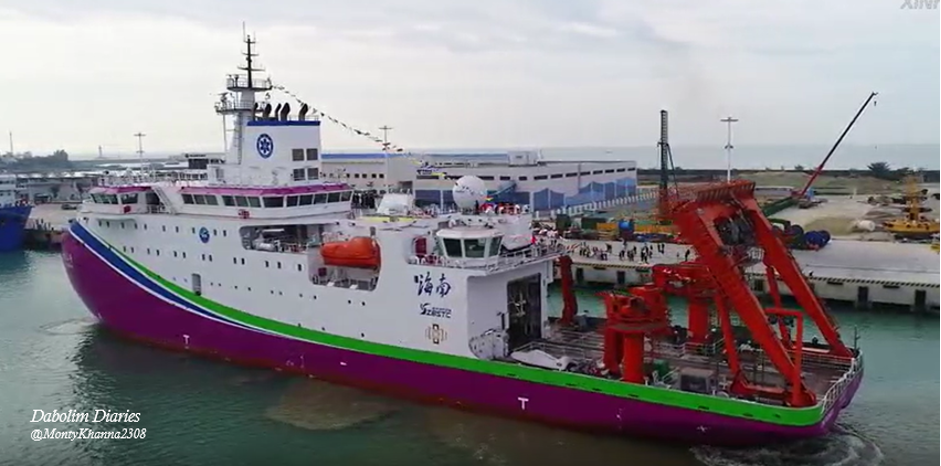
China’s fifth icebreaker, the Tan Suo San Hao (Exploration No 3) set sail from Guangzhou on 26 Dec 2024 and arrived at Sanya on 29 Dec 2024. She is designed by the China State Shipbuilding Corporation’s 704th Research Institute and built by Guangzhou Shipyard International Company Limited (GSI).
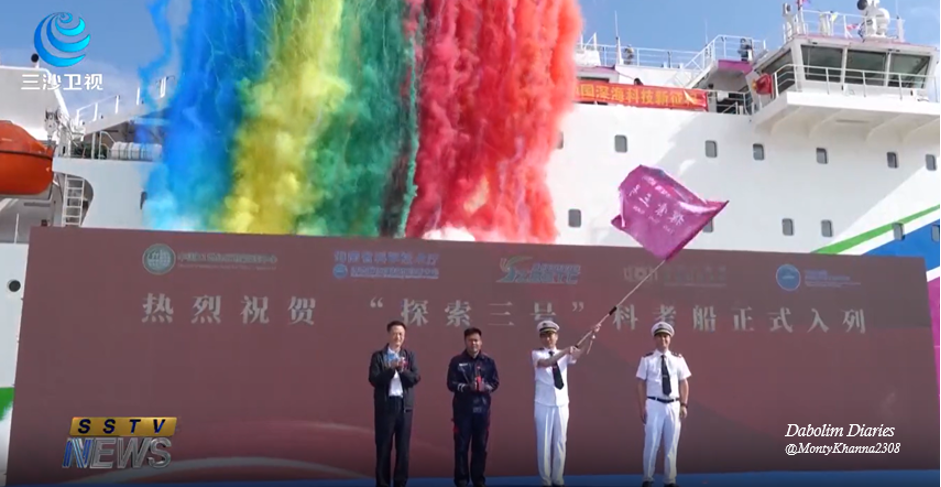
She formally entered into service with the Institute of Deep-Sea Science and Engineering (IDSSE), Sanya of the Chinese Academy of Sciences (CAS) at the Nanshan Port Public Scientific Research Pier in Sanya Yazhou Bay Science and Technology City on the same day. The IDSSE website describes her as ‘China’s first deep-sea multifunctional scientific research and cultural relic archaeology vessel designed with completely independent intellectual property rights.’
The basic parameters of the vessel are as follows:
- Displacement (Full Load): 9,300 Metric Tons
- Max Speed: 16 Kns
- Polar Classification: PC 4
- Endurance: 15,000 nms
- Crew: 80 (32 Seafarers and 48 Researchers)
- Propulsion: 2 x DI1400 ABB Azipods (4,500 Kw each)
- Power Generation: 4 x Wartsila 6L32 (3,300 Kw each)
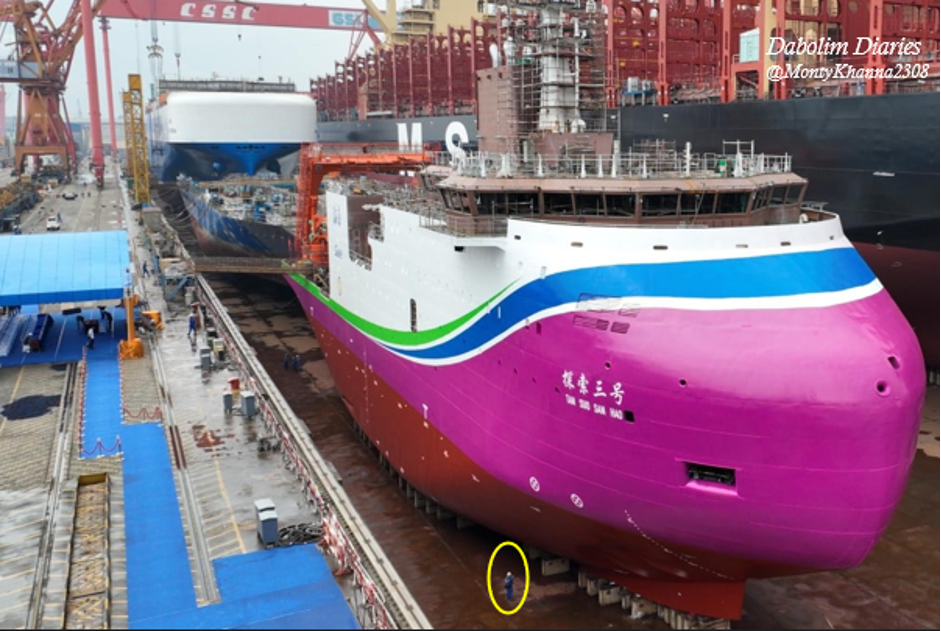
The vessel was constructed by Guangzhou Shipyard International (GSI), a subsidiary of the China State Shipbuilding Corporation (CSSC) on an extremely aggressive timeline. Steel cutting reportedly commenced on 25 June 2023. She was subsequently launched in April 2024 in a record time of ten months. Her unusual shape tends to make her look smaller than what may be expected from her displacement. A better appreciation of her size can be obtained when seen in comparison with a yard worker on the dock floor in the photograph below.
She underwent sea trials in October 2024. While most sourced initially estimated delivery to take place in the first quarter of 2025, the timeline was beaten with formal handover on 29 Dec 2024. The entire build period from commencement of steel cutting to final delivery thus boils down to 20 months.
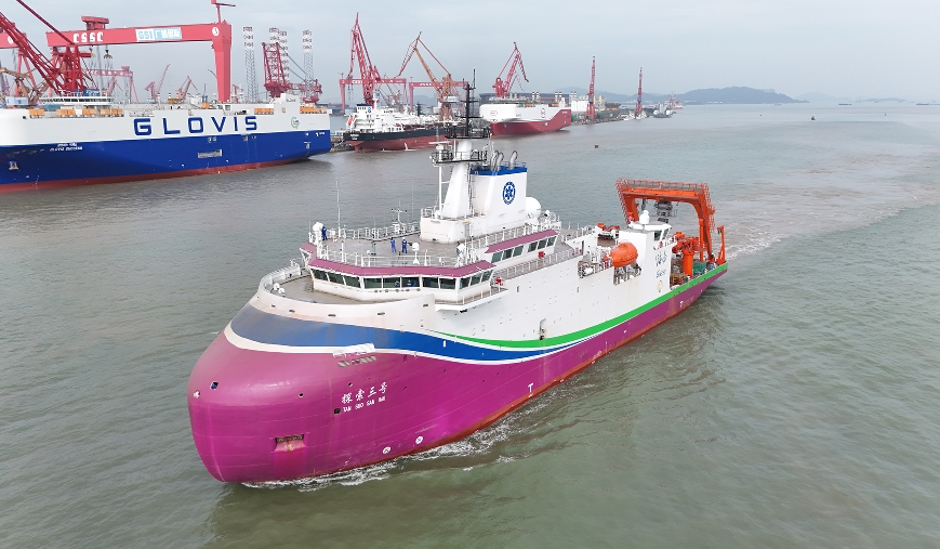
As a PC-4 class icebreaker, she is capable of year-round operations in thick first-year ice which may include old ice inclusions. Like the Xue Long 2, she is designed to break ice while moving ahead as well as astern.
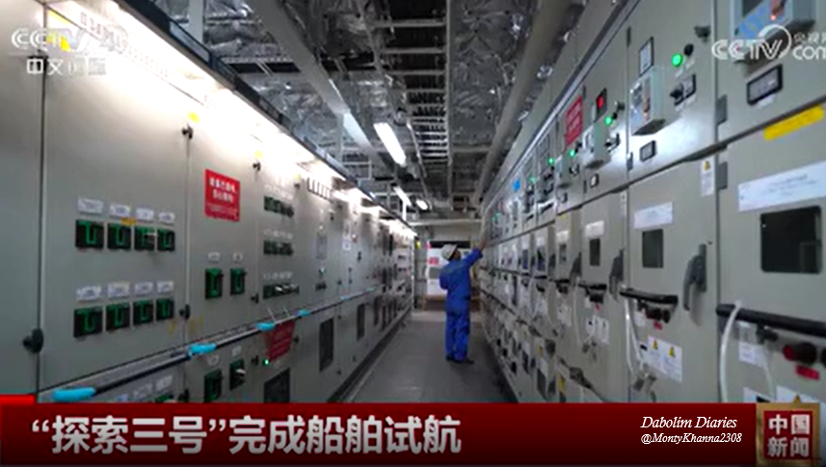
She is an all-electric ship and is powered by two DI1400 ABB Azipods and two bow thrusters. Power is generated by four Wartsila 6L32 generators, each rated for 3,300 KW. She has extensive switchgear to cater for power management.
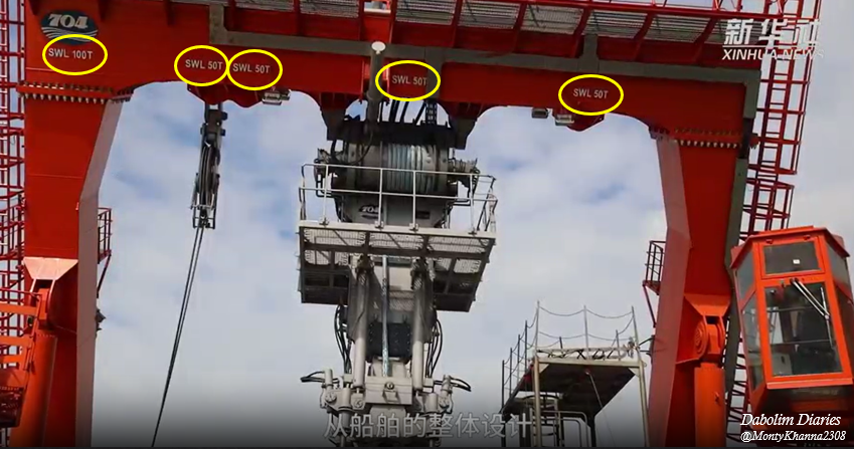
Insofar as the vessels abilities to operate submersibles are concerned, to an extent, they mimic the capabilities of her two sister ships, these being the Tan Suo Yi Hao (Exploration No 1) and Tan Suo Er Hao (Exploration No 2). She has a large ‘A frame’ at the stern with four winches, each with a Safe Working Load (SWL) of 50 tons. The max combined SWL for the entire frame is 100 tons.
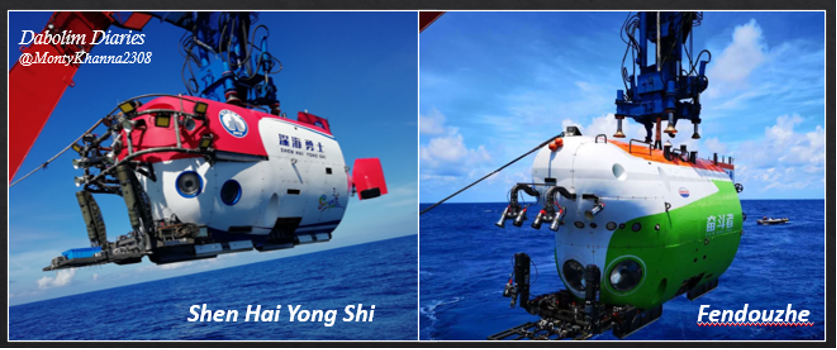
The capacity of the winches is adequate to handle both the manned deep-sea submersibles operated by the IDDSE, these being the Shen Hai Yong Shi (Deep Sea Warrior) and the Fendouzhe (Striver), the former weighing 20 tons and the latter 36 tons. The weight difference is primarily because the former is designed to dive to 4,500 m and the latter in excess of 10,000 m (it recorded a depth of 10,909 m on 10 Nov 2020 in the Mariana Trench).
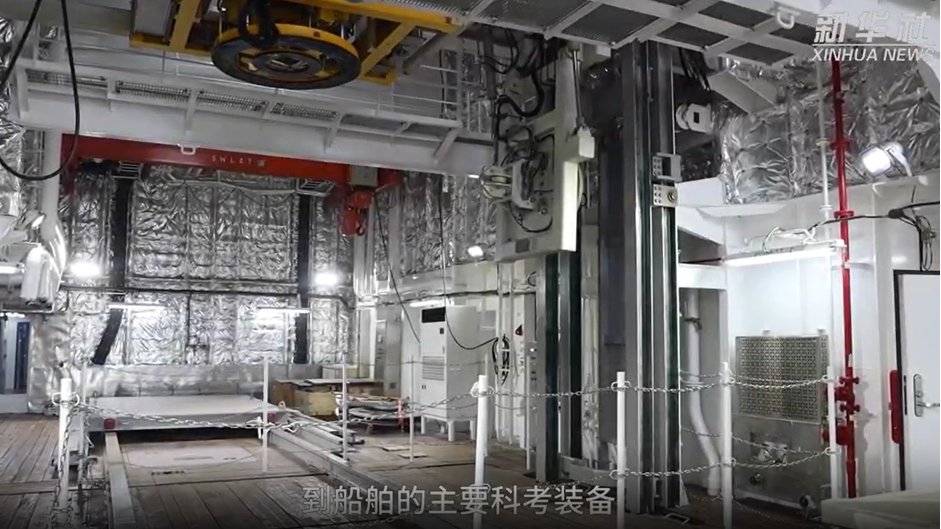
As it may not be possible to deploy submersibles from the ‘A Frame’ in ice-covered waters, the vessel is also equipped with a moon-pool of dimensions 6 x 4.8 m. This is likely to be used for operating unmanned submersibles.
She is not equipped with a hangar (for helicopters) or a helicopter deck. She, however, does have a platform to support vertical replenishment.
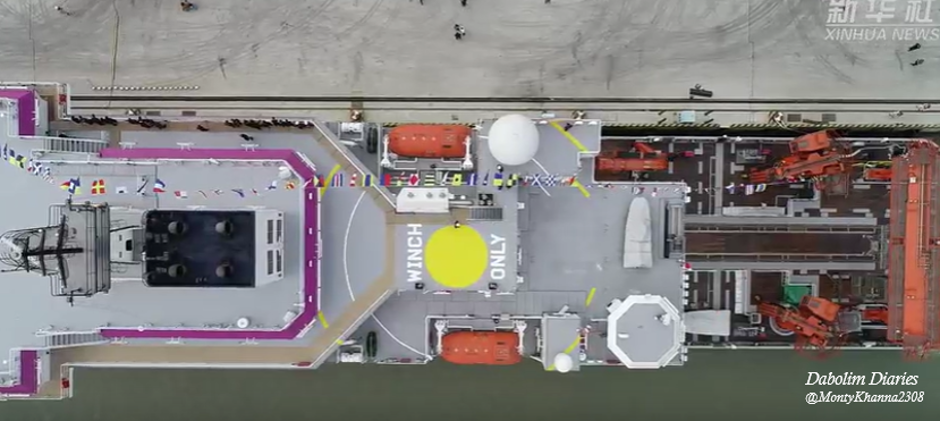
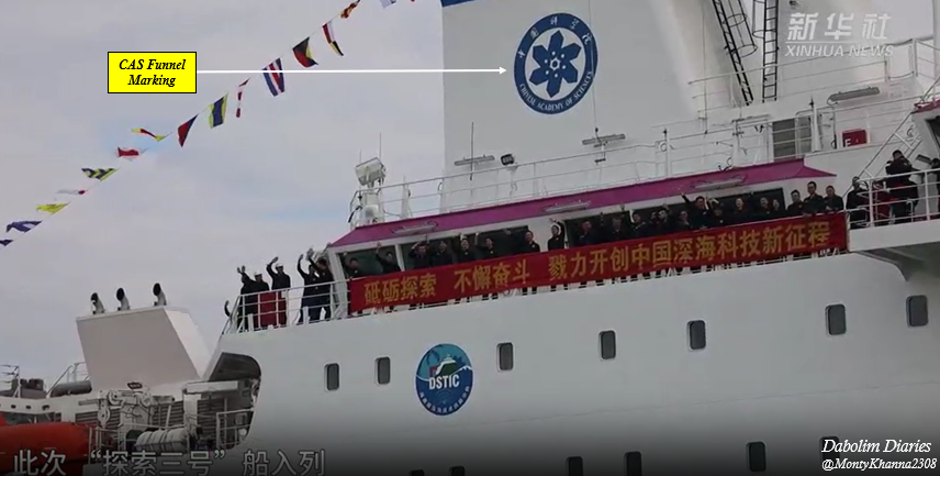
The vessel, while being operated by the Institute of Deep-Sea Science and Engineering (IDSSE), Sanya of the Chinese Academy of Sciences (CAS), will be jointly supported by the People’s Government of Hainan Province, and the Development and Construction Limited Company of Sanya Yazhou Bay Science and Technology City. She carries emblem of the CAS on her funnel.
Analysis. So far, Russia has been the only known country to have sent a manned submersible to the Arctic seabed at the North Pole. With the Tan Suo San Hao, China will have a similar capability albeit with unmanned assets. More importantly, the speed at which this vessel has been constructed has cemented China’s position as a capable manufacturer of Ice-Breakers. Hitherto, all the vessels they have constructed (Xu Long 2, JI Di and Tan Suo San Huo) have been for scientific exploration as well as to meet the logistical requirements of their stations in polar waters. Given Russia’s commitment to commence year-round operations on the Northern Sea Route (NSR), the requirement for commercial ice-breakers is going to increase substantially. Russia’s RosAtomFlot is unlikely to be able to meet this requirement if they were to depend solely on domestic shipyards. These are hard pressed to service the requirements of the ongoing conflict with Ukraine, in addition to being confronted by supply chain disruptions due to the imposition of sanctions. With the increasing capabilities of conventionally powered ice-breakers, Chinese shipyards are ideally suited to bridge this gap.


Leave a Reply
Want to join the discussion?Feel free to contribute!