
By Peter S Goodman. New York: Mariner Books, 2024. 416 Pages, ISBN 978-00-6325-792-4.
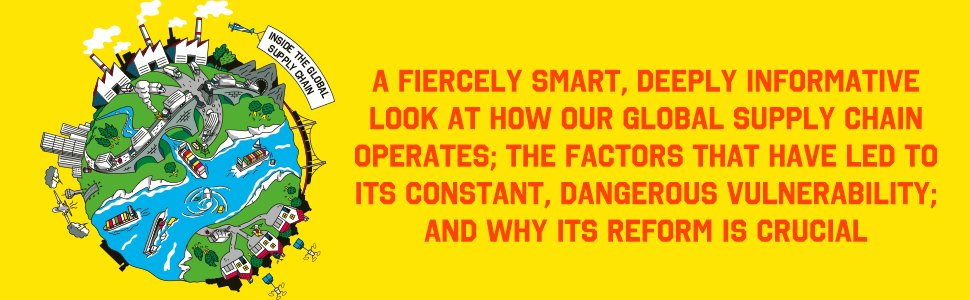
The crisis of globalisation could aptly be called “the crisis of our times”. Bubbling with the global financial crisis of 2008, it evolved into simmering discontent among large sections of Western societies with the capitalist model that relocated manufacturing to developing countries with lower costs, such as China, and finally boiled over during the socio-economic upheaval triggered by the COVID-19 pandemic. The fissures of the current global economic system were laid bare to reveal an unsightly substratum masked by a thin veneer of efficiency and speed. Peter S Goodman’s latest book, “How the World Ran Out of Everything: Inside the Global Supply Chain”, examines the unravelling of the global supply chain during the pandemic and highlights how the fragility of those once-invisible links, that connect the world into a “global village” became apparent as they broke down, with each snapped link reflecting a critical failure in the hitherto seamlessly operating global economic system. Goodman, who is the Global Economics Correspondent for the New York Times, weaves a seamless narrative which unfolds in three parts: the workings of the global supply chain and China’s emergence as the centre of global manufacturing, the inner workings of the critical industries within this supply chain, and the opportunity the pandemic crisis presents for reinventing it.
The first part of the book delves into the rationale behind the en masse relocation of American and European manufacturing to China, alongside the simultaneous shift to “lean” and “just in time” manufacturing strategies. Goodman attributes this shift to the ravenous desire of corporate executives to drive down manufacturing costs by exploiting cheap Chinese labour and the lax regulatory standards obtaining in China. This, combined with the blind application of efficiency measures such as “lean” manufacturing — a concept developed by a resource-constrained Toyota in post-World War II Japan to minimise inventory — across industries created the perfect recipe for significant supply chain disruptions when the pandemic struck. This book follows the story of Hagan Walker, an American business owner whose small company, Glo, relied upon Chinese factories for manufacturing its products. The narrative seamlessly switches between the personal and the political as Goodman intertwines personal stories, such as that of Walker, with incisive political and economic analyses, illustrating how historical trends contributed to the supply chain crisis faced by firms like Glo during the pandemic. He details a logistical nightmare where over fifty container vessels carrying cargo were stuck in a weeks-long disruption at the twin ports of Los Angeles and Long Beach in October 2021, waiting to unload cargo. Fundamental structural flaws in the design of the global supply chain, along with gross miscalculations by corporate executives and shipping carriers — anticipating reduced demand during the pandemic when in fact it surged as people stuck at home ordered more recreational goods — led to a dystopian scenario wherein nearly everything, from toilet paper to computer chips and shipping containers, seemed to be in short supply and prices skyrocketed as supply gradually dried up.
The subsequent section examines the ripple effects of the “Great Supply Chain Disruption” for other sectors of the American economy, such as agriculture. Goodman highlights the travails of California’s almond industry which was unable to export its produce to the rest of the world due to soaring demand for factory goods and a consequent shortage of containers. Digging deeper, the author unearths the implementational limitations of the US government’s policy responses to ameliorate the situation and tame inflation, including the Ocean Shipping Reform Act of June 2022, and critiques the ineffectual attempts to dictate terms to foreign shipping carriers. Shipping carriers, on the other hand, profited heavily off the engineered scarcity and were disinterested in unclogging supply chain bottlenecks to facilitate diversified exports. They readily found corporate executives willing to pay ten times the pre-Covid ocean freight charges for shipping cargo to the American West Coast. Decades of cost-cutting, including layoffs, exacerbated labour shortages across the supply chain — from factory workers to truckers and dockworkers. Goodman argues that the profit-driven nexus between large monopolistic corporations and shipping carriers, functioning essentially as a “cartel” with a chokehold on prices, was the primary cause of the trials and tribulations of millions of small and medium business owners and consumers during the pandemic.
Goodman then turns his analytical lens to the workings of the American railroads, concluding that “precision scheduled railroading” — which applied the “just in time” concept to rail freight — resulted in “operational perils, [labour] shortages, malfunctioning equipment, and delays”. These issues arose from decades of budget cuts aimed at boosting shareholder dividends. The author argues that the supply chain was faultily designed, prioritising shareholder profits over the interests of smaller business owners, workers, and consumers, and sacrificed resilience on the altar of narrowly defined efficiency metrics. Shedding light on the tragic death of Tin Aye, a female immigrant from Myamnar working at a Colorado slaughterhouse owned by JBS Foods — the largest meat processing company in the world — the author reveals the dark underbelly of large corporations that wilfully compromised worker safety by operating their plants in a business-as-usual manner during the pandemic. Deplorably, they did so in the name of feeding the American populace in the midst of a raging pandemic, but in fact, sat on millions of pounds of meat to be shipped for higher prices to markets in Asia, and China in particular. In stark contrast, American consumers faced record-high beef prices, even as small ranchers across the US went out of business as large conglomerates like JBS squeezed them out of the value chain.
In the final section, Goodman explores alternatives to the current global supply chain model, advocating its restructuring to better serve the needs of consumers, workers, and smaller business owners, rather than just a handful of anointed corporate behemoths. He notes the growing interest of American firms in Mexico as a viable alternative manufacturing location due to its proximity, as also its existing road and rail linkages with the US, making it, in aggregate, a more resilient manufacturing base than China. At the same time, he acknowledges that a complete decoupling from Chinese manufacturing remains a distant pipe dream as the scale and breadth of the Asian giant’s industrial capacity makes it nearly impossible to replace it as the world’s factory floor in the near future. Goodman further examines various “China Plus One” strategies, including “reshoring” to the US and “friendshoring” to like-minded countries like Vietnam, although, of course, many of these are still dependent upon Chinese raw materials. This notwithstanding, he views the gradual shift towards diversification and the inclusion of resilience as a key component of the strategic calculus of American businesses as a positive development, which must be provided the requisite momentum even though the pandemic itself is now behind us.
In summary, How the World Ran Out of Everything is a timely and incisive work of investigative journalism that provides a much-needed fillip to the critical conversation on supply chain resilience as shortages wane and the global economy stabilises in the post-pandemic period. Goodman’s compelling prose brings to the fore the poignant stories of ordinary Americans and the human costs of reducing the complex web of the global supply chain to myopic efficiency metrics, which have ironically led to far more pernicious structural inefficiencies and compromised long-term resilience. One of the notable achievements of the book is the “personalisation” of the scarcity crisis, which otherwise seemed, for most people, to have been desultorily unfolding in distant ports and viewed only on news channels. Through deft writing skills, the author manages to simplify complex economic concepts, such as “just in time” manufacturing and “precision scheduled railroading”, making them accessible to a broad audience. However, the book could have been further enriched with the inclusion of historical data sets represented through graphs, maps, and flowcharts, which would have made it an indispensable scholarly resource. Further, the author could have undertaken a deeper exploration of India as an alternative manufacturing hub.
The book nevertheless offers valuable lessons for Indian policymakers, regulators, and captains of industry as the world’s most populous country aims to bolster its own logistics sector and position itself as a viable “Plus One” to attract global manufacturers away from China. Despite India’s own dependence upon China for raw materials, which Goodman highlights in the book, the country’s size, untapped resources, and burgeoning demographic dividend, present significant potential to develop a competitive supply chain that could rival China’s in the long term. To realise this potential, India must continue to invest in improving logistical efficiency, develop skilled labour, and address structural and regulatory inefficiencies that currently stymie the development of a large domestic industrial base. At the same time, it is crucial to learn from the American economic system’s vulnerabilities and avoid being swayed by trendy economic concepts at the cost of ignoring their ground-level implications. An enduring lesson for Business and Management Schools across India, if not across the globe as a whole. The clinching argument, as the author suggests, is that it is vital to consider both efficiency and resilience while redesigning the global supply chain to withstand future pandemics and other potential shocks, including those emerging from climate change, geopolitical tensions, and the US-China trade rivalry, which already loom large on the horizon.
About the Reviewer
Ms Sushmita Sihwag is a Junior Research Associate at the National Maritime Foundation. She holds a master’s degree in liberal studies from Ashoka University, Sonipat, Haryana. Her research focuses upon how India’s own maritime geostrategies are impacted by the maritime geostrategies of ASEAN and its member-states in the Indo-Pacific. She may be contacted at indopac6.nmf@gmail.com


Leave a Reply
Want to join the discussion?Feel free to contribute!