
This article constitutes the concluding segment of a two-part research paper written for policymakers within the Government of India, as also for the wider legal community in India and abroad. The first part[1] collated provisions of international law including established norms pertaining to seabed mining and sought to furnish relevant ‘baseline information’. This second part now contextualises these to India’s national structures, explores the structures relevant to areas beyond India’s national jurisdiction, and culminates in recommendations for Indian law.
National regimes play a critical role in the international regulatory system for seabed mining and the adoption of which forms a part of the international obligations of coastal States wishing to engage in such activity. In order to understand the state of national regimes within sponsoring States, the Council of the International Seabed Authority (ISA) requested sponsoring States to provide information on, or texts of, relevant national laws, regulations and administrative measures adopted on seabed mining in the Area.[2] Pursuant to this, India submitted the Offshore Area Minerals (Development and Regulation) Act 2002 as the governing national legislation.[3] However, as highlighted in Part I to this article — and recognised in the ISA’s study comparing national legislations — Indian legislation only covers areas within national jurisdiction — that is, India’s maritime zones.[4] Since India conducts exploration activity in the Area, it may seem that India conducts such activity in breach of its international obligations. However, since the Government of India directly engages as a Contractor, international law applies in toto and the requirement of sponsorship is waived.[5] Thus, it is correct to hold that the due diligence obligations are not breached at this stage from the lack of governing national legislation. This system, however, is not sustainable. Enterprises — whether State-owned or private — infuse efficiency and commerciality into operations, and these are essential attributes for long-term and effective resource-development. Hence, opening this domain to the private sector or State-owned commercial enterprises is both, desirable and likely, with which comes the importance of adopting national legislation for activities in the Area. Regulatory clarity promotes private participation in industry; and is especially crucial in an activity like seabed mining which has high attendant capital costs and risks.
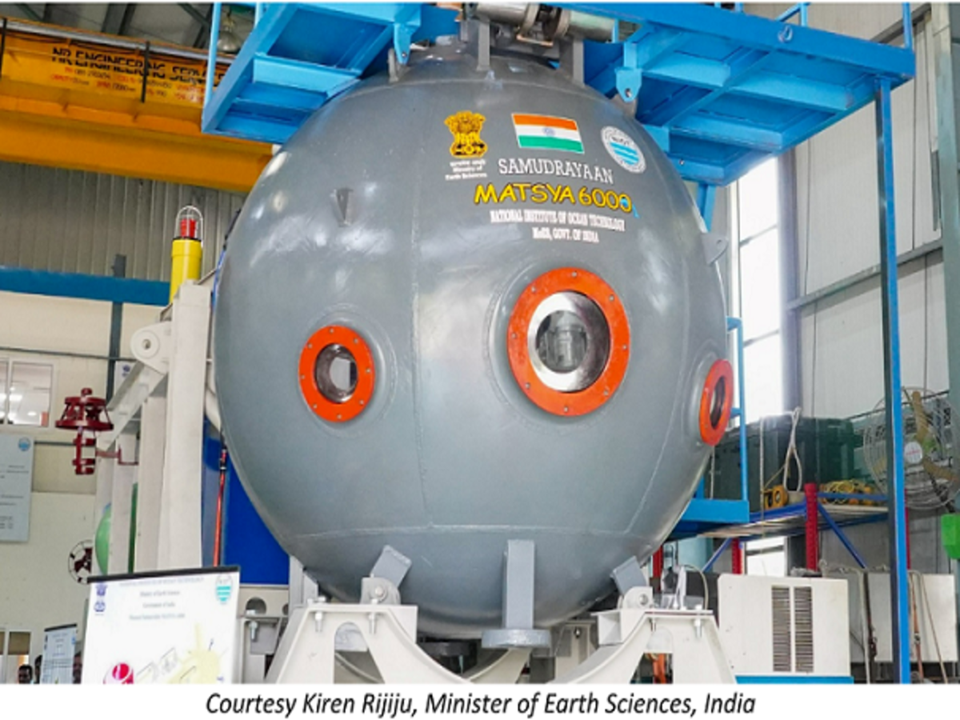
A key issue that may be delaying the adoption of a legal framework in India, is the lack of clarity on whether seabed mining in the Area is going to proceed at all. The lack of scientific data, issues of assessment and quantification of permissible environmental harm, and limited implementation and oversight capacity of the ISA, all act as major drivers of caution (as, indeed, they should!) in the commencement of seabed mining.[6] The push for a global moratorium on seabed mining coupled with the slow pace on the finalisation of exploitation regulations is generating a ‘wait and watch’ approach.[7] On the other hand, there is tremendous pressure by at least some States with the capacity to undertake such operations to simply “get on with it”. China, for instance, reportedly managed to prevent a discussion on a precautionary pause at the ISA’s Council meeting and is aggressively pushing to adopt regulations for exploitation.[8] Further, even nations that have called for a moratorium or precautionary pause to seabed mining have adopted legislation to regulate such activity.[9] India’s launching of the Deep Ocean Mission and the development of the Matsya 6000 indicates a policy inclination within India to engage in extracting resources from the seabed sooner rather than later.[10] For that eventuality therefore, base national legislation for mining in the Area should be adopted even if it will be implemented only once seabed mining in the Area is greenlit by the ISA.
The Offshore Areas Minerals (Development and Regulation) Act 2002 (Offshore Minerals Act) and Offshore Areas Mineral Concession Rules 2006 (Offshore Minerals Rules) accompanied by the environmental protection norms form the core instruments through which extraction of offshore minerals is regulated. Following the entry into force of the Offshore Areas Mineral (Development and Regulation) Amendment Act 2023, the Ministry of Mines has prepared new drafts of (1) Offshore Areas Mineral Auction Rules & (2) Offshore Areas Existence of Mineral Resources Rules.[11] It is also in the process of framing Offshore Areas Mineral Conservation and Development Rules; Offshore Areas Mineral Concession Rules; and Offshore Areas Mineral Trust Rules.[12] This demonstrates the increasing focus of the Government of India upon the extraction of offshore minerals.
While the Offshore Minerals Act is geographically limited to areas within national jurisdiction, it nonetheless serves as a base structure that can be adapted to the Area, given the similarities in the nature of the activity. The underlying principle of the Act — namely, the prohibition of the conduct of any reconnaissance operation, exploration operation or production operation in the offshore areas, except under and in accordance with the prescribed terms and conditions of a granted permit / license / lease — is in consonance with the requirement under international law for regulatory oversight for mining in the Area. Further, the three phases of mining activity, that is, prospection, exploration, and exploitation, have indeed been included and regulated-for within the Act, albeit using different terminology.
The adaptability of the Offshore Minerals Act to incorporate mining in the Area will be assessed. A metric to make this assessment will be the comparative analysis of foreign laws, along with an analysis of literature on ‘model legislations’ for seabed mining in the Area.[13] In this process, salient features of the mining law within national jurisdiction will be expounded upon.
Key common elements identified in national legislations are:[14]
- Purpose, General Principles, and Terms and Interpretation.
- Competent Authorities.
- Licensing Regime.
- Marine Environmental Protection.
- Monitoring and Implementation.
This broadly correlates to the provisions that the sponsoring State may find necessary to include in its national laws as indicated by the Seabed Disputes Chamber — inter alia, financial viability and technical capacity of sponsored contractors; conditions for issuing a certificate of sponsorship; and penalties for non-compliance by such contractors.[15] Each of these will be considered in turn.
Purpose, General Principles, and Terms and Interpretation
Purpose and General Principles. The purpose of the Offshore Minerals Act is “to provide for development and regulation of mineral resources in the territorial waters, continental shelf, exclusive economic zone and other maritime zones of India and to provide for matters connected therewith or incidental thereto.” The first material amendment that needs to be made is the inclusion of “sponsored activities in the Area” to bring them within the scope of this Act.
The “development and regulation of mineral resources” is broad, general terminology. The legal texts of China and Japan employ similar language but seek to additionally “secure sustainable use or rational development of deep seabed resources”.[16] These legislations — by virtue of their being specific to the Area — have drawn directly from the language of UNCLOS, with explicit reference to the regulation of exploration and exploitation in the Area (China, Singapore); safeguarding the common interest of mankind (China); and fulfilling obligations, or ensuring compliance with the provisions of UNCLOS (Germany and Singapore).[17] On the same note, some States — especially the Pacific Island States which have similar legal structures developed together under one programme — have incorporated the principles on which activity in the Area is to be undertaken, that is, peaceful use, cooperation and sharing, and precautionary principles for protection of the marine environment.[18] Such reference to international law may be included — either at this stage or subsequently — for assisting judicial interpretation of provisions, that is, bringing-in consistency with international law.
Terms and Interpretations. The Offshore Minerals Act provides for three stages of mining activity, namely, reconnaissance, exploration, and production, which overlaps with the activity envisaged in the Mining Code even if it differs in terminology used. s4(u) of the Offshore Minerals Act defines reconnaissance operation as “any preliminary geo-scientific survey undertaken for the purpose of searching or locating mineral deposits”, exploration operation in s4(e) as “any operation undertaken for the purpose of exploring, locating or proving the mineral deposits”, and production operation in s4(s) as any “operation undertaken for the purpose of winning any mineral from the offshore area and includes any operation directly or indirectly necessary there for or incidental thereto”. These definitions, as per the Mining Code of the ISA, differ in two ways. First, the Mining Code definition of exploration is more detailed and includes explicitly within its scope the use and testing of equipment, processing facilities, and carrying out environmental, technical, economic, and commercial studies. The Offshore Minerals Act on the other hand expressly lists only exploring, locating, or proving the mineral deposits. Therefore, the scope of “exploration” under the Mining Code is arguably broader than under the Offshore Minerals Act. Similarly, “prospecting” under the Mining Code includes the estimation of the composition, size, and distribution of deposits, and their economic value while “reconnaissance” under the Offshore Minerals Act is limited to “preliminary geo-scientific survey”. The nature of the survey being limited to geo-scientific, it may or may not include a technical and economic evaluation of minerals even under a broad interpretation of that term. An analysis of the template deeds for reconnaissance and exploration in Form D and Form K respectively (Offshore Mineral Rules, 2006) demonstrates that the latter envisages the extraction of some mineral quantity while the former does not. Interestingly, in the Mines and Minerals (Development and Regulation) Act 1957 (MMRDA), which is used to govern onshore mining, the term “prospecting” is used for the activity of “exploration” and the term “reconnaissance” has been used for “preliminary prospecting…through regional, aerial, geophysical or geochemical surveys and geological mapping, but does not include pitting, trenching, drilling.”[19] Inconsistent use of terminology for the same activity conducted (1) onshore, (2) offshore but within national jurisdiction, and (3) offshore beyond national jurisdiction, is likely to create confusion and increase litigation. Hence, even if mining in the Area is sought to be legislated through a separate instrument, consistency in the use of terminology needs to be ensured. Secondly, under the Mining Code, exclusive rights are conferred upon those undertaking an exploration operation, while prospecting licenses confer non-exclusive rights. Such distinction does not seem to exist in the Offshore Minerals Act. The Offshore Minerals Act in s2(t) expressly provides exclusive rights only in the case of a production lease (exploitation stage). If an analogy is to be drawn from the MMRDA, only reconnaissance permits were specified to be non-exclusive (the grant of which has been subsumed under composite licenses after the 2021 amendment).[20] This may imply that exploration rights are exclusive but to express language to that effect may be problematic.
Additionally, the Offshore Minerals Act does not delve into the definition of minerals beyond excluding hydrocarbons from the scope of the Act. On the other hand, the draft Offshore Areas (Existence of Mineral Resources) Rules do have detailed exploration norms for different types of deposits including Deep Sea Minerals such as Rare Earth Elements, hydrothermal minerals/iron manganese crusts and nodules,[21] thus bringing commonly identified deep sea minerals within the scope of the Act.
Competent Authority
In pursuance of s4(a) of the Offshore Minerals Act, the Central Government notified the Additional Director General, National Mission Head-II, Geological Survey of India (GSI), as the administering authority for the purpose of the Act.[22] This makes the Ministry of Mines (to which GSI is attached) the nodal ministry for offshore mining in India. However, since the Deep Ocean Mission is run by the Ministry of Earth Sciences (MoES) and its autonomous institutions, and the MoES is the Contractor with the ISA, close involvement of the MoES is warranted. Hence, the Central Geological Programming Board (CGPB) — which coordinates activities on geological mapping, mineral prospecting, exploration, and exploitation in the country — has been identified as the mechanism through which offshore exploration is going to be conducted.[23] The CGPB includes members from the MoES and the Ministry of Environment, Forest, and Climate Change which are critical to the activity of offshore resource development. This mechanism, while envisaged for mining within national jurisdiction, can be replicated for the Area. This decision is the prerogative of the State and international practice ranges from creating new special ministries (Pacific Island States) to authorising existing ministries such as Mining, Energy and Geology (Germany), Oceanic Administration (China), and Secretary of State (the United Kingdom) for this purpose.
Licensing Regime
The licensing regime stipulated in the Offshore Minerals Act (the Act), offers two types of operating rights to the private sector through auction by competitive bidding, namely, a “composite license” and a “production lease”.[24] While a “reconnaissance permit” has still been included, it has largely been subsumed under the “composite license”. A composite license defined as a “exploration license-cum-production lease” grants a two-stage operating right for exploration and subsequent exploitation on application (s4(ca) of the Act). An operating right can be granted to an Indian national or a company incorporated within India that fulfils the conditions as prescribed (s6 of the Act). The Offshore Mineral Rules 2006 did not stipulate eligibility conditions for the grant of such an operating right. The draft Offshore Areas Mineral (Auction) Rules, however, prescribes (Rule 6, Schedule 1) net worth requirements for a production lease and composite license depending on the value of the estimated resources. Once successful, the bidder will execute a license deed or a production lease deed which contains the terms and conditions by which the licensee or lessee must abide.
Under the current structure, the broad conditions for an exploration license and production lease are stipulated in the Offshore Minerals Rules 2006 (Rule 18 and Rule 28). These rules govern payment of charges, permits and clearances, quantity of withdrawal, data collection and reporting, indemnity, inspection, foreign personnel, and safety measures. In addition, the conditions for a production lease include compliance with rules for environmental protection (Rule 28 (i)). This is supported by the terms and conditions stipulated in the deed itself (Rule 16). The terms of the exploration and production deed expand upon the conditions stipulated in Rules 18 and 28 of the Offshore Minerals Rules 2006, with the notable addition of the obligation to comply with “all the international conventions or treaties to which India is a party and the laws and customs governing the High Seas and will all the laws and regulations/instructions and orders issued by the Government for the protection of navigation, aircraft, fishing and fisheries” (Part II Clause 19 Form K). Specific obligations to prevent pollution of the sea and prevent danger to shipping have also been added. The environmental provisions will be analysed subsequently. Rule 7 and Rule 8 of the Draft Offshore Areas Operating Right Rules retain much of the terms and conditions from the Offshore Mineral Rules 2006 and incorporate into the main body of the Rules terms and conditions previously incorporated in the deed. Further, Rule 14 of the Draft Operating Right Rules explicitly provides for the termination of the lease or license if the lessee or licensee fails to comply with international conventions and treaties to which the Central Government is a party, in addition to non-compliance with any of the terms, covenants and conditions contained in the Offshore Minerals Act, rules framed thereunder, or other Indian laws and regulations.
Recalling the Seabed Disputes Chambers’ dicta, the Offshore Minerals Act, and the rules thereunder — both current and draft — establish the financial viability criteria, conditions for issuing a license, and penalties for non-compliance by such contractors. Therefore, the structure already exists and can readily by adapted to the Area. While technical capacity requirements are not explicitly spelled out, the net worth requirement coupled with the requirement to submit a performance guarantee and rent for the block would translate into only entities with the technical capacity likely to undertake such an activity. A potential mismatch may occur in the requirements and format of the plan of work to be submitted to the ISA after such a license/sponsorship agreement is obtained from the national authority. However, since that requirement is in addition to the requirement of sponsorship, it is a relatively easy amendment to make to the scheme. This stands true even in respect of the contributions to be made to the International Seabed Authority which have been envisaged in compliance with India’s obligations under Article 82 UNLCOS for extractions in the Legal Continental Shelf (s18 of the Act). Suitable amendments can be made once the benefit-sharing regime is finalised at the international stage.
A potential issue that may arise is the maximum size of blocks that may be applied for under the Offshore Minerals Act. S12(4) of the Offshore Minerals Act stipulates that the area granted under a composite license shall not exceed thirty minutes latitude by thirty minutes longitude. Subsequently, an area for which a production lease is granted — either from the composite license or independently — shall not exceed fifteen minutes of latitude by fifteen minutes of longitude (s12(6), s13(4) Offshore Minerals Act). Additionally, s13A imposes a maximum limit of an area to forty-five minutes of latitude by forty-five minutes of longitude, which may be granted to a person through one or more exploration license(s), composite license(s) and production lease(s) all taken together. These limits are, however, significantly lower than the size of the exploration blocks that have been licensed by the Government of India from the ISA. The Indian Contract Area in the Central Indian Ocean Basin for polymetallic nodules extends from 10.25°S to 15.0°S and 73.5°E to 79.25°E.[25] This corresponds to an area of 5.75° by 4.75° (decimal degrees) which far exceeds the maximum limitations incorporated in the Act. Hence, an exception will need to be carved into the Act for private players seeking to enter into exploration licenses in the Area.
Marine Environmental Protection
Ensuring marine environmental protection is a core issue surrounding seabed mining and is the subject of five out of six direct obligations on States as per the Seabed Disputes Chamber.[26] s20 of the Offshore Minerals Act along with its three sub-sections has the following effects: (1) it makes applicable, in addition to the Offshore Minerals Act and its rules, “any other law and rules made thereunder, for the time being in force for the prevention and control of pollution and protection of marine environment”; (2) makes the holder of the operating right liable for any pollution of, or damage to, the marine environment resulting from his activities, and who shall pay compensation as remedies; and (3) empowers the Central Government to prescribe measures for the prevention and control of pollution, and protection of marine environment. Further the Act empowers the Central Government to issue directions (s21) and to make rules (s35) for the protection of the marine environment.
The Act is supported by Chapter VI of the Offshore Mineral Rules 2006, which is dedicated to protection of the environment and marine life. It mandates compliance with international conventions to which India is a party, and requires the taking of all precautions and measures for protection of the marine environment, including steps to control pollution.[27] Additionally, it requires the licensee/lessee to inform the administering authority of any damage and comply with any emergency orders made in those circumstances.[28] These provisions comply with India’s international obligations to ensure the application of the precautionary principle, and provision for emergency measures to protect the marine environment. As highlighted earlier, the rules are also supported by terms in the deeds executed for exploration/production. Since the Ministry of Mines is still in the process of framing the new Draft Offshore Areas Mineral Concession Rules, care must be taken to preserve these provisions from the 2006 Rules.[29] Additional inclusions includes the requirement of submitting, as part of contents of the feasibility report: (1) a brief description on the baseline marine environment condition, the potential impacts of production, and suggested mitigation measures;[30] (2) biotope map of the seabed showing critical marine habitats,[31] and (3) details of the marine geophysical and geochemical surveys conducted.[32] Further, under s16A of the Act, an Offshore Areas Minerals Trust has been established to provide support upon the occurrence of any disaster in the offshore Area.
s20(1) makes the entire gamut of environmental legislation in India applicable to the activity of seabed mining within national jurisdiction. This includes inter alia the Water (Prevention and Control of Pollution) Act 1974 and its rules, the Air (Prevention and Control of Pollution) Act 1981 and its rules, the Environment Protection Act 1986 and its rules, and the Public Liability Insurance Act 1991. Of particular importance is the Environmental Protection Act 1986 under which the Environmental Impact Assessment Notification 2006 (as amended)[33] (EIA Notification) and the Coastal Regulation Zone (CRZ) Notification, 2011[34] has been issued. The former requires prior environmental clearance from the Central Government with respect to activities with potential environmental impacts undertaken in any part of India. The notification clarifies that India includes the territorial sea. This raises questions as to whether this notification is applicable to the continental shelf. A broad reading of s20(1) may make this notification applicable to such activities undertaken beyond the territorial sea. This reading is supported by the coastal regulation zone notification of 2011 which includes the “water and the bed area between the Low Tide Line to the territorial water limit (12 nm)” as a Coastal Regulation Zone (CRZ), and prohibits the mining of sand, rocks, and other sub-strata materials (except those rare minerals not available outside the CRZ area, and exploration and exploitation of oil and natural gas). Further, s29 of the Act enables the Central Government to extend by notification any enactment for the time being in force in India to the offshore area. Hence, such notification should be promulgated in the interest of clarity.
However, the EIA notification also needs to be adapted to include offshore mining for minerals. The Schedule to the EIA notification includes mining of minerals but requires Category A clearance That is, from the Central Government, only for a mining area of greater than equal to 50 hectares. Areas less than 50 hectares and greater than equal to 5 hectares requires clearance from the State Environment Impact Assessment Authority. Since s2 of the Act brings the regulation of mines and the development of minerals in offshore areas under Union control, this categorisation within the notification may not be appropriate. Additionally, rules and methods adept to the conditions of offshore mining need to be incorporated. While the EIA mechanism for offshore oil and gas production can be drawn from, the special conditions of offshore mineral mining need to be considered. While this recommendation is applicable to mining within national jurisdiction, the ISA issued guidelines for conducting EIAs may also be taken into consideration for sponsored activities in the Area.[35]
While implementing s20(2) of the Act, a potential issue that may arise is that the standard at which “damage” is gauged is not clarified. While the section itself gives the administering authority the discretion to impose damages as compensation, such a mechanism may be arbitrary without the promulgation of science-based guidelines to make this adjudication. This may open the floodgates of litigation as damage is to be expected from any mining activity.
Monitoring and Implementation
Ensuring the monitoring and implementation of the Act and its rules forms an important aspect of the regulatory system. Such measures contribute to the fulfilment of the due diligence obligation under UNCLOS. At the outset, the Act creates a criminal offence to engage in any mining activity without a permit/license/lease. Further, even if such right is granted, any failure to furnish the required data also attracts criminal penalty. The Act also empowers the Central government the power of entry, inspection, search and seizure, detention and even arrest without warrant persons or vessels to ascertain whether or not the requirements of the Act or any rule made thereunder is being complied with (s22 of the Act). Additionally, the powers to issue directions and seek compliance therewith confer active powers to the Central Government. This will also allow the State to direct through national tools any request or direction by the ISA.
Non-compliance with the conditions of the operating right creates civil liability with the provision of hefty fines (s28) and is a ground for non-issuance of a production lease (s12(6)(a) of the Act). Rule 14 of the Draft Operating Right Rules further provides for the termination of the operating right for non-compliance with the terms and conditions.
With respect to the safety and security of personnel and infrastructure, the Act provides for the creation of a safety zones (s19(2) of the Act). While they have a legal basis in the exclusive economic zone and continental shelf, a safety zone may be considered for sponsored activities in the Area too. State practice demonstrates that at the very least, warning zones may be promulgated for military activities and may be sustained if “they have no appreciable effect on navigation and no significant effect on the environment or resources of the region”.[36] Hence such safety zones/warning zones for contracted Areas may be explored in conjunction with empowering Coast Guard presence for their enforcement.
Conclusion
As elucidated in this article, the Offshore Areas Minerals (Regulation and Development) Act 2002 and the rules formulated thereunder lay out a detailed scheme for seabed mining within national jurisdiction. This scheme also forms a base structure, albeit one that needs to be tweaked, to incorporate sponsored activity in the Area. Such amendments could be notified once the international community finalises the manner in which such activity is to be undertaken. However, India must be prepared for that eventuality.
Key Recommendations
The following recommendations in terms of amendments to the Offshore Minerals Act merit careful consideration:
- ‘India-sponsored activities in the Area’ should be included within the scope of the Act (the Act is currently restricted to the maritime zones of India).
- References to sustainability may be included within the scope of the Act to lay equal emphasis on environmental protection and sustainable development as is given to mineral resources.
- Consistency in use of terminology needs to be maintained for the activities involved in the mining life cycle.
- With respect to the licensing regime, the net worth requirements and technical capacity for the bidder must be adapted considering the complexity and risk of mining in deeper seas. A template sponsorship agreement may be included within the Rules under the Offshore Minerals Act like templates of deeds currently included. Further, an exception needs to be carved out within the maximum size of blocks that may be auctioned or held by a person.
- The EIA Notification for Environmental Impact Assessments needs to be amended to incorporate offshore mining both within and beyond national jurisdiction. For the manner in which impact assessments are to be conducted in the Area, reference should be made to ISA guidelines on the subject. Similarly, the application for sponsorship/license to conduct an activity in the Area would require the delimitation of the impact reference zones and preservation reference zones as mandated by UNCLOS.
- A warning/safety zone around the contract area in the Area enforced by Coast Guard presence may be explored.
*****
About the Author:
Soham Agarwal, a Delhi-based lawyer holds a Bachelor of Law (Honours) degree from the University of Nottingham, UK. He is currently an Associate Fellow with the Public International Maritime Law Cluster of the National Maritime Foundation, New Delhi. His research is focused upon issues relevant to the seabed, maritime infrastructure, and seabed warfare. He may be contacted at law10.nmf@gmail.com
Endnotes:
[1] Soham Agarwal, “Assessing India’s Legal Preparedness for Seabed Mining: Part I”, National Maritime Foundation, 06 March 2024 https://maritimeindia.org/assessing-indias-legal-preparedness-for-seabed-mining-part-i/
[2] ISA Council, “Decision of the Council of the International Seabed Authority” 2011 ISBA/17/C/20, p 3 https://www.isa.org.jm/documents/isba17c20/
[3] “National Legislation Database”, International Seabed Authority, accessed on 05 March 2024 https://www.isa.org.jm/national-legislation-database/
[4] Secretary-General ISA, “Comparative Study of the Existing National Legislation on Deep Seabed Mining”, November 2021 https://www.isa.org.jm/wp-content/uploads/2022/04/Comparative_Study_NL.pdf
[5] International Tribunal of the Law of the Sea, “Responsibilities and Obligations of States Sponsoring Persons and Entities with respect to Activities in the Area”, Advisory Opinion. ITLOS Rep 2011:10 https://www.itlos.org/fileadmin/itlos/documents/cases/case_no_17/17_adv_op_010211_en.pdf para 79
[6] Julian Jackson and Liz Karan, “Seabed Mining Moratorium is Legally Required by UN Treaty, Legal Experts Find,” Pew Charitable Trust, July 2023, https://www.pewtrusts.org/en/research-and-analysis/fact-sheets/2023/06/seabed-mining-moratorium-is-legally-required-by-un-treaty-legal-experts-find
[7] “Momentum for a Moratorium,” Deep Sea Conservation Coalition, accessed 13 March 2024, https://deep-sea-conservation.org/solutions/no-deep-sea-mining/momentum-for-a-moratorium/
[8] Isaac Kardon and Sarah Camacho, “Why China, Not the United States, Is Making the Rules for Deep-Sea Mining”, Carnegie Endowmnet for International Peace, 19 December 2023. https://carnegieendowment.org/2023/12/19/why-china-not-united-states-is-making-rules-for-deep-sea-mining-pub-91298#:~:text=Crucially%2C%20even%20customary%20international%20law,its%20preferred%20rules%20in%20practice.
[9] Deep Sea Conservation Coalition, “Momentum for a Moratorium”
[10] Ministry of Earth Sciences, “Union Minister Dr Jitendra Singh Says, Samudrayaan Mission Is Aimed At Sending Three Personnel to 6000-Metre Depth In A Vehicle Called ‘MATSYA 6000’ for the Exploration of Deep-Sea Resources Like Minerals”, PIB Delhi Press Release, 21 December 2022. https://pib.gov.in/PressReleaseIframePage.aspx?PRID=1885366
[11] Ministry of Mines, “Mines Ministry Publishes Draft Rules for Offshore Mineral Blocks Auction for Public Consultation” PIB Delhi Press Release, 28 December 2023. https://pib.gov.in/PressReleaseIframePage.aspx?PRID=1991131
[12] Ibid
[13] Klaas Willaert, “Crafting the perfect deep sea mining legislation: A patchwork of national laws”, Marine Policy 119, (September 2020)
[14] Secretary-General ISA, “Comparative Study of the Existing National Legislation”
[15] Advisory Opinion pp 234
[16] Secretary-General ISA, “Comparative Study of the Existing National Legislation”
[17] Ibid
[18] Ibid
[19] Indian Bureau of Mines, “Status of Reconnaissance Permits, Prospecting Licenses and Mining Leases (Advance Release), Indian Minerals Yearbook 2015, 54th Edition https://ibm.gov.in/writereaddata/files/01162017174517IMYB2015_Status%20of%20RPPLML_16012016_Adv.pdf
[20] Mines and Minerals (Development and Regulation) Amendment Act, 2021, s. 16
[21] Part III Draft Offshore Areas Minerals (Existence of Mineral Resources) Rules 202[*] https://mines.gov.in/admin/storage/app/uploads/658a8594434501703576980.pdf
[22] Govt. of India, Ministry of Mines, S.O. 1523(E), The Gazette of India, 06 April 2018
[23] Ministry of Mines, “National Mineral Exploration Policy (Non-Fuel and Non-Coal Minerals)” 2016 p 21 https://geodataindia.gov.in/mert/assets/mert_pdf/1.%20NMEP_2016.pdf
[24] Ministry of Mines, “Parliament passes the Offshore Areas Mineral (Development and Regulation) Amendment Bill, 2023, PIB Delhi Press Release, 03 August 2023 https://pib.gov.in/PressReleaseIframePage.aspx?PRID=1945516
[25] ISA Contract for Exploration, Public Information Template” (Government of India, Polymetallic Nodules), International Seabed Authority, accessed on March 17, 2024 https://www.isa.org.jm/wp-content/uploads/2022/10/Public-information-on-contracts-India_PMN.pdf
[26] Refer to Soham Agarwal, “Assessing India’s Legal Preparedness for Seabed Mining: Part I”, National Maritime Foundation, 06 March 2024 https://maritimeindia.org/assessing-indias-legal-preparedness-for-seabed-mining-part-i/
[27] Rule 40(2)- 40(7) Offshore Areas Mineral Concession Rules 2006 https://upload.indiacode.nic.in/showfile?actid=AC_CEN_15_16_000010_200317_1517807327201&type=rule&filename=Offshore%20Areas%20Mineral%20Concession%20Rules,%202006.pdf
[28] Rule 40(10)- 40(11) Offshore Areas Mineral Concession Rules 2006
[29] Ministry of Mines, “Mines Ministry Publishes Draft Rules for Offshore Mineral Blocks Auction for Public Consultation”, PIB Delhi Press Release, 28 December 2023 https://pib.gov.in/PressReleaseIframePage.aspx?PRID=1991131
[30] Part V, Draft Offshore Areas Minerals (Existence of Mineral Resources) Rules 202[*]
[31] Part VI, Draft Offshore Areas Minerals (Existence of Mineral Resources) Rules 202[*]
[32] Part IV, Draft Offshore Areas Minerals (Existence of Mineral Resources) Rules 202[*]
[33] Ministry of Environment and Forests, “Notification” S.O. 1533 (E), The Gazette of India, 14 September 2006. https://environmentclearance.nic.in/writereaddata/EIA_Notifications/1_SO1533E_14092006.pdf
[34] Ministry of Environment and Forests, “Coastal Regulation Zone Notification”, S.O. 19(E.), The Gazette of India, 06 January 2011 http://moef.gov.in/wp-content/uploads/2017/08/7_0.pdf
[35] ISA Legal and Technical Commission, “Recommendations for the guidance of contractors for the assessment of the possible environmental impacts arising from exploration for marine minerals in the Area” ISBA/25/6/Rev.2 https://www.isa.org.jm/documents/isba-25-ltc-6-rev-1-replaced-by-isba-25-6-rev-2/
[36] Jon M. Van Dyke, “Military exclusion and warning zones on the high seas”, Marine Policy 15, No 3 (May 1991): 147-148


Leave a Reply
Want to join the discussion?Feel free to contribute!