
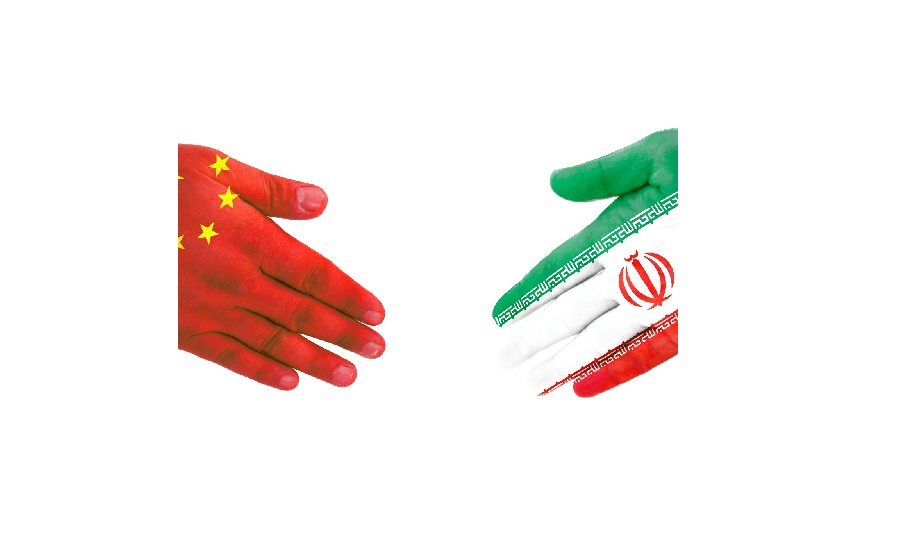
 Image Credits: The Wall Street Journal
China and Iran recently concluded a deal on developing Abadan oil refinery, the largest oil refinery in Iran. In September 2016, the final agreement was reached between China’s Stateowned oil refinery SINOPEC and Iranian Oil Refining and Distribution Company. The deal comes after Chinese President Xi Jinping visited Iran earlier in 2016. The visit occurred immediately after the implementation of Joint Comprehensive Plan of Action (JCPOA) and the consequent lifting of sanctions on Iran. The ‘early bird’ visit underscores not only the significance of Iran for Xi Jinping’s ‘One Belt One Road’(OBOR) initiative but also the enhanced opportunities for China’s energy security. It is pertinent to note that during his tenure, Xi’s predecessor never visited Iran since it was under the sanctions regime at that time. The ‘prompt’ visit of Xi was evidently to capitalize upon the new opportunity of increasing oil imports from Iran. This essay examines the imperative of China’s security in context of the lifting of economic sanctions on Iran post nuclear deal.
China began importing oil from Iran in significant quantities in mid 1990s. In 2000, Iran became the largest supplier of crude oil to China. However, in 2006 Beijing began diversifying its sources of oil supply as it supported the UN Security Council Resolutions (UNSC Resolutions) against Iran’s nuclear program. During 2012-13, China’s oil import from Iran fell significantly as sanctions were tightened. However, in 2014, China’s imports from Iran surged from 429,000 barrels/day (b/d) in 2013 to 550,000 b/d, reaching almost the pre-sanctions level. Strikingly, the boost in oil imports coincides with the formalization of the framework of JCPOA in 2014. This is instructive of the symbiotic relationship between Iran and China.
China is finding it difficult to sit on the fence considering the growing oil demand from private refineries in domestic market. The Chinese government has allowed the teapot refineries (private refineries) to import oil independently rather buying oil from State refineries. This policy aims to end the monopoly of the State refineries, and as a consequent to this new policy the demand for oil import will increase further.
China’s effort to diversify its sources of oil imports did not yield the desired results and its dependence on West Asia continues to grow. In 2014, China imported 50 per cent of its oil from West Asia which includes—Saudi Arabia (16 per cent), Oman (10 percent), Iraq and Iran (9 per cent each), UAE (4 per cent) and Kuwait (3 per cent) respectively. Among China’s top six suppliers, three are located in the sub-region. In 2015, the average import of oil for China was 6.7 million barrels per day. For the foreseeable future, China is likely to remain highly dependent on the subregion for its oil supply. Its oil import dependence (the share of oil imports in total domestic consumption) has increased from 28 per cent in 2001 to 50 per cent in 2008 and is expected to rise to 75 per cent by 2030. Therefore, it is imperative for China to engage with countries in West Asia and especially with Iran, which is a significant player in the Persian Gulf. The significance of the sub-region will continue to increase for China due to further increase in oil imports.
China has been trying to search alternate ways of transferring the oil imported from West Asia. It considered constructing an overland oil pipeline, within the broader framework of economic corridors passing through littoral states in the Indian Ocean Region (IOR) like Bangladesh, Myanmar and Pakistan. While this proposal did not fructify with Bangladesh, the Myanmar pipeline began operating in 2013. The limitation of an oil pipeline as compared to oil tankers is evident due to the capacity constraints of the pipeline. Hence, overland oil pipelines are not a viable alternative for the bulk of China’s oil imports. Thus, China cannot avoid the dependence on sea-routes as it is the most economical way for shipping oil.
Besides considering the costs and benefits associated, the transportation of oil through the pipeline in China Pakistan Economic Corridor (CPEC) is not feasible due to economic and commercial reasons. China will only exercise the option to meet its strategic objective. The fact that only a fraction of the oil imported from West Asia can be transferred through the pipeline, the often posited argument of shortened route through Pakistan is not convincing. Nonetheless, it can be effective during a possible of disruption of shipping. Hence, the overland pipeline is a valuable strategic option.
China’s oil dependence on West Asia comes at a time when it is challenged by US rebalance to Asia. Beijing perceives the presence of US in the sub-region as a threat to its energy security. The significance of the sub-region will continue to increase in the backdrop of increasing oil imports by China. China can capitalize on the antagonistic relationship between Iran and the US, since Tehran also seeks to curtail US influence in the sub-region. Moreover, the instability in the region is also cause of concern for Beijing. It is in this context, China can develop an effective strategic partnership with Iran.
However, Beijing appears to be worried by the fact that post-sanctions, Tehran will reestablish ties with the West. Iranian President Rouhani visited Europe and invited Western companies for investing in Iran. Also, China is facing fierce competition in the sub-region from Asian oil consumers like Japan, India and South Korea. These are the few compelling reasons behind China’s push for taking the bilateral relations to a new high. On the internal front, China is hard pressed with the effects of economic downturn and therefore trying to engage Iran with OBOR. From the Iranian perspective, China can provide capital and infrastructure in reviving Iranian oil industry.
China turning towards Iran is an indication of its direct engagement with West Asia, a shift from its earlier strategy of non-interference. This renewed engagement with Iran is in consonance with its long-term foreign policy goals. It can be posited that China will try securing long term energy deals with Iran and may provide it with financial and technical support to consolidate mutual trust. Moreover, strengthening of ties with Iran will help China with greater access to Caspian energy resources, stretching its influence beyond the Persian Gulf.
*************************
About the Author:
Eshita Rudra is a Research Associate at the National Maritime Foundation (NMF). The views expressed here are his own and do not reflect the official policy or position of NMF. She can be reached at ishicooljnu@gmial.com .
 wikipedia
  Image Credits: Dhaka Tribune
 Image Credits: LSE Blogs
  Image Credits: Stars and Stripes
 Image Credits: Dhaka Tribune
Leave a Reply
Want to join the discussion?Feel free to contribute!