
Keywords: Nuclear Technology, Undersea Warfare, Anti-Submarine Warfare, Maritime Security, Maritime Trade, Indo-Pacific
China’s recent advances in the development of the thorium-229 (229Th) nuclear clock have attracted growing attention within scientific, defence, and strategic communities the world over.[1] Although the technology remains at an experimental stage, its potential implications extend far beyond precision timekeeping. By exploiting nuclear transitions rather than conventional electronic transitions, nuclear clocks promise unprecedented levels of accuracy, stability, and resistance to environmental interference.[2] Such capabilities could support a wide range of future applications, including autonomous navigation, satellite systems, quantum communication networks, and advanced military platforms. Of particular significance is the potential application of nuclear clock technology to submarine navigation, where ultra-precise timing could enable extended underwater operations without reliance on external positioning systems, thereby enhancing stealth and survivability.[3]
The strategic relevance of this technological development is amplified by the critical role of thorium resources in supporting future nuclear clock research and deployment. Consequently, the emerging competition surrounding thorium reserves, processing capabilities, and technological ecosystems has acquired increasing geopolitical significance. While India possesses the world’s largest thorium reserves,[4] China has developed a more integrated scientific and industrial infrastructure capable of translating technological breakthroughs into operational capabilities.[5]
Against this backdrop, China’s progress in nuclear clock technology has important implications for maritime security in the Indo-Pacific. Enhanced underwater navigation capabilities would strengthen the operational effectiveness of the China’s People’s Liberation Army Navy’s (PLAN) submarine fleet,[6] challenging existing anti-submarine warfare capabilities, and complicate maritime domain awareness efforts. These developments carry particular significance for India, whose maritime security interests flow out of its maritime policy, which is encapsulated in the acronym MAHASAGAR (Mutual and Holistic Advancement for Security and Growth Across Regions).[7]
This article, accordingly analyses the scientific foundations and strategic significance of thorium-229 (229Th) nuclear clock technology”, evaluates the role of thorium resources and technological ecosystems in shaping future competition, and assesses the implications of these developments for maritime security in the Indo-Pacific, specifically focusing on the potential impact on India’s maritime interests, anti-submarine warfare capabilities, and broader security challenges in an increasingly contested maritime environment.
Understanding Nuclear Clock Technology
Nuclear clocks represent a significant advancement in precision timekeeping by exploiting nuclear rather than electronic transitions to measure time. Because the atomic nucleus is largely shielded from external electromagnetic fields, temperature fluctuations, and mechanical vibrations, nuclear transitions exhibit exceptional stability and substantially lower systematic uncertainty than the most advanced optical atomic clocks. This enhanced precision extends the potential applications of nuclear clocks beyond conventional timekeeping to fundamental scientific research, including tests of physical constants, measurements of gravitational redshift,[8] investigations into dark matter, and the synchronisation of quantum communication networks. Their robustness also makes them particularly suitable for high-precision applications such as deep-space navigation, inter-satellite timing, and autonomous navigation systems operating in environments where external positioning signals are unavailable.[9]
Similar to optical atomic clocks, a nuclear clock comprises three principal components: (1) a nuclear resonance system, which hosts the target nuclear transition, (2) a laser frequency stabilisation system that generates an ultra-stable excitation-source, and (3) a frequency readout system, typically based on an optical frequency comb. However, unlike conventional atomic clocks, which derive their accuracy from electron transitions surroundings the atomic nucleus, nuclear clocks measure transitions within the nucleus itself. As the nucleus is significantly less susceptible to environmental disturbances, this approach is expected to achieve precision levels estimated to be between 10 and 1,000 times greater than those of existing atomic clocks.[10]
Among the various isotopes, thorium-229 (229Th) has emerged as the most promising for the development of practical nuclear clock. Its uniquely low-energy nuclear isomer can be excited using laser-based optical techniques, enabling a level of experimental control that is not possible with other known nuclear transitions. Combined with its intrinsic resistance to electromagnetic interference and blackbody radiation,[11] these characteristics provide exceptional stability and accuracy, making 229Th the leading ‘candidate’ for next-generation time and frequency standards.[12]
The scientific significance of 229Th extends beyond precision timekeeping. It is the only known nucleus with an isomeric transition that falls within the energy range of electronic excitations, creating a unique interface between nuclear and atomic physics. This property enables researchers to investigate the interaction between nuclear and electronic states while advancing studies in low-energy nuclear physics. Consequently, research on the 229Th nuclear clock not only promises transformative improvements in timing technologies but also contributes to a deeper understanding of fundamental physical processes with potential applications across science, navigation, communications, and defence technologies.[13]
China’s Emerging Technological Advantage
Although China’s identified thorium reserves, estimated at approximately 100,000 tonnes,[14] are significantly smaller than those of India and several other countries, reserve size alone does not determine strategic advantage. Rather, China’s strength lies in its dominance of the global rare-earth industry, accounting for around 70 per cent of global production and controlling much of the downstream processing infrastructure.[15] Given that thorium is typically recovered as a by-product of monazite during rare-earth extraction, this industrial dominance provides China with a reliable source of thorium-bearing materials despite its comparatively modest geological reserves.[16]
More importantly, China has developed an integrated technological ecosystem that links mineral extraction, rare-earth processing, advanced materials research, nuclear science, and state-directed industrial policy. This vertically integrated model enables the rapid translation of scientific research into technological applications, thereby reducing the gap between laboratory innovation and operational capability.[17] Although publicly available data on China’s thorium production remains limited, its well-established processing infrastructure provides a strong foundation for long-term research into advanced technologies, including thorium-229 clocks and molten salt reactors.[18]
China’s sustained investment in thorium-based reactor technology further illustrates a broader national strategy aimed at developing expertise across the entire thorium fuel cycle. Consequently, China’s competitive advantage stems not from the scale of its thorium reserves but from its ability to integrate resource access, industrial capacity, scientific research, and technological innovation into a coherent strategic framework. This integrated approach places China in a favourable position to exploit emerging technologies that depend upon specialised thorium-based materials, including next-generation precision timing systems.[19]
China’s Technological Leap in Nuclear Clock Development
China’s recent development of a fluorinated borate crystal capable of generating ultraviolet light at a record wavelength of 145.2 nanometres represents a significant milestone in the pursuit of the thorium-229 nuclear clock. Developed by researchers at the “Xinjiang Technical Institute of Physics and Chemistry” under the “Chinese Academy of Sciences”, the crystal surpasses the performance of the earlier potassium beryllium fluoroborate standard by achieving the wavelength required to excite the thorium nucleus. This breakthrough addresses a longstanding technical challenge and brings the practical realisation of a 229Th nuclear clock considerably closer. In the longer term, such advances could enable highly accurate autonomous navigation systems, allowing submarines and other military platforms to operate for extended periods without relying on vulnerable satellite-based positioning systems,[20] or even terrestrial ones such as eLORAN.[21]
Beyond its immediate scientific significance, the breakthrough reflects China’s broader strategy of achieving technological leadership through investment in foundational and enabling technologies rather than incremental improvements. The development of a practical nuclear clock requires expertise across several advanced disciplines, including photonics, vacuum ultraviolet (VUV) laser systems, optical frequency combs, precision materials engineering, and nuclear spectroscopy. By simultaneously advancing these interconnected capabilities, China is strengthening an integrated technological ecosystem with applications extending beyond precision timekeeping to defence, aerospace, communications, quantum technologies, and next-generation navigation systems. Consequently, the significance of this achievement lies not only in the development of a single technology but also in the establishment of the scientific and industrial capabilities that could underpin future strategic and military advantages.[22]
Technological Constraints on Nuclear Clock Deployment
Despite its considerable strategic potential, the development of a practical thorium-229 nuclear clock remains constrained by both resource availability and technological complexity. Although thorium is approximately three times more abundant than uranium in the Earth’s crust, commercially viable thorium is largely recovered as a by-product of rare-earth processing rather than through dedicated mining. Consequently, access to usable thorium depends less on geological abundance than on established mining, processing, and refining capabilities. As advanced applications—including nuclear clocks, next-generation sensors, and advanced reactor technologies—continue to emerge, thorium is likely to acquire greater strategic importance alongside other critical minerals.[23]
A more immediate constraint is the limited global availability of the 229Th isotope itself. Unlike naturally occurring thorium, 229Th is produced through specialised nuclear processes that are costly, time-consuming, and technically demanding. Existing production capacity is extremely limited, while a significant proportion of available 229Th is prioritised for medical research, particularly the production of actinium-229 and bismuth-213 used in targeted alpha therapy for cancer. Consequently, the availability of research-grade 229Th remains one of the principal bottlenecks to the large-scale development and testing of nuclear clock technology.[24]
Significant engineering challenges also remain before nuclear clocks can be deployed operationally. These include the generation of ultra-short wavelength vacuum ultraviolet (VUV) lasers capable of exciting the thorium nucleus, the production of highly reproducible optical crystals, thermal and vacuum stabilisation, system miniaturisation, and the stringent purity requirements for 229Th. At the same time, continuous advances in optical atomic clock technology have narrowed the performance gap, increasing competition between the two approaches to ultra-precise timekeeping.[25]
Consequently, while the 229Th nuclear clock has the potential to transform precision navigation and future military systems, its operational deployment remains a long-term prospect rather than an immediate capability. The technology should therefore be viewed as an emerging strategic enabler whose future impact will depend not only on scientific breakthroughs but also on sustained investment in isotope production, advanced materials research, and precision engineering.[26]
Military and Strategic Applications of Nuclear Clock Technology
The principal military significance of the thorium-229 nuclear clock lies in its potential to transform navigation in environments where conventional positioning systems are unavailable or vulnerable. Unlike surface platforms, submarines cannot rely on Global Positioning System (GPS) signals while submerged and therefore depend on inertial navigation systems (INS),[27] which estimate position through dead reckoning using ultra-precise timing in conjunction with accelerometers and gyroscopes. Although modern atomic clocks provide the timing reference for these systems, navigational errors accumulate during prolonged underwater operations, eventually requiring submarines to surface or obtain an external positional update, thereby increasing the risk of detection. By delivering significantly greater timing precision and stability, a 229Th nuclear clock could substantially reduce navigational drift, enabling submarines to operate submerged for longer periods while maintaining accurate positional awareness.[28]
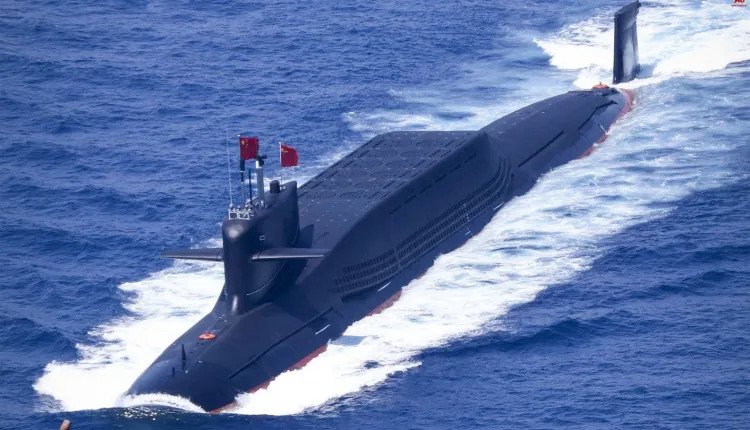
For the People’s Liberation Army Navy (PLAN) of China, such a capability could provide an important operational advantage as its submarine fleet expands with advanced platforms, including the Type 093B nuclear-powered attack submarine and the Type 096 ballistic missile submarine. More accurate underwater navigation would enhance operational endurance, reduce dependence on satellite-based navigation, and improve survivability in contested maritime environments. China’s recent advances in enabling technologies—including ultra-short wavelength vacuum ultraviolet (VUV) lasers, optical lattice clocks, and precision photonics—suggest that nuclear clock research forms a broader effort to develop the technological foundations required for next-generation undersea warfare capabilities.[29]
The strategic implications of nuclear clock technology extend well beyond submarine navigation. Ultra-stable timing underpins a wide range of modern military capabilities, including precision navigation, secure communications, intelligence collection, missile guidance, satellite operations, and the synchronisation of distributed command-and-control networks. Its resilience to electromagnetic interference and other environmental disturbances makes the technology particularly valuable in contested operational environments where conventional navigation and communication systems may be degraded or denied. Similar advantages could also support autonomous spacecraft, deep-space missions, and future quantum communication architectures that require highly accurate and independent timing systems.[30]
Advances in precision timing may also contribute indirectly to improved submarine stealth. More accurate synchronisation of propulsion systems, on-board sensors, and machinery can reduce mechanical inefficiencies and vibration, thereby lowering acoustic signatures that remain the principal means of submarine detection. Although considerable technical challenges remain before nuclear clocks become operationally deployable, their successful integration into future naval platforms could significantly enhance underwater survivability and complicate conventional anti-submarine warfare (ASW) operations.[31] Consequently, the strategic value of nuclear clock technology lies not merely in improving navigational accuracy but in strengthening the broader operational effectiveness and resilience of future military systems.[32]
China’s Expanding Undersea Warfare Capabilities
The strategic significance of nuclear clock technology should be assessed within the broader trajectory of China’s maritime modernisation rather than as an isolated scientific breakthrough. Over the past decade, the PLAN has undertaken sustained investments in advanced undersea capabilities, expanding its fleet of nuclear-powered attack submarines (SSNs) and ballistic missile submarines (SSBNs) while simultaneously strengthening the technological foundations that support future naval operations. Investments in artificial intelligence, quantum sensing, advanced photonics, autonomous systems, and precision engineering collectively reflect China’s long-term strategy of developing integrated capabilities to enhance undersea warfare and maritime power projection.[33]
Should nuclear clock technology mature into an operational capability, it could significantly improve the performance of future Chinese naval platforms by enhancing navigational accuracy, sensor integration, platform coordination, and the resilience of command-and-control systems in contested environments. More importantly, improved underwater endurance and reduced dependence on external navigation systems would increase the survivability and operational effectiveness of the PLAN’s submarine fleet. For ballistic missile submarines in particular, the ability to remain undetected during extended patrols is fundamental to maintaining a credible sea-based nuclear deterrent and an assured second-strike capability.[34]
These developments have significant implications for the strategic balance in the Indo-Pacific. As Chinese submarines become increasingly difficult to detect and track, regional anti-submarine warfare (ASW) capabilities may face growing operational challenges, particularly in strategically significant maritime corridors. For India, this evolving undersea environment underscores the need to reassess naval force planning, strengthen maritime domain awareness, and modernise underwater surveillance and ASW capabilities. Consequently, the strategic importance of nuclear clock technology lies not only in its contribution to individual platforms but also in its potential to reinforce China’s broader military modernisation and reshape the region’s undersea security architecture.[35]
India’s Thorium Advantage and Technological Challenges
India occupies a distinctive position in the global thorium landscape, possessing an estimated 846,000 tonnes of identified thorium resources—the largest national reserve in the world. Concentrated primarily in the monazite-rich beach sands of Kerala, Tamil Nadu, Andhra Pradesh, and Odisha, these deposits constitute a significant share of global thorium resources and have long underpinned India’s strategic vision for nuclear energy. Recognising its limited domestic uranium reserves, India adopted a three-stage nuclear power programme designed to harness thorium as a long-term energy source, making thorium central to the country’s nuclear policy and research agenda.[36]
Despite this substantial resource endowment, India has yet to translate its geological advantage into technological or industrial leadership. Strict regulatory controls governing monazite extraction, limited downstream processing capacity, and the complexities associated with managing radioactive materials have constrained the commercial utilisation of thorium and the development of an integrated industrial ecosystem. Consequently, while India possesses abundant raw materials, it has been slower to establish the scientific, manufacturing, and technological capabilities required to support emerging applications and thorium-229 nuclear clock research.[37]
Recent policy initiatives encouraging greater public and private participation in the exploration and processing of thorium-bearing minerals suggest an increasing recognition that critical mineral security extends beyond resource ownership. In an era where strategic competition is increasingly driven by technological capability rather than resource availability alone, India’s long-term advantage will depend on its ability to convert its substantial thorium reserves into scientific innovation, industrial capacity, and strategic technological capabilities. Without such a transition, the country’s resource advantage is unlikely to translate into leadership in next-generation technologies that may shape future maritime and defence competition.[38]
Implications for India’s Maritime Security
China’s continued investment in advanced undersea technologies has important implications for India’s maritime security environment. The PLAN has steadily expanded its operational presence in the Indian Ocean Region (IOR) through submarine deployments, research vessels, surveillance activities, and the development of dual-use maritime infrastructure. Consequently, any technological advancement that enhances the endurance, autonomy, or survivability of Chinese submarines has the potential to alter the regional undersea balance and increase the complexity of India’s maritime security challenges.
The successful integration of thorium-229 nuclear clock technology into future Chinese naval platforms could significantly enhance underwater operational effectiveness by enabling more accurate and resilient navigation without dependence on external positioning systems. Combined with improvements in acoustic management and platform integration, such capabilities would allow Chinese submarines to conduct longer submerged patrols while reducing their vulnerability to detection. Enhanced survivability would be particularly significant for China’s ballistic missile submarines, as the credibility of a sea-based nuclear deterrent depends upon their ability to remain concealed during extended deployments. Consequently, these technological advances could influence regional deterrence dynamics and contribute to a gradual shift in the strategic balance across the Indo-Pacific.
For India, this evolving undersea environment presents both operational and strategic challenges. Greater submarine stealth would complicate maritime domain awareness and place increasing pressure on existing anti-submarine warfare (ASW) capabilities, which currently rely on an integrated network of surface combatants, maritime patrol aircraft, underwater sensors, and intelligence assets.[39] As conventional detection methods become progressively less effective against more sophisticated submarine platforms, India will need to accelerate the modernisation of its underwater surveillance architecture through investments in advanced sonar technologies, artificial intelligence-enabled data fusion, seabed sensor networks, unmanned underwater vehicles, and persistent monitoring of critical maritime chokepoints, including the Malacca Strait, Lombok Strait, and the approaches to the Andaman and Nicobar Islands.
More broadly, China’s progress in precision navigation and other enabling technologies reinforces the need for India to adopt a long-term approach to maritime capability development. Maintaining a favourable strategic balance in the Indo-Pacific will depend not only on expanding naval platforms but also on strengthening indigenous technological innovation, enhancing maritime domain awareness, and developing next-generation undersea warfare capabilities capable of responding to an increasingly sophisticated and contested operational environment.
Strategic Responses for India
Addressing the strategic implications of China’s advances in nuclear clock technology requires a comprehensive approach that combines technological innovation, industrial capacity, and enhanced maritime security. India needs to prioritise investment in emerging technologies that underpin next-generation undersea warfare, including quantum sensing, precision navigation, artificial intelligence-enabled surveillance, secure underwater communications, and advanced anti-submarine warfare (ASW) systems. Strengthening these indigenous capabilities will be essential to maintaining operational effectiveness in an increasingly contested maritime environment.
Equally important is the expansion of India’s maritime situational awareness (MSA) and maritime domain awareness (MDA) architecture across the Indian Ocean Region and key Indo-Pacific maritime corridors. Enhanced underwater sensor networks, autonomous underwater vehicles, seabed surveillance systems, and integrated intelligence and surveillance architectures would significantly improve India’s ability to detect, track, and respond to increasingly sophisticated submarine operations. These national efforts should be complemented by deeper cooperation with Quad partners through collaborative research, technology sharing, intelligence exchange, and coordinated maritime surveillance initiatives to strengthen regional deterrence and preserve strategic stability.
From an industrial perspective, India must also recognise that future technological competition will depend as much on processing capability and innovation as on access to strategic resources. Although the global commercial market for thorium remains limited, China’s dominance of rare-earth processing has enabled it to establish an industrial ecosystem capable of supporting advanced research in emerging technologies. India, on the other hand, despite possessing the world’s largest identified thorium reserves, continues to face regulatory and industrial constraints that have limited downstream processing and technological development. While existing controls remain important for safeguarding strategic minerals, a more balanced policy framework that encourages responsible exploration, processing, and research would strengthen India’s long-term technological competitiveness. Ultimately, converting resource abundance into industrial capability and scientific innovation will be critical if India is to secure a leading position in future technologies with significant maritime and defence applications.
Conclusion
China’s pursuit of the 229Th nuclear clock represents more than a scientific endeavour in precision timekeeping. It exemplifies a broader strategy of technological leapfrogging through investments in quantum technologies, advanced photonics, and next-generation scientific infrastructure. Although substantial technical barriers remain, the potential military applications of ultra-precise timing systems could reshape future navigation, communications, and undersea warfare capabilities.
For India, the principal concern is not the emergence of a single breakthrough technology but the cumulative effect of China’s sustained investments in enabling technologies that underpin future military power. Monitoring and responding to these developments will require a comprehensive approach combining technological innovation, maritime surveillance, defence modernisation, and strategic partnerships to safeguard India’s interests in the Indo-Pacific region.
*********
About the Author
Mr John J Vachaparambil is an Associate Fellow at the National Maritime Foundation (NMF) and meaningfully contributes to the Foundation’s ‘Public International Maritime Law’ (PIML) cluster. His current research focuses on the legal aspects of fishing, including IUU fishing, and the conservation of the marine biological diversity of areas beyond national jurisdiction (BBNJ). Occasionally, however, his intellectual virtuosity and natural curiosity take him beyond these research-confines, and the present article offers evidence of his wide-ranging interest in “matters maritime”. He can be reached at law5.nmf@gmail.com
Endnotes:
[1] Munis Raza, “China’s 145.2nm crystal paves way for thorium-229 GPS-free submarine navigation”, MSN. https://www.msn.com/en-us/news/technology/china-s-1452nm-crystal-paves-way-for-thorium-229-gps-free-submarine-navigation/ar-AA241Iav?gemSnapshotKey=GMBF5016E2-snapshot-20&ocid=a2hs&apiversion=v2&domshim=1&noservercache=1&noservertelemetry=1&batchservertelemetry=1&renderwebcomponents=1&wcseo=1
Also see: Military Mechanics, “China’s Nuclear Subs May No Longer Need GPS”, YouTube, 03 June 2026. https://www.youtube.com/shorts/Z7nyPk-4Ttc
[2] Luo Yuanqiang, et.al “Current Progress on 229Th nuclear clock”, Multidisciplinary Digital Publishing Institute (MDPI), 31 January 2026. https://www.mdpi.com/2304-6732/13/2/141
Also see: Peter Thirolf, “Shedding light on the Thorium-229 nuclear clock isomer”, Physics, 29 April 2024. https://physics.aps.org/articles/v17/71
Also see: J Tiedau, et.al “Laser excitation of the 229Th nucleus”, APS Journal, 29 April 2024. https://journals.aps.org/prl/abstract/10.1103/PhysRevLett.132.182501
[3] Luo Yuanqiang, et.al “Current Progress on 229Th nuclear clock”.
[4] “Thorium”, World Nuclear Association, 02 May 2024. https://world-nuclear.org/information-library/current-and-future-generation/thorium
[5] Luo Yuanqiang, et.al “Current Progress on 229Th nuclear clock”.
[6] “China Submarine Capabilities”, The Nuclear Threat Initiative, 19 November 2025. https://www.nti.org/analysis/articles/china-submarine-capabilities/
Also see: Cdr Kamlesh K Agnihotri, “The Chinese Navy’s Submarine Arm: Lynchpin of ‘Active Defence’”, Maritime Affairs, 2012. https://maritimeindia.org/wp-content/uploads/2026/03/The-Chinese-Navys-Submarine-Arm.pdf
Also see: Saurav Sarkar, “Understanding China’s submarine capabilities: Undersea competition in the Indo-Pacific”, Institute of Chinese Studies, June 2019. https://www.icsin.org/uploads/2019/11/05/8bf56604ba2e84aef8f30d35edbb937f.pdf
Also see: Henry Boyd & Tom Waldwyn, “China’s submarine force: an overview”, International Institute for Strategic Studies, 04 October 2017. https://www.iiss.org/online-analysis/military-balance/2017/10/china-submarine-force/
Also see: “China Naval Modernisation: Implications for US Navy Capabilities—Background and Issues for Congress”, US Congress, 24 April 2025. https://www.congress.gov/crs_external_products/RL/HTML/RL33153.web.html#Content
Also see: “The PLA Navy – New capabilities and missions for the 21st Century”, The Office of Naval Intelligence, US Navy. https://www.oni.navy.mil/Portals/12/Intel%20agencies/China_Media/2015_PLA_NAVY_PUB_Interactive.pdf?ver=2015-12-02-081058-483
[7] Ministry of Home Affairs, “Union Home Minister and Minister of Cooperation Shri Amit Shah inaugurates the ‘India Maritime Week – 2025’ in Mumbai”, Press Information Bureau, 27 October 2025. https://www.pib.gov.in/PressReleasePage.aspx?PRID=2182946®=48&lang=2
[8] “Gravitational Redshift”, Centre for Astrophysics and Supercomputing, Swinburne University of Technology. https://astronomy.swin.edu.au/cosmos/g/Gravitational+Redshift
[9] Luo Yuanqiang, et.al “Current Progress on 229Th nuclear clock”.
[10] Munis Raza, “China’s 145.2nm crystal paves way for thorium-229 GPS-free submarine navigation”.
[11] “Black-body radiation”, Las Cumbres Observatory. https://lco.global/spacebook/light/black-body-radiation/
[12] Kjeld Beeks, et.al “The Thorium-229 low-energy isomer and the nuclear clock”, Nature Reviews, 25 February 2021. https://www.nature.com/articles/s42254-021-00286-6
[13] Luo Yuanqiang, et.al “Current Progress on 229Th nuclear clock”.
[14] Hai-Dong She, et.al “The occurrence and distribution of thorium in the giant Bayan Obe REE-Nb-Fe polymetallic deposit, China”, Science Direct, November 2025. https://www.sciencedirect.com/science/article/pii/S0169136825004433
[15] Tae-Yoon Kim, et.al “With new export controls on critical minerals, supply concentration risks become reality”, International Energy Agency, 23 October 2025. https://www.iea.org/commentaries/with-new-export-controls-on-critical-minerals-supply-concentration-risks-become-reality?__cf_chl_f_tk=SWKyDcQndtS.wxeiwPwT7X7.YKZzEPD2ECC4wkNsQus-1782841868-1.0.1.1-R1FJWdGWBN7rEBqrddXJLzuvDq8eWD7fFVaK77JfwME
[16] “Thorium”, World Nuclear Association.
[17] “China’s Rare-earth strategy aims for long-term tech leverage rather than countering US”, Ten News Network, 24 June 2026. https://tennews.in/chinas-rare-earth-strategy-aims-for-long-term-tech-leverage-rather-than-countering-us/
[18] Luo Yuanqiang, et.al “Current Progress on 229Th nuclear clock”.
Also see: “Chinese molten salt reactor achieves conversion of thorium-uranium fuel”, World Nuclear News, 04 November 2025. https://www.world-nuclear-news.org/articles/chinese-msr-achieves-conversion-of-thorium-uranium-fuel
[19] Luo Yuanqiang, et.al “Current Progress on 229Th nuclear clock”.
[20] Luo Yuanqiang, et.al “Current Progress on 229Th nuclear clock”.
[21] Sherman Lo and Benjamin Peterson, Stanford University, Stanford GPS Lab “Enhanced LORAN”. https://gps.stanford.edu/research/early-gpspnt-research/enhanced-long-range-navigation-eloran
[22] Luo Yuanqiang, et.al “Current Progress on 229Th nuclear clock”.
[23] Luo Yuanqiang, et.al “Current Progress on 229Th nuclear clock”.
[24] Luo Yuanqiang, et.al “Current Progress on 229Th nuclear clock”.
[25] Luo Yuanqiang, et.al “Current Progress on 229Th nuclear clock”.
[26] Luo Yuanqiang, et.al “Current Progress on 229Th nuclear clock”.
[27] “Inertial Navigation Systems (INS) – An Introduction”, Advanced Navigation, 24 February 2023. https://www.advancednavigation.com/tech-articles/inertial-navigation-systems-ins-an-introduction/
[28] Luo Yuanqiang, et.al “Current Progress on 229Th nuclear clock”.
[29] “China Submarine Capabilities”, The Nuclear Threat Initiative.
[30] Luo Yuanqiang, et.al “Current Progress on 229Th nuclear clock”.
[31] “Anti-submarine warfare”, SH Defence. https://shdefence.com/cube-certified-anti-submarine-warfare/
[32] Luo Yuanqiang, et.al “Current Progress on 229Th nuclear clock”.
[33] “China Submarine Capabilities”, The Nuclear Threat Initiative.
[34] Luo Yuanqiang, et.al “Current Progress on 229Th nuclear clock”.
[35] Luo Yuanqiang, et.al “Current Progress on 229Th nuclear clock”.
[36] “Thorium”, World Nuclear Association.
Also see: Government of India, “A New Chapter in India’s Nuclear Journey”, Press Information Bureau, 07 April 2026. https://www.pib.gov.in/FactsheetDetails.aspx?id=150617&NoteId=150617&ModuleId=16®=3&lang=1
[37] Government of India, Department of Atomic Energy, Bhabha Atomic Research Centre, “Thorium Fuel Cycle”. https://www.barc.gov.in/randd/tfc.html
[38] Muntazir Abbas, “India eyes public-private partnership to explore world’s largest thorium, monazite reserves”, The Economic Times, 14 January 2026. https://economictimes.indiatimes.com/news/economy/policy/india-eyes-public-private-partnership-to-explore-worlds-largest-thorium-monasite-reserves/articleshow/126525898.cms?from=mdr
[39] “ASW Capability”, Stratcore Advisory and Consultancy Pvt Ltd. https://cassindia.com/asw-capability/


Leave a Reply
Want to join the discussion?Feel free to contribute!