
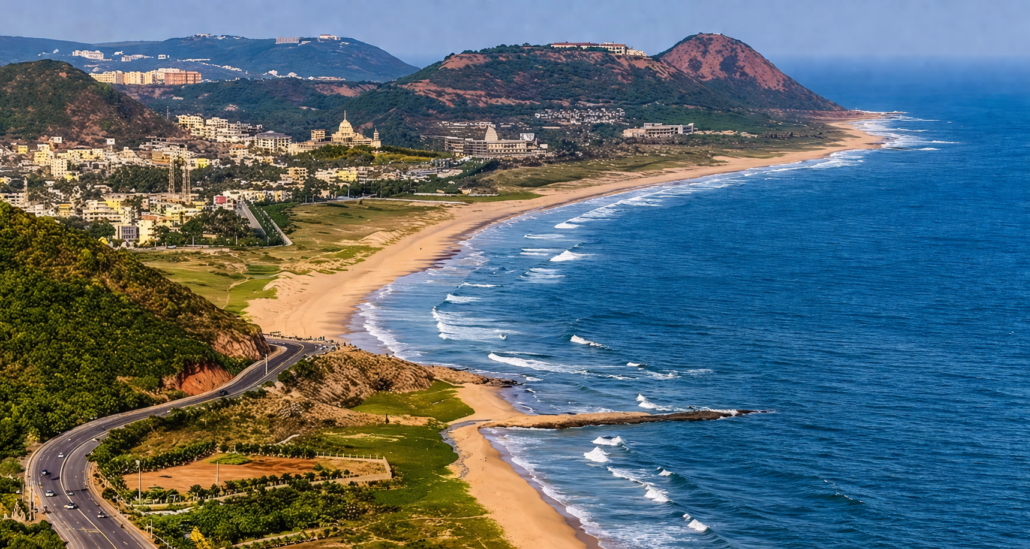
India’s engagement with the seas has historically extended beyond trade and naval power, encompassing and incorporating culture, mobility, and exchange. Despite this, contemporary policy continues to treat the maritime domain primarily through the lenses of security, logistics, and port-led development. Tourism — particularly maritime tourism — remains underdeveloped as a strategic sector notwithstanding its ability to integrate economic growth, cultural heritage, natural heritage, and coastal livelihoods.
Globally, tourism is increasingly recognised as a sector capable of generating employment, stimulating regional development, and enhancing a nation’s global profile. According to the World Travel & Tourism Council (WTTC), in 2024 alone, the travel and tourism industry accounted for ten per cent of the global economy, which translates to roughly US$ 11 trillion. The industry also supported around 357 million jobs worldwide — nearly one in every ten jobs.[1] Within all this, maritime tourism occupies a distinct space, linking coastal landscapes, riverine systems, islands, and maritime heritage into an integrated economic domain. It is not limited to beaches alone, and includes cruise tourism, waterfront development, inland waterways, maritime museums, underwater heritage, and coastal community experiences.
In India, however, the development of maritime tourism has been quite uneven in geographical terms. States on India’s west coast consolidated and built upon early advantages, while the those on the east coast remain underdeveloped despite comparable geographical potential. This asymmetry reflects structural and policy gaps rather than natural constraints.
Andhra Pradesh illustrates this imbalance clearly and provides a useful case through which to examine both constraints and emerging opportunities.
An indicative understanding of this imbalance can be drawn from foreign tourist visits (FTVs). While these figures do not disaggregate maritime tourism, they certainly provide a useful macro-level snapshot of destination visibility, infrastructure readiness, and international integration.
Table 1: Coastal State-wise Foreign Tourist Visits (2022 & 2023)
| Ser | State | Coastline (Km) | FTVs in 2022 (in lakhs) | % share | FTVs in 2023 (in lakhs) | % share |
| East Coast | ||||||
| 1. | Andhra Pradesh | 1053.07 | 0.166 | 3.2 | 0.060 | 0.5 |
| 2. | Odisha | 574.71 | 0.022 | 0.4 | 0.045 | 0.4 |
| 3. | Tamil Nadu | 1068.69 | 0.407 | 7.8 | 1.175 | 10 |
| 4. | West Bengal | 721.02 | 1.037 | 19.9 | 2.707 | 23.1 |
| Total (ES) | 3417.42 | 1.632 | 31.3% | 3.987 | 34% | |
| West Coast | ||||||
| 5. | Goa | 193.95 | 0.175 | 3.4 | 0.453 | 4 |
| 6. | Gujarat | 2340.62 | 1.777 | 34.1 | 2.807 | 24 |
| 7. | Karnataka | 343.30 | 0.129 | 2.5 | 0.409 | 3.5 |
| 8. | Kerala | 600.15 | 0.346 | 6.6 | 0.649 | 5.5 |
| 9. | Maharashtra | 877.97 | 1.152 | 22.1 | 3.388 | 29 |
| Total (WS) | 4162.04 | 3.579 | 68.7% | 7.706 | 66% | |
Source: Compiled from India Tourism Data Compendia 2024 and 2025[2]
This data highlights a clear spatial imbalance. States such as Maharashtra and Gujarat account for a disproportionate share of foreign tourists. West Bengal and Tamil Nadu, too, have managed to sustain international tourism visibility through strong branding and of heritage circuits.
In contrast, Andhra Pradesh’s performance remains strikingly weak. Despite possessing a coastline of approximately 1053 kilometres, the third longest among Indian states after Gujarat and Tamil Nadu, Andhra Pradesh recorded only 0.06 lakh (6000) foreign tourist visits in 2023, accounting for a nearly negligible 0.5 per cent share. Odisha displays a similar pattern, reinforcing the broader underperformance of the eastern seaboard in international tourism flows.
It is important to emphasise that these figures represent overall foreign tourist visits and not numbers specific to maritime tourism. Foreign tourists may well be visiting urban centres, religious sites, or inland destinations, rather than coastal or maritime locations. However, the data remains analytically valuable for two reasons. First, maritime tourism has been a major driver of foreign tourist inflows in west coast states, particularly through beach tourism, cruise ship tourism, and waterfront urban experiences. Second, persistently low foreign tourist numbers indicate a weak destination branding, limited international connectivity, and underdeveloped tourism infrastructure, all of which directly affect the viability of maritime tourism.
From this perspective, Andhra Pradesh’s low foreign tourist share reflects not merely a tourism deficit, but a deeper structural absence of a recognisable coastal or maritime tourism identity. This gap persists despite favourable geography and reinforces the case for examining Andhra Pradesh as a representative example of unrealised maritime tourism potential along India’s east coast.
Conceptualising Maritime Tourism and the Governance Context
Maritime tourism is inherently cross-sectoral. It intersects with ports, shipping, environment, fisheries, urban planning, and coastal regulation. Its development is, therefore, determined as much by governance structures as by geography.
Any discussion on maritime tourism must begin with the constitutional position of tourism as a subject of governance in India. Astonishingly, tourism is not explicitly mentioned in the Union-, State-, or Concurrent Lists of the Seventh Schedule of the Constitution of India.[3] As a non-enumerated subject, tourism formally falls within the residuary powers of the Union government.[4] However, in practice, it functions as a shared domain. The Union shapes policy frameworks and international outreach, while states exercise substantial functional control over planning, implementation, infrastructure, and local regulation.
This ambiguity becomes more pronounced in maritime tourism. Coastal regulation, ports, shipping, and environmental clearances, fall under different ministries and legal frameworks. The result is fragmented decision-making, delayed clearances, and a lack of coordination, especially in complex domains such as cruise tourism and island development.
Over the years, there have been repeated proposals to include tourism in the Concurrent List.[5] Proponents argue that such recognition would facilitate better coordination between the Centre and the states, enable clearer policy alignment, and reduce jurisdictional ambiguity.[6] Despite sustained debate, however, no constitutional amendment has been enacted. Tourism, therefore, continues to function within a hybrid governance structure shaped more by administrative practice than constitutional clarity.
Understanding this governance context is essential in assessing Andhra Pradesh’s maritime tourism sector. The state’s experience reflects not only local policy choices but also the structural constraints arising from India’s constitutional and institutional design.
The Relevance of Andhra Pradesh as a Case Study
Andhra Pradesh reflects both the structural challenges of the eastern seaboard and the possibilities of policy intervention.
Despite a coastline of approximately 1,053 kilometres (third-longest), maritime tourism remains grossly underdeveloped. Tourism activity is positioned without any coherent coastal narrative and is concentrated in limited pockets such as Visakhapatnam. Compared to states on India’s west coast, Andhra Pradesh lacks branding, depth in infrastructure, and institutional continuity.
The situation is not entirely bereft of remedy, of course, and recent policy signals do indicate an encouraging shift. The state leadership has explicitly identified beach and island tourism as priority areas. In January of 2026, the Chief Minister of Andhra Pradesh publicly called for the development of island tourism in the state, drawing comparisons with international models such as the Maldives.[7] The significance of this articulation lies less in the comparison with the Maldives and more in the recognition of islands and coastal stretches as tourism assets rather than marginal spaces.
During a meeting of the “State Investment Promotion Board”, officials were directed to prepare a comprehensive master plan for beach tourism, signalling an intent to move towards structured and spatially planned coastal development.[8] Specific geographies were identified as potential maritime tourism clusters. The Suryalanka beach in Baptla district was highlighted for development over a 15-kilometre stretch, with a strong emphasis on branding, resort-development, and the creation of a clean and safe beachfront.[9] Small islands near Sullurpeta were identified for island tourism development, indicating a willingness to move beyond conventional mainland beach destinations. Regions such as Konaseema, Kolleru, and Pullicat, Papikondalu-Polavaram, and of course, Visakhapatnam, were singled out as emerging tourism clusters combining coastal, riverine, and landscape-based tourism potential.[10]
Recent developments indicate that Andhra Pradesh has entered a more concrete phase in its maritime tourism trajectory, marked by the convergence of political intent, physical infrastructure creation, and institutional engagement. Unlike the earlier period, which had been characterised largely by policy articulation, the current phase shows signs of implementation-led momentum.
A significant milestone was recently achieved with the operationalisation of the “Visakhapatnam International Cruise Terminal”, from which the luxury cruise liner MV Empress, a major cruise ship operated by Cordelia Cruises, was flagged-off.[11] This event marked Andhra Pradesh’s formal entry into India’s emerging cruise-ship tourism network. The cruise itineraries linking Visakhapatnam with Chennai, Puducherry, and open-sea segments, positioned the city as both a port of call and a potential home port in the future. While cruise-ship tourism remains nascent in India, the presence of operational cruise infrastructure places Visakhapatnam ahead of most eastern coastal cities in terms of maritime tourism readiness.
Beyond Visakhapatnam, recent proposals indicate efforts to integrate coastal connectivity with tourism development. The accord of in-principle approval of the Union Government for a greenfield national highway, connecting Nizampatnam fishing harbour with the proposed Amaravati Outer Ring Road, represents a significant intervention.[12] While the project is framed primarily around marine exports and logistics, its implications for tourism are substantial. Improved connectivity to coastal destinations such as Suryalanka and Bapatla beaches directly addresses one of the longstanding bottlenecks in coastal tourism development, namely, ‘access’.[13] For backward coastal regions, such infrastructure can function as an enabling backbone for tourism, fisheries, and allied services, provided tourism planning is integrated from the outset.
Maritime heritage has also begun to feature more prominently within the tourism discourse. The announcement of Andhra Pradesh’s first “Lighthouse Museum” (in Visakhapatnam), along with a “Centre for Maritime Education and Tourism Promotion”, reflects a growing recognition of heritage-led maritime tourism.[14] Nationally, lighthouse tourism has demonstrated rapid growth, following targeted policy-support, and the inclusion of Andhra Pradesh within this framework positions the state to leverage maritime heritage as an experiential tourism asset rather than a static monument.
International outreach complements these domestic initiatives. Andhra Pradesh’s participation in global tourism platforms, including the World Travel Market in London, has sought to reposition the state as an emerging tourism destination.[15] The emphasis on coastline, cultural heritage, and investment opportunities, coupled with assurances under the Tourism Policy 2024–29, indicates an attempt to link global visibility with domestic policy reform.[16] Taken together, these developments suggest a transition from conceptual recognition to early-stage implementation, even as coordination and sustainability challenges persist.
However, this emerging intent must be situated within the broader national context of uneven development in maritime tourism. An indicative comparison of coastal states based on maritime tourism maturity highlights the structural position from which Andhra Pradesh is attempting to transition.
Table 2: Indicative Ranking of Coastal States by Maritime Tourism Maturity
| Ser | State | Tier | Maritime Tourism Characteristics |
| 1. | Goa | High | International beach destination, strong branding, and cruise tourism |
| 2. | Kerala | High | Integrated coastal and backwater tourism, houseboats, maritime heritage |
| 3. | Maharashtra | High | Urban coastal tourism, cruise terminals, waterfront redevelopment |
| 4. | Gujarat | High-Medium | Coastal heritage, niche beach tourism, pilgrimage-coastal linkages |
| 5. | Karnataka | Medium | Emerging beach circuits, eco-tourism |
| 6. | Tamil Nadu | Low-Medium | Select urban beaches, limited integrated maritime branding |
| 7. | Andhra Pradesh | Low | Long Coastline, weak coastal tourism identity beyond Visakhapatnam |
| 8. | Odisha | Low | Limited beach destinations, strong eco-sensitive constraints |
| 9. | West Bengal | Low | Localised coastal tourism, limited national visibility |
Note: The ranking is indicative and based on tourism infrastructure, branding, investment patterns, and diversity of maritime tourism offerings rather than absolute tourist numbers
This comparison reinforces the core argument of the paper. Andhra Pradesh is not starting from a position of incremental growth but from a structurally weak baseline, where maritime tourism lacks both identity and ecosystem depth. Reiterating what has been stated earlier in this paper, the issue is not the absence of coastal assets but the absence of integrated development, sustained branding, and institutional continuity.
The recent policy push, therefore, must be understood as an attempt to shift the state from a “low-tier” maritime tourism profile towards a more organised and competitive framework. Whether or not this transition materialises will depend not on isolated projects, but on the state’s ability to convert policy intent into a coordinated maritime tourism system.
Persistent Constraints
Andhra Pradesh’s challenge lies not in potential but in systemic limitations.
- First, institutional fragmentation continues to dilute outcomes. Maritime tourism cuts across multiple departments, yet coordination remains ad hoc. This leads to disconnected projects rather than a unified tourism ecosystem.
- Second, regulatory complexity increases uncertainty. Coastal Regulation Zone norms and environmental approvals are necessary, but delays and a lack of procedural clarity discourage investment, particularly in island and waterfront tourism.
- Third, infrastructural asymmetry persists. While flagship projects such as the cruise-ship terminal signal progress, last-mile connectivity, sanitation, waterfront amenities, and tourism services remain underdeveloped.
- Fourth, human capital deficits are significant. There are no dedicated maritime tourism training centres to build the soft skills that are essential amongst cruise-ship operators, coastal-hospitality employees, or personnel well versed in marine interpretation. Infrastructure without skilled personnel cannot sustain tourism growth.
- Fifth, cruise tourism is subjected to what is principally a top-down approach. Infrastructure is being created without sufficient alignment with operator demand, itinerary planning, or market requirements.
- Finally, socio-cultural readiness remains underdeveloped, not merely in terms of service quality or cleanliness, but at the level of societal orientation. Maritime tourism introduces sustained interaction with global visitors, bringing different behavioural expectations, cultural norms, and patterns of engagement, which local systems are not yet prepared to absorb. This requires a shift from viewing tourism as a sporadic inflow to a continuous interface, and from informal practices to predictable public behaviour. A gap persists between local norms and international expectations, — particularly in public conduct, hospitality attitudes, and openness to cultural differences — which directly affects tourist experiences.
Each of these constraints warrants independent, in-depth examination and will be taken-up in subsequent research-papers on maritime tourism.
Policy Recommendations and Way Forward
The Andhra Pradesh case illustrates that maritime tourism development is not constrained by geography, but by the absence of an integrated and sustained policy approach. Addressing these gaps requires a shift from project-based interventions to system-level planning. The following eight specific recommendations are offered as a way-forward:
- A “Maritime Tourism Coordination Mechanism” should be established within the state tourism framework, in order to align multiple departments.
- The state must adopt a cluster-based approach, focusing on a limited number of high-potential regions such as Visakhapatnam, Suryalanka-Baptla, Konaseema, and Pullicat.
- The state must ensure that maritime tourism shifts to a “bottom-up” model. Industry requirements — routes, turnaround times, passenger expectations — should guide infrastructure and policy. The role of the state and the Union should be to enable, not dictate.
- Maritime Tourism Training Centres must be established to build both capacity (material wherewithal) and capability (human skills, training, ingenuity, and legal competence) in:
- Cruise-ship Operations
- Coastal hospitality
- Maritime heritage (both cultural and natural) interpretation
- Community-based tourism services.
- Island- and lagoon tourism must follow a controlled and context-specific model. Rather than replicating high-density international resort formats, Andhra Pradesh should prioritise low-impact, high-value tourism grounded in environmental carrying capacity and community participation.
- Socio-cultural readiness must be prioritised, including cleanliness, service standards, and tourist engagement practices.
- Tourism must be embedded within broader infrastructure planning, ensuring that ports, highways, and inland waterways are designed from their very inception, keeping tourism integration as a parallel goal.
- Andhra Pradesh must invest in maritime tourism branding and narrative-building. The state’s tourism identity should move beyond isolated beach imagery to foreground river–sea continuums, maritime heritage, coastal cultures, and experiential tourism.
Conclusion
The imbalance between India’s western and eastern maritime tourism landscapes is the result of long-term asymmetries in policy attention, institutional capacity, and destination-building. Andhra Pradesh demonstrates both the depth of this gap and the possibility of change. Recent initiatives signal intent, but intent alone is insufficient without systemic alignment.
The objective is not merely to increase tourist numbers. The end-state that this paper proposes is threefold: (a) an integrated maritime tourism ecosystem; (b) A socially embedded tourism model; (c) A distinct maritime identity for Andhra Pradesh
If achieved, Andhra Pradesh will not merely mimic or replicate western models but establish a different trajectory — one grounded in sustainability, cultural depth, and institutional coherence. In doing so, it can reposition the eastern seaboard within India’s broader maritime integration.
******
About the Author:
Mr Suraj Palavalsa is a Research Associate at the National Maritime Foundation. He has a Bachelor’s degree in Sociology, History, Political Science, and Economics (Ancillary) from Banaras Hindu University (BHU), and earned his MA degree in International Relations (South Asian Studies) from Pondicherry University, Puducherry. His current research focuses on reviving India’s maritime consciousness, as also on ports and maritime connectivity, adopting an interdisciplinary approach to both areas. He can be reached at emc1.nmf@gmail.com.
Endnotes:
[1] “Travel & Tourism Economic Impact Research (EIR),” World Travel & Tourism Council, 2025. https://wttc.org/research/economic-impact.
[2] Government of India, Ministry of Tourism, “India Tourism Data Compendium 2024”. https://tourism.gov.in/sites/default/files/2025-03/India%20Tourism%20Data%20Compendium%202024_0.pdf.
See Also: Government of India, Ministry of Tourism, “India Tourism Data Compendium 2025”. https://tourism.gov.in/sites/default/files/2025-09/India%20Tourism%20Data%20Compendium%202025_1.pdf.
[3] Government of India, Ministry of External Affairs, “The Constitution of India”, Article 246: Seventh Schedule. https://www.mea.gov.in/images/pdf1/S7.pdf.
[4] Government of India, Ministry of External Affairs, “Article 248: Residuary Powers of legislation”. https://www.mea.gov.in/Images/pdf1/Part11.pdf.
[5] Anumeha Chaturvedi, “Tourism Ministry Initiates Proposal for Including Tourism in the Concurrent List of the Constitution,” The Economic Times, 03 Aug 2021. https://economictimes.indiatimes.com/news/india/tourism-ministry-initiates-proposal-for-including-tourism-in-concurrent-list-of-the-constitution/articleshow/85008011.cms?from=mdr.
[6] “Bring Tourism Sector Into Concurrent List,” The Hindu, 30 Dec 2020. https://www.thehindu.com/business/bring-tourism-sector-into-concurrent-list/article33456981.ece.
[7] Press Trust of India, “Andhra CM Naidu Approves Rs 19,000 cr Investments; Unveils IT Portal, Pushes Beach Tourism Plans,” The Print, 06 Jan 2026. https://theprint.in/india/andhra-cm-naidu-approves-rs-19000-cr-investments-unveils-it-portal-pushes-beach-tourism-plans/2820223/.
[8] Indo-Asian News Service (IANS), “Andhra Pradesh CM Calls for Developing Island Tourism Similar to Maldives”, The News Minute, 07 Jan 2026. https://www.thenewsminute.com/andhra-pradesh/andhra-pradesh-cm-calls-for-developing-island-tourism-similar-to-maldives.
[9] Bandhavi Annam, “Suryalanka Beach in Bapatla All Set for Rs 98 crore Makeover”, The New Indian Express, 23 June 2025. https://www.newindianexpress.com/states/andhra-pradesh/2025/Jun/23/suryalanka-beach-in-bapatla-all-set-for-rs-98-crore-makeover.
[10] IANS, “Andhra Pradesh CM Calls for Developing Island Tourism Similar to Maldives”, The News Minute, 07 Jan 2026.
[11] The Hindu Bureau, “Union Minister virtually flags off cruise liner from Vizag to Chennai”, The Hindu, 03 July 2025. https://www.thehindu.com/news/cities/Visakhapatnam/union-minister-virtually-flags-off-cruise-liner-from-vizag-to-chennai/article69765377.ece.
[12] Times News Network, “Union Government Approves Rs 1,400 Crore Highway Project in Andhra Pradesh”, Times of India, 26 May 2025. https://timesofindia.indiatimes.com/city/vijayawada/union-government-approves-1400-crore-highway-project-in-andhra-pradesh/articleshow/121397784.cms.
[13] “Union Govt Approves Greenfield National Highway to Boost Marine Exports and Tourism in Andhra Pradesh”, India Sea Trade News, 27 May 2025. https://indiaseatradenews.com/union-govt-approves-greenfield-national-highway-to-boost-marine-exports-and-tourism-in-andhra-pradesh/.
[14] Government of India, Press Information Bureau, “‘Lighthouse Tourism Records Fivefold Rise in a Decade’, says Sarbananda Sonowal at the Indian Lighthouse Festival 3.0 in Visakhapatnam”, 10 Jan 2026. https://www.pib.gov.in/PressReleasePage.aspx?PRID=2213361®=3&lang=1.
[15] “Minister Kandula Durgesh Highlights Andhra Pradesh Tourism at World Travel Market”, The New Indian Express, 07 Nov 2025. https://www.newindianexpress.com/states/andhra-pradesh/2025/Nov/07/minister-kandula-durgesh-highlights-andhra-pradesh-tourism-at-world-travel-market#.
[16] Samdani MN, “Andhra Pradesh Unveils Tourism Policy 2024-29 to Boost Investments and Job Creation”, Times of India, 28 Sep 2025. https://timesofindia.indiatimes.com/city/vijayawada/andhra-pradesh-unveils-tourism-policy-2024-29-to-boost-investments-and-job-creation/articleshow/124199087.cms.


Leave a Reply
Want to join the discussion?Feel free to contribute!