
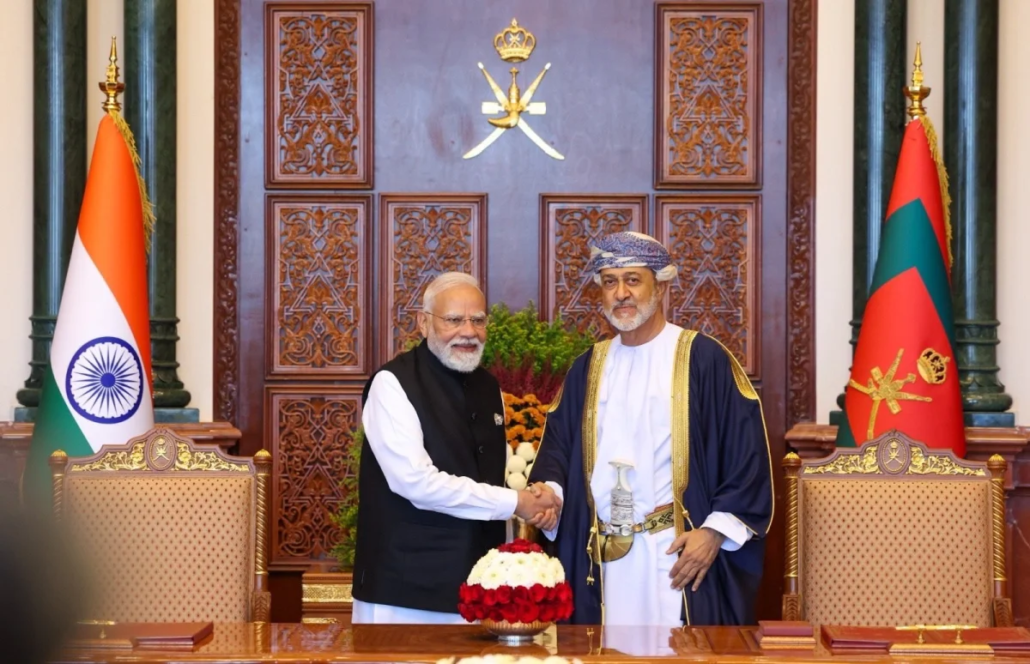
The signing of the Memorandum of Understanding (MoU) on Maritime Heritage and Museums during Prime Minister Narendra Modi’s visit to the Sultanate of Oman on 18 December 2025 marks a pivotal moment in India-Oman relations.[1] While contemporary joint statements understandably foreground trade, energy cooperation, and maritime security, this MoU carries a deeper and more enduring resonance. It formally acknowledges that the India-Oman relationship is not merely strategic or transactional, but civilisational in character, shaped by millennia of sustained maritime interaction across the Arabian Sea.
This civilisational dimension was further reflected in the leaders’ welcome of the joint exhibition “Legacy of Indo-Oman Relations,” and their acknowledgement of ongoing discussion on cultural digitisation initiatives. The proposed establishment of an Indian Council for Cultural Relations (ICCR) Chair Programme of Indian Studies at Sohar University represents an important institutional step in this direction.[2] It creates a sustained platform for academic collaboration, historical research, and cultural exchange, moving cultural engagement beyond symbolic gestures to structured knowledge production. Taken together, these initiatives signal a deliberate effort by both countries to embed maritime heritage and cultural memory within the broader architecture of their contemporary partnership, ensuring that historical linkages are preserved, studied, and projected as living assets of India-Oman relations.
Amongst India’s historical connections, Oman occupies a distinctive and singular place. In many respects, it is India’s oldest known international partner, with interactions dating back over five millennia to the Indus-Saraswati Civilisation.[3] Long before the emergence of modern nation-states, the waters of the Arabian Sea connected Indus ports with the Oman (Magan) Peninsula, facilitating trade, technology transfer, and cultural exchange. The maritime space between India and Oman was never a frontier; it functioned as a corridor. The sea did not divide these societies but bound them into a shared economic and cultural system.
This paper seeks to inform ‘policy’ in that it argues that the MoU on Maritime Heritage and Museums should be viewed as the institutional framework for a long-term India-Oman Maritime Heritage Partnership. Such a partnership must integrate archaeology, museums, naval diplomacy, UNESCO frameworks, academic research, and people-to-people memory. It further situates this emerging partnership within Project MAUSAM, India’s flagship initiative to reconnect the Indian Ocean region through shared maritime cultural landscapes and transnational historical routes.
Oman as India’s oldest Maritime Partner
Oman’s historical connections with the Indian subcontinent extend back to antiquity. Archaeological evidence from sites such as Ras al-Hadd,[4] Ras al-Jinz,[5] Salut,[6] and Bat,[7] alongside Mesopotamian references to Dilmun and Magan, confirms Oman’s role as a crucial node in the Bronze Age maritime trade networks. For the Indus-Saraswati Civilisation, Oman was of central importance as a primary source of copper, a material indispensable to Harappan metallurgy. The scale and consistency of copper extraction and export from the Oman Peninsula underscore the structured nature of this relationship. Excavations across Oman have yielded Harappan pottery, beads, seals, and standardised weights, indicating sustained and organised trade rather than sporadic contact.[8] Conversely, Indus seals and material culture discovered in Mesopotamia often show evidence of having transited through Omani ports, underlining Oman’s role as a maritime intermediary between South Asia and West Asia. These exchanges presupposed advanced nautical capabilities. Both the Harappans[9] and the people of Magan[10] were skilled shipbuilders and navigators, familiar with tidal regimes, coastal sailing, and seasonal wind patterns.
The Arabian Sea thus emerged as a shared maritime laboratory where ship design, seamanship, and navigational knowledge, all evolved collaboratively rather than in isolation. This early interaction established patterns that endured for millennia, including monsoon-based navigation, port-centred cosmopolitanism, and merchant diasporas. Oman, more than any other Indian Ocean partner, represents continuity rather than rupture in India’s maritime history. The Umm an-Nar culture of the Oman Peninsula, dating from approximately 2600 BCE to 2000 BCE, was a direct participant in these Indian Ocean exchange systems. Archaeological evidence indicates a structured trade relationship between Indus settlements such as Lothal, Dholavira, and Sutkagen-dor, and coastal communities in Magan.[11]
Scientific analyses have chemically matched copper ingots from Oman with artefacts found at Indus sites, confirming the scale of extraction and long-distance maritime transport.[12] In return, the Indus supplied textiles, carnelian beads, ivory, and possibly agricultural produce. These were not ad hoc exchanges, but part of a managed maritime economy supported by ports, warehouses, and administrative systems. The maritime route linking Gujarat and Sindh to the Oman coast represents one of the earliest known examples of transoceanic trade in human history.[13]
Notably, this system was characterised by cooperation rather than conquest. There is little evidence of violent maritime domination; instead, the relationship was sustained through commercial, technological, and cultural exchange. For contemporary India–Oman relations, this history provides a powerful narrative foundation, framing both countries not as recent partners but as inheritors of a shared maritime civilisation.
This legacy endured into later historical periods. Omani and Yemeni dhows sailed regularly to Indian ports such as Bharuch, Sopara, Muziris, and later Calicut and Kochi. Indian teak from the Malabar coast became integral to Omani shipbuilding, valued for its durability and resistance to seawater. Oral traditions in Oman continue to recall this reliance on Indian timber. The dhow cultures of Oman and the Swahili coast also exhibit striking parallels with coastal traditions in India. Carved prows, floral and geometric motifs, and construction techniques reveal sustained cross-cultural influence. Indian shipbuilders adopted the elegant upturned sterns characteristic of Gulf vessels, while Omani craftsmen incorporated Indian design elements into their boats. Mariners from Oman recorded monsoon patterns with remarkable precision, aligning wind systems such as the shamal and khareef with lunar cycles. This knowledge closely mirrored Indian maritime traditions and enabled predictable seasonal navigation across vast distances. The Arabian Sea thus functioned as a shared knowledge system governed by nature rather than political borders.
Oman in India’s Project MAUSAM
Project MAUSAM was conceived to reconnect the Indian Ocean world by tracing maritime cultural routes, coastal landscapes, and oceanic exchanges.[14] Within this framework, Oman is not simply a participant but a cornerstone. The Sohar–Qalhat–Muscat circuit historically positioned Oman as a mediator between India, East Africa, and Southeast Asia.[15] These ports linked Indian textiles and spices with African gold and ivory, and Arabian frankincense and pearls. Oman’s geography made it a hinge of the Indian Ocean system rather than a peripheral node.
This centrality is reflected in Project MAUSAM’s proposed operational design. Two of the three transnational maritime circuits announced under MAUSAM include Oman as a key node, underscoring its structural importance to the initiative.[16] Whether in routes linked to the Periplus of the Erythraean Sea or Bronze Age and early historic Indian Ocean trade networks, Oman consistently emerges as an indispensable connector. This recurring presence mirrors historical reality rather than modern diplomatic convenience.
The recently signed MoU on Maritime Heritage and Museums provides the institutional mechanism to translate this conceptual centrality into practice. It enables the operationalisation of MAUSAM through joint research programmes, co-curated museum exhibitions, shared digital archives, and coordinated transnational heritage nominations. In effect, the MoU allows Oman’s historical role as a maritime bridge to be reimagined as a contemporary platform for cultural diplomacy, scholarship, and heritage-led cooperation in the Indian Ocean region.
Jewel of Muscat and INSV Kaundinya: Reviving Maritime Memory
The reconstruction of the Jewel of Muscat, a traditional Omani dhow built using ninth-century shipbuilding techniques, stands as one of the most significant achievements in experimental maritime archaeology in the Indian Ocean region. Constructed without modern fastenings and relying on stitched-plank methods, natural fibres, and historically accurate hull forms, the project demonstrated that early Indian Ocean vessels were capable of long-distance, open-sea navigation.[17] Its successful voyage validated historical accounts of maritime connectivity between the Arabian Peninsula, the Indian subcontinent, and Southeast Asia, challenging lingering assumptions that pre-modern navigation in the region was coastal or rudimentary.
Beyond its technical achievement, the Jewel of Muscat served as a powerful narrative intervention. It restored visibility to indigenous maritime knowledge systems that had been marginalised in modern historiography, particularly under colonial frameworks that privileged European nautical traditions. For Oman, the project reaffirmed its maritime identity as a seafaring civilisation whose history was shaped as much by the sea as by the desert.
For India, the Jewel of Muscat became a catalyst for introspection. It highlighted the absence of comparable efforts to reconstruct and study India’s own traditional vessels, despite archaeological, textual, and iconographic evidence of advanced shipbuilding traditions along India’s coasts. This recognition directly informed the conceptualisation and construction of the INSV Kaundinya, India’s stitched-plank sailing vessel inspired by ancient Indian maritime practices. Drawing on iconography from Ajanta paintings, archaeological remains from coastal sites, and textual references, INSV Kaundinya represents an effort to reclaim India’s maritime past through practice rather than abstraction.[18]
The relationship between the Jewel of Muscat and INSV Kaundinya is therefore not incidental but dialogic. Together, they embody a shared Indian Ocean tradition of shipbuilding rooted in organic materials, adaptive design, and environmental knowledge. They demonstrate that Indian and Omani maritime cultures evolved not in isolation but through sustained interaction, learning, and mutual influence.
The forthcoming voyage of INSV Kaundinya to Oman should be understood in this light.[19] It is not merely a ceremonial port call or a symbolic gesture of goodwill. It constitutes a moving, living archive of shared maritime memory. By retracing historical sea routes, the voyage makes visible the continuity between past and present, scholarship and seamanship, diplomacy and heritage. Under the framework of the MoU, this voyage can be institutionally embedded through co-curated exhibitions, academic seminars, public lectures, and educational outreach in both countries. Such integration would ensure that the voyage becomes part of a sustained heritage partnership rather than a one-off event.
Aligning with Oman Vision 2040
Oman Vision 2040 places culture, heritage, and national identity, at the heart of the Sultanate’s long-term development strategy. Unlike earlier development models that treated heritage as ancillary to economic growth, Vision 2040 explicitly recognises cultural heritage as both a source of social cohesion and a driver of sustainable economic value.[20] Maritime heritage occupies a particularly significant position within this framework, given Oman’s historical identity as a seafaring nation and a connector of the Indian Ocean ‘world’.
Maritime heritage cooperation with India aligns directly with several of Vision 2040’s priority areas of “Citizenship, Identity, National Heritage and Culture.[21]” Joint initiatives under the MoU on Maritime Heritage and Museums and Project MAUSAM can strengthen national pride while projecting Omani heritage internationally. Heritage-led development also offers concrete economic pathways consistent with Vision 2040’s emphasis on diversification and sustainability. Maritime museums, heritage ports, and cultural routes can generate employment, support local crafts, and attract high-value cultural tourism.
Initiatives such as the proposed Spice Boulevard Heritage Circuit or the Periplus Maritime Circuit, with Oman as a central node, can integrate archaeological conservation with cruise tourism, port-city revitalisation, and cultural entrepreneurship, particularly in Muscat, Sur, Sohar, and Qalhat. These initiatives can also be designed to enhance climate resilience through coastal conservation and adaptive reuse of historic infrastructure. Joint research on coastal erosion, underwater cultural heritage, and climate impacts would further strengthen this alignment.[22]
Oman’s proposed “Culture and Values” Index offers an innovative mechanism to measure the social and cultural impact of such initiatives.[23] India–Oman maritime heritage projects can provide measurable indicators within this index, including heritage documentation, museum footfall, educational outreach, international collaborations, and digital dissemination. In this sense, MAUSAM-linked initiatives do not merely preserve history; they generate data, visibility, and outcomes that can be incorporated into national planning and evaluation frameworks.
Way Forward: A Policy Roadmap
With the signing of the MoU, India and Oman now possess the institutional mandate to move decisively from symbolic affirmation to structured implementation. The next phase must be programme-driven, time-bound, and anchored in identifiable institutions on both sides.
- Establishing a Joint India–Oman Maritime Heritage Working Group. A Joint Maritime Heritage Working Group should be established within six months of the MoU, co-chaired by the Ministry of Culture, Government of India, and the Ministry of Heritage and Tourism, Sultanate of Oman. The Working Group should include representatives from the National Museum of Oman and India, the Archaeological Survey of India (ASI), the Directorate General of Antiquities of Oman, the Indian Navy (History division and Maritime History Society), the Royal Navy of Oman, selected academic institutions and think tanks such as India’s National Maritime Foundation, with a mandate to identify priority sites and themes for cooperation, approving pilot projects and timelines, coordinating funding channels and institutional responsibilities and reporting annually to both governments.
- Launch Flagship MAUSAM Pilot Projects with Oman as Anchor State. Rather than dispersing effort, India and Oman should jointly designate two flagship MAUSAM pilots: (i) Sohar-Qalhat-Muscat and Bharuch-Muziris Maritime Heritage Corridor and (ii) Periplus of the Erythrean Sea Route. These pilots should be presented as demonstrator projects for MAUSAM’s transnational ambition.
- Institutionalise Museum-to-Museum Partnerships. The MoU should be operationalised through formal twinning arrangements between the National Museum of Oman and the National Maritime Heritage Complex in Lothal, Gujarat. The deliverables of this arrangement should be rotating exhibitions on the Indian Ocean trade and shipbuilding, joint conservation workshops, shared curatorial fellowships for young professionals and Digitisation of Omani-Indian maritime collections with shared metadata standards. This would move cooperation from event-based exchanges to institutional depth.
- Create an India–Oman Maritime Heritage Fellowship Programme. A jointly funded fellowship programme should be established to support doctoral and postdoctoral research on Indian Ocean maritime history, fieldwork in Omani and Indian coastal sites, museum studies, shipbuilding traditions, and oral history documentation. Fellows should be embedded in Omani and Indian institutions for defined periods, creating a sustained intellectual ecosystem rather than one-off exchanges.
- Align Outputs with Oman Vision 2040 Metrics. All major initiatives should be mapped against Oman Vision 2040 indicators, particularly the proposed Culture and Values Index. This will ensure that heritage cooperation contributes directly to national planning frameworks rather than remaining peripheral. India, too, should develop its own Culture and Values index, taking inputs from Omani counterparts.
- Position India–Oman Cooperation as a Regional Template. India and Oman should jointly present their maritime heritage partnership as a model for the wider Indian Ocean region. Lessons learned can inform future collaborations with Eastern Africa, Southeast Asia, and the Gulf.
- Support Transnational UNESCO Nominations Linked to Indian Ocean Trade Routes.
Conclusion
India and Oman’s relationship is not merely ancient; it is continuous. The sea has been its archive, its highway, and its memory. The MoU on Maritime Heritage offers an opportunity to transform shared history into shared strategy, cultural diplomacy, and global leadership in maritime heritage. In doing so, India and Oman reaffirm a simple but powerful truth: the Indian Ocean did not divide civilisations; it connected them.
******
About the Author:
Mr Suraj Palavalsa is a Research Associate at the National Maritime Foundation. He is a graduate of the Banaras Hindu University (BHU), where he gained a Bachelor’s degree in Sociology, History, Political Science and Economics (Ancillary), and earned his Master’s degree in International Relations (South Asian Studies) from Pondicherry University, Puducherry. His current research focuses on matters pertaining to reviving India’s maritime consciousness through an interdisciplinary approach. He can be reached at emc1.nmf@gmail.com.
Endnotes:
[1] Media Centre, “India – Oman Joint Statement during the visit of Prime Minister of India, Shri Narendra Modi to Oman (December 17-18, 2025),” Ministry of External Affairs (MEA), Government of India (GoI), 18 December 2025, https://www.mea.gov.in/bilateral-documents.htm?dtl/40518#
[2] Government of India, “India-Oman Joint Statement during the visit of Prime Minister of India, Shri Narendra Modi to Oman (December 17-18, 2025),” MEA Media Centre, 18 December 2025.
[3] Government of India, “India-Oman Bilateral Brief”, Ministry of External Affairs Brief, December 2023, https://www.mea.gov.in/Portal/ForeignRelation/Oman-Dec-23.pdf.
[4] Maurizio Cattani, Jonathan Mark Kenoyer et al, “New excavations at the Umm an-Nar site Ras al-Hadd HD-1,
Sultanate of Oman (Seasons 2016–2018): Insights on Cultural Interaction and Long-distance Trade,” Proceedings of the Seminar for Arabian Studies 49 (2019): 69–84, https://www.researchgate.net/publication/382590277_New_excavations_at_the_Umm_an-Nar_site_Ras_al-Hadd_HD-1Sultanate_of_Oman_seasons_2016-2018_insights_on_cultural_interaction_and_long-distance_trade.
[5] “Ras al Had Turtle Reserve and the Heritage Site of Ras al Jinz,” World Heritage Convention, UNESCO, https://whc.unesco.org/en/tentativelists/5840/
[6] Dennys Frenez, Michele Degli Esposti et al, “Bronze Age Salūt (ST1) and the Indus Civilization: Recent Discoveries and New Insights on Regional Interaction,” Papers from the 47th Meeting of the Seminar for Arabian Studies held at the British Museum, London, 46 (24 to 26 July 2015): 107-124, https://www.jstor.org/stable/45163421.
[7] Dennys Frenez, “The Indus Civilization Trade with the Oman Peninsula,” Ministry of Heritage and Culture, Sultanate of Oman, 2018, https://www.harappa.com/sites/default/files/pdf/The_Indus_Civilization_Trade_with_the_Om.pdf.
[8] Dennys Frenez, “The Indus Civilization Trade with the Oman Peninsula,” Ministry of Heritage and Culture, Sultanate of Oman, 2018.
[9] Priyasha Dixit, “The Case for India’s Seafaring Legacy – Ancient Indian Shipbuilding”, National Maritime Foundation Website, 11 May 2024, https://maritimeindia.org/the-case-for-indias-seafaring-legacy-ancient-indian-shipbuilding/.
[10] “Oman’s Maritime History,” Ministry of Heritage and Tourism, Sultanate of Oman, https://shababoman.om/menu/history/en.
[11] Dennys Frenez, “The Indus Civilization Trade with the Oman Peninsula”, Ministry of Heritage and Culture, Sultanate of Oman, 2018.
[12] “Bronze Age Copper Ingots Uncovered in Oman”, Archaeology Magazine, Archaeology Institute of America, 02 June 2023, https://archaeology.org/news/2023/06/02/230602-oman-copper-ingots/.
[13] Vishnu Prakash Mangu, “India and Oman: A Saga of Commerce, Culture, and Connectivity,” International Journal of Humanities, Social Science and Management (IJHSSM) 5, no 2, 2025, 683-692. https://ijhssm.
org/issue_dcp/India%20and%20Oman%20%20A%20Saga%20of%20Commerce,%20Culture, %20and%20Connectivity.pdf.
[14] Government of India, “Project Mausam,” Ministry of Culture. https://www.indiaculture.gov.in/project-mausam.
[15] Suraj Palavalsa and Vice Admiral Pradeep Chauhan, “Operationalising Project MAUSAM”, National Maritime Foundation, New Delhi, 2025.
[16] Government of India, “Parliament Question: Mission MAUSAM”, Press Information Bureau, 21 August 2025, https://www.pib.gov.in/PressReleasePage.aspx?PRID=2159348.
[17] Tom Vosmer, “The Jewel of Muscat: Reconstructing a Ninth-Century Sewn-Plank Boat”, Shipwrecked: Tang Treasures and Monsoon Winds, eds Regina Krahl, John Guy, et al, 120–135. Washington, DC: Arthur M. Sackler Gallery, Smithsonian Institution; Singapore: National Heritage Board and Singapore Tourism Board, 2010.
[18] Government of India, “Traditionally Built ‘Ancient Stitched Ship’ Inducted into the Indian Navy as INSV Kaundinya,” Press Information Bureau, 21 May 2025, https://www.pib.gov.in/PressReleasePage.aspx?PRID=2130294®=3&lang=2.
[19] Newton Sequeira, “Hand-Stitched Kaundinya, Replica of 5th Century Ship, to Sail to Muscat this Month, Times of India, 14 December 2025, https://timesofindia.indiatimes.com/city/goa/hand-stitched-kaundinya-replica-of-5th-century-ship-to-sail-to-muscat-this-month/articleshow/125953459.cms.
[20] Sandhya Rao Mehta, “Oman’s Rich Heritage meets Vision 2040,” Oman Observer, 23 November 2025, https://www.omanobserver.om/article/1180130/opinion/omans-rich-heritage-meets-vision-2040.
[21] Sultanate of Oman, “Vision Document 2020”, Oman Vision 2040, 17, https://www.oman2040.om/VisionDocument?lang=en.
[22] Oman Vision 2040, “Sultanate of Oman, 2020, 36, https://www.oman2040.om/VisionDocument?lang=en.
[23] Oman Vision 2040, Sultanate of Oman, 2020, 25, https://www.oman2040.om/VisionDocument?lang=en.


Leave a Reply
Want to join the discussion?Feel free to contribute!