
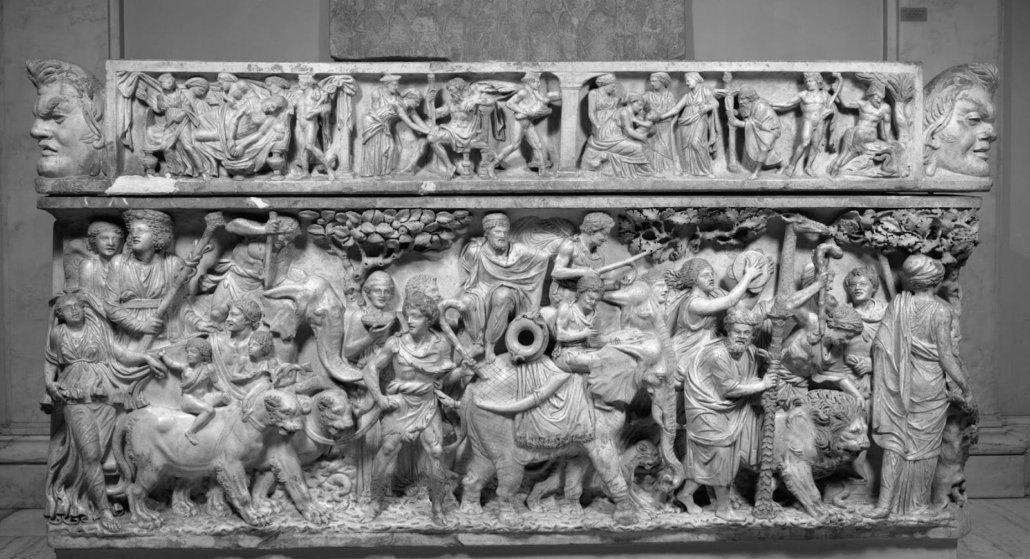
The civilisational ties between India and Greece may be considered an organic consequence of the extensive maritime trade that has occurred between the two societies throughout history. The expansion and integration of maritime networks acted as a catalyst for valuable interaction between — and the emulsification of — two great ancient cultures. Numerous travellers, motivated by different purposes, have documented maritime trade between ancient Greece and India. While some records were penned by well-known diplomats and scholars (primarily of Greek origin) of the ancient world, others can only be attributed to anonymous authors.
Establishing Evidence of Trade Linkages
One of the earliest Greek texts to reference India is Histories, written by Herodotus. However, having been subjected to present rational standards, its value lies chiefly in illuminating Greek perceptions of Indic civilisation rather than serving as a definitive historical account of Indian society or culture.[1] Megasthenes, a well-known Greek historical figure, is one of the many Greek citizens who attempted to record the commercial engagements of their period. Megasthenes, in particular, left an account of the trade between the Mauryan Empire and the Hellenistic empire under Seleucus I in his work entitled “Indica”, dating back to the 4th Century BCE.[2] While the Indica is accepted as a significant record of ancient history, the degree to which modern history can and should rely on the authenticity of its details remains a matter of debate amongst historians.[3] Similarly, a First Century CE Greek navigational text, entitled “Periplus of the Erythraean Sea”, provides a rather comprehensive account of trade routes connecting the Mediterranean world to Indian ports such as Bharuch, Muziris, Korkai, and Poduka.[4] A broad analysis of such texts supports the inference that Greek and Indic societies were on simultaneous trajectories of advancement, particularly in the maritime world.
Maritime expeditions of antiquity were seasonal in nature, as adept seafarers depended on the Indian Ocean’s monsoon winds to facilitate transoceanic commerce. It is also pertinent to note that maritime knowledge was not confined solely to practitioners. Rather, it found artistic expression in literary traditions of both cultures. This is evident in the personification of seas and winds within religious texts and folklore, which often found the basis of traditional societies. The Rig Veda, for instance, contains numerous references to elements of seafaring, including monsoon winds[5], whereas Greek mythology is equally replete with allusions to the oceanic realm.[6][7]
The Periplus of the Erythraean Sea credits Hippalus with the discovery of monsoon winds for navigation. However, this claim remains a point of scholarly contention in contemporary times. Indian historians tend to provide a different perspective, asserting that the discovery, recognition, and application of monsoon winds for maritime trade predate Hippalus. In his work, entitled “Early Users of Monsoon Winds for Navigation”, Sila Tripati provides a meticulous analysis of navigational practices during the Harappan Civilisation, highlighting their sophisticated understanding of monsoon wind patterns and ocean currents as early as 2500 BCE.[8] Drawing upon the research of scholars such as Gaur, Kostman, and Ramage, he opines that the decline of the Harappan Civilisation was, in part, due to the disintegration of maritime trade networks that had primarily been sustained through the advanced navigational expertise of Harappan seafarers. Tripati further strengthens his argument by referencing ancient Indian literary sources, such as the Satapatha Brahmana and Baudhayana Dharmasutra, which contain some of the earliest recorded observations of seafaring and navigation at sea. Based on his textual evidence, it may be inferred that Indian intellectual traditions had imbibed the knowledge of monsoon winds long before the Common Era.
Nonetheless, the academic debate surrounding the discovery of monsoon winds does not diminish the well-documented existence of trade and migration between ancient Greece and India. The extensive commercial, cultural, and intellectual exchanges between these civilisations remain an indisputable historical reality. Since this paper primarily concerns itself with the subject of trade linkages and their impact on the two societies, it may be beneficial to elaborate on the evidence that further supports the claim.
Matthew Watts, in his thesis titled ‘Indo-Greek Trade in the Late Classical and Early Hellenistic Period’, indicates that while there are numerous references to the trade of various commodities, the burden of proof, namely, the need for tangible evidence, tends to pose significant challenges to such sources.[9] Relying primarily on coinage as evidence, he states that they are “an excellent vehicle for investigating commercial activity” and therefore eligible as main evidence. While such an approach may be regarded as overtly dismissive of otherwise comprehensive or significant sources, it undeniably satisfies the immediate need to reaffirm the question of antiquity surrounding such trade networks. However, Watts does identify numerous scholars “from the Archaic period of Greece up to the Roman Imperial period” who have provided reliable information, often primary accounts, on Indo-Greek Trade. It may be useful to note that he examined sources across a variety of disciplines — another indirect evidence of knowledge transaction and cultural transplantation.
In a similar vein, Indo-Greek trade also influenced the socio-cultural milieu of Indian society greatly. The influence of Greek culture on ancient India was notably accelerated by the maritime and overland incursions of Alexander the Great in 326 BCE, which opened new trade routes and paved the way for the formation of Indo-Greek kingdoms.[10] Literary evidence of Indian origin also highlights distinct awareness, on behalf of Indian society, of their Greek counterparts. Panini’s work, entitled “Ashtadhyayi”, constitutes possibly the earliest written evidence for Indian knowledge and perception of the Greeks. While there is no consensus on Panini’s birthdate, scholars agree on the period from the 6th Century BCE to the 4th Century BCE. The Mauryans also developed Greek ties, as witness the fact that Chandragupta Maurya married the daughter of Seleucus I in 303 BCE.[11] It was also with the help of the Greeks, earlier in 312 BCE, that he proved victorious in his endeavour to topple the Nanda dynasty.[12]
The subsequent Indo-Greek kingdoms that came about as a result of either trade or conquest became cultural melting pots, influenced by both Hellenistic and Indian traditions. This unique civilizational blend significantly shaped Indian governance, art, and scientific inquiry. In the artistic domain, Greek naturalism profoundly influenced Indian sculpture, giving rise to the Gandhara School of Art.[13] This fusion integrated Classical Greek realism into the representation of Indian religious figures, particularly in the depiction of Buddhist and Hindu deities. These representations were characterised by Hellenistic features such as draped garments and anatomically precise and youthful forms. This artistic exchange had a lasting impact on the region’s visual culture.
Politically, Indo-Greek rulers incorporated Indian administrative systems while introducing Hellenistic governance practices, such as bilingual coinage, which streamlined commercial transactions across both maritime and land-based trade networks.[14] This fusion fostered economic integration and strengthened the maritime links connecting India with the Greek world.
The interactions that facilitated maritime trade between Ancient India and Ancient Greece were multifaceted, encompassing commerce, medicine, textiles, and extending well into the realms of philosophical dialogues, religious exchanges, and artistic influences. Economic interconnectivity, regulated by the monsoon winds, amply documented in Greek and Indian sources, established the foundation for enduring cross-cultural interactions. The intellectual discourse between Greek and Indian philosophers strengthened conceptual parallels that influenced the evolution of both knowledge traditions. Artistic expression, particularly through Greco-Buddhist art and Indo-Greek political structures, further illustrate the extent of mutual influence. Such a scale of socio-economic and cultural exchange and transplantation laid the groundwork for later engagements between Eastern and Western civilisations, exemplifying the historical significance of cultural diffusion in shaping the intellectual and artistic landscapes of both India and Greece.
Suitable Theoretical Frameworks to Leverage Ancient Ties
A number of modern scholars have attempted to explain historical commonalities in relatively simultaneous socio-economic development trajectories of this kind by employing frameworks rooted in their respective disciplines.
German philosopher Karl Jaspers, for instance, highlighted the shift in religious and philosophical attitudes across the globe from 800 BCE until roughly 200 BCE. He called it the “Axial Age”.[15] Yet again, this concept also does not escape scholarly debate, and rightfully so — but it nonetheless testifies to a sheer range of scholars recognising the value of cultural advancement and interaction during the aforementioned period, which is, incidentally, the period of the subject under analysis in this paper.
These theories encourage an attempt to look into the broader influences societies have exerted on one another throughout history. Academic inquiry of such kind would be especially relevant given the prevailing “sea blindness” afflicting both India and Greece. A study of Indo-Greek maritime linkages presents a valuable opportunity to revive the dormant maritime consciousness in both cultures. Maritime history serves as a crucial tool and catalyst in this endeavour. The effort of establishing maritime consciousness or ‘maritimity’ is not novel to Greek thinking; it has ancient roots that can be traced back to the times of Strabo, who once popularly stated:
“Universal history loses half its import, remains an aggregate of parts, fails to yield its significance as a whole, if it does not continually take into account the unifying factor of the seas. Indeed, no history is entitled to the name of universal unless it includes a record of human movements and activities on the ocean, side by side with those on the land. Our school textbooks in geography present a deplorable hiatus, because they fail to make a definitive study of the oceans over which man explores and colonizes and trades, as well as the land on which he plants and builds and sleeps”[16]
Recommendations for Strengthening Indo-Greek Academic and Cultural Exchange
The intersection of Hellenistic and Indian traditions, facilitated by maritime mobility, highlights the pivotal role of seaborne trade as a catalyst for cultural and intellectual globalisation in the ancient world. Building upon the rich historical and intellectual ties between India and Greece, the Government of India can take the following steps to enhance bilateral cooperation further:
- School-Level Exchange Programmes for History Students
A structured exchange programme for senior secondary history students would provide first-hand exposure to all facets of Indo-Greek history. This initiative could include collaborative learning modules, student-visits to key historical sites, and virtual classrooms for cross-cultural discussions on ancient history and philosophy. Such programmes would foster academic interest and cultural appreciation at an early stage, thereby solidifying a sense of maritimity in the youth.
- Joint Academic Papers and Exchange Programmes at University level
Higher education institutions could collaborate on joint research projects, academic conferences, and exchange programmes for university students. The scope of this initiative should be multidisciplinary. Students pursuing their PhD would particularly benefit by guidance from experts based out of either country. Central institutions of learning in respective nations could spearhead these exchanges, providing students with direct exposure to Indo-Greek heritage while studying comparative history, philosophy, archaeology, et cetera.
- Establishing a Track 1.5 Working Group involving Think Tanks, Academia, Military, and Industry Professionals
A dedicated Indo-Greek working group at the Track 1.5 level, comprising representatives from academia, think tanks, military, and industry, would promote diplomatic and strategic cooperation beyond traditional government channels. This forum would foster dialogue on both historical and contemporary Indo-Greek relations, maritime security, trade collaboration, and cultural heritage preservation. The group could organise joint research initiatives, roundtable discussions, and expert exchanges to generate relevant policy inputs for the governments of both nations.
- Interactive Museums with Virtual Reality
The government central— and state levels— needs invest in interactive museums featuring Virtual Reality (VR) experiences to promote Indo-Greek heritage and educate the public. These museums could offer immersive reconstructions of ancient trade routes, Indo-Greek diplomatic interactions, and shared artistic influences. Visitors could virtually explore key sites like the ancient ports of Muziris and Alexandria. A comprehensive effort to generate 3D reconstructions of Indo-Greek cities could also be undertaken. Such initiatives would enhance cultural awareness and make historical learning more engaging and widely accessible.
- Skill Exchange Between Communities and Experts concerning Indigenous Shipbuilding Traditions
Both India and Greece boast rich maritime legacies, particularly in shipbuilding traditions. Establishing a skill-exchange programme between traditional shipbuilders, maritime historians, and naval engineers from both countries could help preserve these techniques. Workshops, joint research initiatives, and heritage conservation projects would revitalise ancient shipbuilding practices, integrating them into modern maritime industries. This would foster economic and cultural collaboration beyond academia into the field of practising experts in the maritime industry.
- Symbolic Journey Tracing Trade Routes from India to Greece
A government-backed initiative to organise a symbolic voyage retracing the ancient maritime trade routes between India and Greece would be a powerful cultural and educational endeavour. An awareness campaign before this journey, involving historians, maritime experts, and students, would also prove beneficial. This journey could feature both traditional and modern vessels navigating key historical ports such as Bharuch, Aden, Alexandria, and Piraeus. Along the route, interactive cultural programs, exhibitions, and scholarly discussions could highlight the enduring maritime connections between the two civilisations. This journey would raise awareness on Indo-Greek historical ties while promoting tourism, academic collaboration, and cultural diplomacy.
******
About the Author
Priyasha Dixit is a Research Associate at the National Maritime Foundation. She completed her graduate studies at the University of Delhi and holds a BA degree in History and Political Science. She also holds an MA degree, majoring in Law, Politics and Society, from Ambedkar University, New Delhi (AUD). Her key areas of research are ‘Enhancing Maritime Consciousness (Maritime History, Maritime Heritage, and Maritime Culture)’, and ‘Maritime Geostrategies of the Indo-Pacific’. She may be contacted at indopac8.nmf@gmail.com
Endnotes:
[1] Matthew Watts, “Indo-Greek Trade in the Late Classical and Early Hellenistic Period”, Master of Arts: Thesis, University of Otago, June 2021
[2] Britannica, World History, Historians, ‘Megasthenes’, https://www.britannica.com/biography/Megasthenes
[3] U. P. Arora,”Plagiarism and Prejudices in Megasthenes’s Indica.” Proceedings of the Indian History Congress: 43, 1982, p. 171-180.
See also: Truesdell S. Brown, “The Merits and Weaknesses of Megasthenes”, Phoenix 11, no. 1, 1957, p. 12–24.
[4] Lionel Casson, “The Sea Route to India: Periplus Maris Erythraei 57”, The Classical Quarterly , 1984, Vol. 34, No. 2, 1984, p. 473-479.
See also: Britannica, India: Contacts with the West, “Periplus Maris Erythraei”, https://www.britannica.com/place/India/Contacts-with-the-West#ref485330
[5] Sila Tripati. “Early Users of Monsoon Winds for Navigation’, Current Science, 25 October 2017, Vol. 113, No. 8, 25 October 2017, p. 1618-1623.
[6] Britanicca, Philosophy and Religion, Greek Mythology, ‘Oceanus’, https://www.britannica.com/topic/Achelous-Greek-river-god
[7] Britanicca, Philosophy and Religion, Greek Mythology, ‘Poseidon, https://www.britannica.com/topic/Poseidon
[8] Sila Tripati. “Early Users of Monsoon Winds for Navigation’, Current Science, 25 October 2017, Vol. 113, No. 8, 25 October 2017, p. 1618-1623.
[9] Matthew Watts, “Indo-Greek Trade in the Late Classical and Early Hellenistic Period”, Master of Arts: Thesis, University of Otago, June 2021, p. 3-9.
[10] https://www.worldhistory.org/article/208/cultural-links-between-india–the-greco-roman-worl/
[11] World History Encyclopaedia, “Cultural Links between India & the Greco-Roman World” (by Sanujit), 12 February 2011, https://www.worldhistory.org/article/208/cultural-links-between-india–the-greco-roman-worl/
[12] ibid
[13] Britannica, Visual Arts, Sculpture, ‘Gandhara Art’, https://www.britannica.com/art/Gandhara-art
[14] World History Encyclopaedia, “Cultural Links between India & the Greco-Roman World” (by Sanujit), 12 February 2011, https://www.worldhistory.org/article/208/cultural-links-between-india–the-greco-roman-worl/
[15] Baumand et al, “What changed during the axial age: Cognitive styles or reward systems?”, National Library of Medicine, Commun Integr Biol, 25 September 2015, https://pmc.ncbi.nlm.nih.gov/articles/PMC4802742/
[16] Philip Steinberg, “Territorial Political Economy and the Construction of Ocean-Space”, The Social Construction of the Ocean, Cambridge Studies in International Relations: 78, (UK: Cambridge University Press, 2001), 9.


Leave a Reply
Want to join the discussion?Feel free to contribute!