
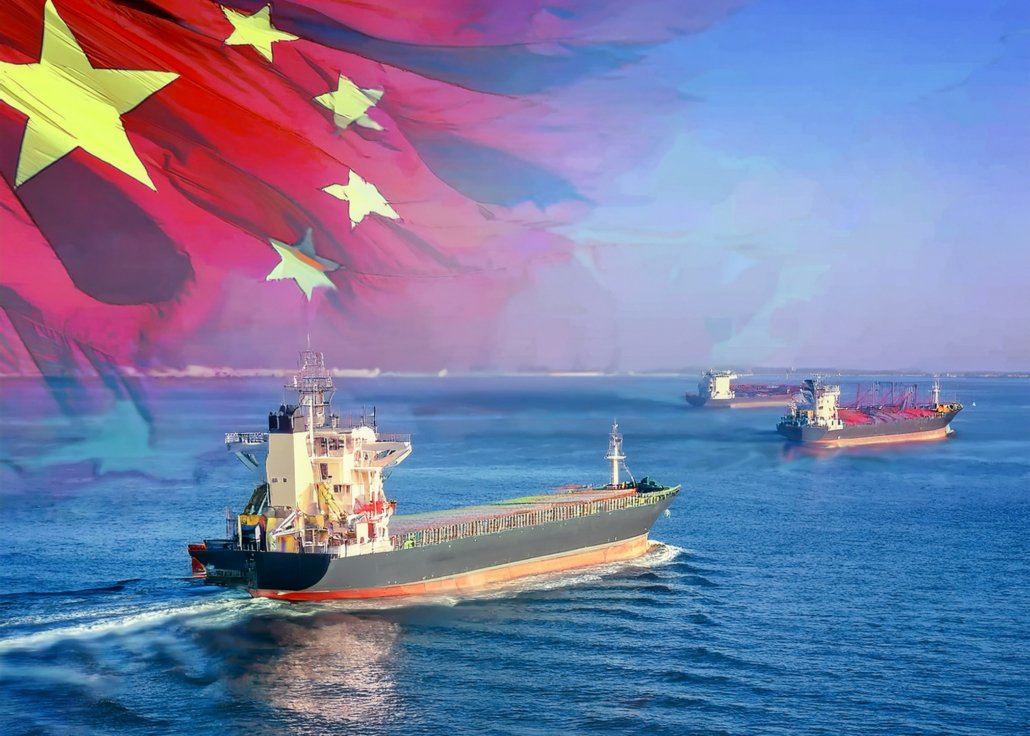
The fifth of April of each year is commemorated as National Maritime Day and seeks to draw global attention to issues principally related to the multiple facets of mercantile shipping and fishing. This article seeks to draw the attention of its readers to a somewhat lesser-known phenomenon that is nevertheless intimately related to the mercantile trade and the merchant marine of various countries. This piece was first published in the Spring 2025 issue of “The Chanakya Diaries” (Issue 2) and is reproduced here with the permission of the Chanakya Forum.
Columbia University’s Capstone Report of 2020 entitled, “The Weaponization of Trade: A Study of Modern Trade Conflicts from the mid-1900s to [the] Present” defines the weaponisation of trade “as the employment of trade tools to induce a trade partner to change its practices in any issue-area (including economic policy and diplomatic relations) by exploiting its economic vulnerabilities”.[1] Drawing from this definition, the weaponisation of maritime trade (which is a subset of trade per se) would incorporate the weaponisation of any of the various tools of this trade, such as ships and their navigation and machinery systems, their crew, the cargo that they carry, the maritime trade routes that they follow, the ports and port-facilities that they use, the space-based and internet-based monitoring and control mechanisms applicable to them while at sea as well as their shore-based management, and the regulatory regimes that apply to maritime trade as a whole.
Implicit in international trade (most certainly including maritime trade) is the notion of “interdependence”. However, this does not imply “symmetry” in the degree to which interdependence is created. In fact, more often than not, international trade is asymmetric. This means that in case economic ties are partially or entirely suspended, one party may lose more than the other. It is this very feature that makes the weaponisation of trade possible.
Historically speaking, the option to weaponise trade has been exercised either by the less vulnerable party or by a State that holds a dominant position in the market of certain strategic goods such as crude oil or critical raw materials (CRMs) including Rare Earth Elements (REE).
Within the context of the Indian Ocean (better thought of as the western segment of the Indo-Pacific), the 1973 oil embargo offers a good example of the weaponisation maritime trade. Here, the objective of the Arab States of OPEC was to coercively alter the international behaviour of countries that were supportive of Israel in the Yom Kippur War of 1973. Since the international transportation of crude oil is overwhelmingly by means of shipping, this greatest impact of this weaponisation of trade was upon the maritime segment of the trade.
This led (and continues to lead) countries such as India, which are increasingly supportive of Israel but are hugely vulnerable to manipulation of crude oil availability by oil-supplier States of West Asia, to one facet of what New Delhi understands to be the “Indian Ocean dilemma”. This is an expression that receives far less global attention than does China’s oft-touted “Malacca dilemma”, which was first articulated by the then President Hu Jintao some thirty years later, during a Communist Party of China Economic Work Conference in 2003.
However, even though both dilemmas relate to maritime trade by way of ships and shipping, the one is, in actual fact, quite different from the other. In the 1973 example, India’s dilemma stemmed from the “weaponisation” of maritime trade by the Arab States of OPEC. The Malacca dilemma, on the other hand, relates to the vulnerability imposed upon the import by the People’s Republic of China (PRC) of critical cargo (chiefly crude oil) as result of geographical choke points. It is important to bear in mind that the Malacca dilemma is NOT about the Strait of Malacca alone. It is actually a generic dilemma that stems from China’s vulnerability to any of the chokepoints (straits) that connect the Indian Ocean to the Pacific. Quite unlike the geographic conformation of the Pacific and the Atlantic oceans, which stretch from north to south like vast highways with neither ceiling nor floor, access-into and egress-from the Indian Ocean is limited by nine maritime constrictions or chokepoints. These are (1) the Strait of Hormuz, which does not actually provide ingress-to or egress-from the Indian Ocean per se but is nevertheless critical in that it connects the Persian Gulf and the Gulf of Oman and thence the Arabian Sea; (2) the Suez Canal, which connects the Mediterranean Sea and the Red Sea; (3) the Strait of Bab-el-Mandeb, which connects the Red Sea to the Gulf of Aden and thence to the Arabian Sea; (4) the Mozambique Channel which provides enroute access to and from the Atlantic Ocean; (5) the weather-determined chokepoint of the Cape of Good Hope connecting the Atlantic Ocean to the Indian Ocean; and the chokepoints connecting the Indian Ocean to the South China Sea and thence to the Pacific Ocean, namely, (6) the Straits of Malacca and Singapore; (7) the Sunda Strait, (8) the Lombok Strait, and the (9) Strait of Ombai-Wetar. It is these straits through which global shipping is forced to go that generate what is now being termed the “Indian Ocean dilemma”.
A particularly thought-provoking question that arises is: Given the fact that Japan and South Korea are equally dependent upon the transportation of crude oil from West Asia as is the PRC, why do we not hear Japanese or South Korean articulations of a similar “Malacca dilemma”? The simple answer is because these countries, unlike the PRC, have “friends”. Not only does China suffer from a particularly unfavourable maritime geography but its international behaviour has imposed upon it one the worst “strategic geographies” in the world.
But to return to examples of the weaponisation of maritime trade in an Indian Ocean context, we can jump to the early years of the next decade and arrive at the “Tanker War”, which was a subset of the Iran-Iraq armed conflict of 1980-88. It is true that in terms of reportage, the “Tanker War” was often overshadowed by the often-bloody fighting on land. Importantly, the “Tanker War” did not involve solely shipping of the belligerent States (had it done so, it could hardly have been included as an example of “weaponisation”). Iraq began the “Tanker War” in 1981, initiating attacks on ships steaming to or from Iranian ports at the extreme northern end of the Gulf. Iran then destroyed Iraq’s oil terminals early in the war and Iraq’s oil exports began to move entirely by overland pipelines. Iraq continued these attacks into 1984, initially without any Iranian response at sea. In March of 1984, however, Iraq expanded the geographic scope by attacking ships serving more southerly Iranian points, particularly the oil-loading complex at Kharg Island. Thereafter, Iran waged its own war on tankers largely to coerce and intimidate the Gulf States supporting Iraq — a clear case of the weaponisation of the maritime trade in oil. By 1987, attacks were carried out against ships flying the flags of 12 countries whose shipping had not previously come under attack, including those of the US, the erstwhile Soviet Union, and the People’s Republic of China (PRC). Thus, given that it involved the shipping of multiple countries and was a clear case of politico-economic coercion and intimidation, the “Tanker War” exemplifies the weaponisation of maritime trade. These lessons were not lost upon the PRC and what is sometimes called the “Hormuz nightmare” has, ever since, become part of the PRC’s own “Indian Ocean dilemma” — which further exacerbates its “Malacca dilemma”.
A more recent phenomenon, and yet, one that once again has received relatively scant attention from Indian maritime analysts, is the weaponisation of maritime transponders. This principally involves the transmitters-cum-transponders f the “Automatic Identification System” (AIS). Originally introduced by the International Maritime Organization (IMO) as a maritime safety measure to help prevent collisions at sea between large commercial vessels plying the high seas, the AIS has, especially after the terrorist attacks suffered by the US in September of 2001 (commonly known as 9/11) and that suffered by India in November of 2008 (commonly known as 26/11), become an indispensable tool in the national and regional endeavours to obtain and sustain “maritime situational awareness” (MSA), which is, more often than not, albeit incorrectly, referred to as “maritime domain awareness” (MDA). The fitment of- and automatic transmission of data by- AIS transponder-cum-transmitters is mandated by the IMO for cargo ships above 500 gross tonnes not on international voyage, as also for any ship over 300 gross tonnes on an international voyage, and on all tankers and passenger vessels such as cruise ships and ferries. Individual countries and supranational entities can also mandate AIS for smaller ships within their waters. However, AIS data is transmitted over unprotected very high frequency (VHF) radio bands, making the system susceptible to deliberate manipulation. Not only are criminal actors manipulating their ships’ AIS signatures to hide or fake their locations and disguise illicit activities, increasingly State actors, too, — such as Russia, China, and Iran — have also been weaponizing AIS with increasing technological complexity. State actors now have an established capacity and capability to fabricate potential casus belli in disputed maritime regions.
AIS spoofing or manipulation describes broadcasting an AIS message with fake position or identity data to disguise a ship’s identity or location. A good example is the motor vessel Kingsway, which evaded international authorities for over four years, successfully evading sanctions imposed by the UN Security Council (UNSC) on oil trade with North Korea (DPRK), not only by repeatedly changed its vessel identification number, name, flag, and paint scheme, but also by continually spoofing AIS to avoid being tracked. Today, however, AIS spoofing is hardly the most pressing of concerns in respect of this form of weaponisation of maritime trade.
Increasing evidence is surfacing of State-actors engaging in “AIS hijacking” wherein AIS data packets from another party’s vessel are “hijacked” by a malevolent actor to present its vessel as the one whose data packets have been “hijacked”. In one well known example, a private individual, Dr Mario Balduzzi (a Senior Research Scientist with Trend Micro Research) was able to conclusively demonstrate that it was eminently possible to hijack an AIS transponder. He did so with the AIS of the US-flagged tug, the Eleanor Gordon, and falsified its position, making the vessel apparently appear in the middle of Dallas, Texas![2] An even more dangerous weaponisation technique used by State actors involves overwhelming rate-limited AIS receivers with random data.[3] This approach renders AIS receivers onboard ships and at ground stations unusable, as they would be unable to distinguish real AIS reports amid the influx of fake signals. This sort of “AIS availability disruption” is technologically challenging to accomplish as it requires sophisticated programming skills and is hence used by State actors rather than criminals. However, the gallop of technology has shown us repeatedly that what used to be thought of (either by virtue of cost or restricted availability of technological sophistication) as the preserve of States has, in fact become commonplace amongst criminals and other non-State malevolent actors as well as State-sponsored non-State ones. It may, therefore, be seen that the ongoing weaponisation of AIS transponders is an excellent example of the weaponisation of maritime trade.
Perhaps the most recent and well-publicised examples of the weaponisation of maritime trade within the Indian Ocean are the actions of the Houthi rebels in Yemen in terms of specifically targeting commercial shipping to coerce nations that are supporting (or at least not overtly condemning) Israel for its sustained and determined (often brutal) military response in Gaza and beyond to the terrorist attacks mounted on the State of Israel by Hamas militants on 07 October of 2023. Although a ceasefire deal was concluded on 15 January 2025, and took effect days later (on 19 January), the conflict continues to have significant regional and international repercussions. A major spin-off of this armed conflict has been the Red Sea crisis. While the crisis began on 19 October 2023, with the Iran-backed Houthi movement in Yemen launching missiles and armed drones at Israel and demanding an end to the invasion of the Gaza Strip, the maritime coercion began in mid-November and accelerated rapidly thereafter. In mid-December of 2023, major global shipping companies such as the Mediterranean Shipping Company (MSC) — the world’s largest container-shipping company, Maersk, CMA CGM — the French shipping giant, COSCO, Hapag-Lloyd, Evergreen Marine Corporation, and BP (the British multinational oil and gas company) all suspended shipments through the Red Sea and began re-routeing their ships via the Cape of Good Hope.
Heightened rates of marine insurance are another fallout of this weaponisation of maritime trade. By January of 2024, most marine insurers required a warranty of “no Israeli involvement” before they would insure vessels for the Red Sea route, with some also requiring warranties of no US or UK interest and no calls to Israeli ports in the last 12 months.[4] Much of the Red Sea has been designated a “listed area” by the Joint War Committee of Lloyd’s and London companies market insurers, giving underwriters the option — but not the obligation — to levy additional premiums over and above the basic annual rate for war risk cover. Even in cases where insurance cover is, indeed, available, rates remain at up to 1% of hull value. As David Osler of Lloyds states, “On paper, the pricing represents an additional $1.3 million on the cost of a single trip for a brand new VLCC booked to load a consignment of crude from a Saudi west coast port. That is around 100 times higher than where they were before Houthi missile and drone attacks on merchant shipping began last November. [emphasis added]… The cost of going the long way round typically adds up to 11,000 nm and a week to 10 days’ transit time to east/west voyages. The extra fuel and crewing costs can come in at as much as $2 million. But the outlay is mitigated by the savings on war risk premiums and Suez Canal transit fees. In some cases, there may be little in it either way in simple dollar terms.”[5]
A far more literal example of the weaponisation of maritime trade is the alleged use of commercial ships to deliberately drag their anchor with a view to damaging undersea cables and pipelines. While incidents of this sort that have occurred in the Baltic Sea have received a great deal of publicity from the investigative print- and electronic media in the West, investigative journalism in maritime matters in India and in countries of the Indian Ocean is practically non-existent. Therefore, the lay public in India is largely deprived of awareness and has yet to register the enormously adverse ramifications of this direct form of weaponisation of merchant vessels that are the carriers of mercantile goods of trade. The Baltic Sea witnessed two such incidents in the last two years alone. The first was in October 2023, when the Hong Kong–flagged, Chinese-registered vessel, the NewNew Polar Bear dragged its anchor for over 100 kilometres and damaged two subsea data cables and a gas pipeline in the Baltic Sea. The second incident occurred in November of 2024, when the Yi Peng 3, a Chinese cargo ship, similarly dragged its anchor over a very large distance, and severed two undersea communications cables connecting Germany and Finland, and Lithuania and Sweden, respectively. A number of Western analysts believe that both these were deliberate and premeditated actions involving Russian and Chinese intelligence agencies. Is the Indian Ocean affected by such direct weaponisation? The answer, unfortunately, is yes. In late December of 2023, a post in a Houthi-allied Telegram channel suggested that submarine cables, too, could become targets of the Houthi attacks on behalf of Gazans — a threat that was widely reported in Western mainstream and social media. Almost immediately thereafter, however, the Houthi-controlled Yemen Ministry of Telecommunications published a statement disavowing any targeting of submarine cables. Nevertheless, on 24 February 2024, the increasingly indiscriminate attacks by Houthi rebels on shipping in the Red Sea, severely damaged the Belize-flagged, UK-owned cargo ship, the MV Rubymar. The crew dropped anchor and abandoned the crippled ship. The general consensus in the particular instance is that the Rubymar began to drift, dragging its anchor and ended-up severing as many as four undersea cables — SEACOM, TGN, AAE-1 and EIG. The impact was grossly underestimated according to globally renowned network-services provider, RETN. The company has asserted, quite unequivocally, that the Red Sea cables that were damaged affected close to 70% of Europe-Asia data traffic flow, not the 25% initially reported.[6] While in none of these instances, whether in Baltic Sea or the Red Sea, has it been proven that State-actors were behind these undersea cable disruptions, it may safely be assumed that the enormous potential spin-off impact has not been lost upon either State actors or malevolent non-State ones — especially upon State-sponsored non-State actors.
Given that the oceans connect rather than divide, the weaponisation of maritime trade in any one of the four ocean basins which together constitute the “world ocean”, has effects that are felt in other ocean basins as also in their respective fringing seas. Thus, when China weaponises maritime trade in the South China Sea, for example, the adverse impacts of the coercion are felt upon maritime trade in the Indian Ocean as well. The case of Australia in this regard, which suffered coercive actions by the PRC, is an excellent case in point.
Finally, it is important to consider how navies could best contribute. Here it is important for readers to remind themselves that insofar as India is concerned, the Indian Navy has, in fact, been particularly and remarkably proactive. On 14 December 2023, India initiated Operation SANKALP to ensure the security of the regional maritime domain, deploying the guided missile destroyer INS Kolkata to supplement another guided missile destroyer of the same Class, INS Kochi. By 26 January 2024, the Indian Navy had deployed additional ships in the area, including the guided missile destroyer INS Visakhapatnam. The Indian Navy has garnered extremely well-deserved praise worldwide for its actions against a whole slew of illicit maritime activities. Every navy engages in five types of actions at sea — dissuasive actions, deterrent actions, preventive actions, curative actions, and punitive actions. Although the various forms of weaponisation of maritime trade per se, seem relatively impervious to naval curative actions, such weaponisation is quite vulnerable to dissuasive, deterrent, and preventive ones. In dealing with coercion designed to force a State to take certain actions or to desist from certain actions for fear of punishment imposed upon its maritime trade, there is certainly a very major role that navies can and must play. While the Indian Naval deployments in support of Operation SANKALP offer an excellent example of dissuasive, deterrent, and preventive actions, there is much that might additionally be gained through international cooperation with other likeminded navies, such as those of Japan and Australia. This does not require any treaty alliance but simply a maritime leveraging of the comprehensive strategic partnerships that have been concluded by India with each of these countries. This would also be entirely in keeping with the lines of maritime thrust identified by the Indo-Pacific Oceans Initiative. Once dyadic cooperation is in place, the Indian Ocean Naval Symposium (IONS) construct offers a number of extremely promising cooperative pathways for executive action designed to resist coercion within the Indian Ocean and to contribute to the resolution of the Indian Ocean dilemma. India will resume the Chairmanship of IONS from 2025 to 2027 and standing up to the challenge posed by the weaponisation of maritime trade might be an excellent example of regionally beneficial maritime leadership by India.
******
About the Author
Vice Admiral Pradeep Chauhan, AVSM & Bar, VSM, IN (Retd), is the Director-General of the National Maritime Foundation (NMF). He is a prolific writer and a globally renowned strategic analyst who specialises in a wide range of maritime affairs and related issues. He may be contacted at directorgeneral.nmfindia@gmail.com
Endnotes:
[1] Lukas Feldhaus, Yuxin Huang, Sherry Kim, Wonjae Kim, Joon Sung Lee, Daniel Marechal,
Xinyi Sun, Samantha Weiss, Markus Jaeger, “The Weaponization of Trade: A Study of Modern Trade Conflicts from the mid-1900s to Present”, Columbia University Capstone Report, Spring 2020 https://www.sipa.columbia.edu/sites/default/files/migrated/downloads/Capstone%2520Report%2520%2528Eurasia%2520Group%2529.pdf
[2] Marco Balduzzi, “AIS Exposed — Understanding Vulnerabilities and Attacks 2.0”, https://www.blackhat.com/docs/asia-14/materials/Balduzzi/Asia-14-Balduzzi-AIS-Exposed-Understanding-Vulnerabilities-And-Attacks.pdf
[3] Marco Balduzzi, Kyle Wilhoit, and Alessandro Pasta, “A Security Evaluation of AIS
[4] David Osler, “War Risk Market Split on Covering US and UK-linked Vessels for Red Sea Transits”, Lloyd’s List Intelligence, https://www.lloydslist.com/LL1148069/War-risk-market-split-on-covering-US-and-UK-linked-vessels-for-Red-Sea-transits
[5] Osler, Ibid
[6] Andrew Wooden, “Red Sea Cable Cuts’ Impact was Severely Underestimated”, Telecom.com Website, 08 October 2024. https://www.telecoms.com/telecoms-infrastructure/red-sea-cable-cuts-impact-was-severely-underestimated-


Leave a Reply
Want to join the discussion?Feel free to contribute!