
Key Words: Maritime Security, National Strategy, SDG 14, Shipbuilding, European Union, Spain. India
The author would like to thank Ms Anuttama Banerjee, Junior Research Associate, National Maritime Foundation, for her contribution to this article.
This article seeks to: (a) highlight the major features of Spain’s newly updated “National Strategy for Maritime Security 2024”, providing policymakers and researchers alike with a comprehensive overview of Spain’s maritime security interests and objectives; (b) offer an analysis of Spain’s action plans/measures to fulfil its strategic goals, laying the groundwork for exploring potential areas of collaboration in maritime security between India and Spain.
Spain, renowned as one of history’s great maritime powers, is perhaps best known for the Spanish Armada, colloquially dubbed the ‘Invincible Armada’,[1] which dominated the seas from the 15th to the 17th centuries, complemented by a well-founded shipbuilding industry. However, the defeat suffered by Spain at the hands of Britain in the famous Battle of Trafalgar in 1805 dealt a crippling blow to the former’s maritime supremacy.[2] Once a prominent blue-water navy facilitating global colonisation, contemporary Spain stands, somewhat diminished, as a mid-sized modern navy aspiring to evolve into a post-modern force.
Nevertheless, as one of the leading maritime nations amongst the 27 member-states of the European Union (EU), Spain is still a significant European power and is also the 16th member of the North Atlantic Treaty Organization (NATO). Spain played a pivotal role in initiating the EU’s “Maritime Strategy” of 2010. Further, Madrid provides steadfast support to the EU in the realms of security and defence, actively endorsing initiatives such as the “Strategic Compass”, the “Permanent Structured Cooperation” (PESCO), and the “European Defence Fund”, while concurrently engaging within NATO.[3]
This paper examines Spain’s interests and objectives within the maritime domain, primarily through an analysis of the country’s “National Strategy for Maritime Security 2024” (NSMS 2024). It commences by delineating Spain’s distinctive geography, which then highlights existing and potential threats and risks to Spain’s national maritime interests. The paper thereafter examines the NSMS 2024, evaluating Spain’s three strategic objectives, as well as its approach and the measures that are planned to be implemented to achieve them. It goes on to underscore the uncommon yet imperative inclusion of “Sustainable Development Goal 14” in national security matters, the connection of the Blue Economy with Spain’s security interests, its collaboration with the EU and NATO to tackle issues of maritime security, amongst other aspects, to underscore the Strategy’s ‘holistic approach’. Subsequently, the article chronicles naval exercises conducted between the Indian Navy and the Spanish Navy, both bilaterally and within multilateral frameworks. In conclusion, the article offers insights into potential areas of cooperation in defence procurement and manufacturing, and the mutual interest of Spain and India in preserving their respective underwater cultural heritage.
Unsurprisingly, one of the most influential contemporary maritime security strategies is that of the USA (2005). Following the US lead, Portugal issued its “Estrategic Nacial para of Mar” in 2006, France developed its “Livre Bleu: La Strategie Nationale pour La Mer et les Oceans” in 2009, and Denmark adopted “An Integrated Maritime Strategy” in 2010. Germany, Ireland, and the United Kingdom also published their strategies in 2011, 2012 and 2014, respectively.[4] Of course, many of these strategies and guidelines have been subsequently updated or revised. In like manner, while Spain released its inaugural “National Strategy for Maritime Security” (NSMS) in 2013, which advocated a dual-focused security policy in the maritime realm: safeguarding national maritime interests and contributing to international endeavours aimed at maintaining order at sea, it issued a revised version in March 2024.
Spain has long recognised that geography is a major determinant of foreign policy, specifically dictating niche or domain-relevant strategies for all nations. Even within a contemporary context, Spain’s maritime legacy extends well beyond the geography of its Mediterranean neighbourhood. The EU, for instance, recognises Spain’s relevance, given that the operational command/headquarters of the “EU Naval Forces (EUNAVFOR) Operation ATALANTA” is based in Rota, Spain.[5] Moreover, Spain’s forward maritime presence is observed in areas such as the Gulf of Guinea, the Horn of Africa, and now the Red Sea, as Madrid appears to be quite committed to enhancing Spain’s visibility in the Indo-Pacific. The following segment outlines Spain’s ‘strategic’ geography.
Spain’s ‘Strategic’ Geography
Spain’s national identity is inherently maritime, stemming not only from the history of the Spanish thalassocracy but more significantly, from its geography. The strategic significance of Spain is considerable, situated as it is at the confluence of the Indo-Pacific and the Euro-Atlantic spheres, which facilitates maritime transit between the eastern Pacific and the western segment of the Indian Ocean, thus serving as a vital nexus. Located at the intersection of Europe and Africa Spain exhibits a distinctive geographic profile as a quasi-island bordered by the Mediterranean, Cantabrian, and Atlantic seas (See Fig 1).[6] It boasts the second-longest coastline in Europe. Additionally, Spain’s territorial expanse encompasses the Balearic Islands in the Mediterranean, the Canary Archipelagos in the Atlantic, and three enclaves — Ceuta and Melilla on the northern coast of Morocco, and Llivia on the French side of the Pyrenees —further augmenting its strategic significance.[7] Moreover, Spain serves as a vital bridge between continents, notably facilitated by the Strait of Gibraltar,[8] a critical choke point in itself.
Through its access to the Mediterranean, Spain maintains connections with West Asia and North Africa (WANA), while its Atlantic coastline enables integration into major international trade routes extending to the Americas. Although Spanish ports and maritime terminals certainly offer several advantages in terms of international maritime trade and transportation of goods and people, they also pose national security risks. Collectively, these attributes make a significant contribution to Spain’s predominant maritime character and its pivotal role in global maritime affairs.
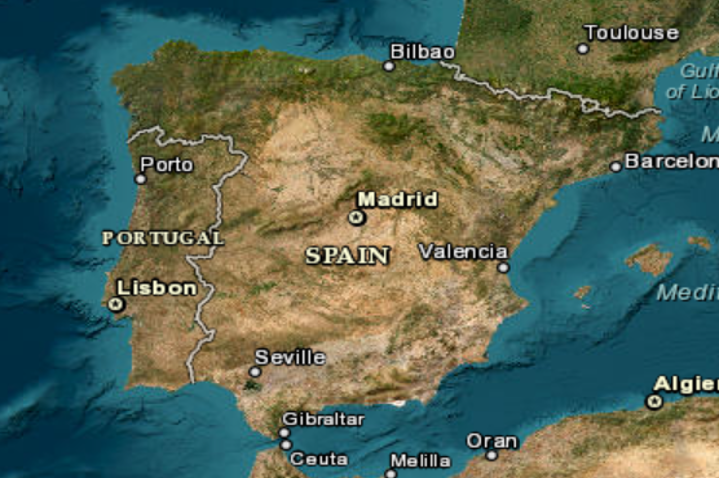
Fig 1. Geographical expanse of the Spanish peninsula
Source – Instituto Geografico Nacional
As is to be expected, Spain prioritises its jurisdictional waters as well as its legal continental shelf, and the ‘International Shipping Lanes’ (ISLs) that link the Spanish peninsula to its island territories. The NSMS additionally highlights various other maritime areas of interest. These encompass the Mediterranean Sea, with a particular focus on the Atlantic margin, West Africa, and the Gulf of Guinea; and the Indo-Pacific region — notably North Africa, the Horn of Africa, and the Persian Gulf, as well as Southeast Asia, with specific focus upon such international fishing grounds as are frequented by Spanish fishing vessels. Notably, the Antarctic and the Arctic regions are also extended areas of interest.[9]
The European approach to addressing the Russia-Ukraine threat involves a comprehensive strategy across the EU. However, given that relying solely on safeguarding the eastern flank may not be feasible for all member-states of the EU,[10] maritime nations such as Italy, Greece, Germany, France, the Netherlands, and Spain, have put several of their eggs in the ‘Indo-Pacific’ basket. The significance of this strategic shift cannot be overstated.
Strategic Lines-of-Action
Before delving into an analysis of Spain’s National Strategy for Maritime Security, it is important to understand Spain’s definition of Maritime Security,
“The combination of preventive and response measures aimed both at protecting the maritime environment from threats and intentional illegal acts, and at limiting the impact of natural hazards, accidents, and of harm to the environment, economic activities and people”.[11]
Within its overall maritime strategy, Madrid has delineated three strategic objectives: (1) to protect Spain’s maritime interests at sea and from the sea; (2) to improve Spain’s maritime capabilities; and (3) to enhance the safety of the seas. To realise these strategic aims, Spain intends to execute targeted initiatives that are aligned with a set of progress indicators. To facilitate this, periodic assessments are planned to be conducted every three years.
Protection of Spain’s Maritime Interests at and from the Sea
Seven specific actions have been outlined to protect Spain’s maritime interests, both at and from the sea. These activities encompass maritime surveillance using national assets and fostering international cooperation to ensure compliance with national and international maritime laws by commercial vessels.[12] Additionally, plans are being developed to enhance the resilience of submarine cables and critical maritime energy infrastructure, both within and outside Spanish waters.[13] Efforts are also underway to expand the delineation of Spain’s maritime areas in the Celtic Sea, the Gulf of Biscay, and areas west of the Canary Islands, and to extend Spain’s continental shelf to optimise resource-utilisation. These endeavours will involve diplomatic initiatives internationally, and coordination among domestic public authorities, to ensure correct delineation. Furthermore, safeguarding Spain’s internationally recognised “underwater cultural heritage” involves the Civil Guard and the Navy functioning in protective and surveillance activities. Hydrographic surveys will also be conducted to update maps of underwater archaeological sites.[14]
Addressing Illegal, Unreported and Unregulated Fishing (IUUF) by Spanish nationals is another government priority. Measures are being implemented to monitor and regulate fishing activities. Importantly, authorities aim to ensure that fish-products that are imported, exported, or re-exported by Spain comply with international conservation and management measures.[15]
Spain also intends to establish a framework for ‘Marine Spatial Planning’ in five areas, namely, the Canary Islands, the Strait of Gibraltar and the Alboran Sea, the northern and southern Atlantic coast, and the Balearic Islands. It is expected that this framework would promote sustainability in domestic maritime sectors.[16]
Finally, enhancing interoperability among ongoing operations and information-sharing centres involves digitalising and monitoring inter-departmental information-sharing processes and agreements. Regular meetings with heads of maritime-security operation centres would be scheduled based on identified agendas, and the National Maritime Security Council would maintain an updated list of national capabilities and resources.[17]
Enhancing Spain’s Maritime Capabilities
Spain’s primary focus is on integrating cutting-edge technology, such as smart sensors, artificial intelligence (AI), and communication systems, into existing sea and air assets. Additionally, efforts are underway to modernise shipyards and fleets, including the incorporation of autonomous navigation, and the usage of “green” hydrogen and other forms of renewable energy as fuel-sources,[18] aiming to preserve Spain’s underwater cultural heritage, and marine biodiversity, as also to enhance oceanographic activities. Spain addresses challenges such as illegal submarines, semi-submersibles, and remote-controlled vessels, through the utilisation of AI, coastal surveillance, and port surveillance systems employing remote-controlled drones.[19] Additionally, Spain strives for increased autonomy at the EU level in three Permanent Structured Cooperation (PESCO)[20] developmental projects, namely. the development of the European Corvette, an anti-remote-controlled submarine system, and the 4E (Essential Elements of European Escort) programme[21], with Spain leading in five areas within this programme.
Special attention is paid to the security of maritime terminals, which are considered critical infrastructure, and would undergo regular and periodic assessment and monitoring procedures by authorities to ensure the safety of supply chains.[22] Spain’s shipbuilding industry is poised for growth as Spanish companies participate in planning international deployments, aided by Spain’s Projects for Economic Recovery and Transformation (PERTE)[23], promoting autonomy in the shipbuilding sector, including auxiliary companies and suppliers of advanced technology.[24]
Spain’s maritime interests heavily influence decisions on public funding for research, development, and innovation (R&D&i). A framework is intended to be established to fund selected public and private institutions engaged in such R&D&i.[25] Efforts are also being made to promote maritime culture and awareness to stimulate interest in maritime professions, enhancing Spain’s comprehensive response capabilities to address risks and threats to national security.[26]
Enhancing Safety of the Seas
Spain prioritises the intensification of its participation in the EU’s Common Security and Defence Policy (CSDP) operations, and within NATO, Madrid is especially focused upon the issue of attributability in respect of international submarine cables crossing the high seas.[27] The vulnerability of these cables necessitates stronger international cooperation for their surveillance and protection. In addition, Spain’s (relatively) increased presence in the Indo-Pacific could potentially enhance its ability to safeguard the International Shipping Lanes (ISLs)[28] relevant to it and address other threats arising from maritime traffic and fishing activities.[29]
Addressing transnational criminal activity is another key area of focus for Spain, which seeks more intensive and extensive cooperation with the EU to tackle challenges such as IUUF, illicit trafficking by sea, and cross-border crime.[30] Greater attention would be paid to public authorities for the conduct of operations and for training missions aimed at strengthening the maritime capabilities of partner countries.[31] Additionally, efforts would be undertaken to encourage greater judicial collaboration, and counter-terrorism activities, with a focus on pre-emptive and multidisciplinary approaches undertaken by EU member-states and select partner nations.
Spain’s strategy to achieve “Sustainable Development Goal 14” (Life Below Water) involves the adoption of appropriate prevention, preparation, and response measures to protect marine resources within protected maritime areas, and the conservation of coastline, seas, and oceans. These measures include the incorporation of aerial drones fitted with sensors and the revision of marine strategies to integrate policies from different sectors.[32]
Last but not least, all economic sectors linked to the sea would undergo scrutiny to assess the effects of climate change, enabling Spain to create maps identifying potential areas of impact. As a result, Spain expects to be better able to prepare preventive and response measures for essential infrastructure such as ports, industrial facilities, pipelines, regasification terminals, and desalination plants.[33]
Key Take-Aways from Spain’s NSMS 2024
Spain’s 2024 decision to update the NSMS, following the revision of the EU Maritime Security Strategy (EUMSS) in March 2023, aims to enhance coordination efforts amongst domestic departments, public authorities, and other key players. The revised strategy focuses on optimising decision-making processes, implementing preventive measures, and executing actions across diverse maritime sectors. Moreover, despite the EU having released its “Strategy for Cooperation in the Indo-Pacific” and the EUMSS in 2022, the 27 individual member-states of the EU maintain distinct sets of national interests, which may or may not align with the EU’s collective objectives. Consequently, the EU27’s national strategies/guidelines enable them to foster stronger bilateral relations with key partners according to their specific interests. For Spain, these strategic interests include the development of its maritime industries into high-value strategic assets and the promotion of closer engagement between the public and the private sectors in maritime-related economic activity.[34] Navatia and Marine Barcelona, amongst the other 70 “Small & Medium Enterprises” (M/o MSME) involved, would participate in a collective effort across 40 projects. The PERTE Naval initiative aims to elevate SMEs as the primary agents driving industrial transformation within the naval shipbuilding sector.[35] This is almost identical to the Indian approach and there is clearly much that each country can learn from the other.
Spain’s approach to ensuring and enhancing maritime security is comprehensive, as evidenced by its focus on achieving SDG-14, enhancing its Blue Economy, addressing climate change and marine pollution, and developing ‘Maritime Spatial Planning’ frameworks. This ‘holistic’ approach emphasises preventive planning as a common response to complex situations requiring concerted action by different authorities or partner nations.[36] In line with Spain’s strategy for achieving ‘holistic’ maritime security, India similarly seeks to generate maritime security by endeavouring to be free of threats and challenges arising ‘in-’, ‘from-’, or ‘through’ the sea.[37] Likewise, Spain’s dedication toward enhancing the capabilities of its partner nations closely mirrors India’s own efforts stemming from New Delhi’s maritime policy of ‘Security and Growth for All in the Region’ (SAGAR).
Illegal migration poses a particularly significant threat to Spain, necessitating bilateral and EU collaboration agreements. This involves optimising search and rescue (SAR) capacities and capabilities at sea, the provision of humanitarian assistance, and facilitating the preliminary identification and processing of immigrants. Incorporating AI technologies and surveillance systems, modernising maritime capacities and capabilities, and implementing measures to counter hybrid threats, are all specified as thrust areas within the NSMS 2024.[38]
Hybrid malevolent strategies, encompassing economic coercion, cyber-attacks, disinformation campaigns, and low-intensity warfare, present a significant challenge. Spain — hosting various submarine cable landing points, and LNG regasification terminals — faces heightened vulnerability to these threats. Additionally, concerns related to national interests, illicit trafficking, cross-border crime, and environmental threats contribute to Spain’s risk assessment. Please refer to Fig 2.[40]
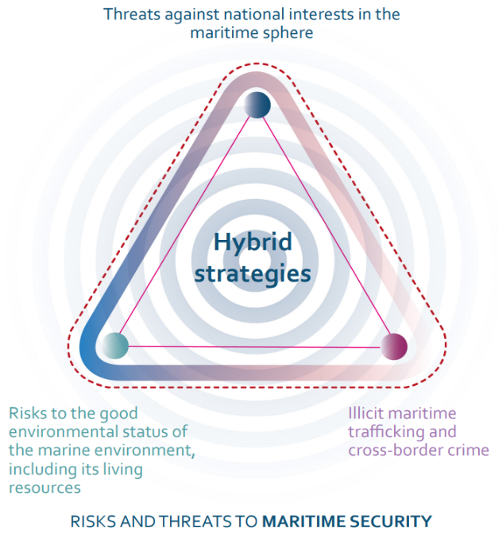
Fig 2. Hybrid Strategies Triangle.
Source: National Strategy for Maritime Security 2024
Interestingly, while Spain’s NSMS indicates that the country possesses a 10,000 km coastline,[41] the Instituto Geographico Nacional indicates Spain has an 8,000 km coastline, while La Moncloa, the website of the Ministerial Departments of the Government of Spain, states that the Spanish Coastline is only 5,755 km in length.[42] This discrepancy has a number of implications pertaining to coastal surveillance and, by extension, raises questions about the Spain’s strategic goals.
Like several other countries, Spain, too, is grappling with the issue of seabed mining. Despite becoming a member of the International Seabed Authority (ISA) in 2023 and ratifying the High Seas Treaty of the United Nations Convention on the Law of the Sea (UNCLOS), Madrid advocates for the EU member-states to conduct analyses of seabed mining in areas designated as the common heritage of mankind. On the other hand, Spain’s focus on sustainability is evident in its ‘precautionary pause’ in seabed mining activities, highlighting its unique stance on the matter.[43]
Alongside its sovereign responsibilities, Spain attempts to strike a balance with its collective responsibilities as a major stakeholder in the EU and in NATO. Spain’s actions at sea and along the coastline align with its efforts to collaborate and promote the initiatives of the International Maritime Organisation (IMO), the EUMSS, and NATO’s Maritime Strategy.[44] Madrid finds that Spanish interests demand stability in the region in the Gulf of Guinea, as maritime insecurity in this area could adversely impact energy supplies and trade flows not only for Spain alone but also for the EU as a whole.[45] This interest is closely aligned to the EU’s collective maritime security objectives and this realisation drives Spain’s willing involvement in the “Coordinated Maritime Presence” (CMP) initiative in the Gulf of Guinea.[46]
While the NSMS includes measures to protect critical maritime undersea infrastructure, such as submarine cables and pipelines, there is no direct mention of an extant or aspirational framework specifically for underwater domain/situational awareness. Such a framework would, of course, support Spain’s own capacity-building efforts under the EU’s PESCO initiatives (See Fig 3).
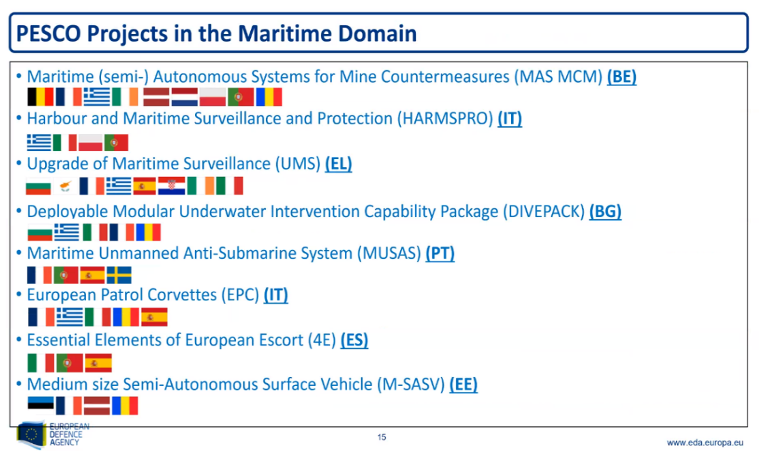
Fig 3. Permanent Structured Cooperation (PESCO) Projects in the Maritime Domain
Source: Presentation slide by the European Defence Agency.
Recently, political instability in Yemen manifested itself as a significant threat to commercial vessels transiting the Strait of Bab-el-Mandeb and the Red Sea. Of consequence was the fact that as naval attention shifted to the Red Sea, there was a notable reduction of presence in the Gulf of Aden and its environs, resulting in an increase in illicit maritime activity, including piracy attacks on ships and marine infrastructure, interference with radio communication systems, and attacks on navigation. Similarly, Spain’s financial responsibilities to the EU in relation to the Ukraine-Russia war is likely to impede Spain’s ability to address organised criminal maritime activities such as the exploitation of migrants at sea and IUUF.
Additionally, the release of the EU’s “Strategy for Cooperation in the Indo-Pacific”, and the strategies/guidelines issued by other member-states are likely to inspire Spain to follow suit, given its geographical positioning and considerable security interests in the region.
Spanish-Indian Maritime Interface
Against this backdrop, it is useful to examine Spain’s relations with India, and the burgeoning relations between India and Spain in the Indo-Pacific. Both, India[47] and Spain are full-fledged members of the Combined Maritime Forces (CMF), thereby highlighting their commitment to uphold the International Rules-based Order (IRBO) by protecting maritime trade, improving maritime security, and preventing and monitoring illicit activities by non-State actors in the CMF Area of Operation (AOR).[48] Moreover, Spain is an “observer” within the Indian Ocean Naval Symposium (IONS).[49] Since maritime security efforts are usually undertaken by each nation’s principal maritime-security force, namely the Indian and the Spanish navies, it is important to promote and leverage interaction between them so as to enhance interoperability. This requires the conduct of combined wargames, table-top exercises, and real-world exercises.
Combined Maritime Activity between Spain and India
The Indian Navy (IN) and the Spanish Navy have conducted a reasonable number of combined exercises, bilaterally and through the European Union Naval Forces (EUNAVFOR). In August of 2019, the Indian Navy Ship (INS) Tarkash made a port call in Cadiz, Spain, to demonstrate India’s operational reach, conduct maritime-security exercises, and strengthen solidarity with friendly nations.[50] On 18-19 June 2021, INS Trikand and four EUNAVFOR Somalia Operation ATALANTA assets, including the Spanish frigate ESPS Navarra, participated in counter-piracy exercises. [51] These exercises comprised cross-deck helicopter landings, night patrols, and manoeuvres on the high sea off the coast of Somalia.
On 26 September 2023, INS Sumedha and ESPS Metero conducted an extensive “Maritime Partnership Exercise” in the Mediterranean Sea (see Fig 4). Personnel from the Indian Navy along with their counterparts from the Spanish Navy participated in advanced communication drills and tactical manoeuvres, including boarding operations. The exercise was designed to promote seamless collaboration between the two navies across a variety of mission scenarios, such as humanitarian relief, anti-piracy procedures, coordinated tactical operations, etc., and sought to minimise errors resulting from miscommunication.[52]
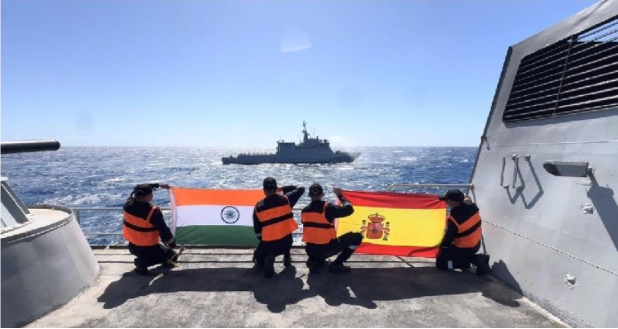
Fig 4. INS Sumedha and ESPS Metero strengthen ties with Maritime Partnership Exercise in the Mediterranean Sea
Source: India News Network.
Following the ‘India-EU Maritime Security Dialogue’ on 05 October 2023, INS Sumedha once again exercised, this time with Spain’s ESPS Tornado, alongside three other EU member-states’ naval assets (see Fig 5) off the coast of Ghana. These exercises demonstrated India’s and the EU’s commitment in bolstering maritime security in the Gulf of Guinea within the framework of the Yaoundé architecture.[53]
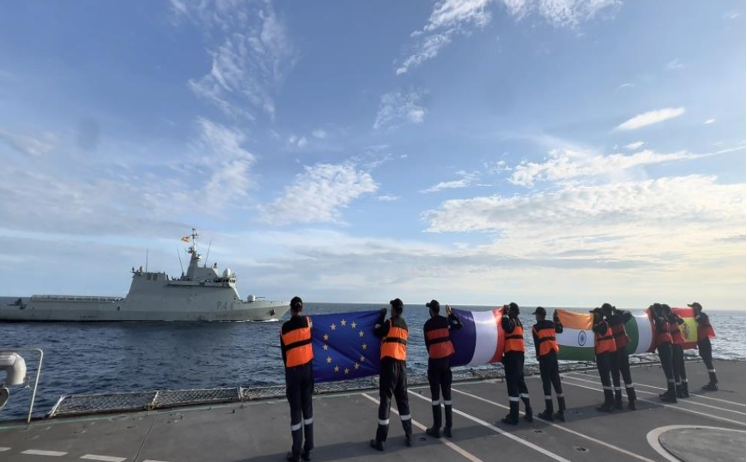
Fig 5. EU and India Maiden Combined Naval Exercise in the Gulf of Guinea
Source: Press Information Bureau, Government of India
Areas of Tangible Maritime Cooperation
Spain and India boast a robust “Strategic Defence Partnership” with a pronounced maritime focus,[54] evidenced by transfer-of-technology (ToT) agreements involving private sector entities from both nations. Recently, Spain’s Ambassador to India — His Excellency Mr Jose Maria Ridao Dominguez — expressed Spain’s optimism and keen interest in India defence industry, specifically in terms of defence technology-sharing and partnerships.[55] Two key areas of collaboration within this “Strategic Defence Partnership” include the procurement and manufacturing of ships and submarines, and the development of critical underwater infrastructure, such as submarine cables.
The maritime focus of the ‘Strategic Defence Partnership’ notwithstanding, the partnership does concentrate upon the cooperation in aviation as well. Spain’s ongoing manufacturing of the Airbus C-295 programme underscores the potential of the defence agreements between the two nations.[56] Spain has already delivered the first Airbus C-295 tactical transport aircraft, while another 16 such aircraft are being manufactured for the Indian Air Force (IAF) in Spain and will be delivered in ‘fly-away’ condition by 2025.[57] Additionally, under an industrial partnership between the two countries, 40 of these aircraft are being manufactured and assembled in India by Tata Advanced Systems (TASL).[58]
Apart from its ongoing collaboration with the IAF, Spain is also a major contender for the ₹43,000 Cr procurement by the Indian Navy under the “Project-75 India”, submarine acquisition programme.[59] M/s Navantia, a leading Spanish government-owned shipbuilding company, is competing neck-to-neck with Germany’s “ThyssenKrupp Marine Systems” (TKMS) for this mega naval contract, which involves a significant transfer of technology to the Indian construction partner. While TKMS has chosen Mazagon Docks Ltd (MDL) as its partner, Navantia will work with Larsen & Toubro, India.[60] Navantia’s “S-80” submarine design relates to a 3000-tonne submarine diesel-electric submarine (Fig 6 refers)[61]fitted with state-of-the-art (but yet to be proven) Air Independent Propulsion (AIP) system. Like that of TKMS, the Spanish design, too, satisfies the Indian Navy’s requirements.[62]
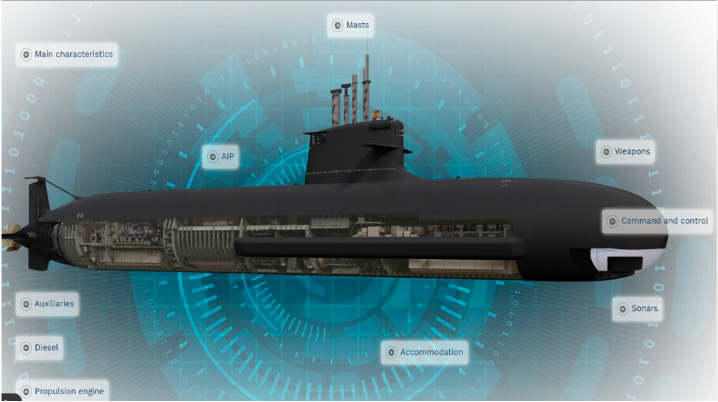
Fig 6. Navantia’s S-80 Submarine Design
Source: Navatia Website
Apart from the tender for submarine construction with L&T, Navantia is also understood to be keen to construct Landing Platforms Dock (LPDs) within India. LPDs are versatile vessels used to transport military personnel and supplies, improving a navy’s amphibious capabilities. Some three years ago, in 2021, the Indian Navy had issued a Request for Information (RFI) for four LPDs, and Navantia has stated that it would be willing to enter into a Transfer of Technology (ToT) agreement, in respect of its Juan Carlos I LPD, with M/s L&T.[63] Although the project has been on hold pending the securing of funds for the proposed Indigenous Aircraft Carrier II (IAC II),[64] the Indian Navy could issue a Request for Proposal (RFP) for the LPDs in 2025. This RFP is expected to incorporate capabilities for Unmanned Aerial Vehicles (UAVs) and Unmanned Combat Aerial Vehicles (UCAVs), aligning with Navy’s strategy to adopt cutting-edge technologies.[65] Additionally, under India’s Double Taxation Avoidance Agreement (DTAA) with Spain, defence procurement and manufacturing industries would benefit as these are capital-intensive activities. Since the tax rates on royalties and fees of technical services are not more than 10 per cent, any agreement between Spanish and Indian companies will be lucrative for both parties.[66]
Overall, there is a huge potential for Spain and India to collaborate within the defence sector. The establishment of a ‘Joint Working Group on Defence’[67] could well facilitate the creation of a dynamic and robust ecosystem for Spanish-Indian industrial and defence cooperation. This would allow for greater and deeper engagement in maritime technologies such as Underwater Unmanned Vehicles (UUVs), LPDs, high-tech conventional submarines, ammunitions, and missiles, amongst other things.
India-Spain collaboration in maritime security and the blue economy is, once again, assessed to be significant, with substantial mutual benefits to be gained. Enhanced collaboration in these areas would foster innovation, sustainable development, and enhance regional stability. To realise this potential, it is crucial to intensify engagement by both, Track 1 (official government-level) initatives and Track 1.5 (informal dialogues or workshops including government and non-governmental stakeholders) ones. Such comprehensive engagement would facilitate the exchange of expertise, joint initiatives, and the development of robust frameworks for cooperation, ultimately strengthening the maritime capabilities and economic prosperity of both nations.
Conclusion
The vulnerability of Spain’s maritime spaces has driven it to undertake major legislative, technological, and operational initiatives aimed at gaining greater control over its maritime domain. Arguably, Spain’s revision of its NSMS seeks to better address the current state of affairs by formulating policies to safeguard vital trade routes, sovereign and neighbouring coastal areas, critical undersea infrastructure, maritime cultural heritage, ocean resources, and marine biodiversity. The NSMS aims to bring Spanish public authorities and the private sector under a common umbrella to bolster Spain’s maritime capabilities and, thereby, to protect its maritime interests. Through international partnerships in the Indo-Pacific region, particularly with India, Spain may yet reclaim its erstwhile status as a prominent maritime power.
******
Endnotes:
[1] “Spanish Armada Defeated”, HISTORY, A&E Television Networks, Published 09 February 2010, Last updated 27 July 2020, https://www.history.com/this-day-in-history/spanish-armada-defeated
[2] “History of Spain, La Moncloa, Ministerial Departments of the Government of Spain https://lamoncloa.gob.es/lang/en/espana/historyandculture/history/Paginas/index.aspx
[3] Luis Simon and Dick Zandee, “Towards Greater European Responsibility in Security and Defence: a Spanish-Dutch View”, Real Instituto Elcano, 10 February 2022, https://www.realinstitutoelcano.org/en/analyses/towards-greater-european-responsibility-in-security-and-defence-a-spanish-dutch-view/
[4] Carlos Espaliu Berdud, “The Spanish Maritime Security: Main Challenges”, Revista Europea De derecho de la Navagacion maritima y aeronautica, *Dialnet-TheSpanishMaritimeSecurity-6953720 (2).pdf Pg 16.
[5] “European Union Naval Force Operation Atalanta – EUNAVFOR Operation Atalanta”, European Union External Action Service, https://eunavfor.eu/
[6] Geography of Spain, Instituto Geografico Nacional, https://www.ign.es/recursos-educativos/coastal-landform/index.html?&locale=en
[7] “Geography of Spain”, La Moncloa, Ministerial Departments of the Government of Spain, https://www.lamoncloa.gob.es/lang/en/espana/historyandculture/geography/Paginas/index.aspx
[8] Ibid
[9] National Strategy for Maritime Security 2024, Department of National Security, Kingdom of Spain, published March 2024, 33
[10] Luis Simon and Dick Zandee, “Towards Greater European Responsibility in Security and Defence: a Spanish-Dutch View”, Real Instituto Elcano, 10 February 2022, https://www.realinstitutoelcano.org/en/analyses/towards-greater-european-responsibility-in-security-and-defence-a-spanish-dutch-view/
[11] National Strategy for Maritime Security 2024, 30
[12] Ibid, 69-70
[13] Ibid, 56 & 73
[14] Ibid, 74
[15] Ibid, 76
[16] Ibid, 78
[17] Ibid, 80
[18] Ibid, 83
[19] Ibid, 85
[20] PESCO is part of EU’s CSDP, and 26 of the 27 EU member-states participate in PESCO, with the exception of Malta. The member-states agreed to plan, invest, develop, and operate defence capabilities together with the PESCO framework.
See also:
“Permanent Structured Cooperation (PESCO) – Factsheet”, European Union External Action Service, Press Team, 22 March 2024, https://www.eeas.europa.eu/eeas/permanent-structured-cooperation-pesco-factsheet-0_en
[21] The objective of the 4E programme is to develop important systems of any surface combatant that will be built in Europe from 2035 to 2045. These include combat systems, communication and information systems, navigation systems, platform management systems, and Integration of System of Systems. Notably, the duration of the project is based on the potential development of any major naval program for shipbuilding.
See Also:
“Essential Elements of European Escort (4E), PESCO Projects, https://www.pesco.europa.eu/project/essential-elements-of-european-escort-4e/#:~:text=The%204E%20Project%20aims%20to,final%20results%20of%20the%20project.
[22] National Strategy for Maritime Security 2024, 87
[23] PERTE stands for Projects for Economic Recovery and Transformation, this is public-private collaboration instrument that promotes large projects to aid economic growth, employment opportunities and competitiveness.
See Also:
“The PERTE Naval will subsidise 40 projects among companies with more than € 56 million”, La Moncloa, Ministerial Departments of the Government of Spain, published on 14 September 2023, https://www.lamoncloa.gob.es/lang/en/gobierno/news/paginas/2023/20230914_perte-naval-projects.aspx
[24] National Strategy for Maritime Security 2024, 88
[25] Ibid 89
[26] Ibid, 93
[27] Ibid, 95
[28] While the strategy mentions SLOCs, the author believes they referring to known ISLs.
[29] National Strategy for Maritime Security 2024, 96
[30] Ibid, 97
[31] Ibid, 99
[32] Ibid, 101
[33] Ibid, 102
[34] Ibid, 51
[35] La Moncloa, Ministerial Departments of the Government of Spain, published on 14 September 2023, https://www.lamoncloa.gob.es/lang/en/gobierno/news/paginas/2023/20230914_perte-naval-projects.aspx
[36] National Security Strategy 2021, Department of National Security, Kingdom of Spain, 85, ESN2021 EN_2.pdf
[37] Dr Manmohan Singh, Former Prime Minister of India, Indian Ocean Naval Symposium Inaugural speech, 2008, PMO Archive, https://archivepmo.nic.in/drmanmohansingh/speech-details.php?nodeid=633
[38] Ibid
[39] Natalia Medina, “Maritime Security Strategy 2024”, Atalayar – Entre Dos Orillas, published on 06 April 2024, https://www.atalayar.com/en/articulo/politics/maritime-security-strategy-2024/20240406080000198337.html
See Also:
National Strategy for Maritime Security 2024, Pg 41
[40] National Strategy for Maritime Security 2024, Pg 40
[41] Ibid, 21
[42] “Geography of Spain”, Instituto Geografico Nacional, https://www.ign.es/recursos-educativos/coastal-landform/index.html?&locale=en
See Also:
“Geography of Spain”, La Moncloa, Ministerial Departments of the Government of Spain, https://www.lamoncloa.gob.es/lang/en/espana/historyandculture/geography/Paginas/index.aspx
[43] National Strategy for Maritime Security 2024, Pg 60
[44] National Security Strategy 2021, Department of National Security, Kingdom of Spain, Pg 85, ESN2021 EN_2.pdf
[45] The National Security Strategy 2013, Department of National Security, Kingdom of Spain, Pg 18 ,https://www.lamoncloa.gob.es/documents/estrategiaseguridad_baja_julio.pdf
[46] “Robles Highlights the Spanish Navy’s Commitment to International Maritime Security”, La Moncloa, Ministerial Departments of the Government of Spain, https://www.lamoncloa.gob.es/lang/en/gobierno/news/paginas/2023/20230908_spanish-navy.aspx .
[47] “Indian Navy Carries Out First Drug Interdiction as CMF Member”, CMF website, published 16 April 2024, https://combinedmaritimeforces.com/2024/04/16/indian-navy-carries-out-first-drug-interdiction-as-cmf-member/.
[48] “Combined Maritime Forces (CMF)”, CMF Website, date accessed 01 May 2024, https://combinedmaritimeforces.com/#:~:text=What%20we%20do,Operations%20inside%20the%20Arabian%20Gulf)
[49] “Indian Ocean Naval Symposium – Participating Nations”, IONS Global, https://www.ions.global/ions-working-groups
[50] “INS Tarkash at Cadiz, Spain”, Government of India, Ministry of Defence, Press Information Bureau, published 19 August 2019, https://pib.gov.in/Pressreleaseshare.aspx?PRID=1582307
[51] “EU-India Joint Naval Exercise”, Government of India, Ministry of Defence, Press Information Bureau, published 21 June 2021, https://www.pib.gov.in/PressReleasePage.aspx?PRID=1729021
[52] “India and Spain Strengthen Ties with Maritime Partnership Exercise in the Mediterranean”, India News Network, published on 27 September 2023, https://www.indianewsnetwork.com/en/20230927/india-and-spain-strengthen-ties-with-maritime-partnership-exercise-in-the-mediterranean
[53] “Gulf of Guinea: EU and India Carry Out Maiden Joint Naval Exercise”, Government of India, Ministry of Defence, Press Information Bureau, published on 26 October 2023, https://pib.gov.in/PressReleaseIframePage.aspx?PRID=1971391
[54] “Defence Secretary and Spanish Secretary of State of Defence Meet in New Delhi; Focus on Defence Industrial Cooperation”, Press Information Bureau, Ministry of Defence, published 08 March 2024, https://pib.gov.in/PressReleaseIframePage.aspx?PRID=2012811#:~:text=on%20industrial%20collaboration.-,Both%20sides%20reviewed%20the%20ongoing%20projects%2C%20and%20discussed%20future%20joint,the%20Spanish%20Ministry%20of%20Defence.
[55] Spain, India Explore expanding Bilateral Ties Starting with Defense”, EFE Communica, 22 November 2023, https://efe.com/en/latest-news/spain-india-explore-expanding-bilateral-ties-starting-with-defense/
[57] Dipanjan Roy Chaudhury, “Spain Ready to supply more C295 Transport Aircraft to India: Envoy”, The Economic Times, 26 November 2023, https://economictimes.indiatimes.com/news/defence/spain-ready-to-supply-more-c295-transport-aircraft-to-india-envoy/articleshow/105504941.cms?from=mdr
[58] Ibid
[59] Spain, India Explore expanding Bilateral Ties starting with Define”, EFE Communica, 22 November 2023, https://efe.com/en/latest-news/spain-india-explore-expanding-bilateral-ties-starting-with-defense/
[60] Manu Pubby, “Trials for Submarines to Start in a few months: want to work together on ammo: Spain”, The Economic Times, 08 March 2024, https://economictimes.indiatimes.com/news/defence/trials-for-submarines-to-start-in-a-few-months-want-to-work-together-on-ammo-spain/articleshow/108335892.cms?from=mdr
[61] “S-8-, a Latest Generation Submarine”, Navatia, https://www.navantia.es/en/business-areas/submarines/
[62] Palak Gupta, “MDL and L&T will be the Strategic Partners for P-75 India Submarine Building Programme”, Force – National Security and Aerospace Newsmagazine, https://forceindia.net/feature-report/profitable-partnerships/
[63] Raunak Kunde, “Navatia and L&T to offer Juan Carlos I LPD to meet Indian Navy’s Requirement for four LPD’, News Beat, Indian Defence Research Wing, published 03 December 2023, https://idrw.org/navantia-and-lt-to-offer-juan-carlos-i-lpd-to-meet-indian-navys-requirement-for-four-lpd/#:~:text=Published%20December%203%2C%202023%20%7C%20By,managing%20director%20of%20Navantia%20India.
[64] Raunak Kunde, “Navy Mulls over Design Changes of the Landing Platform Docks (LPDs) to Accommodate UAVs and UCAVs”, News Beat, Indian Defence Research Wing, published 12 December 2023, https://idrw.org/navy-m ulls-over-design-changes-of-landing-platform-docks-lpds-to-accommodate-uavs-and-ucavs/
[65] Ibid.
[66] I would like to thank Ms Anuttama Banerji, Junior Research Associate, National Maritime Foundation for contributing to this article.
See also,
Archana Rao, “India-Spain DTAA Notification: Lowered Tax Rates and Key Provision”, Indian Briefing, published 02 April 2024, https://www.india-briefing.com/news/india-spain-dtaa-notification-lowered-tax-rates-and-key-provisions-31735.html/#:~:text=The%20DTAA%20between%20India%20and,with%20wealth%20tax%20in%20India.
[67] Indian News Network, “India and Spain decide to intensify bilateral ties: discuss define cooperation and trade”, published on 10 October 2023, https://www.indianewsnetwork.com/en/20231010/india-and-spain-decide-to-intensify-bilateral-ties-discuss-defense-cooperation-and-trade


Leave a Reply
Want to join the discussion?Feel free to contribute!