
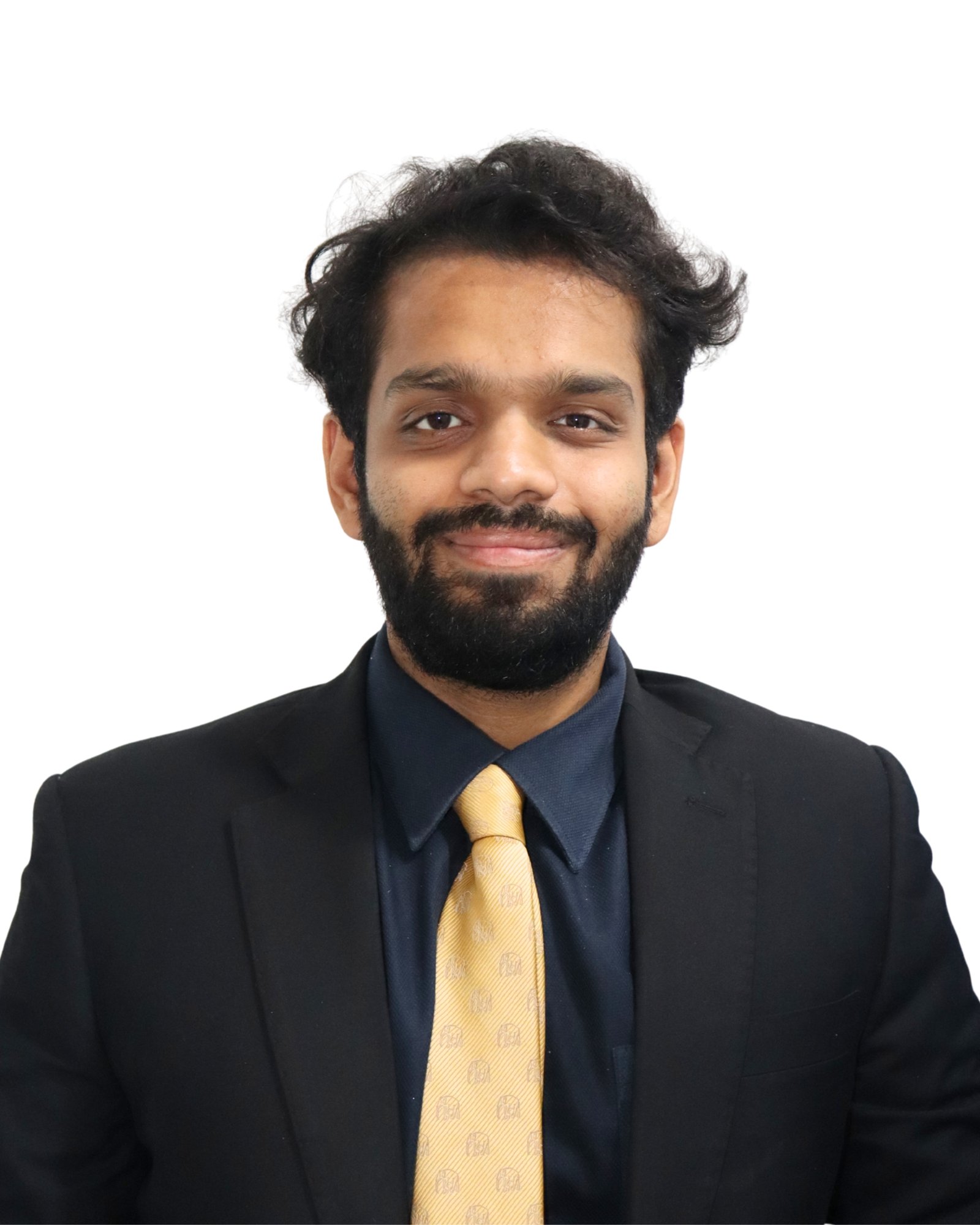
Soham Agarwal
Bio - Profile
Mr Soham Agarwal is an Associate Fellow in the Resilience and Sustainability of Ocean Resources (RSOR) Cluster at the National Maritime Foundation (NMF). His areas of research include the seabed (particularly the legal aspects thereof), including in the context of seabed warfare. Critical maritime infrastructures such as submarine communication cables and deep-seabed ocean resources extraction have formed a central part of his research. He has published writings on these subjects and has presented them at both national and international Track 1 and Track 1.5 forums, which include with the Indian Navy, the National Security Council Secretariat, the Maritime Law Workshop of the Colombo Security Conclave, and the International Cable Protection Committee’s symposium on undersea cable resilience in Valentia Island, Ireland. As such, he was invited as a Defence Special Invitee by the Australian Department of Defence, where he presented options for Indo-Australia collaboration on undersea infrastructure resilience. He is currently also a recipient of the prestigious CDRI fellowship 2024-2025 to enhance disaster-resilience of undersea communication cable infrastructure in India and an Infrastructure Resilient Island States’ project on seaport resilience in Seychelles.
He has received an LLB (Hons.) from the University of Nottingham, United Kingdom and completed an LLB Bridge Course in Indian law from the National Law University of Delhi. His experience also includes research, drafting, and advocacy at law firms and counsel chambers in India. As a true enthusiast of the underwater domain, he also has an Open Water Diver certification.
Areas of Research
- Public International Law
- Seabed and its legal aspects.
- Legal protection of critical Information Infrastructure
- Legal Aspects of Surface, Sub-Surface, and Space-based Maritime Domain Awareness
Experience
- Research Intern (PIML Cluster), National Maritime Foundation, New Delhi (December 2020, March 2021)
- Junior Counsel, Chambers of Farhan Dubash, Mumbai (August 2020- November 2020)
- Paralegal, Vaish Associates and Advocates, Mumbai (September 2019 – February 2020)
Education
Presentations
- “Protection of Submarine Communication Cables: The Legal Way” at the Colombo Security Conclave Maritime Law Workshop in Gandhinagar, Gujarat (2023).
- “Submarine Communication Cables: Cooperation in the Indian Ocean Region” to International Liaison Officers of the Information Fusion Centre: Indian Ocean Region” (2023), New Delhi
- “An Overview of Deep Seabed Mining” at the National Maritime Foundation (2023), New Delhi
- “Analysing the Layers of Submarine Communication Cables: Legal and Policy measures relevant to India” to the officers of the National Security Council Secretariat. Government of India, New Delhi
- “Protecting Submarine Communication Cables in the Indian Ocean: The Indian Perspective” at the EU-NMF Track 1.5 Dialogue (2023), New Delhi
- “Enhancing Cable Resilience in the Indo-Pacific: A Regional Approach” at the Daniel K Inouye Asia Pacific Centre for Security Studies (2023), Hawaii, USA
- Module on Law of the Sea to Indian Foreign Service Probationers with Captain Parmar at Sushma Swaraj Institute of Foreign Service, New Delhi, February 2021.


 https://aumund.com/en/editorials/samson-ship-loading-solutions-for-copper-concentrate-in-latin-america/

 https://www.ogc.org/


