

Abstract: The Gulf of Khambhat, historically known as the Gulf of Cambay, is a bay in the Arabian Sea in the state of Gujarat on the west coast of India. Alang-Sosiya, where the majority of India’s ship breaking and ship recycling industry is concentrated, is located approximately 30 km from Bhavnagar in the Gulf of Khambhat. There are 153 ship-breaking yards in the 12 kilometres of beach-front of Alang-Sosiya, Gujarat. This industry has, in the past, faced scathing criticism from environmental activists for being responsible for environmental degradation. A National Maritime Foundation (NMF) team, comprising Commodore Debesh Lahiri, Executive Director, NMF; Rhythma Kaul, Associate Fellow; Ayushi Shrivastav, Research Associate is currently undertaking a project entitled “Sustainable Ship Recycling in India”. This project analyses India’s current ship recycling practices and capacities through the lens of sustainability, by evaluating the entire process of ship recycling in India from anchorage to disposal and recycling of dismantled parts of the ship. The authors, after a field visit to the Alang-Sosiya Ship Recycling Yard, and having extensively interacted with all the industry stakeholders, are of the opinion that thanks to the concerted efforts of all stakeholders, there has been a significant improvement in the environmental compliance by this industry. This article is the first part of a two-part series on sustainable ship-recycling in India and is focused on the current practices being followed at Alang-Sosiya, with a specific thrust on its legal, political and economic aspects, and concludes with policy-relevant recommendations for the policy makers in various government departments. The second part will focus upon the social, technological and environmental aspects of ship recycling in India. Since, this research article is an outcome of Corporate Social Responsibility (CSR) funds from the Goa Shipyard Limited, a deliberate attempt has been made by the authors to educate the lay public about the basics of sustainable ship recycling.
Keywords: ALANG-SOSIYA, GULF OF KHAMBHAT, SHIP BREAKING, SHIP RECYCLING, SHIP BREAKING CODE, HAZARDOUS WASTE, GUJARAT MARITIME BOARD, HONG KONG CONVENTION, EUROPEAN UNION SHIP RECYCLING RULES
Alang, a small village in Bhavnagar, Gujarat, situated in the Gulf of Khambhat, hosts one of the largest ship recycling industries in the world thanks to its conducive geographical location which facilitates the beaching of vessels for their subsequent recycling. Alang’s hydrological advantages include a very large tidal range (the difference between its high tide and low tide levels) of the order of 10-11 metres, and a 15-degree beach gradient that aids in the beaching of ships. Additionally, because of its location well inside the Gulf of Khambhat, ships are afforded protection whilst at anchorage during inclement weather. Today, the ship recycling industry has expanded beyond Alang and includes the neighbouring village Sosiya to create the Alang-Sosiya Ship Recycling Yard (ASSRY).
Ship recycling is a process that involves anchorage, beaching, ship breaking and recycling of a ship’s parts for disposal and reuse. Currently, 58,000 merchant ships[1] operate on the world’s seas, and a substantial number of end-of-life ships are sent on their final voyage to Alang-Sosiya for decommissioning and ship recycling. The following table provides some beaching data of ships that have been brought for recycling at Alang-Sosiya in the last five years:
| YEAR-WISE BEACHING DATA | ||
| Year | Number of Ships | LDT in MT |
| 2019-20 | 202 | 162280.18 |
| 2020-21 | 187 | 1760641.28 |
| 2021-22 | 209 | 1456655.12 |
| 2022-23 | 131 | 1147480.52 |
| 2023-24 (up to August 2023) | 40 | 348494.88 |
Source: Information provided by Captain Rakesh Mishra, Port Officer, Bhavnagar, Gujarat Maritime Board, “Year-Wise Beaching Data”, LDT in MT – Light Displacement Tonnage in Metric Tonnes.
Historically speaking, ship breaking in Alang commenced in the 1980s and, since then, over 8000 ships have been successfully beached, representing more than 70 million tonnes of light displacement tonnage (LDT)[2], with the industry continuing to grow rapidly.[3] A wide array of end-of-life ships, including large super tankers, cruise liners, special purpose vessels, bulk carriers, warships, ro-ro ships, container ships, etc., make their final voyages to Alang-Sosiya. The ship recycling industry is a significant source of revenue for Gujarat as it generates substantial quantities of re-rollable steel — thus providing an alternative to the non-renewable source of iron ore required for steel-making —accounting for 15 per cent of the country’s total steel output.[4] This industry is also a valuable source of supply for second-hand goods viz. onboard machinery, equipment, pumps, pipes, valves, furniture, fittings and fixtures, other scrap material, etc.
In addition to ship recycling, Alang-Sosiya has several other identities. For example, it is a tourist destination for visitors to see how the dismantling of decommissioned ships is done, a shopping destination to buy what comes out of these ships, and an inventory-in-transition of different equipment, fittings etc. which can be recycled and reused. Therefore, a question that requires to be answered is, who benefits the most from the industry? Is it the developed nations, who have found a cheap way to dispose of their waste? Or is it the Gujarat Maritime Board (GMB) and the shipyard owners who see their profits increase year on year? Or is it the workers, who find employment which is otherwise hard to come by? There is, therefore, a pressing need to identify who is bearing the cost of the benefits of ship recycling.
In August 2023, as part of its ongoing research, a research-team from the NMF undertook a field visit to Alang-Sosiya and interacted with a variety of stakeholders in the ship recycling industry including the officials of Gujarat Maritime Board (GMB) at Alang, Bhavnagar and Gandhinagar. The NMF team interacted with the Port Officer, GMB (Bhavnagar); the Chief Engineer, the Deputy Executive Engineer and Manager (Environment) of GMB, Gandhinagar; the Vice President, Alang-Sosiya Ship Recycling and General Worker’s Association (ASSRGWA); the President and Honorary Secretary of the Ship Recycling Industries Association (SRIA) (India); and the Operations Manager, Green Gene Enviro Protection and Infrastructure Private Limited (GGEPIL). The team also visited a few ship-recycling plots, including those of Ms Arya Steel, Ms Priya Blue, and the Bansal Group; the GMB Red Cross Multi-Speciality Hospital, Alang; the GMB Safety Training and Labour Welfare Institute; the GMB Common Hazardous Waste Treatment Storage Disposal Facility (CHW-TSDF), which is operated and managed by Gujarat Environment Protection and Infrastructure Pvt Ltd (GEPIL) and the Accommodation Complex of ship-recycling workers, which is managed by the SRIA.
It would be appreciated that before examining the legal, economic and political aspects of ship recycling — which is, of course, the focus of this article — it is important to be clear about the entire process of ship recycling in India from anchorage to final disposal of dismantled parts.
Ship Recycling: Step-by-Step Process
According to The Recycling of Ships Act, 2019, ships must be recycled according to a ship-specific recycling plan. There are ten essential steps that need to be taken, starting from the anchoring of a ship to finally sending the ferrous and non-ferrous parts for recycling, as also the disposal of various waste material generated during ship recycling.[5] These steps may be summarised as follows:
- A ship upon entering India’s internal waters, is anchored at about 12 nm from Ghogha Port, Bhavnagar, Gujarat. The ship is then boarded by Customs officials and accorded customs clearance, following which the GMB and the Gujarat Pollution Control Board (GPCB) officials inspect the ship’s Inventory of Hazardous Materials (IHM) and provide the necessary clearance certificate.
- The next step after anchorage is seeking permission from the GMB and the GPCB for beaching of the ship at one of the ship breaking yards at Alang-Sosiya. The ship is allowed to be beached along the Alang-Sosiya coast for dismantling and recycling only after due permission is accorded.
- After the ship is beached, oil is drained from the bilges and tanks, fuel tanks are cleaned and fuel and lubricant lines are disconnected from the ship. Oily waste including oily sand, rags, garbage and plastic wastes are them transported to the nearby Common Hazardous Waste Treatment Storage Disposal Facility (CHW-TSDF) that has been set up by the GMB.
- Thereafter, the Safety Officer of GMB inspects, identifies, and marks the different types of gas cylinders, batteries and chemicals on board. The recovered empty cylinders, batteries and chemicals are safely carried from the ship to their assigned locations in the yard and temporarily stored until they can be transported by an officially contracted firm (assigned by the regulatory authorities) to a site where a final decision about their further usage/disposal is taken.
- The next step is the collection and disposal of bilge water and associated wastes. The bilge water tanks, after being emptied, are cleaned with the help of beach sand.
- The sixth step entails the obtaining of a Decontamination Certificate from the GPCB and a Hot Work Permit from the GMB to subsequently cut the ship using gas-cutting.
- Upon receipt of the Decontamination Certificate and the Hot Work Permit, the usable materials on the ship are removed from the ship and sold to the highest bidder. These materials are, prior to their sale, identified by both, the Safety Officer and the ship dismantling yard owner, and an inventory list of such items is prepared.
- In the eighth step, insulating material including asbestos, glass wool, and thermocol, are removed from the ship by trained workers.
- Gas cutting is the ninth step where the ship is cut into large sections with the help of gas cutting torches, during high tide. Cranes and winches are used to pull the ship’s cut sections, resulting in the sections falling in the inter-tidal zone due to gravity. Once the water recedes completely to the low tide level, pieces of this sliced section, are cut in the inter-tidal zone itself so as to make smaller pieces, which can be conveniently lifted by the cranes and carried to the work area ashore.
- Finally, of the steel obtained from the cutting of ships, that which is in good condition is sent to nearby re-rolling mills that convert it into plates, bars, and rods, which are used in the construction sector. The remaining steel, called scrap, which cannot be sent for re-rolling and cannot be used directly, is sent for melting.
LEGAL PERSPECTIVE
In essence, ship recycling deals with end-of-life ships, which are considered to be a form of hazardous waste. Trading in hazardous waste from developed to developing countries has a history going back to the latter half of the 20th century, when the production and consumption of goods in developed countries increased exponentially.[6] Developed countries were introduced to mass marketing, high consumption, and improved ease of access to products. Consumers began to enjoy the availability of greater varieties of clothing, food, and other consumer goods. However, with the rise in consumption came a rise in the amount of waste generated. When people of these developed countries started protesting against the creation of landfills in their cities, legislations against the dumping of waste became stringent and, eventually, the cost of waste dumping increased. To solve this problem, these countries then began transporting their waste to developing countries, since the waste management policies there were lax and human resource available was cheap and readily available. The developed countries, having found inexpensive ways to process and dispose of their waste, adopted the system of “waste flow”— a phenomenon often termed as “garbage imperialism”.[7]
Two decades into the 21st Century, these wastes continue to flow. The developing countries either find this waste directly dumped on its land or they recycle or reuse the dumped waste. An example of this are fast-fashion castoffs, which end up becoming fleece or mattress stuffing, or are directly sold in second-hand markets of Asian and African nations.[8] The Basel Convention on the Control of Transboundary Movements of Hazardous Wastes and Their Disposal, 1989, was introduced due to this reason. Consequent upon increased environmental awareness and economic heft over the last few years, several developing nations have now begun to ban the import of all or specific types of waste. India, for instance, has banned waste dumping by passing the Hazardous and Other Wastes (Management and Transboundary Movement) Rules in 2016 and in 2019.[9] However, the global shipping industry remains an exception to this, especially with the passing of The Recycling of Ships Act of 2019, which allows the recycling or dismantling of end-of-life ships in India.
The relocation of the market of the ship recycling industry from the developed to the developing countries has been complemented and further strengthened by rising demand for steel in developing domestic markets, lax environmental regulations, and a cheap workforce. End-of-life ships that arrive in Alang-Sosiya for ship recycling are primarily sold based on weight to the shipbreaking companies either directly or through cash buyers.[10]
Overview of Governing Authorities at Alang-Sosiya
Several central and state government authorities are involved in the management of Alang-Sosiya ship breaking yards. These include the Ministry of Environment, Forest and Climate Change (MoEF&CC) and the Ministry of Ports, Shipping and Waterways (MoPSW) in New Delhi, and the Gujarat Maritime Board (GMB), the Labour and Employment Department of Gujarat, the State Coastal Regulation Zone Authority, the Gujarat State Pollution Control Board (GPCB), the Customs Department, the Occupational Health and Safety Inspector, and the Factories Inspector in the state of Gujarat.
The GMB is the nodal agency at Alang-Sosiya with the responsibility of allocating plots for shipbreaking, developing the required infrastructure, acquisition of land, planning and the provisioning of water, electricity, roads, and communication, and so forth. The GMB has been vested with the power to ensure that the shipyards follow the norms and regulations laid down under various state and central government laws and policies. All yards at Alang-Sosiya are mandated to have a Recycling Facility Management Plan and in case any component of the Recycling Facility Management Plan of a particular yard is not functional during the GMB inspection, then the GMB has the power to cancel the permission for that ship recycler to beach any ship until the non-functional components are made functional in accordance with the laid down requirements.
International Laws
International conventions relating to ship recycling are The Hong Kong International Convention for the Safe and Environmentally Sound Recycling of Ships, 2009 (Hong Kong Convention), The International Convention for the Prevention of Pollution from Ships, 1973, and the amendment protocol of 1978, both of which are together known as MARPOL 73/78; The Stockholm Convention on Persistent Organic Pollutants, 2001; The Maritime Labour Convention, 2006; The Basel Convention on the Control of Transboundary Movements of Hazardous Wastes and Their Disposal, 1989, (Basel Convention) and The Basel Convention Ban Amendment, 2019 (Ban Amendment). It is pertinent to note here that the European Union has its own regulations, i.e., the European Union Ship Recycling Regulation, 2013 (EU SRR), and the European Union Waste Shipment Regulation, 2006, with the EU SRR running parallel to the Hong Kong Convention. India is not party to the Ban Amendment and the EU regulations.
The most recent and relevant international convention is the Hong Kong Convention which will enter into force on 26 June 2025. It will introduce global regulations to ensure ships at the end of their operational lives are recycled safely and without posing unnecessary risks to human health and the environment. The convention had laid certain conditions and upon the fulfilment of which it was to enter into force 24 months after the following required criteria were met, viz., not less than 15 member states; not less than 40 per cent of the world’s merchant shipping by gross tonnage; and ship recycling capacity of not less than 3 per cent of the gross tonnage of the combined merchant shipping of those States mentioned above. The date of the Convention’s entry into force was triggered when Bangladesh and Liberia became contracting States to it, marking the moment that all necessary criteria were met.
The Basel Convention is an important legislation that came into force in the 1980s. It protects human health and the environment from the adverse effects of wastes, in particular taking into account the vulnerabilities of developing countries. It obligates member States to (1) reduce and minimise waste at source; (2) manage wastes within the country in which they are generated; (3) reduce transboundary movement of wastes to a minimum; (4) manage wastes in an environmentally sound manner; and (5) strictly control waste trade that does occur via a notification and consent mechanism known as “prior informed consent”. In relation to the Basel Convention, the Ban Amendment is an agreement between the Basel Convention Parties to prohibit the member States of the Organisation for Economic Cooperation and Development (OECD), the European Union (EU), Liechtenstein, and the countries that have ratified the Ban Amendment from exporting hazardous wastes to other countries — especially developing countries or countries with economies in transition.
Alang-Sosiya houses 153 shipbreaking yards out of which only 131 are operational. Currently, 106 shipbreaking yards have received Statements of Compliance (SoC) under the Hong Kong Convention and around nine of them have applied for the certification under EU SRR.[11]
National Laws
Laws in India relating to ship recycling can be grouped in two segments, namely, labour laws, and environmental laws. There is a wide range of laws in India for the protection and improvement of working and living conditions at Alang-Sosiya. These include the Worker’s Compensation Act, 1923; the Payment of Wages Act, 1936; the Factories Act, 1948; the Employee’s State Insurance Act, 1948; The Minimum Wages Act, 1948; the Employee’s Provident Funds Act, 1952; the Payment of Bonus Act, 1965; the Contract Labour (Regulation & Abolition) Act, 1970; the Payment of Gratuity Act, 1972; and the Inter-State Migrant Workmen (Regulation of Employment and Conditions of Service) Act, 1979. The applicability of these laws is discussed in the Economic Perspective below.
Environmental laws regulating ship recycling are the Water (Prevention and Control of Pollution) Act, 1974; The Air (Prevention and Control of Pollution) Act, 1981; the Environmental (Protection) Act, 1986; the Customs Act, 1962; and the Explosives Act, 1884. Regulations framed under the Environmental (Protection) Act, 1986 are Hazardous Waste (Management, Handling & Transboundary movement) Rules, 2008; The Batteries (Management and Handling) Rules, 2001; The Bio-medical Waste (Management and Handling) Rules, 1998; the Noise Pollution (Regulation & control) Rules, 2000; the Municipal Solid Waste Rules, 2000; the Ozone Depleting Substances (Regulation and Control) Rules, 2000; and the Manufacture, Storage and Import of Hazardous Chemical Rules (MSIHS) Rules, 1989.
The Government of Gujarat has enacted some additional laws. These include the GMB Ship Recycling Regulations, 2003; the Petroleum Rules, 1937 & 1976; the Explosives Rules, 1983; the LPG/Oxygen Gas Cylinders Rules, 1981; the Hazardous Waste (M&H) Rules and other Environmental Rules, 1989; and the Provision of Heavy Penalty in case of Fatal Accidents, 1855. Lastly, India has also enacted the Ship Breaking Code (Revised) 2013 (Code) and The Recycling of Ships Act 2019.
India ratified the Hong Kong Convention by passing The Recycling of Ships Act, 2019 whose provisions are the same as those of the Convention. However, the Code was enacted in 2013. In accordance with the specific provisions of the code, whenever a new facility is being planned, an Environmental Impact Assessment (EIA) is required to be undertaken, and the facility should comply with appropriate Coastal Regulation Zone (CRZ) notifications.[12] The Code focuses on the safe disposal of hazardous material generated by ship recycling activities and suggests in detail the appropriate disposal options.[13] It mandates that ship recyclers hand over such hazardous materials to authorised waste management facilities, viz., CHW-TSDF for treatment and disposal.[14] The hazardous material from the ship recycling yards is to be transported to TSDFs, where the same is disposed in an environmentally sound manner. The obligation of the ship recycler ends once the hazardous material reaches a TSDF. Additionally, the Code also mandates that the State Pollution Control Boards (SPCBs) (1) set up air quality monitoring stations within a ten-kilometre radius of shipbreaking facilities to take measurements in terms of National Ambient Air Quality Standards; (2) periodically monitor soil, sediment quality, work-zone air quality, and marine water quality near shipbreaking facilities;[15] (3) create facilities for the removal, storage, and disposal of hazardous material and wastes;[16] and (4) register as members of the TSDF[17] facilities for treatment, storage, and disposal of hazardous waste in an environmentally sound manner.[18]
An end-of-life ship is simultaneously a ship and a hazardous waste. Ships have to remain compliant with the Admiralty and maritime legal corpus, and standards required by international laws on navigation, safety at sea, and flag-related issues, until they are delivered to the ship breaking yards. All international laws governing a ship and hazardous waste are applicable to an end-of-life ship, until the ship is anchored. Thereafter, from the time it is anchored to the time it is beached, domestic laws of the country where it is anchored are applicable to it. However, as soon as the end-of-life ship is beached, it ceases to be a ship and becomes a hazardous waste. The obligation of the ship recycler to dispose of the hazardous material begins as soon as the ship touches the beach head, which is governed under the Recycling of Ships Act and the Code. Waste material originating from the ship recycling process, which reach the TSDF, are governed by the Hazardous Waste (Management and Handling) Rules, 1989, and the Hazardous and Other Waste (Management and Transboundary Movement) Rules, 2016, which make the operator of the TSDF liable for environmentally safe disposal of the material.[19]
Breaking of a ship falls under the category of ‘waste’ under the Basel Convention,[20] and both the Basel Convention and the Ban Amendment apply to the process of ship recycling. India ratified the Basel Convention in 1992 and it has made changes to its hazardous waste management rules to align itself to the Convention.[21] However, India has not ratified the Ban Amendment[22] which prohibits export of hazardous wastes, including electronic wastes and obsolete ships from OECD to non-OECD countries. Consequently, Alang-Sosiya is exempt from the ambit of the Ban Amendment.
Beaching
At Alang-Sosiya, ships are beached for ship recycling. According to Rule 3.3 of the Code, beaching is “the process in which a ship is taken ashore to land and grounded deliberately in shallow water, either on its own power or under tow. A beached ship is rendered immobile and cannot be re-floated. Beaching is thus irreversible.”
India is in conformity with the Hong Kong Convention, 2009, which does not explicitly prohibit beaching. In 2020, India’s National Green Tribunal (NGT) held that the beaching method was permissible[23] basing its conclusion on a 2007 Supreme Court of India judgement.[24] In that case, the Supreme Court of India had applied the principle of sustainable development based on the concept of “balance” to allow the dismantling of a ship at Alang-Sosiya, Gujarat, thus allowing and permitting the use of beaching for ship recycling. The NGT, in its 2020 judgement, opined that if the beaching method is not followed, there would be no shipbreaking activity in India, thereby depriving the country of a major business activity, which would in term lead to unemployment of a large labour force.[25] The tribunal further observed that an expert study, independently conducted under its auspices had not reported any adverse effect of the beaching method since 1982.[26] The observation of the tribunal, while aligned with the EUSRR (which does not ban the process of beaching), is in sharp contrast with the EU decision to ban beaching for the ship recycling process in respect of all EU-flagged ships, due to the safety and environmental issues arising from the beaching method, based on its independent scientific findings.

Figure 1. Beached Ships at Alang-Sosiya. (Photograph by one of the Authors of the Article)
ECONOMIC PERSPECTIVE
As explained earlier in this article, during the process of ship recycling, the ship’s structural members are cut into pieces by trained personnel using the gas cutting method from the bow (front portion) of the ship and gradually working their way towards the stern (the rearmost portion). Even the most impregnable and sturdy ships are torn down in a matter of months by the assiduous labour of workers, assisted by variety of tools and machines such as acetylene torches, sledgehammers, winches and cranes, at the 131 operational yards (of the 153 shipbreaking yards in all)[27] in Alang-Sosiya. Currently, 22 plots are vacant and an overall employment — direct and indirect — of 515 hundred thousand (lakh) people is generating an annual revenue of INR 55 crores per annum.[28] Beachfront plots of various sizes are being leased out by GMB in Alang-Sosiya to the owners of shipbreaking yards. This practice has been going on since 1994. The beach-front width of these plots varies from 30 m, 50 m and 120 m. However, with the increase in the size of the ships there is a clear need to rationalise the beach-front width sizes to accommodate ships with wide beams.
The time taken for the complete dismantling process of a ship depends entirely on the type of ship in question. For instance, an oil tanker takes comparatively lesser time to be scrapped than does a passenger liner as the latter has a more complex internal structure than the former. Currently, an average ship of 10,000 LDT to 20,000 LDT is broken in approximately three to five months. Yards at Alang-Sosiya employ a variety of workers for the various shipbreaking operations. Workers employed at these yards hail from different states of the country, such as Odisha, Uttar Pradesh, Bihar and West Bengal, and are essentially migrant workers who come to Alang-Sosiya in Gujarat in search of employment.[29]
Depending on their skills and experience, workers are very often categorised into “Muqaddams” (supervisors), gas cutters (who work on the ships and at the yards), winch and crane operators, loaders, and yard cleaners. They are paid daily wages according to these classifications. A gas cutter’s wage is around ₹ 800 to ₹2000 per day, as compared to a yard cleaner who earns around ₹500 to ₹1000 per day.[30] The constant search for better employment opportunities than that available in their home states, brings large numbers of workers to Alang-Sosiya, where they are termed “migrant workers”. As such, they usually travel without their families and tend to stay and work at the shipbreaking yards for relatively short periods of time (6 months to 2 years). Accountability of workers and applicability of various domestic labour laws to the ship recycling Industry at Alang-Sosiya, has been a big challenge due to the transient nature of this migrant work force. Apart from direct employment, these ship recycling yards also create indirect employment opportunities for tens of thousands of workers employed in downstream industries, such as re-rolling mills, oxy-acetylene plants, and the real estate market, thereby contributing to the economic growth of the country.
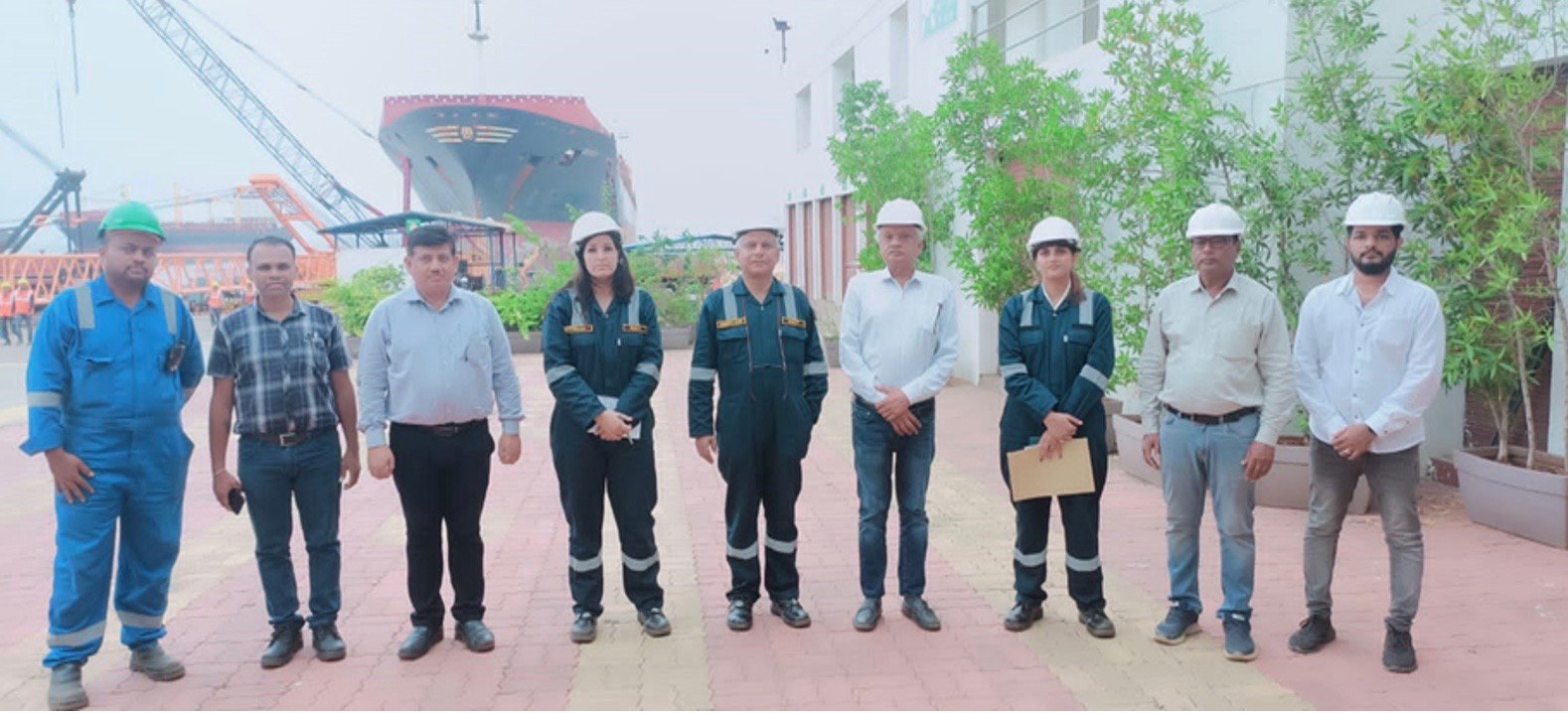 Figure 2. NMF Team’s visit to a Ship Recycling Yard in Alang-Sosiya. (Photograph by one of the workers of the Yard)
Price Structure of Ships Sold for Ship Recycling
Once ships are placed on the recycling market, they are no longer considered as means of transport but become mere commodities, viz., secondary raw material in the form of a floating inventory of ferrous and non-ferrous metal. Shipping markets all around the world remain closely inter-connected, each having its own fundamentals, with the ship recycling market being dependent on several heterogeneous factors, two main ones being:
- Supply: The supply of ships for recycling is driven by freight rates and is related to the international shipping market — impacted by global trade and world economy — and is common knowledge to the inter-connected global community of shipowners. The sales of ships are in hard currencies (currently US$).
- Demand.: The demand of ships for recycling is primarily driven by local demand in re-rolled steel and secondarily-driven by the demand for melted scrap products. The demand side is domestic and mainly concentrated in five shipbreaking countries, with around 400 significant players. Purchases are financed and executed in local currencies only.[31]
The above factors are the driving force in determining the price paid by ship recyclers for acquiring tonnage. The price offered for recycling ships also depends on how the shipbreakers anticipate the market and what they are ready to pay for ships considered as raw material. The re-rolled steel products produced from shipbreaking activities compete with other recycled products. Since these ships are purchased in hard currencies (mainly US$) but resold in local currencies, an exchange rate exposure affects the industry. Currently the number of ships being sent for ship recycling is low as shipowners continue to exploit their vessels to maximise their profits because of increased freight rates.
Each of the above-mentioned factors can have an impact on the ship recycling industry in India and the price offered for recycling ships. Five countries, i.e., Bangladesh, China, India, Pakistan and Turkey, have emerged as major ship recycling centres in the world, primarily because they can afford to offer the highest prices to buy the ships for recycling. A pertinent point that merits mention is that the proportion of scrap from recycled ships versus imported ferrous scrap is not the same across all the afore-mentioned countries.[32] Bangladesh (and to some extent Pakistan) is much more dependent on recycled ships for the supply of steel to meet their domestic steel requirements than are the three other three, viz., China, India, and Turkey.
During the COVID-19 pandemic, there was a plunge in global trade and lowering of freight rates. Ship owners now found it more profitable to simply sell their ships off for recycling rather than continuing to maintain them (in the absence of freight availability). Consequently, , from the second quarter of 2020 onward, a noticeable rise in the number of vessels bought for ship breaking was observed as compared to the muted activity in the first quarter.[33] The key to profit-making in ship recycling lies in the sale of higher value non-ferrous metals, oil, and furniture found on the ship, all of which form a sizeable part of the recycled products other than steel. Our on-ground interactions in Alang-Sosiya revealed that the average purchase price of steel in the Indian sub-continent is around US$ 500 or EUR 458 (currency exchange rate of 0.92) per Lightweight Tonnes.[34] In comparison, the price offered in the EU countries for such product is around EUR 235 to EUR 250[35] with the price gap being attributed to the fact that the end products of ship recycling in the Indian subcontinent are not primarily used as melting scrap for furnaces but as re-rolled steel for the construction industry.
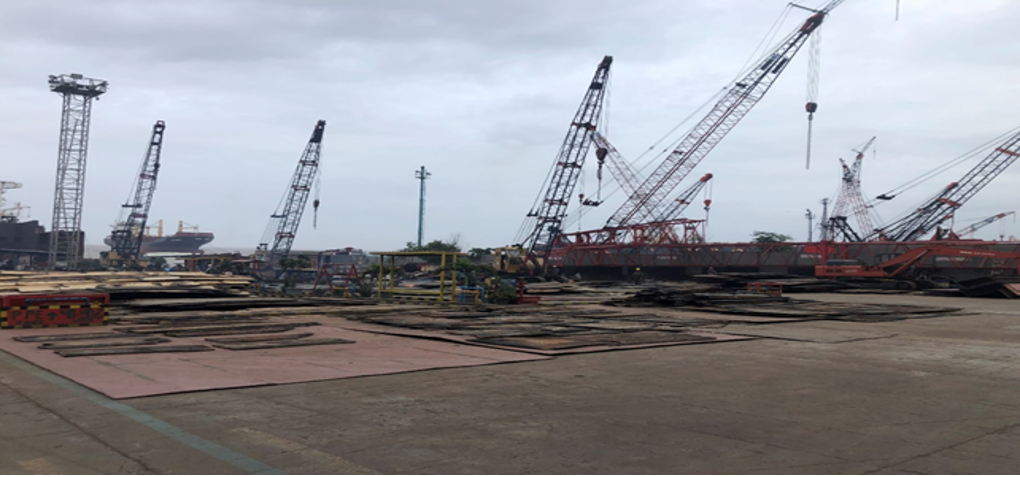
Figure 3. A Ship Recycling Yard at Alang-Sosiya. (Photograph by one of the Authors of the Article)
Alang Market
Lastly, while discussing the economic aspect of ship recycling in Alang-Sosiya, it is important to note that ship recycling not only covers the steel of the hull and superstructure, but also includes the various fittings inside a ship. Items that are stripped from the ship, even before the commencement of the dismantling process, such as electronics, furniture, fitting, cooking ware, machinery, wiring, plumbing, and many other items, are sold in second-hand markets, collectively known as the “Alang Market”. This market, which is one of its kind in the world, runs for miles and is situated close to the shipbreaking yards at Alang-Sosiya.
POLITICAL PERSPECTIVE
The Government of India promulgated the “Maritime India Vision 2030” (MIV 2030) in February of 2021, subsuming within it, the SAGARMALA mega-project, and including the enhancement of the country’s ship recycling capacity. This vision document promotes the concept of ‘Waste to Wealth’ through modification of Bureau of Indian Standards (BIS) regulations and the development of ship recycling infrastructure. The document also identified three major interventions to drive demand in the ship recycling industry:
- Relaxation in BIS (steel scrap standards) to enhance the yield per tonne of scrap and exempt ship-scrap use in re-rollable bar manufacturing based on mechanical strength and quality in lieu of the earlier-specified norms of metallurgical history.
- Redevelopment of plots at Alang-Sosiya and the creation of a ship-repair cluster on the east coast of India to enhance market share.
- Set up a facilitation centre to promote India’s ship recycling industry through the hosting of trade fairs and exhibitions.
As far as the modification of BIS regulations (IS 1786:2008) is concerned (which governs Thermo-Mechanical Treatment (TMT) bar production through ship scrap material), the current regulation limits the usage of recycled steel scrap in manufacturing re-rollable bars, driving prices in India lower. Due to the imposition of the Quality Control Order (QCO), the percentage share of recycled ship steel-scrap usage for re-rollable steel dropped from 70 to 80 per cent to 40 to 50 per cent. The Government of India, vide MIV 2030, has proposed two modifications to the BIS regulations on the requirement of metallurgical history of steel scrap from ship recycling:
- Exemption to steel scrap from ship recycling for use in re-rollable bar manufacturing.
- Use of quality and strength tests in lieu of metallurgical history for determining its end use.
Key initiatives for infrastructure development include the development of a ship recycling park behind the ship recycling yards at Alang. Secondly, MIV 2030 considers Alang-Sosiya as a 14 km “port” and stipulates an area of 2 km inland from the seashore as being a Port Area. This area is planned to be sealed-off with walls and gates and all re-rolling and melting mills would be housed inside this port, with only end-products such as steel bars and ingots, furniture and wastes going outside the gates. Consolidating several small yards into large ones (each with a width of 120+ metres) and increasing the length of the current plots to about 200 m; and the development and establishment of an IS0 17025 accredited laboratory for the testing of hazardous waste, are the other two planned initiatives designed to promote infrastructural development. Finally, India has resolved to adopt a zero-residue model for ship recycling at all plots and work towards ensuring zero leakage of liquid waste to sea from underground waste water/oily water collection from all yards to waste treatment plant.
Maritime Amrit Kaal Vision 2047
The MoPSW released the Maritime Amrit Kaal Vision 2047 in October 2023, after extensive consultations with stakeholders across central ministries, state government departments, private sector, financial institutions, and academia. Building upon MIV 2030, this document articulates, inter alia, India’s aspirations to be a global player in ship recycling and proposes various measures to facilitate an eco-system that provides adequate infrastructure and policy enablers to achieve its desired goal. The 2047 Vision intends to implement the following:
- Short-, medium-, and long-term goals for ASSRY expansion, by relaxing annual charges for plots, allotting new plots and obtaining Coastal Regulation Zone (CRZ) clearance and initiating the widening of the current two-lane road to a four-lane one.
- Reduction in tax/ duties, i.e., import duty (2.5 per cent), and GST (18 per cent), in line with the imported baled scrap.[36]
- Collaboration with the EU by seeking the intervention of Ministry of External Affairs, Government of India to encourage EU and OECD countries to send their vessels directly to Alang-Sosiya (at present, owners of vessels flying the flag of EU member-States resort to first reflagging their vessels under Flags of Convenience (FOC) and only then send them to Alang-Sosiya) with subsidized selling price considering that many ship breaking yards in Alang-Sosiya are fully compliant with the Hong Kong Convention . In order to facilitate this line of effort, the Government of India invited a delegation from the European Union to visit Alang-Sosiya, to assess and analyse the actual conditions in the ship recycling yards and their level of compliance. It is reliably learnt that these visits would be regularly facilitated in the future to achieve transparency with respect to environmental compliance by yards.
- Re-rolled steel, generated from the process of ship recycling is of good quality. Thus far, however, BIS has not been permitting this steel to be used in large construction projects due to lack of metallurgical history or traceability. The effort is now to permit steel generated from ship recycling to be used for large construction projects based on mechanical tests and stringent quality checks rather than metallurgical history. This will not only increase the demand of re-rolled steel but also raise the competition for domestic virgin steel.
Recommendations
The ship recycling industry at Alang-Sosiya has the potential to not only significantly contribute to the economic development of Gujarat in particular and the country in general but also create substantial direct and indirect employment opportunities for a large skilled- and unskilled work force. All stakeholders in the ship recycling industry have shown a willingness to comply with environment sustainability norms. Some important recommendations that would aid in correctly projecting the ship recycling activities at ASSRY are:
- Promote transparency by allowing public access to reports from monthly, quarterly and yearly audits.
- Demonstrate the political will to adopt and execute stringent standards in accordance with the current international practices.
- Evolve multi-pronged strategies to incentivise the migrant workers to stay on for periods longer than the current six months to two years by providing married accommodation, better health care, education facilities for children. etc. This would result in retention of skill sets, thereby preventing accidents and reducing the load of training a large number of fresh workers at regular intervals.
Conclusion
India has embarked upon a journey of establishing a robust governance and legal framework to ensure that the ship recycling industry is in strict conformity with the international standards, while addressing the aspirational and employment requirements of its citizens in accordance with the Maritime Amrit Kaal Vision 2047. The ship recycling industry in India has been identified as a focus area in the Vision 2047 as it makes a significant contribution in producing the country’s steel requirements and, generates direct and indirect employment for skilled and unskilled workers. The challenge lies in adhering to international norms for environmental sustainability. The observations made during the field trip to Alang-Sosiya as part of the project by the NMF team are indicative of the substantial and positive efforts being put in by all stakeholders to promote an environmentally sustainable and safety-conscious ship recycling industry. In the future, we must re-assess and re-evaluate our existing ship recycling industry practices at regular periodicity and, refine them to withstand stringent scrutiny and audit.
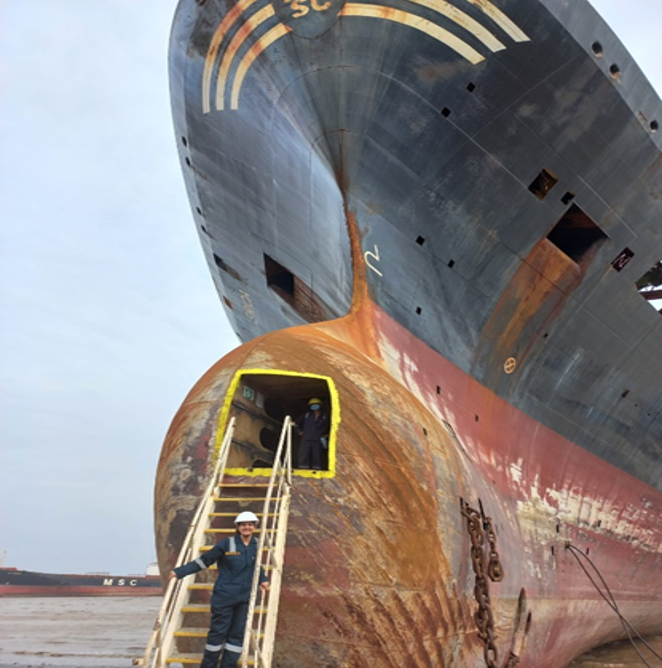
Figure 4. One of the Authors of the article on a ship being dismantled at Alang-Sosiya. (Photograph by one of the workers at the site)
******
About the Authors
Ms Rhythma Kaul is an international maritime lawyer and is currently an Associate Fellow at the National Maritime Foundation (NMF), where she meaningfully contributes to the Foundation’s ‘Public International Maritime Law’ (PIML) Cluster. Her current research focuses on marine pollution and the conservation of biological diversity in the marine environment. She may be reached at law7.nmf@gmail.com.
Commodore Debesh Lahiri is a serving officer of the Indian Navy and is presently, the Executive Director of the National Maritime Foundation (NMF) New Delhi. He is a regular speaker at webinars/seminars/workshops and conferences in India and abroad. He has authored/co-authored a number of books, book-chapters, technical project reports, and well-researched articles. He was a member of the Expert Advisory Group on Blue Economy to the Ministry of Environment, Forests and Climate Change (MoEF and CC) during India’s presidency of the G20. His areas of research-interest are wide ranging and include maritime geostrategy, the Blue Economy (incorporating the combating of Illegal Unreported and Unregulated (IUU) Fishing, Climate Change and Marine Pollution), Disaster Resilience, Shipbuilding, Ship Repair and Ship Recycling. He may be reached at debeshlahiri@gmail.com or execdir.nmf@gmail.com.
Endnotes:
[1]Statista, “Number of ships in the world merchant fleet as of January 1, 2022, by type”, https://www.statista.com/statistics/264024/number-of-merchant-ships-worldwide-by-type/.
[2] Light Displacement Tonnage (LDT) is a measure expressed in metric tonnes and represents at best the scrap value of the ship. It is the actual weight of the ship excluding cargo, fuel, ballast water, stores, passengers and crew.
[3] In-person discussion with Captain Rakesh Mishra, Port Officer, Bhavnagar, Gujarat Maritime Board, August 2023.
[4] NL, Greenpeace: “Shipbreaking in Asia: Unregulated Trade Contributes to Concentration of Dangerous Activities in Developing Countries”, 7 May 2019, Greenpeace NL collection, 1999 II, 1340 IV, Archive of Greenpeace NL, International Institute of Social History.
[5] Anand M. Hiremath, Atil K. Tilwankar and Shyam R. Asolekar’s article titled Significant steps in ship recycling vis-à-vis wastes generated in a cluster of yards in Alang: a case study, Journal of Cleaner Production from Centre for Environmental Science and Engineering, Indian Institute of Technology Bombay, Mumbai provides the knowledge base which has been enhanced by Team NMF’s visit to Alang-Sosiya Ship Recycling Yard.
[6] The North-South divide has been a socio-economic and political division used often in the late 20th century. It divided the world into two, the Global North, and the Global South. The Global North were the developed countries of Europe, and the United States. Similarly, the Global South were developing countries, predominantly of Asia and Africa.
[7] Pellow, David Naguib, “Resisting Global Toxics: Transnational Movements for Environmental Justice”, Cambridge, MA: MIT Press, 2007.
[8] Sitara Srinivas, “Stitching a New Narrative: Engaging with Sustainability in the Fashion Industry”, Social Policy Research Foundation, https://www.sprf.in/post/engaging-with-sustainability-in-the-fast-fashion-industry.
[9] Hazardous Waste (Management and Transboundary Movement) Amendment Rules, 2019, https://pib.gov.in/newsite/PrintRelease.aspx?relid=189227.
[10] The ship owner may sell the ship directly to a shipbreaking company by taking charge of its transportation to the final destination (in this case the shipbreaking yards), or preferably sell it through a broker. Alternatively, a ship owner may sell the ship to a “cash buyer” company such as GMS or the Wirana Shipping Company. These companies buy the ships and resell them to shipbreakers.
[11] In-person discussion with Captain Rakesh Mishra, Port Officer, Bhavnagar, Gujarat Maritime Board, August 2023.
[12] The Shipbreaking Code 2013.
[13] The Shipbreaking Code 2013, Rule 6.4.1 (X).
[14] The Shipbreaking Code 2013, Rule 6.4.3.
[15] The Shipbreaking Code 2013, Rule 6.4.
[16] The Shipbreaking Code 2013, Rule 6.5 requires facilities be created for ballast water disposal, oil sediments removal; disposal of asbestos; to treat bilge water; and removal of waste oily sludge, mineral oil and paint chips generated during the ship breaking process.
[17] The Shipbreaking Code 2013, Rule 5.3 (i)(b).
[18] Hazardous Waste (Management and Handling) Rules, 1989.
[19] Hazardous Waste (Management and Handling) Rules, 1989, Rule 4 (1) states that occupier and the operator of a facility shall be responsible for proper collection, reception, treatment, storage and disposal of hazardous material.
[20] Conference of the Parties to the Basel Convention on the Control of Transboundary Movement of Hazardous Waste and their Disposal, Seventh Meeting, held at Geneva from 25 to 29 October 2004.
[21] India became a party to the Basel Convention in 1992 and made numerous amendments to the Hazardous Wastes (Management and Handling) Rules, 1989 to give effect to the convention.
[22] The Ban Amendment to the Basel convention prohibits shipments of hazardous waste from parties listed in the Annexe VII of Basel Convention which are destined for operations according to Annexe VI A, to States not listed in Annexe VII (Article 4A (1). The amendment also inserts a new preambular paragraph 7 bis, which recognizes that transboundary movements of hazardous wastes, with regards to developing countries, have a high risk of not being able to provide environmentally sound management facilities as required by the convention.
[23] Conservation Action Trust v Union of India, (2020) SCC Online NGT 868, (37), (“Conservation Action Trust”).
[24] Research Foundation for Science Technology and Natural Resource Policy v Union of India and Other (2007) 15 SCC 193.
[25] Conservation Action Trust v Union of India, (2020) SCC Online NGT 868, (37), (“Conservation Action Trust”).
[26] Mazyar Ahmad, “Ship recycling in India- environmental stock taking”, Indian Law Review, Vol. 6(2022), No. 3: 465-478, https://www.tandfonline.com/doi/full/10.1080/24730580.2022.2082100.
[27] Maritime Amrit Kaal Vision 2047.
[28] Maritime Amrit Kaal Vision 2047.
[29] In-person discussion with Captain Rakesh Mishra, Port Officer, Bhavnagar, Gujarat Maritime Board, August 2023.
[30] In-person discussion with Captain Rakesh Mishra, Port Officer, Bhavnagar, Gujarat Maritime Board, August 2023.
[31] Damien A Devault et al, “Ship breaking or scuttling? A review of environmental, economic and forensic issues for decision support”, Springer Nature, Environmental Science and Pollution Research (2017) 24:25741–25774, https://economictimes.indiatimes.com/industry/transportation/shipping-/-transport/domestic-ship-breaking-industrys-revenue-to-rise-by-10-this-fiscal-says-crisil/articleshow/81509301.cms?from=mdr
[32] Mikelis N (2013) Ship recycling markets, Bulletin 2013, Vol. 108 #3, https://www.bimco.org/Search-result?term=Mikelis+N+(2013)+Ship+recycling+markets%2c+BULLETIN+2013+VOLUME+108+&pn=3.
[33] Damien A Devault et al, “Ship breaking or scuttling? A review of environmental, economic and forensic issues for decision support”, Springer Nature, Environmental Science and Pollution Research (2017) 24:25741–25774,
https://economictimes.indiatimes.com/industry/transportation/shipping-/-transport/domestic-ship-breaking-industrys-revenue-to-rise-by-10-this-fiscal-says-crisil/articleshow/81509301.cms?from=mdr.
[34] Lightweight Ton’ is the unit for the fixed weight of the empty as-built ship, equivalent to the weight of water displaced, given in terms of the defined weight system, i.e. Metric or Long Tons. The ‘Lightweight Tonnage’ is the weight commonly used as the basis for determining the scrap value of ships. For further information, refer to https://www.steamshipmutual.com/publications/articles/articles/tonnage.
[35] Federation Française de l’Acier, “Prix moyen des ferrailles d’origine régionale- Données mensuelles”, www.acier.org/pages/stat/ferrailles/scrap.htm.
[36] Metal recycling is a process where metals are recycled and reused over and over again. Some of the most useful machines in the recycling process are shredders, conveyors, compactors and balers. Scrap metal baling is an essential process in the metal recycling industry. The process quickly and efficiently deals with metals, from small scrap pieces to washing machine and entire vehicles. Baling is an effective way to cut the cost of haulage and to maximise the payload on every waste collection. For further information, refer to https://www.morecambemetals.co.uk/the-importance-of-scrap-metal-baling/#:~:text=Scrap%20metal%20baling%20is%20an,payload%20on%20every%20waste%20collection.


Leave a Reply
Want to join the discussion?Feel free to contribute!