
Rear Admiral Monty Khanna (Retd) – ‘Dabolim Diaries’ Issue No 17 dated 24 Feb 2026
China reportedly has the largest fleet of Survey and Research vessels in the world. Several studies have put down this number to somewhere between 60 to 70 vessels. It is, however, difficult to arrive at an agreed number as a common understanding on what constitutes a Chinese Survey and Research Vessel (CSRV) is amorphous. Further, State Owned Enterprises (SOEs), particularly those engaged in prospecting for petroleum operate their own fleet of custom-made ships, often with names similar to those of government owned ships. If one were to include all of these, the number of CSRVs would be significantly higher.
This is the first in a series of briefs that attempts to provide some structure to the loosely defined term ‘CSRVs’ by associating them with their parent agency and assessing their primary tasking. Due to the extent of the subject, this series will not include ships owned by the PLA Navy, the Space Tracking Base (Yuan Wang series) or by SOEs.
Agencies along with their subordinate institutions that operate CSRVs are as listed below: –
- Ministry of Natural Resources (MNR)
- Polar Research Institute of China (PRIC), Shanghai
- National Deep-Sea Center (NDSC), Qingdao
- Guangzhou Marine Geological Survey (GMGS), Department of Marine Geology, Guangzhou
- Qingdao Institute of Marine Geology, Qingdao
- First Institute of Oceanography (FIO), Qingdao
- Second Institute of Oceanography (SIO), Hangzhou
- Third Institute of Oceanography (TIO), Xiamen
- China Academy of Sciences (CAS)
- Institute of Deep-sea Science and Engineering, Sanya (IDSE)
- Institute of Oceanology, Qingdao (IOCAS)
- South China Sea Institute of Oceanology (SCSIO)
- China Ocean Mineral Resource R&D Association (COMRA)
- Chinese Academy of Fishery Science/Yellow Sea Fisheries Research Institute
- Universities
- Sun Yat-sen University
- China Ocean University
- Xiamen University
- PLA Navy
- State Owned Enterprises (SOEs)
This report (Part 1 of the CSRV series) will cover only the Polar Research Institute of China (PRIC), Shanghai.
State Oceanic Administration (SOA). The primary institution under the MNR that is responsible for marine research is the SOA. The SOA has undergone two major rounds of restructuring in the past decade. The first was in 2014 where the four maritime dragons i.e. the China Marine Surveillance, China Coast Guard, China Fisheries Protection, and China Marine Customs were brought under its ambit in a structure as depicted in Figure 1 below:
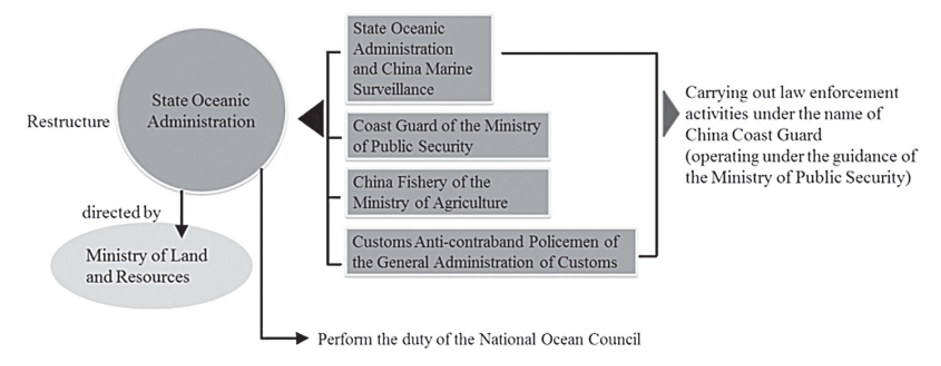
Fig 1: 2014 Restructuring of the State Oceanic Administration
The second round of restructuring happened on 19 March 2018 with the merger of three major institutions, these being the Ministry of Land and Natural Resources, State Oceanic Administration, and the State Bureau of Surveying and Mapping to form the newly constituted Ministry of Natural Resources (MNR). While some reports initially stated that consequent to this merger, the SOA has ceased to exist, it however appears that the SOA continues to function as a subordinate entity within the ministry with its head being concurrently designated as a Deputy Minister of the MNR. The symbol of the SOA is as depicted in Figure 2 below.
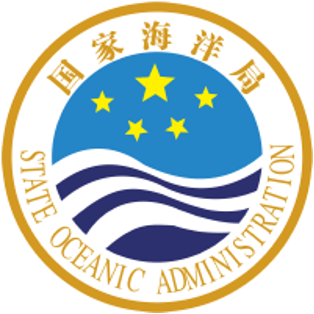 Fig 2: Symbol of the State Oceanic Administration
Polar Research Institute of China (PRIC). PRIC is the principal institute responsible for polar research in China and for executing the five-year plans drawn up by the China Arctic and Antarctic Authority (CAA). Its primary responsibilities are as listed below: –
- Research in polar science, technology and policy
- Observation of polar climate change and environmental protection
- Operation of national observation and research stations and the key laboratory of Ministry of Natural Resources for polar science
- Operation and management of facilities for China’s polar expedition, including research stations, research vessels, inland traverses, aircrafts and the domestic base
- Logistics and technical support for China’s polar expedition
- Management and service of polar archives, data and samples
- Promoting international cooperation on polar expedition and research
- Public education and outreach of polar science
Established in Shanghai in 1989, it initially operated from a building in Jinqiao (Figure 3).
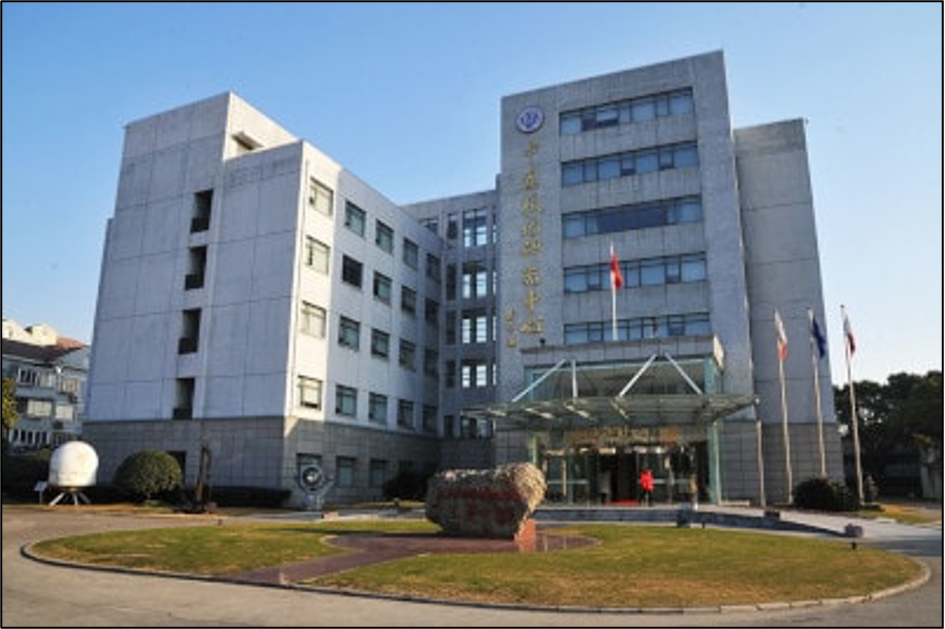 Fig 3: PRIC Building – Jinqiao Campus
In 2022, the PRIC moved to a new campus (Figure 4) that spans 15.68 hectares along the Yangtse river in the Pudong New District of Shanghai (31o 18’.8 N, 121o 41’.1 E).
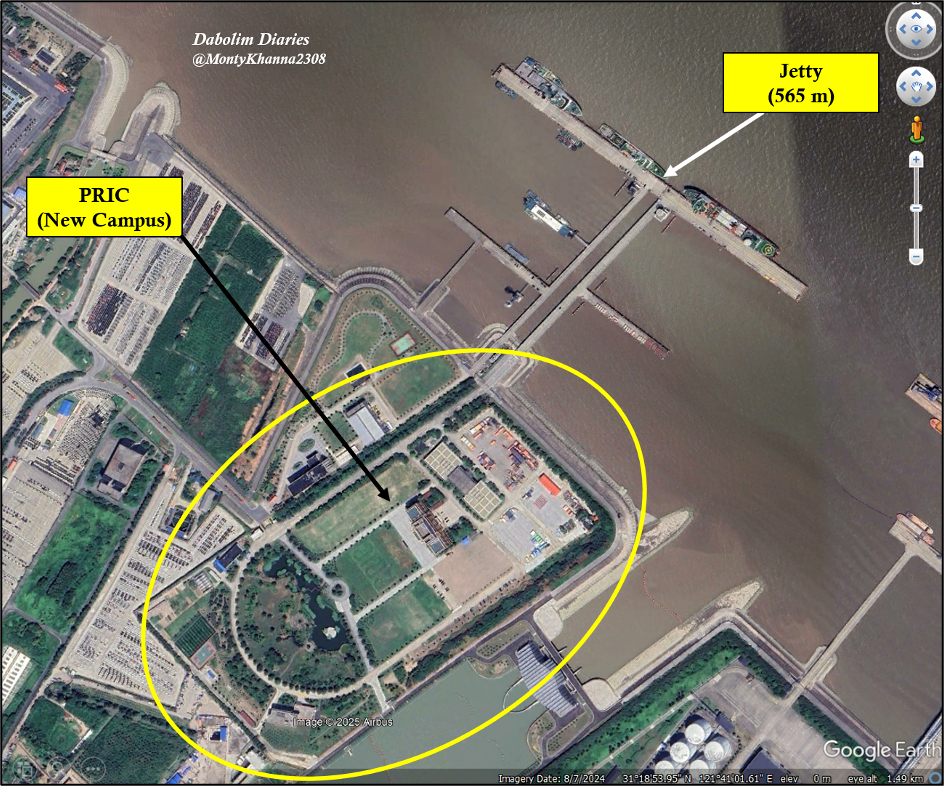
Fig 4: New PRIC Campus in Pudong New District
The facility includes a 565-metre-long jetty, where the Xulong and Xulong 2 icebreakers are usually berthed (Figure 5).
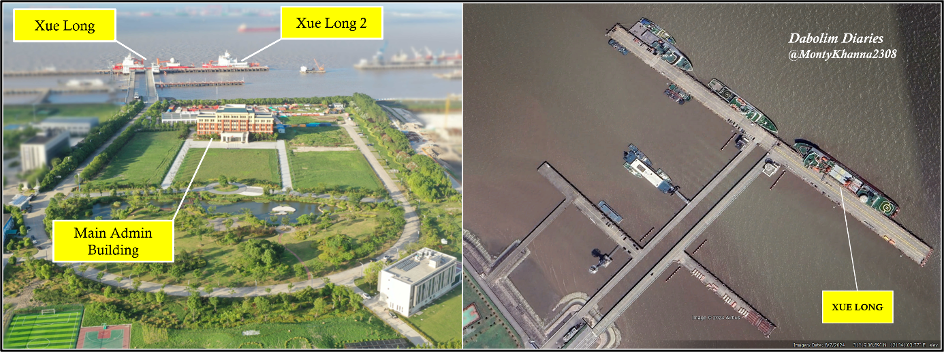 Fig 5: Layout of New Facility with Details of Jetty
Vessels Operated. The PRIC operates two icebreakers, Xue Long and Xue Long 2. The vessels are used for research activities in the Arctic and Antarctic as well as for servicing Chinese stations in the Antarctic. To meet these requirements, the PRIC plans two voyages annually, one to the Arctic (15th expedition in 2025) and the other to the Antarctic (42nd expedition in 2026).
- Xuelong (Snow Dragon). Construction of the vessel, a Project 10621 icebreaking cargo and supply ship designed for the Russian Arctic, started at the Kherson shipyard in January 1990. However, a short time after the break-up of the Soviet Union, construction was halted when she was 83 percent complete. She was subsequently acquired by China in 1993 and formally inducted under by the PRIC in 1994 as a PC-6 class icebreaking vessel. She has undergone major upgrades in 2007 and 2013 (which included the fitment of a large radome on top of the hangar) that have extended her service life by 15 years. She has two large cranes amid ships and two smaller ones in the bows. In addition, she has a small A-Frame at the stern which can be canted aft to facilitate flight operations (Figure 6).
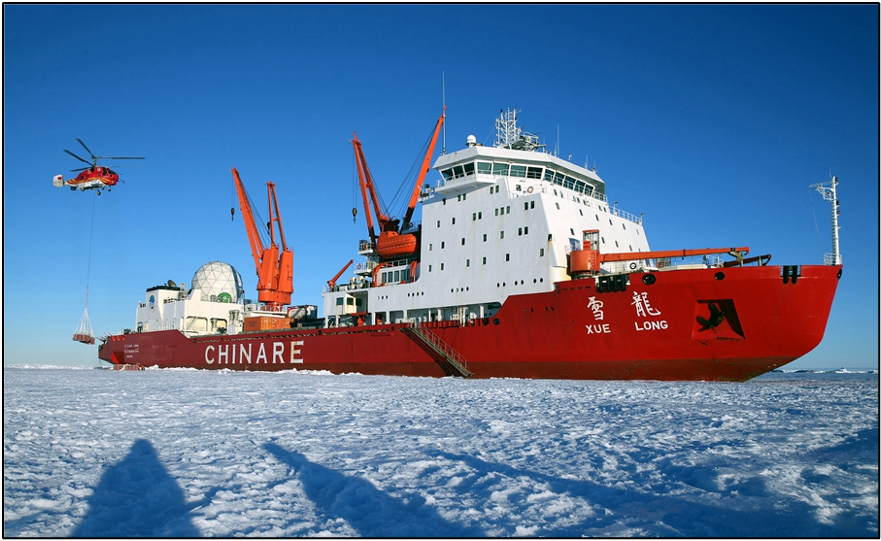 Fig 6: Xuelong with Kamov 25
She has a large bridge that allows good all-round visibility (Figure 7).
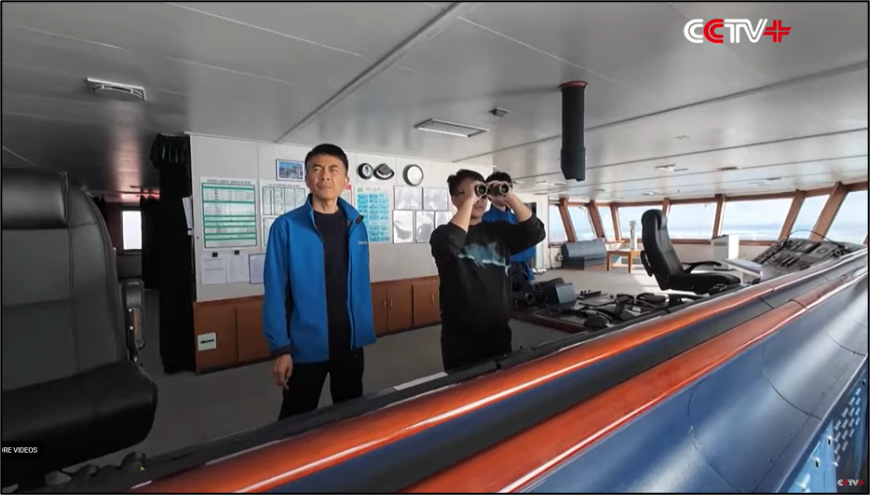 Fig 7: Bridge of Xuelong with her Captain (Blue Jacket)
She carries the funnel marking of the SOA. She is equipped with a helicopter deck and hanger for embarkation of a Kamov 32 helicopter (Figure 8).
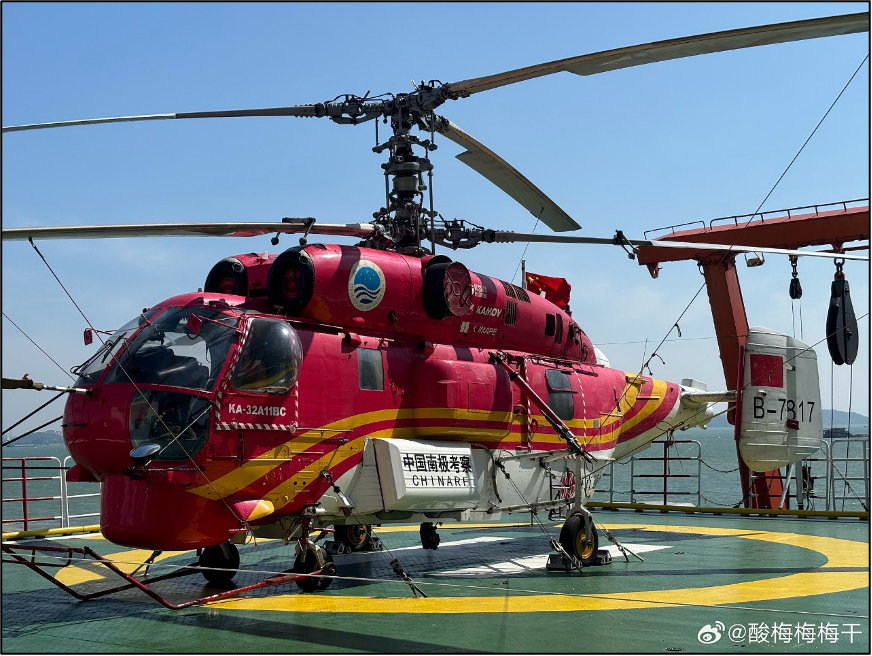
Fig 8: KA 25 Helicopter Embarked on Deck of Xuelong (A-Frame Can be Seen in Erect Position)
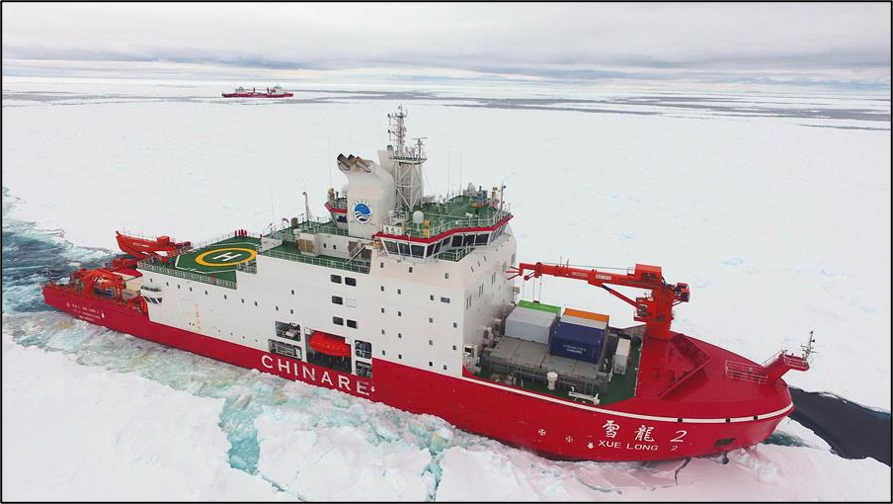
- Xuelong 2. The first icebreaker to be built in China, the Xuelong 2 was designed and developed by the 708 Research Institute of the China State Shipbuilding Corporation (CSSC) in collaboration with the Finnish ship-building specialists Aker Arctic. She was laid down in 2016 and delivered to the PRIC on 11 June 2019 as a PC 3 class icebreaking vessel. She is fitted with two large cranes, one forward and one aft. (Figure 9) In addition, she has a small A-Frame at the stern which is retracted (canted inwards) in its normal stowage position.
Fig 9: Xuelong 2
While somewhat smaller than the Xuelong, her icebreaking capabilities are far superior. She is versatile and designed to break through ice while moving ahead or astern (Figure 10).
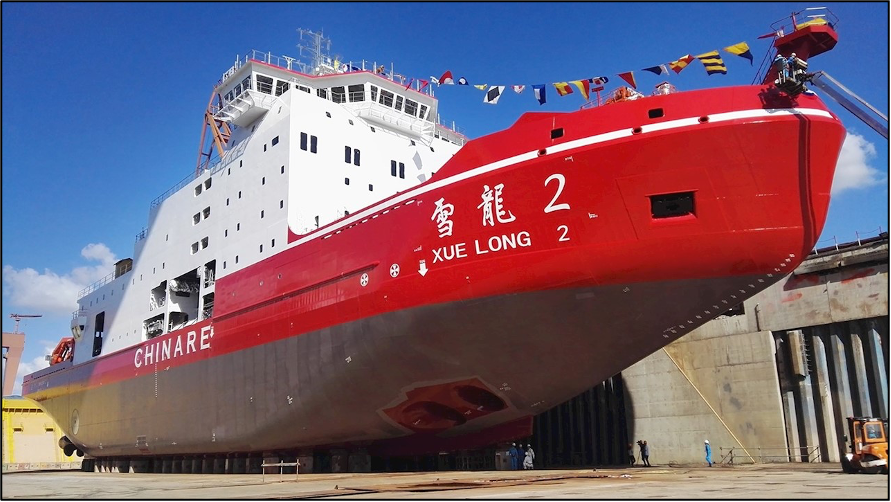 Fig 10: Xuelong 2 in Drydock Showing Tapering Bow and Stern for Ahead and Astern Breaking Operations (Bow Thruster Openings are Visible)
She has a well-equipped modern bridge as shown in the Figure 11 below.
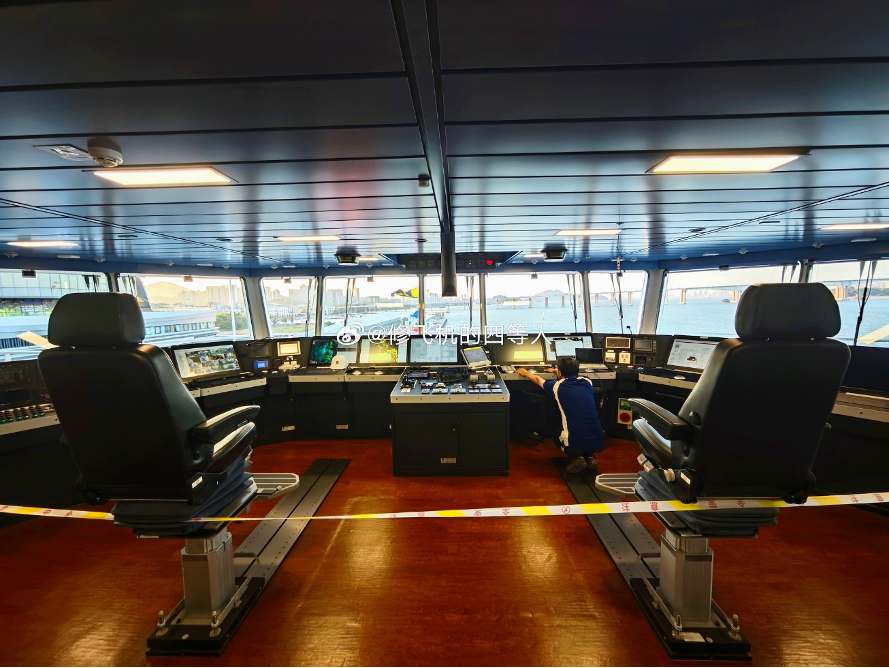 Fig 11: Bridge of Xuelong 2
She too has a helicopter deck and hanger and is capable of embarking two helicopters, an Agusta Westland AW 169 (Snow Eagle 301) as seen in Figure 12 below, and possibly a Bell 407.
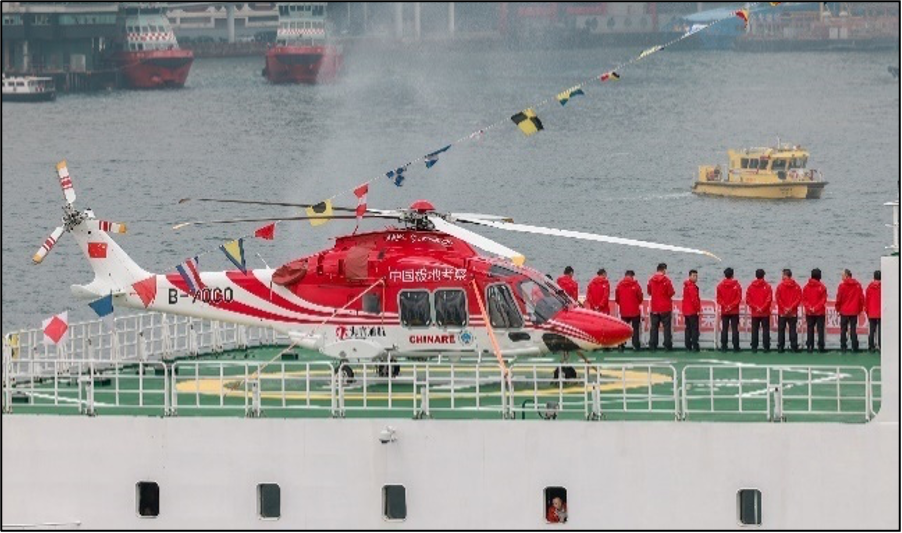
Fig 12: Agusta Westland AW 169 (Snow Eagle 301) on Helo-deck of Xuelong 2
Given hangar space constraints, it is likely that the rotor blades of these helicopters have to be removed prior to stowage as shown in Figure 13 below.
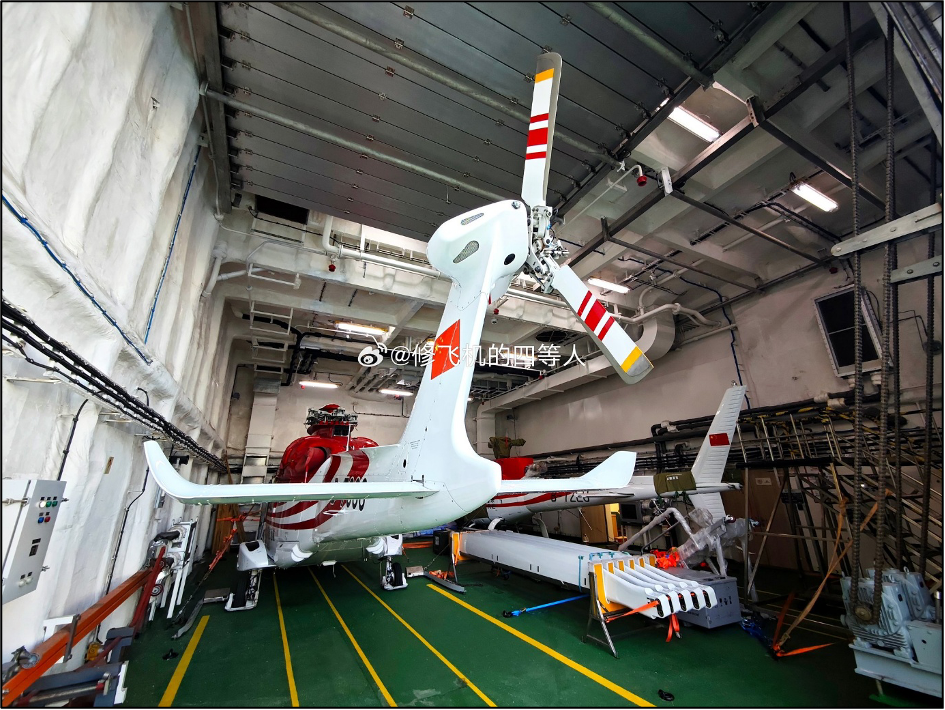
Fig 13: Agusta Westland AW 169 (Snow Eagle 301) and Bell 407 in Hangar of Xuelong 2 (Rotor Blades of Both Helicopters have Been Removed)
Broad details of the two vessels are as shown in Table I below.
Table I – Broad Parameters of Xuelong and Xuelong 2
| NAME | LENGTH | BEAM | DISPLACEMENT | YEAR | BUILDER |
| XUE LONG
(PC-6) |
167 | 22.6 | 21025 | 1994 | Kherson Shipyard, Ukraine |
| XUE LONG 2
(PC-3) |
122.5 | 22.3 | 14300 | 2019 | JNCX, China (Design consultancy provided by Aker Arctic, Finland) |
While the PRIC has its own symbol, the vessels it operates carry the funnel marking of the State Oceanic Administration (Figure 14).
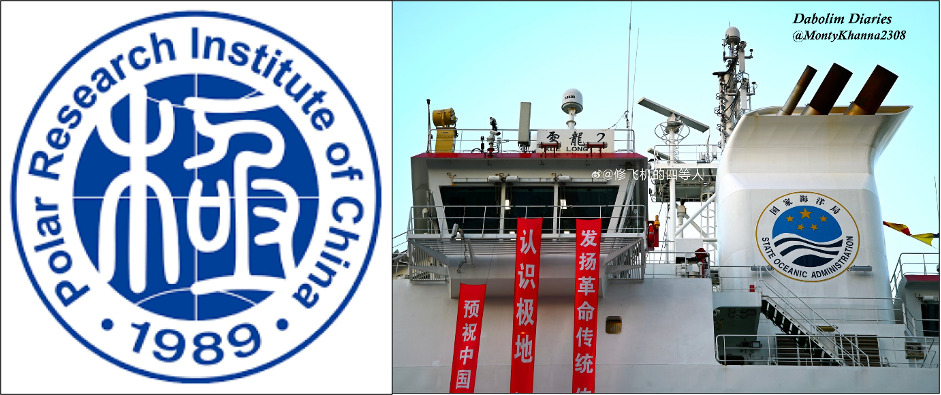
Fig 14: Symbol of PRIC (Left) and SOA Funnel Marking on Xuelong 2
Assessment. China operates the largest fleet of survey and research vessels in the world. These vessels belong to various institutions charged with undertaking different disciplines of maritime research. As the data harnessed by these ships has concurrent military applications, it is important to understand their capabilities and attempt to keep track of their deployments. Tracing the linkages of these vessels with their parent organisations and understanding their charter, is a useful tool for assessing the broad functions and capabilities of these ships.
Insofar as the PRIC is concerned, China has made substantial progress in polar research, for which the Xuelong and Xuelong 2 have played a critical role. The Xuelong now is more than three decades old and should be replaced soon. While the Xuelong 2 was built at JNCX with design consultancy from Aker Arctic, China appears to have developed adequate in-house expertise to make future ice-breaking vessels without external assistance. This is evident from the construction of newer ice-breaking vessels by Guangzhou Shipyard International (GSI) for other organisations. It will however be interesting to see if China also invests into adapting some of their domestically-built helicopters (possibly the Z-20) for shipborne operations under polar conditions.


Leave a Reply
Want to join the discussion?Feel free to contribute!