
CHINA’S HEAVY LIFT SHIP FLEET AND THEIR POTENTIAL FOR USE IN COMBAT
Rear Admiral Monty Khanna (Retd) – ‘Dabolim Diaries’ Issue No 5 dated 30 Jan 2025
Heavy Lift Ships (HLS), as the name suggests, are essentially vessels that are designed for the purpose of lifting large and heavy pieces of equipment. They essentially fall into two categories; those which are semi-submersible and those whose cargo carrying deck remains exposed at all times. Both, however, are fitted with a comprehensive outfit of ballast tanks with associated ballast pumps. In some cases, ballast tanks are also de-watered using compressed air, similar to systems operated in submarines. Semi-submersible ships require extensive ballasting arrangements to submerge their main deck to a sufficient depth that allows the cargo to float free. Ballast tanks in non-submersible vessels are also required to be reasonable robust to cater for accurately aligning their main deck with shore-based rails or platforms for rolling out heavy items such as container cranes and for ensuring that the ship remains evenly trimmed, even as the cargo is being shifted ashore.
The cargo carrying deck of HLSs provides a flat expanse of space, sometimes rivalling that of an aircraft carrier in its dimensions. Not only is it large and without obstructions, but it is also strong and has a high load carrying capability. Further, as most of such ships are fitted with a Dynamic Positioning (DP) system, they can accurately maintain both position as well as orientation, both of which are important attributes for military usage. This opens up several possibilities for their use to support military operations. In keeping with a well-established ethos of Civil Military Integration (CMI), China has been in the forefront of such activity. Before examining specific examples of such use, it would be useful to take stock of the size of China’s HLS fleet which has both military as well as commercial components.
PLA Navy
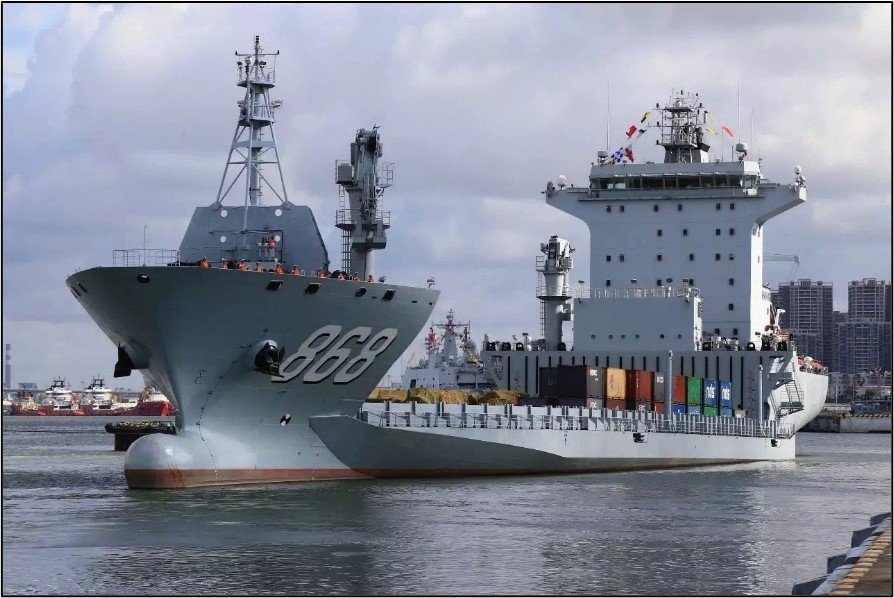
The PLA Navy commissioned its first and only Heavy Lift Ship, the semi-submersible Mobile Landing Platform Donghaidao (Pennant No 868) in July 2015. Consequent to a new policy pertaining to the naming of ships that was issued in 2021/22, the name of the vessel was changed to Yinmahu and the Pennant No to 834. The ship has a length of 175.5 m, a beam of 32.4 meters and a displacement of roughly 20,000 tons. It has been used extensively for ferrying of combat loads in the Western Pacific and also for supporting the PLA base in Djibouti.
PLA Navy Ship Donghaidao (868)
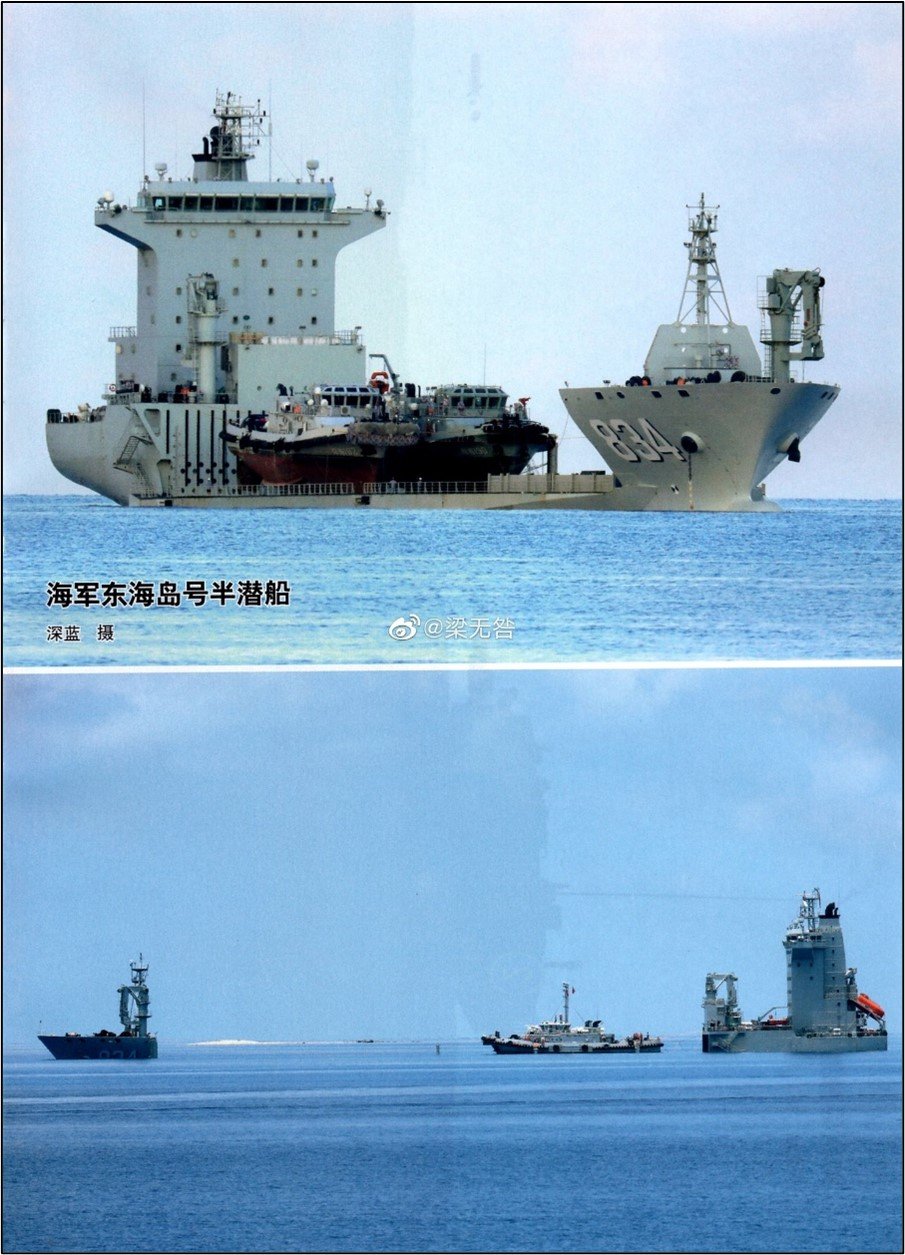
PLA Navy Ship Yinmahu (834) Being Used to Ferry Tugs
Commercial HLS Operators
China has the largest fleet of commercial HLSs in the world numbering more than fifty. Their ownership is concentrated amongst three large companies though there are several other smaller operators as well. The main HLS fleet operators are as listed below.
COSCO Shipping
The Heavy Transport division of COSCO Shipping operates the world’s largest fleet of modern, purpose-built semi-submersible heavy lift vessels. As of 2024, its fleet strength comprised of thirteen such vessels. Notable amongst these is the Xin Guang Hua, the flagship of COSCO’s semi-submersible HLS fleet with a stupendous lift capacity of 100,000 DWT.
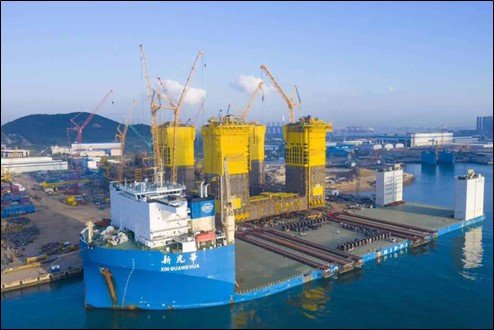
Xin Guang Hua Loading a FPSO Hull
Shanghai Zhenhua Shipping Company, Ltd
The company is a subsidiary of Shanghai Zhenhua Heavy Industries Company Limited (ZPMC), the largest manufacturer of marine cranes in the world. As per the website of the company, it has a fleet of 25 integrated transport ships, of which 7 are semi-submersible. These include twelve 60,000-ton heavy cargo ships which are used to deliver assembled cranes to its clients.
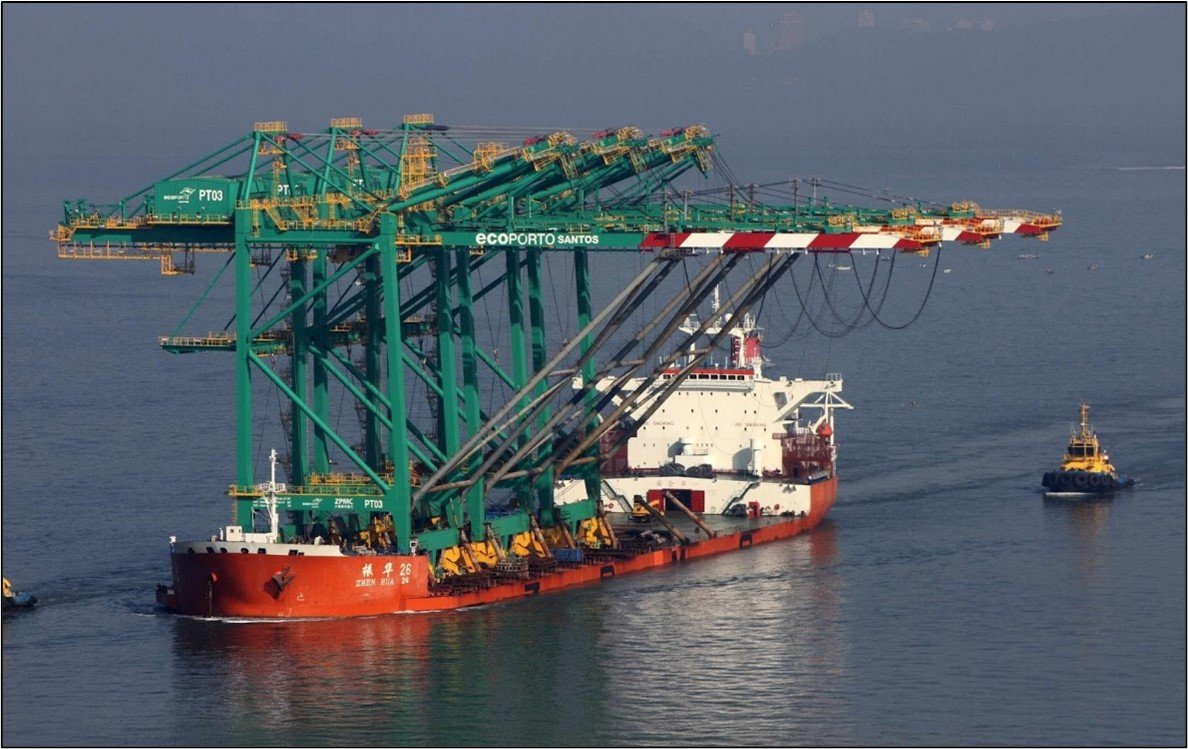
Zhen Hua 26 with Three Container Cranes Embarked
Jiangsu Fanzhou Shipping Company (FZCW)
FZCW is a Nanjing based shipping company that has a fleet of about six HLSs of which at least two are semi-submersible. A recent addition to their fleet has been the Fan Zhou 8 that was built by the Taizhou Zhonghang Shipyard. The vessel’s massive lift deck reported has an area of 11,700 square meters and is capable of embarking 58,000 metric tons of cargo. More importantly, she has an ice-classification that allows her to operate in waters with small floating ice.
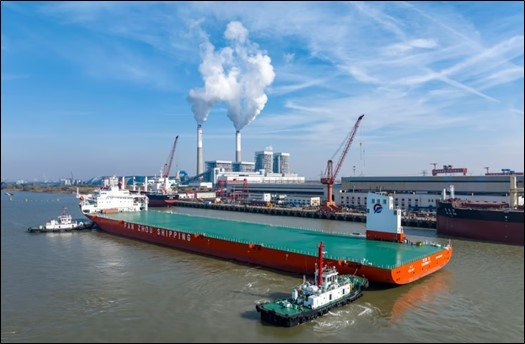
Fan Zhou 8 Returning from Sea Trials
Potential Military Applications
HLSs, as mentioned earlier, are very flexible vessels that have the potential to be used for a wide spectrum of miltary taks. Some of these are as mentioned below.
Hovercraft Carrier
China currently operates two classes of medium/large hovercraft, these being the Type 726/A Yuyi Class displacing about160 tons tons and the gigantic Zubr Class with a displacement of 555 tons. While the PLA Navy has several ships such as the Type 071, Type 075 and the recently launched but yet to be commissioned Type 076, equipped with well-decks large enough to accomodated two to four Type 726/A hovercrafts, the only means of ferrying a Zubr closer to the planned theater of employment is on a semi-submersible HLS. The PLA Navy demonstrated such a capabilty for the first time a few months after the commissioning of the Donghaidao by releasing a film on CCTV showing such an evolution. A more recent photograph released in May 2023 suggests that such a practice remains relevant today and is rehearsed from time to time.
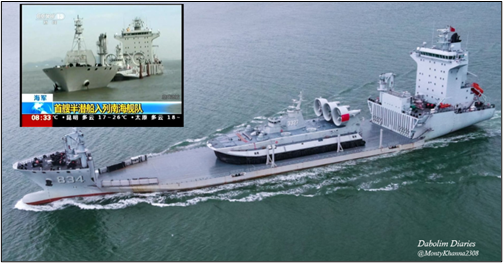
Donghaidao with Zubr Embarked in 2023 (Inset: Similar evolution in 2015)
Mobile Helicopter Base
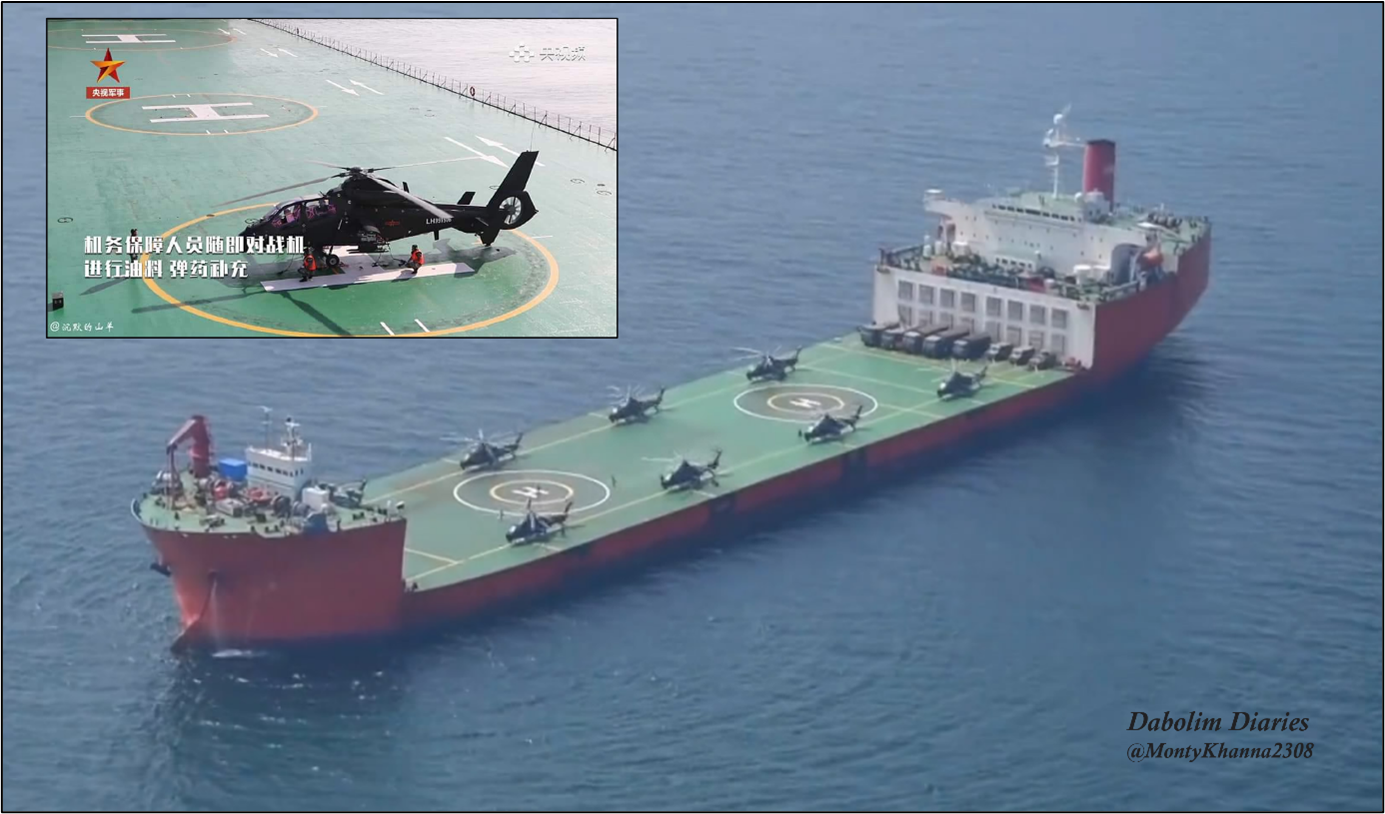
The large flat unobstructed deck of a HLS makes it a good platform for a mobile helicopter base that could be rapidly deployed close to the theater of operations. China has already rehearsed such usage several times, one of the most notable demonstration being the recent embarkation of eight Z-10 attack helicopters on board a semi-submersible HLS, a picture of which was posted on Weibo in October 2024. The space available on the main deck could also be utilised for the erection of pre-fabricated hangars as well as for embarking specialised equipment and vehicles so as to enhance the quantum of aviation support the mobile base could provide.
Transportation of Submarines/Missile Boats/Fast Attack Craft to Operational Areas
Semi-submersible HLSs are often used to transport ships, submarines and offshore installations from place to place. An example of such an evolution by a Chinese HLS in the not too distant past is the ferrying of two Ming Class submarines in end 2016 from Lushun to Chittagong on board a COSCO semi-submersible ship. Delivery transits of such a nature follow protocols that entail ellabotrate and time consuming procedures for preservation and de-preservation of vessels being ferried at the start and end points respectively. Operational employment of such a capability done with the aim of reducing transit time and conserving machinery running hours may not permit such a process. Under such circumstances, a defining requirement would be for the assets to be fit for combat operations soon after being floated off the HLS, even if this were to be done mid-sea. Enabling procedures would, therefore, have to be at considerable variance from that catering for vessels undergoing delivery voyages. Systems would have to be kept alive to enable quick and flexible deployment. This would require the HLS to provide services such as specialised power supplies, compressed air, sea water, fresh water and distilled water to the embarked vessel. Given the versitality of HLSs, most of these services may be readily avaialble. Where not, specialised container based solutions may have to be embarked to do so. Insofar as areas of deployment are concerned, the recent induction of the ice-class Fan Zhou 8 throws open the interesting possibility of submarines being ferried to the Arctic should such a need arise.
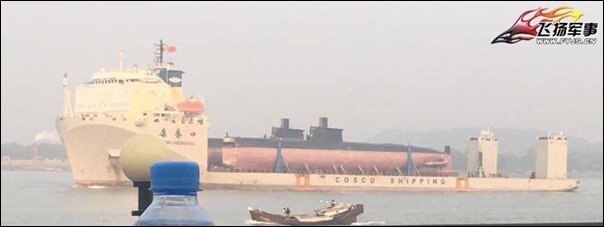
Two Ming Class Submarines Being Transported to Chittagong on a COSCO Semi-Submersible Ship
Ferrying Heavy Vehicles in Support of Expeditionary Operations
In any major expeditionary operation like a Taiwan contingency, the quantum of heavy combat equipment such as tanks, infantry combat vehicles, artillery (tracked, wheeled and towed) etc. that will need to be ferried to the landing area will be substantial. HLSs with their large deck, wide beam, variable draught, ability to adjust their trim, and hold their position and heading using dynamic positioning equipment are well suited to meet this requirement. If a berth ashore is not available for discharging their load, vehicles could be rolled off a jury ramp into the sea (if amphibious) or driven ashore using portable causeways built over floating pontoons or lifted off the sea bed using specialised jack-up rigs. Several such structures have recently been seen to be under construction at Guangzhou Shipyard International (GSI) and have been commented upon extensively on X (Twitter).
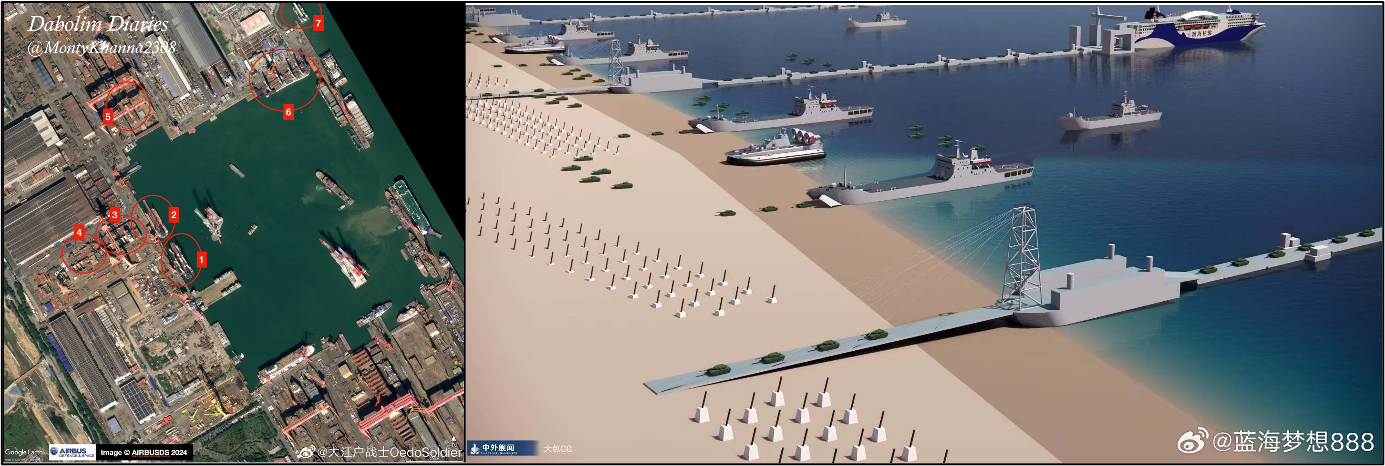
GSI Shipyard with Jack-Up Pontoons (Left) and Computer Generated Image of their Use in Combat (Right)
Repair and Recovery of Damaged Assets
HLSs could be used for carrying out emergency dry-docking of ships in theater to effect pressing repairs either due to enemy action or other causes. In most circumstances, they may require assistance of a support ship equiped to carry out such repairs. Submarine tenders with their robust workshops and repair facilities will be able to fulfill this role well. In cases of major damage, the effected vessel could be ferried to a domestic ship repair facility or possibly a regional one located in a country with which China has an understanding to address such contingencies.
Assessment
Heavy Lift Ships are versatile platforms that can be used for a wide variety of military applications, particularly as enablers of expeditionary operations. It is notable that in spite of the unification of Taiwan being a major task for the PLAN, their investment is HLSs remains a very modest single vessel. This is clearly indicative of the fact that commercially operated HLSs will be used extensively in support of military operations. Several evolutions of this nature have been exercised in the past and this practice is likely to continue. Further, China will continue to encourage its privately owned shipping companies to remain invested in building and enhancing their fleets of HLSs.


Leave a Reply
Want to join the discussion?Feel free to contribute!