
 The economic times
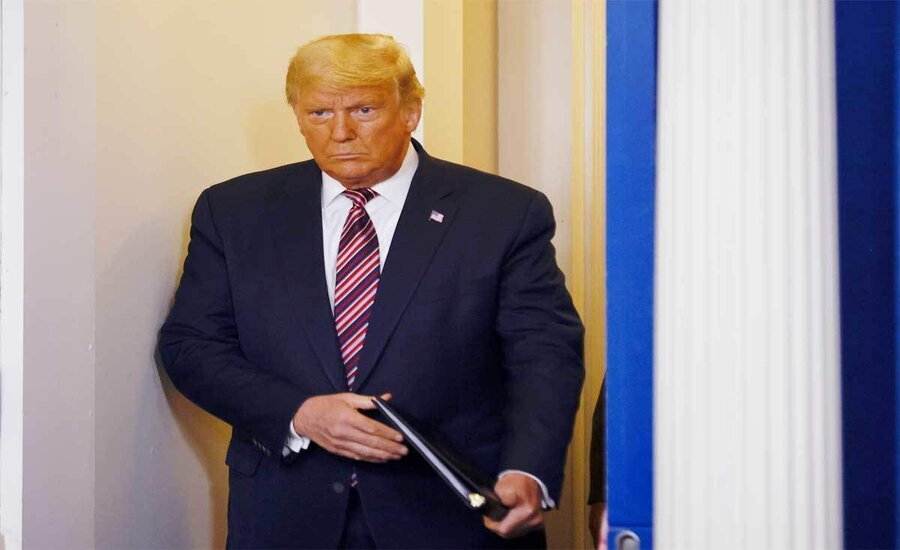
On 20 January 2017, Mr Donald Trump assumes office as the 45th President of the United States (U.S.). Six years ago in 2011, his predecessor, President Barak Obama launched the ‘Rebalance to Asia’. Among the key objectives of the policy were to engage with the economically rising Asia-Pacific, maintain U.S. supremacy in this region, and manage the rise of China. So far, clearly, the ‘Rebalance’ has not been effective for the U.S., inter alia in terms of bringing about an enhanced economic integration, reassurance of allies, or even managing military escalation.
There is much speculation on what the new incumbent to the White House Donald Trump would do. A few believe that Trump will unravel ‘Rebalance’. The mainstream view is that the Asia-Pacific is too important an area for the U.S. to disengage with. Nonetheless, the texture of ‘Rebalance’ may change. This essay attempts to lift the fog on this issue to extent possible, and examine its strategic implications for the Asia-Pacific, and the broader Indo-Pacific region.
Those who have followed the U.S. election campaign are well aware that America’s electorate voted for a change. Trump, therefore, notwithstanding all his odd ways, did win. This will embolden him to continue to do things differently. However, he can do things differently only with regard to the functions that he understands well. This calls for an analysis of Trump’s disposition towards the three key dimensions of the U.S. ‘Rebalance’: economics, diplomacy and military-strategy.
Economics
Undeniably, Donald Trump understands economics. Besides having being a successful businessman, his book ‘The America We Deserve’ published in the year 2000 is a rather compelling read. It emerges from the book that Trump believes that sound economics and economic strategy will lead to, not only effective governance, but also successful international relations. In the book, he lays a vision for the U.S. grounded in economics, and the need for America to have a ‘dealmaker’ President. It was perhaps with this strong conviction that he trashed the Trans-Pacific Partnership (TPP) without a second thought. Of course, this does not imply that the U.S. would hold back its economic engagement with the Asia-Pacific countries, only that he may seek more favourable arrangements, with a focus on bilateral ones.
Diplomacy
Does Donald Trump understand diplomacy? One cannot be very certain, but then Donald Trump thinks that he does. The reasons are evident. He began appointing key envoys – such as to the United Nations and China – without even naming his Secretary of State, whose advice he could have benefited from for making these key envoy appointments. He then picked Rex Tillerson as the Secretary of State. Tillerson is a former Exxon Mobil CEO, who has never served in the U.S. government, but is close to the Russian President Vladimir Putin. All these indicate the likelihood that Trump will adopt a self-willed foreign policy; but one that premised on rationale, which to him is ‘sound economics’.
Trump has irked China by ‘cosying up’ to Taiwan, but it also fits well into ‘the picture’. Trump may continue making noises against Beijing suggesting a review of ‘One-China’ policy and so on, but all this commotion is likely to be meant as leverage against China to concede to the critical U.S. interests, such as in terms of Beijing’s trade practices, about which, lately, Washington is not too happy about.
Military-Strategy
Does Donald Trump understand military-strategy? Here, Trump may find himself on a ‘sticky wicket’. Undeterred, he had wisely appointed the retired Marine Gen Mattis as his Defence Secretary, who has served in Iraq; notwithstanding the special waiver he would need from U.S. Congress for the post. Although Trump has declared that he would avoid repeating the “mistakes” of his predecessors in getting the U.S. embroiled in “costly wars”, he is likely to focus on the Islamic State (IS) and other forms of religious terrorism, which may hold his attention on developments in the Middle East/ West Asia, and its periphery.
Hence, the indicators are that Trump may be more inclined to be conservative on military assertion in the Asia-Pacific. Of course, this may change based on the developments, particularly the behaviour of China and North Korea. But in the overall sense, the U.S. assertiveness in the Western Pacific using its ‘hard power’ is likely to reduce.
Implications for the Region
The aforesaid ‘informed’ speculation on the likely U.S. strategic disposition under Donald Trump leads to two broad conclusions. First, China may assert itself more strongly, not only in Asia-Pacific, but also in the broader Indo-Pacific region. Such assertion could be centered on the ‘One Belt One Road’ (OBOR), and also involve a maritime-military assertion in the Indian Ocean Region (IOR). Furthermore, if the U.S. manages to rob China of its emerging strategic ally Russia, Beijing may be cornered, and behave quite like a cat that is cornered – aggressively.
Second, notwithstanding the U.S. stakes in the IOR, America’s security role in the IOR may be scaled down somewhat, carefully calibrated to prevent a ‘vacuum’ being filled by China; and possibly, coordinated with the European powers. This will ensure that the stakeholders in the IOR do not enjoy ‘free-riding’ financed by American citizens. In this scenario, India would need to play a more proactive role as a regional ‘net security provider’. Though New Delhi has always been willing to do so, its challenge would be to balance the regional security role with the more pressing commitments of homeland (internal, coastal and offshore) security.
**********************************
*Captain Gurpreet S Khurana, PhD, is Executive Director at National Maritime Foundation (NMF), New Delhi. The views expressed are his own and do not reflect the official policy or position of the NMF, the Indian Navy, or the Government of India. He can be reached at gurpreet.bulbul@gmail.com
 Vivekananda international foundation
  The japan times
  Image Credits: Bulk Energy
 cambiaso risso group
Leave a Reply
Want to join the discussion?Feel free to contribute!