
Rear Admiral Monty Khanna (Retd) – ‘Dabolim Diaries’ Issue No 30 dated 19 Sep 2026
The PLA Navy has witnessed explosive growth over the past three decades. This growth has been underscored by a strong focus on research and development; wherein new systems are initially tested ashore in robust testing centers. This is followed by comprehensive testing afloat in ships dedicated for this purpose. It is only thereafter that the systems find their way onto combatants, which are initially produced in small numbers. During this phase, they undergo yet another round or two of iterative spiral development. Once all the issues are identified and addressed, and design stability is achieved, subsequent variants of ships are rapidly built in large numbers. Such an approach has been witnessed in evolving designs of Type 52 destroyers which finally resulted in mass production of the Type 52D. The same philosophy has also been seen in the Type 54 frigate of which only two were built, but they paved the way for the Type 54A of which about 50 have been constructed. This brief examines the ashore and afloat testing facilities of the PLA Navy.
Ship Integration Facility, Wuhan
It was built in 2009 at Huangjia Lake in Wuhan, as part of the refit and modernization effort of Type 001 aircraft carrier (ex-Varyag). The facility falls under the ambit of China Ship Research and Design Center, also known as the 701 Research Institute of China State Shipbuilding Corporation Limited. It is a unique amalgamation of Government (PLA Navy), Industry (CSSC) and Academia (Wuhan University of Science and Technology as well as the PLA Navy University of Engineering, Wuhan). The facility includes a 1:1 scale model of an aircraft carrier and a substantial part of the superstructure of a large surface combatant (Fig 1).
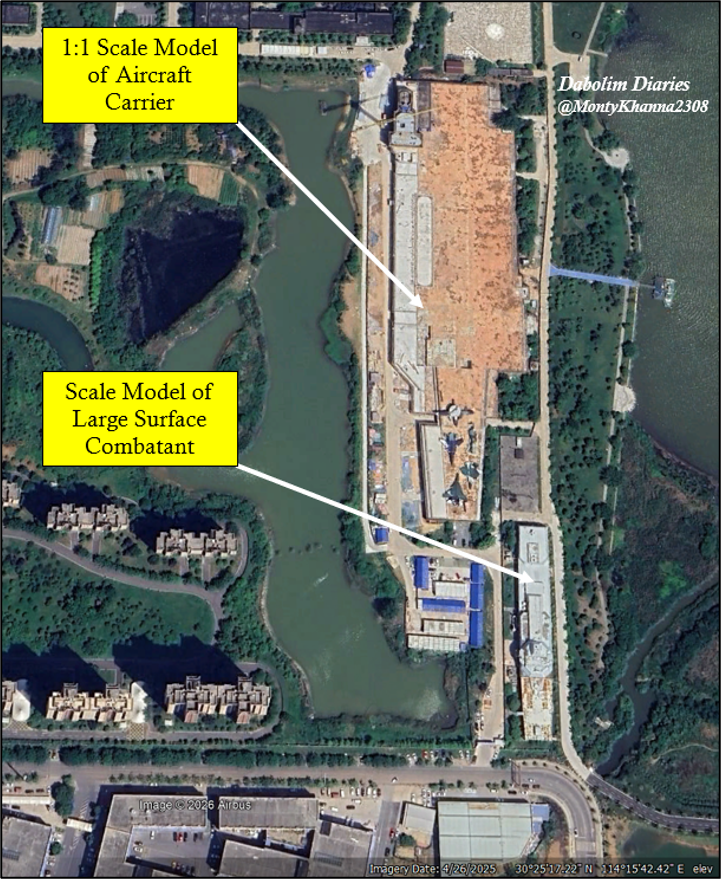 Fig 1: Layout of Ship Integration Facility, Wuhan
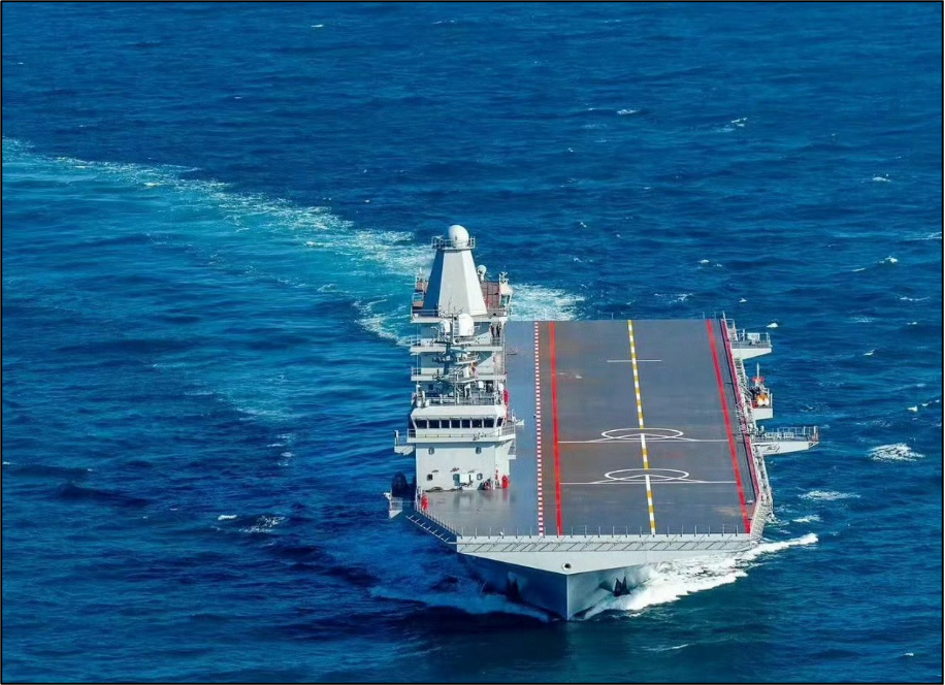
It may be noted that insofar as the aircraft carrier development is concerned, as the layout of PLA Navy aircraft carriers evolved from the Liaoning to Shandong and finally the Fujian, the layout of the mock-up preceded such changes (Fig 2).
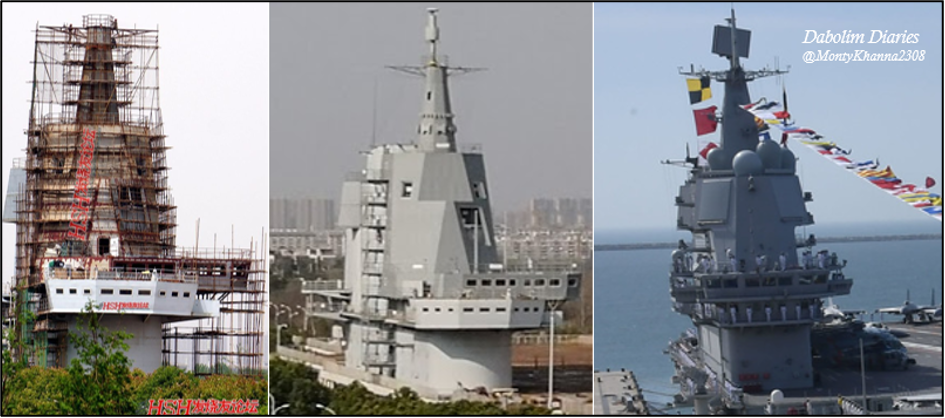
Fig 2: Island of Mock-Up Being Modified (Left), Completed (Center), Actual on Shandong (Right)
Prior to the commencement of construction of the PLAN’s first CVN (Type 004), the island on the mock up was dismantled and shifted right aft. The deck was also widened to become more representational of what the actual vessel will finally look like (Fig 3).
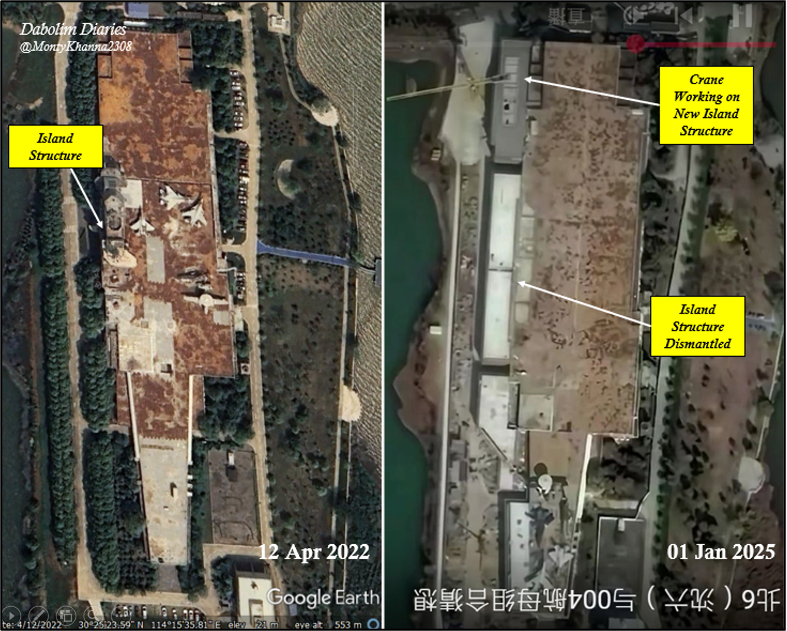 Fig 3: Changes Being Made to Mock-Up Prior to Construction of Type 004
A recent picture of the mock-up after activities pertaining to shifting of the island aft (to optimize the functioning of the flight deck) have been completed as shown in Fig 4.

Fig 4: Layout of Carrier Mock-Up Prior Post Structural Changes
‘Test and Trial’ Ships
Another element of the PLANs robust R & D architecture is its not so insignificant fleet of dedicated ‘Test and Trial’ ships in its force structure. The PLA Navy has been fielding such vessels for several years. Table I lists the vessels in its inventory for this purpose.
Table I: PLA Navy Inventory of Multi-Purpose Test and Trial Ships
| Type | Class | Pennant No (Name) | Commissioned | Former Pennant No |
| 909 | Dahua | 851 (Bisheng) | 1997 | 891 |
| 909A | Dahua | 852 (Hua Luogeng) | 2008 | 892 |
| 910 | Dahua II | 853 (Zhan Tianyou)
854 (Li Siguang) 855 (Wu Yunduo) 856 (Huang Weilu) |
2012
2014 2018 2019/20 |
893
894 895 896 |
- Type 909 (851/891). Bi Sheng was the first specially designed equipment comprehensive test ship of the Chinese Navy. It was commissioned in December 1997. Her construction has reportedly greatly accelerated the development of new weapons and equipment of the Chinese Navy, and played an important role in the equipment of the third-generation destroyers and frigates. She has been used as the trial platform for various types of naval missiles, guns, radars, and combat command systems, electronic jamming equipment, and integrated electronic warfare systems. Some of the major weapon systems for which she has carried out trials include the YJ 62 anti-ship missile, and HHQ 9 and HHQ 16 air defense missiles. In Fig 5 she can be seen firing a HHQ 9 missile at a time when she still carried the Pennant No 891. The vessel was awarded first class merit in 2017 for having conducted 77 missiles test. The aft part of the hull had a large helicopter deck about 30 meters long. Although there is no hangar, the platform is sufficient for taking off and landing large and medium-sized helicopters.
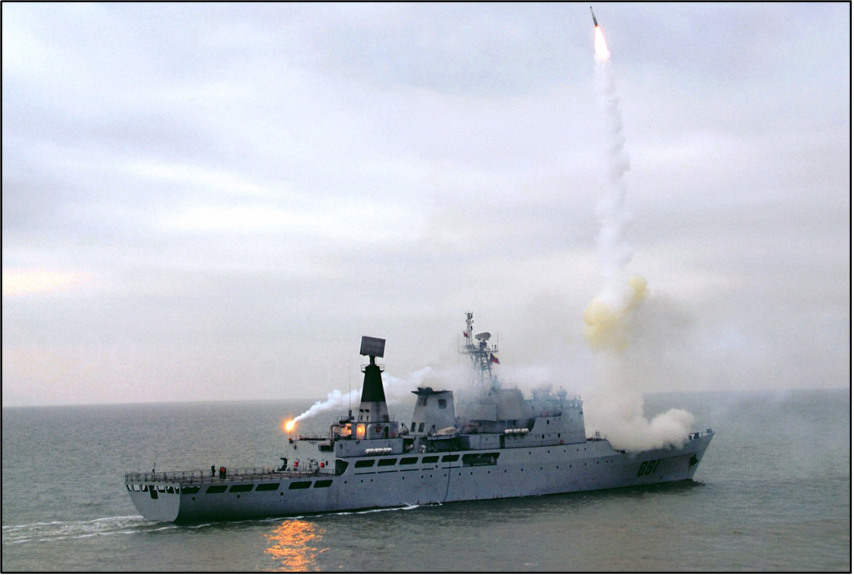
Fig 5: Bi Sheng Firing HHQ 9 Missile During Early Development
Notwithstanding her age, the vessel continues to be used to test later versions of missiles as seen from the recent picture below (Fig 6) where she is firing what is probably a HHQ 9C surface to air missile. In the picture she bears her new pennant number 851.
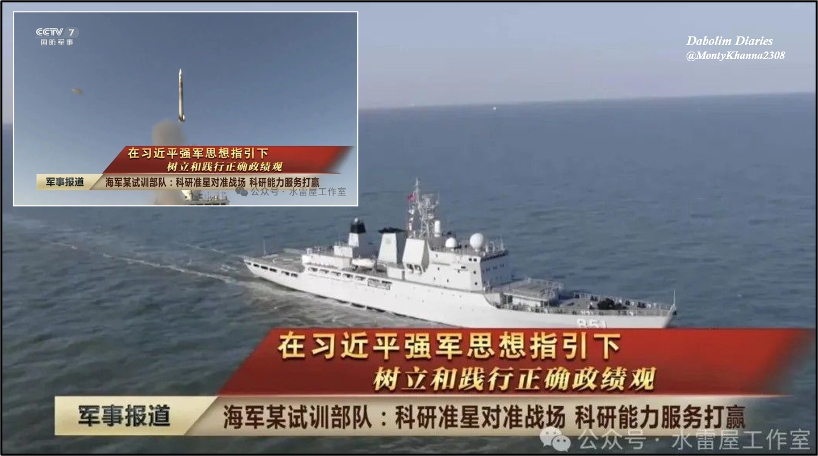
Fig 6: Recent Picture of Bi Sheng Firing Possible HHQ 9C Missile
- Type 909A (852/892). The Hua Luogeng (892) is the PLAN’s second weapons integration test ship of the Type 909 family. She was launched at the Hudong-Zhonghua Shipyard in March 2006 (Fig 7) and seconded to the North Sea Fleet post commissioning. She is named Hua Luogeng in honour of the renowned Chinese mathematician born in 1910.
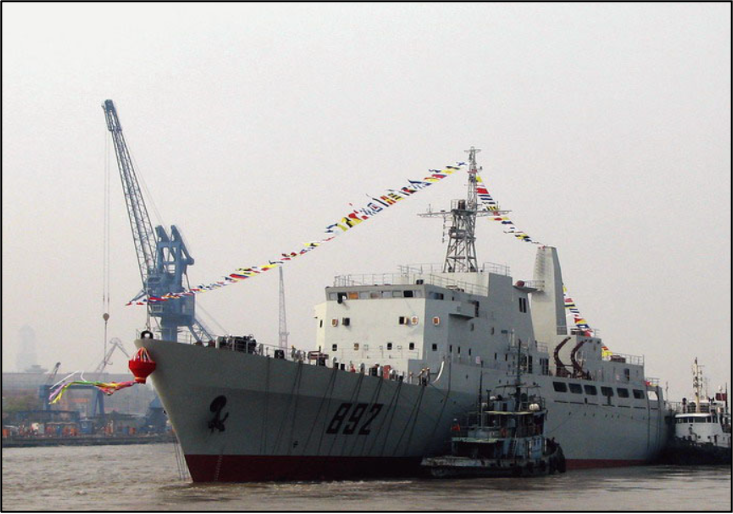 Fig 7: Launch of Hua Luogeng (892) at Hudong-Zhonghua in March 2006
She initially was given Hull No 892 which was subsequently changed to 852. It is believed that the induction of this vessel greatly accelerated the testing and consequent induction of PLANs ship-borne weapon systems. A feature of this vessel that attracted some attention at the time of her induction was her integrated mast which was assessed to be similar to that on the U.S. San Antonio LPD 17 class. As per Chinese literature, the mast design would facilitate a much higher degree of informization which would be progressively adopted on most PLAN vessels.
Like the Bi Sheng, she too has a large helo-deck aft. However, this has often been used for the installation and testing of missile systems instead of the embarkation of helicopters. The picture below (Fig 8) shows the deck fitted with an HHQ 10 launcher.
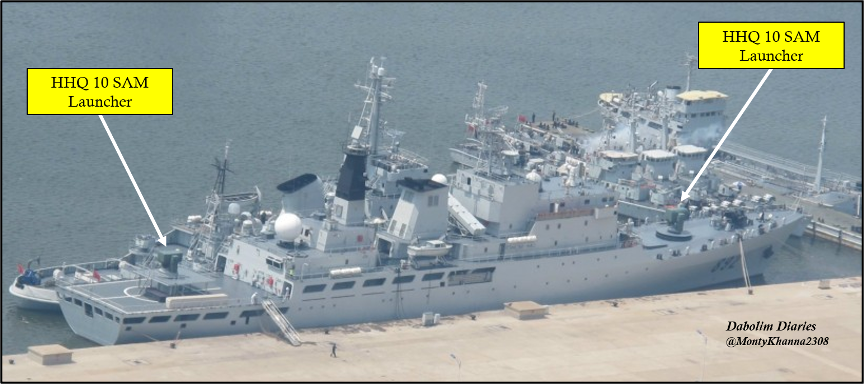
Fig 8: Helo-Deck of Hua Luogeng with HHQ-10 Launcher
Both the Bi Sheng and Hua Luogeng are based at Huludao at the jetty that abuts Bohai Shipyard (Fig 9)
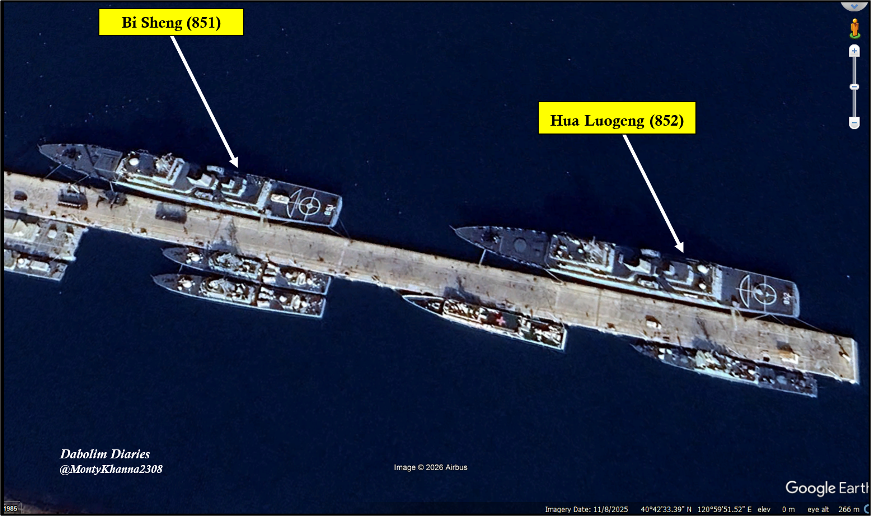 Fig 9: Bi Sheng and Hua Luogeng Berthed at Huludao
It is assessed that the PLA Navy meets a sizable part of its afloat testing and trails requirements from this facility (Fig 10).
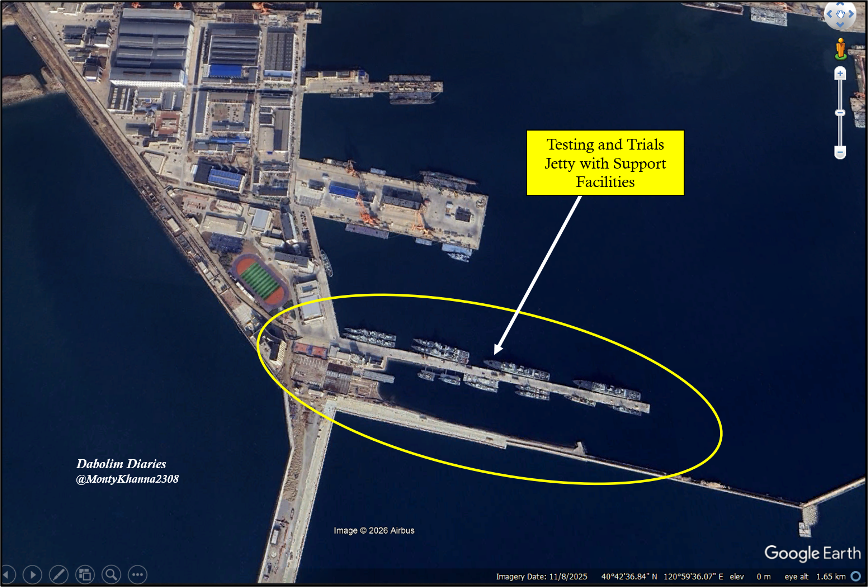
Fig 10: PLAN Afloat Testing and Trails Facility at Bohai Shipyard, Huludao
- Type 910 (853, 854, 855, 856). Having seen the value provided by the Bi Sheng and Hua Luogeng, China commissioned four of the slightly modified and larger Type 910 (Dahua II Class) between 2012 and 2020 (Fig 11).
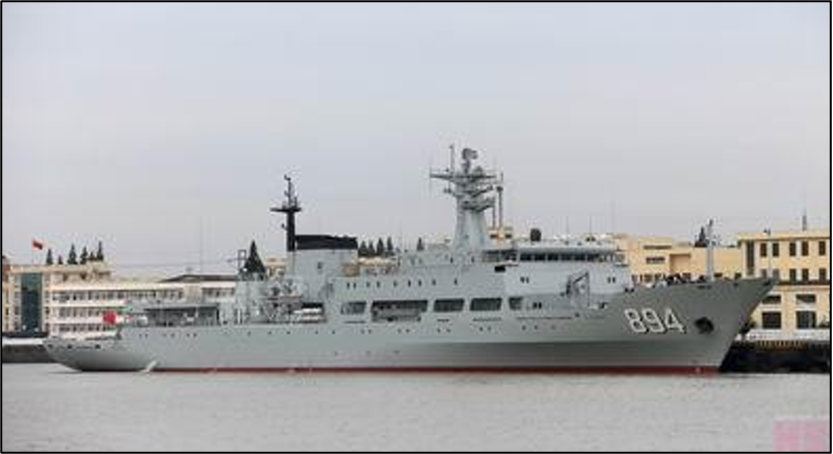 Fig 11: Type 910 (Dahua II Class)
These vessels have greatly strengthened the ability of engineers to test weapons and sensors afloat prior to fielding them in combatants. Some of the weapon trials these ships have been used for are as enumerated below.
- New AESA Radar. The Huang Weilu (856) has been used extensively for testing newer variants of large AESA surveillance radars (Fig 12).
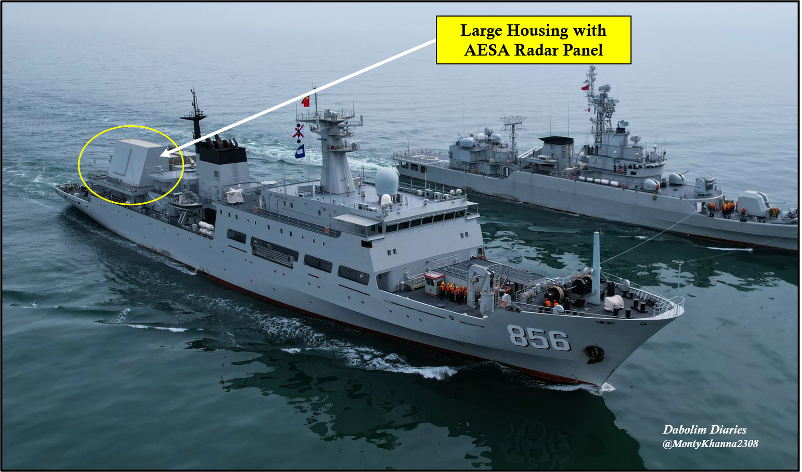 Fig 12: Huang Weilu Fitted with Large AESA Surveillance Radar Panel
- Improvements to 346/A Phased Array Radar. This class of ships has been used for improving the performance of the Type 346/A multifunction Dragon Eye active phased array radar, the primary sensor on board a large number of PLAN combatants. The picture below (Fig 13) shows the Zhan Tianyou (853) fitted with a panel of the radar.
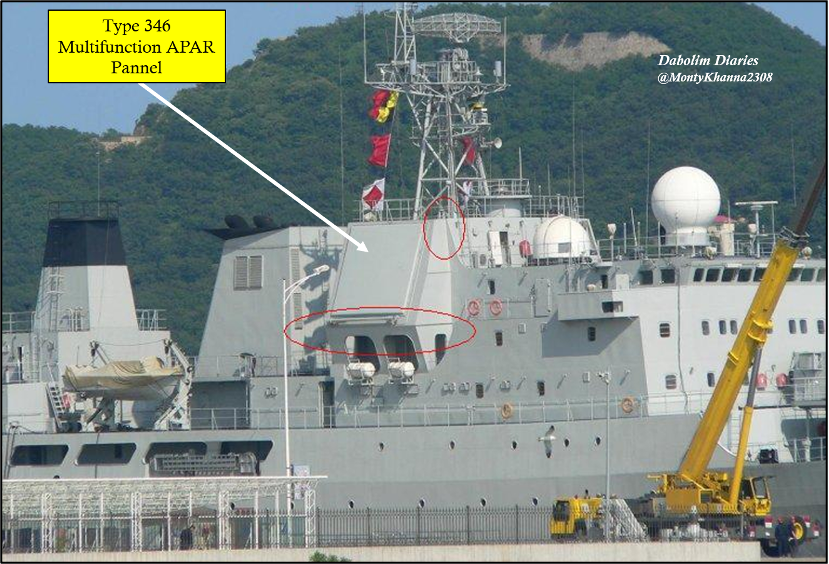 Fig 13: Zhan Tianyou (853) Fitted with Type 346A Radar Panel
- 155 mm Gun. The PLAN is in the process of carrying out sea trials of a 155 mm gun. These are being conducted on the Wu Yunduo (855) a Type 910 trial ship (Fig 14).
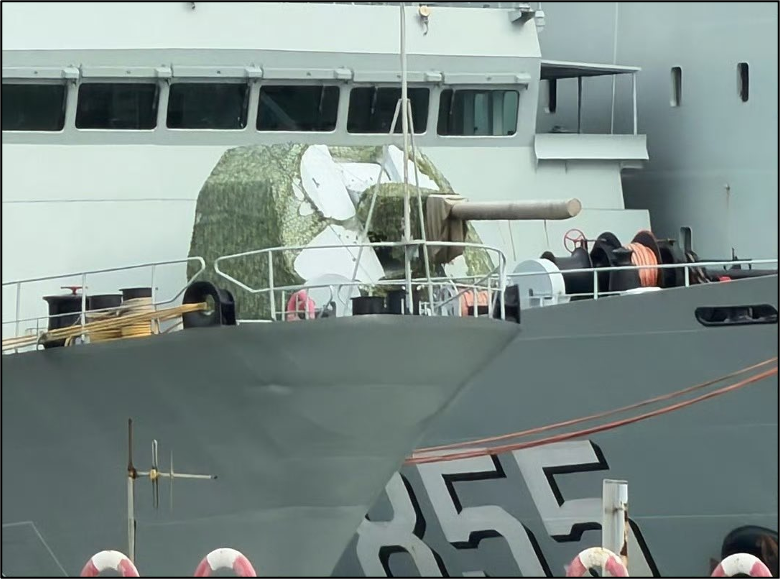
Fig 14: Wu Yunduo (855) Fitted with 155 mm Gun
Installation of the gun was undertaken at Liaonan shipyard, Lushun (Fig 15).
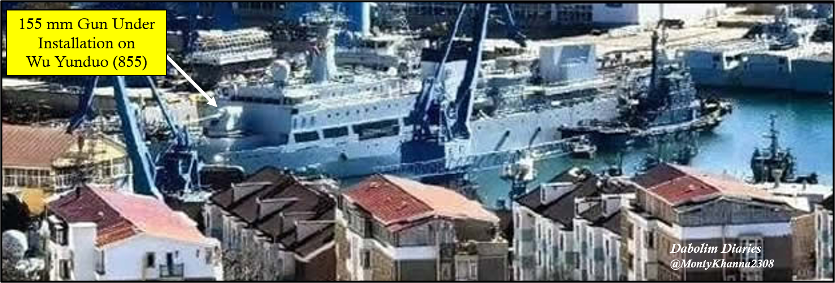 Fig 15: Wu Yunduo (855) Being Fitted with 155 mm Gun at Liaonan Shipyard, Lushun
The ship has thereafter been observed to be at sea for trials of the weapon (Fig 16).
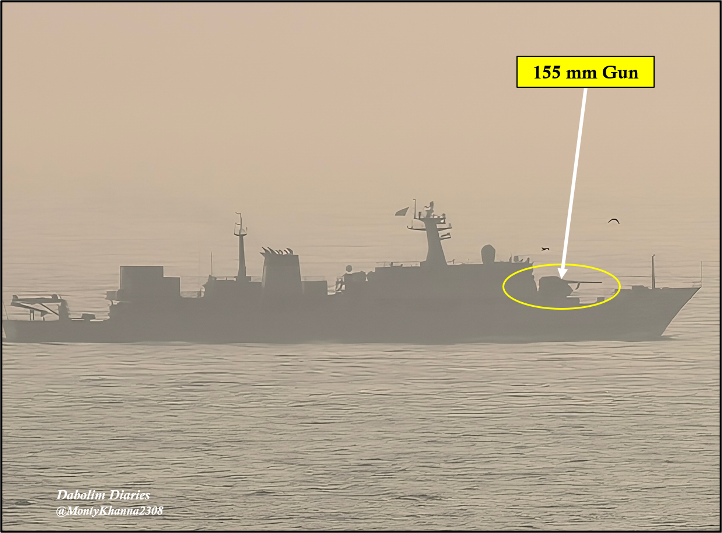 Fig 16: Wu Yunduo (855) Undertaking Sea Trials for 155 mm Gun
While the exact basing arrangements for the Type 910 vessels are not known, it is assessed that unlike the Type 909/909A, these have been distributed amongst all the Theatre Navies.
Integrated Test Platform (Stealth Corvette)
The PLAN is in the process of testing a new corvette with extensive stealth features. The vessel was constructed at Liaonan Shipyard, Lushun. Its notable features include an integrated mast, concealed gun turret, VLM containers and a large helo-deck (Fig 17).
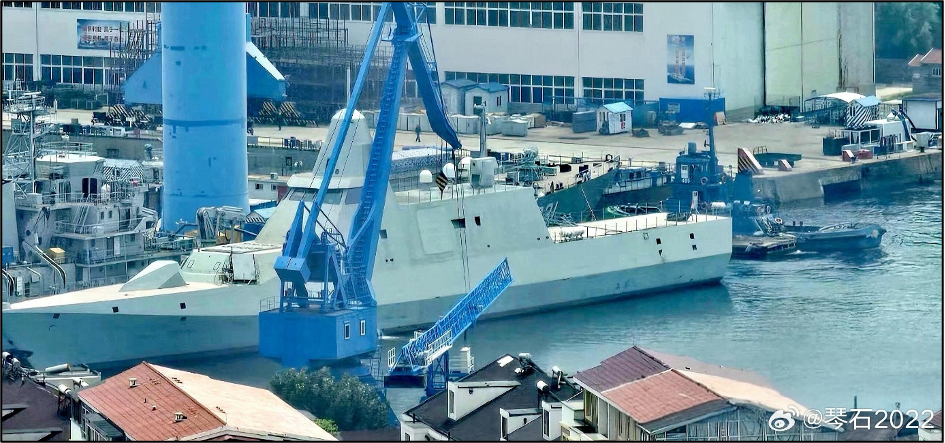 Fig 17: Stealth Corvette Under Construction at Liaonan Shipyard
It was launched in end 2023. A banner at the launch ceremony referred to the vessel as an ‘Integrated Test Platform” (Fig 18).
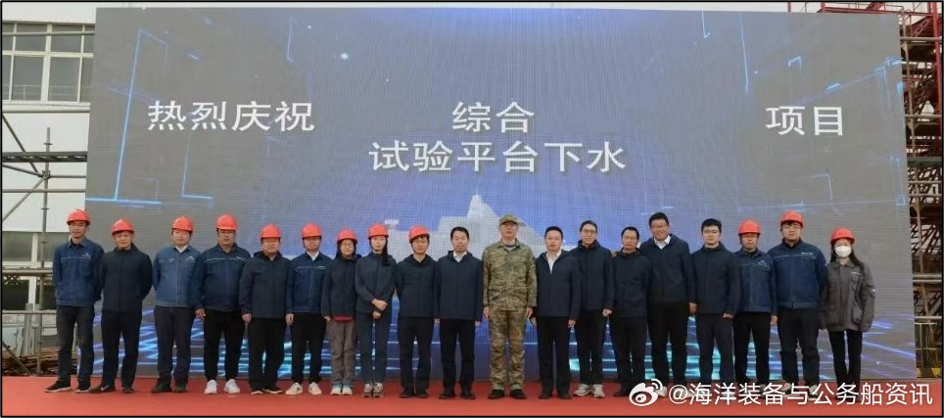
Fig 18: Photograph Taken at Launch Ceremony of Stealth Corvette
The vessel is estimated to displace over 3000 tons. Her lines along with the large bridge windows make her look deceptively small (Fig 19).
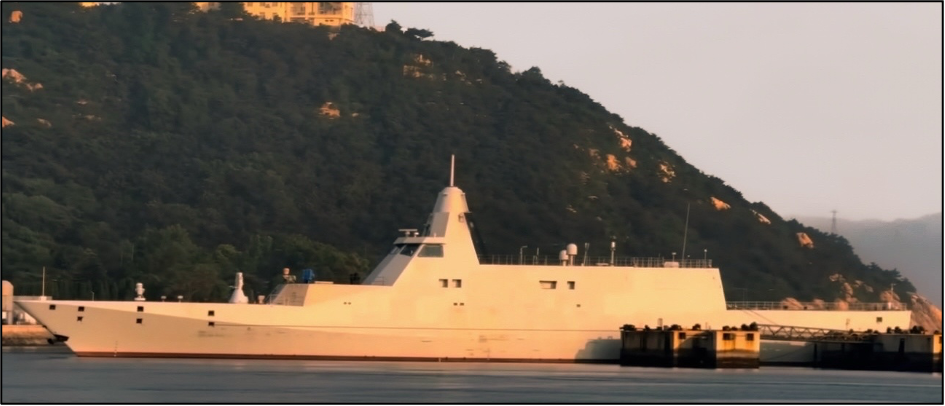 Fig 19: Layout of Stealth Corvette
The vessel has been seen at sea several times (Fig 20). Construction of follow-on vessels of a similar design is yet to commence.
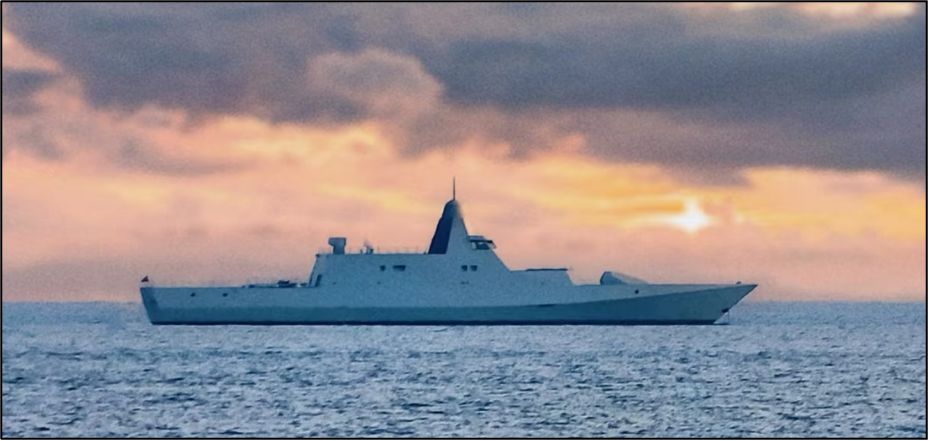
Fig 20: Stealth Corvette at Sea
Special Purpose Testing Vessels
The PLAN has been seen to convert existing vessels for special requirement of testing and trials. A good example of this approach is the use of the Type 072 III Landing Ship Haiyang Shan (936) as a vessel to undertake the trials of the developmental Electro Magnetic (E/M) gun (Fig 21). The modification was done in 2017/2018. Trials are assessed to have been challenging as the weapon has still not been adopted for wider use.
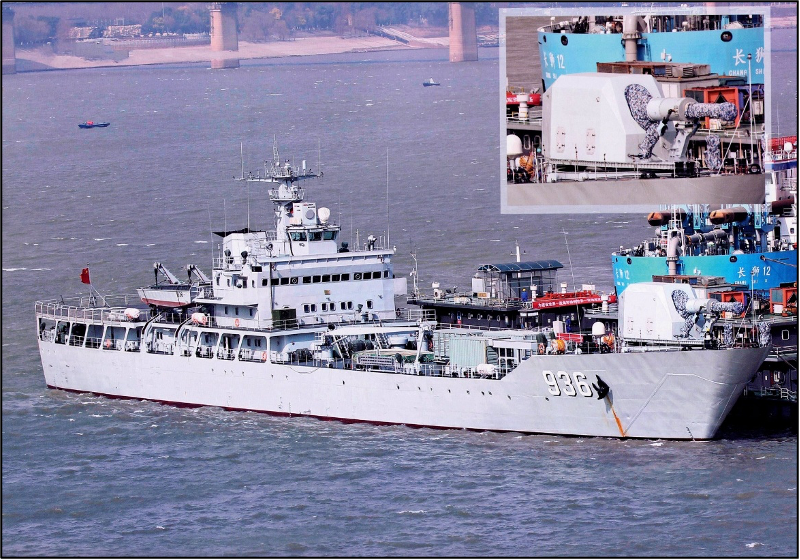 Fig 21: Haiyang Shan (936) Fitted with Electro Magnetic (E/M) Gun
The vessel has been based at Huludao (Fig 22) and normally operates from the same jetty as the Be Sheng and Hua Luogeng.
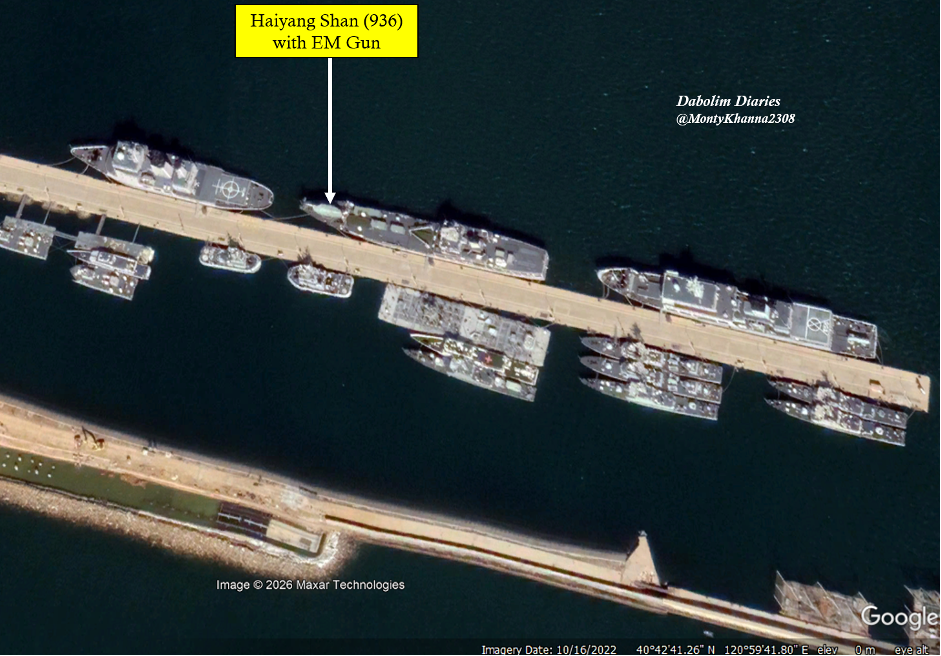
Fig 22: Haiyang Shan (936) at Huludao
Industry Owned Trial Vessels
In addition to the PLAN, Chinese shipbuilders have begun investing into their own testing and trial vessels. The most prominent of these is the Zhong Chuan Tan Suo 01 which was built by Guangzhou Shipbuilding International (GSI) in 2024 for the China State Shipbuilding Cooperation (CSSC). The vessel has a large aviation capable through-deck which could be used for testing drones and rotary wing aircraft (Fig 23). Given the speed of her construction, she is assessed to have been built to commercial specifications.
Fig 23: Zhong Chuan Tan Suo 01 at Sea
She has a three-island configuration, the aft-most being a funnel which prominently displays the CSSC logo (Fig 24).
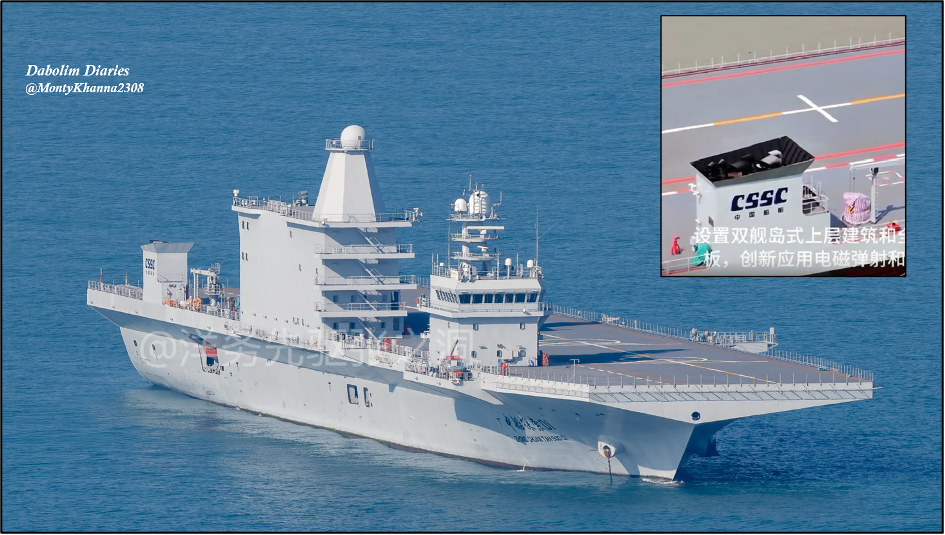 Fig 24: Zhong Chuan Tan Suo 01 with Three Islan Configuration and Funnel Showing CSSC Logo
Pictures dated end 2025 show her undertaking rotary wing drone trials at sea (Fig 25).
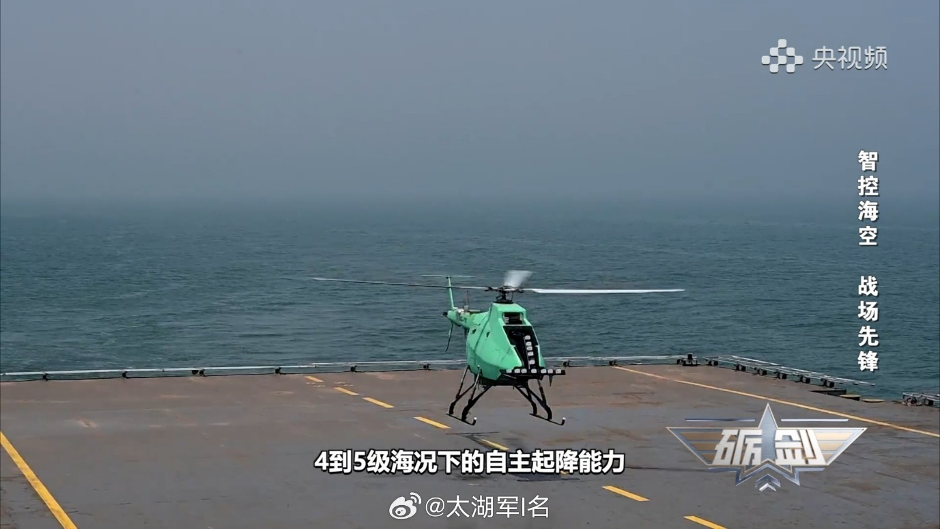
Fig 25: Zhong Chuan Tan Suo 01 Carrying Out Rotary Wing Drone Trials
There are also several other trials vessels of smaller dimensions which are owned and operated by Chinese State-Owned Enterprises (SOEs) as well as private shipyards to undertake rapid prototyping and reduce developmental risk.
Assessment
It can thus be seen that China follows an elaborate process before inducting weapons, sensors and associated systems on their ships at scale. The first stage is independent trials at the R & D and prototyping facilities in factories where the equipment is designed/manufactured. The next stage is testing the equipment in an integrated environment with other ship systems at a land facility. This is done at the Ship Integration Facility in Wuhan and possibly in other installations built for a similar purpose. The third stage involves installing the equipment on a testing and trials ships and checking its performance at sea. Having ironed out defects and design shortfalls, the equipment is installed on the initial run of the new class of combatant ships normally involving two to four hulls. After resolving remanent issues, the production run is ramped up to cater for a significant number of ships which are rapidly built. Retrofitting of newer equipment during major refits and mid-life upgrades follows a similar process. While an elaborate procedure of this nature may appear to be cumbersome and time consuming, the advantage lies in de-risking the R & D process to the greatest possible extent and ensuring that prior to the commencement of induction at scale, all failings of the equipment have been resolved.
The procedure followed by the PLAN therefore has the following advantages.
- It reduces the risk of fielding new weapons on platforms through undertaking comprehensive testing ashore and at sea.
- It eliminates the requirement of designating regular combat vessels for undertaking trials. This allows such assets to focus on their primary mission of training for combat.
- Testing and trails ships are built with adequate margins in terms of space and weight to fit a wide variety of weapons, sensors and associated systems. They also have adequate power generation capacity as well as a full outfit of rectifiers, convertors and invertors to meet all customised power requirements. This makes the installation of new systems relatively easy.
- Since the crew and associated scientists of such vessels are dealing with integration issues on a regular basis, they become adept at finding solutions to emergent problems. This reduces the development time-line.
- Getting industry to invest in their own testing and trials ships reduces the pressure on PLAN assets thereby enhancing the band-width of R & D effort while simultaneously reducing the time taken.

Leave a Reply
Want to join the discussion?Feel free to contribute!