
Keywords: Maritime History, Indian Maritime History, Shipbuilding, Ancient Shipbuilding, Maritime Heritage
The contemporary global shipbuilding industry has been shaped by epochal change on a near continuous basis. Shipbuilding is itself a subset of the seafaring element of external merchandise trade. Contemporary Indian society, particularly the Indian political, administrative, and industrial elite, remains woefully ignorant of Indian maritime prowess in terms of both, material wherewithal (“capacity”) and human skills (“capability”) that persisted over the several centuries that elapsed between the “ancient” Indian historical epoch to the “medieval” one.
Why is it important to re-introduce the seafaring traditions of the peninsular kingdoms of ancient India to contemporary Indian society? This is, at least in part, because knowledge of past accomplishments that were sustained over protracted periods of time engenders the feeling that the contemporary generation is the inheritor of a rich and proud legacy that their own efforts must sustain and embellish, even as they ready themselves to hand this legacy over to generations to come. Contemporary Indian society is unfortunately still imbued in large measure by feelings of inferiority in its pre-colonial prowess, achievements, and status. A significant cause is that despite political independence having been gained, a severe lack of knowledge of ‘maritime India’ persists. This ignorance is frequently lamented as “sea blindness”. Yet, this lack of knowledge is not, by any stretch of imagination, a mere accident of fate. It is a deliberate extractive process without which a people cannot be placed for long under a colonial yoke. To achieve the latter, the very spirit of the colonised people must be broken. In the case of India, this has required the deliberate and methodical stamping out of the natural pride of Indians in their past accomplishments. Destruction of organisational pride is one amongst several manifestations of a deliberate process by which colonisation of wealth and territory is sustained through the colonisation of the collective mind of the peoples being placed under a colonial yoke. There are, of course, a whole slew of large questions that need to be addressed. Is the term “colonial” to be conflated solely with “European” colonial powers? Where should the line between “pre-colonial” and “colonial” periods be drawn across the historical evolution of the several socio-cultural entities that preceded the establishment of the modern nation-State that followed the 1648 ‘Peace of Westphalia’?
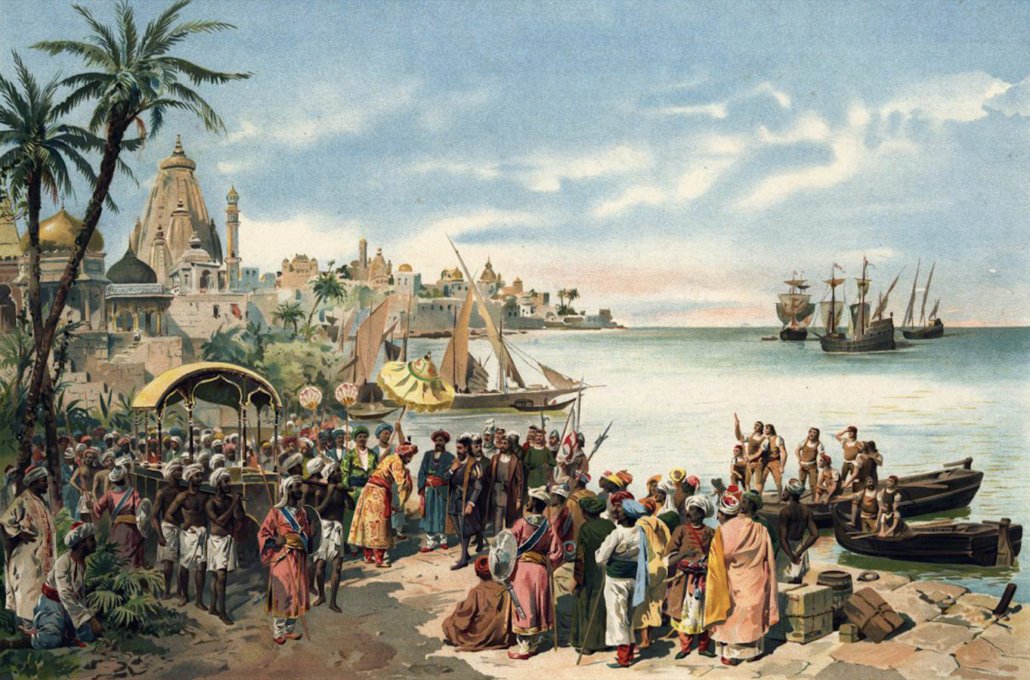
These larger issues notwithstanding, given that contemporary India is manfully attempting to re-establish itself as a self-reliant nation with significant present and future capacity, capability, and potential, this article seeks to contribute to the engendering of national pride in ancient Indian knowledge and its practical applications in shipbuilding. It accordingly endeavours to lay the first step in a stairway whose ascent would lead to the rekindling of national pride by tracing the history of its shipbuilding industry and the surrounding evidence of maritime trade and connectivity, concentrating upon the ancient period of Indian history. This article also seeks to highlight India’s constant role in the history of the global shipbuilding scenario until the “medieval” epoch (defined by the advent of the Portuguese, the British, and other European powers), while making passing mention of modern shipbuilding in the 19th century onwards.
Conventional wisdom asserts that India has always been a crucial hub for maritime trade, connecting the East with the West. The possibility that the English word “navigation” itself may have been progressively derived from the Sanskrit word ‘navgati’ must also be appreciated. Here, ‘nav’ means a ship or a vessel and ‘gati’ means speed or progress.[1] India was an independent and crucial player in well-established mercantile trade in the Indian Ocean for centuries, well before the arrival of any colonial powers.[2] Since ancient times, Indian sailors ventured into the seas thanks to their knowledge and use of the monsoon winds. This deep understanding of seasonal patterns allowed them to travel safely and efficiently, opening up trade routes to faraway lands. Satavahana coins, dating as far back as the 2nd century BCE to the 3rd century CE, also depict the use of winds for the purpose of oceanic navigation. There is also a mention of ships propelled by the force of the wind, collectively known as Pavanabalasamahaya, in Buddhist Jatakas and Jain literature. Archaeological evidence suggests that seafarers sailing from the eastern coast of India, particularly from the modern Indian state of Odisha, have been conscious of this phenomenon for more than 2,000 years.[3] The Indian Ocean, therefore, can be viewed as a familiar and shared maritime space since antiquity.
The study of Indian history is often referenced to three broad epochs, namely, the ‘ancient’, the ‘medieval’, and the ‘modern’ periods. The antiquity of an incident or event is established relative to an overarching timeline that is further subject to the aforementioned general classification, even though this does, indeed, have its own challenges concerning the underpinning colonial ideas surrounding the conflation of modernity with development.[4] It is pertinent to note that when this timeline is imposed upon maritime history, the arrival of foreign powers may be viewed as one of the key markers for each period as it coincides with the time periods denoted in the general classification. The term ‘foreign powers’ here loosely implies colonial powers that took over territorial control and purposely established a legacy that was independent-of, and often in contradiction-to, the Indian heritage, where the adjective “Indian” refers to the socio-cultural and socio-economic entity called “India”, even if not to a coherent geopolitical and cartographic one. This broad understanding of the term ‘colonial’ is replete with complexities and is, of course, vulnerable to criticism. It is certainly true that the interaction of foreign cultures with those of India, and the cross-cultural transplantation of techniques, crafts and methods occurring as a result, has had both, positive and negative spinoffs. However, this is an entire subject in and of itself and a separate concern, one way or another, altogether.
To return to the main threads with which this particular article is being woven, the arrival of the Portuguese powers, for instance, could well be referred to as a crucial event in the “medieval” period, within the context of maritime history.[5] Likewise, the subsequent colonisation of India by the British might be said to coincide with the “modern” period and is another important maritime marker.
In somewhat striking contrast, the scope of ancient history presents a far less tidy set of markers. It is, in and of itself, a dynamic issue as unlike the “medieval” and “modern” markers from which one goes forward to embrace contemporary times, the “ancient” period and its markers are constantly being shifted backwards in time, as a result of newer discoveries. That said, there is, today, an abundance of sources — both online and offline — that offer strong evidence of India’s significance in the ancient maritime world. Despite this growing body of evidence, seldom is India portrayed as a pivotal and essential political entity in the chain of dependence concerning trade and development — what we nowadays, at least in popular parlance, call “global supply chains” and “global value chains”. This neglect notwithstanding, as the second President of the USA, John Adams, said, “Facts are stubborn things; and whatever may be our wishes, our inclinations, or the dictates of our passion, they cannot alter the state of facts and evidence”.[6] There is significant evidence that shows that India had a flourishing shipbuilding industry (albeit one of understandably varying levels of sophistication and application) right across history. It is probably colonial drivers that have relegated Indian seafaring to the fringes of academic investigation, and this is a travesty that urgently needs to be corrected, especially as modern India seeks to cast off the mental shackles of colonisation that have persisted far longer than have mere political ones.
In terms of the ancient period in India, the Harappan epoch is usually presented as the age containing the most reliable evidence when considering the origin of ancient shipbuilding in India. There are important sources from this era that suggest a heightened sense of maritime awareness and maritime identity. The oldest tangible evidence is in the form of images, seals, and other such remains. The variety in the design of the oldest known boats depicted in images from the Harappan period suggests a possibility of well-established contact with other cultures that probably contributed to such diversity in riverine and seagoing craft.[7] There is also evidence of an Indus Valley seal that gives us an insight into ancient Sindh. It seems to represent a vessel, likely for riverine use, made of reeds, in which the reeds are lashed together at the bow and stern.[8] The depiction on the seal from Mohenjo-Daro, along with a baked clay amulet, depict a curved hull with vertical lines across it. These depictions are validated by Egyptian evidence of similar reed watercrafts (bundle rafts).[9] While Thor Heyerdahl’s famous Ra, Ra-II, and Kon-Tiki expeditions, involving boats constructed from reeds captured the global imagination[10], this has, sadly, not happened with the Indus Valley reed boat, despite its value and antiquity.
The native Indian genius thrived within civilisations such as the Harappans. They constructed sophisticated port cities like Lothal, which prospered around 2,400 BCE. These focal centres emerged as pivotal trade nodes, linking India via maritime routes to lands as far off as Mesopotamia. Excavated sites of the Harappan settlement phase, such as Lothal, Nageswar, Kuntasi and Padri present varied evidence that suggests that the Harappans did have a seaward attitude and had ventured as far as the Persian Gulf. About 35 Mature Harappan sites are situated along the coastline of Gujarat alone.[11]
Marine archaeology, as a discipline, has also widely contributed to the knowledge of ancient maritime affairs and shipbuilding in particular as it offers detailed analyses of port remains and recovered shipwrecks. The Godavaya shipwreck located in Sri Lanka, which also happens to be the oldest shipwreck in the Asia-Pacific region, is 2,100 years old. It is a valuable find in the field of marine archaeology and supports the information surrounding trade in the Indian Ocean during the ancient period.[12]
While literary sources are relatively sparse in this regard, there are certain key texts that supplement the aforementioned archaeological evidence. The Rigveda is known to be the oldest surviving literature record containing references to maritime activity. There is a mention of the Samudra or the seas in the text. There are also references to Lord Varuna, the Lord of the Sea, who knows all sea routes. Several passages detail anecdotes of sea voyages; of merchants sailing across oceans for trade and in search for wealth.[13] Indian epics such as the Mahabharata and the Ramayana also contain descriptions of shipbuilding among other anecdotes that also address navigation, naval warfare, and various other kinds of maritime activity.[14] Sangam literature also provides significant evidence in relation to Tamil traders of ancient India. Aside from these literary sources, certain accounts of foreign travellers shed light on the state of maritime affairs prevalent during ancient India. Examples of these accounts include that of the “Periplus of the Erythraean Sea”, the travel accounts of Marco Polo, and those of Chinese pilgrims such as Fa-Hien and Hiuen Tsang. The “Periplus of the Erythraean Sea” along with Pliny’s work called “Natural History”, and Ptolemy’s “Geography”, are some of the more popular foreign literary sources that describe ancient India’s commerce with Rome. Supplementing these are ancient Tamil works along with ancient texts in Sanskrit and Pali, which refer to the land of ‘Romaka’, that is, the city of Rome and use words such as ‘Yavanas’ for Greeks and Romans. [15]
There is a record of the Board of Admiralty in Emperor Chandra Gupta Maurya’s War Office, as detailed in the well-known text Arthashastra authored by Kautilya. The Arthashastra also mentions several posts related to the naval department, for instance, there was a Navadhyaksha (Superintendent of Ships) whose duties included navigation of the seas as well as inland navigation. It also expounds upon the construction and security of trade routes.[16] The criticality of shipbuilding is also proven by the fact that the State also gave tax incentives to build ships.[17] Maritime trade and connectivity were, therefore, a significant feature of ancient societies.
Various historical and archaeological sources in Sanskrit, Pali and other vernacular languages detail the use of timber for shipbuilding and the meticulous techniques employed to maintain the longevity of those ships. Panini’s work, called the Ashtadhyayi, which dates back to the 5th century BCE, elaborates greatly on different timber species and their use in ship construction among many other purposes. Patanjali’s work from the 2nd century BCE, likewise, mentions the particular use of Deodar for the construction of different parts of the ship, and the general variety of timber employed in the construction process. Many other foreign records, while expounding the many merits of Indian teak, mention that teakwood was exported to distant lands for shipbuilding, and construction of buildings, temples, and palaces.[18] The discovery of Indian teak in the ruins of Ur of the Chaldees (present-day Iraq) dates back to 3,000 BCE, which serves as proof that commercial activity by sea between India and Babylon thrived during the ancient period.[19]
Human needs, as in every other walk of life, dictated the pace and scale of the development of shipbuilding. Looking at trade as a factor, it must be appreciated that India’s role was ever-changing, yet significant throughout time and so, too, were the waters around it. One is struck by the sheer dynamism of the ancient period, and this ensures that the process of tracking backwards from the arrival of the Portuguese (which is part of the medieval period), is never a monotonous or linear exercise. As history is accorded its rightful place in the modern tale of India’s prosperity and development, the centrality of shipbuilding begins to shine with an ever-brighter lustre. As mentioned earlier, ancient Indian seafarers, excelled at comprehending the potency and complexity of the monsoon winds. They designed and built ships and craft that were capable of utilising these seasonal winds to effect not merely close-coast voyages but ones that involved sailing out of sight of land for protracted periods, thereby laying the foundation for trade routes spanning the Indian Ocean and farther regions. Evidence suggests that it was not just voyagers but Indian maritime craftsmen, too, were adept at employing their refined skills to develop indigenous shipbuilding methods. Their innovative approach displayed ingenuity and resourcefulness that marked them apart from the rest of the world while actively contributing to the development of robust and seaworthy vessels.[20] A series of evidence, which can be encountered going further back in time from the aforementioned period, portrays a shipbuilding industry with increasingly indigenous ideas in action.
An 11th century Sanskrit text called Yuktikalpataru offers elaborate insights into the shipbuilding practices of the time. Generally credited to King Bhoja of Dhar, the text sheds light on various aspects pertaining to shipbuilding. It details size-related specifications and methodologies with remarkable granularity, showcasing the distinguished prowess and calibre of Indian shipbuilders during the 11th century. Shipbuilders had immense knowledge of the properties of wood, which, of course, was the most crucial material for shipbuilding during the ancient period.[21] However, shipbuilders were also confronted with various challenges of using wood as the primary material for shipbuilding. The durability, strength and resilience of wood was a serious issue.
A wreckage salvaged in 1961 provides an insight into how people may have gone about resolving such issues during those times. The ship was made of Kerela teak, which was known for its durability. Since iron was not being used by Indian shipbuilders in those times (with good reason, since iron was prone to rusting), the ship’s planking was stitched together with coil yarn dipped in fish oil.[22] Traces of this technique of building stitched or sewn ships exist in certain communities to date.
Although the arrival of the Portuguese (and subsequent colonial powers) certainly marked a decline in favourable command of the seascape, this was a gradual process. Right up to the middle of the ‘modern’ historical epoch, India continued to witness considerable activity in its shipbuilding industry. At sea, there was still an interesting mix of cultures and craft at play; while “junks” populated the eastern coast as they made their way from China, the western coast was dominated by “dhows”. Junks, which were large sailing vessels with a distinguishable and unique design, are traditionally associated with the East and Southeast Asia. They were characterised by a high stern and projecting bow, featuring up to five masts in order to support highly manoeuvrable square sails crafted from panels of linen or matting and later flattened by bamboo strips. Massive rudders were used in lieu of a large keel or centreboard. Solid bulkheads partition the hull both transversally and longitudinally, thereby providing structural strength to the craft.[23] Dhows, on the other hand, were a quintessential mix of Indo-Arab techniques. The masts and yards of traditional dhows were originally constructed using Indian teak and coconut wood. Early versions had their sails woven from coconut or palm leaves, while the subsequent use of cotton (which was also from India) made longer voyages possible. The planks used for the hull were often stitched or sewn together and the vessel most often featured a triangular (lateen) sail, which allowed it to sail much closer to the wind than a square sail would have allowed.[24] Duarte Barbosa, a Portuguese worker on the Malabar Coast during early 1500s, recorded that sewn-plank boats plied annually between Calicut and either Aden or Jeddah. Meanwhile, on the eastern coast, a Dutchman named Peter Floris, working on the Coromandel Coast, also noted the presence of local sewn-plank boats, both at sea and at harbour, near Madras (present-day Chennai).[25]
However, the scenario changed as the shipbuilding industry encountered massive, even if gradual, changes. The pace of this change increased dramatically as the 18th century gave way to the 19th and European shipbuilding practices became predominant across much of the colonised world. The 19th century is, in fact, regarded as a transformative era, principally because it marked the shift from wood-centric shipbuilding to the use of iron and steel for the construction of ships. The age of sail gave way to the age of steam, impacting the design of ships as place had to be found for steam engines and the coal (and later, heavy oil) that would propel them, as also for the shafting and propellers that the steam would be used to run.[26] In many ways, this period laid the groundwork for the contemporary shipbuilding landscape.
As a colonised nation, particularly under the British, India’s position in the shipbuilding world changed significantly. Faced with an acute timber shortage after losing access to American forests and its own depleting oak forests, Great Britain was absorbed with the aim of acquiring raw materials from India, particularly teakwood. Another reason behind this urgency was the immediate need to free Great Britain from its dependence on foreign territories such as the Baltic nations which did not belong to it.[27] Therefore, it may be argued that right from the late 18th century onwards, British control of Indian forests grew exponentially to cater for its shipbuilding industry. India’s role, on the other hand, had diminished drastically from being an acknowledged repository of shipbuilding skills to being a mere provider of raw material.
There is much evidence to suggest that the civilisations that dared to venture beyond their territorial limits, into the uncharted seas, thrived. This unique blend of evidence, if reconciled and juxtaposed with records of dexterity, may render a multitude of possible narratives. The diverse sources which generally encompass oral histories which are passed down through generations, written documents or inscriptions from various periods, and the surviving traditions and rituals are of significant importance. The fundamental challenge, therefore, is to reconcile this rich tapestry of sources and often distinct or disparate elements to construct a cohesive and reliable historical narrative.
In conclusion, it is important to point out that the overwhelming arc of development in this century if coupled with a myopic view of history, would propagate the notion that significant shipbuilding developments occurred exclusively in the 19th century. While this era can undoubtedly be credited for bringing in such revolutionary change as informs common contemporary knowledge, it is also crucial to remember that this is hardly the first revolution to have occurred in this regard and far from remaining imbued with a sense of inferiority that has been assiduously planted by colonial powers, India needs to take pride in its ancient knowledge systems and to pick up the threads of subcontinental history that were so callously snipped by colonising entities. In this wider effort at not merely restoring justifiable pride in indigenous effort and achievement, it is not merely the story of Indian shipbuilding that is at stake but Indian mind-building itself. This is an endeavour that is both noble and necessary if ‘maritime India’ is to be revived and restored to a position befitting its contemporary aspirations.
******
Endnotes:
[1] Odakkal Johnson and Janhavi V Lokegaonkar, “Climatological Aspects in Indian Navigation”, in Roads, Winds, Spices in the Western Indian Ocean: The Memory and Geopolitics of Maritime Heritage, eds Nutan Kapoor Mahawar and Pragya Pandey, (Chennai: Macmillan Publishers India, 2022), 54-55.
[2] James Hancock, “Indian Ocean Trade before the European Conquest”, World History Encyclopaedia, 20 July 2021, https://www.worldhistory.org/article/1800/indian-ocean-trade-before-the-european-conquest/
[3] Sila Tripati and LN Raut, “Monsoon Wind and Maritime Trade: A Case Study of Historical Evidence from Orissa, India.” Current Science 90, No. 6 (March 2006): 864–71. http://www.jstor.org/stable/24089206
[4] NCERT, Social Science, “Introduction: How, When and Where”, Our Pasts-III, Textbook in History for Class VIII, https://ncert.nic.in/textbook/pdf/hess2ps.pdf
[5] Jagran Josh, “Timeline of the History of Portugal as a Trader”, 04 September 2018, https://www.jagranjosh.com/general-knowledge/timeline-of-the-history-of-portugal-as-a-trader-1534849375-1
[6] John Admas, Wemms Trial, 148-178, US National Archives, https://founders.archives.gov/documents/Adams/05-03-02-0001-0004-0016
See Also: Quote Investigator® Tracing Quotations https://quoteinvestigator.com/2010/06/18/facts-stubborn/
[7] Fabrizia Baldissera, “People and Ideas on the Seas of Ancient India”, in The Sea in History: The Ancient World, eds Philip De Souza and Pascal Arnauld, (Woodbridge: The Boydell Press, 2017), 553-54.
[8] “An Indus Boat Seal”, Blog, Harrapa.com, 17 February 2015, https://www.harappa.com/blog/indus-boat-seal
[9] Sean McGrail, Boats of the World: From the Stone Age to Medieval Times (New York: Oxford University Press, 2009), 262.
[10] Britannica, Biography, Thor Heyerdahl, 14 April 2024, https://www.britannica.com/biography/Thor-Heyerdahl
[11] Aniruddh Singh Gaur, “Harappan Maritime Legacies of Gujarat”, (New Delhi: Asian Publication Service, 2000), 163.
[12] The Nautical Archaeology Digital Library, “Godawaya Shipwreck”, SL/S/GODA/M/002, https://shiplib.org/index.php/landscapes/projects-2/sri-lanka/godawaya-shipwreck/, accessed on 25 April 2024.
[13] Government of India, “Join Indian Navy” website, “Maritime Heritage”, https://www.joinindiannavy.gov.in/en/about-us/maritime-heritage.html
[14] Radhakumud Mookerji, “Indian Shipping: A History of the Sea-borne Trade and Maritime Activity of the Indians from the Earliest Times”, 53-58.
[15] Ibid, 10-11.
[16] Government of India, Ministry of Ports, Shipping and Waterways, Sagarmala: Port-Led Prosperity, “A look at how Mauryans excelled at sea-borne trade”, Maritime Glory, http://sagarmala.gov.in/sites/default/files/MARITIME-GLORY.pdf
[17] Snehal Sripurkar, “Sailing through Centuries: A Journey into the History of Indian Shipbuilding”, Enroute: Indian History, 06 July 2023 https://enrouteindianhistory.com/sailing-through-centuries-a-journey-into-the-history-of-indian-shipbuilding/
[18] Sila Tripati, SR Shukla, S Shashikala, and Areef Sardar, “Role of Teak and other Hardwoods in Shipbuilding as evidenced from Literature and Shipwrecks”, Current Science, VOL. 111, NO. 7 (October 2016): 1262-1268. https://www.jstor.org/stable/24909139
[19] SM Edwardes, “A Note on the Durability of Indian Teak”, Empire Forestry Journal, Vol. 1, No. 2 (1922): 257-260. http://www.jstor.org/stable/42595291
[20] Radhakumud Mookerji, “Indian Shipping: A History Of The Sea-borne Trade And Maritime Activity Of The Indians From The Earliest Times”, (London: Longmans, Green And Co, 1912), 28, https://archive.org/details/in.ernet.dli.2015.522933/page/n7/mode/2up)
[21] Radhakumud Mookerji, “Indian Shipping: A History of the Sea-borne Trade and Maritime Activity of the Indians from the Earliest Times”, 20-24.
[22] Snehal Sripurkar, “Sailing through Centuries: A Journey into the History of Indian Shipbuilding”, Enroute: Indian History, 06 July 2023 https://enrouteindianhistory.com/sailing-through-centuries-a-journey-into-the-history-of-indian-shipbuilding/
[23] Brittanica, Category: Science and Tech, Junk (Ship), revised and updated by Amy Tikkanen, https://www.britannica.com/technology/junk-ship
[24] Hideaways: Life Changing Experiences, “The History of Dhows: Tales from the Bush”, https://hideawaysafrica.com/the-history-of-dhows-an-ancient-art/
[25] Sean McGrail, “Boats of the World: From the Stone Age to Medieval Times”, 269-270.
[26] Royal Museums Greenwich, “Shipbuilding at Greenwich”, https://www.rmg.co.uk/stories/topics/shipbuilding-1800-present
[27] Lucas Sérougne, “Teak conquest: Wars, Forest Imperialism and Shipbuilding in India (1793-1815)”, Annales Historiques de la Révolution Française, Vol. 399, No. 1, (2020): 123-152. https://www.cairn-int.info/article-E_AHRF_399_0123–to-conquer-teak-wars-forest.htm


Leave a Reply
Want to join the discussion?Feel free to contribute!