
Rear Admiral Monty Khanna (Retd) – Issue No 15 dated 27 Jan 2026
The PLA Navy gives considerable importance to mine warfare. This can be gauged not only from the large fleet of minesweepers that it operates, but also for the deperming ranges it has built to measure and reduce the magnetic signature of its warships. Details of these are given in the succeeding paragraphs,
Xiangshan. The first of the deperming ranges was set up between 2006 and 2008 at Xiangshan (29 o 31’.3 N, 121 o 40’.5 E). It is 225 m long and 25 m wide. It has six pylons on its north-eastern side to facilitate the berthing of vessels before they are warped between the two arms of the deperming berth (Fig 1).
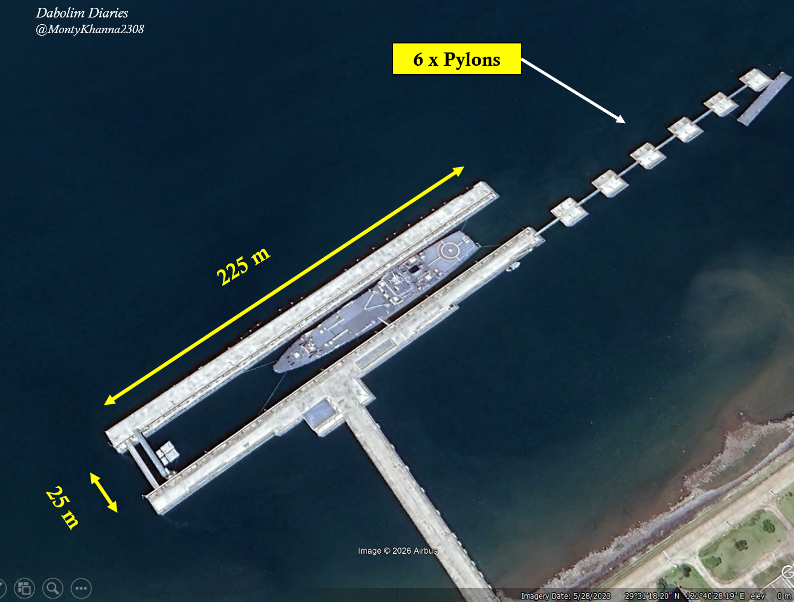 Fig 1: Deperming Range at Xiangshan
Being restricted in dimensions, particularly in its width, the largest sized vessel observed to have used this facility is a Type 52D destroyer as seen in Fig 2.
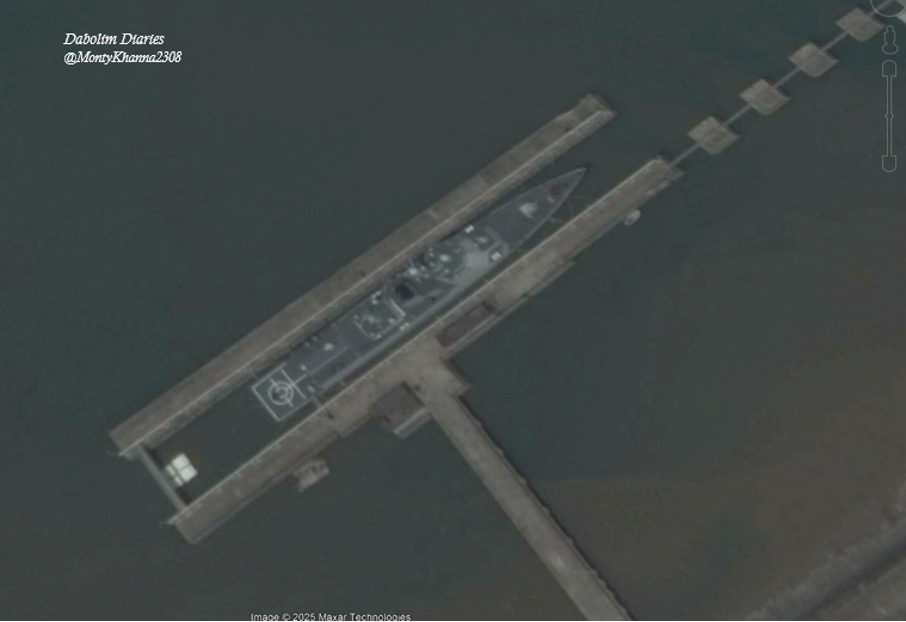
Fig 2: Xiangshan Deperming Range with Type 52D Destroyer (image dated 05 May 2017)
The facility is conveniently located adjacent to the PLA Navy dockyard at Xiangshan (Fig 3) and in the close vicinity of several other naval facilities at Zhoushan, Daxie Dao and Xihu. It functions under the administrative control of the Eastern Theatre Navy (ETN).
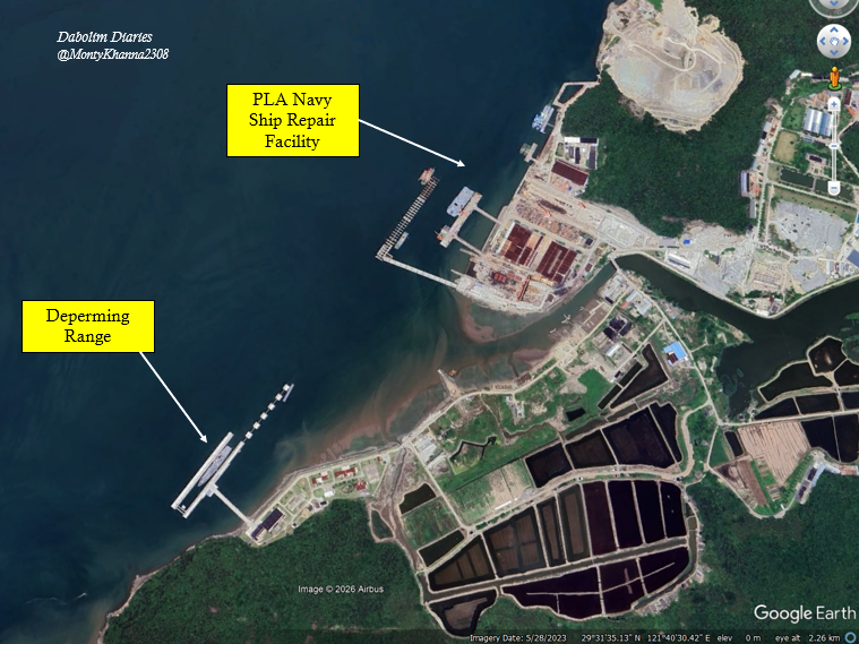 Fig 3: Broad Layout of Facilities at Xiangshan
Yulin, Hainan. Just a few months after commencing work at Xiangshan, the PLA Navy started construction of its second deperming range at Yulin Naval Base in Hainan (18 o 11’.3 N, 109 o 41’.4 E). Work here also commenced in 2006 and was completed by 2008. It is larger than the Xiangshan facility and has a length of 248 m and width of 30 m (Fig 4). Further, it has seven pylons on its north-eastern side for berthing vessels prior to being warped between the arms. Being located at Yulin, the facility is capable of servicing most of the ships (including Type 55 destroyers) and submarines at this base, with the exception of LPDs, LHAs and aircraft carriers. It functions under the administrative control of the Southern Theatre Navy (STN).
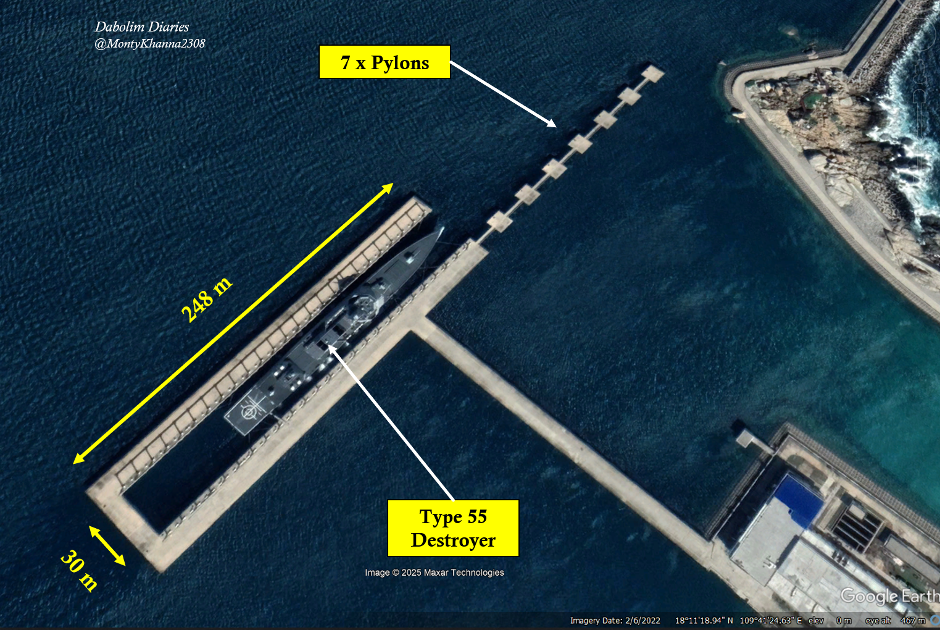 Fig 4: Deperming Range at Yulin with Type 55 Destroyer
Yuchi, Guzhen Bay. The Eastern Theatre Navy (ETN) continues to be without its own deperming range. This may, however, change with imagery showing the construction of a facility at Yuchi naval base (35 o 43’.4 N, 120 o 01’.5 E) which could be a deperming range (Fig 5).
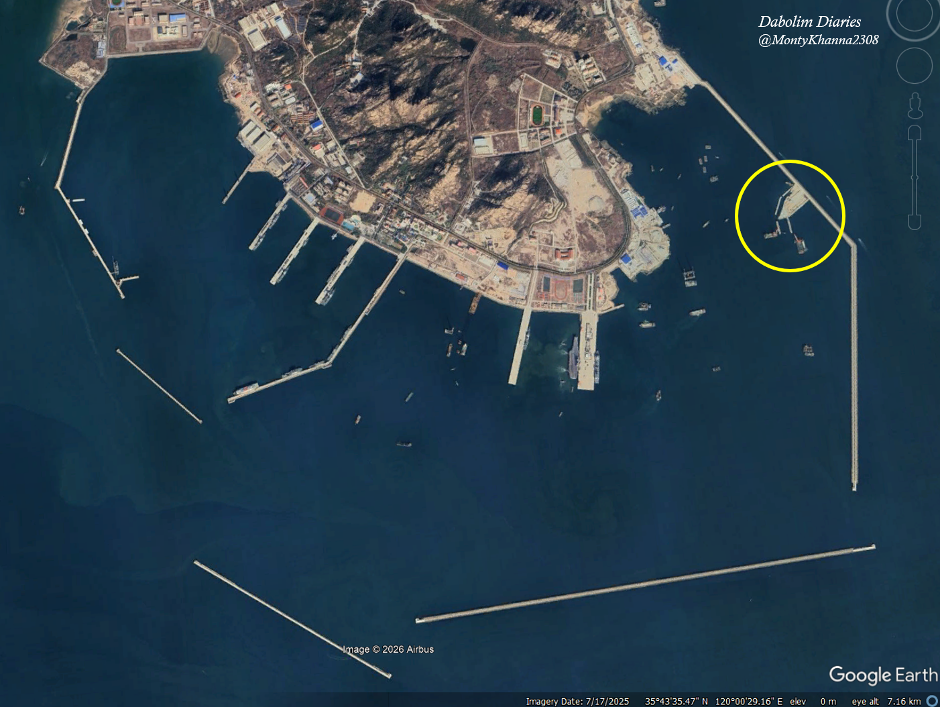 Fig 5: Probable Location of New Deperming Range at Yuchi
In the image below (Fig 6), early signs of construction of two arms on the eastern side of the harbour can be seen. In Brief Number 6 of Dabolim Diaries (05 Feb 2025) titled ‘Yuchi Naval Base – The PLA Navy’s Largest Base’, it had been assessed that this construction was most likely for berthing conventional submarines and Unmanned Undersea Vessels (UUVs). This was based on the fact that the 71 m gap between the two arms would be restrictive for berthing larger ships on a regular basis.
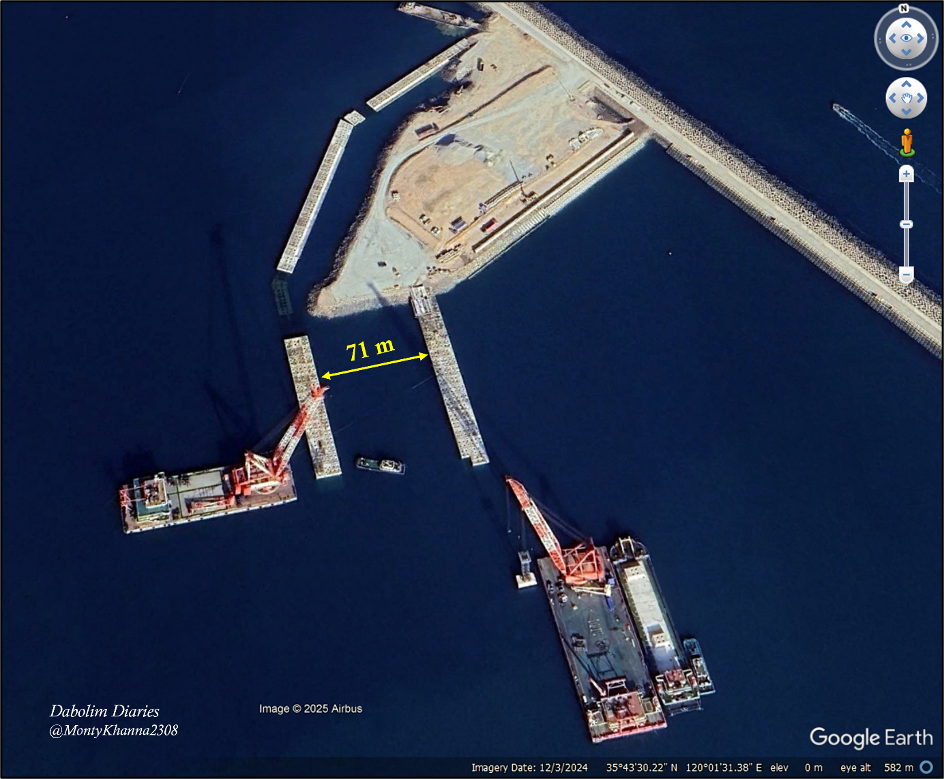 Fig 6: Construction at Yulin dated 03 Dec 2024
More recent imagery (not available on Google Earth) shows that each of these arms has now been extended to a length of 580 m.
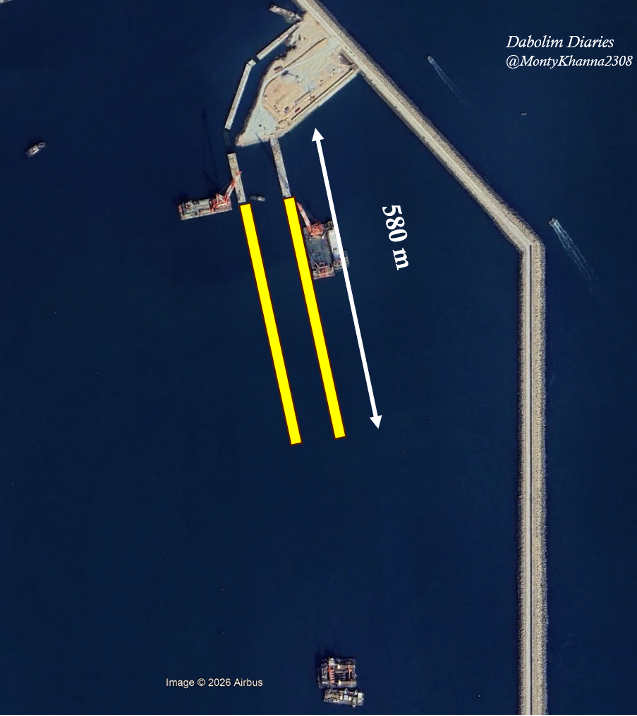 Fig 7: Progress in Construction of Arms as Seen in Imagery from Other Sources
With this development, assessed use of this facility gives rise to two options. Either the space in between the two arms will be reclaimed to make way for an aircraft carrier/LHA berth which would be about 100m wide, or this is likely to be a specialised facility for the deperming of large vessels. The first option seems unlikely at this juncture as in the carrier berths built at Yalong and Yuchi, the reclamation (between the two arms) proceeded almost side by side with their construction. Further, access to the eastern wall of the jetty in its current alignment will be a little constrained. If it were intended for the berthing of large vessels, it would have been relatively easy to marginally realign it (parallel to the breakwater) mitigating this problem. Lastly, large vessels like carriers and LHAs tend to have a robust logistical footprint. The access to this facility does not appear to support this requirement. At this point of time, it therefore appears that the most likely use of this facility is for a deperming range.
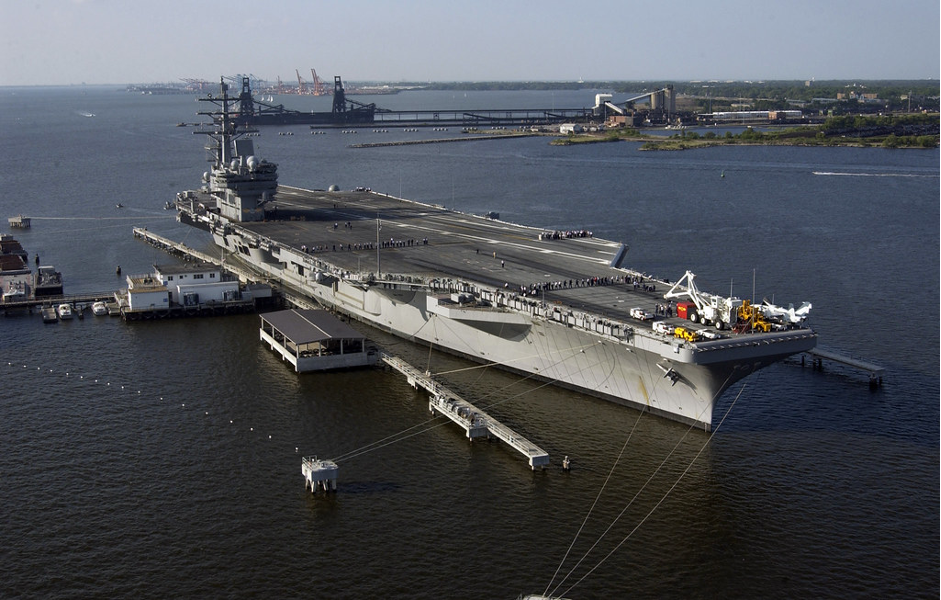
As a point of reference, Fig 8 below contains imagery of the U.S. Navy’s aircraft carrier deperming range at Lambert’s Point in Virginia.
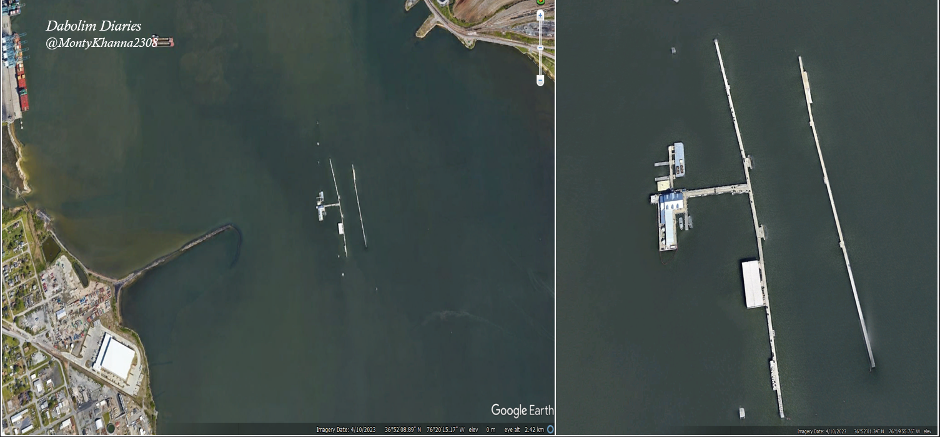 Fig 8: Deperming Range at Lambert’s Point (blow up to the right)
A picture of the range with the aircraft carrier USS Reagan undergoing deperming is Fig 9 below.
Fig 9: Deperming range at Lambert’s Point with USS Ronald Reagan
While the design philosophy of this facility differs considerably from that coming up at Yuchi, its width at 75 m is similar to the 70 m width of the structure at Yuchi.
Huangpu Shipyard. In addition to the PLA Navy deperming facilities, the Huangpu Shipyard in Guangzhou has its own deperming range (Fig 10) located west of the yard (23 o 04’.95 N, 113 o 24’.0 E).
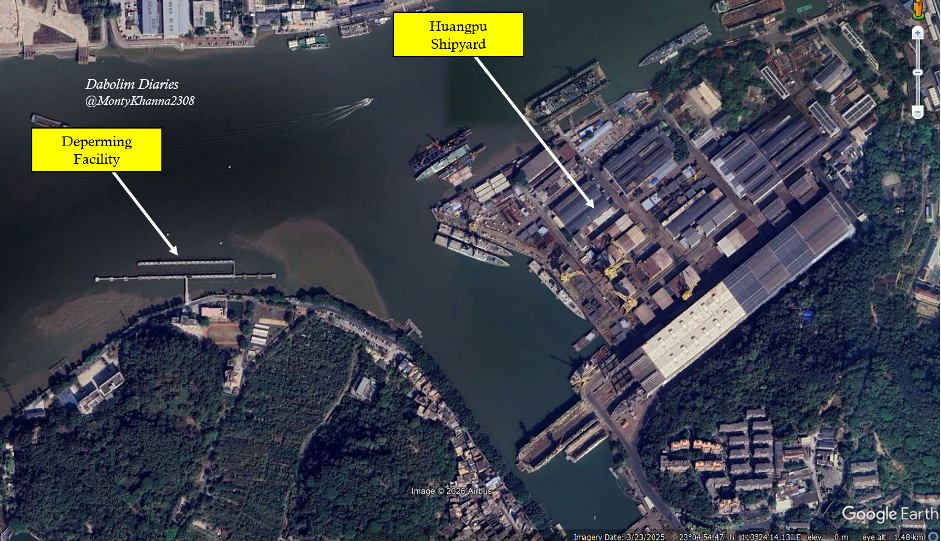 Fig 10: Deperming Range Adjacent to Huangpu Shipyard
At 165 x 20 m, it is the smallest of all the ranges and can at best accommodate a frigate-sized vessel. It has three pylons at each end and is the only deperming facility that can be accessed from either side (Fig 11). The location of this facility is reflective of the fact that a significant proportion of the mine countermeasure vessels of the PLA Navy have been constructed at this yard. It is not clear if this facility is operated by the yard or the PLA Navy.
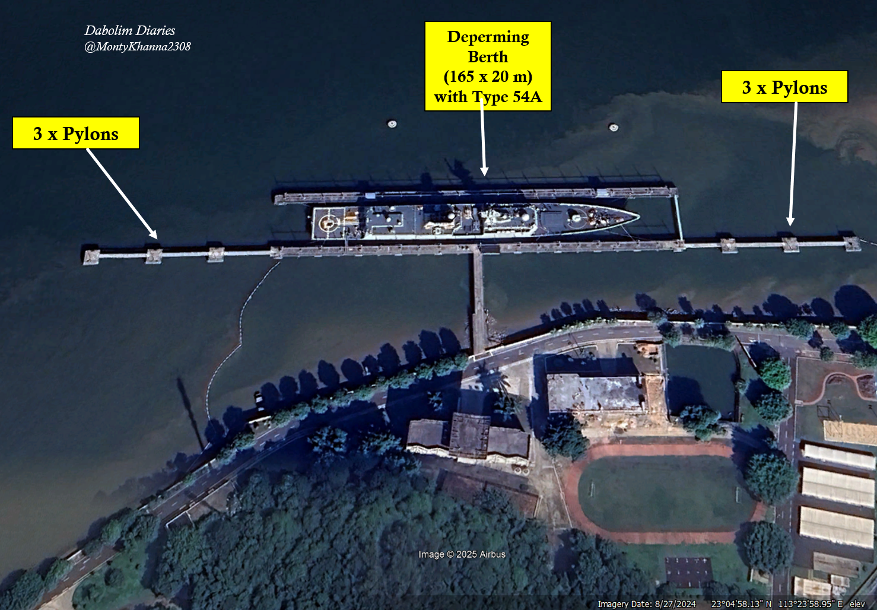 Fig 11: Deperming Range at Huangpu with Type 54A Frigate
Assessment. The fact that the PLA Navy has three functioning deperming ranges, with a fourth probably under construction, which between them, will be capable of accommodating all types of vessels in commission speaks of the importance that the force assigns to the threat from mines. Given the increasing trend of nations in the vicinity to focus on the development and acquisition of asymmetric capabilities to counter the PLANs growing capabilities, this threat is likely to get exacerbated with the passage of time. Reducing the magnetic signature of combat vessels, particularly those likely to be used for expeditionary operations, is also essential for increasing the credibility of the military option in the event of a Taiwan contingency. Chinese investment in this facet of warfare is therefore likely to persist in the foreseeable future.


Leave a Reply
Want to join the discussion?Feel free to contribute!