
Rear Admiral Monty Khanna (Retd) – ‘Dabolim Diaries’ Issue No 19 dated 19 Mar 2026
China has over the years created four large Institutes of Oceanography that function under the Ministry of Natural Resources, often with collaboration with a provincial government/body. Three of these (First, Second, and Third) were established between the late 50s and mid-60s. The Fourth Institute of Oceanography is a much more recent creation having been established in January 2017. These institutes are large organizations focused on different aspects of oceanographic research. They have been authorized to confer post-graduate degrees autonomously and undertake doctoral courses in conjunction with established universities. While an effort has been made to segregate their functioning, significant overlaps persist. They have a large number of laboratories and other research facilities, some of which are located at satellite centers. This brief examines each of these institutes along with the vessels they have under their charge.
FIRST INSTITUTE OF OCEANOGRAPHY
The First Institute of Oceanography (FIO) was established in 1958 as a non-profit marine research institute overseen by Ministry of Natural Resources (MNR) of China.
Vision
- Be the leader of world innovations on ocean science and technology
- Be the provider of scientific solutions for global sustainable development.
Mission
- Implement basic and applied research in oceanography
- Provide technical support for sustainable ocean management.
Location. The FIO is located in Qingdao. Its address is No.6 Xianxialing Road, Laoshan District, Qingdao City, China 266061 (36° 6′ 10″N, 120°27’14.8″E). A picture of the main campus as well as a satellite image of the same are shown in Fig 1 and Fig 2 respectively.
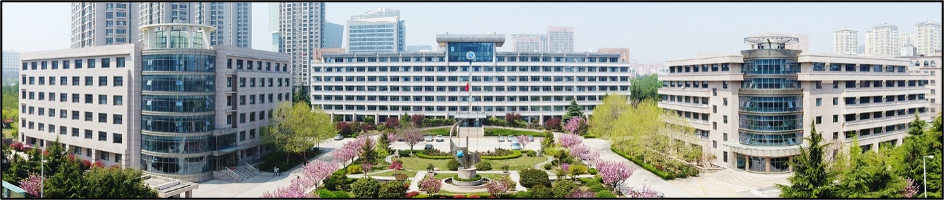 Fig 1: Qingdao Campus of the First Institute of Oceanography
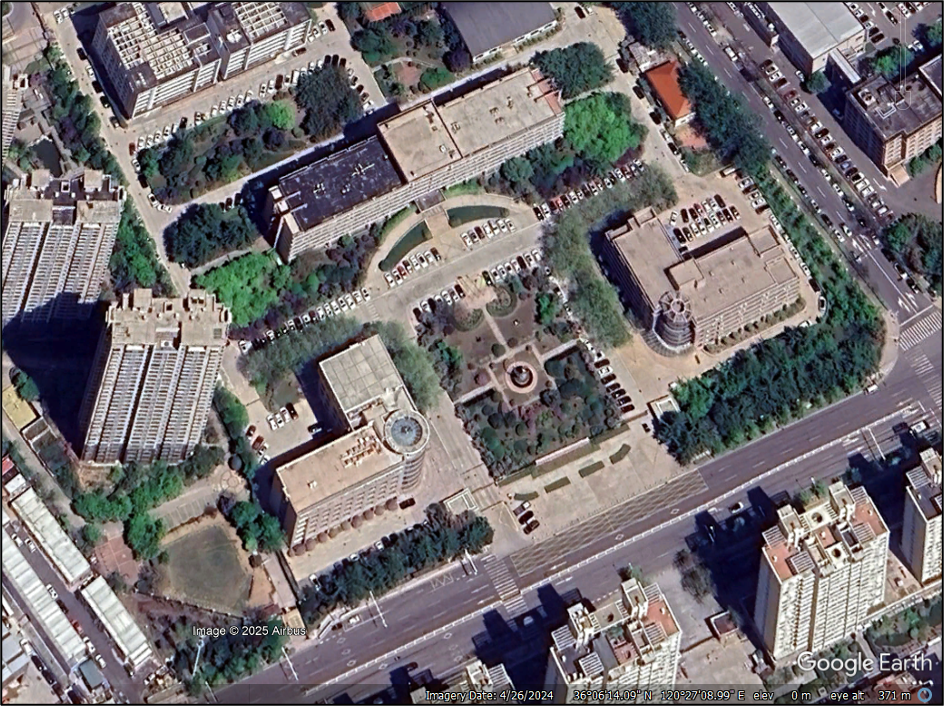 Fig 2: Satellite Image of FIO Qingdao Campus
Symbol. The symbol of the FIO is shown in Fig 3.
 Fig 3: Symbol of FIO
Research Areas. FIO’s current key research areas range from coastal to open oceans, and from tropics to polar regions. Scientists in FIO conduct research in marine science and numerical modeling, marine environmental geology, marine hazards forecasting, air-sea interaction and climate change, protection of marine eco-environment, and protection and sustainable use of islands and coastal zones. It provides science-based support for ocean management both domestically and abroad.
Staff. FIO has more than 520 permanent staffs of which 470 are scientists and researchers, with the remaining serving in administrative capacities. In addition, more than 300 temporary staff and post-doctoral researchers are sub-contractors, who also provide valuable contributions to research and service activities.
Satellite Campuses. It has a satellite campus at Aoshan.
International Platforms. The FIO operates several international centers. These are: –
- China-Korea Joint Ocean Research Center in FIO, Qingdao
- China-Indonesia Center for Ocean and Climate in Jakarta
- China-Thailand Joint Laboratory for Climate and Marine Ecosystem in Phuket
- FIO- POI (V.I.Il’ichev Pacific Oceanological Institute of the Russian Academy of Sciences (RAS) Joint Research Center of Ocean and Climate in Vladivostok
- FIO-UM (University of Malaysia) Joint Center of Marine Science and Technology in Bachok, Malaysia
- UNESCO/IOC (Indian Ocean Commission) Regional Training Research Center on Ocean Dynamics and Climate in FIO, Qingdao
- China-PEMSEA (Partnerships in Environmental Management for the Seas of East Asia) Sustainable Coastal Management Cooperation Center, FIO, Qingdao
Vessels Operated. The FIO operates two vessels, details of which are given below: –
- Xiang Yang Hong 01. This is an advanced integrated scientific research vessel designed to undertake multi-disciplinary coordinated research. She has a robust mobile marine laboratory and is also utilized as a test platform for marine scientific research and development. She has the ability to undertake three-dimensional comprehensive marine environment and resource survey of atmosphere, sea surface, water, seabed and deep-sea extreme environment. A picture of this vessel is shown in Fig 4.
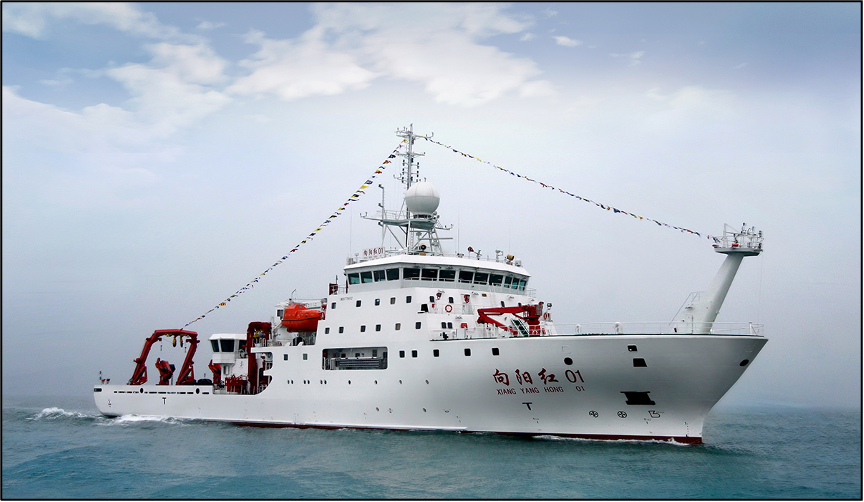
Fig 4: Xiang Yang Hong 01
- Xiang Yang Hong 18. This is dynamic positioning outfitted, electrically propelled research vessel equipped with laboratories and survey facilities to undertake oceanographic surveys on physical oceanography, atmospheric sciences, marine geology, physical geography, marine organism, ecology, remote sensing, remote measuring, coastal zone and oceanographic engineering. A picture of this vessel is shown in Fig 5.
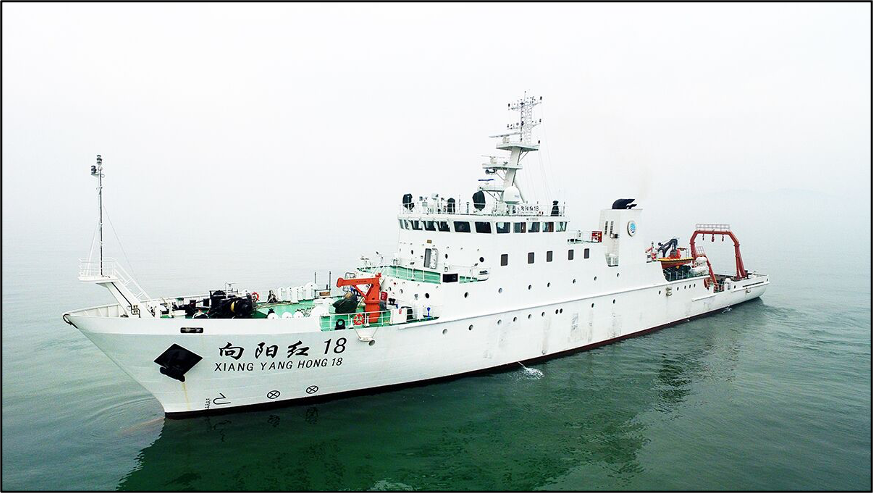 Fig 5: Xiang Yang Hong 18
SECOND INSTITUTE OF OCEANOGRAPHY
The Second Institute of Oceanography (SIO) was established in 1966 as a non-profit marine research institute overseen by Ministry of Natural Resources (MNR) of China.
Mission. To augment academic innovation, enhance scientific research, and build itself into a scientific and technological think tank that can meet the demands of China and become a growth cradle for leading talents in the field of marine science so as to make new contributions for the development of marine undertaking.
Location. The SIO is located in the city of Hangzhou. Its address is No. 36 Baochubei Road, Hangzhou, Zhejiang Province, China. A picture of the main campus is shown in Fig 6.
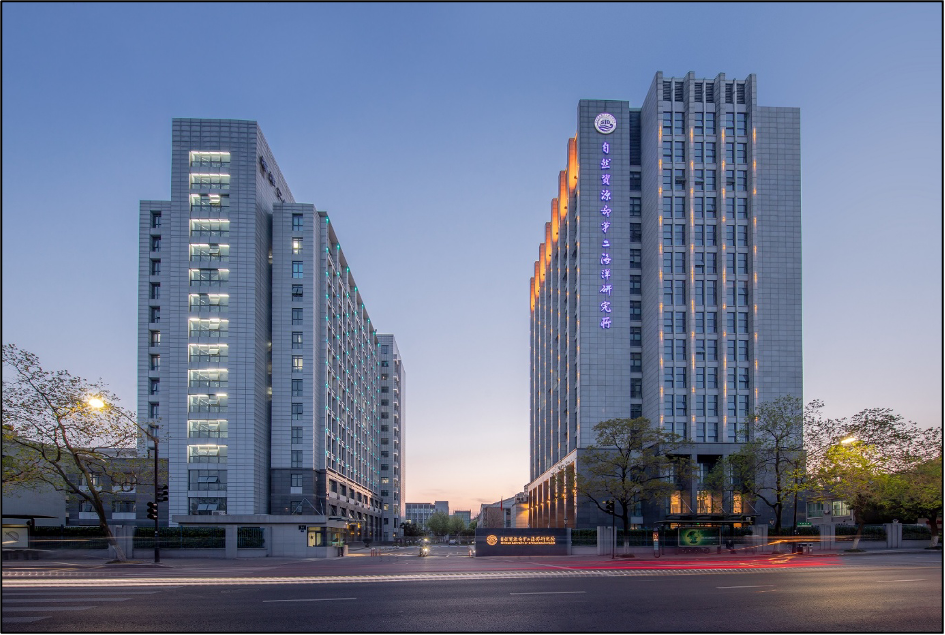
Fig 6: Hangzhou Campus of the Second Institute of Oceanography
Symbol. The symbol of the FIO is shown in Fig 7.
Fig 7: Symbol of SIO
Key Laboratories. The SIO has many innovation platforms for science and technology funded by MNR, a Marine Academy of Zhejiang Province co-built with Zhejiang Province, the School of Oceanography, Shanghai Jiao Tong University and Institute for Polar and Deep Ocean Technology co-built with Shanghai Jiao Tong University. It also has two key laboratories, these being
- Laboratory of Satellite Ocean Environment Dynamics
- Laboratory of Submarine Geoscience
International Platforms. The SIO has created several international platforms over the years. Details of these are given in the subsequent paragraphs
- BRICS International Research Center for Deep-Sea Resources. This was launched on 24 April 2025. The Center focuses on deep-sea minerals, oil and gas, cold seeps, and environmental governance. It consolidates the scientific strengths of BRICS countries and provides strategic advice and solutions to major sustainable development issues. It does so through cooperative research, joint expeditions, platform co-construction, technology transfer, and capacity building. The Center thus aims to enhance the influence of BRICS countries in global ocean governance.
- China-Indian Ocean Region Maritime Cooperation and Training Center. It was inaugurated in December 2024. It is a regional cooperation and training platform established under the guidance of the MNR and the China International Development Cooperation Agency (CIDCA). The Center works with other marine agencies of the MNR to collaborate with countries in the Indian Ocean region in areas such as marine observation and forecasting, marine spatial planning, marine disaster prevention and mitigation, marine ecological protection and restoration, and sustainable blue economy development. It builds on previously established several international cooperation platforms, including the China-Pakistan Joint Research Center, the China-Zanzibar Joint Research Center, the China-Madagascar Continental Shelf Joint Laboratory, and the China-Africa Maritime Science and Blue Economy Cooperation Center.
- China-Madagascar Joint Laboratory on Continental Shelf Research. It was jointly established by the SIO and the National Office of Mines and Strategic Industries of Madagascar on 04 June 2024. It focuses on research related to the tectonic evolution of the Madagascar continental margin, the effects of continental shelf delimitation, joint processing of China-Madagascar cooperative expedition data, as well as international training and exchanges.
- China-Africa Marine Science and Blue Economy Cooperation Center. It was inaugurated in July 2023. It focuses on deepening marine scientific cooperation and technological innovation and advancing sustainable blue economy development across Africa.
Staff. The SIO has a staff of more than 400 professional technicians. It is authorized to confer Master Degrees of Science. It also employs doctoral students in collaboration with leading universities and research institutes in China and other nations.
Satellite Facilities. The SIO has two satellite facilities. Details are as mentioned below: –
- Lin’an. It undertakes operational oceanography research in the Indian Ocean and provides operational support for the Marine Biological Resources Platform, the Island and Sea Area Management Platform, and the Zhejiang Institute of Marine Science. A satellite picture of the campus is shown in Fig 8.
Fig 8: Satellite Campus of SIO at Lin’an
- It was jointly established by the SIO with the Zhoushan Municipal Government. It undertakes advanced research projects integrating deep-sea scientific research, technology R&D, and equipment manufacturing. A satellite picture of the campus is shown in Fig 9.
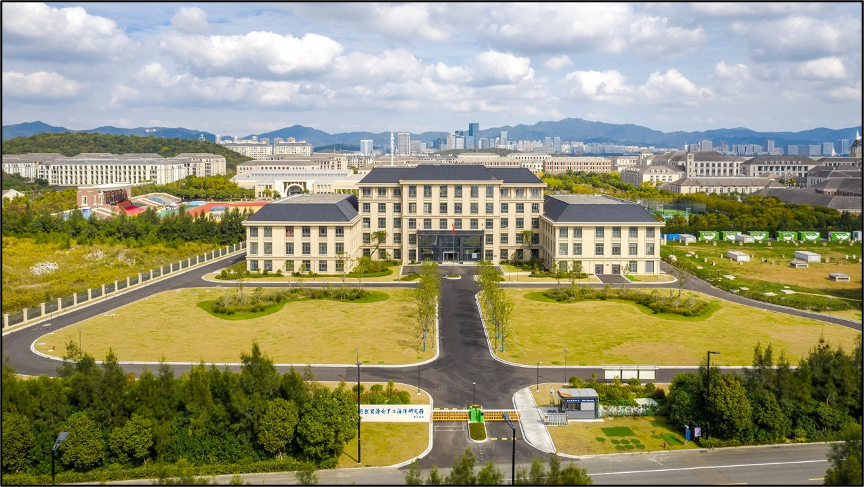
Fig 9: Satellite Campus of SIO at Zhoushan
Vessel. The SIO operates the Xian Yang Hong 10, a 4,500-ton marine scientific research vessel scientific research ship that was jointly built by the SIO and the Zhejiang Taihe Shipping Co., Ltd. She is well equipped to undertake oceanographic surveys and is fitted with steerable propellors and bow thrusters. A picture of the vessel is shown in Fig 10.
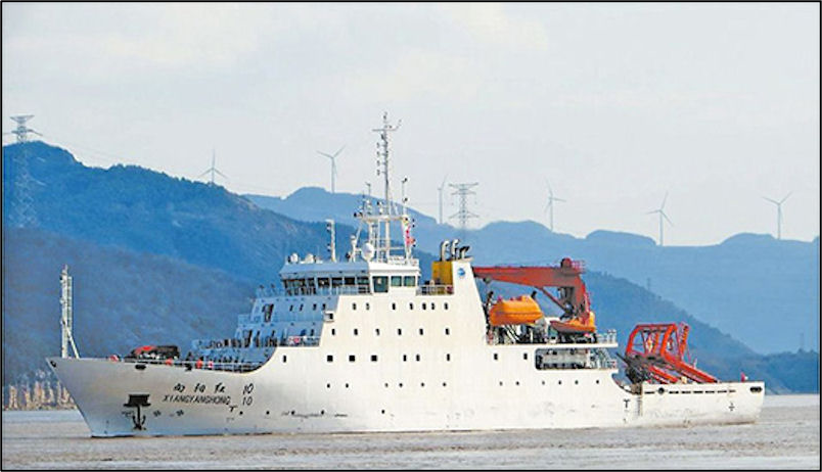
Fig 10: Xian Yang Hong 10
THIRD INSTITUTE OF OCEANOGRAPHY
The Third Institute of Oceanography, Ministry of Natural Resources (TIO), was founded in 1959. It is a comprehensive nonprofit research institute for oceanography that aims to provide technical support for marine management, public service, and marine economy development by engaging in basic marine research, applied research, and high-tech research.
Location. The TIO is located in the city of Xiamen. Its address is 178#, Daxue Road, Siming District, Xiamen, Fujian, China, 361005 (24°26.15’N, 118° 5.35’E). A picture of the campus is shown in Fig 11.
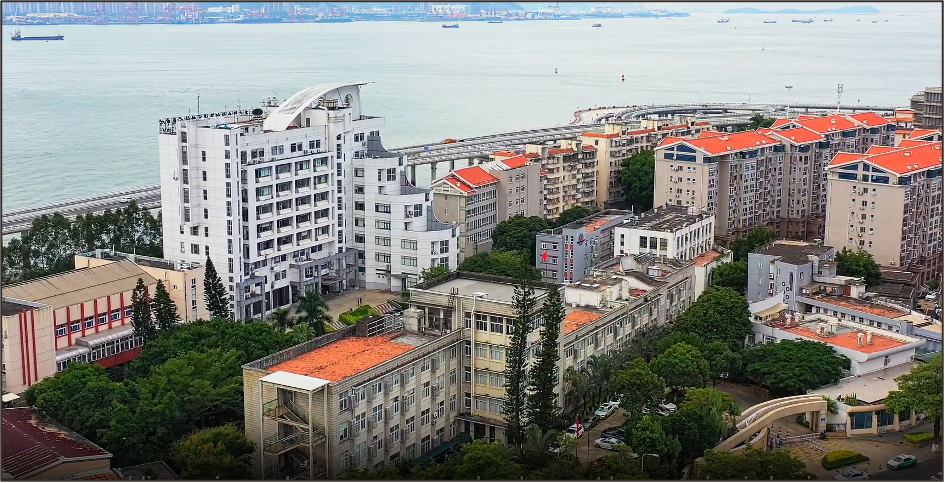 Fig 11: Xiamen Campus of the Third Institute of Oceanography
Symbol. The symbol of the TIO is as shown in Fig 12.
Fig 12: Symbol of TIO
International Platforms. The SIO has created international platforms as given below.
- APEC Marine Sustainable Development Center (AMSDC). It was inaugurated on 01 November 2011 and is located in Xiamen. It aims to promote the development and cooperation of blue economy in APEC region, strengthen marine environmental protection and ecosystem-based marine management. A picture of the Center is shown in Fig 13.
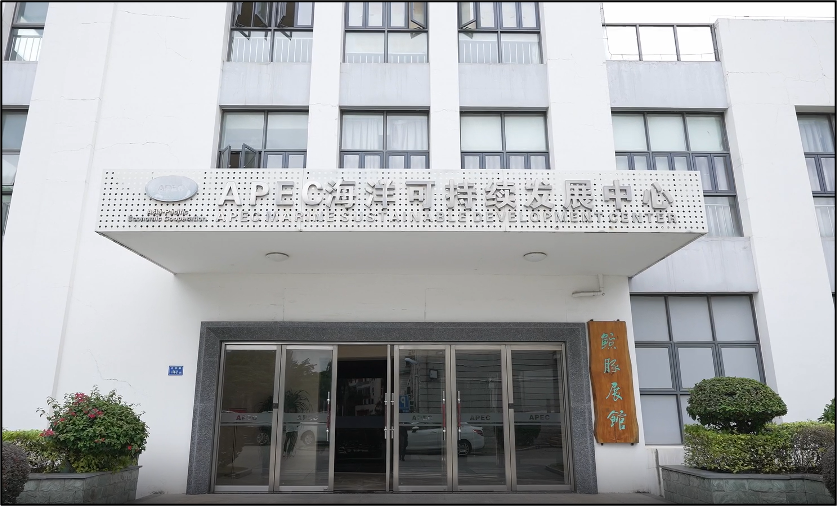 Fig 13: APEC Marine Sustainable Development Center
- Sino-French Laboratory of Deep-Sea Microbiology-Microbsea. It was established on 28 November 2018 in collaboration with the Institut Français de Recherche pour l’exploitation de la Mer (IFREMER) and University of Brest, France. Its function is to gain insights into the diversity and biology of microorganisms at deep-sea hydrothermal vents.
- IAEA Collaboration Center for Marine Environment Isotope Analysis. It was established in December in collaboration with the International Atomic Energy Agency IAEA). It focuses on the development of stable radio isotope technology and the establishment of new industry standards in this field.
Staff. The TIO has over 400 researchers. It is authorized to confer master’s degrees in the primary discipline of oceanography and the secondary disciplines of microbiology and environmental science. It also conducts joint doctoral programs in collaboration with Tsinghua University, University of Science and Technology of China and some other universities and institutions.
Satellite Campuses. The TIO has two satellite facilities, both of which are located close to Xiamen. Ine is at Xiang’an and the other at Gulei. Pictures of the two campuses are shown in Fig 14.
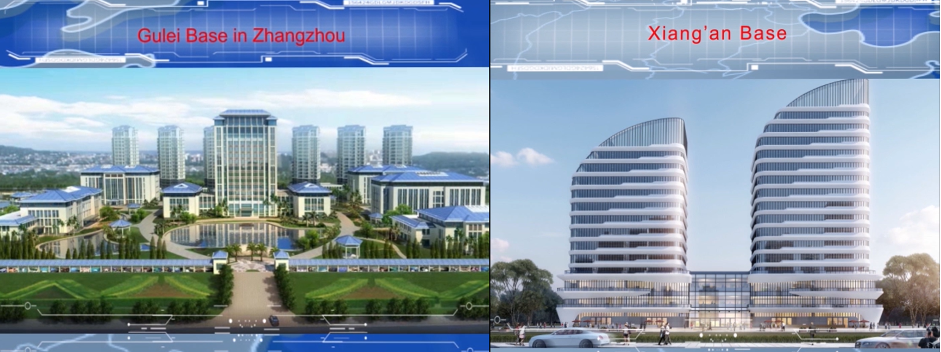 Fig 14: Satellite Campuses of TIO at Gulei and Xiang’an
Vessels. The TIO operates two vessels through its Vessel Management Center (VMC), which was founded in December 2012.
- Xiang Yang Hong 03. It was delivered on 26 March 2016. It is a comprehensive marine research vessel that displaces 4,500-tons and has an endurance of 15,000 nautical miles, with a self-supporting capacity of 80 days with 80 people. It is equipped with DP-1 dynamic positioning and has B3 ice classification. It has an electric drive with an Azipod and two bow thrusters. It has an A- frame at the stern that is often used for operating unmanned tethered submersibles of the 6,000-meter class. It is able to observe, detect and accomplish the fidelity sampling and field analysis of such comprehensive marine environments as high-precision and long-period dynamic environment, geological environment, ecological environment, and atmospheric environment. Since being inducted, it has carried out more than 20 major scientific research missions covering a distance exceeding 200,000 nautical miles. A picture of the vessel is shown in Fig 15.
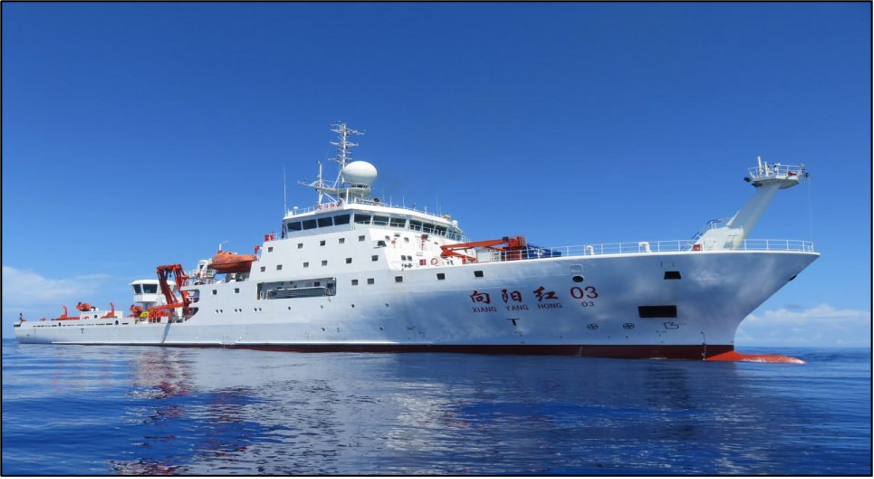 Fig 15: Xiang Yang Hong 03
- China Marine Surveillance 203. It is used by the TIO for coastal research work. A picture of the vessel is shown in Fig 16.
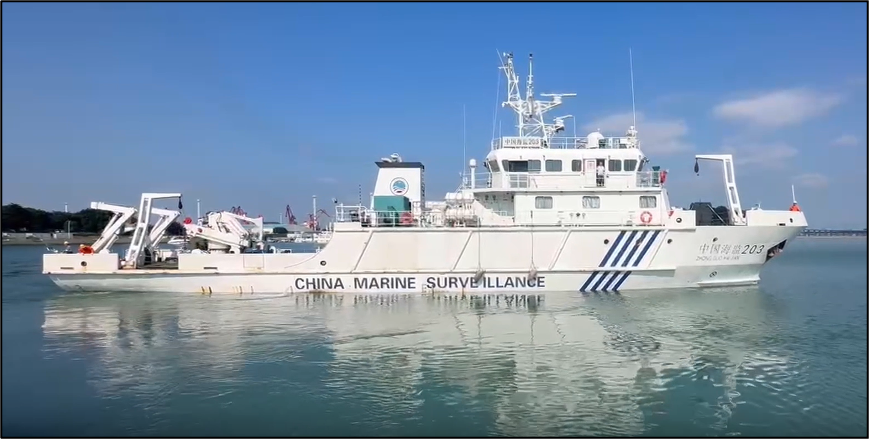 Fig 16: China Marine Surveillance 203
FOURTH INSTITUTE OF OCEANOGRAPHY
The Fourth Institute of Oceanography (CIO) was inaugurated in September 2018 and officially began operations in January 2020. It is jointly managed by the MNR and the Government of Guangxi Zhuang Autonomous Region. It is also known as the ‘China-ASEAN Joint Research and Development Center for Marine Science and Technology’.
Location. It is located in Beihei, Guangxi. Its address is Building 1, No. 1 Haibin Road, Beihai Marine Industry Science and Technology Park, No. A201 Haijing Avenue, Yinhai District, Beihai City, Guangxi Zhuang Autonomous Region. A picture of the main campus is shown in Fig 17.
 Fig 17: Main Campus of CIO at Beihei
Symbol. The symbol of the TIO is as shown in Fig 18..
 Fig 18: Symbol of CIO
Functions. It primary tasks are as follows: –
- To play a role in regional marine governance, conduct research on relevant major issues, and provide support for regional marine governance and cooperation;
- To play a role in solidly promoting the building of the China-ASEAN Blue Economy Partnership, strengthening the ties of the blue economy partnership through cooperation in areas such as technological innovation, demonstration and application of results, capacity building, and ecological protection; and
- To play a role in serving the development of local marine economy, taking into account the relevant needs of local areas in opening up to the outside world, helping to build a new pillar of the marine economy, and constructing the Western Land-Sea New Corridor and the Beibu Gulf International Gateway Port in Guangxi at a high level.
Vessels. The CIO is not known to operate any vessels.
Assessment. China’s investment in the field of Ocean Research has grown exponentially in the last three decades. A large part of this effort is undertaken by the First, Second, Third and Fourth Institutes of Oceanography. More importantly, China has leveraged this capability to enhance relations with several littoral countries, creating dedicated centers under one or more institutions to do so. Given the vast expanse of the Indian Ocean, the increasing pressure that nations will face to economically tap ocean resources, as well as the shortfall of capacities to undertake surveys and research to do so; China’s footprint in this field will continue to grow. Given the security implications of data harnessed, the growth of the four oceanographic institutions needs to be closely monitored.


Leave a Reply
Want to join the discussion?Feel free to contribute!