
Rear Admiral Monty Khanna (Retd) – ‘Dabolim Diaries’ Issue No 28 dated 30 Aug 2026
The PLA Navy continues to invest heavily in its expeditionary capabilities. In the brief titled ‘The PLA Navy Doubles Down on its Large Amphib Fleet’ that was released on 28 Jul 2026, we focused on the increasing number of large amphibious vessels. This brief focuses on the bases that these vessels will operate from. As expeditionary capabilities are spread across several naval facilities, this brief confines itself to those that are built to primarily meet the needs of the large expeditionary vessels, these being of the Type 071, 075 and 076 classes. The matrix that has been used to identify such bases is presence of sufficiently long jetties with large ramps to facilitate easy loading/unloading. It may be noted that while jetties/piers are flexible in their role and could be utilised to berth different types of vessels, this report dwells more on their primary purpose of expeditionary operations.
The first base of the PLA Navy with purpose-built facilities for large expeditionary vessels was Zhanjiang. Over time, similar facilities have been created or are under construction over numerous bases. These are as listed below and are described in subsequent paragraphs.
- Northern Theatre Navy
- Yuchi, Qingdao (Under Construction)
- Eastern Theatre Navy
- Shanghai
- Southern Theatre Navy
- Zhanjiang
- Yulin, Sanya (Under Construction)
- Overseas Bases
- Ream, Cambodia
- Djibouti
Northern Theatre Navy (NTN)
- The NTN is in the process of getting its first expeditionary base to support large amphibs. This is coming up within the confines of Yuchi Naval Base through the construction of two large jetties, each with its own ramps (shown as Site B in Fig 1).
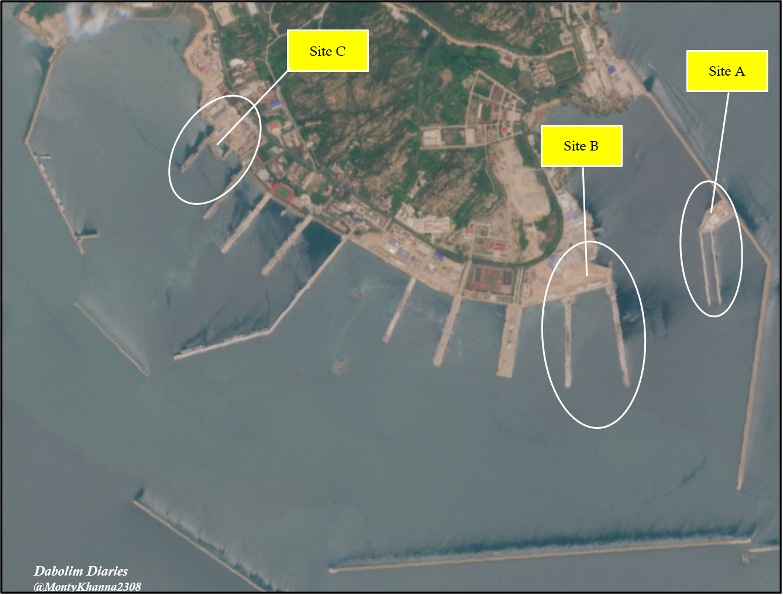 Fig 1: Site B – Two Jetties for Expeditionary Role
Details of the jetties and associated ramps are depicted in Fig 2. It may be noted that each of these three ramps is about 40 m wide, which is 10 m more than the standard 30 m wide ramps that are located in most other bases.
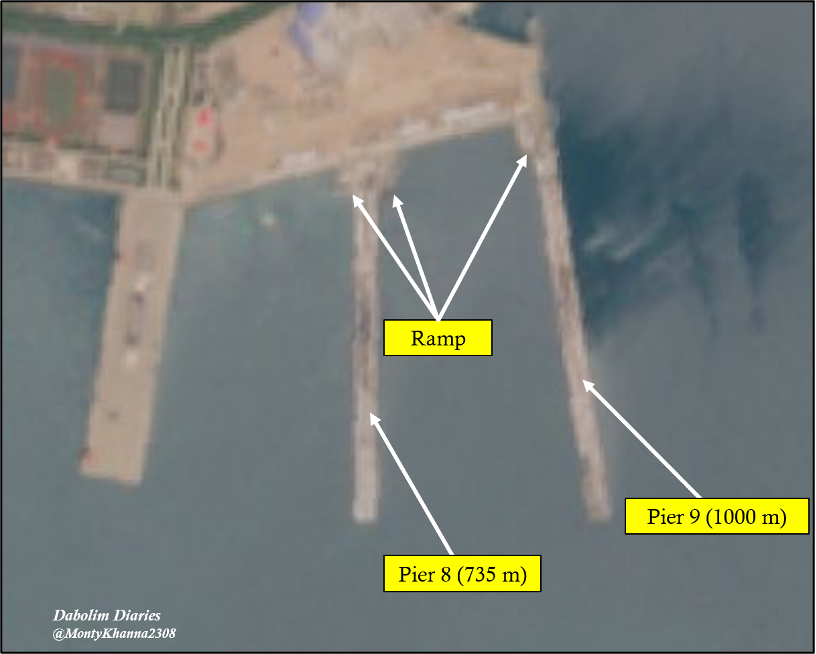 Fig 2: Location of Ramps at Yuchi Naval Base
Eastern Theatre Navy (ETN)
- Like the NTN, the ETN has only one base to support large amphibs. This is located at Shanghai on the Yangtse river in New Pudong District (across JNCX shipyard). The base was constructed between 2020 and 2023. It essentially comprises on one large pier 1800 m long and two smaller support piers, one 435 m long (floating) and the other 500 m (masonry). Details are depicted in Fig 3.
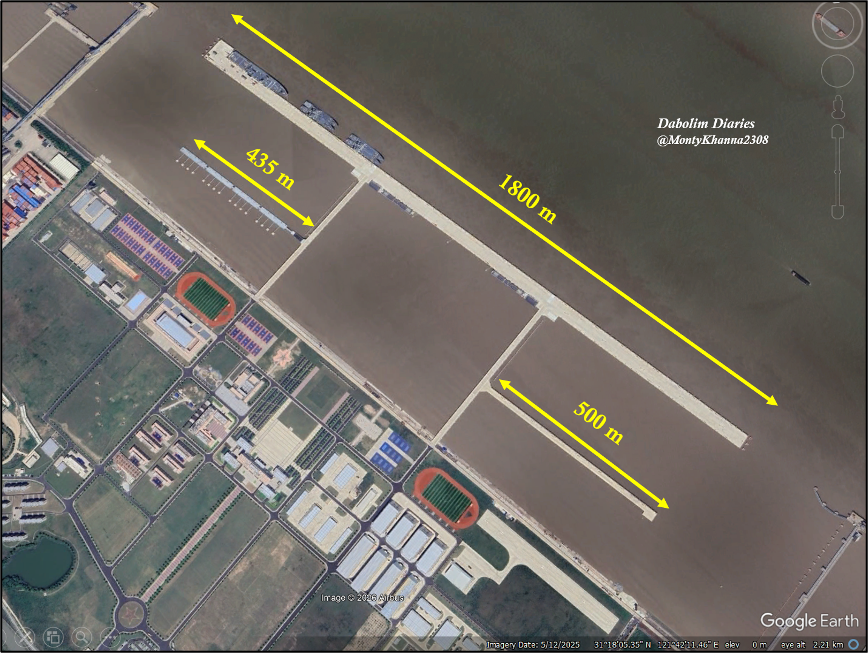 Fig 3: PLA Navy Expeditionary Base at New Pudong District, Shanghai
The floating pier comprises of four pontoons, each of which is 90 m long. Each pontoon is secured in its position with the assistance of struts connected to four dolphins (Fig 4).
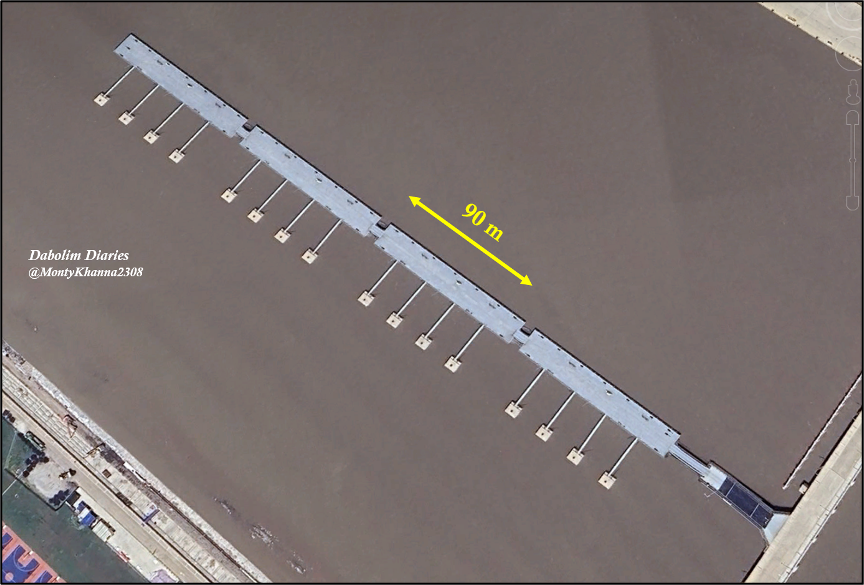 Fig 4: Layout of Floating Pier
For facilitating rapid embarkation and disembarkation, the main pier is fitted with hoistable ramps, each 10 m wide. This design is a departure from earlier facilities with a similar purpose which have fixed ramps (Fig 5).
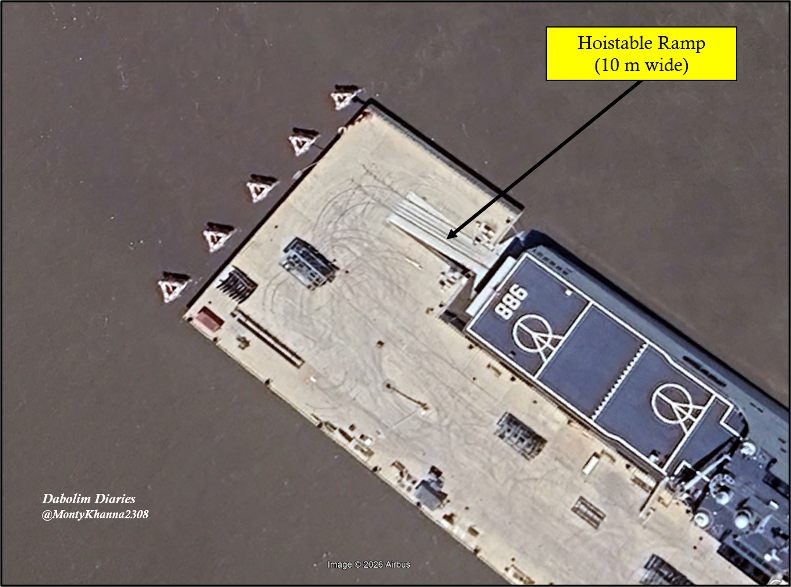 Fig 5: Hoistable Ramp in use to Service a Type 071 Vessel
Five such hoistable ramps are installed on the jetty, one to facilitate stern loading, two for side loading, and two on the inner side for stern loading of smaller vessels, possibly of the Type 072 class (Fig 6).
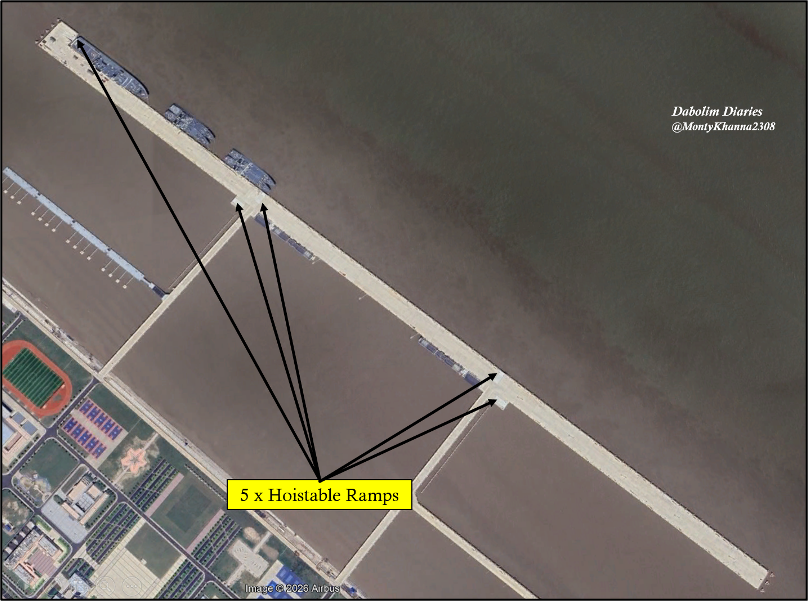 Fig 6: Main Pier at Shanghai with Five Hoistable Ramps
A panoramic view of the main jetty with two Type 075s, two Type 071s and nine smaller LSTs of the 072 family is shown in Fig 7.
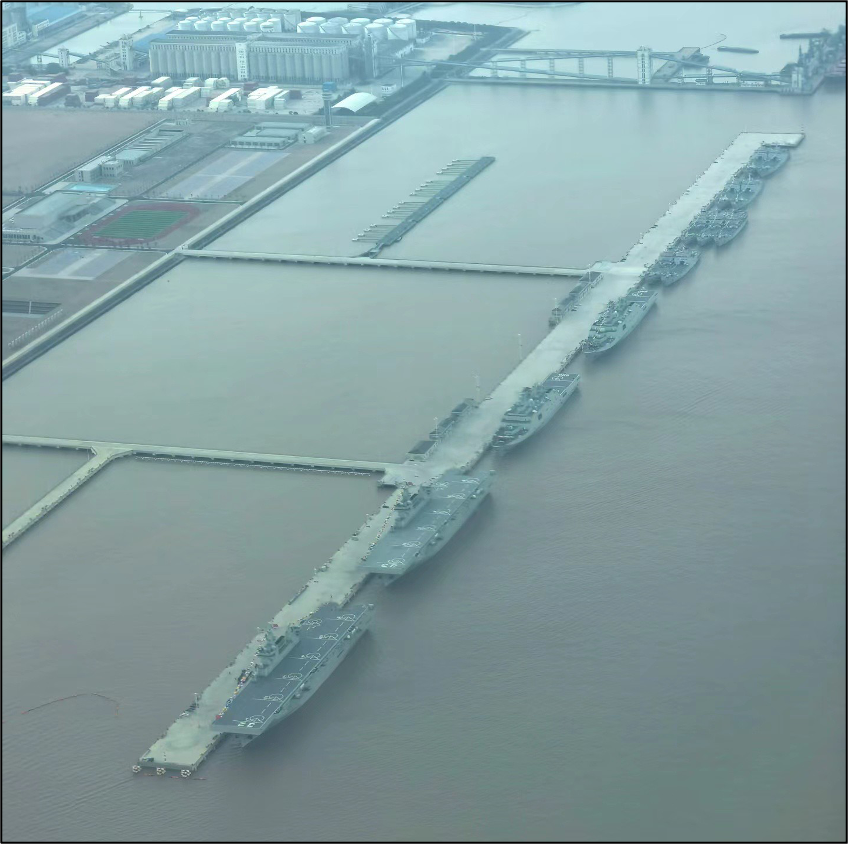 Fig 7: Main Pier at Shanghai with Several Large Expeditionary Vessels
Southern Theatre Navy (STN)
The primary expeditionary base of the STN for large amphibs is Zhanjiang. The PLA Navy is however in the process of building one more similar facility under the STN at Yulin Naval base in Sanya, Hainan. Each of these is described in the succeeding paragraphs.
- This is the oldest base of the PLA Navy that has been equipped to meet the requirements of large expeditionary vessels. The base has two jetties with purpose-built facilities to do so (Fig 8).
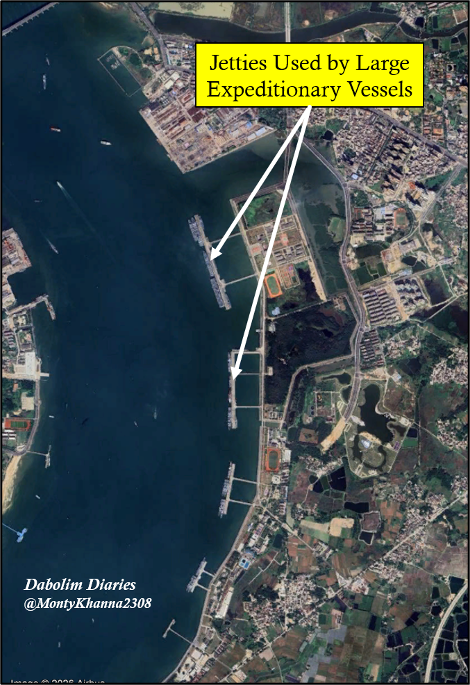 Fig 8: Expeditionary Jetties at Zhanjiang
The first of these is 800 m long and contains three ramps, one to facilitate side loading on larger vessels and two for bow/stern loading on smaller landing ships (Fig 9).
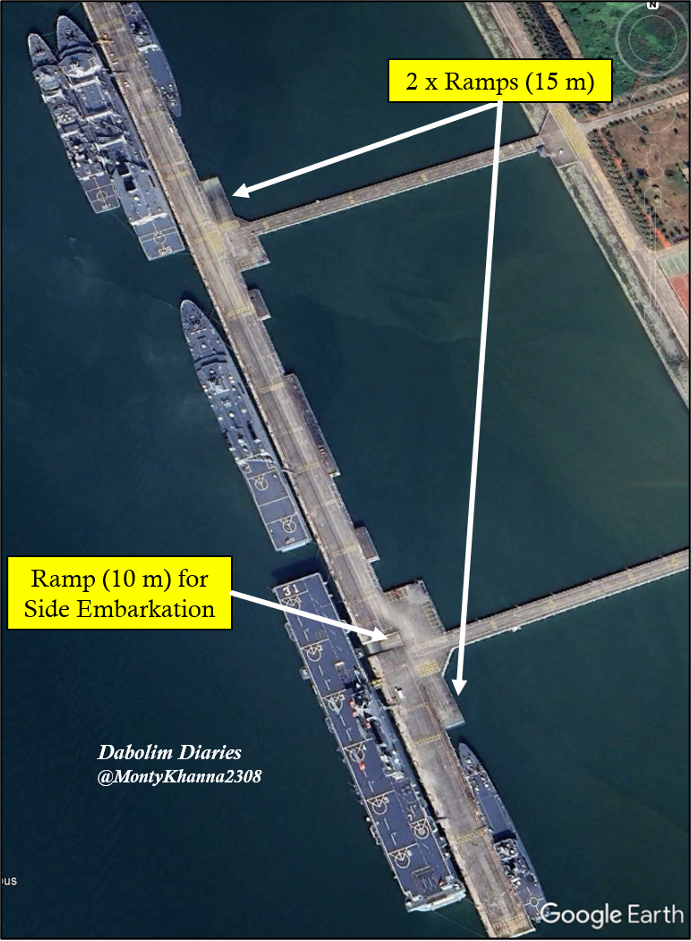 Fig 9: Location of Ramps on 800 m Jetty at Zhanjiang
The second jetty is 6000 m long and incorporates a 30 m wide ramp to facilitate stern loading on larger vessels of the Type 071 class and bigger (Fig 10).
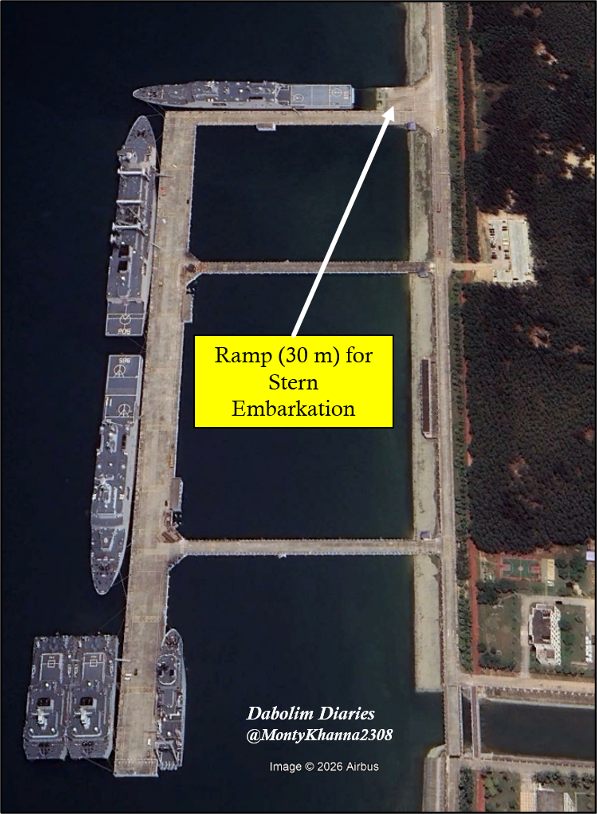 Fig 10: 600 m Jetty with Loading Ramp at Zhanjiang
A photograph showing the embarkation of trucks on a Type 071 LPD at this jetty is shown in Fig 11.
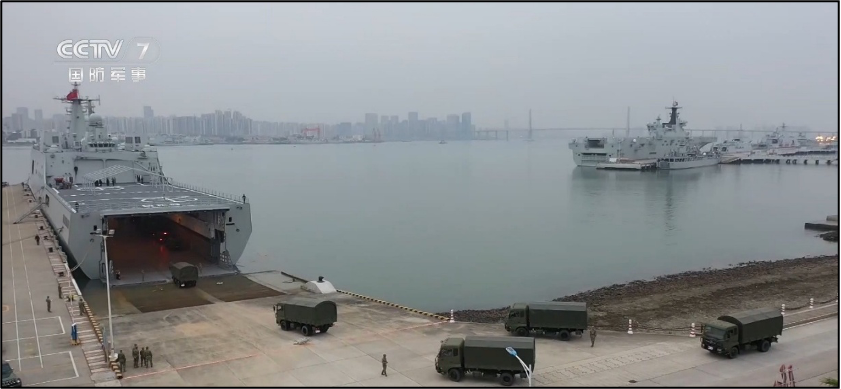 Fig 11: Trucks Embarking a Type 071 at Zhanjiang
- Yulin Naval Base, Sanya. There is a new complex under construction at Yulin Naval Base comprising of five piers, each 660 m long (Fig 12). Three of these piers have ramps under construction at their roots (the rightmost two piers on both sides of the root and the leftmost on the outer side). This leads one to the assumption that this facility is primarily going to be used for the berthing of expeditionary vessels.
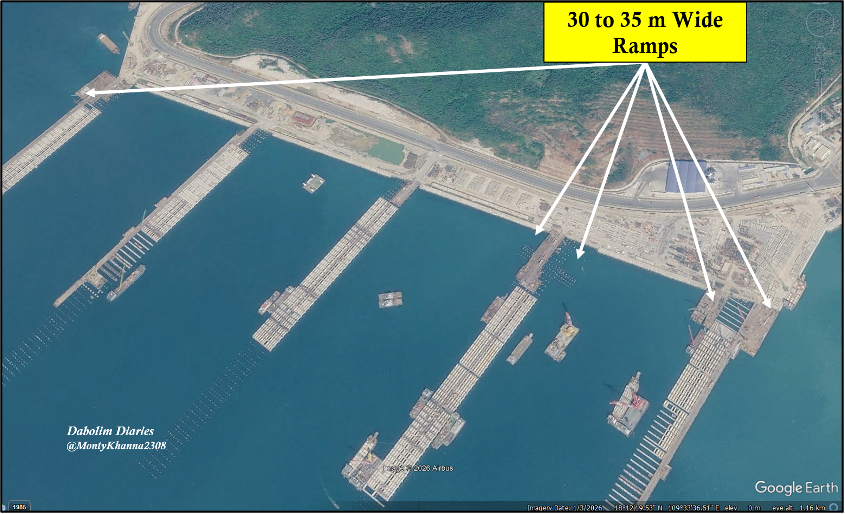 Fig 12: Construction Activity at Yulin Naval Base
Overseas Facilities
In addition to the above, China has built two large bases overseas, each of which fields a long jetty equipped with a ramp. Details of these are as follows.
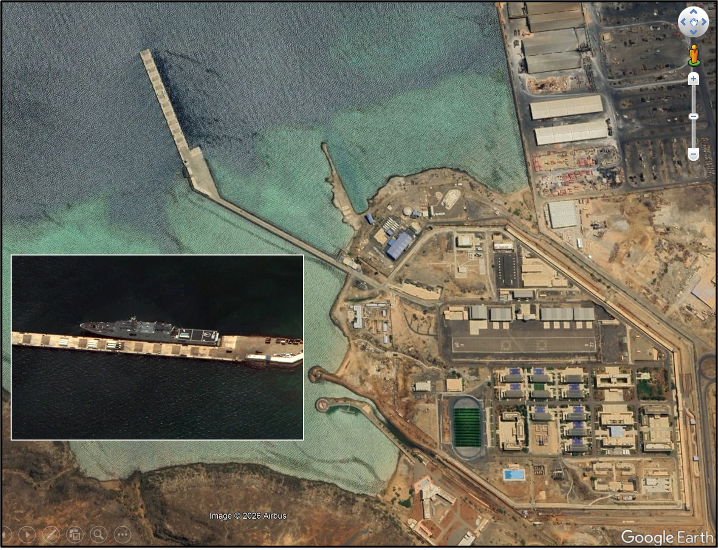
- A key feature of the PLA base at Djibouti is a 500 m long causeway that leads to a 450 m long jetty. The eastern face of the jetty supports a 30 m wide ramp that has been frequently used for embarkation/disembarkation of stores, equipment and vehicles by PLA Navy Type 071 vessels (Fig 13).
Fig 13: PLA Navy Base at Djibouti (Inset Shows Type 071 Using Ramp)
- Ream, Cambodia. A similar base with expeditionary vessel support facilities has been built at Ream naval base in Cambodia. The newly constructed 330 m long jetty also incorporates a 30 m wide ramp that has been used by vessels of the Type 071 class as shown in the photograph below contained in the All-Source Analysis ‘Spotlight Report’ on the subject (Fig 14).
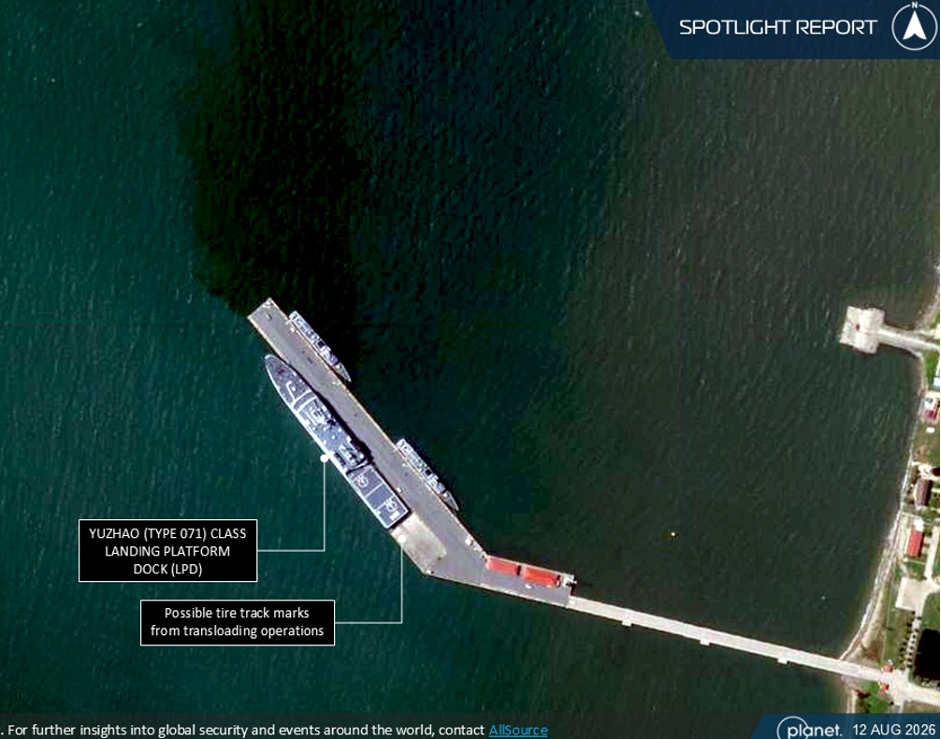 Fig 14: PLA Navy Base at Ream, Cambodia
Assessment
It may thus be seen that as the PLA Navy goes about increasing the number of large expeditionary vessels in its inventory, construction of their berthing facilities and supporting arrangements are preceding their commissioning. Observing and analysing the growth of marine infrastructure at their bases is therefore a good means to assess the future growth of the PLA Navy in this field.
It, however, needs to be noted that sustained distant water operations cannot be addressed by only two overseas bases. This remains a serious lacuna of the PLA Navy that is exacerbated by their lack of robust defence partnerships to support the long-term basing of assets. While utilising their colossal Chinese-flagged commercial fleet for support partly mitigates this lacuna, it is a poor substitute for assured-access basing arrangements underwritten with strong technical and logistic support capabilities. The emergence of new overseas bases capable of supporting expeditionary operations is thus another area that needs to be carefully watched to assess the capabilities and priorities of the future PLA Navy.


Leave a Reply
Want to join the discussion?Feel free to contribute!