
Rear Admiral Monty Khanna (Retd) – ‘Dabolim Diaries’ Issue No 18 dated 10 Mar 2026
China has placed itself as a major player in the arena of seabed mining in ‘the Area’. It has done so systematically, progressively increasing its exploratory and exploitation capabilities and participation in the activities of the International Seabed Authority. With the United States not being a signatory of UNCLOS, it has had a relatively free hand to do so. From an institutional standpoint, most activities concerning seabed mining are handled by the China Ocean Mineral Resources R&D Association (COMRA), which is placed under the Ministry of Natural Resources.
Brief History and Role
COMRA was established on 09 April 1990. It is headquartered in Beijing (1 Fuxingmenwai Avenue, Beijing 100860, P.R. China). It is registered as one of seven pioneer investors for the Preparatory Committee for the International Seabed Authority and the International Tribunal for the Law of the Sea in 1991. It oversees all activities of exploration and exploitation in the seabed, ocean floor, and subsoil beyond the limits of national jurisdiction (the Area), in accordance with the 1982 United Nations Convention on the Law of the Sea (UNCLOS) and the 1994 Agreement relating to the Implementation of Part XI of the United Nations Convention on the Law of the Sea (the Agreement).
Its primary functions are: –
- Safeguard China’s rights and interests in the development of international seabed resources.
- Be the interface between the Peoples Republic of China (PRC) and the International Seabed Authority (ISA).
- Contribute to the development and utilization of international seabed resources through exploration and development activities.
- Promote the formation and development of deep-sea high-tech industry.
- Facilitate the pursuance of international activities that promote the sustainable utilization of international seabed resources.
Symbol. The symbol of COMRA is as shown below. It is displayed on submersibles and ships operated by the agency.
 Fig 1: Symbol of COMRA
Claims for Exploration and Exploitation. The timeline of claims made by COMRA and allocations given by the ISA is as enumerated below: –
- 05 March 1991 – Registered with the International Seabed Authority and the Preparatory Committee of the International Tribunal for the Law of the Sea as a pioneer in international seabed development, and was allocated a 150,000 square kilometre development zone in the international seabed area outside of national jurisdiction.
- 1997 – Obtained ISA approval for a 15-year exploration plan in its polymetallic nodule mining area. Subsequently, in May 2001, COMRA signed an Exploration Contract with the ISA marking its transition from a pioneering investor in international seabed development activities to a contractor for international seabed resource exploration.
- 05 March 1999 – Relinquished 50 per cent of the development zone (1,50,000 square kilometre) and obtained exclusive exploration rights and priority commercial mining rights to mine polymetallic nodule in the retained 75,000 square kilometre mining area.
- 2001 – Obtained 75,000 square kilometre polymetallic nodule contract area in the Northeast Pacific.
- May 2010 – Submitted an application to the International Seabed Authority (ISA) to explore a prospective polymetallic sulphide ore deposit in the South-West Indian Ridge. Approval for 10,000 square kilometre was granted in Jul 2011. Signed a 15-year exploration contract on 18 November 2011. According to the terms of this contract, COMRA will give up 75 per cent of the ore deposit region in 10 years while enjoying possible rights of commercially mining in the remaining 2,500 square kilometre.
- 2014 – Acquired 3,000 square kilometre cobalt-rich crust contract area in the Northeast Pacific.
China is thus the first country in the world to undertake activities in all three undersea resources (polymetallic nodules, polymetallic sulphides and cobalt-rich crust) in three separate mining areas.
Submersibles. COMRA has developed a series of deep-sea survey submersibles to undertake surveys. It has done so with financial assistance being provided by the National Technical Research and Development Project 863 (NTRDP 863). It has also collaborated with other organisations to do so, the salient ones being the Second Institute of Oceanography (SIO) and Quality Assurance from the China Classification Society (CCS) in the case of the Qianlong and the Chian Ship Scientific Research Centre (CSSRC) in the case of the Jiaolong. The symbols of these key collaborative organisations are painted on the sides of the submersibles along with the COMRA.
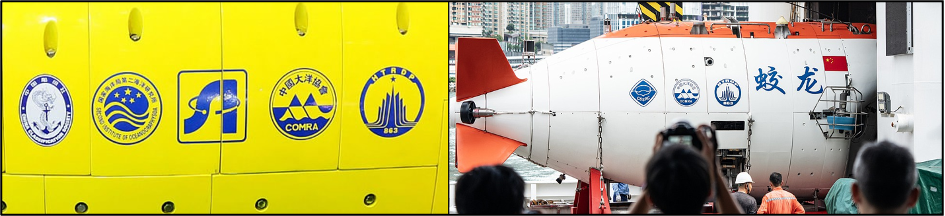 Fig 2: Symbols of Organisation Associated with Developing/Operating Submersibles Under COMRA Painted on the Side of the Submersible
China classifies submersibles developed under this programme under three categories, these being Remotely Operated Vehicles (ROVs), Autonomously Operated Vehicles (AOVs) and Human Operated Vehicles (HOVs), colloquially referred to as the three dragons. Details of each of these are below.
Remotely Operated Vehicles (ROVs) – Hailong Series
This series comprise of the Hailong III and Hailong 11000; details of which are given below
- Hailong III. It is a domestically made ROV funded by COMRA and developed by Professor Ge Tong with his team from Shanghai Jiaotong University. It is designed to operate at depths up to 6,000 metres. It is designed to carry out observations and collect samples from the sea bed. It is operated from the mother ship Dayang Yi Hao.
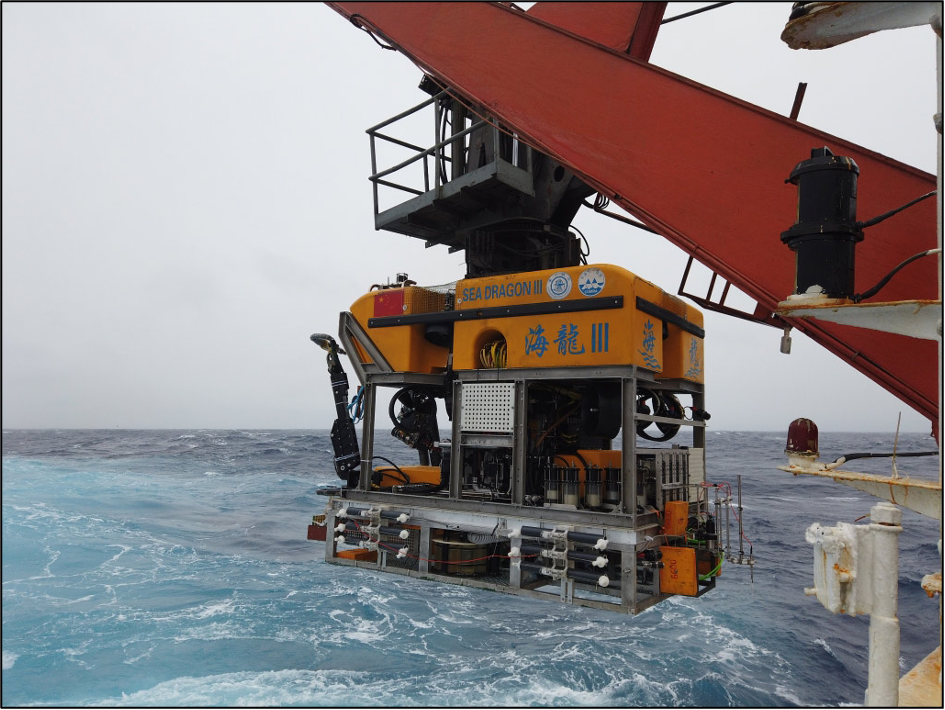 Fig 3: Hailong III
- Hailong 11000. This is a 10,000-meter deep-sea unmanned remote-controlled submersible developed by the Shanghai Jiaotong University. She underwent her first trials in 2018. She too is operated from the mother ship Dayang Yi Hao.
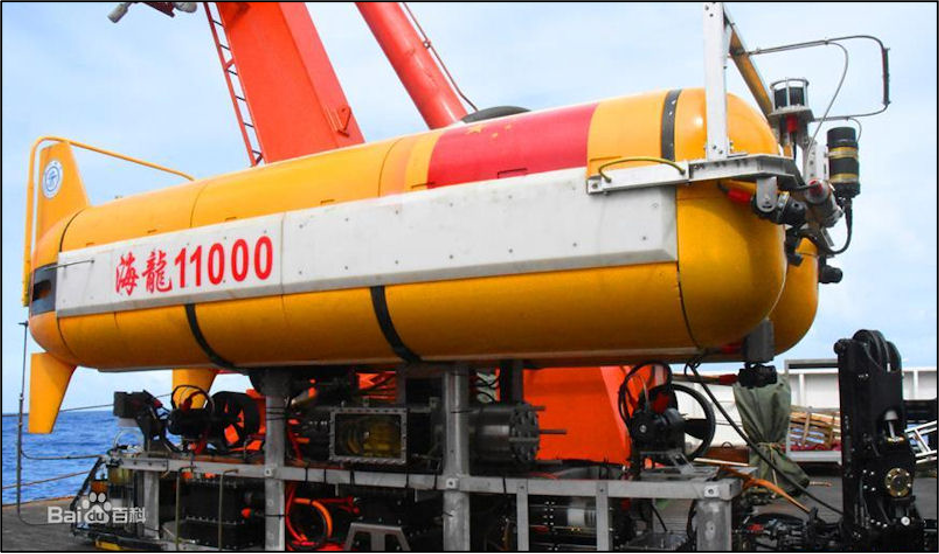
Fig 4: Hailong 11000
Autonomously Operated Vehicles (AOV) – Qianlong
Qianlong No 1. This is a domestically-developed 6000-meter unmanned submersible authorised by COMRA. The design effort was led by the Shenyang Automation Institute with assistance from the Institute of Acoustics of the Chinese Academy of Sciences and Harbin Engineering University. It was one of the key projects under the 12th Five-Year Plan of COMRA. Work on building the submersible started in 2011 and was completed by 2012 with trials commencing in 2013. It is 4.6 m long, 0.8 m in diameter and weighs 1500 kg in air. It has a speed of 2 knots, endurance of more than 24 h and a maximum working depth is 6000 m. Its main functions are to conduct detailed surveys on seabed topography, geological structure, seabed flow field and marine environmental parameters. Marine scientific research and resource exploration and development provide the necessary scientific data. It is operated from the mother ship It Dayang Yi Hao.
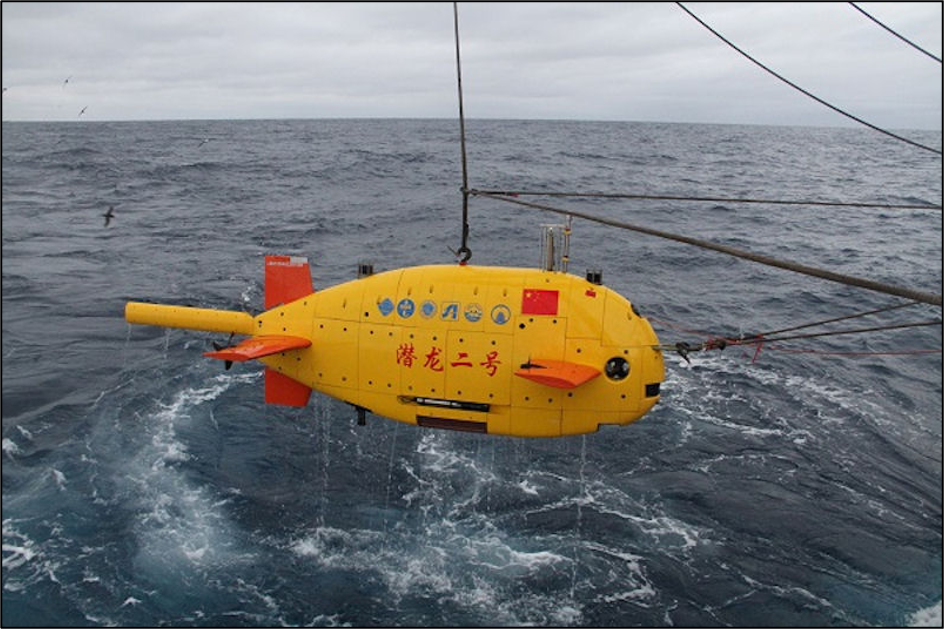
Fig 5: Qianlong No 1
Human Operated Vehicles (HOV) – Jiaolong
The Jiaolong is the first Chinese manned submersible in the 7,000 meter class. It was designed and fabricated by the China Ship Scientific Research Centre (CSSRC) in cooperation with the Shenyang Automation Research Institute, the Beijing Acoustic Research Institute of the Chinese Academy of Sciences (CAS) and the China Ship Development and Design Centre amongst others. The submersible did its first dive in 2009. This was followed by an extensive trial phase during which dives of increasing depth were conducted, finally culminating in a dive to a depth of 7,015 meters, just above its maximum designed operating depth of 7,000 meters on June 23, 2012 in the Mariana Trench. The event received national acclaim as exemplified by a meeting between Xi Jinping, Li Keqiang and other party and state leaders with representatives of advanced manned deep-sea diving units at Great Hall of the People in May 2013. It weighs 22 tons, has a length of 8 meters, beam of 3 meters and is manned by a crew of 3 personnel. She competed her 300th dive on 18 August 2024.
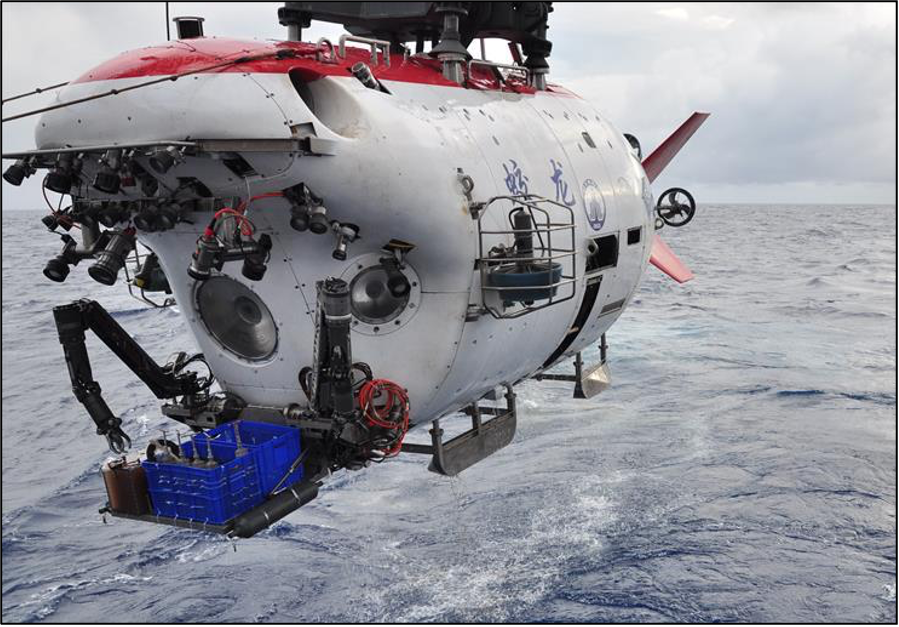 Fig 6: Jiaolong
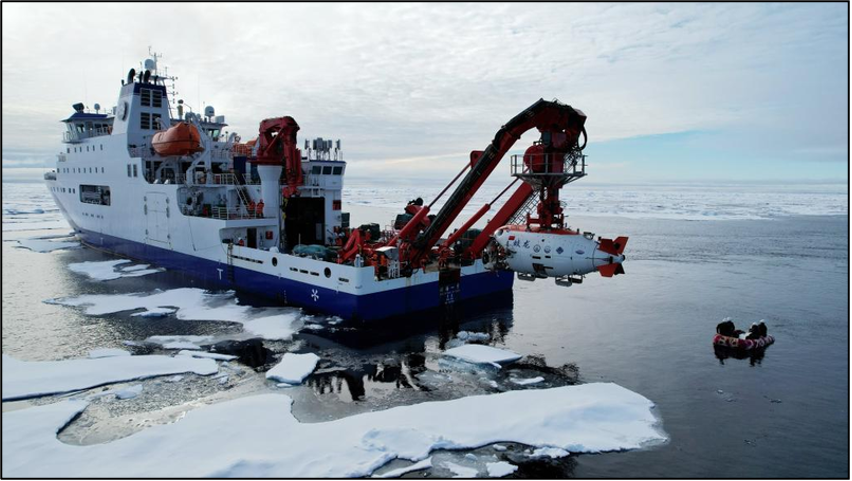
The Jiaolong received a major upgrade in 2025. This included replacement of the original zinc-silver battery pack with a high-energy-density flexible lithium one, in addition to upgrades of thrusters, hydraulic system, video transmission system, and fault diagnosis and decision support system. These have significantly improved the overall performance and operational capabilities of the submersible. Post upgradation and trials, she was taken to the Arctic where China conducted its first manned submersible dives in October 2025 as part of the 15th Arctic Expedition. As per the National Deep Sea Centre in Qingdao, the biological and geological samples collected during the Arctic dives were of notably higher quality than those obtained through traditional trawling methods.
Fig 7: Jiaolong Conducting Dives from the Shen Hai Yi Hao in the Arctic
The Jiaolong’s mother ship is the Shen Hai Yi Hao, which is operated by the National Deep Sea Center (NDSC), Qingdao. Details of this organization were covered in Dabolim Diaries Brief No 9 (China’s Deep Sea Manned Submersibles – Part I) dated 04 March 2025.
Ships Operated by COMRA and NDSC
COMRA operates only one vessel itself, with another being operated by the NDSC in coordination. Details of these vessels are as listed below.
Dayang Yi Hao (Ocean No 1). The vessel is regarded as China’s first modern comprehensive oceanographic research vessel. She has been in service for over 40 years. She has participated in close to 30 oceanographic expeditions during which she has done multiple survey tasks and undertaken trials for domestically produced marine survey equipment. She underwent a major refit cum modernisation in 2024-25, which included upgradation of her ROV winch and stern A-frame. In December 2025, she was sighted in the northern Arabian Sea. She is the mothership of the ROVs Hailong III and Hailong 11000.
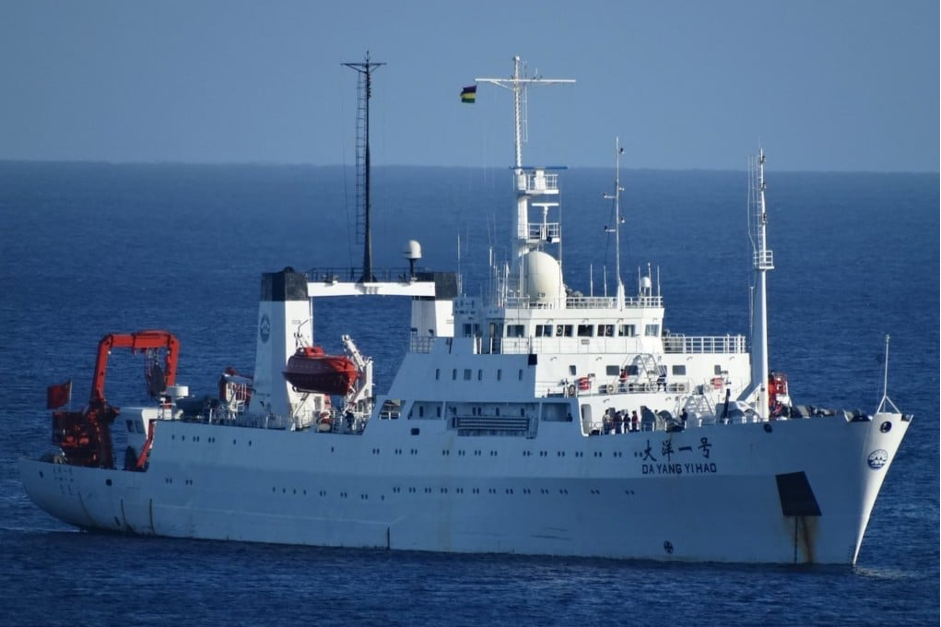 Fig 8: Dayang Yi Hao (Ocean No 1)
Shen Hai Yi Hao (Deep Sea Number 1). This vessel is operated by the National Deep Sea Center, Qingdao, an operative organization linked to COMRA. The vessel was built by the Wuchang Shipbuilding Industrial Group at their yard in Wuhan. Launched on December 8, 2018 she was handed over to NDSC in 2019. She has a length of 90.2 metres, beam of 16.8 metres, and a design draught of 5.5 metres. She has a designed endurance of 60 days. She is fitted with a large A-frame at the stern and has taken over the role of mothership for the HOV Jiaolong from the Xiang Yang Hong 09. She has ice classification as demonstrated by her voyage to the Arctic with Jiaolong embarked in October 2025.
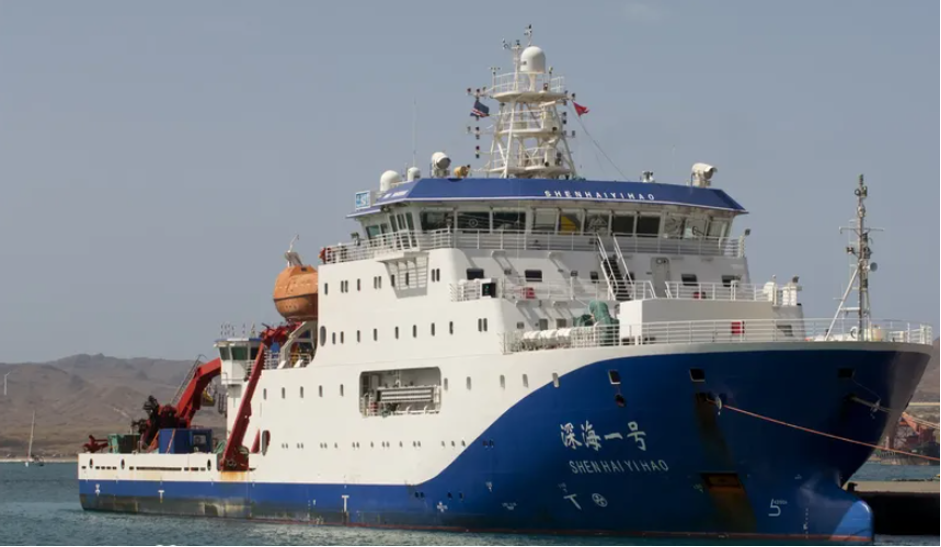 Fig 9: Shen Hai Yi Hao (Deep Sea Number 1)
Xiang Yang Hong 09 (Facing the Red Sun 09). The Xiang Yang Hong 09 is a 4,500-ton distant-water research vessel built in 1978 by Hudong-Zhonghua Shipbuilding to a design provided by the 708th Research Institute of the China State Shipbuilding Corporation. In the first 27 years of her life, she took part in several oceanographic experiments and research projects under the ambit of the State Oceanic Administration. In 2006, despite being over 27 years old, she was selected to undergo upgradation to undertake the role of a mothership for China’s deep sea submersible programme. She has been used in this role extensively and made history by being the mothership for the submersible Jiaolong when she did her first dive to a depth of 7,000 meters in June 2012, a role that has been shifted to the Shen Hai Yi Hao in 2019. She has either been refitted and re-purposed for other tasking or taken out of service.
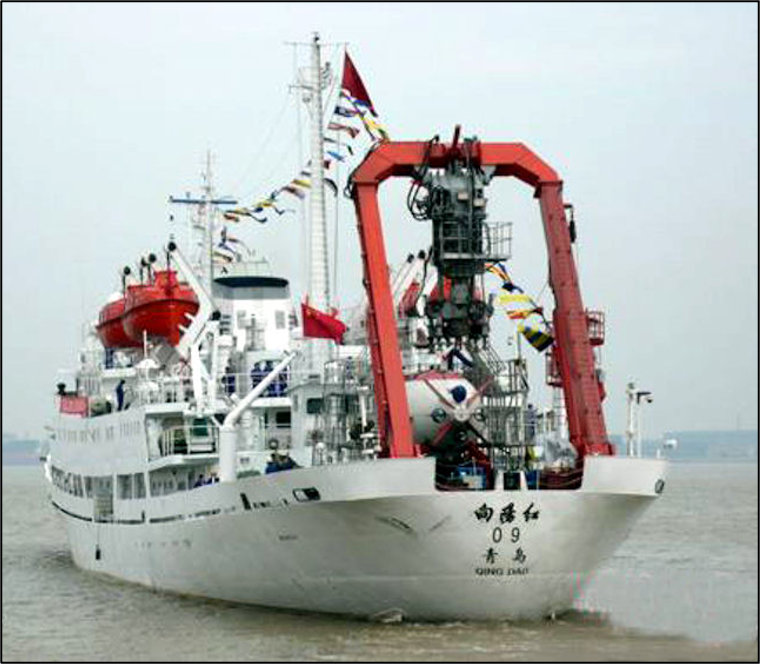 Fig 10: Shen Hai Yi Hao Xiang Yang Hong 09 (Facing the Red Sun 09 with Jiaolong Embarked
Assessment. China’s investment in seabed research continues to grow from strength to strength, with COMRA as the nodal point in this endeavour. This is a far-sighted approach driven by the clear understanding that the regime for commercial exploitation of seabed resources will soon be formalised by the ISA. As and when that happens, China will have a head start in commencing such activity. It is notable that its efforts in this direction have even taken China to the Arctic, in addition to the Pacific and Indian oceans. While the last exploratory voyage to the Arctic may have been undertaken in consultation with Russia, sustained activity in the region could exacerbate geopolitical contestation. Further, the dual use nature of such capabilities with regards to the concomitant threat to undersea infrastructure, such as cables and pipelines, as well as military usage of the data gathered, particularly to augment Undersea Domain Awareness (UDA) needs to be assessed and factored.


Leave a Reply
Want to join the discussion?Feel free to contribute!